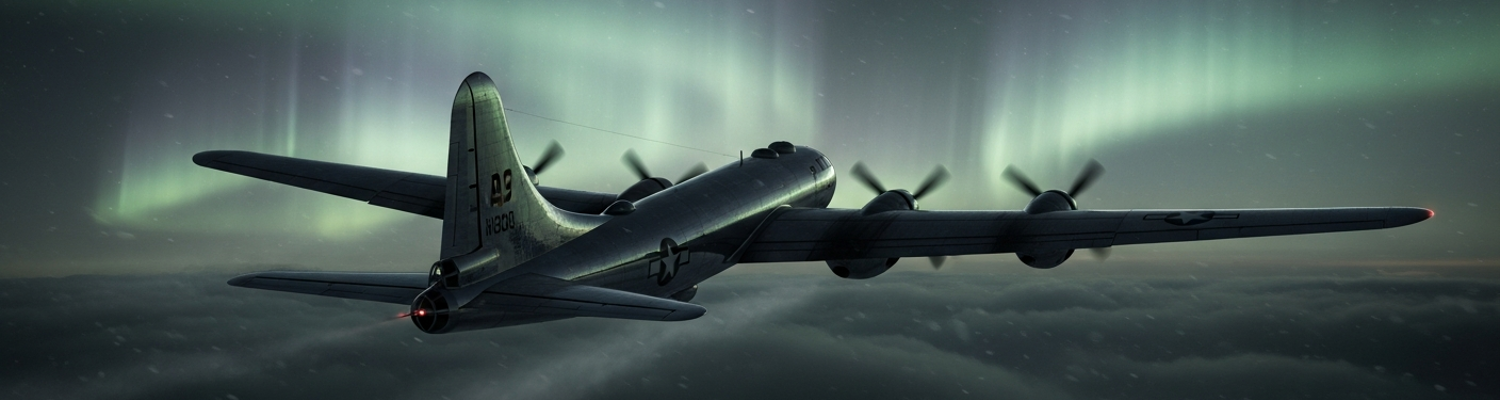

The alliance built to defeat the Axis was dead. A review of declassified planning documents from 1946 shows American military strategists rapidly reorienting their focus from a defeated Germany to their recent Soviet ally. Agreements made at Yalta and Potsdam became points of contention. Soviet refusal to withdraw from Eastern European nations and the suppression of democratic movements created what was described in a March 1946 speech as an iron curtain descending across the continent. By 1947, this ideological divide was formalized. The United States announced a policy of containment, a direct response to perceived Soviet expansionism. This initiated a new kind of global struggle fought through proxy wars, espionage, and a relentless technological arms race.
The Red Army had not gone home.
By 1948, the Soviet military, though demobilized from its wartime peak of over 11 million, remained a formidable force of nearly 3 million active personnel. Its divisions occupied key positions across Eastern Europe, securing compliant governments in Poland, Hungary, Romania, and Bulgaria. The February 1948 coup in Czechoslovakia served as a stark example. A functioning democracy was dismantled from within, its non-communist ministers outmaneuvered and a one-party state declared under Soviet direction. This political consolidation was backed by an increasingly capable military. The Soviet Air Force was being modernized. This included the successful reverse-engineering of the American B-29 Superfortress. The first flight of this clone, the Tupolev Tu-4, occurred on May 19, 1947. By 1949 it was entering large-scale service, with production lines at plants in Kazan, Kuibyshev, and Moscow. This development gave Soviet Long Range Aviation a bomber with the theoretical range to reach North America. The Arctic was a new strategic frontline.
To American war planners, the Arctic was a void. The shortest route for a Soviet bomber strike against the industrial heartland of the United States was not across the Atlantic or Pacific, but over the North Pole. Intelligence assessments from the period reveal a profound lack of information on Soviet capabilities in this region. U.S. intelligence had no human assets in the closed Soviet north. The locations, ranges, and operational readiness of Soviet early-warning radar installations were entirely unknown. A string of potential Arctic staging bases, from Nagurskoye in Franz Josef Land to Tiksi on the Laptev Sea coast, were little more than names on a map. The number and quality of fighter interceptor regiments from the PVO Strany (Soviet Air Defense Forces) assigned to protect these northern approaches were a matter of speculation. Without this data, any calculation of bomber attrition rates was pure guesswork. Project STRATOSPHERE was born from this intelligence vacuum.
By 1948, the urgent intelligence requirements on Soviet Arctic defenses had become a consuming priority. The establishment of the PVO Strany as a separate branch of the military that year signaled a concentrated focus on defending the homeland from air attack. Yet what this meant along the vast northern coastline was a mystery. Declassified intelligence assessments are filled with unnerving voids. American analysts lacked any concrete data on the operational capacity of potential Soviet staging bases, the number and type of fighter interceptors stationed there, or the state of their logistical support infrastructure. The assumption was that the PVO Strany would have positioned fighter regiments, likely flying Yak-9s or new MiG-9 jets, to protect these approaches. Their numbers, readiness, and pilot competence were unknown variables. This created an untenable situation for the Strategic Air Command (SAC), which was responsible for planning retaliatory strikes.
The problem was a near-total lack of reliable, current data.
The polar regions represented a black hole in American intelligence gathering. Human intelligence assets within the closed-off Soviet military zones of the high north were nonexistent. Previous, more tentative efforts to gather information had yielded little of value. Operation Nanook in 1946, for instance, was primarily a cartographic and weather station mission, establishing a joint US-Danish presence in Thule, Greenland. It could not peer behind the Iron Curtain. The immense distances and extreme weather of the Arctic made conventional aerial reconnaissance exceedingly difficult. The United States simply did not know what it was looking for. There was no understanding of Soviet early warning radar capabilities. While postwar efforts to develop new radar systems were underway in the Soviet Union, drawing on captured German technology and their own research, the locations, range, and frequencies of these systems were an enigma to the West. Any reconnaissance flight was flying into unknown enemy defenses and was also flying blind, unable to even detect if it was being tracked.
The airframe selected for the mission was a B-29-100-BW, pulled new from the Bell-Atlanta production line. It was never meant to be a bomber. Designated internally as the 'Silver Wing', it underwent a radical transformation at the Oklahoma City Air Depot. Following the precedent set by the 'Silverplate' atomic bombers, the Silver Wing was subjected to a radical weight-reduction program. All defensive armament, including the complex remote-controlled turrets and their sighting systems, was stripped from the fuselage. Only the tail gunner's position remained. This saved thousands of pounds and reduced the required crew. The cavernous bomb bays were not fitted for photographic equipment. Instead, they were packed with additional rubber bladder fuel tanks, supplementing the main wing tanks and nearly doubling the aircraft’s fuel load. The four Wright R-3350-57AM engines, notoriously prone to overheating, were fitted with modified cowlings and oil coolers specifically intended for sustained high-power settings in a dense, cold air mass.
The cold was the primary adversary. A significant gamble was taken with the crew cabin’s pressurization system. Standard B-29s provided a pressurized environment, but the system was known to have issues. For STRATOSPHERE, the flight profile demanded sustained operation above 35,000 feet, where outside air temperatures could plummet below -70 degrees Fahrenheit. At these temperatures, standard rubber pressure seals around the cockpit glazing and fuselage connection points became brittle, leading to catastrophic failure. Archival evidence from climate hangar tests at Eglin Field (Document E-CH-47-11A) shows that engineers from the Air Materiel Command developed a new, experimental synthetic polymer blend. Designated XP-48, it was intended to remain pliable in extreme cold. The Silver Wing was the first and only airframe to have these seals installed. The decision was contentious. Test reports indicate that under simulated high-altitude, low-temperature cycles, the XP-48 seals developed micro-fractures. While these did not lead to an immediate explosive decompression, they did produce a persistent, high-pitched squeal and a worrying loss of cabin pressure over time, forcing the cabin superchargers to work far beyond their specified limits. Project commanders, facing a non-negotiable operational deadline, signed off on the modification.
To combat the ever-present danger of atmospheric icing, the Silver Wing was equipped with an unproven thermal anti-icing system. The standard B-29 relied on inflatable rubber boots on the leading edges of the wings and tail surfaces, a system deemed wholly inadequate for the severe clear-air icing anticipated in the high Arctic. The experimental solution was a bleed-air system, a concept that would not become standard for many years. It functioned by tapping super-heated air from the turbocharger stage of the inboard Wright R-3350 engines and ducting it through newly fabricated passages inside the wing’s leading edge. The intent was to heat the wing surface to a temperature where ice could not form. The system was a brute-force solution with large risks. Operational logs show that diverting the bleed air caused a noticeable drop in engine manifold pressure, affecting power output during a critical phase of flight. There were no automated temperature regulators. A flight engineer had to manually operate the system, with specific instructions to use it only in short bursts. Uncontrolled, continuous operation risked thermal stress that could warp the main wing spar.
The number was 30 percent.
A one-in-three chance of catastrophic system failure for any single STRATOSPHERE mission. This was not a guess. It was brutal arithmetic, built from known mechanical weaknesses pushed into an unknown environment. Engineers at Air Materiel Command assigned a specific failure probability to each of the 'Silver Wing's' experimental or over-stressed systems, based on data from wartime losses and the new climate hangar tests at Eglin Field. The Wright R-3350 engines were the greatest concern. Wartime operational loss data showed that for every B-29 lost to enemy action, nearly two were lost to other causes, primarily engine fires. Planners took the established rate of engine failure and subsequent fire, which onboard extinguishers failed to control 87% of the time, and multiplied it by a factor of 1.5 to account for sustained high-altitude operation in extreme cold.
Added to the engine problem was the unprecedented flight environment. The new XP-48 polymer pressure seals, which had already shown worrying micro-fractures in ground tests, were given a 10% chance of a critical failure leading to incapacitating or explosive decompression above 35,000 feet. The experimental thermal wing de-icing system, which diverted super-heated air from the already stressed turbochargers, introduced a further possibility of cascading engine failure or thermal stress damage to the main wing spar. When these discrete probabilities were compounded, the cumulative forecast was that nearly one in every three missions would end in the loss of the aircraft and its crew.
This figure ignited a firestorm of internal dissent. Archival evidence from Pentagon briefing notes shows a sharp divide between two camps. On one side was the Strategic Air Command, under the new and demanding leadership of General Curtis LeMay. For SAC's planners, the intelligence void over the Arctic was an existential threat that outweighed the risk to a single aircrew. They argued that the potential for a surprise Soviet bomber attack over the pole, using the new Tu-4, was so high that any intelligence was worth the cost. On the other side were veteran commanders from the Eighth and Fifteenth Air Forces, men who had witnessed the high cost of operational losses over Europe and the Pacific. They were joined by engineers from Air Materiel Command who, having compiled the failure statistics, viewed the mission as a reckless expenditure of a valuable airframe and a highly trained crew. The debate reached the highest levels of the Air Staff, with some commanders arguing that the 30% loss probability was tantamount to a suicide mission.
The ultimate justification for proceeding came down to a simple, brutal calculation. The risk of losing one B-29 was less than the risk of not knowing what was behind the Iron Curtain. The February 1948 coup in Czechoslovakia and the increasing belligerence of the Soviet Union had created an atmosphere of acute tension. The appearance of the Tu-4 gave the Soviets a credible means of striking the continental United States for the first time. Planners had to assume the Soviets were building an Arctic infrastructure to support these bombers, but they had no idea what it consisted of. Was there a northern radar network? How far could it see? What were the response times of PVO Strany interceptor regiments? Project STRATOSPHERE was authorized because it was the only way to get answers. The mission was designed to be a probe, to deliberately fly into the dark and see what would shoot back.
The flight plan originated at Eielson Air Force Base, Alaska. The objective was simple: maintain an altitude in excess of 35,000 feet for the duration of the intelligence-gathering leg of the flight. This was a deep-penetration flight into what was, for all intents and purposes, an atmospheric black hole. No reliable meteorological data existed for the behavior of the jet stream or ambient temperatures at that altitude over the polar ice cap. It was a flight into a complete unknown, both geographically and atmospherically, designed to push the 'Silver Wing' and its crew to their breaking points.
As the 'Silver Wing' climbed through 35,000 feet, the outside air temperature gauge plunged, stabilizing near a terrifying -70 degrees Celsius. The extreme cold immediately began to attack the machine. A post-flight maintenance report (AFM-48-10B) documented how hydraulic fluid in the control surface actuators and landing gear systems began to thicken, making the controls feel sluggish and unresponsive. Inside the cockpit, a persistent, high-pitched squeal started to emanate from the forward canopy as the experimental XP-48 polymer seals became brittle and lost their integrity. Frost began to spiderweb across the inside of the cockpit plexiglass despite the heaters running at maximum capacity. The most immediate mechanical concern centered on the Wright R-3350 engines. Oil in the nacelles was congealing, threatening to starve the massive radial engines of lubrication. The flight engineer, staring at his panel of fluctuating gauges, faced an impossible choice regarding the experimental thermal wing de-icing. Using the system would divert super-heated air from the turbochargers, causing a drop in engine power and threatening the bomber’s ability to maintain altitude. Not using it risked a catastrophic buildup of clear-air ice on the leading edges.
The technologies that made the B-29 a state-of-the-art bomber were being pushed far beyond their design limits. The four Wright R-3350 engines, which already had a reputation for overheating their rear cylinders, were now being subjected to the opposite problem while simultaneously being run at continuous high power settings just to keep the aircraft from sinking in the thin air. The crew could see the turbo-superchargers on the inboard engines glowing a dull cherry red against the dark polar sky. The greatest point of failure, however, was the cabin pressurization system. The decision made by Air Materiel Command to rely on the unproven XP-48 seals had proven to be a near-fatal error. With the seals failing, the cabin superchargers could not maintain pressure. A close review of operational logs indicates the cabin pressure altitude alarm began to sound as the 'Silver Wing' passed the 78th parallel north, forcing the crew onto their emergency oxygen bottles hours ahead of the worst-case projections.
A close review of the flight recorder transcripts indicates that as the 'Silver Wing' crossed the 80th parallel north over the Kara Sea, it encountered a previously undocumented atmospheric phenomenon. The aircraft entered an exceptionally violent filament of the polar jet stream. Unlike typical turbulence, this was clear-air turbulence, or CAT, an invisible enemy that struck without warning in the cloudless sky. The massive B-29 began to shake violently, not with the shudder of a normal storm, but with a high-frequency vibration that threatened to tear the airframe apart. The pilots, fighting against their own sluggish controls as the hydraulic fluid congealed, wrestled to keep the bomber level. A post-mission inspection report would later show that dozens of rivets along the upper wing roots had been sheared by the stress. Inside the fuselage, the navigator was thrown from his seat, and the delicate electronic intelligence gear was subjected to forces far beyond its tested limits. The airframe, already made brittle by the extreme cold, groaned under the strain.
The first critical failure was the pitot-static system. A rapid, localized temperature drop within the jet stream filament flash-froze the moisture in the super-cooled air onto the pitot tubes, the small, heated probes on the exterior of the aircraft that measure airspeed. Their internal heating elements were completely overwhelmed. Within seconds, the airspeed indicators on the main instrument panel began to give wildly erratic readings before freezing in place. The command pilot now faced one of the most dangerous situations in aviation: flying a heavy, unstable aircraft without any reliable indication of its speed. Too slow, and the B-29 would stall and fall out of the sky. Too fast, and the extreme aerodynamic forces could rip the wings off.
With the primary flight instruments compromised, the pilot was forced to fly entirely by referencing the engine tachometers and the artificial horizon, a procedure known as flying by attitude and power. It was a technique practiced in training but considered a last resort in actual flight. At the same time, the navigator reported that his primary navigation aid, the overhead sextant dome used for taking celestial readings, was completely opaque with a thick layer of rime ice, rendering it useless. A sheet of clear ice, almost impossible to see, was simultaneously forming along the leading edges of the wings and, more critically, the tail surfaces. The experimental bleed-air de-icing system was their only defense. The flight engineer, following emergency procedures, engaged the system in short bursts, causing the inboard engines to surge and the entire airframe to shudder as super-heated air warped the frozen aluminum skin. The ice also began to encase the specialized ELINT antenna arrays mounted beneath the fuselage, effectively blinding the aircraft. The navigator, working by a single hooded lamp, made a final dead reckoning calculation based on his last reliable star sight, noting in his log that their position was now, at best, a well-informed guess.
The photographic data was a near-total loss. Post-flight analysis by technicians from the Air Technical Service Command showed that over 80 percent of the film exposed by the three K-17 aerial cameras was unusable. The extreme, rapid temperature drop had flash-frozen the camera shutter mechanisms, while the violent turbulence threw their delicate gyroscopic stabilizers completely out of alignment. This resulted in long stretches of film that were nothing more than a smeared, incomprehensible blur. What few frames were captured in the moments before the failures were of marginal quality, marred by ice crystals forming on the camera bay’s exterior optics and the high-angle glare of the polar sun.
Yet, within this degraded photographic evidence, Strategic Air Command’s photo-interpreters found their first puzzle pieces. A handful of blurry, sequential frames taken just prior to the main camera failures provided a partial overview of a Soviet installation near the coastline of the Laptev Sea. Though distorted, the images confirmed the existence of a concrete runway far longer than required for tactical aircraft. Analysts at SAC headquarters calculated its length as sufficient to support continuous operations by Tupolev Tu-4 strategic bombers, confirming the existence of a forward staging base on the Arctic periphery. Another set of nearly-failed images captured a strange, lattice-like antenna array, something never before seen. This visual evidence, when correlated with data from the 'Silver Wing’s' electronic intelligence receivers, provided the first concrete proof of the PVO Strany’s northern defenses.
The mission’s most significant achievement was not photographic. It was electronic. Before the severe icing and turbulence rendered most systems inoperable, the 'Silver Wing’s' suite of passive radio frequency detectors had listened. As the aircraft approached the 75th parallel north, its receivers registered powerful, periodic pulses from a ground-based source. This was the first-ever detection of a Soviet early-warning radar network in the high Arctic. Analysts codenamed the signal 'Pole Axe' and, by triangulating its emissions, were able to place its origin point near the same coastal area where the blurry photographs had been taken. The signal’s characteristics were crude by Western standards, but its existence was a revelation. It proved the Soviets were not blind in the north. The mission also intercepted scrambled, high-frequency radio traffic consistent with the command-and-control net of a PVO Strany fighter interceptor regiment, confirming a military air presence even though no aircraft were visually sighted.
Project STRATOSPHERE, despite the near loss of the aircraft, was deemed a success by the Air Staff. It validated the entire concept of high-altitude, deep-penetration reconnaissance. The numerous, nearly catastrophic mechanical failures provided an invaluable catalog of real-world performance data under extreme stratospheric conditions. Engineers now had a baseline. They knew the exact temperature at which the XP-48 seals would fail, the performance degradation caused by the thermal de-icing system, and the breaking point of the camera mounts under severe clear-air turbulence. This was not theoretical data from a climate hangar; it was hard-won intelligence purchased at great risk. The failures of the 'Silver Wing' directly informed the design requirements for the next generation of American reconnaissance aircraft, specifically the need for a purpose-built airframe that could operate above 70,000 feet, an altitude beyond the reach of any contemporary threat.