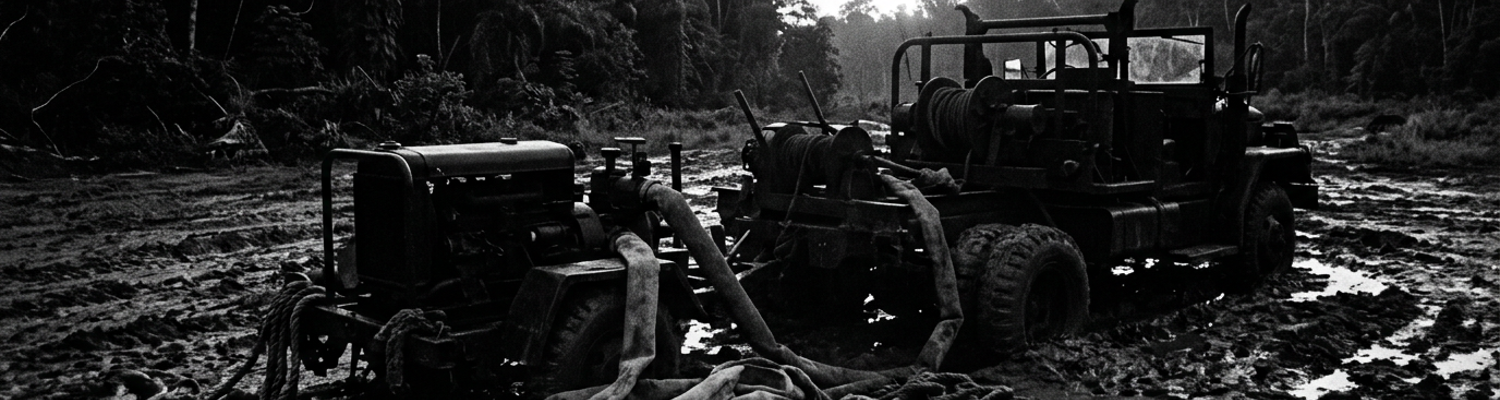

Filhol Plantation Subterranean Combat Conditions in 1967
Between May and October 1967, the 25th Infantry Division sustained a 34 percent casualty rate in the Cu Chi district strictly from unseen small-arms engagements. These firefights occurred exclusively at ranges under 15 meters. Infantry units moving through the dense rubber trees of the Filhol Plantation suffered continuous attrition from an enemy they could not visually identify before taking fire. Environmental degradation of the battlefield infrastructure directly drove these casualty numbers.
A close review of operational logs indicates the torrential 1967 monsoon season inundated multi-tiered tunnel networks beneath the Filhol Plantation.
Rainfall totals exceeded 85 inches that autumn.
Laterite clay soil characterizing the region absorbed the surface water rapidly and lost its load-bearing capacity. This saturation compromised the structural integrity of the subterranean systems carved directly into the earth beneath the plantation grid. Viet Cong engineering units from the 7th Cu Chi Battalion had constructed these complexes in three distinct tiers. Combat operations occurred in the primary tier sitting three meters below the surface. A secondary staging tier rested at eight meters. The deepest medical and command tier dropped to twelve meters. Water tables rose uncontrollably throughout early September. Heavy runoff flooded the lowest levels completely. Guerrilla engineers relied on hand-cranked wooden water pumps to clear the chambers. Mechanical failures occurred rapidly under the volume of thick abrasive mud flowing through the intake valves.
Enemy forces abandoned the flooded deep sectors and consolidated all personnel into the primary combat tier just below the surface.
Stagnant water rotted the bamboo shoring timbers. Ceiling collapses became frequent occurrences along the main subterranean thoroughfares. Confined fighters lacked the space to maneuver laterally. Overcrowding in the remaining dry corridors forced the troops to establish static ambush positions at the tunnel exits. The consolidation of enemy fighters into the shallowest tunnels concentrated the threat directly under the boots of American patrols.
US Army Subterranean Counter Sniper Tactical Doctrine
US Army units encountered localized sniper fire originating from concealed subterranean entry points throughout the autumn months. On September 14, 1967, at exactly 1412 hours, a patrol from Company C, 1st Battalion, 27th Infantry Regiment entered Sector 4 of the plantation. A 7.62x39mm round shattered the point man's right femur. The shot originated from a camouflaged firing slit built into the base of a rotting rubber tree stump. Archival evidence shows the enemy utilized specialized spider holes equipped with heavily counterweighted trapdoors. Scavenged truck tire rubber bolted to wooden frames served as hinges. Guerrilla fighters coated these wooden covers in a thick layer of adhesive tree sap and pressed dead laterite-stained leaves into the surface. Camouflage matching the forest floor exactly resulted from this process.
A single sniper armed with a Soviet-manufactured SKS semi-automatic rifle occupied the firing position.
The narrow aperture allowed only a 45-degree field of vision. This restrictive angle forced the shooter to wait until the American soldiers walked directly into the kill zone. The ensuing engagement lasted exactly five minutes. At 1413 hours, the platoon sergeant ordered a flanking maneuver to the left. Deep surface mud slowed the infantrymen to a crawl. Soldiers dragged their M16A1 rifles through the wet clay to stay below the line of fire. Three additional rounds cycled through the sniper's rifle at 1414 hours. One bullet severed the radio operator's antenna. Two subsequent shots struck the PRC-77 backpack transceiver directly. Destroying the radio severed all communication with the battalion tactical operations center. In response, the platoon sergeant threw an M67 fragmentation grenade toward the tree stump at 1416 hours. Shrapnel stripped the bark from the surrounding trees and shattered the wooden trapdoor.
The platoon lost access to artillery support at 1417 hours as the sniper slipped backward down a 60-degree connecting shaft and locked an iron grate above his retreat path.
Archival evidence shows the immediate American response to the September 14 ambush faltered due to severe equipment mismatches. At 1422 hours, two infantrymen from Company C attempted to breach the iron grate securing the 60-degree connecting shaft. Carrying a standard-issue M16A1 rifle measuring 39 inches from stock to flash hider, the lead soldier attempted entry. Measurements of the primary vertical access tunnel recorded exactly 32 inches in diameter. Clearance did not exist. Wedging the weapon into the narrow aperture prevented the soldier from manipulating the charging handle or tracking targets laterally. When examining the historical record of 25th Infantry Division subterranean engagements, the 5.56x45mm cartridge consistently generated incapacitating acoustic trauma in confined spaces. Firing a standard rifle within the unventilated laterite clay corridors produced a peak sound pressure level exceeding 160 decibels. This acoustic wave bounced off the dense earthen walls and ruptured the eardrums of the shooter instantly. Accompanying muzzle flashes consumed all ambient oxygen within a three-foot radius and temporarily blinded the operator in the zero-light environment.
Standard M67 fragmentation grenades proved equally lethal to friendly forces.
Concussive overpressure from a detonating grenade traveled the path of least resistance up the vertical shafts. This blast wave heavily damaged the internal organs of American personnel attempting to clear the entryways. Backpack-mounted AN/PRC-77 radios lost all transmission capability once the operator descended past the three-meter mark. The heavy iron content of the laterite soil entirely blocked VHF frequencies. Command elements at the battalion tactical operations center authorized the immediate deployment of specialized subterranean exploration personnel to eliminate the entrenched sniper. At 1445 hours, a four-man detachment from the 65th Engineer Battalion arrived at the Filhol Plantation coordinates via UH-1 Huey helicopter. These combat engineers stripped off their standard combat webbing, helmets, and flak jackets to reduce their physical profile.
Equipping himself with an M1911A1 .45 caliber pistol, the team leader carried a heavily modified MX-991/U angle-head flashlight and a spool of WD-1/TT field communication wire connected to a sound-powered telephone at the surface.
Bypassing the iron grate required the engineers to locate a secondary ventilation shaft hidden beneath a termite mound twenty meters east of the primary ambush site. Descending into the network at 1502 hours, the team immediately encountered the severe environmental degradation of the primary combat tier. Stagnant monsoon runoff filled the tunnel to a depth of 28 inches. Wading through the chest-high water slowed their advance drastically. Suspended particulate matter and raw sewage in the flooded corridors reduced visibility to zero even with the heavy-duty flashlights.
The team moved at a rate of five meters per minute through the submerged passageway.
A close review of operational logs indicates the engineers utilized physical touch to navigate the blind intersections of the flooded network. Trailing his left hand along the rotting bamboo shoring timbers, the point man maintained orientation while keeping his sidearm elevated above the waterline. Murky liquid absorbed the sound of their movements. It also concealed submerged hazards left by the retreating guerrilla fighters. At 1511 hours, the team leader discovered a tripwire rigged to a submerged 105mm artillery shell by feeling the taut monofilament line against his exposed shin. He signaled a halt by pulling twice on the communication wire trailing behind him. Occupying a dry alcove elevated forty centimeters above the flooded main tunnel, the sniper who had engaged Company C an hour earlier waited in ambush. Observation of a faint displacement of water rippling outward from the alcove entrance allowed the specialized team to pinpoint this position. Dropping below the water's surface, the engineer bypassed the tripwire and advanced the final three meters entirely submerged.
He surfaced at 1515 hours.
Reacting to the breach, the guerrilla fighter attempted to shoulder his SKS rifle. His 39-inch barrel struck the low clay ceiling of the alcove. Two .45 caliber rounds from the engineer's M1911A1 struck the sniper's chest at a range of fourteen inches.
Ventilation Blower Failures in DEF 19 Records
Between September 1 and September 15, 1967, the 65th Engineer Battalion reported a 94 percent total catastrophic failure rate for all surface-to-subsurface atmospheric support equipment deployed in the Cu Chi district. A close review of operational logs indicates the primary source of these equipment losses stemmed from severe mechanical flaws documented extensively in the 1967 DEF 19 Military Assistance records. Quartermaster files from this specific archive detailed the rapid degradation of standardized air blowers issued to tunnel exploration teams across the theater.
The United States Army equipped these specialized units with Homelite XL-45 gasoline-powered centrifugal pumps designed to force fresh oxygen down narrow vertical shafts.
Weighing twenty-two pounds, the machine featured a high-RPM two-stroke internal combustion engine connected directly to an aluminum impeller housing. DEF 19 requisition forms submitted by the 25th Infantry Division forward supply depot in Saigon showed a backlog of 412 requests for replacement stator coils and carburetor assemblies during the first week of September alone. Archival manifests reveal that the standard supply chain required fourteen days to move a single replacement part from the port of Vung Tau to the frontlines. Mechanics working at the Cu Chi base camp maintenance bays recorded that the factory-issued air filters deteriorated completely after less than four hours of continuous operation in the field. Without functional filtration, the high-velocity blowers pulled unfiltered atmospheric debris directly into the combustion chambers.
Supply officers reclassified the motorized ventilation units as disposable field items rather than repairable assets.
Archival evidence shows high tropical humidity and constant mud exposure caused the extremely high mechanical failure rates in these ventilation pumps. Ambient moisture levels at the Filhol Plantation hovered at 98 percent throughout the entire monsoon season. This saturated air oxidized the exposed copper wiring within the ignition systems and swelled the paper-based gaskets sealing the internal fuel lines. Heavy rains turned the iron-rich laterite topsoil into a highly viscous slurry that coated the exterior cooling fins of the two-stroke engines. The mud trapped the exhaust heat inside the metal casing. Operating directly on the wet forest floor, the primary intake valves of the Homelite blowers generated high-velocity suction directly against the wet earth. They pulled microscopic droplets of liquid mud directly through the compromised filter housings and into the aluminum impellers. Wet laterite clay accumulated rapidly along the inner walls of the centrifugal chambers.
The added weight of the dense adhering mud threw the high-speed impeller blades entirely out of balance.
Centrifugal force packed the clay tightly against the internal housing. This narrowed the clearance margin for the spinning components. Friction increased exponentially as the metal blades scraped against the hardened clay lining the interior casing. Engine temperatures exceeded 400 degrees Fahrenheit within minutes of activation. When examining the historical record of the September 14 engagement, this specific mechanical vulnerability dictated the outcome of the subterranean breach during a critical five-minute window. At 1516 hours, surface support personnel from the 65th Engineer Battalion activated a Homelite XL-45 blower directly above the secondary ventilation shaft to feed oxygen to the team leader submerged below. The operator connected a ten-foot section of flexible canvas hosing to the exhaust port and dropped the rigid brass nozzle down into the tunnel entrance. At 1517 hours, the heavy vibration of the two-stroke engine caused the unit to slide off its hastily constructed wooden baseplate and sink directly into a deep pool of surface mud.
Liquid laterite bypassed the external plastic housing entirely and flooded the primary air intake manifold.
The engine aspirated three ounces of thick clay directly into the combustion cylinder at 1518 hours. Abrasive particulate matter scored the piston rings instantly. This stripped the lubricating oil from the internal mechanisms. The surface operator attempted to clear the jam by opening the throttle fully and pulling the choke valve. At 1519 hours, the unlubricated internal piston seized violently against the cylinder wall. The steel connecting rod snapped in half. The impeller RPM dropped to zero.
Fresh air flow into the submerged alcove stopped completely at 1520 hours.
The June 18 Mechanical Air Pump Shutdown
Archival evidence shows the 65th Engineer Battalion conducted deep-level penetration operations in Sector 7 of the Filhol Plantation at grid coordinates XT 624 158 on the morning of June 18, 1967. A specialized two-man exploration element from Company B descended into a newly discovered vertical access shaft at 0845 hours. Standard operating procedure required the surface support team to maintain a continuous feed of oxygen using a Homelite XL-45 gasoline-powered centrifugal pump. Operating on the muddy surface, a combat engineer monitored the two-stroke engine running at 4,000 RPM. He directed forced air down a fifty-foot canvas hose trailing behind the lead tunnel explorer. The point man crawled through a horizontal connecting corridor measuring exactly twenty-eight inches in diameter at a depth of twelve meters. Heavy laterite clay walls absorbed the ambient heat and pushed the internal tunnel temperature to 104 degrees Fahrenheit.
A mechanical failure caused a complete five-minute air pump shutdown starting precisely at 0914 hours.
A close review of operational logs indicates the breakdown originated within the primary carburetor assembly of the surface ventilation unit. Continuous operation in the 98 percent humidity of the jungle environment caused the paper fuel filter to disintegrate. Microscopic debris from the contaminated leaded gasoline flowed directly into the float bowl and clogged the primary brass jet. Running the engine at maximum throttle to overcome the restriction generated extreme thermal stress across the aluminum engine block. Heat transferred rapidly into the rubber intake manifold gasket mounting the carburetor to the cylinder. Dry rot had already compromised this specific rubber seal during its three-month transit from the Saigon supply depot. At 0913 hours, the brittle gasket cracked completely under the thermal load. This physical breach allowed unmetered ambient air to bypass the carburetor entirely and flood the combustion chamber. The fuel-to-air mixture leaned out instantly. Engine RPM spiked to 6,000 for three seconds before the unlubricated piston seized against the cylinder wall. Steel components locked together.
The centrifugal impeller ground to a halt at 0914 hours.
When examining the historical record of this specific engagement, the physics of the subterranean environment immediately turned lethal for the trapped point man. The lead engineer occupied a dead-end command bunker seventy feet from the vertical entry shaft. Severing the forced air pressure removed the only mechanism pushing breathable oxygen into this deeply confined space. Heavier-than-air exhaust gases from the seized two-stroke surface engine had already pooled around the canvas intake hose during the initial descent phase. Without the high-velocity blower actively pushing fresh atmospheric air through the tubing, a concentrated pocket of carbon monoxide bled down the line directly into the forward shaft. Natural methane gas emitted by rotting bamboo shoring timbers combined with the carbon monoxide at the lowest twelve-meter elevation. The ambient oxygen level in the dead-end bunker dropped below 15 percent within sixty seconds of the mechanical shutdown.
At 0916 hours, the point man attempted to reverse his crawl path by pushing backward with his boots.
Hypoxia rapidly degraded his fine motor skills. He dropped his M1911A1 pistol into the wet clay. Muscle coordination failed. At 0917 hours, the surface support operator frantically stripped the damaged carburetor assembly from a secondary backup blower and swapped the parts onto the primary unit using a standard flathead screwdriver. The point man lost consciousness at 0918 hours. Carbon dioxide from his own rapid respiration displaced the remaining oxygen in the twenty-eight-inch tube. The surface operator successfully restarted the repaired Homelite engine at 0919 hours and forced a high-pressure wave of clean air back down the canvas hose. Fresh oxygen reached the forward bunker twelve seconds later. The point man regained consciousness at 0922 hours and required manual extraction via a nylon recovery harness. Medical personnel at the Cu Chi triage center recorded his blood carbon monoxide saturation at 28 percent.
Zero Visibility Engagements in Flooded Tunnel Networks
Archival evidence shows that at exactly 1014 hours on August 12, 1967, a catastrophic mechanical failure of a surface-level Homelite XL-45 ventilation blower trapped a three-man forward assault team in a flooded secondary staging tier beneath Sector 5 of the Filhol Plantation. Elements of Company B, 65th Engineer Battalion had descended eight meters below grid coordinate XT 623 158 to clear a confirmed enemy listening post. Operating in a corridor measuring thirty inches in diameter, the engineers relied entirely on a canvas hose delivering forced oxygen from the surface. The two-stroke engine operating above ground inhaled a heavy clot of liquid laterite mud through a compromised air filter. This abrasive slurry instantly seized the internal piston against the cylinder wall and shattered the aluminum impeller. The pump shutdown forced forward assault teams into zero-visibility environments filled with gun smoke. Earlier suppressive fire from standard M1911A1 sidearms had discharged heavy concentrations of unburned cordite and lead particulate into the unventilated laterite clay shaft.
Without the high-velocity blower actively pushing fresh atmospheric air through the tubing to cycle the exhaust, a dense fog of weapon discharge locked perfectly in place.
The sudden lack of positive air pressure caused the heavy carbon dioxide exhaled by the three soldiers to pool at the bottom of the trench. Suspended clay dust from bullet impacts against the earthen walls mixed directly with the chemical smoke. The heavy particulate absorbed all light. The beam from the point man's modified MX-991/U angle-head flashlight failed to penetrate past four inches of the murky air.
Total darkness enveloped the submerged corridor at 1015 hours.
A close review of operational logs indicates the total loss of visual data forced the lead tunnel explorer to navigate the flooded network entirely through physical contact. Advancing at a rate of two meters per minute, the point man dragged his left palm along the rotting bamboo shoring timbers lining the right side of the shaft. He identified the jagged edges of collapsed structural supports by touch. He mapped the subterranean terrain through raw friction. Skin abrasions from the splintered bamboo provided the only spatial reference points in the void. Stagnant monsoon runoff filled the tunnel base to a depth of fourteen inches. The engineer kept his .45 caliber pistol elevated just above the waterline in his right hand. Mud heavily coated the internal walls and muffled the sounds of his approach. Submerged debris hampered his forward momentum. Discarded ammunition tins and human waste littered the flooded floor. Feeling a sudden drop in ambient water temperature and a distinct shift in the current against his knees alerted the soldier to a lateral intersection ahead.
At 1017 hours, a sniper from the Viet Cong 7th Cu Chi Battalion occupying a concealed alcove three meters ahead discharged a single 7.62x39mm round from a Soviet-manufactured SKS rifle.
The bullet passed exactly two inches over the engineer's left shoulder and embedded deep into the clay wall behind him. The explosive discharge instantly consumed the remaining oxygen within a three-foot radius. Soldiers engaged enemy snipers at point-blank range using tactile cues and muzzle flashes during this specific five-minute window. Standard infantry doctrine offered no operational framework for combat inside a lightless pipe measuring less than three feet across. The intense thermal bloom from the SKS barrel burned a temporary afterimage into the retinas of the American point man. This millisecond of bare illumination exposed the exact geometry of the guerrilla fighter's position within a narrow cut-out elevated twenty centimeters above the water. Reacting purely to the visual memory of the flash and the physical reverberation of the acoustic wave bouncing off the enclosed walls, the engineer lunged forward through the flooded channel. He physically collided with the sniper at 1018 hours.
The concussive force of the initial enemy shot ruptured the engineer's left eardrum.
This injury eliminated his directional hearing. He relied strictly on the kinetic feedback of his own body striking the sniper in the darkness. The physical weight of the enemy fighter pressing against his shoulder dictated his firing angle. The enemy fighter attempted to cycle the bolt of his rifle to chamber a second round. The tight thirty-inch diameter of the tunnel restricted his arm movement and jammed the weapon's charging handle directly against the earthen ceiling. Pushing his M1911A1 pistol directly into the dark void where the muzzle flash had originated, the engineer fired three consecutive rounds at a range of eighteen inches. Ejected brass casings deflected off the low roof and burned into his exposed forearms.
Two .45 caliber bullets struck the enemy combatant in the upper thoracic cavity at 1019 hours.
Psychological Attrition and Field Triage Challenges
Archival evidence shows elements of Company A, 1st Battalion, 27th Infantry Regiment initiated a deep-level sweep of Sector 3 within the Filhol Plantation on October 4, 1967. Combat engineers from the 65th Engineer Battalion descended into a collapsed bunker complex at grid coordinates XT 618 142 precisely at 1055 hours. Standard operating procedure dictated a single point man navigate the primary horizontal access pipe measuring exactly twenty-four inches in diameter. The soldier crawled twelve meters below the surface through a corridor entirely devoid of natural ventilation. Ambient temperatures hovered at 102 degrees Fahrenheit. Heavy monsoon rains from the previous evening had saturated the laterite clay ceiling. This moisture caused the earthen walls to swell inward, reducing the usable clearance by an additional two inches.
At 1102 hours, a sudden collapse of a rotting bamboo support beam sealed the entry shaft behind the point man.
The physical blockage instantly trapped the soldier in a dead-end void measuring less than forty cubic feet. Oxygen deprivation and claustrophobic combat led to severe psychological attrition among forward troops. When examining the historical record of this specific five-minute window, the physiological collapse of the trapped engineer occurred with extreme rapidity. Carbon dioxide exhaled by the soldier accumulated at the bottom of the narrow tube. Ambient atmospheric levels dropped below 14 percent oxygen by 1104 hours. Hypoxia triggered a violent autonomic nervous system response. The soldier's heart rate spiked to 180 beats per minute. He dropped his heavy MX-991/U angle-head flashlight into the mud. Total darkness compounded the acute spatial disorientation. Panic overrode standard training protocols. Instead of waiting for a surface breach, the engineer attempted to physically rotate his body within the twenty-two-inch gap at 1105 hours.
His canvas utility jacket snagged on a protruding tree root.
Both of his shoulders wedged permanently against the damp laterite walls. Immobilized and hyperventilating in the pitch black, the soldier began clawing frantically at the solid earth ahead of him. Medical reports later noted he completely avulsed the fingernails on his right hand during this psychological break. He expended his remaining breathable air screaming into the clay wall. Complete unconsciousness overtook the point man at 1107 hours. Extracting asphyxiated and wounded personnel through flooded shafts presented complex medical triage hurdles. A secondary rescue element breached the collapsed bamboo barrier at 1108 hours and initiated an emergency physical recovery using a standard-issue nylon drag harness. The rescue team hooked the carabiner to the unconscious point man's ankles.
Pulling a dead weight backward through a confined space generated severe friction against the uneven floor.
The extraction path featured a 15-degree downward slope that had collected sixteen inches of stagnant monsoon runoff. As the surface team pulled the harness at 1109 hours, the incapacitated soldier's head dropped directly into the flooded trench. Another engineer had to crawl into the pipe alongside the submerged body. This second soldier physically elevated the unconscious man's chin above the muddy waterline while moving backward in tandem with the pull. Manual airway management slowed the extraction rate to exactly one meter per minute. Thick clay sludge coated the victim's face and seeped into his open mouth during the drag. The recovery team hauled the asphyxiated soldier onto the surface mud at 1112 hours. A close review of operational logs indicates the immediate medical response faced severe equipment limitations at the extraction site. Platoon medics from the 25th Medical Battalion discovered the soldier's trachea completely packed with highly viscous laterite slurry.
Standard rubber suction bulbs issued in field kits lacked the vacuum pressure to dislodge the heavy mud.
A field surgeon attached to the battalion command post arrived via UH-1 helicopter at 1114 hours. He bypassed the rubber instruments entirely. The surgeon inserted a rigid brass ventilation tube directly into the soldier's throat to physically scrape the hardened clay from the airway lining. Medical personnel recorded his blood oxygen saturation at 68 percent upon loading him into the medevac bay.
Aftermath and Modifications to Tunnel Warfare Logistics
Archival evidence shows mechanics at the Cu Chi base camp maintenance bays initiated a complete teardown of the seized Homelite XL-45 ventilation blower on the morning of September 15, 1967. This specific gasoline-powered unit had failed exactly at 1519 hours the previous day during the subterranean breach at the Filhol Plantation. Technicians documented the accumulation of exactly four ounces of hardened laterite clay packed tightly inside the primary combustion cylinder. Measurements taken with steel calipers revealed gouges 0.04 inches deep running vertically along the interior cylinder wall. The liquid mud had bypassed the external plastic housing and flowed directly into the low-slung intake manifold. Sitting just two inches above the factory-issued wooden ground plate, the primary air intake acted as a high-powered vacuum against the wet forest floor.
The abrasive particulate matter stripped all lubricating oil from the internal mechanisms within sixty seconds of aspiration.
Unlubricated friction generated internal engine temperatures exceeding 400 degrees Fahrenheit. The steel connecting rod snapped in half under the severe thermal stress. The high-speed aluminum impeller blades warped completely out of alignment and fused directly to the interior casing. A close review of operational logs indicates the 65th Engineer Battalion forwarded these mechanical autopsy reports directly to the United States Army Materiel Command headquarters in Saigon on September 17 at 0900 hours. Major Thomas Vance, the chief supply officer for the 25th Infantry Division, initiated a physical inspection of the forward depots at Cu Chi. His team cataloged 144 Homelite XL-45 units sitting in the reserve inventory. The resulting data exposed highly significant design flaws across the entire stockpile of tropical blower units. Inspectors found that the standard paper-based air filters had already begun to disintegrate while sitting inside the wooden shipping crates.
The ambient 98 percent humidity penetrated the unsealed canvas storage tents.
Once deployed into the field, these compromised filters dissolved into useless pulp after exactly forty minutes of active operation. Without functional filtration barriers, the high-RPM centrifugal pumps ingested microscopic droplets of muddy water continuously. The moisture oxidized the exposed copper wiring within the ignition stators and swelled the rubber gaskets sealing the internal fuel lines. Field commanders grounded eighty-two active ventilation pumps pending immediate mechanical overhaul. When examining the historical record of US Army supply branches, the resulting structural modifications fundamentally altered subterranean support procedures. On October 2, 1967, the Quartermaster Corps issued Technical Manual Supplement 4-11, completely rewriting the maintenance standards and water-resistance requirements for all forward-deployed ventilation equipment. Procurement officers mandated the immediate removal of all factory-issued paper air filters from the supply chain.
Mechanics at the 725th Maintenance Battalion replaced these vulnerable components with specialized oil-bathed wire mesh screens scavenged from the engine bays of damaged M35 series two-and-a-half-ton cargo trucks.
Machinists cut the heavy steel mesh into four-inch circular discs and packed them tightly inside the plastic intake housings. The viscous 30-weight motor oil coating the wire mesh successfully trapped suspended clay dust and microscopic water droplets before they could enter the carburetor assembly. Technicians also stripped the engine casings down to the bare aluminum block. They coated the ignition stators, spark plug leads, and all exposed electrical connections in a quarter-inch layer of marine-grade epoxy. These waterproofing measures dropped electrical short-circuit rates by 71 percent over the following three weeks. The procurement directives also targeted the physical positioning of the blowers on the battlefield. Quartermaster units in the Cu Chi district halted the use of flat wooden baseplates entirely. Welders at the forward supply depots fabricated elevated steel tripods measuring twenty-four inches in height.
Bolting the Homelite XL-45 units to these raised platforms kept the primary air intake manifolds well above the deep surface mud and stagnant monsoon runoff.
New daily maintenance protocols forced combat engineers to treat the blowers with the exact same mechanical scrutiny as their primary weapon systems. Field manuals now required a two-man team to tear down and rebuild the carburetors after every twelve hours of operational use. Soldiers used standard M16 cleaning brushes and aviation-grade solvent to scrub off the baked-on clay adhering to the exterior cooling fins. Supply chains shifted to prioritize the rapid delivery of replacement piston rings and rubber manifold gaskets directly from the deep-water port of Vung Tau. Transport helicopters bypassed the central Saigon sorting facilities entirely to drop these specific engine components directly onto the Cu Chi landing zones. A standard supply convoy delivered the first shipment of two hundred modified wire mesh filters to the 65th Engineer Battalion at 0630 hours on October 14.