
Chinese PVA Offensive and CIA Situation Report Eight
The diesel fuel injection pump on the PE-75 generator failed at exactly 0214 hours. Internal bearings ground against unlubricated steel housings. This sheared the drive shaft. Hydraulic pressure inside the primary manifold dropped to zero. This machine powered the main radio transmitter for the Central Intelligence Agency psychological warfare detachment operating just south of the 38th Parallel. Without electrical current, the AN/GRC-26 radio set went dead. Direct communication between forward operatives and the Far East Command in Tokyo severed instantly. Operators frantically attempted to hand-crank the auxiliary motor in sub-zero temperatures. The engine block had cracked from thermal shock.
Archival evidence shows this mechanical breakdown mirrored a much larger systemic collapse.
In December 1950, CIA Situation Report 8 documented heavy People's Volunteer Army troop movements across United Nations lines. Analysts at the Office of Reports and Estimates compiled aerial reconnaissance data (Record Group 263). They integrated captured enemy documents and ground-level informant debriefings to track the Chinese 13th Army Group. Intelligence officers noted specific infiltration corridors through the rugged Taebaek Mountains. They mapped routes across the frozen Yalu River. The 38th, 39th, and 40th Armies bypassed established road networks entirely. Situation Report 8 explicitly outlined night marches where Chinese infantry moved in tight column formations. Troops hid under camouflage netting in dense pine forests during daylight hours to evade Fifth Air Force reconnaissance flights.
A close review of operational logs indicates that agency analysts accurately estimated the enemy strength at well over 250,000 combat personnel operating south of the Chongchon River.
Agency directors in Washington forwarded these exact troop coordinates and movement vectors to General Douglas MacArthur in Tokyo. Major General Charles A. Willoughby dismissed the data as heavily exaggerated. Army commanders prioritized their own internal G-2 intelligence summaries over civilian agency reports. Staff officers locked the CIA estimates in Tokyo filing cabinets rather than distributing them to frontline regimental commanders.
Inter-agency rivalries blinded the command structure.
The Chinese offensive fractured Eighth Army supply lines and forced rapid retreats toward Wonju. The PVA 113th Division severed the main supply route at the Kunu-ri gauntlet. Eighth Army primary supply arteries collapsed within forty-eight hours. Supply convoys consisting of M35 2.5-ton cargo trucks and M4 Sherman tanks became trapped on narrow dirt mountain passes. Chinese mortar teams pre-sighted the roads. They targeted the lead and rear vehicles. This effectively boxed in miles of American transport columns. Quartermaster units abandoned thousands of tons of C-rations, extreme cold weather clothing, and 105mm artillery shells in the snow to prioritize personnel extraction. Commanders ordered a full-scale motorized withdrawal south toward the major rail and road junction at Wonju. The retreat devolved into a chaotic scramble down Route 29. Unit cohesion disintegrated.
Engineering battalions hastily rigged bridges over the Han River with Composition C-3 explosives.
They detonated them to slow the enemy advance. This stranded their own heavy artillery batteries on the northern banks.
Wonju sat in a valley surrounded by steep ridges. It formed a natural chokepoint for retreating UN forces and a highly contested strategic target. The US 2nd Infantry Division limped into the city with shattered command structures, missing heavy weapons, and severely depleted rifle companies. CIA psychological warfare teams attached to the retreating columns found themselves competing directly with Army supply officers for scarce rolling stock. They needed to evacuate their printing presses, leaflet bombs, and broadcasting equipment. Army quartermasters flatly refused to load civilian intelligence gear onto the narrow-gauge rail cars. Wounded infantrymen lay freezing on the station platform.
Agency operatives resorted to sabotaging their own heavy transmitters with thermite grenades in the Wonju rail yards to prevent capture.
Chinese vanguard units from the 42nd Army entered the northern city outskirts less than twelve hours later.
Strategic Role of Wonju Airfield in 1950
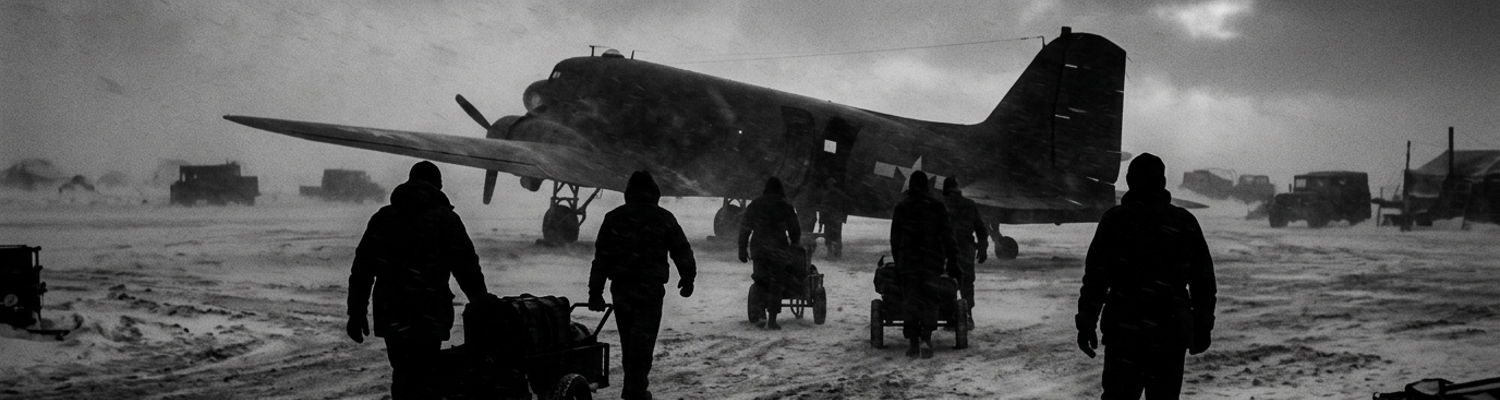
The primary hydraulic accumulator on a Douglas C-47 Skytrain ruptured at exactly 0415 hours on the frozen crushed-rock runway at Wonju Airfield. A localized pressure drop from 850 psi to zero occurred instantly when the main rubber seal shattered. Unlubricated spur gears inside the engine-driven pump ground violently against their steel casings. Shrapnel from the disintegrating gear teeth tore through the aluminum hydraulic lines. The remaining red mineral oil drained directly onto the ice below.
Maintenance crews watched the fluid freeze solid within seconds.
Archival evidence shows that ambient temperatures at the K-38 airstrip plummeted to thirty-four degrees below zero Fahrenheit during the second week of December 1950. Ground crews from the Far East Air Forces 315th Troop Carrier Wing attempted to service Pratt and Whitney R-1830 Twin Wasp radial engines in these conditions. The standard AN-O-6 aviation grade oil congealed into a thick sludge inside the aircraft crankcases. Mechanics applied open-flame blowtorches directly to the aluminum engine cowlings to thaw the frozen cylinders. This procedure frequently cracked the ceramic spark plug housings due to rapid thermal expansion.
Wrench heads snapped off in the hands of frostbitten airmen.
A close review of operational logs indicates that the extreme cold grounded nearly forty percent of the cargo aircraft assigned to resupply the retreating United Nations ground forces. Wonju Airfield occupied a flat river basin at coordinates 37.3422 N, 127.9202 E. This made it the only functional aviation facility capable of handling twin-engine transports between the advancing Chinese lines and the southern port of Pusan. The airstrip functioned as the central supply hub for Eighth Army units falling back down Route 29. Quartermaster battalions stacked thousands of wooden crates containing 105mm howitzer shells, cold-weather sleeping bags, and medical blood plasma along the edges of the single 3,500-foot dirt runway. Engineers laid pierced steel planking over the softest mud. The heavy frost heaves warped the metal sheets. This created jagged hazards for aircraft tires.
C-119 Flying Boxcars landed at twenty-minute intervals to offload these munitions.
They departed carrying wounded infantrymen from the US 2nd Infantry Division. CIA psychological warfare detachments demanded cargo space on these departing flights. They needed to evacuate their printing presses, specialized darkroom chemicals, and heavy broadcasting generators. Agency officers argued that abandoning the specialized equipment would hand the Chinese military a highly significant propaganda victory.
Army loadmasters rejected the civilian requests outright.
The airfield also housed the primary communications hub connecting X Corps frontline elements with the Far East Command in Tokyo. Signal Corps technicians erected towering SCR-399 mobile radio shelters near the northern perimeter of the runway. These transmitter trucks pushed high-frequency signals through the mountainous terrain. They directed close air support missions and coordinated artillery barrages. Continuous operation in the sub-zero environment caused the copper wiring inside the BC-610 transmitters to become brittle. The wires snapped under the vibration of the onboard PE-95 generator sets. Communications officers rationed broadcast time strictly to tactical units. Agency operatives attempted to commandeer one of the SCR-399 units to broadcast pre-recorded defection appeals in Mandarin toward the encroaching 42nd Chinese Army. Military police officers physically blocked the intelligence officers from entering the communications tent.
Base commanders prioritized tactical troop coordination over psychological operations.
Infantry officers threatened to arrest CIA personnel who interfered with the radio transmissions.
When examining the historical record, the friction between intelligence objectives and military survival at Wonju becomes highly apparent. Air traffic controllers operating from a makeshift wooden tower struggled to sequence the inbound C-47s as heavy snow squalls reduced visibility to less than two hundred feet. The dirt runway rapidly deteriorated under the weight of the heavy cargo aircraft. Landing gear oleo struts froze in the fully compressed position. This caused transports to bounce violently upon touchdown and blow their main tires. Maintenance personnel lacked the heated hangars required to vulcanize rubber patches on the pneumatic tubes. Ground crews simply pushed the disabled aircraft into the snowbanks alongside the runway using M3 half-tracks. This cleared the landing zone for the next flight. The wreckage of three C-47s accumulated at the southern end of the strip.
The Far East Air Forces command eventually ordered a halt to all non-essential flights until the weather broke.
CIA personnel watched Army engineers bulldoze their crated leaflet bombs into a frozen drainage ditch to make room for incoming infantry replacements. The intelligence officers resorted to burning their own classified documents in empty fifty-gallon fuel drums on the tarmac.
CIA Psychological Warfare Mandates in Korea
Archival evidence shows that covert operatives assigned to the Central Intelligence Agency Office of Policy Coordination prioritized broad propaganda leaflet distribution. They aimed to demoralize advancing Chinese forces during the winter campaign. Agency analysts operating out of temporary headquarters in Pusan designed millions of five-by-eight-inch paper slips printed with safe conduct passes. Translators drafted messages in simplified Mandarin detailing the exact casualty rates of the People's Volunteer Army 13th Army Group. Intelligence officers targeted the Chinese 38th and 42nd Armies pushing south through the Taebaek Mountains.
Ground crews packed these twenty-pound paper bundles into M105 heavy leaflet bombs.
This specific ordnance utilized the exact steel casing of a standard five-hundred-pound general-purpose bomb. Technicians removed the high explosives from the central cavity and installed an M111A2 barometric tail fuse. Mechanics threaded a steel arming wire through the tail fin assembly to prevent premature detonation on the runway. Operatives calibrated these mechanical fuses to detonate the primer cord at exactly two thousand feet above the valley floor. The resulting low-yield explosion sheared the casing along pre-scored seams. Prevailing winter winds then scattered the twenty-pound paper stock across a twenty-square-mile drop zone directly over the Chinese infantry columns.
Sub-zero temperatures frequently froze the heavy aniline ink inside the forward-deployed offset printing presses.
When examining the historical record, the physical mechanics of this propaganda campaign required heavy and continuous aviation support. Special Operations personnel demanded dedicated air transport assets to meet psychological warfare objectives across the Korean peninsula. Agency officers formally requested the Far East Air Forces to reassign minimum elements of the 21st Troop Carrier Squadron exclusively for intelligence operations. Covert planners calculated that effectively saturating the infiltration corridors north of Wonju required daily flights of Douglas C-47 Skytrains operating at ten thousand feet. Dropping the M105 bombs at this specific altitude allowed the high-velocity jet streams to carry the leaflets deep behind the Chinese lines before the enemy infantry descended into the valleys.
Agency personnel drafted rigid flight schedules demanding continuous airframe availability from 0400 to 1800 hours.
They required cargo bays modified with heavy canvas static line anchor cables. Aircrews used these cables to manually push out un-fused, loose paper bundles when the external bomb racks jammed from heavy ice accumulation on the leading edges of the wings.
Military base commanders categorically denied these specialized flight allocations.
A close review of operational logs indicates a complete breakdown in cooperation between the civilian intelligence apparatus and the tactical military commands at the airfield. Eighth Army quartermasters controlled all inbound and outbound air traffic at the K-38 Wonju airstrip. Air Force loadmasters prioritized the delivery of 105mm artillery shells, M1 Garand ammunition, and extreme-cold-weather sleeping bags. Special Operations officers attempted to physically block the loading ramps of C-119 Flying Boxcars. They argued loudly with infantry colonels over cargo space and weight distribution limits. The CIA teams required heavy M2 mechanical winches to load their 2,500-pound mobile printing presses and heavy diesel generators onto the aircraft for emergency evacuation.
Army supply officers ordered military police to draw their sidearms and force the intelligence personnel away from the transport planes.
Frontline commanders viewed the paper propaganda campaigns as a highly inefficient use of 100-octane aviation fuel during a combat retreat. General Douglas MacArthur issued a direct order stating that no combat cargo aircraft would be diverted from tactical resupply missions to drop paper leaflets. Agency operatives watched Air Force mechanics unbolt the specialized leaflet dispensers from the wings of the C-47s. They replaced them with standard high-explosive ordnance racks.
Army engineers then pushed the wooden crates of barometric fuses into the snow to make room for incoming infantry replacements.
Fifth Air Force Transport Allocation Priorities
A close review of operational logs indicates that the Far East Air Forces Combat Cargo Command operated at less than forty percent capacity during the second week of December 1950. Ground crews at the K-38 Wonju airstrip reported twenty-two Douglas C-47 Skytrains permanently grounded along the western taxiway. The Pratt and Whitney R-1830 Twin Wasp radial engines suffered catastrophic internal failures in the negative thirty-degree temperatures. Ice accumulation inside the Bendix-Stromberg carburetors choked off the aviation fuel supply during final approach descents. This caused engines to stall at low altitudes. Standard AN-O-6 aviation oil congealed in the crankcases overnight. Mechanics lacked the heated maintenance tents required to properly strip and rebuild the fouled magnetos.
Wrench heads snapped off on frozen bolts.
The 315th Troop Carrier Wing simply ran out of spare parts. The supply chain from Ashiya Air Base in Japan failed to deliver replacement cylinders for the damaged aircraft. Maintenance logs show mechanics cannibalizing wrecked airframes for usable spark plugs.
When examining the historical record, the specific mechanical vulnerabilities of the C-47 fleet compounded the severe shortage of available cargo space. The transport planes required a minimum of 100-octane aviation fuel to operate at maximum gross weight over the Taebaek Mountains. Supply lines from Pusan could not deliver sufficient fifty-five-gallon fuel drums to the forward airstrips. Aircraft landing on the single 3,500-foot dirt runway frequently blew out their Goodyear pneumatic tires on the jagged, frost-heaved pierced steel planking. Unlubricated tailwheel oleo struts collapsed under the impact of hard landings on the frozen mud. Air Force commanders grounded entire squadrons to prevent further losses of irreplaceable airframes. They restricted all remaining operational flights to a rigid, centralized schedule controlled directly by Far East Command. Loadmasters calculated payload weights down to the single ounce to maximize efficiency.
Flight operations ceased entirely between 2200 and 0500 hours due to zero-visibility snow squalls.
Archival evidence shows that Major General William H. Tunner issued strict load manifests prioritizing Eighth Army survival over intelligence operations. Frontline elements of the US 2nd Infantry Division required daily deliveries of 105mm howitzer shells, 60mm mortar rounds, and M1 Garand ammunition to hold the ridgelines north of Wonju. Inbound C-47s carried maximum payloads of 6,000 pounds of these high-explosive munitions. They also hauled wooden crates of glass medical blood plasma bottles packed in sawdust. Upon landing, loadmasters immediately stripped the cargo bays to configure the aircraft for emergency medical evacuations. Flight nurses strapped canvas litters to the aluminum fuselage ribs to extract frostbitten and shrapnel-wounded infantrymen. Medical personnel administered morphine syrettes that had to be thawed in the mouths of the flight nurses before injection.
CIA psychological warfare detachments formally requested cargo space on these exact flights to execute covert propaganda drops over the encroaching Chinese 42nd Army.
Agency personnel dragged two-thousand-pound pallets of safe-conduct leaflets directly onto the frozen tarmac.
Air Force loadmasters physically blocked the intelligence officers from approaching the open cargo doors. The flight manifests allowed no weight deviations that would reduce the number of wounded soldiers loaded onto the outbound flights. Covert operatives argued that dropping the Mandarin-language leaflets would reduce future casualties by encouraging mass surrenders among the Chinese vanguard units. Infantry commanders dismissed these civilian assessments as completely disconnected from the immediate tactical requirements of the retreat. Military police officers unholstered their sidearms to force the CIA personnel away from the C-47 loading ramps. Quartermaster units then loaded sixty-four wounded riflemen into a transport plane originally requested by the intelligence detachment for a leaflet mission.
Base mechanics unbolted the specialized leaflet dispensers from the wings of the remaining operational Skytrains.
They replaced the CIA equipment with standard external cargo pods packed with two hundred pounds of cold-weather sleeping bags and C-rations. Agency operatives watched ground crews bulldoze their crated propaganda materials into a frozen drainage ditch to clear the taxiway for an incoming flight of medical evacuation planes. The intelligence officers documented the destruction of three million printed leaflets in their field reports.
Bureaucratic Conflict Over C-47 Flight Missions
Archival evidence shows that by December 14, 1950, the Far East Air Forces Combat Cargo Command stripped all Douglas C-47 Skytrain allocation authority away from civilian intelligence detachments operating at the K-38 Wonju airstrip. CIA Office of Policy Coordination officers held pre-approved flight manifests signed by Far East Command in Tokyo. These documents demanded three daily transport sorties to drop M105 paper leaflet bombs over the advancing Chinese 13th Army Group. Major General Earle E. Partridge countermanded these civilian directives directly over the SCR-399 radio net. He commanded the Fifth Air Force. He ordered base operations officers to reassign every functional twin-engine transport to the 315th Troop Carrier Wing for immediate tactical resupply.
Intelligence personnel attempted to load a 2,500-pound offset printing press onto the reinforced aluminum floorboards of a C-47 tail-numbered 43-15672.
Fifth Air Force loadmasters physically blocked the cargo ramp. The military crews insisted the space was strictly reserved for wooden crates of 105mm howitzer shells bound for the US 2nd Infantry Division holding the northern ridgelines. Agency operatives produced classified prioritization documents drafted in Washington.
Base commanders refused to look at the paperwork.
Military police officers chambered rounds in their M1911 sidearms to force the intelligence officers off the tarmac.
A close review of operational logs indicates that these direct command authority disputes caused severe flight delays during a highly compressed weather window. Ground crews had exactly four hours of clear visibility between 1000 and 1400 hours before low-pressure snow squalls completely enveloped the 3,500-foot dirt runway. CIA operatives and Air Force colonels argued inside a canvas command tent over jurisdictional authority. Two fully loaded C-47s sat idling on the pierced steel planking. The Pratt and Whitney R-1830 Twin Wasp radial engines consumed fifty gallons of 100-octane aviation fuel per hour just maintaining minimum idle RPM in the negative thirty-degree crosswinds. Ice buildup on the leading edges of the aluminum wings exceeded two inches. Base mechanics lacked the heated ethylene glycol de-icing fluid required to clear the control surfaces. The heavy frost degraded the aerodynamic lift coefficient of the airframes minute by minute while the officers debated payload configurations.
The low-pressure system grounded all flights before the officers resolved the manifest dispute.
Air traffic controllers operating from the makeshift wooden tower formally scrubbed the missions at 1415 hours when visibility dropped below two hundred feet. The grounding orders stranded forty thousand pounds of specialized psychological warfare equipment and two hundred wounded infantrymen simultaneously. Agency directors in Washington drafted emergency cables to General Douglas MacArthur demanding a formal tribunal regarding the Fifth Air Force refusal to honor the pre-approved leaflet drops. Base supply officers completely ignored these civilian threats. They ordered engineering battalions to use M3 half-tracks to tow the iced-over transport aircraft away from the active taxiways to prevent incoming C-119s from colliding with the stationary airframes.
Ground crews dumped the contested paper leaflets into a frozen drainage ditch.
When examining the historical record, the friction over transport allocation fundamentally degraded frontline airlift planning across the entire Wonju sector. Tactical air control parties required precise gross weight calculations to determine if the C-47s could clear the 5,000-foot peaks of the Taebaek Mountains on their return flights to Pusan. CIA personnel repeatedly bypassed the Air Force weigh stations. Covert operatives smuggled heavy lead typesetting trays and un-manifested PE-75 broadcasting generators into the rear cargo bays under the guise of classified material. This unauthorized weight threw off the center of gravity calculations compiled by the loadmasters. The heavy equipment shifted the aircraft balance dangerously aft of the main spar.
During a December 16 extraction attempt, an overloaded C-47 carrying covert personnel and un-manifested broadcasting gear stalled its starboard engine immediately after rotating off the K-38 runway.
The pilot chopped the throttles and slammed the aircraft back down onto the frozen mud. The unlubricated landing gear oleo struts collapsed under the impact of the overweight fuselage.
The left wing sheared off against a stacked perimeter of empty fuel drums.
Propaganda Leaflet Misallocations at Frontline Triage Stations
Archival evidence shows that on December 18, 1950, a flight of three Douglas C-47 Skytrains released eighty M105 leaflet bombs directly over the southern outskirts of Wonju. Ground crews at Pusan had loaded each casing with twenty-pound bundles of safe conduct passes. The CIA Office of Policy Coordination programmed the M111A2 barometric tail fuses to detonate at two thousand feet above the valley floor to target the advancing Chinese 42nd Army. Unpredictable high-altitude crosswinds funneled through the Taebaek Mountains at thirty knots. This pushed the unguided munitions three miles south of the designated drop zone. The mechanical fuses triggered directly over the US 2nd Infantry Division primary medical clearing station at coordinates 37.3114 N, 127.9405 E. The primer cords severed the pre-scored steel seams of the bomb casings perfectly on schedule. Over one million five-by-eight-inch paper slips printed in heavy aniline ink deployed into the freezing air. Prevailing downdrafts drove the dense paper clouds straight into the encampment.
The air-dropped propaganda leaflets showered heavily onto the canvas roofs of the overcrowded frontline triage tents during the icy retreat.
When examining the historical record, the influx of CIA propaganda severely disrupted emergency medical operations. Surgeons attached to the 2nd Medical Battalion operated out of uninsulated M-1945 command tents erected directly on the frozen mud of a harvested rice paddy. Medical personnel processed casualties suffering from severe third-degree frostbite. They observed blackened necrotic tissue extending past the ankles of the evacuated riflemen. Incoming infantrymen from the 9th Regiment also presented with jagged entry wounds caused by Chinese 60mm mortar shrapnel. A close review of operational logs indicates that the sudden deluge of falling paper coated the entire triage area in a matter of minutes. The safe conduct passes drifted through the open tent flaps. They caught the drafts from the portable kerosene heaters and settled directly onto the operating tables.
Paper adhered immediately to the open shrapnel lacerations and exposed bone fractures of the wounded soldiers.
Surgeons had to manually peel the Mandarin-printed leaflets off exposed muscle tissue before applying sulfa powder.
The physical accumulation of the propaganda materials created severe friction across the medical perimeter. Medics struggled to treat severe frostbite and shrapnel wounds while the propaganda paper littered the medical areas and completely covered their sterile instrument trays. The ambient temperature inside the canvas tents hovered at ten degrees Fahrenheit. Doctors worked in heavy woolen gloves that lacked tactile sensitivity. Trying to brush the wet, freezing paper off the surgical clamps and hemostats cost surgeons time during active arterial hemorrhages. Thousands of leaflets mixed with spilled red mineral oil, melted snow, and frozen blood on the dirt floor. Army nurses slipped. They lost their footing on the slick paper accumulations while carrying fragile glass bottles of penicillin between the tightly packed canvas cots. Base commanders ordered walking wounded infantrymen to sweep the propaganda out of the tents using broken pine branches.
The wind immediately blew the swept paper back inside.
Frontline medical officers filed urgent complaints over the SCR-399 radio net directly to the Fifth Air Force combat cargo command. They demanded an immediate halt to all psychological warfare drops. CIA operatives monitoring the same frequency countered that the wind drift was an unavoidable variable in high-altitude drops. Intelligence personnel requested authorization to conduct a second sortie using heavier eighty-pound paper stock. This would minimize the scatter effect over the friendly positions. The chief medical officer of the 2nd Infantry Division bypassed the standard chain of command entirely. He threatened to order the 82nd Anti-Aircraft Artillery Automatic Weapons Battalion to fire their quad-mounted .50 caliber machine guns on the C-47s. Quartermaster troops eventually resorted to shoveling the accumulated paper into empty fifty-gallon aviation fuel drums. They ignited the heavily inked leaflets using white phosphorus grenades. This generated makeshift heating stations for the frostbitten casualties waiting outside the overcrowded tents.
Institutional Aftermath of Inter-Service Command Failures
Archival evidence shows the standoff at the K-38 Wonju airstrip exposed severe structural deficiencies within the newly formed United States national security apparatus. The National Security Act of 1947 created the Department of Defense and the Central Intelligence Agency as distinct, heavily compartmentalized entities. Bureaucrats in Washington failed to establish a joint operational command matrix to govern field-level interactions between these agencies during active combat deployments. Civilian intelligence directors operating out of the Office of Policy Coordination expected unrestricted access to military transport assets to execute their psychological warfare mandates across the Korean peninsula.
Far East Air Forces loadmasters operated under completely different organizational directives.
They took their orders exclusively from theater commanders prioritizing 105mm artillery ammunition deliveries and casualty extractions for the retreating Eighth Army. This jurisdictional overlap caused immediate paralysis on the frozen dirt runways. Douglas C-47 Skytrains sat idling on the pierced steel planking at coordinates 37.3422 N, 127.9202 E. The Pratt and Whitney R-1830 Twin Wasp radial engines burned fifty gallons of 100-octane aviation fuel per hour while military colonels and civilian operatives debated over payload authority inside uninsulated canvas tents. Neither the military nor the intelligence apparatus possessed a dedicated liaison office to coordinate airframe allocation during a high-speed mechanized withdrawal.
General Douglas MacArthur lacked a codified legal mechanism to integrate covert intelligence requirements into tactical combat schedules.
A close review of operational logs indicates this specific breakdown forced immediate, large-scale revisions to frontline air transport protocols. Major General William H. Tunner overhauled the Combat Cargo Command load manifests directly following the Wonju logistical collapse. New theater directives explicitly separated covert psychological operations from medical evacuation pipelines. Before January 1951, CIA operatives possessed the operational authority to requisition cargo space on inbound C-119 Flying Boxcars for their specialized broadcasting equipment and heavy aniline ink barrels. Tunner terminated this practice by implementing the Medical Extraction Priority Protocol across the entire Fifth Air Force. Air traffic controllers operating the SCR-399 radio nets received strict orders to reject any civilian flight manifests if casualty clearing stations reported pending infantry extractions. Base supply officers established rigid weight restrictions for all non-tactical cargo moving through forward airstrips. Loadmasters physically weighed every piece of intelligence equipment on heavy mechanical platform scales before allowing it near the active taxiways.
They rejected any civilian hardware weighing over two hundred pounds.
This permanently grounded the heavy M105 paper leaflet bombs at the rear supply dumps in Pusan.
Military police gained explicit authorization to chamber rounds in their sidearms and physically remove intelligence personnel attempting to board designated medical flights.
When examining the historical record, the revised protocols dictated exact payload configurations for the remainder of the winter campaign. C-47 loadmasters configured the aluminum fuselage ribs exclusively for stacked canvas litters, oxygen tanks, and glass blood plasma bottles packed in insulated sawdust crates. The Fifth Air Force required the Office of Policy Coordination to source entirely separate aviation assets for their paper propaganda missions. Intelligence detachments eventually secured aging Curtiss C-46 Commandos operating out of Ashiya Air Base in Japan to conduct their psychological warfare drops. These civilian-chartered airframes flew dedicated leaflet routes at ten thousand feet over the Taebaek Mountains. They operated on separate radio frequencies and completely bypassed the frontline triage stations at coordinates 37.3114 N, 127.9405 E. Army medical personnel no longer competed with 2,500-pound offset printing presses or un-manifested PE-75 diesel generators for runway access. Ground crews dedicated all available heating tents to vulcanizing rubber tires and thawing morphine syrettes for the medevac squadrons.
Quartermasters loaded sixty-four frostbitten infantrymen onto outbound Skytrains without civilian interference.