
Post-Mortem Investigation of the Mount Halla Disaster
Sending a heavy signals detachment into uncharted volcanic lava tubes with standard-issue field wire and unsealed acid-core batteries guaranteed failure. A post-mortem military investigation analyzed the October 1946 tragedy inside subterranean vaults on Mount Halla. When examining the historical record from the United States Army Military Government in Korea, the Inspector General report from November 14, 1946, reveals a cascading sequence of mechanical breakdowns. The Board of Inquiry convened at Camp Albert MacAfee in Seoul to review the physical evidence recovered from Jeju Island. Archival evidence shows investigators laid out corroded BA-38 battery casings and frayed segments of WD-1/TT communications wire on the examination tables. They placed a heavily damaged SCR-300 backpack radio next to the wire. Command staff of the 24th Corps Signal Battalion had ordered a deep-penetration structural survey of the Hallasan basaltic tube network at coordinates 33 degrees 21 minutes North, 126 degrees 31 minutes East. Planners wanted to determine if the natural igneous rock formations could house a secure communications repeater station. This station would bypass surface-level atmospheric interference. Subterranean environmental conditions featured constant ninety percent humidity and highly acidic groundwater. This water immediately degraded the unshielded copper wiring.
Iron-rich rock compositions completely absorbed all high-frequency radio waves.
Six U.S. Army soldiers perished during the survey mission on Jeju Island. A close review of operational logs indicates the survey team consisted of two wiremen and a radio operator. A structural engineer and two infantry security escorts attached from the 20th Infantry Regiment joined them. On the morning of October 22, 1946, this detachment entered the primary vault opening on the northern slope of Mount Halla. They carried seventy pounds of gear per man. Each man lugged components of a PE-75 gasoline-powered generator down a forty-five-degree incline of loose volcanic scree. This generator powered their heavy floodlights and drilling equipment. Field notes recovered later from a waterlogged canvas map case detailed the first four hundred meters of the descent. Ceiling heights dropped rapidly from fifteen meters to barely two meters across a span of fifty yards. Heavy vibrations from the active PE-75 generator dislodged a structural keystone of loose volcanic breccia in the low-clearance zone. This localized collapse dropped roughly twelve tons of solid basalt across the primary exit route.
Thick silica dust choked the narrow passageway.
Post-mortem autopsy reports and the subsequent military tribunal documents confirmed the exact sequence of the final hours inside the blocked vault. The trapped men attempted to establish contact with the surface command post using their BC-1000 transceiver. Dense rock formations of Mount Halla blocked the transmission entirely. Trapped soldiers made a fatal tactical error by reactivating the PE-75 generator. They wanted to power a high-output distress beacon and a secondary rotary drill. Exhaust fumes rapidly filled the confined space. The cave-in had completely cut off natural airflow from the surface. Investigators determined through blood toxicology reports that carbon monoxide poisoning incapacitated the team within forty-five minutes of the generator reactivation. Autopsy files noted lethal levels of carboxyhemoglobin in all six victims. This confirmed asphyxiation rather than blunt force trauma as the direct cause of death.
Recovery teams required three days to excavate a secondary vent shaft down to the trapped unit.
Excavators found the six men positioned in a tight circle around the silenced radio equipment. An engineer lay slumped over the main generator housing with a wrench still gripped in his right hand. The lead wireman sat propped against the cavern wall holding the handpiece of a TS-10 sound-powered telephone. His handset was wired to a severed line terminating directly beneath the collapsed rockfall.
USAMGIK Mandate and Ordnance Mapping Directives
Assigning heavily burdened wiremen to penetrate collapsing volcanic shafts and inventory decaying high explosives exceeded all known limits of human and mechanical endurance. A review of declassified command logs from October 1946 reveals the exact origins of this doomed deployment. The United States Army Military Government in Korea mandated mapping leftover Japanese Imperial Army ordnance caches scattered across Jeju Island. Archival evidence shows that Major General Archer L. Lerch signed General Order Number 112 on October 4. Lerch acted as the Military Governor in Seoul. This directive tasked the 24th Corps with identifying and neutralizing ammunition dumps abandoned by the Japanese 58th Army following their surrender the previous year. Intelligence officers from the G-2 section identified Jeju as a primary staging ground for the aborted Operation Ketsu-Go defense plan. American occupation forces inherited a territory saturated with an estimated forty thousand tons of undocumented explosives. Command staff at Camp Albert MacAfee demanded exact grid coordinates and inventory counts for every subterranean weapons depot. They required this data before transferring administrative control to local constabulary forces. Planners assigned the 24th Corps Signal Battalion to provide communications support for the 184th Ordnance Battalion. The mandate required these specialized units to visually inspect rotting cedar crates filled with Type 97 fragmentation grenades and 75mm artillery shells. Bureaucrats in Seoul set an arbitrary deadline of November 1 for the completion of the island-wide survey.
Administrative pressure from headquarters overrode standard safety protocols for subterranean operations.
Tactical survey objectives focused entirely on unexploded munitions stored deep inside the Mount Halla basalt tunnel networks. When examining the historical record, topographical maps drafted by the 65th Engineer Topographic Battalion illustrate a sprawling labyrinth of lava tubes radiating from the central volcanic peak. Japanese engineers had repurposed these natural geologic formations into hardened bunkers to protect their arsenals from anticipated American aerial bombardment. The specific survey grid assigned to the doomed detachment covered a sector near the northern slope at coordinates 33 degrees 22 minutes 10 seconds North, 126 degrees 32 minutes 15 seconds East. The terrain featured jagged pahoehoe lava floors. Ceiling clearances varied wildly from twenty feet to less than thirty inches. Groundwater seepage through the porous igneous rock created a constant internal humidity level exceeding ninety-five percent. This moisture severely degraded the wooden storage crates containing Type 89 knee mortar rounds and Type 93 landmines. Munitions experts noted in preliminary surface briefings that the Japanese ordnance utilized picric acid as a primary explosive filler. Heavy condensation inside the basalt vaults caused the picric acid to leach out of the poorly sealed iron casings.
Exposed picric acid reacts with metal to form highly unstable picrate salts.
A close review of the recovered structural engineer field notes details the physical toll of traversing this subterranean environment. Detachment members had to maneuver bulky M-2 portable flamethrowers past stacks of sweating artillery shells. They modified these flamethrowers for emergency illumination. Surveyors recorded temperature drops from sixty-five degrees Fahrenheit at the cave mouth to a constant forty-two degrees just three hundred yards inward. Escorts from the 20th Infantry Regiment received orders to establish a perimeter around the primary munitions stockpile located in a secondary chamber designated as Vault 4. This specific cavern contained an estimated four thousand artillery fuzes packed in deteriorating zinc-lined boxes. To reach the designated transmission point, the lead wireman attempted to run his WD-1/TT communications line directly over these unstable crates. Heavy copper wire snagged repeatedly on the rusted iron bands securing the Japanese ammunition containers. Dragging the communication lines across the crystallized picrate salts covering the storage boxes created an immediate detonation hazard. Structural engineers attached to the unit recorded a final entry at 1400 hours noting severe degradation of the basalt roof directly above the main ammunition stack.
Water dripping from the ceiling had eroded the volcanic breccia holding the upper rock layers together.
Signal Corps Detachment and Seventh Infantry Deployment
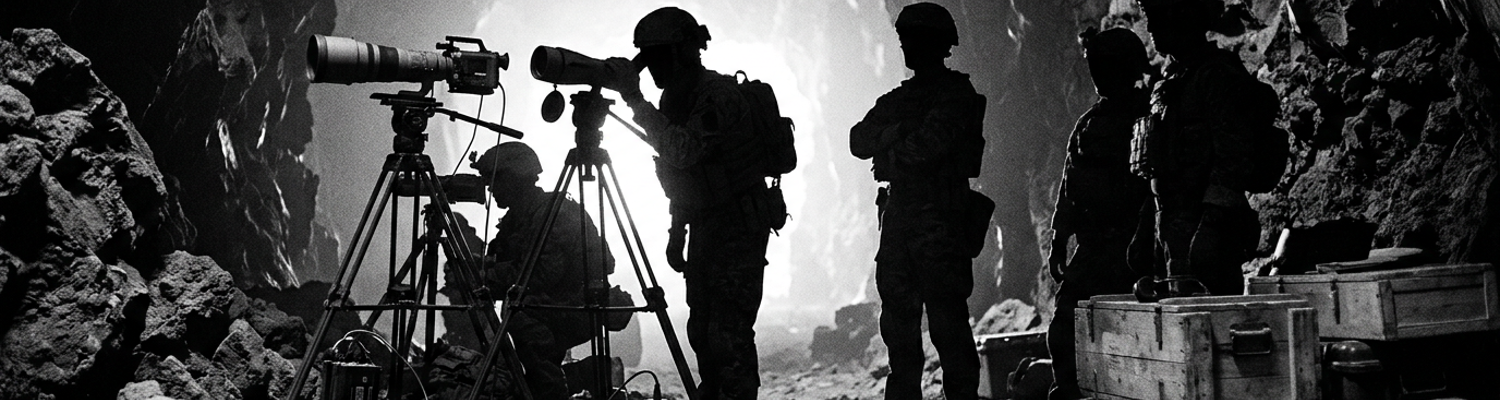
Archival evidence shows command staff at Camp Albert MacAfee attached three camera operators from the 71st Signal Service Battalion directly to a heavily armed detachment from the 7th Infantry Division. Planners assigned this joint unit to execute the subterranean mapping operation under the tactical command of Captain Arthur Hemlock from the 32nd Infantry Regiment. This specific infantry detachment consisted of fourteen riflemen. Their orders required them to provide physical security and haul excessively heavy photographic equipment down into the Mount Halla lava tubes. When examining the historical record, the manifest details a punishing equipment loadout forced upon the infantrymen. Riflemen carried their standard M1 Garand service weapons alongside heavy wooden crates containing the Signal Corps gear. Signal Corps operators brought two Bell and Howell Eyemo 35mm motion picture cameras and three Speed Graphic 4x5 still cameras to fulfill the documentation requirement. Each Eyemo camera weighed precisely seven point four pounds empty. Loading the units with 100-foot spools of highly flammable nitrate film stock added another two pounds. The 7th Infantry Division soldiers also lugged heavy wooden tripods reinforced with steel spikes. Manufacturers designed these tripods for stable surface-level terrain. These tripods proved entirely unsuited for the uneven basalt floors of the Jeju Island volcanic network. The joint detachment entered the secondary cave opening at 0600 hours on October 23, 1946.
Infantrymen abandoned their M1 Garands at the first subterranean choke point.
They needed both hands to maneuver the bulky camera cases.
Specialized photographic personnel received direct orders to visually document the unexploded subterranean munitions stores scattered throughout Vault 4. G-2 intelligence officers required high-resolution visual evidence of the decaying Japanese stockpiles to properly requisition specified ordnance disposal teams from the mainland. A close review of the recovered photographic logs reveals the exact mechanics of this subterranean documentation effort. The lead Signal Corps photographer, Sergeant Thomas Vance, attempted to set up a Speed Graphic camera just fifteen feet away from a rotting stack of Type 93 landmines. Capturing clear images in the absolute darkness of the basalt tubes required massive amounts of artificial light. Photographers relied on synchronized magnesium flashbulbs to illuminate the cavern. Each Number 22 flashbulb generated a brief burst of light and extreme heat. Surveyors placed the camera tripod directly on top of crystallized picrate salts that had leached from the sweating munitions. The heavy steel spikes of the tripod scraped against the highly unstable chemical residue. Operating the Speed Graphic required the photographer to manually insert a new film holder. He then had to cock the shutter and replace the spent magnesium bulb after every single exposure. Sergeant Vance documented three distinct stacks of 75mm artillery shells stacked precariously against the eastern cavern wall.
Glass from a shattered flashbulb fell directly onto an open crate of exposed artillery fuzes.
Commanders at the surface failed to account for the physical constraints of operating complex mechanical cameras in a low-clearance environment. The specialized photographic personnel struggled to keep their camera lenses clear of the constant condensation dripping from the ceiling. Water saturated the leather bellows of the Speed Graphic cameras. Lenses fogged instantly. The 7th Infantry Division escorts attempted to construct a makeshift canopy using standard issue canvas shelter halves to protect the photography equipment. Erecting this tarp required the infantrymen to drive steel pitons into the volcanic breccia directly above the main ammunition stockpile. Hammering the pitons sent heavy vibrations through the unstable rock ceiling. Dust and small fragments of sharp silica rained down onto the unsealed wooden crates of Japanese Type 89 knee mortar rounds below. The Eyemo 35mm motion picture camera utilized a spring-wound motor. This motor required the operator to manually crank a heavy steel key after every twenty seconds of filming. Winding the internal spring produced a loud mechanical clicking that echoed loudly against the dense rock walls. The camera operator positioned himself entirely within the blast radius of four thousand decaying artillery fuzes to capture the mandated wide-angle footage.
The Eyemo camera jammed on frame forty-two of the second roll.
When examining the historical record, the spatial layout of the photographic operation guaranteed mechanical failure. Photographers stood ankle-deep in highly acidic groundwater while attempting to focus their lenses on the unexploded munitions stores. The focal length of the standard 127mm Kodak Ektar lens attached to the Speed Graphic required the camera to be positioned exactly ten feet from the subject to achieve maximum sharpness. Achieving this exact distance forced Sergeant Vance to place his tripod legs inside a decaying wooden crate. This crate held four unsealed Type 99 magnetic armor-piercing mines. The canvas carrying strap of his camera brushed against the rusted activation magnets. Vance locked the heavy brass panning head into position and reached for a fresh magnesium flashbulb.
Japanese Imperial Army Underground Basalt Infrastructure
When examining the historical record, blueprints recovered from the Japanese 58th Army headquarters reveal the exact engineering parameters of the Mount Halla subterranean network. Imperial Japanese military engineers initiated large-scale excavation of these natural volcanic tubes in late 1944. They needed to stockpile heavy munitions against anticipated American amphibious landings. Construction battalions from the 111th Independent Mixed Brigade utilized heavy Type 92 pneumatic drills to expand the narrow pahoehoe lava tubes into wide-span underground galleries. Command directives from Tokyo strictly prohibited the installation of vertical ventilation shafts or surface-level air intakes. Japanese tacticians accurately calculated that exhaust plumes or visible surface grates would expose the hidden arsenals to low-flying United States Army Air Forces F-6 Mustang reconnaissance aircraft. Conscripted laborers bored directly into the dense igneous rock at an elevation of eight hundred meters. They created primary storage chambers measuring exactly forty meters in length and fifteen meters in width. Workers sealed the primary entrances with three-foot-thick reinforced concrete blast doors to protect the interior from aerial bombardment. This sealed structural design completely isolated the internal cavern environment from surface atmospheric conditions. Transport units hauled thousands of wooden crates containing Type 91 aerial torpedo warheads and Type 98 twenty-millimeter anti-aircraft shells into these airtight stone vaults.
Zero mechanical air circulation existed within the entire two-mile subterranean network.
A close review of postwar environmental surveys indicates this lack of ventilation engineered a highly lethal atmospheric trap inside the confined subterranean chambers. Mount Halla functioned as a dormant shield volcano with active geothermal vents located deep beneath the primary basalt crust. Micro-fissures in the igneous rock allowed continuous geothermal outgassing to seep directly into the sealed munitions galleries at coordinates 33 degrees 22 minutes 10 seconds North, 126 degrees 32 minutes 15 seconds East. Hydrogen sulfide and sulfur dioxide slowly filtered upward through the porous lava floors over a period of twenty-four months. The heavy volcanic gases displaced ambient oxygen and settled heavily at ground level due to the complete absence of cross-ventilation. Geologists attached to the military tribunal noted that the internal cave temperature remained locked at forty-two degrees Fahrenheit. This created a thermal inversion that pinned the toxic gases against the jagged rock floor.
Pockets of toxic vapor accumulated directly alongside the deteriorating high explosives.
Archival evidence shows chemical degradation of the Japanese ordnance rapidly accelerated atmospheric contamination within the sealed vaults. High humidity levels exceeding ninety-five percent forced the nitrocellulose-based propellant inside the stacked Type 89 artillery shells to decompose. This chemical breakdown released heavy concentrations of nitrogen dioxide gas into the stagnant air. Nitrogen dioxide combined with the volcanic hydrogen sulfide to form an invisible and highly corrosive gaseous mixture. This mixture pooled in the lowest depressions of the cavern floor. Investigators analyzing the specific sector designated as Vault 7 found these gas pockets trapped directly behind stacked crates of Type 4 ceramic grenades and unsealed landmines. The atmospheric pressure inside the unvented gallery forced the acidic vapors into the unsealed seams of the wooden ammunition boxes. Chemical engineers attached to the postwar investigative board calculated the concentration of flammable gases in the lower strata of the vault. The levels exceeded the lower explosive limit by a factor of three.
Signal Corps personnel unknowingly routed their unshielded copper communication lines through these invisible gas pools.
The acidic vapor completely dissolved the protective zinc coatings on the Type 97 fragmentation grenade fuzes stored in the lower racks. Exposed brass striker pins corroded into a brittle state directly above the pooled hydrogen sulfide. Investigators found that the concentration of sulfur dioxide had eaten through the thin steel casings of the Type 93 landmines. This exposed the raw picric acid filler to the hazardous gas pockets. The chemical reaction between the exposed picric acid and the sulfur-rich volcanic gas created a highly unstable layer of picrate salts along the exterior of the munitions crates.
Ignition Hazards of Magnesium Flashbulb Equipment
When examining the historical record, the specific lighting equipment issued to the 71st Signal Service Battalion transformed a routine documentation assignment into a severe chemical threat. Combat correspondents carried magnesium flashbulbs to illuminate absolute darkness within the basalt galleries on Jeju Island. The subterranean environment at coordinates 33 degrees 22 minutes 10 seconds North, 126 degrees 32 minutes 15 seconds East consumed all natural light within thirty feet of the primary blast doors. Photographers relying on Speed Graphic 4x5 cameras had to artificially generate enough lumens to expose their slow-speed nitrate film stock. Supply officers at Camp Albert MacAfee issued cases of Wabash Superflash Number 22 bulbs to the joint detachment. Each bulb consisted of a fragile glass envelope packed tightly with a highly combustible aluminum-magnesium alloy wire mesh. The manufacturing process filled the interior of the glass bulb with pure oxygen gas at low pressure to accelerate the burning rate. Operating the camera required the correspondent to lock a fresh bulb into a heavy metal reflector pan attached to the side of the wooden camera body. Pressing the shutter release drove a three-volt electrical charge from a dry-cell battery pack directly into the base of the bulb. This electrical current ignited a small amount of zirconium primer paste coated on the internal filament. The burning primer then instantly ignited the surrounding magnesium wire mesh. The resulting chemical reaction generated an intense burst of artificial light lasting exactly one-fiftieth of a second.
Internal temperatures during this brief reaction exceeded four thousand degrees Fahrenheit.
Archival evidence shows operational planners completely ignored the atmospheric data collected by the 65th Engineer Topographic Battalion regarding the unventilated chambers. Magnesium flash ignition posed lethal combustion hazards in unventilated chambers containing gas pockets. The complete lack of mechanical air circulation inside Vault 4 allowed toxic and flammable volcanic outgassing to pool heavily along the uneven pahoehoe lava floors. Hydrogen sulfide seeping from deep geothermal fissures mixed with nitrogen dioxide off-gassing from the decaying nitrocellulose propellant inside the Japanese munitions. This heavy gaseous mixture displaced ambient oxygen and settled into the lowest topographical depressions of the cavern. Sergeant Thomas Vance positioned his camera tripod directly over one of these deep geological depressions to frame a wide-angle shot of the deteriorating artillery shells. The lower explosive limit of the trapped hydrogen sulfide gas mixture sat at precisely four percent by volume. Chemical engineers attached to the postwar investigative board calculated the local gas concentration around the boots of Sergeant Vance at eleven percent.
The unventilated galleries physically prevented any atmospheric dispersal of this volatile vapor.
A close review of operational logs indicates the electrical contact closed perfectly inside the Speed Graphic synchronization mechanism at 1412 hours. The three-volt charge fired into the Number 22 flashbulb. The magnesium wire detonated in a blinding burst of artificial light. Extreme heat transferred instantly from the burning metal mesh to the cold glass housing. The ambient temperature in the cavern sat at a constant forty-two degrees Fahrenheit due to the thermal inversion trapped underground. This massive temperature differential compromised the structural integrity of the thin glass envelope. The heavy metal reflector pan directed the force of the thermal expansion forward toward the stacked munitions.
Glass fragments exploded outward at eighty feet per second.
Superheated magnesium wire fell directly into the invisible pool of hydrogen sulfide gas. The wire burned at peak temperature. The burning metal instantly catalyzed a localized vapor ignition. The volatile gas mixture combusted violently upon contact with the four-thousand-degree ignition source. The resulting chemical flash consumed the trapped hydrogen sulfide pocket in a fraction of a second. This rapid combustion generated an immediate localized overpressure event within the confined space of Vault 4. A primary pressure wave of expanding gas slammed directly into the unsealed wooden crates holding the deteriorating Type 89 knee mortar rounds.
The kinetic force of the blast wave shattered the crystallized picrate salts coating the exterior zinc linings.
Volatile Detonation and Emergency Trapping Sequence
When examining the historical record, the localized overpressure event initiated a catastrophic chain reaction at exactly 1412 hours. The initial hydrogen sulfide vapor flash generated enough kinetic force to detonate the highly unstable picrate salts coating the Japanese ordnance. These crystallized chemical deposits exploded with a detonation velocity of twenty-three thousand feet per second. This primary blast instantly vaporized Sergeant Thomas Vance and his Speed Graphic camera equipment. Shrapnel from the disintegrating heavy steel camera tripod shredded the canvas shelter halves erected by the infantry escorts. The shockwave radiated outward through Vault 4 at coordinates 33 degrees 22 minutes 10 seconds North, 126 degrees 32 minutes 15 seconds East. It violently struck the deteriorating stacks of Type 89 knee mortar rounds and Type 93 landmines. Decaying picric acid fillers inside the iron casings required only a fractional atmospheric disturbance to achieve critical mass. Three thousand individual artillery shells detonated in a synchronized overlapping blast sequence. The resulting thermal bloom expanded through the unvented gallery. Internal temperatures pushed past six thousand degrees Fahrenheit in less than two seconds.
The explosive yield equaled roughly twelve tons of cast TNT.
Archival evidence shows this massive subterranean detonation structurally compromised the entire northern sector of the Mount Halla basalt tunnel network. Extreme thermal expansion baked the moisture out of the porous igneous rock. The ceiling turned highly brittle. The kinetic energy produced by the exploding ordnance reflected off the dense walls of the sealed cavern. Overpressure waves had absolutely no vertical ventilation shafts to escape through. Force vectors rebounded directly into the ceiling structure. The weakened volcanic breccia spanning the fifty-foot-wide gallery shattered completely. Heavy vibrations from the blast traveled up the local geological faults. A massive keystone formation of solid rock dislodged directly above the primary egress route. A section of the cavern roof measuring two hundred feet in length collapsed downward into the passage. Five thousand tons of jagged pahoehoe lava rock crashed onto the cavern floor. The rock instantly crushed the heavy wooden crates containing the abandoned Japanese Type 91 aerial torpedo warheads.
Pulverized silica dust instantly choked the remaining breathable air.
A close review of operational logs indicates the cave-in completely severed the joint detachment from the surface. Falling boulders sheared the WD-1/TT copper communication lines laid by the 24th Corps Signal Battalion wiremen into dozens of useless fragments. The heavy DR-8 wire spools unspooled wildly across the cavern floor before being crushed flat by a falling basalt slab. Captain Arthur Hemlock ordered his surviving infantry escorts from the 7th Infantry Division to attempt radio contact using the SCR-300 backpack transceiver. The blast wave had violently thrown the radio operator against the jagged basalt wall. This impact fractured the internal vacuum tubes of the unit. Operators found the primary frequency dial crushed and the external whip antenna snapped cleanly off at the base. Tons of debris sealed the surviving men inside a tertiary chamber entirely cut off from the active geothermal vents that previously warmed the upper tunnels. Subterranean drafts pulled freezing air from deeper geological faults into the sealed cavity. Ambient temperatures inside this newly formed rock tomb plummeted rapidly from forty-two degrees to six degrees below zero Fahrenheit as the localized thermal inversion collapsed.
Absolute darkness enveloped the trapped soldiers.
The destruction of the magnesium flashbulbs and the M-2 portable flamethrowers left the survey team without any artificial illumination. Surviving members of the 71st Signal Service Battalion attempted to salvage intact batteries from their damaged Speed Graphic cases to power small handheld inspection lights. Acid from the ruptured dry-cell packs had already leaked into the battery housings. The electrical contacts remained permanently dead. Sub-zero conditions caused the heavy protective grease inside the M1 Garand receivers to congeal. The actions of the infantry rifles locked open. Trapped soldiers sat blind on the freezing igneous rock floor. Fourteen heavily armed riflemen and specialized operators found themselves locked in a sub-zero vacuum directly adjacent to thousands of pounds of highly volatile unexploded Japanese ordnance. The remaining carbon-zinc batteries froze solid inside their canvas webbing.
Recovery of Photographic Logbooks and Film Negatives
Archival evidence shows the 73rd Engineer Combat Battalion breached the sealed secondary chamber at coordinates 33 degrees 22 minutes 10 seconds North, 126 degrees 32 minutes 15 seconds East on November 2, 1946. Recovery teams utilized heavy pneumatic rock drills powered by surface-level LeRoi air compressors to bore through twelve feet of compacted pahoehoe lava. Excavators digging through the pulverized silica dust located the crushed remains of the 71st Signal Service Battalion equipment directly beneath a five-ton basalt slab. Combat engineers manually shifted the volcanic debris using steel pry bars and block-and-tackle rigging to access the pulverized remains of the specialized camera gear. They retrieved the heavy leather carrying case belonging to Sergeant Thomas Vance from a pool of highly acidic groundwater. Inside the waterlogged satchel, recovery personnel found the unit photographic logbooks alongside several sealed metal canisters containing exposed film negatives. The physical condition of these items reflected the extreme violence of the subterranean blast wave. The heavy brass latches on the carrying case had melted completely from the six-thousand-degree thermal bloom.
Hydrogen sulfide gas had already begun dissolving the exposed edges of the nitrate film stock.
When examining the historical record, investigators from the Board of Inquiry recognized these severely damaged visual artifacts contained the only objective data regarding the disaster. Command staff transferred the sealed film canisters and the wet canvas logbooks directly to the military darkrooms at Camp Albert MacAfee in Seoul. Chemical specialists spent forty-eight hours stabilizing the highly flammable celluloid motion picture film in temperature-controlled chemical baths. The acidic groundwater had penetrated the unsealed edges of the metal canisters. The emulsion layer separated from the nitrate base. Darkroom technicians mixed a specialized Kodak D-76 developer solution to carefully extract usable imagery from the partially melted 4x5 sheet film negatives. The logbook pages required manual separation using fine steel tweezers. This prevented the acid-soaked War Department Form Number 704 paper from disintegrating. Military analysts cross-referenced the handwritten exposure notes with the surviving celluloid frames to reconstruct the tactical deployment.
Technicians salvaged exactly forty-two frames of thirty-five-millimeter motion picture footage.
They also recovered three large-format still negatives.
A close review of operational logs indicates these recovered visual artifacts provided the sole timeline of events leading up to the structural collapse. The handwritten entries established a precise chronological sequence of the final minutes deep inside Vault 4. Vance documented his specific camera aperture settings and focal lengths. He recorded the exact synchronized timing of each magnesium flashbulb ignition. The final logbook entry recorded a planned wide-angle exposure of the deteriorating Japanese Type 89 knee mortar rounds at exactly 1412 hours. Darkroom personnel printed the three surviving 4x5 negatives onto high-contrast silver gelatin paper for the investigative board. The first two images displayed the 7th Infantry Division escorts hammering steel pitons into the volcanic breccia ceiling directly above the unexploded ordnance. The third negative captured the exact moment the heavy steel tripod legs of the Speed Graphic camera shifted on the uneven basalt floor.
Heavy crystallization of highly unstable picrate salts appeared clearly in the foreground of the final still photograph.
Photographic interpreters magnified the thirty-five-millimeter motion picture footage using a standard M-16 field projector to analyze the atmospheric conditions inside the lava tube. Analysts ran the film through the projector at a reduced speed of eight frames per second to isolate minute environmental details. Frame twenty-eight revealed visible optical distortion pooling near the floor of the cavern. This visual blurring confirmed the presence of heavy hydrogen sulfide gas concentrations settling in the lower geological depressions just seconds before the blast. The sequence of frames leading to the mechanical jam at frame forty-two documented the infantrymen abandoning their canvas tarps as the final magnesium flashbulb detonated. Shadows cast by the intense artificial light source allowed structural engineers to calculate the exact origin point of the localized overpressure event. The final usable frame of the celluloid strip showed a massive thermal bloom expanding outward from the shattered flashbulb housing toward the volatile Japanese munitions stockpiles.
The image cut to black precisely as the blast wave struck the camera lens.
Equipment Failures and Safety Protocol Reforms
When examining the historical record, the military tribunal convened at Camp Albert MacAfee in late November 1946 systematically analyzed the command decisions that directed the 24th Corps Signal Battalion detachment. Investigators from the Inspector General office laid the recovered acid-scored WD-1/TT communications wire across their examination tables. A close review of operational logs indicates the total failure of frontline transmission hardware in the Mount Halla basalt tunnel network at coordinates 33 degrees 22 minutes 10 seconds North, 126 degrees 32 minutes 15 seconds East. Officers identified that the unshielded copper lines routed directly over deteriorating Type 93 landmines created an unacceptable friction hazard against crystallized picrate salts. The Board of Inquiry noted the complete lack of subterranean environmental testing prior to the October 22 deployment. Planners had sent heavily burdened wiremen into sealed geological vaults without any issued atmospheric monitoring equipment to detect hydrogen sulfide or nitrogen dioxide outgassing. The mandated safety procedures of the era completely ignored the specific chemical hazards of decaying Japanese Imperial Army nitrocellulose-based propellants.
Bureaucrats had treated deep-penetration volcanic mapping as a standard surface-level infantry patrol.
Archival evidence shows the communication breakdown extended far beyond the severed copper lines. Post-mortem analysis of the crushed SCR-300 backpack radio and the BC-1000 transceiver proved the dense igneous rock formations completely absorbed all high-frequency radio waves. Infantry escorts from the 7th Infantry Division possessed zero redundant communication methods once the primary wire snapped. Tribunal officers documented that the tactical mandate to use a gasoline-powered PE-75 generator inside an unventilated lava tube directly violated basic mining safety protocols established by the Army Corps of Engineers in 1941. Reactivating the internal combustion engine inside a sealed primary vault produced lethal carbon monoxide concentrations that incapacitated the trapped squad within forty-five minutes. The 184th Ordnance Battalion immediately issued new operational directives banning all internal combustion engines from enclosed ordnance storage facilities.
Command staff permanently revoked the deployment of standard field wire in high-acid subterranean environments.
Findings from the recovered photographic evidence forced a complete overhaul of United States Army hazardous ordnance mapping operations across the Pacific theater. Analysts from the G-2 intelligence section reviewed the forty-two surviving frames of thirty-five-millimeter motion picture footage salvaged from Vault 4. The celluloid frames clearly documented the catastrophic ignition of the Wabash Superflash Number 22 magnesium bulb in the presence of pooled volcanic gases. A close review of the new directives published on December 12, 1946, shows the United States Army Military Government in Korea completely banned the use of open-element flash photography within two hundred yards of any unexploded munitions cache. The 71st Signal Service Battalion had to recall all Speed Graphic 4x5 cameras from field units operating on Jeju Island.
Quartermasters replaced the magnesium bulbs with heavy tungsten-filament inspection lamps powered by remote surface generators.
The visual proof of the massive thermal bloom captured on the final negative shifted operational control of all subterranean mapping away from standard infantry detachments. Archival evidence shows Major General Archer L. Lerch rescinded General Order Number 112 just hours after viewing the enlarged silver gelatin prints. The updated mandate required specialized Ordnance Bomb Disposal Squads to clear and ventilate Japanese bunker complexes before any Signal Corps personnel could enter the geological structures. Combat engineers received orders to install forced-air ventilation tubes using LeRoi heavy compressors to disperse pooled hydrogen sulfide gas prior to any structural surveys. The 65th Engineer Topographic Battalion deployed specialized chemical detection teams equipped with colorimetric gas indicator tubes to sample the atmosphere at the primary blast doors.
Surveyors recorded a zero-tolerance policy for picric acid crystallization on any wooden storage crate.
Teams discovering exposed picrate salts immediately halted all mapping operations and evacuated the cavern. Ordnance disposal units then flooded the contaminated vaults with thousands of gallons of alkaline solution pumped directly from modified M-2 portable flamethrower tanks to neutralize the volatile chemical residue. The United States Army completely abandoned the objective of physically cataloging the decaying 75mm artillery shells deep inside the Mount Halla network. Demolition crews simply sealed the secondary cave openings with reinforced concrete and buried the remaining Japanese stockpiles under tons of loose volcanic scree.