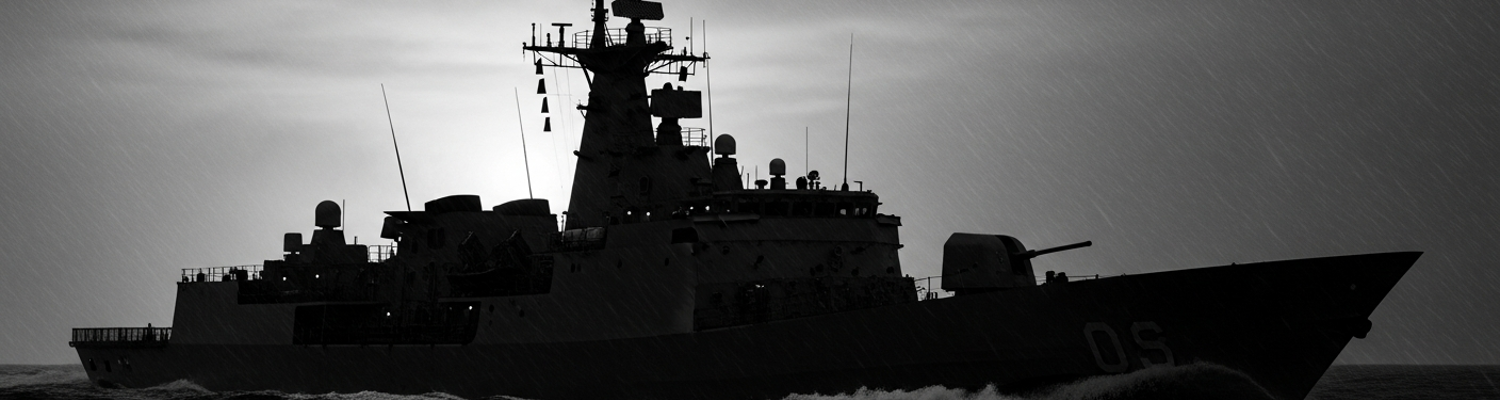

The Deteriorating Strategic Landscape
A bipartisan congressional delegation landed in South Vietnam in late February 1975. Their task was a near-impossible assessment. Led by Representative John Flynt, the group included a spectrum of political opinions, from supporters of continued aid to staunch opponents like Bella Abzug and Donald Fraser. Their direct purpose was to evaluate President Ford’s urgent request for $300 million in supplemental military aid for Saigon. Archival records of their meetings (NARA Record Group 287) show lawmakers confronting a situation collapsing faster than Washington could comprehend. They met with American Ambassador Graham Martin and South Vietnamese President Nguyen Van Thieu. The briefings they received, while grim, likely understated the true fragility of the Army of the Republic of Vietnam (ARVN). By the time the delegation returned to the United States to debate the funding, the strategic context they had been sent to evaluate was already history. The battlefield had rendered their findings obsolete.
The North Vietnamese Army had been testing American resolve for months. After Congress rejected appeals for increased aid following the seizure of Phuoc Long province in January 1975, Hanoi saw an opening. The United States did nothing. This inaction confirmed to the North Vietnamese Politburo that the moment for a final, decisive offensive had arrived. On March 10, 1975, General Van Tien Dung unleashed Campaign 275. It was a massive armored and infantry assault not on the heavily defended positions at Pleiku, but on the unsuspecting provincial capital of Ban Me Thuot in the Central Highlands. The city fell in two days. The attack severed the main north-south inland road, Route 14, and effectively trapped the entirety of ARVN’s II Corps.
The fall of Ban Me Thuot triggered a catastrophic failure in South Vietnamese command. On March 14, President Thieu met secretly with his II Corps commander, General Pham Van Phu, and made a fateful decision. He ordered a full strategic withdrawal from the Central Highlands to consolidate forces along the coast. This strategy was conceived without a coherent operational plan.
The withdrawal order initiated a rout.
The retreat down the dilapidated provincial Route 7B devolved into what became known as the “Convoy of Tears.” A disorganized column of over 1,200 trucks, carrying disintegrating ARVN units and an estimated 400,000 civilian refugees, became a perfect target for pursuing NVA forces. The convoy was shelled relentlessly. In the chaos, ARVN soldiers deserted en masse to find their families. The retreat cost II Corps more than 75% of its combat units and resulted in an estimated 155,000 civilians killed or captured. Within weeks, South Vietnam had lost control of one-fourth of its territory. Half of its army had effectively ceased to exist as a fighting force.
This unprecedented collapse on land forced all subsequent planning toward the sea. With roads overrun and airfields under direct threat of artillery fire, maritime corridors were the only remaining path for any large-scale evacuation. North Vietnamese artillery could now reach major coastal cities and port facilities. The South Vietnamese Navy was itself in disarray. Planners in Saigon and Washington had to rapidly identify secure sea lanes, assembly points for thousands of American personnel and at-risk Vietnamese, and a naval force capable of protecting the exodus. U.S. Navy Task Force 76 began to assemble off the coast near Vung Tau. It was a collection of aircraft carriers and amphibious vessels that would soon become floating sanctuaries. The evacuation had shifted from a contingency to an urgent necessity, predicated entirely on control of the waters of the South China Sea.
Washington's Political Paralysis
Operational logs from April 1975 reveal a Washington establishment paralyzed by competing pressures. The primary political anxiety revolved around the specter of a naval incident in the South China Sea. Any direct confrontation between U.S. naval vessels and North Vietnamese forces during an evacuation would have been catastrophic for the Ford administration. Congress, having passed the War Powers Act over Nixon’s veto in 1973, was deeply hostile to any action that could be construed as re-engaging in the conflict. A firefight at sea, an American ship damaged or sunk, or casualties among the naval crews of Task Force 76 would have ignited a political firestorm. The administration was walking a tightrope. It had to project enough strength to deter North Vietnamese interference with the evacuation, but not so much that it triggered an attack or a domestic political backlash. This fear dictated the cautious rules of engagement for the naval forces assembled offshore, limiting their actions to self-defense and the immediate protection of evacuation assets. The entire sea-based withdrawal depended on Hanoi’s restraint.
The diplomatic landscape was just as treacherous. The United States was not operating in a vacuum. The Soviet Union, Hanoi’s primary benefactor, was a major concern. A direct U.S.-Soviet naval standoff was a nightmare scenario, but even the appearance of American weakness or chaotic retreat could embolden Soviet adventurism elsewhere. Allies in Asia, particularly in the Philippines and South Korea, were watching to see if American security guarantees held any weight. A failure to safely extract U.S. personnel and key Vietnamese allies would send a damaging message about American reliability. Ambassador Graham Martin, in Saigon, consistently argued that the U.S. had a moral obligation to evacuate not just Americans but also the thousands of South Vietnamese who had worked for the U.S. government. This created a diplomatic bind. A large-scale evacuation of Vietnamese could be seen by Hanoi as a provocation, while abandoning them would be a stain on American honor.
Against this backdrop, the physical efforts to secure safe passage became a monumental undertaking defined by desperation. The initial plan, codenamed Talon Vise and later Frequent Wind, prioritized fixed-wing aircraft flying from Tan Son Nhut airbase. The disastrous crash of a C-5A Galaxy during “Operation Babylift” on April 4, which killed 138 people, shook confidence in large-scale air transport. When North Vietnamese rockets and artillery began hitting Tan Son Nhut on April 28, the fixed-wing option was eliminated entirely. This forced a full switch to the final, most hazardous option: helicopter evacuation to the ships of Task Force 76. The fleet, centered on carriers like the USS Hancock and USS Midway, became the only hope. Marine Corps CH-53 and CH-46 helicopters shuttled back and forth from designated rooftops in Saigon to the ships. Their pilots flew for 18 hours straight. So many South Vietnamese helicopters piloted by fleeing ARVN personnel arrived that some had to be pushed overboard from the crowded flight decks to make room for others to land.
The South China Sea ASW Screen
Operational logs from April 1975 show the sub-surface chess game that unfolded alongside the helicopter evacuation. The primary underwater threat was not North Vietnamese. Hanoi possessed no meaningful submarine capability. The threat was Soviet. Planners at CINCPACFLT were acutely aware that Soviet nuclear-powered attack submarines and intelligence-gathering trawlers were likely in the area, observing the US Navy’s actions. Any miscalculation could have escalated the humanitarian mission into a superpower confrontation. To mitigate this, a wide-ranging but discreet anti-submarine warfare (ASW) operation was put into motion, creating a multi-layered defensive bubble around Task Force 76.
The first layer of this shield consisted of long-range maritime patrol aircraft. P-3B Orion aircraft from Patrol Squadron 19 (VP-19) were deployed from Naval Air Station Cubi Point in the Philippines to fly constant surveillance over the approaches to the evacuation zone. These four-engine turboprop planes were the Navy’s premier submarine hunters. Their crews would fly exhausting 10-to-12-hour missions, methodically dropping patterns of AN/SSQ-53 DIFAR sonobuoys to listen for the acoustic signature of a submerged vessel. The Orions could monitor the sonobuoy data from the air, building a sound map of the ocean below. A key piece of equipment was the AN/ASQ-81 magnetic anomaly detector (MAD), housed in the distinctive tail stinger, which could detect the metallic mass of a submarine hull. The P-3s acted as the navy’s eyes and ears, extending the fleet’s sensory range by hundreds of miles.
Closer to the evacuation fleet, a screen of dedicated surface combatants provided direct protection. This ASW screen was composed of a mix of destroyers and modern Knox-class frigates. Ships like the USS Cook (FF-1083), part of the task force, were built specifically for anti-submarine warfare. They were equipped with the powerful AN/SQS-26 bow-mounted sonar, capable of both actively sending out pings and passively listening for contacts. Many of these frigates also operated the Light Airborne Multi-Purpose System (LAMPS), which consisted of an SH-2 Seasprite helicopter. This helicopter acted as a force multiplier, flying out from the frigate’s stern flight deck to drop its own sonobuoys and deploy a dipping sonar. It could rapidly investigate any suspicious contact far from the main body of the fleet. The surface screen’s job was one of tense vigilance, maintaining a constant watch and readiness to launch ASROC anti-submarine rockets or homing torpedoes.
This combined air and sea ASW effort was focused on a singular mission: keeping the designated sea lanes open. The evacuation depended on safe passage from the coast of South Vietnam, near Vung Tau, out into the international waters of the South China Sea. The ASW umbrella was designed to ensure that the dozens of South Vietnamese naval ships and civilian boats fleeing toward the American fleet could do so without interference. The presence of the P-3s and the ASW frigates was a powerful deterrent. It was a projection of strength intended to prevent a confrontation, ensuring the waters remained clear for the exodus from Saigon.
Asymmetric Threats and Captured Assets
Intelligence summaries from April 1975 reveal a deep anxiety among American planners over what the People’s Army of Vietnam (PAVN) Navy might do. The threat was not of a conventional fleet battle, but of asymmetric attacks. Intelligence reports circulating through the Defense Intelligence Agency and CINCPACFLT focused on two primary dangers: fast attack craft and naval mines. The PAVN possessed a small number of Soviet-made P-4 and P-6 torpedo boats and Chinese-supplied Swatow-class gunboats. While these coastal vessels stood no chance against the destroyers of Task Force 76 in open combat, planners feared they could conduct hit-and-run raids against the dozens of undefended civilian barges and fishing boats packed with refugees. A single torpedo could turn a desperate escape into a massacre.
The problem was magnified by captured equipment. As the PAVN swept down the coast, they overran major Republic of Vietnam Navy (VNN) bases at Da Nang and Cam Ranh Bay. Hanoi’s naval inventory was suddenly augmented with American-made vessels. While most of the VNN’s larger warships escaped, a significant number of smaller craft were captured intact, including numerous Patrol Craft Fast (PCF), also known as Swift Boats, and riverine patrol boats (PBRs). Unlike a complex destroyer, these small boats were relatively simple to operate. Intelligence could not rule out the possibility that PAVN forces, perhaps compelling former VNN sailors to assist, could turn these captured American assets against the evacuation fleet. The sea lanes were crowded, making it difficult to distinguish friendly from hostile vessels. Any fast-moving radar contact approaching the evacuation flotilla had to be treated as a potential threat.
The enemy was now armed with American weapons.
This threat environment made the establishment of a controlled maritime corridor a high priority. The strategic importance of anti-submarine warfare during Operation Frequent Wind was therefore not solely about countering submarines. The ASW umbrella served a broader purpose of deterrence and sea-lane security. The continuous presence of P-3 Orion maritime patrol aircraft sent a clear signal. Their powerful radar monitored surface traffic, but their primary ASW equipment, sonobuoys and magnetic anomaly detectors, was a constant reminder of American underwater dominance. This was a direct message to the Soviet Navy, whose intelligence-gathering ships and submarines were known to be in the region, to keep their distance. Any attempt by a Soviet submarine to close with Task Force 76 to gather acoustic intelligence on the American carriers would be detected and tracked.
By creating a secure bubble around the evacuation fleet, the ASW screen directly enabled the humanitarian mission. It was designed to prevent any outside interference. On the surface, Knox-class frigates and destroyers formed a protective ring, using their AN/SQS-26 sonar systems to listen for underwater contacts while their surface-search radars scanned the horizon. Their SH-2 Seasprite helicopters could be quickly dispatched to investigate any suspicious contact. This layered defense ensured that the waters leading from the coast of South Vietnam to the waiting ships of Task Force 76 remained open. It allowed the carrier flight decks to focus on the relentless cycle of landing helicopters and provided a zone of relative safety for the thousands of refugees fleeing by sea.
The Fragile Breaking Point of Technology
Naval records from the period reveal that the ASW shield around Task Force 76 was a collection of advanced but brittle technologies, each operating near its own breaking point. The backbone of the surface screen, the Knox-class frigates, were built around the powerful AN/SQS-26 bow-mounted sonar. This system, a marvel of 1960s analog electronics, was also notoriously temperamental. Its performance was highly dependent on complex system adjustments. The sheer number of analog circuits made it difficult to maintain in a deployed environment. Electronics Technicians aboard ships like the USS Cook (FF-1083) were in a constant battle against component failure, saltwater corrosion, and the heat generated by racks of vacuum-tube-era hardware. A failure in a single power amplifier or a drift in a frequency calibration could degrade the sonar’s ability to detect. Worse, it could create false returns that sent crews on pointless investigations. The SQS-26 demanded exhaustive maintenance from an already taxed crew just to prevent failures that would have left a hole in the underwater defensive line.
The problems extended from the hull of the ship to the ocean itself.
The underwater environment of the South China Sea in April presented a nightmare for sonar operators. Intense solar heating of the surface water creates a sharp thermal layer, or thermocline, often just 100 meters below the surface. This layer acts like a mirror for sound waves, causing sonar pulses from a ship’s bow-mounted unit to bounce off and travel horizontally. This left a massive “shadow zone” underneath where a submarine could operate with near impunity. P-3 Orion crews dropping sonobuoys faced the same physics. The AN/AQA-7 DIFAR (Directional Frequency Analysis and Recording) systems aboard the P-3B variants were a leap forward, but they were still processing data from expendable buoys with limited battery life, which often drifted on unpredictable currents. The South China Sea is an acoustically noisy place. The cacophony of biological noises from marine life, combined with the rumble of distant commercial shipping, created a high ambient noise floor that could easily mask the subtle acoustic signature of a quieted Soviet submarine. A sonar technician had to distinguish a potential threat from the sound of snapping shrimp, a passing tanker dozens of miles away, or an acoustic ghost created by the water conditions.
This technological unreliability had a direct human cost.
In the Combat Information Centers of the destroyers and frigates, and on the tactical plot boards of the P-3 Orions, every decision was colored by the potential for equipment failure. A faint, intermittent contact on an SQS-26 display could be a Soviet submarine, or it could be a school of fish with gas-filled swim bladders. A commander had to weigh the risks of inaction against the costs of reaction. Launching an SH-2 Seasprite helicopter from a frigate committed the ship’s primary long-range sensor and weapon delivery platform to a potentially fruitless search. For the P-3 crews on their grueling 12-hour patrols, the pressure was immense. Chasing down every questionable sonobuoy hit with a low-level pass to use the Magnetic Anomaly Detector (MAD) boom was time-consuming and burned precious fuel. Every decision to classify a contact as “spurious” or “non-hostile” was a calculated gamble, an acceptance of risk based on incomplete data from systems that were known to be imperfect. This constant uncertainty added a significant psychological burden on crews already operating under the stress of a high-stakes geopolitical crisis.
The Littoral Environment as an Adversary
After-action reports and oceanographic data from the South China Sea in April 1975 reveal the physical challenges that plagued the anti-submarine warfare screen. The very nature of the littoral environment off the coast of Vung Tau rendered advanced U.S. sonar technology profoundly unreliable. This region is characterized by shallow waters, a complex seabed, and significant freshwater runoff from the Mekong Delta. For the sonar technicians aboard the Knox-class frigates, this was a worst-case scenario. The AN/SQS-26 sonar, designed for deep-ocean prosecution of Soviet submarines, was crippled by the physics of the coastal shelf. In shallow water, its active sonar pulses would scatter, bouncing between the sea surface and the seabed, creating high reverberation. This acoustic clutter filled sonar displays with false returns and ghost contacts, making it nearly impossible to distinguish a submarine hull from a shipwreck or a rock outcropping.
The weather itself became a hostile actor.
The operational timeline of Frequent Wind coincided with the volatile transition between the dry northeast monsoon and the wet southwest monsoon. April is known for the sudden onset of intense, localized squalls. Mission logs from P-3 Orion patrol aircraft show these weather patterns had a direct, negative impact on ASW effectiveness. The torrential downpours associated with these squalls created a deafening roar on the ocean’s surface, a wall of acoustic noise that blinded the hydrophones on the sonobuoys. Passive detection became nearly impossible. The low, thick cloud ceilings and poor visibility frequently grounded the P-3s at their base in the Philippines or forced them to operate at higher, safer altitudes. The SH-2 Seasprite helicopters operating from the frigates faced similar peril. Launching a helicopter into a monsoonal squall with high winds and near-zero visibility was an extreme risk.
Data became noise.
Even in calmer weather, high sea states churned up by distant storms created a constant state of data corruption. The constant pitching and rolling of a frigate in rough seas directly impacted the stability of its SQS-26 sonar dome, introducing motion-induced errors. For the P-3 Orion crews, the effect was more pronounced. The sonobuoys they deployed were tossed violently by the waves. This generated significant “flow noise” as water rushed past their sensitive hydrophones. Waves frequently washed over the buoys entirely, severing the radio link to the aircraft. A continuous stream of acoustic data would devolve into an intermittent and unreliable series of squawks. This unreliability extended to the P-3’s Magnetic Anomaly Detector (MAD) boom. Effective use of the MAD system required the aircraft to fly a low, stable course. The turbulent air just above a rough sea made this a dangerous flight regime. Sonar operators and tactical coordinators were inundated with ambiguous information. Every alert required a judgment call.
Geopolitical Stakes of a Naval Incident
White House records from April 1975 show a Ford administration consumed by the risk of a naval incident off the coast of Vietnam. Any direct military clash between the ships of Task Force 76 and North Vietnamese forces would have created a political cataclysm. The War Powers Act, enacted just two years prior, loomed over every decision. Its restrictions on the president’s ability to wage war without congressional approval were still legally untested. A firefight at sea was the nightmare scenario. Such an event would have been viewed by a hostile Congress as an illegal re-engagement in the war, potentially sparking calls for impeachment. This intense domestic pressure dictated the fleet’s cautious posture. The rules of engagement were strictly limited to self-defense, a framework designed to project just enough strength to deter interference without provoking a fight.
This was not a regional crisis. It was a global one.
The Cold War context magnified the stakes. Pentagon planners were acutely aware of Soviet naval movements in the area. Coinciding with the fall of Saigon, the Soviet Navy was conducting “Okean 75,” a massive worldwide naval exercise involving over 200 ships. The presence of Soviet intelligence-gathering trawlers and submarines shadowing Task Force 76 was assumed. An accidental confrontation could have escalated the humanitarian mission into a direct superpower standoff. American naval strategy was therefore twofold: execute the evacuation while simultaneously signaling to Moscow that any attempt to interfere would be met with overwhelming force. The stability of the sea lanes was paramount.
Washington was also performing for an audience of its allies. Nations across Asia, particularly treaty partners like South Korea and the Philippines, were watching the fall of Saigon with deep apprehension. A bungled or failed evacuation would send a disastrous message about American reliability. This external pressure was complicated by a fierce internal debate driven by U.S. Ambassador Graham Martin. While initial plans from Washington focused on evacuating only Americans, Martin insisted that the U.S. had a profound moral obligation to save the thousands of South Vietnamese who had worked for American agencies. In desperate cables to the White House, he argued against abandoning allies. This created a severe diplomatic bind. A mass evacuation of Vietnamese could be portrayed by Hanoi and Moscow as a provocative continuation of the conflict, yet abandoning them would be an unacceptable stain on American honor.
The Post-Evacuation Congressional Inquiry
The fall of Saigon on April 30, 1975, shifted the battlefield to Washington D.C. The congressional record shows that even before the last CH-53 helicopter had landed on the USS Midway, members of Congress were preparing for a full-scale inquiry. The Ford administration’s execution of Operation Frequent Wind was immediately subjected to intense scrutiny, driven by a deep-seated institutional distrust. The Church and Pike Committees were already conducting wide-ranging investigations into intelligence abuses, creating a hostile environment for the executive branch. Lawmakers demanded a detailed accounting of the evacuation, not to celebrate its successes, but to search for operational failures and potential violations of the War Powers Act. The central question was whether the military, in its efforts to protect the withdrawal, had engaged in actions that could be construed as renewed hostilities without congressional approval.
This was a hunt for accountability.
The assessment of intelligence gathering and anti-submarine warfare capabilities formed a highly contentious part of this review. Committee investigators, aided by analysts from the newly formed Congressional Budget Office and the General Accounting Office, fixated on the performance of the naval screen. They discovered a troubling gap between the theoretical capabilities of the ASW assets and their actual performance. After-action reports revealed the severe limitations of the Knox-class frigates’ AN/SQS-26 sonar in the shallow, acoustically cluttered littoral waters. The system, designed for deep-ocean duels with Soviet submarines, was shown to be frequently overwhelmed by high reverberation and unpredictable thermoclines. Lawmakers seized on reports from P-3 Orion crews that detailed how monsoonal squalls and high sea states rendered their passive sonobuoy arrays nearly useless. The hearings highlighted a significant intelligence failure: despite the massive assembly of naval power, CINCPACFLT could not definitively confirm the locations or intentions of Soviet submarines in the operational area. This forced commanders to operate on a set of worst-case assumptions.
The review process culminated in a series of formal recommendations and quiet policy changes. There was no single, public “Frequent Wind Report,” but the findings were absorbed into the broader conclusions of the Church Committee and influenced the Pentagon’s internal reviews. A primary outcome was an urgent push to correct the demonstrated weaknesses in littoral warfare. The inquiries exposed the Navy’s over-emphasis on blue-water operations against the Soviet Union at the expense of capabilities needed for coastal conflicts. This led directly to increased funding and new procurement programs for shallow-water ASW systems. New requirements were issued for sonar that could better filter out the acoustic clutter of coastal zones. The command-and-control challenges faced during the evacuation also spurred changes in the doctrine for Non-combatant Evacuation Operations (NEOs). Finally, the intelligence gaps exposed by the operation reinforced the need for the permanent intelligence oversight committees that were established in the wake of the Church and Pike investigations, ensuring future military operations would be subject to a level of congressional scrutiny absent for most of the Vietnam War.