
Area 18 Nuclear Maneuvers and Mechanical Failures
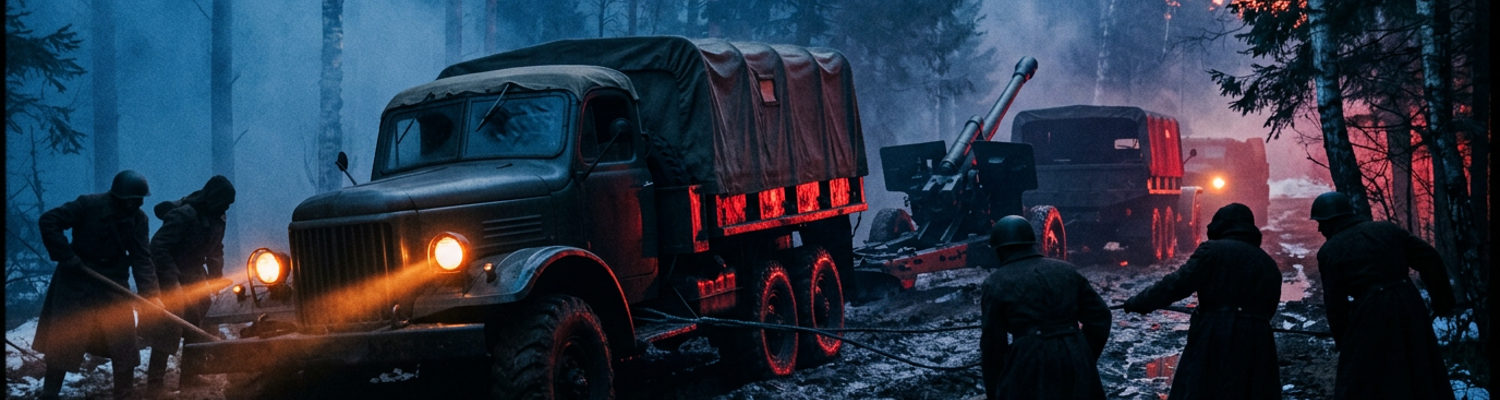
Hydraulic fluid sprayed across the baked alkali dust. An O-ring ruptured inside the traverse mechanism of an M-29 Davy Crockett launcher mount. Sand grains had worked into the fine-pitch brass gearing of the elevation assembly. The teeth sheared under hand-crank tension with a dry metallic screech. Ordnance technicians knelt in the dirt with field wrenches. They stripped the elevation housing to clean out metal shavings minutes before the countdown.
The desert offered zero margin for mechanical error.
On July 17, 1962, the U.S. Army carried out Exercise Ivy Flats at Area 18 of the Nevada Test Site. The operation centered on the Davy Crockett system for Shot Little Feller I. Archival evidence shows that field officers faced an unyielding schedule dictated by visiting civilian and military leadership. Mounted on an armored carrier, the smoothbore launcher was configured to fire the sub-kiloton W54 warhead. This spherical package was designed to release lethal prompt neutron radiation rather than wide-area blast damage. Gun crews struggled against weapon mount instability caused by heat expansion. They recalibrated the propellant firing chamber while temperatures on the plateau soared past one hundred degrees Fahrenheit. At 1000 hours local time, the weapon discharged. The fin-stabilized projectile traveled 2,800 meters across the barren desert basin. The warhead detonated approximately twenty to forty feet above ground zero. It produced a low-yield nuclear blast estimated at eighteen tons of TNT equivalent.
The dust cloud was still churning when the order came to move out.
When examining the historical record, operational logs confirm that Company B, 1st Battle Group, 12th Infantry advanced into the radioactive target area immediately following the detonation. Their objective was to test ground counter-insurgency tactics against simulated Aggressor forces. Soldiers crossed the start line in standard field uniforms without specialized protective suits. They relied purely on pocket dosimeters and film badges pinned to their shirts. Heavy tracked vehicles churned irradiated topsoil. The tracks threw contaminated grit directly into the open ventilation grilles of trailing personnel carriers. Field commanders directed rifle platoons through the perimeter to eliminate surviving Aggressor strongpoints established in defensive foxholes near the detonation locus. Radiac meters held by chemical monitoring teams pegged near forty roentgens per hour. Infantry squads rushed through designated lane markers. Radios crackled with conflicting reports of dummy gun emplacements. Troops executed aggressive fire-and-maneuver drills directly beneath the drift of the active mushroom cloud.
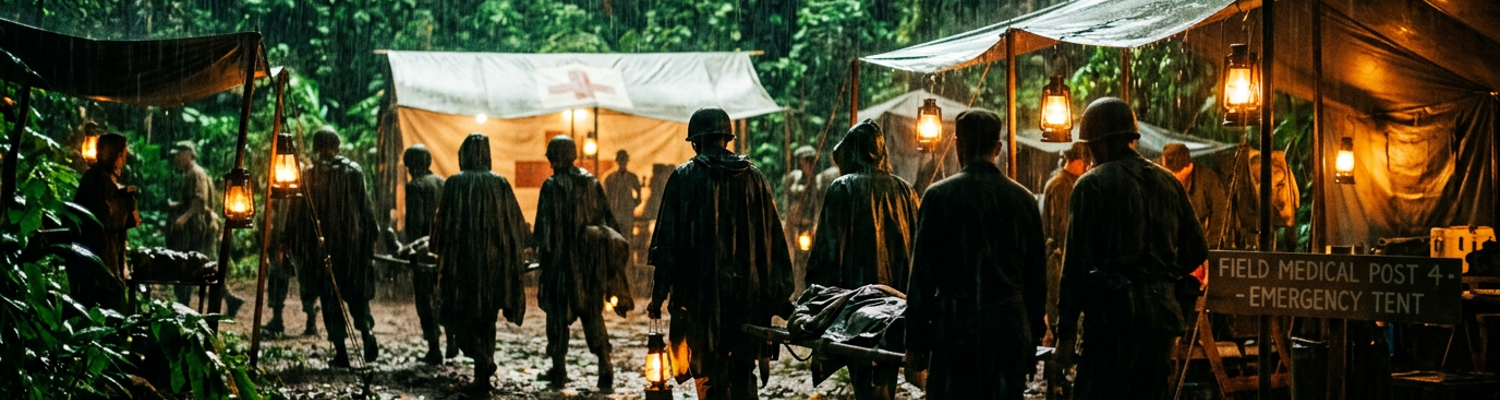
Field medical officers monitored every movement through telemeters and soil samples.
A close review of operational logs indicates that Army planners referenced NARA file code 999-2-214, Book 2. This file contained the declassified captive diary of Major Calvin F. Chunn. Planners used it to establish physiological stress and survival baselines for troops in the fallout zone. Chunn had kept the detailed record during his confinement as a prisoner of war across Japanese camps in the Philippines following the fall of Bataan. He cataloged daily biological collapse, systemic dehydration, and muscle degradation under extreme physical deprivation. Planners extracted these specific starvation and exhaustion thresholds. They calculated how many hours infantrymen could engage in aggressive squad actions after suffering acute ionizing radiation doses. Staff analysts mapped the recorded symptom timelines directly against anticipated battlefield radiation syndromes. The exercise protocols treated human endurance as a calibrated mathematical limit derived from prior military trauma.
Dosimeter readings for the lead squad commanders peaked above safety parameters before the final defensive line was secured.
VIP Observers and Radiological Timelines
Archival evidence shows that seated upon wooden observation bleachers 3.5 kilometers southwest of ground zero, Attorney General Robert F. Kennedy and General Maxwell Taylor observed Shot Little Feller I through dense protective goggles. Kennedy attended as the direct personal representative of President John F. Kennedy. He was tasked with evaluating whether low-yield tactical fission weapons could validate the emerging national doctrine of flexible response. Next to him sat Taylor. Taylor was then serving as presidential military representative and preparing to assume the chairmanship of the Joint Chiefs of Staff within months. Roughly one thousand senior military officers, congressional observers, and scientific evaluators packed the tiered wooden benches overlooking the barren flat of Area 18. Desert heat climbed toward one hundred degrees before the countdown reached zero. The heat baked the wood and warped distant visual markers across the dry lakebed. Taylor watched through optical binoculars as the launcher crew completed final ignition checks. Detonation produced an instant optical flash. A heat wave washed across the bleachers before the ground shock struck.
Sweat cut dark channels through alkali dust on their faces.
A close review of operational logs indicates that the presence of cabinet-level leadership did not soften the conflict between combat doctrine and civilian radiation regulations. Atomic Energy Commission monitors assigned to Area 18 enforced a strict administrative timetable. This timetable stalled assault forces in their staging trenches. Standard infantry training required mechanized elements of the 12th Infantry to advance seconds after the shockwave passed. They were supposed to overrun target objectives before defending Aggressor forces recovered from blast concussion. Civilian safety controllers overruled the battalion staff. They enforced a mandatory forty-five-minute operational hold while radiological survey teams mapped ground contamination. Monitors riding in modified open jeeps swept the dry terrain with AN/PDR-39 ionization chambers. They searched for the one-roentgen-per-hour and five-roentgen-per-hour limits. Tactical officers argued that simulated combat demanded an immediate assault to prevent hostile units from reorganizing in their defensive foxholes. Safety officials refused to clear troop carriers forward until technicians completed every soil assessment. Doctrine fell apart. Inside idling M113 carriers, infantrymen suffered severe dehydration. Ventilation fans sucked superheated air and fine powder through open rear doors. Radio operators recorded repeated calls from company commanders requesting permission to cross the line of departure. Test controllers rejected every request.
Engines boiled in the desert wash.
When examining the historical record, exercise maps demonstrate that rigid Atomic Energy Commission boundaries made tactical maneuver impossible once tracked vehicles received clearance to roll. Shifting winds had pushed the cloud of irradiated topsoil northeast. This blanketed the primary armor axis in heavy particulate fallout. Under conventional field manuals, vehicle columns would have executed a wide flanking maneuver to the west to bypass the falling dust plume. Test range directives prohibited any movement outside surveyed safety corridors. The entire mechanized advance was confined to a narrow strip marked by wooden stakes and red engineer flags. Drivers had to advance in single-file columns directly beneath the drift of radioactive debris. They kicked up clouds of contaminated soil that choked trailing vehicles. Quartz dust clogged Detroit Diesel intake filters within twelve minutes of operation. This caused manifold vacuum drops and stalled two personnel carriers in the alkali silt. Rifle squads stayed buttoned inside sweltering hulls. They stared at AN/PDR-27 radiac meters as needle indicators climbed steadily past thirty roentgens per hour near marker post Bravo-Two.
Choctaw Low-Altitude Aerial Insertions
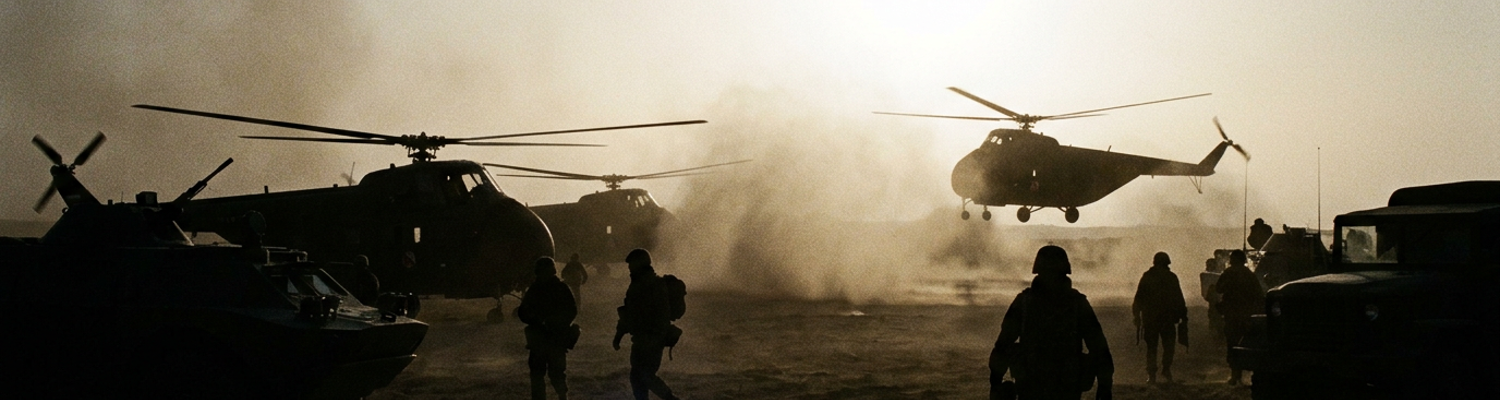
When examining the historical record, flight logs from the 57th Transportation Company confirm that pilots flying Sikorsky H-34 Choctaw helicopters executed low-altitude troop insertions directly through radioactive alkaline dust and ground particulate clouds across Area 18. Each H-34 carried nine fully equipped infantrymen from Company B, 1st Battle Group, 12th Infantry. They banked low over the Buckboard Mesa terrain minutes after the W54 warhead detonated. The nine-cylinder Wright R-1820-84 radial engines sucked in massive volumes of superheated desert air thick with active fission products and neutron-activated calcium carbonate. Ground particulate thrown up by the blast settled into the engine cooling shrouds. The dust baked onto exhaust collector rings and created immediate hot spots that threatened in-flight fires. Mechanics had fitted standard wire-mesh screens over the nose air intakes. The ultra-fine alkali powder blew straight through the mesh. It ground against cylinder walls and contaminated lubricating oil sumps. Flight crews kept their side cockpit windows slid open to clear cabin smoke. They unintentionally exposed themselves and their passengers to airborne particulate clouds. These clouds registered continuous gamma and beta emissions on floor-mounted IM-108 radiac meters.
Rotor wash blasted pulverized calcium carbonate directly into the open engine bays.
Archival evidence shows that zero-visibility conditions caused by irradiated soil and pulverized alkali dust complicated approach vectors toward designated landing zones. The Choctaws dropped below fifty feet to initiate their final deceleration flares near Landing Point Alpha. The four-bladed main rotors generated a violent recirculating dust vortex that completely enveloped the fuselages. Pilots lost all visual reference to the desert floor. The powdery alkali silt was pulverized by the shockwave and baked bone-dry by the desert heat. It hung in a dense suspension that blocked out ground markers, terrain contours, and the horizon line. Co-pilots stared down through chin bubbles trying to spot landing gear contact against the whiteout. Pilots fought heavy cyclic control feedback as turbulent ground-effect air currents rocked the airframes. Pitot tubes accumulated fine silt within seconds. This caused erratic airspeed indications across primary flight panels. Aviators had to transition to blind instrument hover techniques mere feet above unseen boulders and dry wash gullies. They relied on calculated descent rates and garbled radio calls from ground pathfinders who were coughing violently behind damp cotton field dressings.
Alkali sediment choked the cockpit air vents.
A close review of operational logs indicates that flight crews operated under strict flight corridors that prevented evasive maneuvers around active fallout plumes. Atomic Energy Commission range safety controllers and military test directors restricted every helicopter to a rigid five-hundred-meter-wide flight path. This path was oriented along an approach heading of zero-three-five degrees. This pre-cleared aerial lane was established to keep aircraft clear of adjacent live-fire target sectors and unexploded ordnance fields scattered across the northern flats. Desert wind shear shifted the lower stem of the mushroom cloud northeast. The radioactive plume drifted squarely across this compulsory approach route. Tactical aviation doctrine prescribed immediate lateral evasive turns to avoid flying through visible nuclear debris. Range regulations explicitly prohibited pilots from deviating a single degree outside the surveyed stakes. The Choctaws flew straight through the drifting aerosol column at eighty knots. Their airframes gathered active isotopes. Cabin dosimeters recorded rapid spikes exceeding forty-five roentgens per hour before the landing gear touched down.
Ionization and Communication Failures
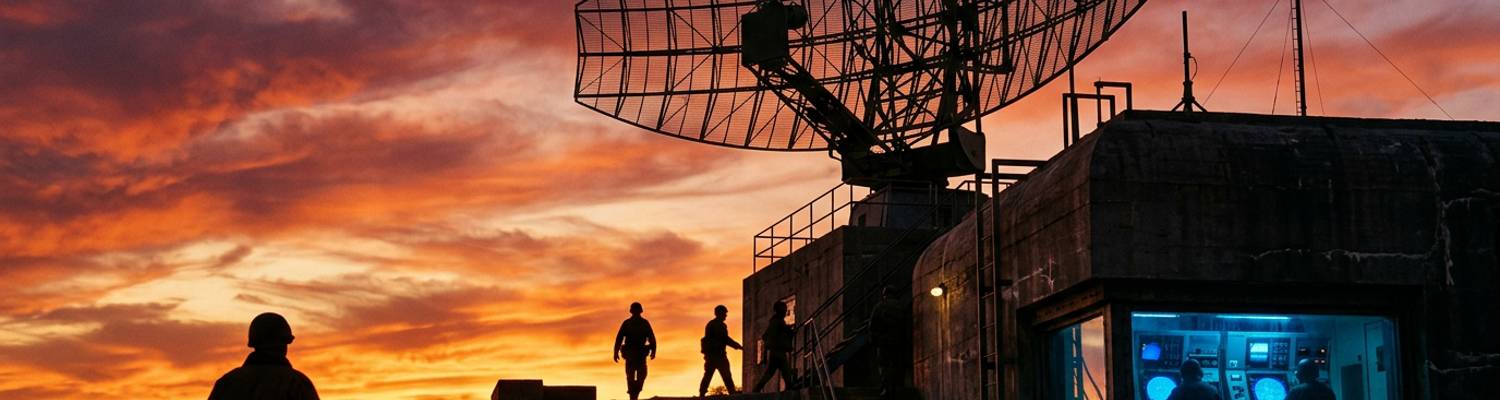
Archival evidence shows that monitoring teams advancing into the fallout sector discovered their primary detection equipment was completely inadequate for the post-detonation environment. Chemical Corps specialists assigned to Company B carried the AN/PDR-27 radiac survey set. This was a portable instrument built around two low-voltage Geiger-Mueller tubes designed primarily to register low-level contamination up to a factory limit of five hundred milliroentgens per hour. The survey teams crossed the four-hundred-meter perimeter around ground zero. Extreme atmospheric ionization overwhelmed the gas-filled detector probes. Free electrons stripped from atmospheric gases by prompt gamma and neutron emissions filled the GM tubes with continuous Townsend avalanches. This prevented the quenching gas from resetting the electrical discharge between pulses. Instead of measuring linear radiation rises, the meters suffered full electrical saturation. Needles slammed violently against the far-right stop pins. They lodged in place as internal microammeters absorbed continuous current overloads. Operators flipped rotary selector switches through all four attenuation ranges. The high-range scales offered no relief in a zone where actual ambient exposures exceeded thirty-five roentgens per hour. Monitoring teams were left functionally blind. They held vibrating instruments that indicated absolute catastrophe without providing a single readable numeric value.
The needle stayed locked against the brass peg.
When examining the historical record, radio transmission logs indicate that electromagnetic disturbances and dense ionization fields severed forward communications within seconds of the explosion. Battalion combat command had established tactical control nets using AN/ARC-44 VHF-FM transceiver units mounted in command vehicles and coordinating aircraft. These operated along standard frequency bands between twenty-four and fifty-two megahertz. The ionization front expanded through the lower troposphere. Free electron densities in the dust plume absorbed high-frequency electromagnetic propagation. This generated severe radio blackout across all forward axes. Radio operators inside buttoned-up M113 personnel carriers adjusted squelch potentiometers and swapped quartz crystal channels. The receivers picked up only a howling wall of thermal hiss and plasma interference. The electromagnetic disturbance had saturated the delicate vacuum-tube front ends of the transceivers. It knocked out grid-leak resistors and desensitized radio frequency amplifiers. Forward observers attempting to coordinate the infantry advance with lingering Choctaw flight crews received no acknowledgments across the airwaves. Squad leaders driving through the dust cloud found themselves operating in absolute radio silence less than six hundred meters from the blast locus.
Static obliterated every transmission on the command frequency.
A close review of operational logs indicates that Signal Corps specialists turned to primitive physical infrastructure to restore command and control. Radio networks were paralyzed. Signalmen hauled steel-spooled DR-8 reels across the irradiated scrub. They paid out unshielded WD-1/TT two-conductor twisted-pair field wire directly through contaminated vehicle ruts. Wire crews tied lines to desert sagebrush and split-rail fence posts along the edge of Area 18. They attempted to keep the copper-steel conductors elevated above moisture-depleted alkali flats that leaked electrical current into the earth. Technicians bypassed standard communication trunks by establishing an improvised relay station on the western rim of Buckboard Mesa. They used dry batteries and TA-312 sound-powered telephone sets to bridge forward squads with the tactical operations center. Signal soldiers had to splice severed cables by hand with friction tape when tracked personnel carriers crushed the insulation. Through this fragile web of bare wire and high-ground relay points, commanders pushed manual Morse clicks and cracked voice relays to direct the final platoon assault across the objective.
Field telephones were passing fire commands over raw copper wire before the dust settled on the crater rim.
Aviation Mechanics and Field Engine Repairs
Archival evidence shows that Wright R-1820-84 Cyclone engines mounted inside the nose compartments of the 57th Transportation Company H-34 Choctaws ingested hundreds of pounds of airborne radioactive silica within twenty minutes of the blast. Pulverized desert floor was fused into microscopic glass beads by the eighteen-ton yield of the W54 warhead. This material bypassed external wire intake screens completely. These abrasive particulates packed solid inside the Bendix-Stromberg injection carburetors. They jammed sliding throttle valves and choked the primary metering jets. Fuel-air mixtures drifted dangerously lean. Nine-cylinder radials lost manifold pressure across the Buckboard Mesa flight sector. Pressure dropped from thirty-eight inches of mercury to less than twenty-five within two minutes of loiter time. Unburned fuel detonated erratically inside cylinder heads. Cylinder head temperature gauges spiked past two hundred and sixty degrees Celsius. This threatened unrecoverable piston seizures five hundred feet above the alkali wash.
Engines starved on glass and dust.
A close review of operational logs indicates that ground crews had to salvage these stalled engines while operating directly inside the combat zone. Two Choctaws made forced landings on the flat north of Landing Zone Alpha. Aviation mechanics and crew chiefs leaped into the prop wash carrying canvas tool rolls to initiate emergency disassembly. Aggressor riflemen from the opposing force opened up from perimeter trenches with blank-loaded M14 rifles and ground-burst flash simulators. This forced technicians to duck beneath aluminum engine cowlings while unbolting induction manifolds. Mechanics worked without protective gloves. They used safety wire and standard solvent to ream crushed silicate out of internal carburetor passages. Their bare hands were slick with AVGAS and radioactive sediment. Flight-line officers refused to authorize recovery tractors due to contaminated zone boundaries. They ordered repairs executed where the airframes sat. Every intake horn had to be stripped, scraped with pocketknives, and reassembled under continuous fire-support drills. Pocket dosimeters recorded accumulated exposures climbing past fifteen roentgens per hour.
Wrenches turned while blank rounds cracked overhead.
When examining the historical record, maintenance teams found that ambient gamma exposure and persistent thermal radiation around the engine compartments rapidly cooked electrical wiring and oil pumps. Crew chiefs scavenged forty-pound cast lead ballast blocks bolted inside disabled M113 armored personnel carriers parked in the forward maintenance pool. Mechanics beat these dense lead slabs flat against steel landing gear struts. They used brass drift punches and five-pound sledgehammers to hammer the metal into crude three-eighths-inch sheets. They molded the soft metal directly around sensitive fuel-metering units, ignition harnesses, and engine oil scavenge lines. This improvised shielding prevented gamma heating from boiling the 1100-grade mineral oil inside the sumps. It kept lubricant flowing through the planetary reduction gearing of the main rotor transmission. Crews wired the heavy lead jackets in place using aircraft lockwire. They secured the assemblies just enough to allow pilots to wind the radial engines back up to operational revolutions per minute.
Field logs recorded three modified Choctaws lifting clear of Area 18 before dark.
Tactical Aftermath and Doctrinal Revisions
Air filters clogged long before radiation levels dropped.
Archival evidence shows that mechanical breakdown and atmospheric ionization posed as severe an operational barrier as acute radiation exposure during the forward push. Tactical doctrine focused heavily on human roentgen thresholds. Mechanical systems failed across Area 18 within minutes of detonation. Free electrons generated by prompt ionizing radiation stripped charge across high-frequency whip antennas. This disabled the receiver stages of forward AN/VRC-12 vehicular radios and severed communication between platoon leaders. Pulverized silica suspended in the thermal cloud entered starter motors, final drives, and generator commutators across Company B M113 carriers. Fine dust ground through rubber lip seals. It contaminated transmission oil and caused oil pressures to collapse below fifteen pounds per square inch. Three armored personnel carriers lost forward drive gear sets along the assault route. They stranded mechanized rifle squads in surveyed radiation zones registering twelve roentgens per hour. Combat Command evaluators discovered that infantrymen survived the initial radiation flux without immediate incapacitation. Their fighting vehicles suffered total automotive paralysis from heat and abrasive alkaline dust.
Wash racks made the contamination worse.
A close review of operational logs indicates that Chemical Corps troop decontamination protocols proved inadequate for managing alkaline dust embedded into standard-issue canvas and combat gear. Technicians established decontamination points along the edge of Yucca Flat. They attempted to wash retreating rifle platoons using pressurized water trucks and soap detergents. Water applied to the dry micronized calcium carbonate topsoil produced a thick alkaline chemical paste. This caustic slurry soaked directly into cotton-sateen OG-107 fatigue trousers, M-1956 web harnesses, field pack canvas, and rough-out leather combat boot uppers. Dry brushing techniques fractured the brittle desert plant ash. This drove hot particulate deeper into the cotton weave rather than scraping it free. Radiac monitoring teams scanning troops with AN/PDR-27 detection wands recorded beta-gamma readings exceeding three hundred milliroentgens per hour on soldiers who had undergone four consecutive scrub cycles. Ordnance personnel cut field packs, suspenders, and cartridge belts off infantrymen with trench knives. They dumped entire crates of standard equipment into open disposal trenches because standard washing failed to remove the radioactive residue.
The nuclear rifle had eliminated its own tactical speed.
When examining the historical record, the technical outcomes recorded during Shot Little Feller I contributed to the Army reconsidering the tactical utility of low-yield frontline nuclear weapons. Combat Developments Command staff realized that deploying the Davy Crockett at company level created insurmountable friction. Friendly crews had to dig into defilade or hide inside armored hulls to fire the sub-kiloton W54 warhead safely. The resulting fallout, communication blackout, and mechanical erosion prevented them from rapidly exploiting the blast zone. The mandatory delays imposed by civilian Atomic Energy Commission safety rules combined with engine breakdowns across radioactive terrain. This eliminated the shock advantage needed for fast mobile counterattacks. Army leadership recognized that low-yield fission weapons could not turn infantry battalions into self-contained nuclear assault teams without crippling the very units attempting to advance. Technical reports compiled from Exercise Ivy Flats circulated directly through the Department of the Army. These reports slowed procurement requests and paved the way for the eventual withdrawal of the M-28 and M-29 systems from active infantry inventories by 1968.