
Prewar Fleet Escort Doctrine and Shallow Littorals
Steam ruptured through the cracked casing of the main circulating pump inside the forward engine room of an escorting destroyer. Machinist mates lunged through dense clouds of white vapor with heavy asbestos gloves to dog down emergency stop valves while scalding water sloshed across the diamond plate deck. The sudden loss of condenser vacuum tripped the main throttle and dropped the warship out of formation just as it entered the outer shoals of the Huon Gulf. Stoker gangs and throttlemen shouted into their sound powered phone sets to coordinate repairs while bilge pumps strained against the murky seawater filling the sumps. Outside the armored hull the smell of burnt packing grease and raw diesel exhaust mingled with the sour reek of rotting mangrove mud drifting from the nearby New Guinea shoreline. Bridge watchstanders gripped the splinter shields in silence as they watched the vessel drift toward uncharted coral heads that no emergency damage control party could counter.
Coral reefs along these narrow New Guinea passages completely destroyed the tactical formations taught in peacetime naval classrooms. Prewar fleet escort doctrine and official US Navy War Instructions had been drafted for the wide and deep waters of the open ocean. Those screening manuals instructed destroyers to form broad circular screens around heavy capital ships and maintain generous intervals of several thousand yards so escorts could sweep for submarines. That geometric theory collapsed completely in the cramped bottlenecks separating the mainland from offshore volcanic islands. Navigators had barely two miles of cleared channel between sheer underwater shelves, forcing destroyers to abandon their circular patrol sectors and string themselves out into rigid single file columns. Sonar operators listened helplessly as acoustic sound pings echoed uselessly off sheer underwater rock faces while lookouts knew that any standard evasive turn would run their hulls straight onto submerged limestone.
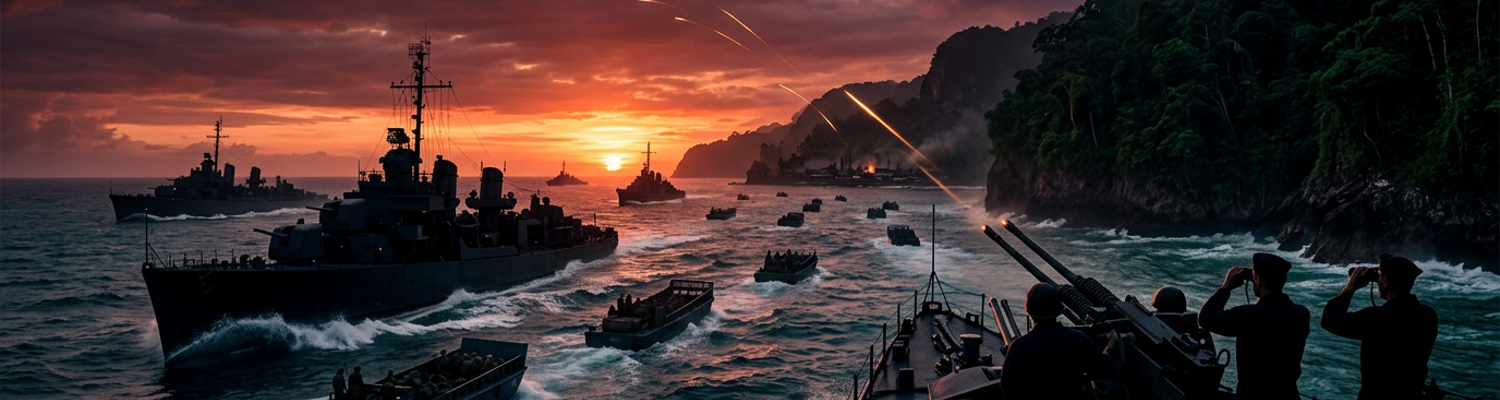
Limestone shelves and shallow draft hazards forced Rear Admiral Daniel E Barbey to throw away traditional naval screening rules entirely. Barbey directed the Seventh Amphibious Force to move vulnerable supply echelons across hundreds of miles of combat zones without the heavy carrier screens or cruiser squadrons promised by standard fleet doctrine. Operations planners routed clumsy convoys of tank landing ships and infantry landing craft out from forward staging bases at Milne Bay and Oro Bay. These lumbering amphibious vessels could make barely eight knots while creeping along the jagged eastern coastline of Papua. Destroyer captains escorting these sluggish convoys found themselves wedged between shallow beachheads and deep ocean trenches without enough maneuvering room to carry out antisubmarine sweeps. Barbey responded by turning his few available destroyers and subchasers into close shepherd craft and pinning them tight against the flanks of the cargo ships to shield them from nocturnal torpedo plane strikes.
Bombers sweeping south from Rabaul exploited these compressed convoy lanes every time the sun slipped behind the coastal mountain ranges. Crews on the escorting destroyers spent their nights at general quarters while deafened by the crack of twin five inch guns and forty millimeter antiaircraft mounts firing blindly into the overcast. Spent shell casings piled across wet decks and filled the humid tropical air with the biting sulfur stench of burned cordite. Escort captains could not order the standard dispersal maneuvers outlined in prewar tactics books when aerial torpedoes dropped into the water because scattering would send loaded supply ships crashing into one another. Helmsmen spun their brass wheels to hold their ships steady on narrow compass headings while geysers of brackish water from near miss bomb explosions washed across the forecastles. Officers in the combat information centers tracked incoming radar contacts on grease penciled plotting boards to guide the battered convoys past the reefs and push them deeper into the hostile approaches of the Vitiaz Strait.
Hydrographic Hazards and Uncharted Coral Formations
Grease pencil marks on the plotting boards revealed the convoys entering coastal waters where Allied hydrographic intelligence had completely broken down. Charts carried in the pilot houses of Task Force 76 relied on decades old German colonial surveys and vague British merchant sketches that omitted major underwater hazards along the Huon Peninsula. Uncharted barrier reefs and sharp coral pinnacles rose vertically out of deep water within hundreds of yards of the shoreline and remained undetected by high altitude aerial photography. Destroyer fathometers pulsed sonic pings downward into the black swell to find the bottom. The crude echo sounders registered safe bottom depths of forty fathoms only seconds before warship keels crossed jagged limestone spires. Amphibious commanders found themselves pushing heavily laden landing craft through dark coastal waters where a navigational error of twenty yards meant ripping open steel hull plates on submerged stone.
Steel hull plates threatened to tear open against these hidden obstacles before Japanese shore batteries even opened fire. Rear Admiral Daniel E Barbey responded by throwing out standard deep water navigation manuals and ordering his ships to rely on manual sounding leads. Seamen stepped out onto exposed sounding platforms along the bows and swung heavy lead weights on hemp lines into the dark swells to measure ocean depth fathom by fathom. Quartermasters relayed the sounding calls through sound powered telephone headsets to shout urgent warnings to the bridge whenever the sea floor abruptly shoaled from sixty feet to less than fifteen. Officers on the bridge wings kept their eyes fixed on the dark water because no modern instrument could replace the physical feel of a lead weight striking stone beneath the foam.
Lookouts climbed into the masthead crosstrees and balanced on forward gun tubs to scan the restricted approaches toward Scarlet Beach for sudden shifts in water color. Watchstanders peered down into the dark water to identify brown and pale green patches that marked shallow reef heads. They searched for narrow bands of deep blue water that offered safe passage through the maze of coral. Engine throttles were cut to dead slow to quiet machinery vibrations so that bridge crews could hear depth shouts echoing from the bow platforms. Dense smoke from burning mangrove timber and exploding shore bombardments drifted out across the bay to blind the observers and hide the safe passage between the shoals. Helmsmen gripped the wheel spokes with sweating palms and swung their rudders back and forth to keep the heavily loaded landing ships centered between the jagged barrier reefs.
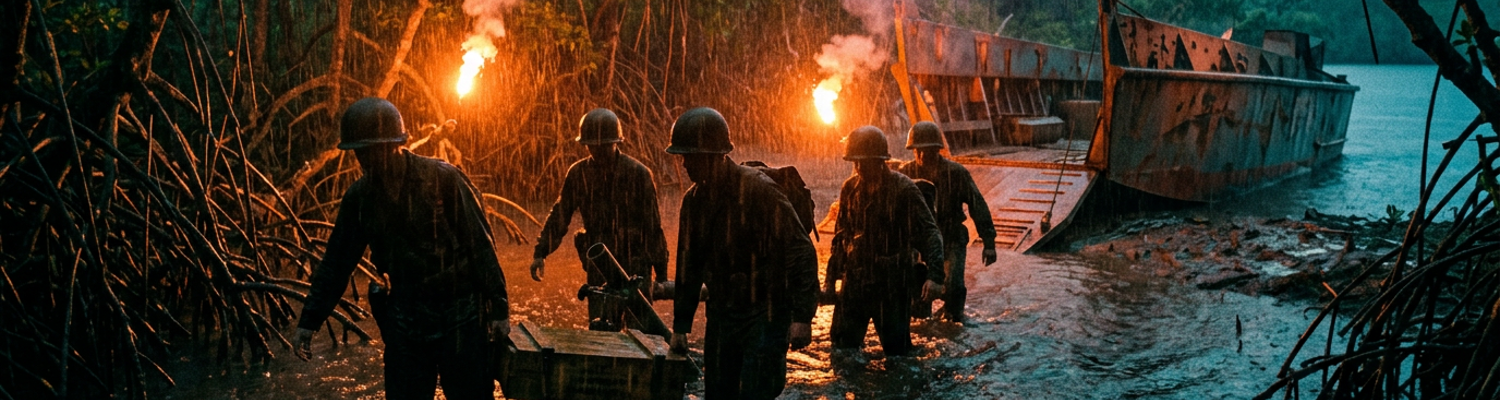
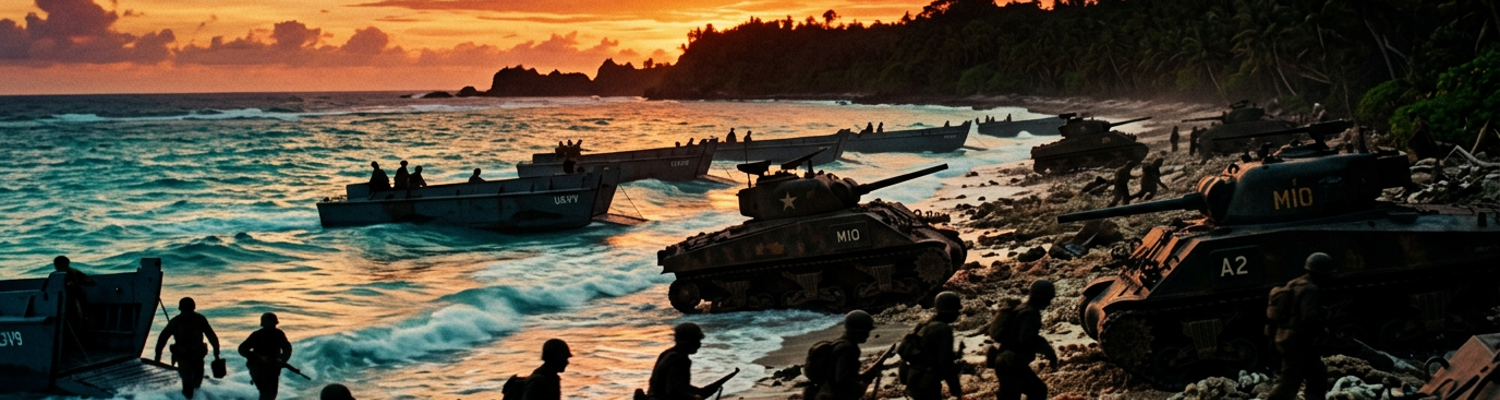
Rudder movements alone could not prevent several landing vessels from grinding their bottoms into the shallow shoals as the assault wave pressed directly into Scarlet Beach. Sounding leads bounced off solid coral heads as clumsy tank landing ships pushed past the outer reefs and scraped their hulls over submerged shelves to reach the landing ground. Australian infantrymen leaped from lowered bow ramps into waist deep surf and hauled mortars and ammunition boxes across jagged coral fragments under heavy defensive fire. Beachmasters set up kerosene lanterns and colored signal markers along the waterline to guide following echelons through the few natural cuts in the barrier reef. Destroyer captains kept their warships stationed just outside the surf line and laid down close range five inch gunfire while navigators penciled newly discovered coral pinnacles onto their blank charts.
Radar Terrain Clutter and Night Air Interdictions
Navigators penciled those freshly sounded channel paths into their logs while operating so close to the mainland destroyed the electronic vision of Task Force 76. Radar operators sitting inside the dark combat information centers watched their green cathode ray screens bloom with solid pulses of light. Severe land return clutter from the Finisterre and Rawlinson mountain ranges bounced electronic pulses back into the receiving antennas and completely blinded the early warning search radars. Radar men turned their receiver gain knobs and adjusted sweep circuits on their consoles to clear the interference. The radio waves striking the massive coastal peaks created thousands of false target blips across the scopes and masked real threats. Combat information officers could not separate low flying aircraft echoes from the solid return generated by the jagged rock walls.
Japanese air commanders exploited these blind radar sectors by staging coordinated nocturnal air strikes directly out of major base facilities at Rabaul. Imperial Japanese Navy aircrews assembled strike groups of twin engine torpedo bombers and dive bombers to hunt the vulnerable amphibious echelons moving along the New Guinea coast. Pilots flew across the Solomon Sea under the cover of night and throttled back their engines to skim across the wavetops. Japanese pilots hugged the northern slopes of the coastal mountain ranges as they neared the convoy lanes and deliberately used the high mountain terrain to swallow their aircraft reflections on Allied radar screens. Destroyer lookouts strained their eyes into the humid darkness because shipboard electronics could not warn them of an impending attack until the enemy planes cleared the ridge lines and began their final runs.
Lookouts caught their first warning not from the blinded radar gear but from the sudden sharp drone of airplane engines vibrating through the steel hull plating. Japanese aircraft dropped string lines of magnesium parachute flares over the water to light up the slow moving landing ships in blinding white glare. Torpedo bombers leveled out just thirty feet above the dark water to launch aerial torpedoes toward the beam of the cargo vessels. Dive bombers pushed over into steep glides to drop high explosive bombs across the escort screen. Geysers of saltwater from near miss bomb detonations crashed over the open bridge wings and gun tubs of the destroyers. The falling seawater drenched sailors who were already choking on dense exhaust smoke and burning powder gas.
Gun crews loaded shells by hand and aimed their weapons through manual ring sights to fire blind tracer barrages because gunnery radars were equally useless against the mountain clutter. Destroyer captains shouted emergency helm orders into their sound powered phones and threw their rudders hard over to comb the incoming torpedo tracks without driving their ships onto the adjacent reefs. Forty millimeter Bofors mounts and twenty millimeter automatic cannons hammered continuous bursts into the darkness. Hot brass casings ejected from the breeches and piled ankle deep across the slick steel deck plates. Helmsmen hauled on their brass wheels to right their listing warships as damaged bombers crashed into the sea. The burning aircraft cleared a fiery path through the darkness so the battered convoy could resume its crawl into the Vitiaz Strait.
Destroyer Engagements of USS Reid and USS Smith
USS Reid surged through the burning oil slicks left by the downed bombers and cut across the convoy bow to establish an escort screen along the western approach of the strait. Torrential monsoon squalls struck the warship within minutes and brought dense sheets of tropical rain that completely erased the horizon. Japanese torpedo and dive bombers dropped out of the storm clouds at masthead height and skimmed the wave crests to launch their weapons beneath the blind sweep of the ship radar. Radar directors could not lock onto the fast moving targets through the wall of falling water and forced gun crews to rely entirely on visual targeting. Gun trainers peered through open ring sights while rain streamed across their faces and hand cranked the five inch mounts to fire directly at the flickering blue exhaust flames of oncoming aircraft. Concussion waves from the rapid gunfire ripped away canvas bridge spray shields while the suffocating reek of burning cordite hung heavy in the rain choked air.
USS Smith cut through that cloud of powder smoke and took position alongside Reid to pour heavy automatic fire across the path of the next wave of low flying bombers. Spotters on the flying bridge stood fully exposed to the driving squall and shouted bearings down voice tubes to gun captains who could see only shadowy silhouettes against the gray waves. The crew worked forty millimeter Bofors guns and twenty millimeter Oerlikon cannons without mechanical directors and tracked targets by manual lead to saturate the air with tracer rounds. Near miss bomb detonations threw columns of brackish saltwater over the gun tubs and drenched loaders who shoved fresh ammunition clips into the hot breeches. Shrapnel sliced through deck gear before the combined visual barrage from both destroyers clipped the wings and engines of two attackers and sent them cartwheeling into the surf. The barrage shattered the Japanese flight formation and forced the surviving planes to dump their torpedoes harmlessly into open water and retreat toward New Britain.
Daihatsu class motorized barges exploited that sudden aerial retreat by darting out from hidden mangrove channels along the Huon Peninsula to intercept the vulnerable cargo ships. These shallow draft steel landing craft and armed coastal interdiction vessels moved in tight groups and utilized the jagged shoreline and shallow reefs to shield themselves from standard fleet gunfire. USS Reid and USS Smith swung their rudders hard over to interpose their armored hulls between the assault barges and the slow moving transports. Standard fire control computers could not generate firing solutions for small targets that drew only five feet of water and maneuvered inside dangerous coastal shoals. Destroyer captains ordered their gun crews to bypass automated systems and depress their five inch gun barrels manually to aim right over the open sights at water level. High explosive shells struck the water within feet of the small craft and threw up muddy geysers from the shallow bottom that tore through the thin steel plating of the lead hulls.
Bofors mounts hammered the crippled barges at point blank range and poured steady streams of high explosive and tracer shells into the splintered wreckage. Return fire from Japanese machine guns and light automatic weapons sparked against the destroyer forward hull plates without piercing the steel belts. Crewmen on the remaining coastal craft threw their helms over to flee before five inch rounds broke their wooden superstructures and detonated exposed fuel drums on their open cargo decks. Burning diesel fuel spread across the shallows and filled the humid coastal air with dense black smoke that mixed with the sour smell of mangrove mud. Navigators on Reid and Smith called out warning depths from the bridge wings and prompted the captains to reverse their engines and pull back before the outgoing tide grounded their hulls on uncharted coral pinnacles. Both warships quickly reformed their screening stations around the transport column and escorted the battered amphibious echelon into the landing approaches of the Vitiaz Strait.
Landing Ship Vulnerabilities and Below Deck Attrition
Enginemen on the landing ships fought collapsing air blowers and suffocating vapors as the escorted transport column moved into position for the final run to the beach. Forced draft ventilation blowers choked on oily grit and tripped their electrical breakers to cut off fresh air to the bottom machinery flats of the tank landing ships and infantry landing craft. Temperatures inside these diesel soaked engine rooms spiked past one hundred twenty degrees Fahrenheit and heated the steel bulkheads until they scalded bare skin on contact. Motor machinists mates stripped to their skivvies and soaked rags in bilge water to tie around their faces to filter the dense fumes of unburned fuel. Sailors collapsed onto the vibrating diamond deck plates with heat cramps and vomiting as the lack of oxygen triggered severe heat exhaustion across every watch section. Deckhands climbed down the steel ladders to drag unconscious crewmen up to the open tank decks before the big General Motors diesels seized from neglected lube oil strainers.
Machinists cleaned those clogged strainers by hand under flashlight beams to keep the twin propeller shafts spinning at flank speed toward the shore. Japanese artillery batteries and concealed mortar pits opened fire from the tree line the moment the bow doors swung open into the surf. High explosive mortar shells struck the exposed weather decks and threw metal splinters across the winch stations while shrapnel slashed through exposed hydraulic lines. Helmsmen held their rudders amidships despite the exploding shells and rammed the flat bottoms of the landing craft directly onto the sandbars to discharge their cargos of trucks and infantrymen. Retracting winches groaned under immense strain as beaching cables pulled taut to anchor the sterns against the incoming breakers. Artillery detonations threw geysers of mud and saltwater over the open vehicle ramps as the troops pushed forward into the jungle.
Shrapnel from those artillery detonations sliced into the unarmored bow doors and hull plating to puncture fuel lines and tear through ballast tanks. Receding tides and shifting surf hammered the grounded vessels against jagged limestone ledges beneath the water and tore long gashes in their outer steel plating. The violent impacts bent propeller shafts out of alignment and threatened to flood the generator flats. Damage control parties waded through flooded lower compartments with timber shores and wooden wedges to plug structural hull punctures before the rising water could short out the electrical boards. Japanese gunners concentrated their mortar fire on landing ships that hung up on the offshore reefs and shifted impact bursts across the deck houses to kill crewmen trying to work the stern anchor winches. Pumps sucked up gritty sand and brackish seawater and burned out their electric impellers as repair parties fought to keep the punctured hulls buoyant enough to back off the beach.
Anchor cables hummed with tension as winch drums took the strain and hauled the flooded and grounded hulls backward off the limestone shelves through the falling mortar fire. Damaged landing craft listed heavily to port and starboard as ruptured wing tanks took on sea water. Throttlemen ran their remaining functional engines in reverse at emergency overspeed to pull the heavy steel hulls free from the coral grip. Coxswains backed their ships into deeper water through the gaps in the reef and left trails of leaking diesel fuel and hydraulic fluid across the surf line. Beachmasters signaled following waves of supply craft to alter their landing headings toward open stretches of sand to clear the fire swept shallows. Repair teams towed the flooded vessels out toward the destroyer screen so the next echelon could push directly onto the contested shoreline.
Tactical Improvisations and Chemical Smoke Defense
Steel towlines dragged the flooded landing craft out toward the destroyer screen while daylight left the clustered supply echelons completely exposed to incoming air strikes along the coast. Prewar doctrine manuals offered no tactical plans for protecting slow moving amphibious echelons inside narrow coastal corridors and forced landing craft crews to invent their own defenses on the spot. Amphibious sailors lashed industrial fog generators and chemical smoke pots directly to the stern deck rails of tank landing ships and infantry craft. Deckhands ripped open ignition caps and turned pressure valves on the canisters to release dense streams of chemical smoke that rolled off the fantails and spread across the water. Heavy white fog drifted over the convoy within minutes and shrouded the supply echelons from coastal spotters and high altitude bombers searching for targets along the reef. The expanding blanket of chemical smoke obscured the cargo vessels right at the waterline and forced enemy pilots to guess the location of their targets through the gray haze.
Smoke from the chemical generators drifted across the weather decks in choking clouds that burned the eyes and throats of the loaders and machine gunners. Motor machinists adjusted fuel oil feeds on improvised furnace burners mounted along the hull sides to thicken the artificial fog bank across the water. Strategic planners in distant administrative offices had ignored repeated requests for specialized anti aircraft escorts and factory built smoke gear. Those rear echelon commanders viewed New Guinea coastal runs as minor logistical movements rather than front line combat zones. Amphibious commanders countered this administrative neglect by training their own crews to deploy thick smoke curtains whenever lookouts heard aircraft engines over the roar of the surf. The dense chemical screen successfully masked the physical outlines of the transport ships and forced Japanese aviators to drop their ordnance blindly into the fog.
Pilots plunged their bombers straight through the smoke bank at masthead level to locate the transport hulls by sight. Gunners abandoned the complex lead computing sights and centralized fire control directors required by prewar navy gunnery manuals because targets appeared only hundreds of yards away for split seconds. Crews instituted an ad hoc point blank anti aircraft fire doctrine that turned every automatic weapon into an independent barrier gun. Loaders slammed ammunition clips into twin forty millimeter Bofors mounts and twenty millimeter Oerlikon cannons while gun captains pointed their barrels directly over the open railings. Every ship poured continuous streams of tracer ammunition into the gaps in the smoke and filled the low air with dense crossfire. The concentrated barrage shredded approaching aircraft without waiting for range calculations from bridge directors.
Shells from the twenty millimeter cannons tore away engine cowlings and shattered cockpit glass on bombers skimming less than fifty feet above the sea. Damaged enemy aircraft cartwheeled into the coral shoals or pulled up with smoking engines to drop their bombs into empty water outside the transport lanes. This point blank gunnery doctrine and improvised chemical smoke defense secured the Allied coastal supply lane despite months of strategic administrative neglect from theater planners. Winch operators hoisted heavy ammunition pallets and fuel drums over the side into waiting amphibious trucks to supply the infantry pushing inland. Coxswains backed empty landing craft off the sandbars to clear the beaches for following supply echelons moving through the reef gaps. Deck crews immediately swapped out spent smoke pots for fresh canisters and reset their chemical generators to shroud the next inbound convoy before Japanese air groups could regroup over New Britain.