
Origins of Strategic Air Command Arctic Reconnaissance
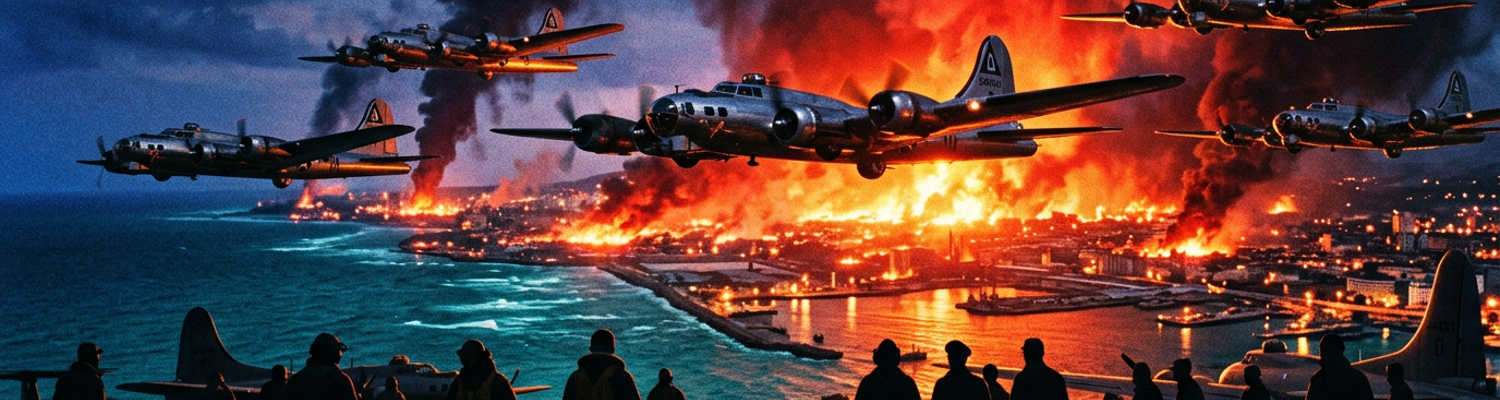
Archival evidence shows that in January 1956, Strategic Air Command headquarters issued a secret planning directive. The order mandated direct overflights of the Arctic Basin. General Curtis LeMay required a physical reaction from the Soviet defense apparatus. Authorized under the broader authority of the Joint Chiefs of Staff, the directive instructed planners to design mass penetrations of the northern periphery. American strategists recognized a distinct geographical fact. Any future exchange involving thermonuclear weapons would cross the Arctic Circle. Intelligence charts of Siberia and the Kola Peninsula showed blank expanses. Analysts knew radar stations and interceptor airfields occupied those empty spaces. LeMay ordered the 4th Air Division and the 55th Strategic Reconnaissance Wing to chart the exact capabilities of Soviet air defense troops. These troops operated under the designation PVO Strany. Reconnaissance crews had to force Soviet radar operators to turn on their equipment.
They flew directly toward sovereign airspace along predetermined corridors above eighty degrees north latitude. Strategic Air Command sought to record pulse repetition frequencies. They needed operating wavelengths and interception command channels. This operation received the code name Home Run. The objective involved mapping every P-20 Token, P-8 Knife Rest, and Spoon Rest radar installation ringing the Siberian coastline from Murmansk to the Chukchi Peninsula.
The flights pushed men and machines past their design tolerances.
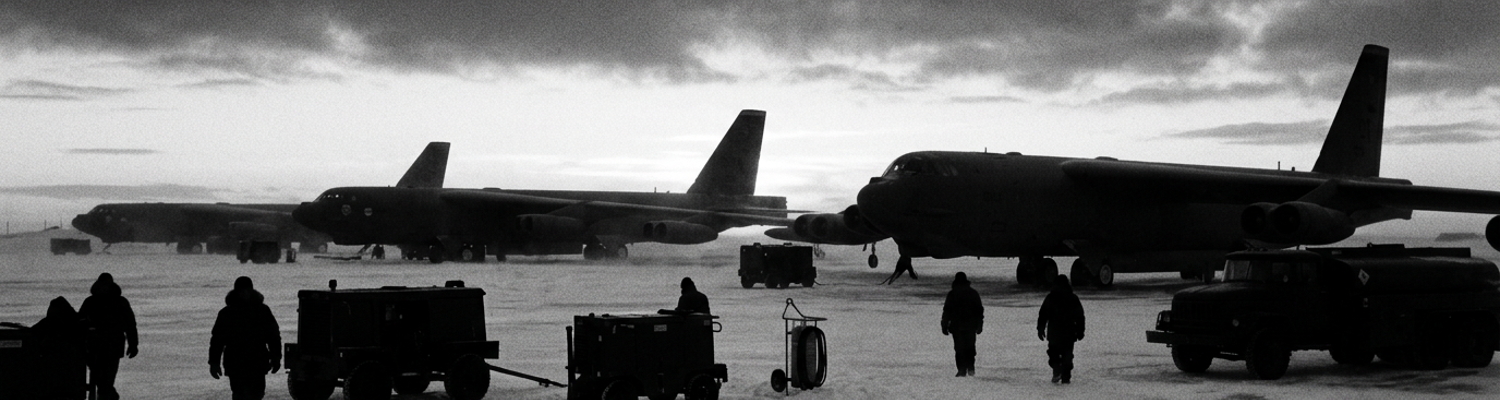
A close review of operational logs indicates that the mission fell to two variants of a Boeing swept-wing jet. The RB-47E and the specialized RB-47H executed the primary sorties. Units drawn from the 55th Strategic Reconnaissance Wing at Forbes Air Force Base deployed forward detachments. They staged directly out of Thule in Greenland and Eielson Air Force Base in Alaska. The RB-47E carried eleven cameras in its nose bay. These included high-altitude K-38 split-vertical instruments. Technicians loaded night-flash cartridges alongside the cameras for high-resolution target mapping. Inside the RB-47H, engineers replaced the standard bomb bay with a pressurized metal capsule. The Air Force designated this the raven compartment. It lacked dedicated heating systems.
Three electronic warfare officers sat crowded in this capsule.
They operated APR-9 search receivers and ALA-6 direction-finding antennas. Magnetic wire recorders logged Soviet signal traffic. These officers operated in freezing conditions. They sat isolated from the pilots forward in the nose. The raven crew relied on an emergency lower hatch ejection system. That specific system would fail if cabin pressure dropped abruptly. Engines failed with alarming frequency in the polar freeze. Maintenance logs at Eielson reveal constant issues with the General Electric J47-GE-25 turbojets. The engines routinely suffered compressor stalls when ingesting subzero polar air at thirty-five thousand feet. Water-methanol injection systems froze solid inside delivery lines before takeoff. Crews needed that injection system to lift sixty-ton aircraft off slush-covered runways.
Tanker rendezvous compounded the danger.
Crews flying out of Thule executed aerial refuelings with propeller-driven KC-97 Stratofreighters. They flew in total cloud cover above seventy-five degrees north. Magnetic compasses spun erratically in this region. Celestial navigation proved impossible during spring whiteouts. Ground radar operators at Soviet installations near Tiksi and Mys Shmidta detected the American formations. The bombers turned south toward Soviet territory. Alert sirens sounded at fighter strips on the Kola Peninsula. MiG-17 interceptors scrambled into the cloud decks. Operational orders instructed RB-47 crews to hold course toward the shoreline. They waited until Soviet ground stations initiated high-frequency tracking locks. This delay gave the electronic warfare officers sufficient time to record the response.
Operation Home Run Flight Operations and Radar Mapping
Between March 21 and May 10, 1956, Strategic Air Command executed one hundred and fifty-six coordinated sorties directly over the Arctic ice pack. Dispatched from forward staging areas at Eielson Air Force Base near Fairbanks and Thule Air Base in northern Greenland, massed waves of up to sixteen RB-47E and RB-47H jets climbed into the polar stratosphere. Ambient air temperatures plunged past minus sixty-five degrees Fahrenheit at operational altitudes between thirty-five and forty thousand feet. Synthetic rubber gaskets around canopy frames shrank. The material fractured under the extreme thermal contraction. Pressurized cockpit air bled out into the thin atmosphere. Red hydraulic fluid thickened into a heavy paste. The military formulated this fluid to specification MIL-H-5606. The cold jammed main landing gear uplocks. It rendered bomb-bay door actuators inoperable. Fuel lines carrying JP-4 aviation kerosene experienced localized wax precipitation. The wax clogged micro-mesh delivery filters. This triggered intermittent flameouts on outer General Electric J47-GE-25 engines.
Camera bay heating blankets burned out under continuous voltage loads.
High-altitude shutter assemblies on the K-38 split-vertical recon cameras locked completely over the frozen pack ice. Metal fatigued rapidly in the Arctic vortex. Archival evidence shows that flight trajectories swept across the polar basin in daylight formations. The planners deliberately simulated the radar profile of a SAC thermonuclear strike wing. Splitting off at predetermined navigation points above Franz Josef Land, five-aircraft cells turned south. They flew directly toward the Soviet defense periphery from the Kola Peninsula to the Chukchi Sea. Ground stations operated by the Radiotekhnicheskiye Voyska detected the multi-ship streams crossing eighty degrees north latitude. Air defense installations lit up along the shoreline. Operators activated early-warning P-20 Token S-band radars alongside VHF P-8 Knife Rest systems. Near Severomorsk and Polyarny on the Kola coast, Soviet commanders ordered immediate alert scrambles. They sent MiG-17F Fresco interceptors off snow-cleared runways into freezing cloud layers.
Interceptors launched from Rogachevo airbase on Novaya Zemlya attempted stern-conversion intercepts.
Soviet pilots struggled with severe fuel constraints. They lacked the altitude performance to engage the reconnaissance jets cruising at four hundred and forty knots. The flights functioned as deliberate electronic triggers. When examining the historical record from the electronic warfare stations, the three raven officers monitored every activated Soviet emitter along thousands of miles of shoreline. They operated AN/APR-9 search receivers paired with AN/ALA-6 directional antennae and APA-17 pulse analyzers. American technicians recorded exact operating frequencies between two point seven and three gigahertz. They noted antenna scan patterns and pulse repetition intervals. Electronic countermeasures operators dropped experimental chaff bundles into the polar airstream. This tested the tracking sensitivity of Soviet SON-9 fire control radars.
Magnetic wire recorders documented voice communications between Soviet air control sectors at Tiksi, Mys Shmidta, and Murmansk.
Analysts identified intercept-controller handoff boundaries across the Siberian coast. Flight cells held their penetration headings until shore-based systems established sustained gun-laying locks. The bombers broke away over international water margins only when tape spools filled with high-frequency telemetry.
Permafrost Erosion and Runway Failures at Eielson
The physical foundation of the Arctic reconnaissance corridor deteriorated rapidly during the final weeks of the operation. At Eielson Air Force Base, situated at sixty-four degrees forty minutes north in the Tanana River valley, civil engineering teams faced severe subsoil shifting beneath the newly extended north runway. The Corps of Engineers had lengthened the paved surface to fourteen thousand five hundred feet. They achieved this by stripping away the protective layer of black spruce muskeg. Teams laid aggregate directly over ice-rich discontinuous permafrost. High-temperature exhaust streams from continuous six-engine J47 turbojet takeoffs drove thermal energy straight into the frozen silt. The spring thaw of May 1956 accelerated the process. Ice lenses fifty feet below the runway surface liquified into subterranean mud pockets.
Deprived of solid footing, the twelve-inch reinforced concrete slabs slumped.
The damage spanned a twelve-hundred-foot stretch of the runway extension. Six-inch vertical elevation differentials opened across the concrete. These sharp ridges sheared the nose-gear assemblies of two taxiing RB-47 aircraft. The Arctic ground gave way under sixty tons of moving aluminum. Archival evidence shows that this structural collapse migrated into the surrounding flightline infrastructure within seventy-two hours. Dispersal revetments assigned to the 26th Air Refueling Squadron cracked. Subterranean permafrost shelves slid toward the adjacent slough. Beneath hardstands four and seven, high-pressure subterranean fuel transfer conduits carrying JP-4 kerosene tore loose at their mechanical sleeve couplings.
Over eight thousand gallons of fuel escaped into the thawing ground.
Manual cutoff valves eventually halted the flow. The resulting subsoil void threw dispersal revetment blast walls out of alignment. It fractured the concrete parking aprons. These sudden slab fractures grounded six scrambler-equipped KC-97G divert tankers on alert duty. The heavy aircraft sat immobilized behind unstable fissures with dry delivery booms. Operations officers could not risk taxiing the heavy propeller tankers across fractured aprons. Compromised fuel hydrants threatened to ignite under landing gear friction. Strategic Air Command lost its northern divert buffer.
Emergency containment teams confronted severe danger inside the subterranean utilidors connecting the runway pump houses.
These unventilated eight-foot concrete utility trenches carried high-pressure steam distribution pipes, electrical cables, and primary fuel delivery lines beneath the base frost line. Jet fuel from the ruptured transfer conduits seeped through weeping wall seams directly into the utilidor floor channels. A toxic vapor cloud formed. Technicians shut down the utility steam lines to eliminate ignition sources. Without active steam circulation, ambient temperatures inside the unheated tunnels dropped to minus twenty degrees Fahrenheit within minutes. Structural heaving distorted the utilidor framework. Heavy steel access hatchways jammed in their frames. Nine maintenance airmen found themselves trapped within the freezing dark. Surface rescue parties worked with portable spark-resistant hydraulic jacks and battery-powered floodlamps. They spent four hours cutting through buckled bulkhead doors. The teams extracted the hypothermic crew members before fuel vapors reached explosive atmospheric concentrations. Field reports sent to SAC headquarters that evening listed the base fuel distribution grid as completely non-operational.
Communications Breakdown and Deep Airspace Incursion
On the morning of May 6, 1956, a physical signal malfunction inside the underground communications center at Offutt Air Force Base altered the operational scope of Operation Home Run. Within the automated switching room, a Model 28 Teletype perforator jammed. It was processing operational dispatch SAC-OPS-56-114 bound for the Directorate of Plans at the Pentagon. Metal punch pins misaligned against the oiled five-channel paper tape. The pins tore the feed holes along a three-inch strip. This physical tear skipped a critical routing header. It stripped Annex Charlie from the encrypted transmission. That dropped addendum contained the sovereign boundary constraints established by the White House. The constraints existed to prevent intentional incursions over Soviet land.
Communications technicians bypassed the torn section by manually splicing the tape.
They did not verify the missing numeric blocks. The station transmitted an incomplete directive. The new orders eliminated the fifty-nautical-mile buffer zone off the Siberian coastline. Joint Chiefs watch officers in Washington received a clearance form indicating zero diplomatic restrictions on polar track trajectories. Paper tape determined the boundary of nuclear war. A close review of operational logs indicates that the garbled transmission routed straight into forward briefing rooms at Thule and Eielson. Signal officers failed to identify the omission. Cryptographic clerks fed the spliced Baudot tape through KW-26 encryption units. They encoded the omission directly into operational flight plans. Flight planners calculated track coordinates assuming that national territory exclusions had been formally waived for the incoming mission wave.
Five RB-47E reconnaissance jets assigned to the 343rd Strategic Reconnaissance Squadron drew the flawed flight plans.
The waypoint tracks plotted directly across the frozen shoreline of the Taymyr Peninsula. Navigators aligned their B-4 periscope drift meters and N-1 directional gyro systems. They used coordinates that positioned their flight axes fifty miles south of the sovereign boundary line. No verification call came from Washington to confirm the route parameters. Five bombers flew south into silence. When examining the historical record from radar tracking posts at Mys Chelyuskin and Khatanga, the five RB-47E aircraft crossed the Arctic pack ice at thirty-six thousand feet on heading one-seven-four. The flight crossed the outer barrier of Soviet territorial airspace without altering course. The formation continued fifty miles beyond the approved buffer boundary straight into sovereign Siberian air corridors.
Ground operators at Soviet early-warning station Dikson detected the five radar returns.
The targets moved at four hundred and thirty knots through subzero cloud decks. General LeMay's aircrews maintained radio silence. They remained unaware that their flight plan carried them over restricted coastal installations, dry docks, and PVO radar networks. Navigational drift from uncorrected magnetic variance pulled the lead aircraft an additional twelve miles eastward along the Yenisei Gulf. Ground-controlled interception radars assigned to the 10th Independent Red Banner Air Defense Army locked onto the formation. The stations transmitted continuous tracking telemetry to Soviet interceptor regiments at Norilsk. Soviet radar consoles showed five clear signatures advancing across sovereign territory.
Four MiG-17F Fresco interceptors scrambled from Ambarchik airbase.
Their VK-1F engines burned full afterburner through sub-arctic squalls to reach intercept altitude. Inside the lead RB-47E, the copilot observed radar warning receiver lamps strobing along the auxiliary instrument panel. Soviet fire-control radars achieved steady target locks from the rear quarter. The American mission commander realized the formation occupied coordinates fifty miles south of the ice pack over the tundra coastline. He executed an immediate high-g breakaway turn north toward open water. Turbines groaned under maximum throttle settings. The six J47-GE-25 engines consumed fuel reserves at double their standard climb rate. They discharged black smoke plumes over the frozen coastal terrain. Soviet fighters pursued the fleeing bombers to the edge of the territorial boundary before low fuel forced them to break contact and return to their coastal runways.
Diplomatic Repercussions and Eisenhower Administration Fallout
Moscow broke its silence eight days after the Taymyr penetration. Archival evidence shows that on May 14, 1956, Soviet Deputy Foreign Minister Andrei Gromyko summoned United States Ambassador Charles E. Bohlen. The meeting occurred at the foreign ministry building on Smolenskaya-Sennaya Square. Bohlen received a formal diplomatic protest detailing the precise flight trajectories of the five RB-47 aircraft. The document proved the bombers had violated the coastline between Dikson and the Khatanga River. Tracking logs attached to the document mapped the penetration point at seventy-three degrees north latitude. The charts plotted the American flight path fifty-two miles inland over sovereign territory. The communication delivered an explicit military ultimatum rather than conventional diplomatic objection.
Kremlin leadership issued a direct warning.
Border air defense forces held standing directives to destroy any unidentified multi-engine aircraft on sight. The Soviet government treated mass incursions as acts of war. They stated this justified retaliatory strikes against forward American staging facilities. Defensive posture immediately hardened. Long-range aviation regiments at Tiksi placed Tu-16 strike aircraft on alert dispersal strips along the Laptev Sea. The Kremlin dispatch shattered the assumption of covert impunity in Washington. When examining the historical record from the May 24 meeting of the National Security Council, President Dwight D. Eisenhower summoned Air Force Chief of Staff General Nathan Twining and Chairman of the Joint Chiefs of Staff Admiral Arthur Radford into the Oval Office for an unscheduled confrontation.
Eisenhower exhibited cold fury over the May 6 Taymyr corridor penetration.
He demanded an explanation for how five nuclear-capable jet bombers entered sovereign Soviet airspace without executive authorization. General Curtis LeMay defended the deep tracks through Twining and subsequent operational memoranda. LeMay classified the flights as an operational necessity. He argued the Air Force needed to force Soviet radar operators to activate the target acquisition transmitters of their inner PVO defense belt. Intelligence specialists at SAC insisted that flight crews could not plan reliable nuclear strike profiles for the B-47 and B-52 fleet without real-world telemetry from the P-20 Token and P-8 Knife Rest radar chains. Eisenhower rejected the military justification outright. He stated that an unauthorized reconnaissance flight over Russian territory was an act of war. He believed it risked triggering global thermonuclear exchange through an operational misunderstanding.
Civilian authority clashed directly with military autonomy over the polar flight paths.
A close review of operational logs indicates that the fallout permanently altered the structure of American strategic reconnaissance. Eisenhower stripped Strategic Air Command of its autonomous authority to approve borderline Arctic flight routes. He mandated that every future mission within one hundred nautical miles of Soviet territory receive direct clearance from the Oval Office. Operational oversight shifted rapidly toward civilian intelligence agencies. White House planners accelerated funding for the Central Intelligence Agency Project Aquatone. They concluded that the high-altitude U-2 spy plane represented a far safer collection platform than multi-plane SAC bomber formations. The U-2 flew above seventy thousand feet outside the reach of MiG-17 interceptors. LeMay received orders to cancel all remaining mass penetration runs under Operation Home Run immediately. On June 10, 1956, the final three RB-47E aircraft of the 55th Strategic Reconnaissance Wing departed Eielson Air Force Base on a one-way ferry route back to Forbes Air Force Base in Kansas.