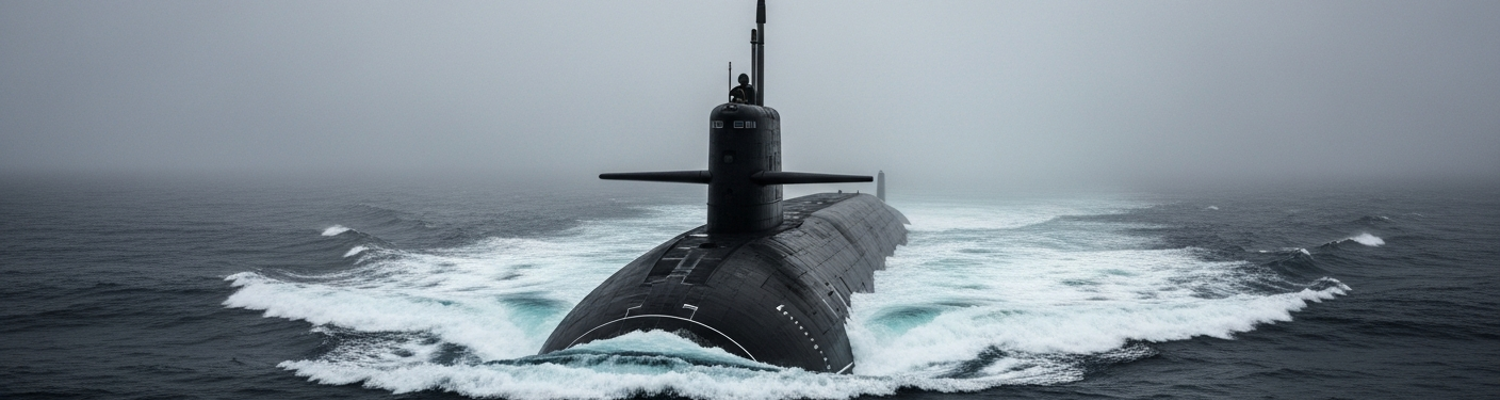

Operational logs from the Cold War document a persistent anxiety among United States naval commanders in the North Pacific. The Soviet Pacific Fleet, based in Vladivostok and Petropavlovsk-Kamchatsky, presented a significant numerical superiority. By the mid-1980s, this fleet comprised approximately 800 ships. This included over 120 submarines and 98 major surface combatants. The force contained Kirov-class battlecruisers like the Admiral Lazarev and two Kiev-class aircraft carriers, Minsk and Novorossiysk. Global exercises such as Okean in 1970 showed Moscow’s capacity for coordinating multi-ocean strikes with dozens of submarines and warships, a command-and-control reach that concerned Western naval strategists. For American submarine crews tracking these assets, the volume of potential targets was a difficult tactical problem. Soviet doctrine emphasized the defense of maritime bastions, especially the Sea of Okhotsk, and the survivability of their ballistic missile submarines (SSBNs). This formed a core part of their nuclear deterrent. The result was a high-traffic environment where any single contact could represent a range of threats, from a diesel-electric patrol submarine to a nuclear-armed SSBN heading for its launch basket.
Geography amplified the tension.
The Bering Strait, a narrow and shallow channel only 85 kilometers wide and about 50 meters deep, is the sole sea link between the Arctic and Pacific Oceans. This made it a chokepoint of strategic importance. A mandatory transit route for Soviet submarines moving from shipyards in the European Arctic to operational areas in the Pacific. A primary mission for U.S. attack submarines was to establish barriers and monitor this traffic. A constant cat-and-mouse game in frigid, confined waters. The U.S. Navy deployed sophisticated assets for this purpose, including the Sound Surveillance System (SOSUS), a network of undersea hydrophone arrays designed to detect the acoustic signatures of transiting Soviet boats. The objective was to find and track any Soviet submarine, particularly nuclear-powered ballistic missile submarines like the Yankee and Delta classes, before they could reach the open ocean. A single undetected SSBN represented a direct nuclear threat to North America. This close-proximity contest led to numerous tense encounters and even collisions, with both sides pushing crews and equipment to their limits for intelligence gathering and strategic positioning.
This underwater competition was complicated by the region’s dominant meteorological feature: persistent, thick fog. The Bering Sea is known for advection fog, which forms when warm, moist air moves over the colder sea surface. Not an occasional nuisance. A prevalent condition, capable of reducing visibility to near-zero for days. During the Cold War, this had a profound effect on naval operations. While modern aircraft were generally all-weather capable, low-altitude maritime patrol and anti-submarine warfare (ASW) flights became exceptionally dangerous and often impossible under such low-cloud conditions.
For surface ships and surfaced submarines, the fog was a disorienting and constant threat. It blinded lookouts and made visual confirmation of radar contacts impossible. A blip on a screen could be a fishing trawler, an iceberg, or a Soviet intelligence-gathering vessel. There was no way to visually discern its identity or intent until it was dangerously close. The fog also degraded the performance of certain radar and electronic surveillance systems, creating an environment where a technologically advanced warship could be effectively blind. This forced a heavy reliance on passive sonar, but the shallow, noisy waters of the strait often complicated acoustic detection. The psychological strain on crews was high, operating for extended periods in a claustrophobic, sensory-deprived world where a collision or a sudden confrontation could emerge from the gray wall of fog at any moment. The Bering Strait was a physical and psychological crucible.
Archival evidence from Sturgeon-class submarine patrols in the late 1980s reveals a recurring technical issue. The standard AN/BQQ-5 sonar suite, a sophisticated system for its time, was being pushed to its limits in the unique acoustic environment of the Bering Strait. The BQQ-5, which integrated a bow-mounted spherical passive and active sonar array with a towed array, was designed for deep-water operations where background noise was relatively predictable. The shallow, 50-meter-deep waters of the Strait created a chaotic soundscape. Constant noise from grinding ice, unpredictable currents, dense biological activity, and the acoustic clutter of the U.S. Navy’s own assets created detection challenges. For the crew of the USS Batfish (SSN-681), a long-hull Sturgeon-class boat, this was an operational problem. By 1988, the mission to track the newest classes of quiet Soviet submarines transiting the chokepoint was becoming difficult. The BQQ-5's processing algorithms were overwhelmed by the volume of acoustic interference, making it hard to distinguish a faint Soviet sonar signature from the background din.
Official channels offered no immediate solution. The problem reached a breaking point aboard the Batfish during a patrol in 1988. Frustration with the BQQ-5’s performance led a small group of sonar technicians and junior officers to devise an unauthorized fix. They decided to bypass the system's main processor for the passive towed array. Anecdotal accounts from squadron veterans indicate the crew jury-rigged a solution using spare parts and commercially available electronics, including a salvaged Tektronix oscilloscope and shielded cable from the ship's communications locker. They created an independent, unfiltered audio feed from the TB-16 towed array. This feed went directly to a separate spectral analysis machine and a set of high-fidelity headphones. This allowed a skilled operator to listen to raw acoustic data from the array, using the human ear to pick out subtle patterns that the BQQ-5’s software was filtering out as noise. It was a return to an earlier era of submarine warfare, relying on operator skill over automated processing. The decision to implement this modification was made at the command level of the submarine, entirely outside the rigid procurement channels of the Naval Sea Systems Command (NAVSEA).
This was a serious breach of protocol. NAVSEA maintained absolute control over the configuration of naval vessels, a policy designed to ensure safety, interoperability, and logistical uniformity. Any modification required a years-long process of design, testing, and approval. The procurement and acquisition system was a deliberate, multi-billion dollar bureaucracy. For a submarine’s crew to independently alter a primary combat system was almost unheard of. It carried the risk of severe professional sanction for the captain and his officers. Yet, the tactical situation in the Bering Strait was deemed so pressing that the Batfish’s command felt the operational risk of inaction outweighed the career risk of insubordination. They were confronting technologically advanced Soviet assets. Waiting years for an approved upgrade was not an option.
The modification worked. On subsequent patrols, the submarine’s sonar division, now augmented by their ad-hoc system, was reportedly able to detect and classify contacts that other submarines in the same area missed. The success of the “Batfish mod,” as it became known, was a validation of the crew’s ingenuity and a critique of the Navy’s procurement process. The unauthorized success created a dilemma for the submarine force leadership. They could not officially condone the breach of protocol, but the results were undeniable. The event became a case study in the friction between warfighters on the front lines and the administrative organizations that supported them.
After-action reports from the late 1980s point to a specific simulated convoy interdiction exercise in the Bering Strait. This was not a routine training evolution. The exercise was designed to stress-test the barrier patrol concept against a peer adversary in the most difficult environmental conditions. The “Blue” force, representing the United States, was centered on the USS Batfish (SSN-681). Fresh from a major overhaul that concluded in December 1990 and equipped with its non-regulation sonar modification, the submarine was tasked with the primary anti-submarine warfare mission. Its objective was to locate, track, and simulate the destruction of a high-value “Red” force convoy transiting a predetermined patrol box. This simulated convoy was composed of several U.S. surface vessels, whose job was to mimic the acoustic and electronic signatures of a Soviet amphibious group. For the crew of the Batfish, this was a test of their controversial equipment. Success would vindicate their risky decision. Failure would bring intense scrutiny.
The exercise began under a thick blanket of advection fog. A deliberate choice by the exercise planners. The fog reduced visibility to less than a quarter-mile, effectively blinding visual and some electronic surveillance methods. Periscope observation was impossible. Surface lookouts were useless. The conditions forced a complete reliance on passive sensors, creating a scenario where hunter and prey navigated by sound alone in shallow, acoustically cluttered waters. The fog created a disorienting operational environment. For the Batfish, it meant operating almost completely blind, save for what its sonar arrays could discern through the murk and ambient noise of the strait. The risk of a real-world collision between the submarine and one of the surface ships it was hunting was acute.
The official record of the exercise was maintained by a Navy P-3C Orion aircraft flying high overhead. A VP-4 'Skinny Dragons' Orion operating from Adak. It circled in clear air far above the fog bank. Its AN/APS-137 multi-mission surveillance radar could cut through the weather to paint a clear picture of every surface contact below. The P-3 crew’s mission was to track the positions of all participating vessels, log the “Red” convoy’s movements, and act as the impartial umpire, confirming or denying any kill claims made by the Batfish. The aircraft’s sensor suite was considered the definitive data source. What the P-3 saw on its screens would become the official history.
Aboard the Batfish, sonar technicians listening to the raw audio from their jury-rigged towed array detected multiple contacts. They classified the acoustic signatures as the “Red” force convoy, moving in formation where intelligence suggested it would be. The data was faint, a whisper that the standard-issue BQQ-5 processing suite reportedly filtered out. Confident in their system, the Batfish’s commander maneuvered the submarine into an optimal firing position and launched a simulated spread of Mark 48 torpedoes. The time, position, and target data were logged and transmitted to the exercise umpires aboard the P-3. The submariners were certain of their success. The response from the Orion was a flat denial. According to the P-3’s official radar data, there were no ships at the coordinates Batfish had targeted. The P-3’s log showed the “Red” convoy was miles away. From the perspective of the airborne umpires, the Batfish had attacked an empty patch of ocean. Its unauthorized sonar system had apparently hallucinated ghost contacts in the fog. This created an operational paradox: the submarine crew was adamant they had engaged the target based on their acoustic data, while the aviation crew, relying on their own powerful sensors, had recorded a complete miss.
Aboard the P-3C Orion, the world was a clean radar plot. The AN/APS-137 surveillance radar provided the exercise umpires with a top-down view of all surface traffic. Their screens showed the “Red” force convoy steaming in a neat formation miles south of its expected position. This radar picture was the official record. The accepted ground truth. Deep below, the USS Batfish saw something entirely different. The submarine’s official AN/BQQ-5 sonar suite showed little more than ambient noise. But the sonar team, listening to the unfiltered audio from their unauthorized towed-array modification, had a contact. A subtle acoustic trace that their jury-rigged system presented as a high-value Soviet submarine, precisely where pre-mission intelligence predicted a target would be.
Two realities. They could not coexist.
The conflict escalated from a data argument to a safety failure. The command team aboard the Batfish, having validated their improvised sonar rig on previous patrols, chose to trust their ears over official reports from the umpires. They were convinced the P-3’s radar was wrong or that the primary target was a submarine the Orion could not see. The submarine maneuvered for an attack, plotting a firing solution for a spread of simulated Mark 48 torpedoes. The atmosphere was tense but confident. This was the moment to prove the worth of their innovation. What no one on the Batfish or in the P-3 knew was that a second US fast-attack submarine was operating within the exercise area. It was maintaining complete radio and sonar silence on a separate, higher-priority intelligence mission. Its position placed it directly in the path of the Batfish’s simulated attack. Historical analyses of Cold War friendly-fire incidents (NARA Record Group 338) show that such situations, born from misidentification and rigid rules of engagement, were a persistent danger.
From the perspective of the airborne umpires, the Batfish fired into an empty patch of ocean. A clear miss based on their radar data. They logged the failure. The denial of their kill infuriated the Batfish’s crew, who were adamant they had engaged a primary target. The crisis erupted hours later. The commander of the second submarine, having detected the active sonar pings of the Batfish’s simulated torpedoes homing on his position, broke his mandated silence. He filed an emergency report of a near-miss incident. The “ghost” contact that the Batfish had so confidently tracked was not a Soviet boat, but it was not empty ocean either. It was a friendly submarine nearly targeted for destruction by another. The incident triggered a formal inquiry. It pitted the clandestine culture of the submarine force against the data-centric authority of naval aviation. The P-3’s log showed a failed attack on a non-existent target. The Batfish’s logs documented a successful engagement based on acoustic data no other platform could replicate.
The emergency report from the second fast-attack submarine, a vessel whose presence in the patrol box was a closely held secret, escalated the situation. Its terse message, breaking mandatory radio silence, reported the active sonar pings of incoming torpedoes. It had been forced into a high-G emergency maneuver. The “ghost” contact Batfish attacked was a friendly asset. This transmission triggered a formal flag-level inquiry, instantly moving beyond the authority of the exercise umpires. Logs from the P-3 Orion, the Batfish, and the second submarine were immediately impounded. A multi-command investigation was chartered to determine how two American submarines came to the brink of a friendly-fire catastrophe during a controlled exercise.
The investigation became a jurisdictional war between the Naval Sea Systems Command (NAVSEA) and the staff of the Chief of Naval Operations (CNO). For NAVSEA, the entity responsible for the design and maintenance of every ship in the fleet, the situation was clear. The crew of the USS Batfish had performed an unauthorized modification to a primary combat system. A direct violation of NAVSEA’s authority over fleet configuration management. NAVSEA investigators viewed the “Batfish mod” not as a clever innovation but as a rogue piece of hardware proven unsafe. Their argument was simple: the crew had jury-rigged an untested system, trusted its flawed output over official data from the P-3, and nearly destroyed another American submarine. The command’s culpability was absolute. Their focus was entirely on the breach of engineering protocol.
Operational commanders saw a different picture. From the perspective of the CNO’s staff, particularly the submarine warfare directorate (OPNAV N97), the investigation was more complex. The near-miss was a serious failure. But they viewed the unauthorized sonar modification as a symptom of a deeper problem. The official AN/BQQ-5 sonar, while effective in deep oceans, was struggling in the shallow, acoustically dense waters of strategic chokepoints. The Soviet Navy was producing quieter submarines. The Navy’s primary sensor system was failing to keep pace. The CNO’s staff confronted the fact that a handful of enlisted technicians and junior officers on the Batfish had, out of necessity, created a system that provided a tangible intelligence advantage where the multi-billion dollar procurement pipeline had failed. The debate inside the Pentagon became a clash of philosophies: NAVSEA’s rigid adherence to process versus the CNO staff’s focus on warfighting outcomes. The operators argued that the root cause was not the Batfish’s modification, but the procurement bureaucracy’s inability to rapidly field equipment that met the evolving threat.
The inquiry devolved into a case study of bureaucratic conflict. Instead of a focused analysis of tactical and equipment failures, the investigation became a paper war, bogged down by competing regulations and institutional pride. NAVSEA engineers, who had designed and certified the BQQ-5, could not officially acknowledge that a crude workaround might outperform their system in certain environments. The submarine force, protective of its people and its problem-solving culture, defended the Batfish commander’s decision-making in a high-threat environment. The result was a stalemate. The final report (JIB-88-04) was a heavily redacted document that found fault with both the exercise’s communication protocols and the submarine’s procedural violations. It carefully avoided a definitive judgment on the sonar modification itself.
The classified report following the incident became a battlefield for two opposing institutional philosophies. On one side stood NAVSEA, the engineers and logisticians. For them, the case was simple: the Batfish command team had violated standing orders by installing an uncertified modification. Their investigation focused on this breach of protocol, concluding that the non-regulation hardware produced flawed data that led directly to the near-miss. The solution, from their perspective, was disciplinary action and a reinforcement of NAVSEA’s authority over configuration management.
The operators saw something else. The office of the Chief of Naval Operations, specifically OPNAV N97, viewed the incident as a critical warning. They argued the root cause was not the crew’s modification but the procurement system’s failure. The standard AN/BQQ-5 sonar was becoming less effective against newer Soviet submarines, yet the official process for fielding an upgrade was a multi-year bureaucratic marathon. The CNO’s staff contended that the Batfish crew had been forced into a corner, compelled by operational necessity to create a solution the institutional system was too slow to provide. The fact that a jury-rigged system using scavenged parts could provide any tactical advantage was an indictment of the procurement pipeline.
The final report’s long-term impact was a slow evolution in naval procedures. While the “Batfish mod” was never officially sanctioned, its problematic success served as a catalyst within the Pentagon. It added a powerful voice to a growing chorus of operational commanders who argued that the Navy’s acquisition process was out of sync with the pace of technological change. The incident became an unofficial case study supporting a new concept: using commercial off-the-shelf (COTS) technology to rapidly upgrade combat systems. This led directly to the development of the Acoustic Rapid COTS Insertion (ARCI) program in the 1990s. ARCI fundamentally changed sonar development by building systems on an open architecture. It allowed for quick software and hardware upgrades using commercially available processors, rather than waiting for bespoke, military-specific components. This shift was a rejection of the old NAVSEA model. Instead of a system being a fixed piece of hardware for decades, ARCI turned the sonar suite into an evolving platform. The Navy could now insert new processing algorithms and faster computer chips on a timeline measured in months, not decades, a process that mirrored the Batfish’s unauthorized field expediency but did so within a structured and certified framework.