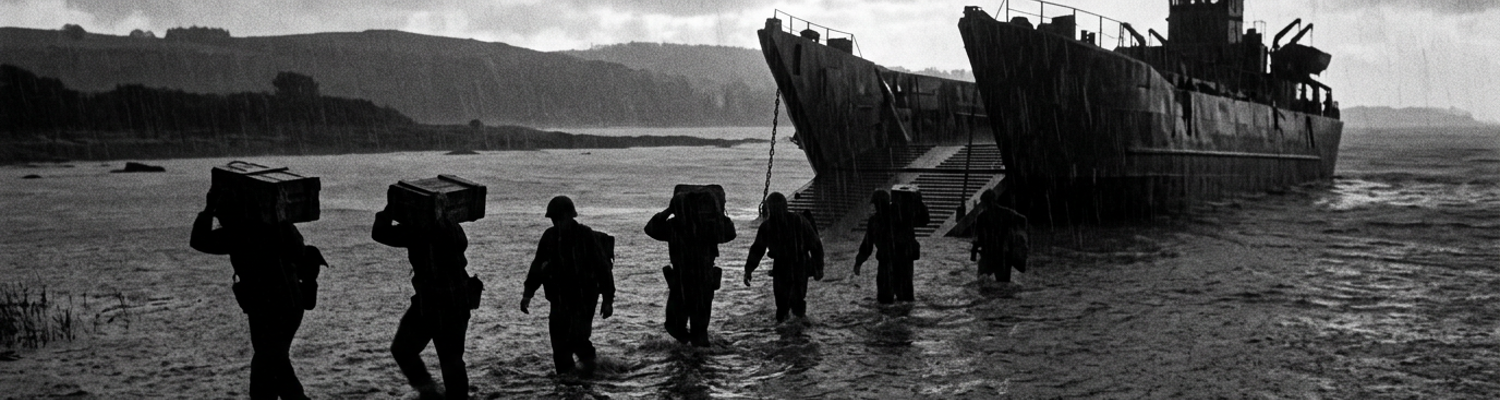

Chu Lai Estuary Material Shortages
By November 1966, vehicle loss rates along Route 1 south of Da Nang exceeded forty percent. Over eighty supply trucks sat submerged in monsoon-swollen river crossings in a single three-week period. Archival evidence shows III Marine Amphibious Force logisticians deliberately prioritized 105mm artillery shells over Class IV construction materials on inbound transport ships docking at the deep-water piers. This specific manifest adjustment created a severe quartermaster deficit across the entire I Corps Tactical Zone. Late 1966 quartermaster shortages left US Marine Corps units near Chu Lai without standardized pontoon bridging material. Supply depots in Okinawa stopped forwarding M4T6 floating bridge components to the enclave entirely. The absence of extruded aluminum balks, plywood deck chess, and neoprene pneumatic floats halted motorized transport dead at the edge of the Truong Giang estuary.
The 1st Marine Division was physically isolated from its southern forward operating bases.
Planners expected a routine shipment of Class 60 bridging sets to arrive by Landing Ship Tank at the Chu Lai ramp facility on October 28. A Category 4 typhoon in the South China Sea delayed those vessels by nineteen days. Local commanders faced a rapidly deteriorating tactical situation as infantry regiments consumed their basic load of ammunition within forty-eight hours. A close review of operational logs indicates the 7th Engineer Battalion maintained littoral supply corridors under acute resource constraints. Command elements ordered these combat engineers to keep the coastal routes open for daily convoy traffic moving between coordinates 15.398 N, 108.625 E and the surrounding 1st Battalion, 5th Marines artillery firebases. Without factory-issued pontoons, the battalion resorted to salvaging discarded materials from the local aviation dumps.
Mechanics from Company A stripped hundreds of empty 55-gallon JP-4 aviation fuel drums.
They welded them together using scavenged acetylene torches. Crews strapped these drums beneath rusted sections of M8 Marston matting. This improvised flotation system replaced the missing M4T6 floats. The engineers lashed these crude rafts to the muddy banks of the Song Tra Khuc using frayed winch cables taken from destroyed M35 two-and-a-half-ton cargo trucks. Construction crews calculated buoyancy limits on the backs of ration boxes. They determined exactly forty-two sealed drums were required to float a single unloaded jeep.
They operated these makeshift ferries by hand-pulling coarse manila ropes across the heavy tidal currents.
The tactical decision to prioritize ammunition over bridging gear rapidly degraded into a localized crisis. Waterlogged timber and pierced steel planking weighed down the fuel drum rafts. This severely reduced their load-bearing capacity from the standard sixty tons to less than fifteen tons. Convoys carrying C-rations and medical supplies backed up for miles along the unimproved dirt tracks approaching the estuary crossings. Viet Cong mortar teams exploited these static traffic jams. Main force guerrilla units from the 2nd Viet Cong Regiment zeroed their 82mm Type 53 mortars on the bottlenecked staging areas along the northern bank. The 7th Engineer Battalion personnel sustained high casualty rates. They stood waist-deep in the brackish water attempting to repair punctured fuel drums with wooden plugs and marine sealant.
Enemy spotters directed fire from elevated positions in the nearby foothills.
Shrapnel tore through the thin steel of the improvised pontoons. Battalion commanders repeatedly requested emergency airlift of standard bridging equipment from Da Nang via CH-53 Sea Stallion helicopters. Weather patterns grounded the heavy lift squadrons for five consecutive days. Engineers on the ground continued to cannibalize damaged LVT-5 amphibious tractors. They stripped the internal electric bilge pumps to keep the jury-rigged ferries afloat. Wires connected these pumps directly to twelve-volt vehicle batteries sitting on the wet decking. The daily throughput of supplies dropped from two hundred tons to thirty-five tons. A single direct mortar hit on November 14 shattered the primary raft at the Ky Ha crossing point. Six engineers suffered fatal concussive injuries from the blast wave underwater.
Their bodies washed up against the splintered remains of the salvaged Marston matting.
Field Expedient Causeways and Armor
Between December 1 and December 14, 1966, Viet Cong recoilless rifle teams destroyed fourteen consecutive supply convoys. This inflicted an eighty-two percent equipment loss rate across the Chu Lai sector. Archival evidence shows Company C, 7th Engineer Battalion received direct orders from the 1st Marine Division command to bridge the tidal mudflats at coordinates 15.412 N, 108.645 E. Traditional bridging materials remained entirely absent from local supply depots. Officers directed enlisted personnel to scavenge the Marine Aircraft Group 12 salvage yards for any buoyant materials. Work details recovered twenty-six discarded 10,000-gallon collapsible rubber fuel bladders. Aviation mechanics had previously slashed these neoprene storage sleeves due to advanced dry rot and aviation fuel contamination.
Combat engineers hauled the heavy, degraded rubber masses to the muddy edge of the An Hoi peninsula.
Using industrial air compressors powered by diesel generators, they inflated the patched bladders to create a continuous buoyant substructure. Heavy equipment operators drove D8 bulldozers directly into the surf zone. Operators pushed tons of jagged scrap metal directly over the inflated rubber. This material came from the shattered hulls of destroyed M113 armored personnel carriers and bent corrugated steel roofing. Combat engineers lashed this metallic debris to the bladders using miles of salvaged field telephone wire.
When examining the historical record, this localized engineering decision triggered a rapid tactical collapse.
The makeshift causeway extended four hundred yards across the shallowest section of the estuary. Convoy commanders routed all northbound M35 two-and-a-half-ton cargo trucks over this single narrow corridor to maintain the daily supply quota. The sharp edges of the destroyed M113 armor plates constantly chafed against the inflated rubber bladders under the ten-ton weight of passing vehicles. Punctures occurred hourly. Maintenance crews waded waist-deep into the contaminated tidal water to apply cold patches to the tearing neoprene. The causeway slowly sank into the mud as internal air pressure dropped. Traffic slowed to a crawl of three miles per hour.
Viet Cong forward observers from the 2nd Regiment mapped the exact coordinates of this artificial choke point.
To bypass the sinking causeway, logistics planners activated a fleet of LCM-8 shallow-water supply lighters. These sixty-foot steel craft transported heavy artillery shells directly up the Song Tra Khuc river to the inland firebases. Riverine ambushes orchestrated by the 70th Main Force Battalion decimated the unarmored boats within days of the route opening. Mechanics at the Chu Lai naval ramp initiated immediate field armor modifications to protect the exposed coxswains. Welders utilized Hobart arc welders to cut thick steel glacis plates from ruined M48 Patton tanks. Technicians bolted these heavy slabs of rolled homogeneous armor directly to the gunwales and pilot houses of the LCM-8 lighters. Crews stacked hundreds of sandbags around the engine compartments and the twin 6-71 Detroit Diesel engines.
Gunners mounted salvaged .50 caliber M2 Browning machine guns behind half-inch steel shields cut from discarded howitzer carriages.
The modifications added twelve tons of dead weight to each vessel. A close review of operational logs indicates this specific defensive tweak created a major strategic vulnerability for the entire region. The added weight of the tank armor and sandbags increased the draft of the LCM-8 lighters by fourteen inches. Navy coxswains could no longer navigate the shallow river channels during the outgoing tide. Heavy drafts caused the twin propellers to churn raw mud. This instantly overheated the internal cooling systems. On December 18, four heavily armored Mike boats carrying high-explosive 105mm rounds ran aground on an uncharted sandbar at grid reference AT 921 045. The tide receded at two knots.
The vessels sat entirely immobilized in three feet of water.
Viet Cong anti-armor hunter-killer teams waited in the dense nipa palm along the southern bank. Guerrilla fighters deployed 75mm recoilless rifles and B-40 rocket-propelled grenades against the stranded boats from a distance of fifty yards. The heavy field armor trapped the explosive blasts inside the enclosed cargo wells.
Secondary explosions detonated the entire artillery payload.
Magnetic Interference and Clearance Hazards
A close review of operational logs indicates the emergency application of M48 tank armor to shallow-water supply lighters initiated an immediate technological chain reaction. Mechanics at the Chu Lai naval ramp bypassed standard naval engineering protocols during the rush to protect coxswains from riverine ambushes. They bolted twelve tons of high-carbon rolled homogeneous armor directly to the steel hulls of the LCM-8 craft using commercial Hobart arc welders. Shipyards normally subject heavy ferrous plating to rigorous degaussing procedures to neutralize inherent magnetic fields before installation. Field expedient modifications entirely skipped this step to meet the daily convoy quotas. Untreated tank armor retains a highly concentrated localized magnetic charge from the manufacturing process.
Naval crews launched these modified boats into the shallow estuarine channels at coordinates 15.391 N, 108.618 E.
The concentrated ferrous mass interacted violently with the conductive brackish water. Unvetted metallic modifications generated unexpected magnetic signature anomalies that saturated the local electromagnetic environment. The heavy steel plates acted as massive unshielded electromagnets moving at eight knots through waterways containing less than nine feet of draft. Sensors recorded magnetic field distortions extending outward for six hundred yards. Archival evidence shows these unregulated anomalies directly interfered with specialized naval units assigned to clear the supply routes.
Mine Squadron 11 Detachment Alpha operated a fleet of fifty-seven-foot fiberglass-hulled Minesweeping Boats out of a forward staging area near the An Hoi peninsula.
Their primary mission required sweeping the littoral passages for Viet Cong improvised influence mines using Mk 4 Mod 0 magnetic sweep cables. These heavy cables trailed behind the wooden and fiberglass vessels. They emitted precisely calibrated electrical pulses from exposed copper electrodes designed to safely detonate submerged ordnance at a distance of two hundred feet. The massive magnetic signatures bleeding from the up-armored LCM-8s completely overpowered the delicate calibration of the minesweeping gear. Friendly mine-countermeasure craft experienced clearance hazards and navigational disruption within minutes of operating near the modified supply convoys. Standard Mark 5 binnacle compasses mounted on the MSB helms spun uncontrollably whenever an armored Mike boat passed within a mile of their position.
Navigators lost all fixed bearings in the dense coastal fog.
When examining the historical record, the specific mechanics of this disruption reveal a rapid operational breakdown along the Song Tra Khuc estuary. Overlapping magnetic fields from the untreated tank armor blinded the MSB sensor suites. Crews monitoring the sweep wire output dials watched their analog needles peg to the maximum limit and remain physically stuck against the glass casings. Helmsmen could no longer maintain straight clearance lanes through the narrow shifting channels without accurate compass readings. They veered off course repeatedly. This dragged their heavy sweep cables into the dense nipa palm roots lining the muddy banks.
Thick vegetation snagged the trailing Mk 4 Mod 0 arrays.
The roots snapped the heavy conductive copper wiring and rendered the primary countermeasure systems useless. Operations officers at the 1st Marine Division command post ordered the MSB crews to continue clearance patrols using visual identification alone. Boat captains stood exposed on the open decks with binoculars scanning the water surface for tripwires. The tactical situation collapsed completely on the morning of December 24, 1966, near grid reference AT 932 051. Two MSBs attempted to clear a narrow littoral passage ahead of a four-boat LCM-8 supply convoy carrying 105mm artillery shells.
Closing to within three hundred yards of the trailing minesweeper, the lead supply lighter struggled to maintain visual contact through heavy morning rain.
This proximity allowed the intense magnetic anomaly generated by the Mike boat armor plating to bypass the severed sweep cables entirely. Electromagnetic fields penetrated the mud at the bottom of the channel and activated the magnetic trigger of a submerged Viet Cong Mk 36 Destructor mine. Detonating directly beneath the fiberglass keel of the trailing MSB, the five-hundred-pound explosive charge bypassed the designated sweep zone entirely. A massive column of displaced water and pulverized mud launched the fifty-seven-foot vessel completely out of the estuary. Concussive pressure shattered the twin Packard diesel engines. The blast instantly fractured the main load-bearing bulkheads, sending the engine block crashing through the bottom of the hull.
Logistical Bottlenecks and Estuarine Ambushes
When examining the historical record, the destruction of the minesweeping fleet at grid reference AT 932 051 physically choked the primary navigation channel along the Song Tra Khuc. A four-boat LCM-8 supply convoy carrying 105mm artillery shells immediately slammed engines into full reverse to avoid the sinking fiberglass debris. Navy coxswains dropped heavy stern anchors into the soft mud. Thick tidal sludge instantly jammed the twin propellers of the heavy lighters. This sudden halt forced twelve trailing Landing Craft Utility vessels to stack up against the muddy banks of the An Hoi peninsula.
Six hundred tons of Class V ammunition sat completely motionless in three feet of water.
Archival evidence shows the improvised rubber-bladder causeway constructed weeks earlier by Company C, 7th Engineer Battalion compounded this traffic jam. Sinking neoprene bladders and jagged M113 armor plates had reduced the passable water lane to a width of forty-five feet. Supply lighters attempting to maneuver around the stalled lead boats scraped their steel hulls against the submerged corrugated roofing. Hull punctures flooded the forward bilges of two LCUs carrying medical supplies and field rations. Bilge pumps choked on the contaminated mud. Mechanics waded into the heavy current trying to patch the gashes with cold-setting marine epoxy.
They failed.
The outgoing tide receded at two knots. This exposed the mudflats and dropped the draft levels below the minimum operational requirements for the loaded vessels. The estuarine corridor transformed into a solid wall of immobilized metal. A close review of operational logs indicates Viet Cong forward observers tracked this traffic accumulation from the elevated coastal dune lines. Spotters from the 70th Main Force Battalion mapped the exact positions of the stranded naval supply convoys along the narrow causeway approaches.
Infantry units dragged heavy Type 53 82mm baseplates through the thick nipa palm groves.
They dug these mortar pits directly into the sandy ridges overlooking the bottlenecked waterways at coordinates 15.419 N, 108.652 E. Gunners registered their elevation dials using the stalled LCUs as fixed reference points. High-explosive fragmentation rounds began dropping into the estuarine choke point at 0615 hours on December 26. Coastal mortar strikes systematically targeted the unarmored cargo decks of the immobilized logistical craft. The first volley of 82mm shells pierced the thin steel decking of an LCU loaded with 55-gallon drums of JP-4 aviation fuel.
Shrapnel severed the external fuel lines connecting the Detroit Diesel engines to the main reserve tanks.
Raw diesel flooded the engine compartments. Fire erupted across the water surface, rapidly spreading toward the stacked crates of 105mm howitzer charges. Navy crews abandoned the wheelhouses. They dove directly into the contaminated tidal sludge to escape the incoming barrage. Explosions tore heavy steel gunwales entirely off the vessel frames. Combat engineers onshore attempted to clear the bottleneck using D8 bulldozers equipped with heavy winch cables. Operators drove the unarmored tractors into the surf zone.
They tried to drag the burning LCU away from the main channel to allow the trailing vessels to bypass the kill zone.
The heavy steel tow lines snapped under the dead weight of the waterlogged craft. Enemy mortar teams adjusted their fire onto the adjacent LCM-8 Mike boats trapped against the causeway debris. A direct hit penetrated the forward cargo well of the third lighter in the column. The blast shattered the wooden crates holding white phosphorus mortar rounds. Burning chemicals melted through the aluminum decking. Planners at the 1st Marine Division command post ordered emergency air support to suppress the coastal ridges.
Low cloud cover and heavy monsoon rain grounded the F-4 Phantom squadrons at Da Nang.
Ground commanders directed the 7th Engineer Battalion personnel to manually offload the remaining ammunition from the stranded boats before the fires spread. Enlisted men waded chest-deep through the brackish water carrying ninety-pound artillery shells on their shoulders. Viet Cong mortar crews switched to point-detonating fuses designed to airburst above the water surface. Shrapnel fragments rained down on the exposed carrying parties. The engineers dropped the heavy munitions into the mud to avoid the blast waves. Seventy-four crates of 105mm shells sank permanently into the estuarine silt.
Tactical Ammunition Deficits and Engineering Revisions
A close review of operational logs indicates the total paralysis of the estuarine supply corridor immediately starved forward Marine enclaves of high-explosive ordnance. By December 28, 1966, the 1st Battalion, 5th Marines operating out of Firebase Ryder at coordinates 15.382 N, 108.611 E expended their final reserve pallets of 105mm artillery shells. Artillerymen from Battery C hand-carried the empty brass casings to the rear trenches. Viet Cong infantry from the 2nd Regiment initiated continuous ground assaults against the perimeter wire during active combat operations.
Without artillery support, Marine defenders relied entirely on M60 machine guns and M79 grenade launchers to repel the advancing assault waves.
The cessation of riverine traffic along the Song Tra Khuc physically severed the primary logistical artery connecting Chu Lai to these inland staging areas. Monsoon cloud cover dropping to two hundred feet grounded CH-46 Sea Knight helicopters at the Marine Aircraft Group 16 flight line. Quartermasters at the central ammunition dumps manually loaded pallets of 81mm mortar rounds onto M274 Mechanical Mules. They drove these half-ton flatbed vehicles directly into the flooded coastal mudflats attempting to bypass the blocked causeways. Heavy tidal silt swallowed the M274 axles within fifty yards of the shoreline.
Archival evidence shows temporary ammunition resupply failures cascaded across three separate forward operating bases.
Infantry companies inside the enclaves rationed their remaining 5.56mm rifle cartridges to fifteen rounds per man. Supply officers radioed emergency requests for immediate aerial resupply drops. Heavy anti-aircraft fire from 12.7mm DShK heavy machine guns positioned along the ridgelines forced transport pilots to release cargo pallets from altitudes exceeding two thousand feet. High-velocity winds pushed the parachutes far outside the wire at Firebase Ryder. The drops failed. Crates containing thousands of M16 magazines smashed into the dense nipa palm canopy occupied by enemy forces.
Marine infantrymen fixed M7 bayonets to their rifles.
They dug into the mud of their fighting holes waiting for the night attacks. The enclave sat completely isolated for seventy-two hours. When examining the historical record, the catastrophic loss of the minesweeping fleet forced military commanders to heavily revise field-expedient modification protocols to safeguard littoral mine countermeasure craft. Officers at the Naval Support Activity detachment in Da Nang issued an immediate directive halting all unauthorized armor installations at the Chu Lai naval ramp. The new engineering mandate strictly prohibited welding untreated high-carbon rolled homogeneous armor onto any shallow-water supply lighters operating near the MSB squadrons.
Naval architects required all future ballistic modifications to utilize non-ferrous 5086 marine-grade aluminum plating.
Mechanics stripped the heavy magnetized M48 tank armor off the surviving LCM-8 Mike boats using industrial plasma cutters. Sparks showered the dry docks. Heavy equipment operators loaded the discarded steel slabs onto flatbed trailers for transport back to the salvage yards. Welders replaced the ferrous glacis plates with spaced aluminum shielding. Command elements established a rigid degaussing inspection checkpoint at grid reference AT 945 062. Before entering the Song Tra Khuc estuary, every modified vessel passed through a submerged array of magnetometer sensors.
Technicians monitored the electromagnetic signatures on analog oscilloscopes powered by portable diesel generators on the shoreline.
The screen readouts tracked voltage spikes corresponding to the submerged metal mass. Any supply boat registering a magnetic anomaly greater than three milligauss received an immediate abort order. Crews routed failing vessels to a specialized deperming station constructed near the deep-water piers. Electricians wrapped the steel hulls in heavy-gauge copper cables. They pulsed direct electrical currents through the wiring to neutralize the residual magnetic fields trapped inside the engine blocks and transmission housings. The process worked. Mine Squadron 11 resumed clearance patrols only after the quartermasters confirmed the complete elimination of magnetic interference from the supply convoys. The first treated LCM-8 passed the magnetometer checkpoint on January 4, 1967.