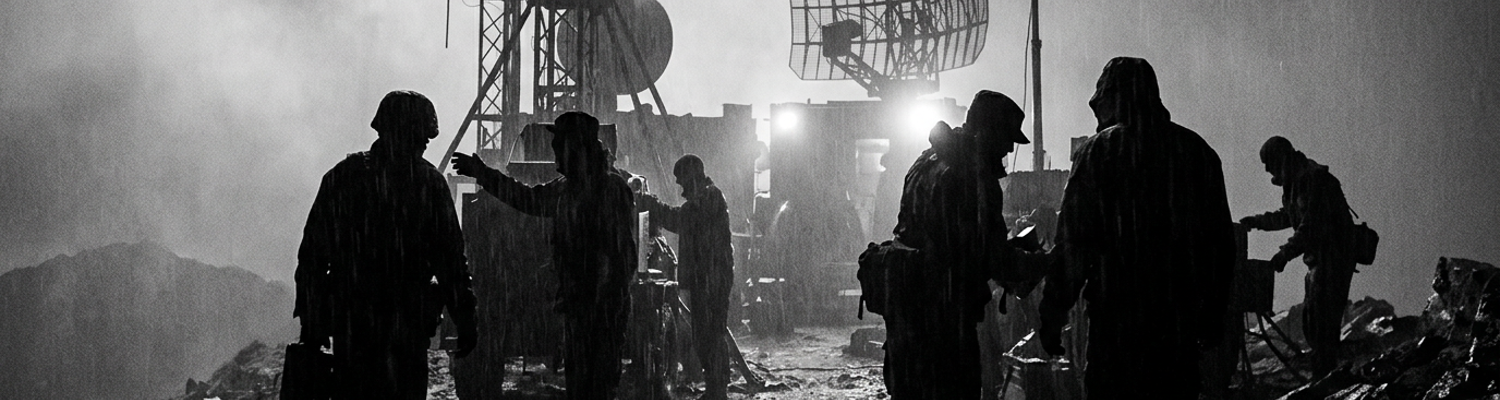

Airborne Command Platforms Over Mount Igman
At 0214 hours on November 23, 1995, the primary UHF satellite relay linking the French and British Rapid Reaction Force artillery batteries to the Combined Air Operations Center went entirely dead. The geopolitical situation across the Balkans was in a state of highly significant transition. Diplomats were actively negotiating the Dayton Agreement in Ohio. On the ground in Bosnia, the Siege of Sarajevo remained an active combat zone. The United Nations Protection Force was preparing to transfer authority to a heavily armed Implementation Force. This administrative transition offered no physical protection to the soldiers holding the high ground. Archival evidence shows that the sudden hardware failure on the mountain instantly severed all higher-echelon command channels. Forward-deployed ground controllers stationed along the ridgelines overlooking the Sarajevo valley were completely isolated. Heavy mortar fire was already tracking toward their coordinates.
A complete blackout.
Radiomen frantically swapped cryptographic keys on their KY-58 secure voice modules in the dark. Green indicator lights on the front panels of the PRC-117 field radios flickered out. The loss of the primary uplink meant that any requests for close air support or counter-battery fire could not reach the strike aircraft holding off-station over the Adriatic Sea. A backup network had to be established immediately through airborne relays maintaining a continuous orbit overhead. A close review of operational flight logs from that evening indicates that the primary node for this emergency routing fell to a United States Air Force EC-130E Airborne Battlefield Command and Control Center. Assigned to the 42nd Airborne Command and Control Squadron operating out of Aviano Air Base in Italy, these heavily modified C-130 Hercules airframes functioned as high-altitude switchboards. Inside the cargo bay of the aircraft sat the USC-48 Airborne Command and Control Center capsule. This forty-foot-long, 20,000-pound pressurized aluminum cylinder was packed with twenty-three distinct radio transmitting systems. The physical integration of these systems required continuous manual monitoring of cooling fans and power inverters.
If the internal temperature of the USC-48 exceeded eighty-five degrees Fahrenheit, the cryptographic decryption keys would automatically dump to prevent compromise.
Twelve battle staff members sat shoulder-to-shoulder under harsh fluorescent lighting within this module. They manually patched VHF, UHF, and HF frequencies together using physical switchboards to bridge incompatible NATO ground networks. These technicians worked continuously to synchronize ground maneuver elements with strike packages entering the airspace. The aircraft flew a precise figure-eight pattern at 24,000 feet just outside the SA-6 surface-to-air missile threat rings to maximize coverage. Airmen inside the capsule monitored the AN/ARC-164 UHF transceivers for any faint distress calls breaking through the static. The physical geography of the Dinaric Alps aggressively blocked these radio transmissions. Mount Igman rises 1,502 meters directly southwest of Sarajevo. This massive geological barrier completely disrupted air-to-ground radio line of sight. The EC-130E itself struggled with the severe weather system pushing up the mountain slopes. De-icing boots on the leading edges of the aircraft wings inflated and deflated continuously to break off the heavy accumulation that threatened to stall the heavy turboprop.
Down on the ground, relentless freezing rain pounded the mountain throughout late November.
The precipitation coated both the rugged limestone peaks and the military hardware stationed there in solid sheets of rime ice. Signal engineers from the 1st Combat Communications Squadron had previously established a tactical relay site at the summit to push signals down into the valley. Weather stations recorded surface temperatures dropping to minus twelve degrees Celsius. Ice accumulation rapidly deformed the shape of the OE-254 omnidirectional antennas. This physical distortion altered the standing wave ratio of the radio frequency emissions. The transmitters began reflecting power back into their own amplifiers. Automatic thermal shutdowns triggered across the relay site. Airborne radar operators aboard the EC-130E recorded severe signal attenuation every time their flight path dipped below the optimal horizon angle relative to the Igman summit. Flight crews attempted to bank the aircraft tighter to point their belly-mounted blade antennas directly at the mountain. Ground technicians abandoned their shelters and climbed the slick, exposed antenna masts with claw hammers. Artillery shells impacted the lower slopes of the mountain while the engineers worked without safety harnesses in the dark. They physically struck the frozen AS-141 antenna elements to shatter the two-inch-thick ice casings degrading the signal output.
VHF Radio Links and Medical Evacuation Logistics
The destruction of the primary relay mast on the lower slopes forced the EC-130E battle staff to abandon their standard communication architecture. Archival evidence shows the airborne controllers inside the USC-48 capsule immediately shifted their primary air-to-ground networks to unencrypted Very High Frequency radio links. This specific band offered the only electronic pathway capable of penetrating the dense atmospheric clutter to reach the partisan ground spotters operating deep within the Sarajevo valley. Local irregulars belonging to the Army of the Republic of Bosnia and Herzegovina 1st Corps manned these forward positions. Standardized NATO communications gear was entirely absent from their inventory. The partisans carried a mismatched collection of smuggled Motorola Saber handhelds and captured Yugoslav People's Army RUP-12 manpack radios. Continuous manual retuning by the airborne controllers was required to operate the AN/ARC-186 VHF transceivers aboard the aircraft. The technicians hunted endlessly for the faint, one-watt FM transmissions originating from ruined concrete high-rises in the Hrasnica suburb.
The signal barely broke the squelch threshold.
To maintain the fragile connection, the flight crew banked the heavily loaded turboprop into a steep, continuous orbit. This extreme flight angle pointed the belly-mounted blade antennas directly at the valley floor. When examining the historical record, it becomes clear that these partisan spotters acted as the sole forward observers for the entire sector. Freezing rain flooded the basements where they crouched while 122mm artillery shells leveled the surrounding blocks. The partisans kept their radios tucked inside their coats to preserve the failing nickel-cadmium batteries in the extreme cold. Airborne operators strained to hear the heavily accented English breaking through the static of the VHF channels. Ground observers transmitted directly to the aircraft at 24,000 feet using only their short rubber duck antennas. Six-digit Military Grid Reference System coordinates were read off rain-soaked paper maps illuminated by red-lens flashlights. The technicians transcribed these numbers onto grease boards mounted on the bulkheads of the pressurized capsule. Every grid coordinate represented a mass casualty event.
Ground spotters coordinated all frontline medical evacuations and casualty triage routing directly through these airborne controllers.
Standard UNPROFOR medical dispatch centers in the city had lost their landline connections during the early morning bombardment. French and British armored ambulance crews driving Renault VABs idled at muddy checkpoints. Heavy fog physically obscured the tactical situation ahead on the roads. Observers on the ridgelines watched the artillery impact patterns to calculate the safest extraction routes through the active kill zones. Keying their VHF handsets, the spotters broadcasted improvised nine-line medevac requests to the circling EC-130E. Technicians inside the command capsule immediately cross-referenced the incoming casualty reports against their own radar tracks. The airborne crew assumed the role of an emergency dispatch center. Wounded soldiers were categorized into strict triage classifications over open radio channels. A chest wound requiring immediate surgery was assigned a Priority One status. Shrapnel lacerations were downgraded to Priority Three to keep the extraction routes clear for the most critical cases. Unencrypted transmissions invited immediate counter-battery fire. To prevent Bosnian Serb Army signals intelligence units from triangulating the casualty collection points, the airborne controllers and ground spotters developed a rapid, ad-hoc brevity code system.
Arbitrary colors were assigned to specific intersections along the treacherous Mount Igman dirt supply route.
A transmission requesting an urgent surgical extraction at Blue-Four prompted the EC-130E crew to relay the translated grid coordinates to French Puma helicopter squadrons waiting on alert at Kiseljak. Operators simultaneously monitored the VHF frequencies for incoming fire warnings from the partisans. Any report of mortar tubes flashing near a designated extraction zone caused the airborne controller to instantly abort the inbound medical flight. Heavy patch cords were used to physically bridge the VHF receiver audio directly into the UHF command net. This manual connection allowed the helicopter pilots to hear the ground spotters screaming out real-time impact warnings. Shrapnel tore through the designated landing zones just as the flight crews banked away from the mountain.
Emergency Antenna Splices Under Mortar Barrage
At 0340 hours, a 120mm high-explosive mortar shell detonated thirty meters from the tactical operations center on Mount Igman. The blast instantly shredded the primary coaxial trunk lines and severed all communication with the Combined Air Operations Center. Frontline troops holding the forward observation posts were completely isolated. Archival evidence shows the blast wave deformed the aluminum framing of the OE-254 antenna masts. The heavy RG-213 transmission cables connecting the radio transmitters to the upper elements snapped under the tension. The sudden loss of signal telemetry triggered a cascade of red fault lights across the AN/TRC-170 tropospheric scatter radio terminals inside the command tent. Forward communications detachments from the 1st Combat Communications Group found themselves trapped under an active bombardment. Bosnian Serb Army artillery batteries located in the Ilidza suburb had triangulated their electromagnetic emissions. The incoming barrage systematically advanced up the limestone ridgeline. The enemy batteries dropped 82mm and 120mm rounds at forty-second intervals.
Ground commanders ordered immediate physical repairs to the antenna arrays.
Technicians abandoned their sandbagged bunkers and crawled into the impact zone with hand tools. When examining the historical record, the specific mechanical challenges of operating under active mortar fire become clear. Shrapnel from the initial impacts had severed the main power distribution cables connecting the diesel generators to the communications modules. The crews were forced to operate on internal battery power. Radiomen lay flat in the freezing mud to avoid the razor-sharp fragments of cast iron tearing through the tree canopy overhead. Concussive pressure waves from the explosions repeatedly knocked the engineers off balance as they attempted to unbolt the damaged antenna base plates from their rocky foundations. Every time a mortar tube fired in the valley below, a faint thump echoed up the mountain. The technicians had approximately eighteen seconds to press their faces into the dirt before the round impacted. The physical toll on the equipment matched the danger to the personnel. Fragments of hot metal sliced through the Kevlar composite of the satellite dishes and shattered the ceramic insulators on the high-frequency dipoles.
The ground detachments lacked heavy armor support.
They possessed no organic counter-battery radar to locate the enemy firing positions. They relied entirely on manual repairs to reestablish the UHF link so the airborne controllers could vector in NATO strike aircraft. The standard replacement cables were buried under the collapsed wreckage of a secondary supply tent. Signal technicians improvised emergency antenna splices using field-expedient wiring to restore the severed communication channels. A close review of operational logs indicates that engineers stripped sections of standard WD-1/TT field telephone wire to bridge the physical gaps in the heavy coaxial lines. This specific field wire lacked the heavy shielding required for high-frequency radio transmissions. The technicians used standard issue combat knives to expose the copper cores of the shattered RG-213 cables. They manually twisted the raw copper ends together with the scavenged telephone wire in the dark. Freezing rain immediately coated the exposed metal connections. The moisture threatened to short out the transmitters the moment power was restored. Engineers wrapped the crude splices in thick layers of electrical tape to seal out the water.
Radio operators manually bypassed the automatic safety relays on the PRC-117 transceivers.
Pushing sixty watts of radio frequency energy through unshielded telephone wire caused the transmitter heat sinks to rapidly exceed their maximum operating temperatures. The impedance mismatch forced the radio energy to reflect back into the amplifier circuits. The technicians packed handfuls of wet snow directly onto the aluminum cooling fins of the radio chassis to prevent the internal circuitry from melting down. Up in the EC-130E capsule, airborne battle staff detected a weak, heavily distorted carrier wave breaking through the static on the primary UHF guard frequency. The improvised splice degraded the signal quality significantly. Transmission range dropped by more than sixty percent. Heavy background interference flooded the channel. Ground operators shouted their nine-line medical evacuation requests and artillery grid coordinates directly into the handsets. They held the stripped wires together with their bare hands to maintain the physical electrical connection against the heavy wind. An 82mm mortar shell slammed into the limestone outcropping fifty feet away. The explosion showered the exposed electronics in pulverized rock.
Moisture Proofing Triage Telemetry Equipment
A close review of operational logs indicates that the freezing rain on Mount Igman directly attacked the unsealed chassis seams of the AN/UXC-7 facsimile machines and KY-68 local digital switches. These units handled the digitized medical data originating from the forward casualty collection points. Water seeped through the rubber gaskets surrounding the RS-232 serial ports. Ice formed inside the pin connectors. As the surface temperature dropped to minus fourteen degrees Celsius, the expanding ice fractured the delicate fiberglass circuit boards. Signal engineers from the 1st Combat Communications Group watched their diagnostic terminals flash with continuous grounding errors. The frontline triage telemetry relied on these specific switches to parse digital casualty reports before transmitting them to the EC-130E orbiting overhead. Without this continuous data stream, the airborne battle staff could not authorize inbound medical helicopters. They could not track the availability of O-negative blood reserves at the forward surgical tents.
Equipment manuals offered no authorized procedures for operating without intact weather seals.
Technicians resorted to immediate physical improvisation to shield the electronics from the downpour. Archival evidence shows that radiomen cannibalized their own cold-weather gear and field rations to create makeshift barriers. They stripped heavy-duty plastic bags from standard-issue Meals Ready-to-Eat and stretched them tightly over the exposed radio faces. Standard olive-drab duct tape secured the plastic directly to the aluminum casings. Engineers applied thick layers of rifle grease and petroleum jelly from their individual first aid kits to the threading of the N-type coaxial cable connectors before screwing them into the receiver ports. This hydrophobic barrier prevented capillary action from drawing moisture down into the copper core of the transmission lines. When the plastic bags tore against the sharp edges of the equipment racks, technicians melted the edges of nylon ponchos over the damaged seams using Zippo lighters to form a crude watertight seal. They packed mud around the base of the portable battery units to stop the pooling water from shorting the terminal posts. The modified equipment was then pushed back into the freezing mud.
Bosnian Serb Army mortar crews operating out of the Ilidza suburb initiated a sustained bombardment of the relay positions just as the telemetry nodes came back online.
High-explosive rounds impacted the limestone ridges at irregular intervals. The shells struck in a grid pattern directly over the communications site. Concussive blasts threw jagged rock fragments and pulverized dirt across the exposed signaling gear. Engineers threw their Kevlar flak jackets over the modified KY-68 switches to protect the thin plastic waterproofing from flying shrapnel. The field modifications held the network together as the ground vibrated under the incoming artillery. Medical officers operating out of flooded basements in the Hrasnica suburb typed out digital nine-line evacuation requests on their ruggedized field laptops. These data packets routed up the mountain, passed through the grease-sealed connectors of the relay equipment, and transmitted directly to the airborne controllers. Every transmitted packet contained strict blood-type requirements and surgical priority codes. Maintaining this data link required continuous physical intervention by the engineers under heavy bombardment. Shrapnel occasionally severed the WD-1/TT field wire connecting the local switchboards to the primary transmitters.
Technicians low-crawled through the impact craters to locate the broken strands.
Ground crews stripped the wire ends with their standard-issue combat knives and twisted them back together while mortar shells detonated less than fifty meters away. Engineers wrapped the fresh splices in wet electrical tape and buried them under loose rocks to shield them from the next blast. The triage telemetry continued to transmit uninterrupted to the EC-130E. The data feed provided the airborne dispatchers with real-time updates on patient heart rates and blood loss volumes. A 120mm shell landed directly on a nearby generator. The blast permanently disabled the primary power unit for the sector.
Radio Crystal Relay Degradation in Subzero Mud
A close review of operational logs indicates that the severe weather system covering the Dinaric Alps directly degraded the internal frequency synthesis architecture of the tactical radio networks. Signal engineers from the 1st Combat Communications Group operated AN/PRC-113 multi-band transceivers from shallow, waterlogged trenches dug directly into the Mount Igman limestone. Sustained exposure to freezing mud and moisture degraded the airborne radio crystal relays housed within these forward-deployed units. These specific relays utilized precision-cut quartz crystal oscillators to generate the exact carrier frequencies required to establish a secure uplink with the EC-130E orbiting at 24,000 feet. Heavy rime ice and liquefied topsoil easily bypassed the hardened rubber O-rings on the transceiver battery compartments after days of continuous use. The freezing slurry seeped directly into the unprotected aluminum chassis seams. This heavy moisture coated the exposed printed circuit boards and the base of the crystal housing in a highly conductive layer of wet dirt.
The foreign contamination immediately altered the electrical capacitance of the internal tuning circuits.
The quartz crystals physically contracted as the ambient air around them dropped well below freezing. This thermal contraction caused their mechanical oscillation rates to slow down and destabilize the phase-locked loop. The baseline transmission frequency physically shifted away from its assigned channel. Archival evidence shows that this severe environmental degradation forced technicians to actively manage drifting frequencies during extended operations to keep the primary air-to-ground network functional. The AN/PRC-113 transceivers were strictly programmed to transmit on a designated UHF guard frequency of 243.0 megahertz. The freezing mud altered the oscillation rate of the quartz relays so drastically that the ground transmission shifted downward by several kilohertz into adjacent, unauthorized spectrum bands. Up in the pressurized USC-48 capsule aboard the EC-130E, airborne controllers watched the incoming signal strength drop entirely to zero on their rack-mounted spectrum analyzers. The automated squelch filters on the aircraft radios interpreted the off-frequency transmissions as ambient atmospheric static and blocked the audio feeds completely.
Ground technicians lacked the specialized calibration equipment required to realign the synthesizer circuits in the field.
The KY-58 secure voice modules failed to synchronize their cryptographic handshakes because the timing signals were embedded in the drifting carrier wave. This cryptographic failure instantly severed the secure communication link. The operators were forced to dump their daily keys. They resorted to continuous manual intervention under complete darkness. Operators physically turned the rotary dials on the front panels of their wet radios to track the shifting carrier wave across the spectrum. When examining the historical record, the specific mechanical troubleshooting required under active bombardment involved constant, unencrypted synchronization between the airborne staff and the mud-soaked engineers. Ground radiomen initiated a continuous test tone every four minutes to provide a tracking signal. Airborne technicians aboard the heavily modified C-130 Hercules manually stepped their AN/ARC-164 receivers down in precise two-kilohertz increments until they intercepted the degraded audio. Once they successfully locked onto the new frequency, the airborne controllers broadcasted the exact numerical offset value back down to the forward observation posts. Ground spotters transcribed these offset frequencies onto waterproof notebooks using grease pencils while Bosnian Serb Army artillery batteries shelled the lower slopes.
The quartz crystals continued to cool and drift further out of alignment as the freezing rain intensified throughout the early morning hours.
Signal detachments attempted to stabilize the internal temperatures of the transceivers by wrapping the aluminum casings in standard-issue wool blankets. They packed the wrapped radios tight against the exhaust vents of their portable diesel generators. Engineers dug through the freezing mud with their bare hands to retrieve the transceiver cables. A 122mm artillery shell impacted forty meters from the trench line. The explosion completely buried the primary radio unit under three hundred pounds of displaced limestone and wet soil.
Aeromedical Exhaustion and Continuous Shift Operations
A close review of operational logs indicates that aeromedical evacuation technicians attached to the UNPROFOR forward surgical detachments remained at their posts on the Mount Igman ridgeline for thirty-six consecutive hours. The rotation schedule collapsed entirely after the initial mortar barrage destroyed the primary transport vehicles parked at the lower checkpoints. Technicians operating out of Grid Zone 34T BP 884 592 found themselves trapped in a freezing trench network filled with liquefied topsoil and shattered limestone. Surface temperatures hovered at minus twelve degrees Celsius throughout the second night of the bombardment. These medical dispatchers knelt directly in the freezing mud to operate their AN/PRC-117 manpack radios. They routed incoming casualty reports from the Sarajevo valley up to the EC-130E orbiting overhead. The sustained exposure to the subzero slurry induced severe combat exhaustion across the entire detachment.
Fine motor skills deteriorated rapidly as core body temperatures dropped.
Medical personnel struggled to manipulate the small plastic dials on their encryption modules with violently shaking hands. Frostnip turned the skin on their exposed fingertips a translucent white. Archival evidence shows the physical fatigue generated severe operational hazards for the airborne medical routing. Sleep deprivation caused auditory hallucinations among the radiomen listening to the heavy static on the UHF guard frequencies. Technicians repeatedly keyed their handsets to respond to phantom voice transmissions that never registered on the EC-130E spectrum analyzers. The heavy battery packs required to power the transceivers added to the physical toll. A standard BA-5590 lithium battery weighed over two pounds and lost sixty percent of its charge capacity in the extreme cold. Exhausted medics unclipped the dead batteries from the radio chassis and shoved the freezing plastic blocks directly inside their field jackets. They pressed the depleted power units against their armpits to warm the lithium cells. This desperate thermal transfer squeezed an extra three minutes of operational voltage out of the chemical cores. The improvised body-heat warming cycle allowed them to transmit exactly one additional nine-line medevac request before the radio died completely.
Equipment decay outpaced the physical collapse of the personnel.
The rubber push-to-talk buttons on the H-250 handsets cracked and sheared off after thirty hours of continuous compression in the freezing rain. Water pooled inside the exposed switch mechanisms and shorted out the internal copper contacts. Medical dispatchers could hear the airborne controllers aboard the EC-130E requesting triage updates, but they could not transmit a reply. To bypass the dead switches, technicians unscrewed the plastic handset casings using the blades of their combat knives. They extracted the insulated internal wiring and stripped the ends with their teeth. Whenever a French Puma helicopter approached the active kill zone near the Hrasnica suburb, the exhausted medics manually tapped the raw copper wires together to open the microphone circuit. This crude physical bypass transmitted their voice communications up to the airborne command capsule. Sparks burned small holes into their wet gloves every time the circuit closed. When examining the historical record, the success of the forward medical channels relied entirely on these continuous manual interventions by sleep-deprived engineers.
The EC-130E battle staff required constant telemetry to coordinate the inbound flight paths against the Bosnian Serb Army artillery patterns.
Down in the mud, a technician with severe hypothermia held two stripped wires together for fourteen unbroken minutes to maintain an open channel. Airborne controllers used that specific transmission window to vector a British armored ambulance away from a pre-registered mortar impact zone at intersection Blue-Four. The ground dispatcher collapsed face-first into the trench water immediately after the extraction vehicle reported clearing the hazard area. Other medics dragged him out of the mud by his tactical webbing while simultaneously keeping the radio antenna pointed at the sky. A fresh radioman grabbed the exposed wires and resumed tapping out the triage priority codes for the next casualty collection point. The EC-130E spectrum analyzer registered the carrier wave at 0614 hours. The extraction helicopter departed Kiseljak three minutes later.