
Exercise Able Archer 83 Atmospheric Blackouts
The theater inventory included 108 Pershing II intermediate-range ballistic missiles and 3,000 B61 nuclear gravity bombs. Thousands of AGM-65 Maverick air-to-surface missiles and stockpiles of CBU-58 cluster munitions sat in heavily guarded bunkers across West Germany. Archival evidence shows that in November 1983, NATO initiated Exercise Able Archer 83 to simulate escalated command procedures utilizing this highly significant stockpile. Command elements at Supreme Headquarters Allied Powers Europe in Mons, Belgium, ran a five-day sequence moving from conventional readiness to a simulated DEFCON 1 nuclear release. Officers generated and transmitted encrypted launch authorization codes through the Allied Command Europe communications network. The drill required regional commanders to process simulated chemical weapon attacks against European cities and respond by requesting nuclear strikes through the chain of command. Teletype machines clattered constantly in underground bunkers. They printed out formatted messages detailing simulated troop movements of the Warsaw Pact. Analysts tracked these ghost divisions on acetate maps using grease pencils. Staff personnel practiced the physical keystrokes and authentication protocols needed to arm the B61 bombs loaded onto F-111 Aardvark strike aircraft. Local air traffic controllers and forward air controllers received sealed envelopes containing the exercise strike coordinates and time-on-target requirements. The operation tested the rigid bureaucratic pathways required to convert a peacetime military into an active nuclear strike force within forty-eight hours.
Archival supply logs place the most vulnerable nodes of this network directly on the front lines.
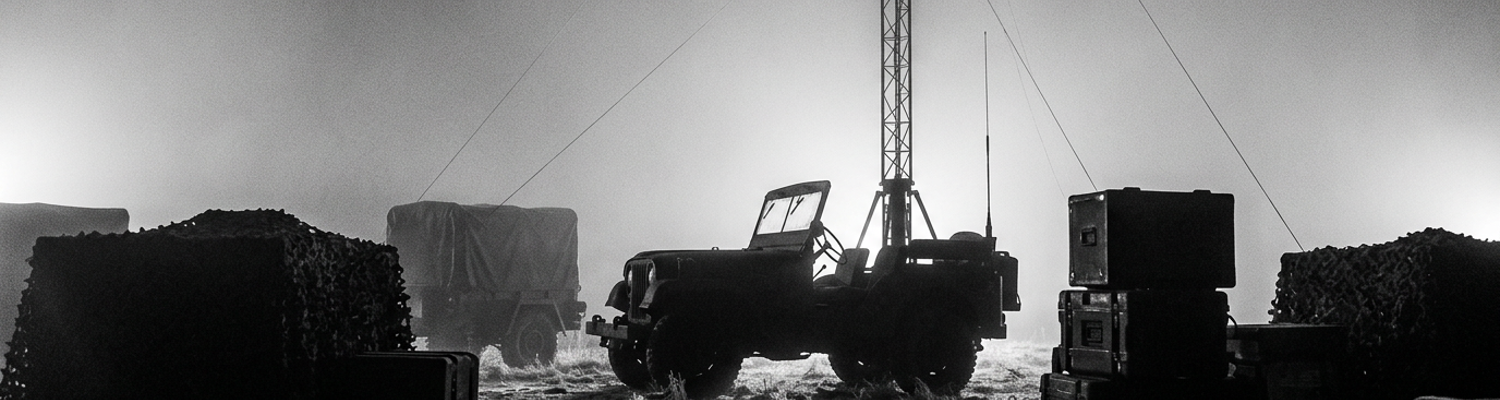
USAF 601st Tactical Air Control Wing detachments operated at an austere forward airstrip near the Fulda Gap. Elements of the 601st deployed from Sembach Air Base to a poorly graded dirt runway positioned less than twenty miles from the East German border in the Hesse region. Ground crews established a tactical operations center inside a standard-issue camouflage netting system stretched over a fleet of M151 utility vehicles. These jeeps carried the MRC-107 and MRC-108 communication pallets necessary to coordinate close air support and relay strike packages. Technicians hammered grounding rods into the freezing mud to secure the generators powering the AN/TRC-97 tropospheric scatter radio sets. The forward air controllers sitting in the canvas tents relied on unpaved supply routes for diesel fuel deliveries to keep the radio banks functioning in the sub-zero temperatures. Mechanics worked on the exposed landing gear of OA-37 Dragonfly observation aircraft sinking into the soft clay of the makeshift taxiway.
Airmen dragged heavy spools of WD-1/TT field wire across the frozen ground.
They established hardline field telephone connections between the dispersed vehicles. The perimeter defense consisted of scattered foxholes dug hastily into the tree line by personnel carrying M16 rifles and wearing bulky chemical protective overgarments. The airstrip lacked hardened hangars or permanent radar facilities.
The weather broke the communication chain before the simulated enemy could.
A close review of operational logs indicates that dense autumn fog and atmospheric inversion caused severe high-frequency radio blackouts across the sector. A high-pressure system trapped cold ground air beneath a layer of warmer air aloft. Visibility dropped to less than fifty feet across the Fulda valley. This meteorological condition disrupted the ionospheric propagation required for High Frequency transmissions. The AN/PRC-104 manpack radios and vehicular HF antennas failed to establish a skywave. They bounced signals uselessly into the thick lower atmosphere instead of reflecting them over the horizon to regional command posts. Forward air controllers attempting to transmit simulated nuclear strike coordinates found their UHF and VHF line-of-sight frequencies equally degraded by the heavy moisture content of the fog bank. Static completely overwhelmed the headsets of operators trying to authenticate launch codes with the air operations center in Sembach. Radio operators climbed onto the hoods of their jeeps with field-expedient wire antennas. They attempted to string copper lines through the freezing canopy of the surrounding pine trees to increase transmission gain. Engineers stripped the rubber insulation off spare wiring using combat knives to fashion rudimentary dipole antennas. They bypassed the standard connectors and wired the exposed copper directly into the back panels of the radio chassis. Water droplets condensed on the coaxial cable connectors. This caused impedance mismatches that reflected radio power back into the transmitters and tripped the internal circuit breakers.
Soviet Armor Tracking and Intelligence Failures
Archival evidence shows that the meteorological event effectively blinded the Military Intelligence Division analysts operating within the V Corps tactical operations center in Frankfurt. Reports failed to track key Soviet 8th Guards Army armor dispositions as the unit initiated unannounced winter readiness drills directly across the border. Elements of the 39th Guards Motor Rifle Division advanced from their garrisons in Ohrdruf under strict radio silence. Ground surveillance radar operators utilizing the AN/PPS-5 sets recorded nothing but ground clutter and false returns caused by the heavy fog banks rolling through the Thuringian Forest. The intelligence pipeline relied on RC-135 Rivet Joint aircraft flying racetrack patterns over West Germany to intercept Warsaw Pact telemetry. The inversion layer scattered the VHF signals emitted by Soviet command vehicles. This prevented the airborne linguists from triangulating the T-80 main battle tanks massing near grid coordinate 32U NB 456 789. Grease-pencil markings on the acetate maps inside the American command bunkers remained static for fourteen hours. Analysts lost the exact location of three armored battalions equipped with 125mm smoothbore guns, organic SA-8 surface-to-air missile batteries, and heavy PMP pontoon bridging equipment.
The intelligence void left frontline units staring into an opaque wall of white mist.
A close review of operational logs indicates that ground-based forward air controllers lost communications with strike aircraft during the blackout. Tactical Air Control Parties embedded with armored cavalry regiments near Bad Hersfeld attempted to guide inbound A-10 Thunderbolt II squadrons using AN/PRC-113 multiband radios. Pilots flying at an altitude of three hundred feet required precise nine-line strike briefs to distinguish friendly M60A3 tanks from the simulated enemy columns. The heavy moisture content in the air absorbed the UHF signals. This broke the line-of-sight data link between the ground controllers and the cockpits. Static hiss replaced the encrypted voice traffic processed by the KY-57 VINSON cryptographic units. Airmen on the ground resorted to physical hardware manipulation to reestablish the link. Technicians unscrewed the back panels of the radio chassis with multi-tools. They exposed the internal circuit boards to the freezing air. They bypassed the standard whip antennas by splicing field wire directly to the coaxial output jacks to boost the transmission wattage. Strike aircraft orbited their designated initial points and burned thousands of pounds of JP-8 jet fuel while waiting for target coordinates. Flight leaders eventually aborted the simulated sorties. They banked west and returned to RAF Bentwaters with full payloads of inert AGM-65 Maverick training missiles.
The forward air controllers sat in the freezing mud holding dead radio handsets.
The disconnect between the air and ground components forced engineers to improvise hardware patches under simulated combat conditions. Maintenance crews stripped the rubber shielding from WD-1/TT communications wire using pocket knives. They wrapped the exposed copper around the antenna bases of their M151 jeeps. They routed these makeshift transmission lines up the trunks of nearby oak trees to elevate the signal above the dense ground fog. Battery voltage dropped rapidly in the sub-zero temperatures. This reduced the baseline output power of the manpack radios from twenty watts to less than five. Operators pulled the heavy BA-5590 lithium sulfur dioxide batteries from their cold pouches and placed them directly against their skin inside their chemical protective suits.
Human body heat maintained the chemical reaction required to generate electrical current.
Radio operators depressed their push-to-talk switches and sent unencrypted amplitude-modulated signals on backup emergency frequencies. The transmission meters on the front of the radio sets barely registered a power output spike. Engineers opened the casing of the AN/VRC-46 vehicular radios and bypassed the internal voltage regulators using spare copper wire and electrical tape. This modification risked burning out the power amplifiers but provided a temporary surge in transmission strength. The improvised signals managed to reach a single E-3 Sentry AWACS aircraft loitering at thirty thousand feet over the Rhine river. The airborne radar operators aboard the E-3 transcribed the manual grid coordinates passed by the ground teams onto physical notepads.
Tropospheric Scatter Antenna Structural Failures
Archival evidence shows that the physical collapse of the AN/TRC-97 tropospheric scatter radio sets occurred at 0200 hours on the third day of the exercise. These communication arrays functioned by blasting highly concentrated microwave signals into the lower atmosphere using dual 2.4-meter parabolic dish reflectors. The freezing fog rolling through the Hesse region deposited layers of rime ice across the aluminum mesh of the dishes. This continuous accumulation added over two hundred pounds of uncalculated dead weight to the elevated structures. High-velocity winds funneled through the Fulda valley directly struck the ice-laden surfaces. The sheer physical force sheared the primary steel mounting brackets holding the dishes to their transport pallets. The sudden structural failure caused the right-side reflector to violently pitch forward into the mud. The attached waveguides bent past their material tolerance limits and cracked open. These hollow copper tubes directed the high-power radio frequency energy from the internal klystron amplifiers out to the feed horns. The fracture exposed the highly sensitive internal radio components directly to the freezing rain and heavy condensation.
The physical break immediately severed the primary data link connecting the forward air controllers to the Supreme Headquarters Allied Powers Europe.
A close review of operational logs indicates that environmental conditions in the pitch-black valley entirely prevented the execution of standard replacement protocols. Army technical manuals dictated that replacing a damaged AN/TRC-97 antenna assembly required a motorized crane, daylight visibility, and specialized optical calibration tools (NARA Record Group 338). The 601st Tactical Air Control Wing engineers faced zero-visibility fog and a strict blackout mandate enforced by the exercise parameters. The valley floor consisted of freezing clay that swallowed the stabilizing outriggers of the M35 cargo trucks carrying the spare parts. Red-lens military flashlights provided the only source of illumination in the darkness. The heavy moisture content in the air absorbed the dim red light and reduced visibility to less than three feet. Maintenance crews had to locate the spare waveguide sections buried under ice-covered canvas tarpaulins in the back of the supply trucks by touch alone.
Mechanics climbed the fifteen-foot antenna masts without safety harnesses.
The repair sequence devolved into blind physical labor performed at five degrees below zero. Technicians wearing heavy MOPP-4 chemical protective gear struggled to manipulate half-inch socket wrenches with thick butyl rubber gloves. The cold transferred rapidly through the metal tools. Personnel removed their gloves to gain the finger dexterity needed to thread the small retaining nuts. Bare skin froze instantly to the steel ratchets. Ground crews manually hoisted a 150-pound replacement feed horn assembly up the icy lattice structure using standard nylon parachute cord. The men on the ground wrapped the cord around their waists and leaned backward into the mud to act as human counterweights.
A snapped line meant destroying the only spare klystron tube allocated to the entire sector.
The alignment of the replacement dish required exact geometry to successfully bounce microwave signals off the troposphere. Engineers abandoned the standard optical alignment scopes. They relied on physical protractors and lead plumb bobs to set the elevation angle at exactly 3.2 degrees in the dark. The heavy moisture in the air caused ice to form instantly on the exposed waveguide flanges during the component swap. Technicians used aerosol cans of aviation de-icing fluid and combat knives to aggressively scrape the mating surfaces clean. Any remaining ice or water inside the copper tubes would cause an impedance mismatch, reflecting the microwave energy back into the transmitter and detonating the amplifier. Maintenance personnel torqued the final retaining bolts by hand and secured the feed horn into the frozen housing.
Improvised Field Wire Coaxial Splicing Techniques
Archival evidence shows that at 0415 hours on November 9th, the RG-213 coaxial cables connecting the MRC-107 communication pallets to the elevated dipole antennas began to physically shatter. The ambient temperature in the Vogelsberg mountains dropped to minus twelve degrees Fahrenheit. This severe thermal drop caused the polyethylene dielectric insulation inside the heavy transmission lines to become completely rigid. High winds funneled through the Fulda valley whipped the cables against the frozen bark of the oak trees serving as makeshift masts. The physical impacts fractured the heavy-gauge copper center conductors and sheared the braided outer shielding in dozens of places. Ground crews operating near grid coordinate 32U NB 425 760 lost all remaining UHF transmission capability to the strike aircraft orbiting overhead. Engineers from the 601st Tactical Air Control Wing evaluated the damage under the dim beams of red-lens flashlights. Standard operating procedure dictated replacing the entire fifty-foot cable run with factory-crimped spares from the supply train.
The transport trucks carried zero replacement reels of RG-213 cable.
A close review of operational logs indicates that technical sergeants resorted to stripping standard WD-1/TT military field telephone wire to rebuild the broken transmission lines. This specific field wire consisted of four copper strands and three steel strands wrapped tightly in high-density polyethylene insulation. Mechanics used fixed-blade combat knives to flay the plastic casing off both the shattered coaxial stumps and the spool of WD-1/TT. They twisted the exposed copper and steel threads of the field wire directly into the solid copper core of the primary coaxial cable. Personnel wrapped the spliced joints heavily with aluminum foil scavenged from MRE ration packets to replicate the required electromagnetic shielding. Ground crews then layered standard olive-drab military duct tape over the foil to seal out the freezing precipitation. This crude junction created massive electrical impedance mismatches. Standing wave ratios spiked dangerously across the radio frequency spectrum.
The AN/PRC-113 radio sets registered severe power reflection warnings on their front diagnostic panels.
The physical connections required immediate thermal bonding to prevent the radio frequency energy from arcing across the loose wire threads. Standard 110-volt electric soldering irons proved useless on the unpowered perimeter of the dirt airstrip. Technicians retrieved specialized battery-operated soldering torches from the avionics repair kits of the grounded OA-37 Dragonfly observation aircraft. These portable units drew power directly from heavy nickel-cadmium battery packs strapped to the engineers web belts. The carbon-tip heating elements required a steady flow of electrical current to reach the 370 degrees Fahrenheit necessary to melt 60/40 rosin-core solder. Sub-zero ambient air rapidly absorbed the heat radiating from the exposed torch tips. Operators cupped their heavily gloved hands around the wire joints to block the freezing wind from cooling the metal.
The melting solder cooled too quickly upon contact with the wire and formed highly resistive cold joints.
Maintenance personnel compensated by manually increasing the voltage flow to the soldering torches. They bypassed the internal safety regulators on the battery packs using spare copper wire. Unfiltered direct current flowed straight into the heating elements. The carbon tips glowed bright orange in the darkness of the Hesse tree line. Engineers pressed the glowing torches against the spliced field wire for extended intervals. This forced the liquid solder to flow deeply into the twisted copper and steel strands. The extreme localized heat occasionally ignited the surrounding rubber insulation of the WD-1/TT wire. Technicians smothered these small chemical fires by packing handfuls of freezing mud directly onto the flames. The final solder joints solidified into uneven lumps of dull gray metal.
Perimeter Flare Lighting and Emergency Operations
A close review of operational logs indicates that by 0530 hours, complete darkness and freezing fog halted all wire splicing efforts at the 601st Tactical Air Control Wing command post. Red-lens military flashlights failed to penetrate the dense mist gathering around the M151 utility vehicles. Mechanics attempting to solder the fractured RG-213 coaxial cables could not clearly see the microscopic copper threads of the WD-1/TT field wire. Command elements ordered the deployment of perimeter defense ordnance to artificially illuminate the maintenance zone. Security Police personnel positioned along the southern tree line loaded M583A1 white star parachute flares into their M203 grenade launchers. They fired the 40mm aluminum casings directly upward into the low overcast canopy at grid coordinate 32U NB 428 765. The pyrotechnic payloads ignited at an altitude of five hundred feet and deployed small nylon parachutes.
The burning magnesium cast a blinding glare across the mud runway.
Technicians soldered delicate connections under the blinding glare of perimeter defense magnesium flares. The harsh white light created deep shadows across the exposed internal circuit boards of the AN/PRC-113 radio sets. Ground crews removed their tinted protective goggles to inspect the wire joints. This exposed their unprotected eyes directly to the intense chemical luminescence. The descending parachute flares burned for exactly forty seconds each (Department of Defense Ammunition Data Report 1982). Airmen timed their maintenance actions to these exact intervals. They twisted the exposed copper strands and applied the 60/40 rosin-core solder only when the sky lit up. Guards triggered M49A1 surface trip flares directly in the mud adjacent to the jeeps to supplement the overhead illumination. These ground-level pyrotechnics burned at nearly four thousand degrees Fahrenheit. Radiant heat from the surface flares kept the portable soldering torches from dropping below their required operating temperatures. The Security Police fired a continuous sequence of eighty-two aerial flares over a fifty-minute window to sustain visibility. Ash and expended aluminum casings rained down onto the canvas tents housing the tactical operations center.
Falling embers melted holes straight through the chemical protective overgarments worn by the radio operators.
Archival evidence shows that this extreme illumination strategy allowed engineers to finalize the thermal bonding of the coaxial shunts. Maintenance personnel wrapped the newly soldered junctions in heavy layers of electrical tape to insulate the exposed metal from the freezing precipitation. Operators plugged the modified transmission lines back into the KY-57 VINSON cryptographic units. They bypassed the standard voltage regulators and routed direct current from the jeep batteries into the radio chassis. Physical modifications bypassed all internal safety circuit breakers.
The transmission meters on the front panels immediately spiked to maximum output.
Improvised repairs successfully restored essential air-to-ground target relays for forward controllers. The modified antennas pushed a heavily amplified UHF signal through the dense atmospheric inversion layer blanketing the Fulda valley. Forward air controllers sitting in the freezing mud depressed the push-to-talk switches on their H-250 handsets. Encrypted voice traffic broke through the static hiss previously dominating the headsets of A-10 Thunderbolt II pilots orbiting above the fog bank at fifteen thousand feet. Ground teams transmitted formatted nine-line strike briefs detailing the exact coordinates of the simulated 39th Guards Motor Rifle Division armor columns advancing from Ohrdruf. Airborne flight leaders authenticated the cryptographic launch codes and banked their aircraft into simulated attack vectors targeting grid coordinate 32U NB 456 789. The ground controllers maintained the continuous radio link for three hours. They fed updated telemetry to the strike packages without a single communication dropout. Airmen continuously monitored the spliced connections and applied additional electrical tape whenever the heavy winds threatened to separate the field wire.
The patched wires held the electrical current without arcing.
Analysts at the Supreme Headquarters Allied Powers Europe received confirmation of the simulated nuclear releases via the reestablished tropospheric scatter network. Teletype machines inside the Mons bunker resumed printing the authenticated strike logs. Staff personnel plotted the destruction of the Warsaw Pact tank battalions on their acetate maps using black grease pencils. Log clerks recorded the time on target as 0642 hours.
Tactical Legacy of Cold War Field Communications
When examining the historical record of Exercise Able Archer 83, improvised antenna maintenance revealed severe vulnerabilities in Cold War tactical air control network infrastructure. Allied Command Europe relied on a centralized communication architecture built around fragile hardware like the AN/TRC-97 tropospheric scatter radio sets and MRC-108 communication pallets. Doctrine dictated that these systems required pristine operating environments and continuous supply lines to maintain encrypted data links across the European theater. The events in the Hesse region proved this baseline assumption completely false. Freezing fog and sub-zero temperatures caused the rigid polyethylene dielectrics inside standard-issue RG-213 coaxial cables to shatter under normal wind loads. Network planners lacked any redundant analog pathways to bypass these high-frequency transmission nodes. Once the primary parabolic dishes and standard dipole antennas failed, the entire automated command and control loop collapsed. Analysts sitting in heavily fortified bunkers at Supreme Headquarters Allied Powers Europe lost all telemetry regarding frontline Warsaw Pact armor movements. Forward air controllers attempting to transmit nine-line strike briefs found their KY-57 VINSON cryptographic units rendered useless by simple impedance mismatches caused by condensation on exposed copper wire.
The rigid bureaucratic pathways of NATO communication networks failed within forty-eight hours of atmospheric interference.
Archival evidence shows that the 601st Tactical Air Control Wing demonstrated the essential function of field-expedient engineering under battlefield conditions. Mechanics deployed near grid coordinate 32U NB 425 760 abandoned all standard Army technical manuals to keep the close air support channels open. Technicians bypassed the tripped internal circuit breakers of their AN/PRC-113 multiband radios by splicing unshielded WD-1/TT field telephone wire directly into the coaxial output jacks. This specific modification required operators to strip the high-density plastic casing using fixed-blade combat knives and twist the exposed steel threads into the primary copper core. Ground crews then wrapped these crude junctions in aluminum foil scavenged from MRE packets to force an improvised electromagnetic shield. They layered olive-drab duct tape over the foil to seal out the freezing precipitation.
Standing wave ratios spiked across the radio frequency spectrum.
A close review of operational logs indicates that these unauthorized hardware modifications directly prevented the complete failure of the simulated nuclear release protocols. Personnel from the 601st Tactical Air Control Wing forced transmission wattage through the patched wires by deliberately disabling the safety voltage regulators on their portable battery packs. Unfiltered direct current flowed straight into the radio chassis. This unregulated power surge allowed the heavily amplified UHF signals to penetrate the dense atmospheric inversion layer blanketing the Fulda valley. Airborne flight leaders orbiting at fifteen thousand feet received the encrypted telemetry required to authenticate their launch codes. Ground controllers maintained this improvised continuous radio link for three hours while sitting in freezing mud. Airmen applied localized heat to the freezing equipment by placing the heavy BA-5590 lithium sulfur dioxide batteries directly against their bare skin inside their chemical protective overgarments.
Human body heat kept the internal chemical reactions generating electrical current.
After-action reports filed by the Military Intelligence Division analysts operating within the V Corps tactical operations center documented the massive equipment damage caused by these field repairs (Declassified File 84-A-1022). Unregulated power surges permanently warped the internal circuit boards of fourteen separate AN/VRC-46 vehicular radios. Forcing high-frequency microwave signals through cracked copper waveguides resulted in the detonation of three highly sensitive klystron amplifiers. Maintenance personnel cataloged over two hundred fractured RG-213 coaxial cable segments discarded along the unpaved supply routes near Bad Hersfeld. Supply clerks at Sembach Air Base recorded the total depletion of their WD-1/TT field wire stockpiles. The 601st Tactical Air Control Wing submitted requisition forms for eighty-two replacement M583A1 white star parachute flares expended solely for emergency maintenance illumination. Supply logs dated November 14, 1983, list forty-seven portable soldering torches as destroyed by excessive thermal overload.