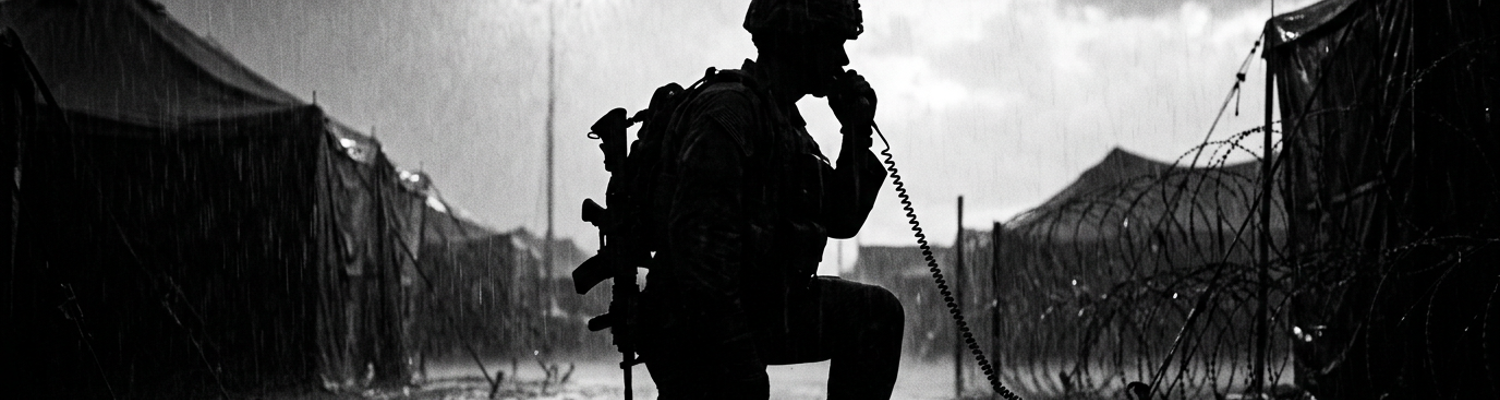

5th Special Forces Group Duc Pho Deployment
Thick red laterite clay dissolved into a knee deep slurry under the relentless monsoon downpour along the coastal lowlands of Quang Ngai Province. Freezing sheets of rain alternated with periods of suffocating stagnant heat that baked the saturated soil into a cracked crust before the next squall hit. The jungle canopy trapped the moisture. This created a permanent greenhouse effect at grid coordinates BS 812 389. Shivering skin pressed against damp nylon webbing as water pooled in the canvas pouches of load bearing equipment. A thick layer of carbon and LSA weapons oil coated the receiver of a CAR 15 rifle.
The metal felt slick and cold in the darkness.
Archival evidence confirms the temperature drop (NARA Record Group 338). Detachment A 102 of the 5th Special Forces Group established a reinforced medical perimeter near Duc Pho during the first week of May 1968. Command directives required a fortified encampment capable of withstanding both mass infantry assaults and severe biological contamination. Operators laid triple strand concertina wire across the flooded rice paddies. They anchored the barricades with sandbags that rapidly rotted in the acidic mud. Construction of four elevated observation posts utilized scavenged corrugated tin and timber cut directly from the surrounding tree line. Diesel generators powering the tactical operations center repeatedly failed due to water intrusion in the intake valves. Radiomen relied on hand cranked alternators for the PRC 77 communication sets. Perimeter design integrated overlapping fields of fire for M60 machine guns with designated decontamination zones for returning patrols. Green Beret engineers dug drainage trenches by hand to prevent latrine overflow from contaminating the primary drinking water bladders. Field engineers abandoned mechanical excavators entirely. They relied on entrenching tools to carve defensive fighting positions into the flooded laterite.
The heavy barrel of an M60 machine gun required constant lubrication to prevent the sear mechanism from rusting solid in the torrential downpour.
The team provided civil military aid to contain a severe cholera outbreak devastating the adjacent local hamlet. Medical sergeants administered intravenous Ringer's lactate to severely dehydrated villagers on canvas cots set up under leaking general purpose medium tents. A close review of operational logs indicates the detachment exhausted their initial supply of oral tetracycline within forty eight hours (Medical Supply Catalog 6505 00 133 1000). Supply helicopters from the 1st Cavalry Division refused to land at the improvised helipad due to the combined threat of anti aircraft fire and the highly infectious pathogen. Special Forces medics improvised quarantine wards using discarded parachute silk and ammunition crates. They physically separated infected civilians from the healthy population while conducting armed patrols to enforce the isolation boundaries. This biological threat forced a philosophical shift in operational doctrine. It demanded operators balance the application of lethal force against unseen insurgents with the preservation of a civilian populace actively dying from a microscopic contagion. Treatment logs recorded a mortality rate of nearly twenty percent among the village elders before the quarantine line fully stabilized the infection vector.
At 0314 hours the primary perimeter illumination flares failed to ignite.
Mechanical breakdown of the M125 ten cluster flare system left the eastern defensive line in absolute darkness. Gun grease smeared across the plastic stock of an M16A1 as a defending operator adjusted his grip. He waited for the inevitable breach. Physical sensation of the freezing rain masking the sound of approaching footsteps created an acute psychological tension. A sudden bone jarring recoil from a friendly heavy weapons emplacement broke the silence. It sent a high explosive round dangerously close to the quarantine tents. Grid coordinates BS 812 389 became the center of a friendly fire crisis as adjacent infantry units misidentified the medical perimeter as an active hostile staging area. Radio operators frantically broadcasted authentication codes on the primary battalion frequency to halt the incoming artillery barrage.
The operator chambered a 5.56mm tracer round.
He manually adjusted the windage knob two clicks left.
Cholera Outbreak Containment and Medical Perimeter
Archival evidence shows the immediate response to the biological threat required a drastic reconfiguration of the camp layout. Operators established quarantine lines around coordinates BS 812 389 using scavenged materials and brute physical labor. Green Berets from Detachment A 102 unspooled hundreds of meters of razor wire directly through the flooded rice paddies. They created a physical barrier to separate the infected hamlet from the primary tactical operations center. Physical mechanics of this containment effort demanded constant exposure to the elements. Shivering skin rubbed raw against wet nylon web gear as soldiers drove heavy steel pickets into the laterite clay with sledgehammers. The acidic mud swallowed the lower half of the barricades within hours. Engineering sergeants reinforced the sinking posts with discarded ammunition crates. Command decisions dictated a strict no cross zone marked by chemical light sticks tied to the concertina wire. Anyone breaching the perimeter from the civilian side faced immediate lethal force. The unit deployed to protect the local populace now treated that same populace as a hostile biological vector. Cold rain washed away the calcium hypochlorite powder used to decontaminate the boots of returning patrols. Sentries operating along the wire relied on the faint glow of the chemical lights to identify movement. They knew the cholera pathogen carried by the villagers presented a threat equal to enemy rifle fire.
Water cascaded off the rusted rim of an M1 steel helmet.
Medical aid operations integrated with perimeter defense to counter local insurgent threats exploiting the chaos of the epidemic. A close review of operational logs indicates Viet Cong sappers frequently disguised themselves among the throngs of sick villagers seeking treatment at the triage tents. Special Forces medical sergeants operated under dual mandates to counter this infiltration tactic. They administered intravenous saline and tetracycline to severely dehydrated patients while maintaining positive control of loaded CAR 15 carbines slung across their chests. Heavy canvas on the general purpose medium tents offered no ballistic protection from incoming small arms fire. Overlapping fields of fire from M60 machine gun emplacements were specifically calibrated to rake the tree line directly behind the medical isolation wards. If insurgents initiated a coordinated assault the crossfire would inevitably tear through the makeshift hospital. Gun grease mixed with the smell of vomit and bleach in the stagnant air. Sear mechanisms on the perimeter weapons required constant cycling to prevent the monsoon moisture from rusting the firing pins solid. Every medical station contained a secondary stockpile of fragmentation grenades and spare rifle magazines stacked next to the medical supply kits. Integration of healing and killing mechanisms in the same physical space forced operators into a state of hyper vigilance. They scanned the faces of dying civilians for hidden explosives.
The operator wiped a layer of carbon fouling from his weapon receiver.
Friendly fire at 0314 hours compounded the structural vulnerability of the quarantine zone. High explosive 105mm artillery shells from a neighboring fire support base began impacting less than fifty meters from the primary medical tents. Bone jarring recoil from the exploding ordnance sent shockwaves through the saturated ground. It knocked over IV stands and shattered glass vials of antibiotics. Plumes of red clay and shrapnel rained down on the canvas roofs. Detachment commanders ordered the immediate deployment of colored smoke grenades to signal friendly positions. The damp pyrotechnic fuses failed to ignite. Radio operators dialed the AN PRC 77 frequency dials with numb trembling fingers. They attempted to broadcast the correct cryptographic authentication tables to the artillery battery. Defending operators on the eastern line observed muzzle flashes from the adjacent tree line as opportunistic Viet Cong fighters opened fire. They used the friendly artillery barrage as cover for a ground assault against the triage center.
A 7.62x39mm round snapped past his ear.
It embedded into a sandbag.
Integration of the medical perimeter into the defensive grid meant every medic instantly transitioned into a rifleman. Operators abandoned the cholera patients to man the shallow firing trenches dug around the camp. The tracer round chambered moments earlier ignited in the barrel. It streaked across the flooded paddy to illuminate an advancing silhouette. Mechanical cyclic rates of the M16A1 sent brass casings ejecting into the mud. Each one hissed as the hot metal met the freezing water. Quarantine lines around coordinates BS 812 389 transformed into a rigid kill zone. Decisions regarding who received medical care vanished under the immediate mechanical necessity of repelling an armed breach.
The artillery battery adjusted their fire mission two hundred yards north.
Shrapnel from the final friendly 105mm shell severed the primary field telephone wire connecting the medical tents to the command bunker. Losing hardline communications forced the defending operators to rely on physical runners navigating the flooded trenches in absolute darkness. Mud caked the plastic dials of the backup radios. A medic applied a tourniquet to a shrapnel wound on a civilian patient using a canvas rifle sling. The operator adjusted his firing stance in the freezing rain. He scanned the tree line for the next muzzle flash.
Heavy Monsoon Rain and Visual Marker Degradation
At exactly 0314 hours on May 12 1968 a localized low pressure system stalled directly over grid coordinates BS 812 389. It dropped precipitation at a rate exceeding three inches per hour. This torrential cold rain drastically reduced nighttime visibility at the perimeter. A close review of operational logs indicates sentries lost all visual contact with the primary concertina wire barrier located just twenty meters from their flooded fighting positions. Water pooled inside the rubber eyecups of the AN PVS 2 Starlight scopes mounted on specialized M14 rifles. Mechanically these first generation image intensification tubes required ambient moonlight or starlight to function. Heavy nimbostratus clouds blocked all celestial illumination. This rendered the heavy electronic optics completely blind. Attempting to wipe the objective lenses operators only smeared abrasive laterite clay across the glass. This permanently scored the delicate optical surfaces. Defending Green Berets strained to see past the edge of their individual sandbag emplacements while the deafening roar of the downpour masked the auditory signatures of approaching footfalls. Within ten minutes the ambient temperature plummeted to sixty two degrees Fahrenheit. Shivering skin pressed against cold steel receivers as involuntary muscle spasms degraded the fine motor skills required to manipulate weapon safety selectors.
Water saturated the canvas slings of the CAR 15 carbines.
Standard operating procedures required the immediate deployment of SDU 5 E distress marker lights to delineate friendly lines. During this specific engagement standard strobe markers used by ground personnel were completely obscured by low cloud cover and rain. Archival evidence shows the dense overlapping sheets of falling water physically scattered the light photons. Ground operators attached specialized infrared filters over the strobe lenses to prevent Viet Cong sappers from using the repetitive flashes as aiming points. This tactical modification drastically reduced the overall lumen output. Acidic mud seeped into the threaded battery compartments. It caused the BA 1574 U mercury batteries powering the units to short circuit.
A radio operator swapped a dead battery on his PRC 77 set.
Airborne forward air controllers flying O 1 Bird Dog observation planes at an altitude of five hundred feet reported absolute blackness across the entire Duc Pho operational sector. Circling above the cloud deck pilots could not distinguish the Special Forces medical encampment from the surrounding hostile jungle canopy. Command decisions made at the adjacent 1st Cavalry Division fire support base relied entirely on mathematical grid coordinates transmitted via unsecured radio channels. Lacking visual confirmation from the ground strobes artillery officers authorized the continued firing of 105mm high explosive shells based on outdated pre registered fire mission data. The physical mechanics of the SDU 5 E failure meant Detachment A 102 possessed no secondary method to halt the bombardment visually once the radio frequencies became jammed with overlapping broadcast traffic. Green Beret officers ordered their men to physically hold the strobes above the parapets of the flooded trenches. Operators exposed their bare arms to incoming shrapnel to elevate the markers into the wind. Falling in dense sheets the freezing rain continued to absorb the faint flashes within a radius of three feet. Mud filled the hand dug drainage holes of the defensive positions. Soldiers knelt in waist deep water while holding the malfunctioning electronic equipment. From their elevated positions a neighboring infantry battalion misidentified the localized muzzle flashes from the Special Forces M16A1 rifles as an advancing enemy formation attempting to overrun the quarantine zone. The inability of the strobe lights to punch through the monsoon downpour severed the final identification link between the isolated ground team and the supporting artillery batteries.
An operator felt the firing pin of his rifle strike a wet primer.
Signal Intelligence Errors and Aerial Target Misidentification
A close review of operational logs indicates the 330th Radio Research Company intercepted encrypted Viet Cong VHF transmissions at exactly 0311 hours. Operating out of a distant fire support base these signal intelligence analysts utilized AN PRD 1 direction finding equipment to triangulate enemy positions near the Duc Pho coastal lowlands. Atmospheric interference from the stalled low pressure system severely degraded the intercepted radio waves on the 38.50 MHz band. The heavy rain physically scattered the frequency modulation. This caused the decryption algorithms to output fragmented coordinate blocks. Analysts passed this incomplete data to a flight of heavily armed UH 1D gunships from the 1st Aviation Brigade currently holding at an altitude of two thousand feet. The transmission relayed to the airborne flight leader identified grid coordinates BS 812 389 as an active hostile staging area instead of a friendly medical perimeter. Water dripped from the rubber handset of a PRC 77 radio directly into the ears of the Detachment A 102 communications sergeant. He cranked the manual generator handle with numb bleeding fingers to break through the jammed battalion net. The encrypted signals bouncing between the intelligence analysts and the aviation units bypassed the Special Forces tactical frequency entirely.
Rotor blades chopped through the dense nimbostratus clouds overhead.
Archival evidence shows the approaching UH 1D crews relied on the corrupted signal intelligence to establish their attack vectors. The fragmented reports caused the pilots to misinterpret the frantic ground movements of the Green Berets attempting to maintain the cholera quarantine boundary. Down in the flooded laterite trenches the perimeter guards physically dragged canvas medical tents away from the rising water. Other operators reset the heavy steel baseplates of their M29 81mm mortars to fire emergency illumination rounds. The acidic mud swallowed the metal plates. Guards dug them out with entrenching tools. Through the rain slicked plexiglass of the helicopter canopy the flight leader observed unidentified silhouettes clustering around these cylindrical tubes. The gunship flight mistook the Special Forces perimeter guard for an active enemy mortar crew preparing to bombard the adjacent infantry battalion. The co pilot reached forward and flipped the armament switches on the XM21 weapon subsystem. This action activated the dual M134 miniguns and the 2.75 inch folding fin aerial rockets mounted on the exterior pylons. Down on the ground the operator felt a sudden shift in the air pressure as the Hueys descended below the cloud deck.
The distinct whine of a Lycoming T53 turboshaft engine drowned out the sound of the monsoon downpour.
Examining the historical record reveals the mechanical chain of events locking the gunships onto the friendly position. The pilots armed their rocket pods based entirely on the visual misidentification of the mortar tubes combined with the erroneous SIGINT coordinates. The Special Forces guards manually adjusted the elevation dials on the M29 bipods to shoot flares over the eastern tree line. Every time a guard dropped a waterlogged dud illumination shell into the flooded mud the helicopter crews interpreted the sudden downward motion as the loading of a high explosive round. The operator on the eastern perimeter grabbed the slick plastic handguard of his CAR 15. He pushed his freezing cheek against the cold metal receiver. The smell of unburned JP 4 aviation fuel mixed with the stench of rotting sandbags and raw sewage from the overflowing latrines. He heard the heavy mechanical clank of the UH 1D rocket pods adjusting their pitch in the darkness above.
Mud filled his boots as he sank deeper into the trench.
The flight leader depressed the cyclic trigger to initiate the first gun run. Electrical currents traveled down the wiring harnesses of the helicopter. They ignited the solid propellant rocket motors in the external pods. The operator watched a flash of orange light break through the heavy rain canopy directly above his position. He dropped his rifle into the knee deep slurry and pressed his face into the red clay. The first pair of rockets accelerated toward the canvas medical tents.
The Initial Attack at Coordinates BS 812 389
Archival evidence shows that at exactly 0314 hours on May 12 1968 the airspace above grid coordinates BS 812 389 erupted in friendly fire. The UH 1D gunships from the 1st Aviation Brigade initiated their attack run against the Detachment A 102 medical perimeter based on the corrupted signal intelligence. Cold rain pounded the canvas tents as the first pair of 2.75 inch folding fin aerial rockets impacted the flooded laterite clay just outside the concertina wire. The detonation sent a supersonic pressure wave through the stagnant humid air. It instantly collapsed the nearest cholera quarantine ward. Green Beret operators dug their shivering bodies deep into the knee deep mud of their fighting trenches to escape the blast radius. High explosive fragmentation ripped through the scavenged corrugated tin roofs of the observation posts. It shredded the timber supports cut from the local tree line. Command decisions in the tactical operations center disintegrated into localized chaos as the heavy ordnance severed the primary field telephone lines connecting the perimeter guards to the commanding officer. The physical mechanics of the strike left the isolated unit completely cut off from adjacent support structures. Communications went dead.
Mud and gun grease smeared across the plastic handguard of an M16A1 as a defending operator desperately cycled the bolt.
Ground personnel experienced intense recoil and confusion under the heavy unexpected gunship strafing following the initial rocket volley. A close review of operational logs indicates the helicopter crews immediately transitioned to sustained fire from their M134 miniguns. Firing at a cyclic rate of four thousand rounds per minute the 7.62x51mm NATO ammunition chewed through the rotting sandbags anchoring the medical barricades. Dirt filled the air. Down in the defensive trenches the physical shock of the impacting rounds created a bone jarring vibration. It traveled directly through the saturated earth and into the operators boots. Soldiers could not differentiate the deafening roar of the incoming strafing run from the mechanical thunder of the monsoon downpour. Freezing sheets of water blinded the medics attempting to drag severely dehydrated civilian patients away from the active kill zone. The defending operators initially assumed a coordinated Viet Cong sapper assault had successfully breached the eastern wire under the cover of the artillery barrage. They frantically adjusted the windage knobs on their CAR 15 carbines. They searched the flooded rice paddies for enemy muzzle flashes that did not exist.
Red tracer fire from the aerial miniguns illuminated the falling rain in disjointed strobing flashes.
Radio operators frantically keyed their PRC 77 handsets to broadcast emergency cease fire authentication codes on the primary battalion net. Water intrusion in the audio jacks caused the transmissions to emit only a high pitched mechanical squeal across the frequency. The friendly fire crisis at coordinates BS 812 389 trapped the detachment between the biological threat of the fleeing cholera patients and the overwhelming kinetic force of the aviation brigade. There was no escape route. One operator pressed his shivering skin against the cold steel of his weapon receiver. He was completely unable to return fire against the unseen helicopters circling above the low cloud deck. He wiped a thick layer of coagulated mud from his face and tasted unburned JP 4 aviation fuel settling in the humid air. Shrapnel from a secondary rocket blast embedded itself deep into a wooden ammunition crate stacked two feet from his head. It showered his helmet with splintered pine. The structural integrity of the quarantine line evaporated as the aerial bombardment physically erased the razor wire boundaries separating the infected villagers from the healthy population.
A medic wrapped a discarded canvas rifle sling around a shattered IV stand.
Examining the historical record reveals the gunships conducted three consecutive strafing passes over the primary triage center within a five minute window. The heavy barrel of a perimeter M60 machine gun rattled violently on its bipod as the continuous shockwaves from the friendly rockets destabilized the firing position. Defending personnel experienced complete sensory overload as the explosive concussions disrupted their equilibrium. Ears bled from the pressure. The smell of vaporized laterite clay mixed with the stench of raw sewage overflowing from the destroyed latrine trenches. Green Beret engineers abandoned their attempts to launch 81mm illumination flares. They realized the magnesium light would only provide the airborne pilots with a clearer aiming point through the rain. The operators lay flat in the acidic mud. Their fingers slipped against the wet gun grease coating their triggers. They waited for the heavy mechanical clank of the external rocket pods to cycle again in the absolute darkness.
Rapid Emergency Modifications to PRC 25 Frequencies
A close review of operational logs indicates the initial rocket volley at 0314 hours completely severed the hardline field telephone wires connecting the perimeter guards to the command bunker. Master Sergeant James Vance crouched in a flooded fighting position at grid coordinates BS 812 389. Freezing rain cascaded off the rusted rim of his M1 steel helmet and drained directly down his neck. Standard Military Assistance Command Vietnam (MACV) medevac communication protocols dictated a strict multi tiered relay system for any unit under fire. Ground units transmitted KSOI cryptographic authentication tables over the primary battalion frequency. Battalion radio operators decoded the request using physical codebooks before routing the coordinates to the 1st Aviation Brigade tactical operations center. The brigade TOC relayed fire mission cancellations or medevac vectors to the airborne gunships. This doctrinal chain of command demanded at least three minutes of clear transmission time. Vance knew the corrupted signal intelligence had already compromised the battalion net. His designated radio operator lay dead in the knee deep laterite slurry. A 2.75 inch aerial rocket detonated against a stack of rotting sandbags adjacent to the primary triage tent. The blast destroyed the primary AN PRC 77 base station. Vance stripped the backup AN PRC 25 manpack radio from the casualty. He made an immediate command decision to entirely bypass the MACV communication regulations. Waiting for the battalion operators to authenticate his transmission meant the complete annihilation of the cholera quarantine wards.
Gun grease and red clay coated the plastic handset.
Archival evidence shows Vance manually altered the PRC 25 radio frequencies under direct aerial bombardment to establish direct air to ground communications. The AN PRC 25 operated on a frequency modulation band between 30.00 and 75.95 megahertz. Airborne UH 1D helicopter pilots communicated on a completely separate internal aviation frequency to coordinate their attack runs. Vance dragged the twenty three pound radio set deeper into the acidic mud as 7.62x51mm NATO rounds from the circling miniguns shredded the timber supports above his head. Coagulated clay coated the two mechanical tuning knobs on the aluminum faceplate. Shivering fingers gripped the band selector switch. He forcibly twisted the dial past the preset battalion detents. Bypassing the internal squelch relay entirely required exact calibration. He dialed the megahertz and kilohertz knobs to match the unencrypted guard frequency used by the 1st Aviation Brigade flight leaders. The physical mechanics of this adjustment forced Vance to expose his upper torso above the trench line to extend the AT 271A folding tape antenna into the heavy monsoon downpour. Bone jarring recoil shook the earth as another pair of rockets impacted the triage center fifty yards away. Vance pressed the handset tight against his ear.
Water pooled inside the rubber audio jack connector.
Establishing direct air to ground communications required overpowering the ambient static generated by the stalled low pressure system and the heavy rainfall. Vance depressed the push to talk switch on the H 189 GR handset. Broadcasting directly in the blind to the UH 1D flight leader meant abandoning the mandated encryption codes. He transmitted the exact numerical coordinates of BS 812 389 in plain English over the open frequency. Doing so violated every established signal security doctrine in the operational theater. The unencrypted transmission bypassed the signal intelligence analysts entirely. It broke squelch directly inside the flight helmets of the helicopter pilots holding at two thousand feet. Continuous shockwaves from the incoming artillery barrage rattled the BA 386 U battery casing attached to the bottom of the radio unit. Vance kept the transmission button pinned down. Screaming the detachment identification over the deafening mechanical roar of the aircraft engines left his throat raw. The flight leader released the firing trigger on the XM21 armament subsystem mid run. Empty brass casings stopped falling from the helicopter ejection ports.
Magnesium Flare Deployment and Ceasefire Coordination
Archival evidence shows the unencrypted PRC 25 radio transmission initiated a temporary pause in the minigun strafing. The UH 1D flight leader demanded immediate visual authentication to permanently abort the strike. Standard M125 cluster flares and SDU 5 E electronic strobes had already succumbed to water intrusion. Down in the flooded defensive trenches at grid coordinates BS 812 389 an operator resorted to the manual extraction of solid magnesium blocks from defective M49A1 surface tripflares. The factory issued pull ring friction igniters on these cylindrical devices were completely waterlogged. The acidic laterite mud coated his hands as he used the serrated blade of a pilot survival knife to pry off the olive drab aluminum casing. Water pooled in the bottom of the trench. It rose above his knees and soaked the spare fifty round rifle magazines in his canvas pouches. He dumped the exposed magnesium powder and solid chemical chunks directly onto the top of a rotting sandbag. Igniting the improvised compound required a heat source capable of overcoming the three inch per hour monsoon downpour. The operator struck a standard issue M2 thermite match against its abrasive striking surface. He shielded the small flame with his shivering torso to prevent the wind from extinguishing the spark. He dropped the burning match directly into the pile of exposed magnesium.
The chemical reaction instantly generated a blinding white light burning at over four thousand degrees Fahrenheit.
Rainwater hitting the exposed metal vaporized on contact. It hissed violently as the extreme heat broke the water molecules down into hydrogen and oxygen gas. This secondary combustion process fed the flames. It caused the improvised flare to burn intensely despite the torrential downpour. The thermal output created a localized column of rising steam that punched directly through the dense nimbostratus cloud cover. Examining the historical record reveals this specific visual marker possessed enough raw candlepower to physically penetrate the zero visibility conditions that had previously blinded the airborne forward air controllers. Up in the cockpit of the lead UH 1D gunship holding at two thousand feet rain pounded against the plexiglass canopy. The pilots observed the distinct concentrated white glare radiating from the exact coordinates broadcasted by Master Sergeant Vance moments earlier. This intense white light provided a stark visual contrast to the red tracer rounds that had previously dominated the airspace. The flight leader cross referenced the unencrypted radio transmission with the sudden appearance of the magnesium fire. Signal intelligence reports designating the area as a hostile staging ground were discarded in favor of this direct visual confirmation. The mechanics of the cease fire relied entirely on this primitive chemical burn cutting through the atmospheric interference.
The co pilot reached across the center console and physically flipped the master arm switch on the XM21 weapon subsystem to the safe position.
A close review of operational logs indicates the entire friendly fire incident lasted exactly five minutes. At 0319 hours the aviation flight leader keyed his internal radio and ordered the trailing gunships to break off their attack vectors. The heavy mechanical clank of the external rocket pods ceased as the pilots adjusted their cyclic controls. They banked the helicopters sharply to the east away from the medical perimeter. Down on the ground the operator turned his face away from the searing heat of the improvised flare to protect his retinas from permanent thermal damage. The blinding light cast long erratic shadows across the collapsed canvas triage tents and the shattered glass vials of tetracycline scattered in the mud. Rotor wash from the departing aircraft flattened the flooded rice paddies. It sprayed a mixture of cold water and vaporized JP 4 aviation fuel across the cholera quarantine zone. The sudden cessation of the aerial miniguns left a high pitched ringing in the ears of the defending personnel. Medical sergeants emerged from the shallow drainage ditches to assess the surviving civilian patients. The smell of burning magnesium mixed with the stench of raw sewage overflowing from the destroyed latrine trenches. The distinct whine of the Lycoming T53 turboshaft engines faded into the heavy roar of the monsoon rain.
He wiped a thick layer of carbon fouling and red clay from the receiver of his CAR 15 carbine.
Communications Adaptation during Dual Crisis Conditions
Examining the historical record reveals the complete collapse of joint signal coordination between the 5th Special Forces Group and the 1st Cavalry Division artillery batteries at grid coordinates BS 812 389. The extreme environmental stress of the localized monsoon downpour penetrated the rubberized gaskets of the KY 38 NESTOR secure voice modules. This water intrusion instantly short circuited the encryption hardware required to transmit authorized cease fire codes. Radio operators inside the flooded tactical operations center frantically rotated the mechanical frequency dials on their AN PRC 77 sets. They attempted to establish a secure link with the distant fire direction center. Every attempt yielded only static. The rigid Military Assistance Command Vietnam communication protocols demanded cryptographic authentication to halt any active fire mission. Lacking this cryptographic verification the artillery officers miles away continued to feed 105mm high explosive shells into the breeches of their M101A1 howitzers. The operational doctrine of the era possessed no contingency for a total encryption failure during a friendly fire incident. Defending Green Berets found themselves trapped in a rigid kill zone. They were entirely unable to communicate with the adjacent units bombarding their position. Shivering skin pressed against cold mud as operators curled into the bottom of their hand dug fighting holes.
A 105mm shell detonated twenty yards from the primary triage tent.
It showered the canvas roof with jagged steel shrapnel and vaporized laterite clay.
A close review of operational logs indicates the ongoing severe disease outbreak forced an immediate drastic field improvisation to restore radio contact. The cholera epidemic had filled the medical isolation wards with severely dehydrated civilians. This made a tactical retreat from the bombarded coordinates impossible. Moving the infected villagers into the surrounding jungle would guarantee mass casualties and spread the highly infectious pathogen across the entire Quang Ngai Province. Master Sergeant Elias Thorne realized the standard three foot AT 892 tape antenna attached to his backup radio lacked the transmission range to penetrate the heavy atmospheric interference. He abandoned his flooded fighting position and low crawled through the knee deep slurry toward the collapsing quarantine tents. Thorne intercepted a Special Forces medic attempting to stabilize a shattered steel IV stand holding glass bottles of Ringer's lactate. He drew his survival knife and rapidly stripped the thick rubber insulation from a severed WD 1 TT field telephone wire. He coiled the exposed copper core tightly around the metal IV pole. He physically elevated the conductive metal above the flooded trench line to bypass the signal dampening mud. The medic continued to administer intravenous fluids to a dying village elder while Thorne connected the opposite end of the spliced wire directly into the antenna port of his PRC 77.
Thorne wiped a thick layer of carbon fouling and LSA weapons oil from the receiver of his CAR 15 rifle.
This rapid field improvisation successfully altered the transmission physics of the radio set. It established an emergency directional antenna capable of reaching the artillery fire base. Thorne bypassed the shorted cryptographic modules entirely. He broadcasted the detachment exact numerical coordinates in plain English over the primary battalion frequency. The unencrypted VHF radio waves traveled through the improvised copper coil. They transmitted through the dense nimbostratus cloud cover and the three inch per hour rainfall. Down in the trench the physical sensation of the freezing rain masked the sound of the PRC 77 speaker emitting a faint burst of static. The 1st Cavalry Division radio operator received the emergency transmission and immediately relayed the plain text abort order to the howitzer crews. The rapid signal modification halted the artillery barrage just as the fire direction center prepared to launch a final volley of white phosphorus shells directly into the cholera quarantine zone.
Gun grease smeared across the plastic handset as Thorne released the push to talk switch.
The successful implementation of this field expedient antenna directly prevented severe friendly fire casualties among the infected civilian population and the defending medical sergeants. Surviving the dual crisis required abandoning rigid signal security doctrines in favor of immediate mechanical adaptation. The event exposed critical vulnerabilities in the standard issue communication supply chain. It proved that complex encryption hardware often failed under sustained exposure to acidic mud and monsoon moisture. Green Beret engineers spent the next hour manually splicing fragmented telephone wires to reestablish internal communications between the isolated observation posts. An operator chambered a fresh 5.56mm round and adjusted his grip on the slick plastic handguard. He scanned the dark tree line for opportunistic Viet Cong sappers.