
A review of operational logs from the A Shau Valley campaign shows a persistent, grinding battle fought against terrain, weather, and mechanical failure. For the small teams of Forward Air Controllers and the infantry of the 101st Airborne Division on remote firebases like Airborne or Blaze, survival was measured in flight hours. These outposts were islands, entirely dependent on helicopters for ammunition, water, rations, and medical supplies.
The process was a high-risk gamble. UH-1 Huey helicopters approached landing zones no larger than the aircraft itself. A full landing was a luxury. Crews performed supply kick outs, flying low and fast over a smoke signal and pushing bundles out to troops below. Other times, a helicopter would hover with one skid on the ground while soldiers scrambled to unload, exposed to potential ground fire. For the heavily wounded, the only exit was often a jungle penetrator, a device lowered through the trees to hoist a man up.
This lifeline was perpetually threatened.
The A Shau Valley sits under a dual monsoon season. From May to October, the southwest monsoon brought torrential rains that turned landing zones into mud and reduced visibility to near zero. People’s Army of Vietnam (PAVN) and Viet Cong forces exploited this atmospheric blindness, timing movements for when they knew American air mobility would be crippled. A Central Intelligence Agency report on weather effects noted that low clouds and fog were the chief limiting factors, forcing pilots to fly on instruments in mountainous terrain. The valley itself was covered in a dense, triple-canopy jungle, with trees reaching 200 feet. This vegetation could hide a downed helicopter from rescue aircraft flying directly overhead.
The operational tempo and environment actively destroyed the helicopters. The heat and humidity of the highlands were severe. Fine, abrasive dust kicked up during landings got sucked into engine intakes, clogging air filters and causing accelerated wear on turbine blades. Mechanics worked from before dawn, conducting exhaustive pre-flight checks. During the monsoon, the problem shifted from dust to water. Downpours grounded entire fleets. Moisture caused corrosion and shorted electrical systems. Critical supply choppers were routinely unavailable. A review of Operation Delaware in April 1968 shows that helicopter support could not keep pace with the 1st Cavalry Division’s advance, forcing a risky attempt to reopen an old French airstrip for C-130 cargo planes. During Operation Massachusetts Striker in 1969, engineers inserted to build a firebase were socked in by weather, subsisting on rainwater caught in their ponchos for days until helicopters could fly again. The distinctive sound of an approaching Huey was never a guarantee.
For the forward observers of the 101st Airborne Division dug into the firebases of the A Shau Valley, the war was a contest against their own equipment. Secure communications, the literal lifeline for units in contact, were perpetually compromised. The standard man-portable radio, the AN/PRC-25, was a 25-pound burden made heavier by the need for spare batteries. Its handset was notoriously vulnerable to moisture. In the soaking humidity of the A Shau, this was a critical design flaw. Radio Telephone Operators wrapped their handsets in the plastic bags from battery packages, a field improvisation against an unrelenting environment. The radios still failed. Moisture caused corrosion and short-circuits, severing a squad’s link to artillery support or medevac helicopters. When a radio went dead in a firefight, a unit was utterly alone.
The jungle took everything.
This isolation was magnified by a chronic lack of sustenance. Standard C-Rations were heavy, canned meals ill-suited for long-range patrols. Lighter, freeze-dried Long Range Patrol (LRP) rations were developed, but they came with their own problems. Each LRP meal required over a pint of water to be properly reconstituted, a resource that was often dangerously scarce. Troops in the A Shau frequently had to rely on rainwater collected in ponchos. During Operation Massachusetts Striker in March 1969, engineers building Firebase Whip were trapped by fog and rain, their survival dependent on what little water they could catch. The alternative was to consume the LRP rations dry, a move that demanded drinking even more water to prevent dehydration. The result was slow starvation. Soldiers were forced to subsist on dwindling and inadequate calories, leading to weight loss, fatigue, and a diminished capacity to remain alert.
The physical environment was a potent enemy. The triple-canopy jungle and steep, muddy slopes made every movement an ordeal. Constant wetness led to immersion foot, a condition where the skin on the feet would break down, leading to fungal infections and painful ulcers that could render a soldier unable to walk. Uniforms and canvas webbing rotted on the soldiers' bodies. Leeches and mosquitoes were a constant plague. The very ground they occupied was hostile. For the men of the 101st during operations like Apache Snow, this physical decay was inseparable from the psychological toll. A soldier with a failing radio, gnawing hunger, and raw feet was a soldier at his breaking point before the first shot was fired.
For a Forward Air Controller pinned down with a platoon of the 101st Airborne, the world shrank to the crackle and hiss of his AN/PRC-25 radio. The process was one of frustration. A pilot circling in an O-1 Bird Dog or an OV-10 Bronco would hear a broken, distorted plea for fire support. On the ground, the Radio Telephone Operator would be shouting coordinates into a handset often compromised by moisture. The physics of the valley worked against them. The AN/PRC-25 was an FM radio, requiring a near-direct line of sight to function. In the deep, jungle-choked ravines of the A Shau, that was an impossibility. A signal that might travel for miles in open country could die within a few hundred yards, absorbed and scattered by the dense, water-logged vegetation. The resulting transmission was a chaotic mess of static and partial words, a phenomenon known as multipath scattering. For the pilot, this meant trying to piece together a target location from an incoherent stream of noise while the ground team was taking fire. For the soldier, it was the terrifying experience of screaming for help into a dead device.
The dual monsoon weather pattern created an atmospheric barrier that was often more effective than enemy jamming. During frequent thunderstorms, lightning discharges would flood VHF and UHF radio bands with overwhelming static, rendering voice communication useless. This atmospheric noise was a tactical reality that PAVN forces understood and exploited, timing attacks to coincide with weather fronts that they knew would cripple American air support. The region’s high humidity and fog also directly degraded radio wave propagation. The valley’s triple-canopy jungle acted as a massive absorber of radio energy. To overcome these obstacles, units sometimes relied on airborne relay aircraft, but this was a limited asset.
The enemy knew this.
Underpinning the system was a set of communication protocols from the Signal Corps ill-suited for warfare in Southeast Asia. Doctrine published as late as 1965 was based on concepts from the 1940s, designed for large-scale conventional warfare. The system was centralized and inflexible. A significant flaw was the underestimation of the enemy’s signals intelligence capabilities. Many units communicated on unencrypted channels, and lax radio discipline often gave away critical information. While secure voice systems like the NESTOR KY-38 were developed for the AN/PRC-77 radio, their rollout was slow. The older, non-secure AN/PRC-25 remained in widespread use. The enemy operated sophisticated listening posts and used captured American radios. This forced a dangerous choice upon ground commanders: maintain radio silence and risk being cut off, or broadcast in the clear and risk announcing their every move.
Operational logs from Operation Apache Snow in May 1969 detail the cascade of failures. For the ground Forward Air Controller attached to the 3rd Battalion, 187th Infantry, the world had been reduced to the mud-slicked slope of Dong Ap Bia and the roar of a PAVN assault. Pinned down with a rifle company, the FAC’s entire focus was on his AN/PRC-25 radio set. He was tasked with directing an orbiting F-4 Phantom onto PAVN trench lines, a mere 100 meters from his own company’s foxholes. The lives of the men around him depended on his ability to communicate precise coordinates under extreme duress. His exhaustion was a tactical factor; sleep had been a luxury for days. The constant stress, combined with physical depletion, degraded his ability to function.
His words were fighting the terrain itself.
The primary cause of the disaster was a breakdown in communication. The AN/PRC-25 radio required a near-direct line of sight for a clear signal. On the steep, jungle-choked mountainside, that was impossible. The FAC’s transmission, strained by his labored breathing and the firefight, was scattered and distorted. The F-4 pilot, flying at several hundred miles per hour, heard a fragmented stream of numbers. Amid the static, a single critical digit in the grid coordinate was misheard. Standard procedure called for the pilot to read back the coordinates for confirmation. In the chaos of a troops-in-contact emergency, this protocol was sometimes rushed. The beleaguered FAC, simultaneously trying to direct his men and avoid enemy fire, may have missed the error in the pilot’s read-back. The intended target was a fortified PAVN bunker system; the misidentified target was the command post of another of the 3/187th’s companies, positioned further down the slope.
The incoming aircraft was a McDonnell Douglas F-4 Phantom II, carrying over 18,000 pounds of ordnance. On this run, its pylons were loaded with high-explosive bombs and napalm. Acting on the confirmed but incorrect coordinates, the pilot banked his jet. He acquired his aiming point based on the FAC’s description of a large, blasted tree stump and the faulty grid location. The Phantom rolled in on the friendly position. The pilot depressed the release switch. Two canisters of napalm detached and tumbled toward the canopy. The jellied gasoline ignited, engulfing a section of the American perimeter in fire. The operational logs note the immediate, panicked screams that erupted over the radio net. A subsequent investigation confirmed the strike landed directly on the friendly command post, killing two and wounding more than a dozen soldiers. The incident was one of five separate friendly fire events during the ten-day battle.
After-action reports from the 23rd Tactical Air Support Squadron reveal the psychological cost of sustained night operations over the A Shau Valley. For a Forward Air Controller flying the OV-10 Bronco, the tour was a relentless cycle of low-altitude, high-threat missions. The operational tempo was punishing. Crews were often on standby for immediate launch. The missions were solitary, with a single Bronco prowling for hours over the jungle, its crew tasked with interdicting PAVN truck traffic on the Ho Chi Minh Trail. The OV-10D variant, modified for night observation, was equipped with a Forward-Looking Infrared (FLIR) turret and larger engines with exhaust suppressors. But these advantages did little to lessen the mental strain. Pilots flew in near-total darkness, often under low cloud cover, navigating a landscape of 5,000-foot ridgelines. Their entire world was the green-and-black display of the FLIR screen and the voices on the radio. Weeks of this routine shattered sleep cycles and eroded mental resilience.
The darkness was absolute.
This degradation was accelerated by the personal nature of the threat. Bronco crews flew low and slow, typically just over 100 miles per hour, making them a predictable target for anti-aircraft artillery. The valley was saturated with PAVN gun emplacements, primarily 37mm cannons, whose crews were experts at tracking slow-moving aircraft. The FAC pilots knew that if the enemy opened fire, their only defense was to jink violently while their observer tried to pinpoint the muzzle flashes. Every shadow could be a gun pit. This state of hyper-vigilance, maintained for hours, night after night, was psychologically unsustainable. Unit records document a pattern of increasing combat fatigue, where pilots reported heightened anxiety, irritability, and an inability to rest between missions. They were trapped in a feedback loop of exhaustion and fear.
The breaking point often manifested as a sensory distortion. There is a documented phenomenon in which FAC pilots, pushed beyond their limits, would begin to experience phantom AAA fire. A pilot, orbiting over a blacked-out valley, would suddenly report seeing tracers, non-existent streams of red or green light arcing towards his aircraft. He would put his OV-10 into a hard, defensive break, calling out the phantom gun position to his observer, who could see nothing. Other FACs in the area would confirm the sky was clear. For the pilot, the experience was utterly real, a hallucination born from a mind so conditioned to expect attack that it began to create its own. In one specific incident, a seasoned FAC pilot on a night interdiction mission began frantically reporting heavy, coordinated AAA fire. His voice on the radio was strained with panic. He threw his Bronco into a series of violent, high-G maneuvers to evade non-existent shells. The flight was aborted, and the pilot was grounded upon his return. It was a complete psychological breakdown, the culmination of weeks of relentless pressure. Medical evaluations pointed to severe combat exhaustion.
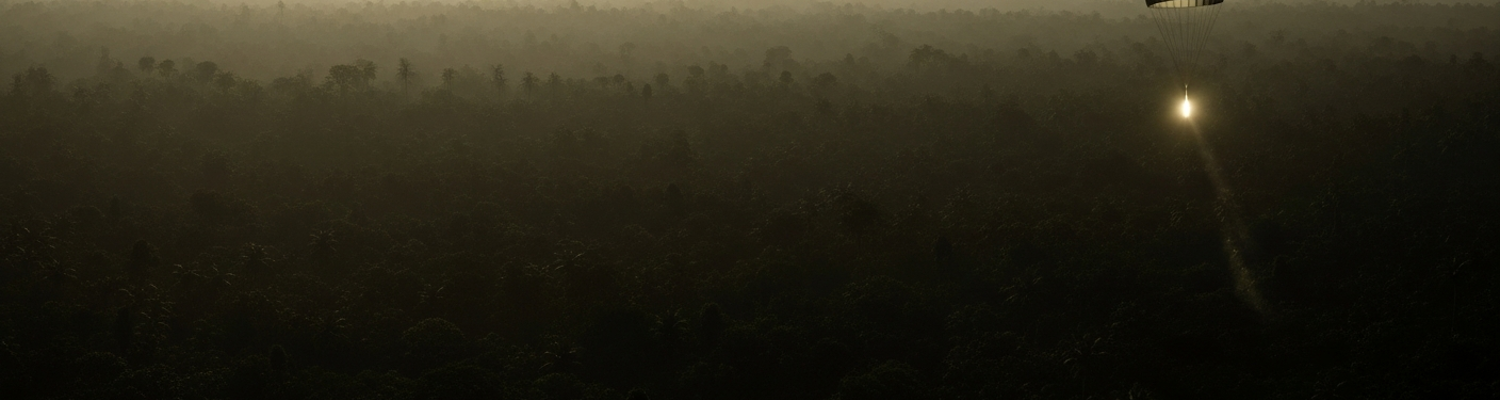
Night operations in the A Shau Valley were a constant battle against the darkness, prosecuted with manufactured daylight. For interdiction missions, this light came from parachute-retarded LUU-2/B flares. These canisters, deployed from C-130 or C-123 flareships, contained a magnesium and sodium nitrate compound that produced a brilliant white light measuring approximately 2 million candlepower. Each flare would burn for four to five minutes, descending slowly and turning a wide swath of the jungle into a scene of stark, bleached intensity. For soldiers on the ground, the effect was physiologically violent. Pupils adjusted to the darkness would slam shut against the sudden glare. Then, as the flare extinguished, it would plunge them back into a deeper blackness, their natural night vision destroyed for several critical minutes. This cycle of light and dark, repeated for hours, created a state of perpetual disorientation.
The light was a weapon.
This artificial daylight presented its own tactical problems. Archival logs from AC-130 Spectre gunship crews and Forward Air Controllers detail the difficulty of fighting under the swaying, inconsistent light of a drifting flare. As the flare descended and was pushed by winds, shadows on the ground would writhe and dance. A stationary tree stump could appear to be a crouching figure. A bomb crater might be mistaken for an active enemy bunker. This created a high-stress environment where a gunship crew had to make split-second decisions based on unreliable visual information. The challenge for an airborne observer was to distinguish friend from foe in a chaotic landscape of twisting shadows, all while the FAC on the ground pleaded for immediate fire support.
The visual distortions inherent in this environment broke down a soldier’s psychological resilience. The combat zone at night became a disorienting spectacle of conflicting sensory input. The strobing burn of the flares, combined with the phosphorescent green streaks of AAA tracers and muzzle flashes, created a hallucinatory battlespace. The human brain, taxed by fatigue and fear, struggled to process the chaotic signals. Reports from pilots and ground troops describe a feeling of being brightly illuminated for any enemy gunner in the surrounding darkness, yet unable to see beyond the ring of artificial light. The stark contrast between the illuminated area and the absolute blackness beyond was a source of constant anxiety. This constant, high-stress visual processing wore down cognitive functions, leading to errors in judgment.
Intelligence summaries from the A Shau Valley reveal a persistent campaign to eliminate PAVN leadership. These were decapitation missions, born from fragmented signals intelligence and hurried analysis. The pressure to execute these strikes, flowing down from MACV, was intense. An intercepted radio transmission or an ambiguous thermal image could trigger a maximum-effort strike. A Forward Air Controller crew would be scrambled, fighter-bombers diverted, and an entire slice of the air war focused on a single grid coordinate. The objective was surgical, but the environment guaranteed a blunt-force application.
The intelligence was often wrong.
For an exhausted pilot in an OV-10 Bronco, the mission began with a sleep debt measured in weeks. After hours of prowling the dark valleys, his world compressed to the green-and-black phosphor glow of a Forward-Looking Infrared display. On the screen, the jungle canopy was a uniform gray, punctuated by the occasional hot-white signature of a cooking fire or a running engine. The intelligence pointed to a specific cluster of heat signatures as a potential PAVN regimental command post. The pilot, fighting fatigue, had to match the ghostly image on his screen to a map. The target was supposed to be 100 meters west of a distinctive river bend, but in the dark, from 4,000 feet, there were three similar bends. A moment of indecision was suppressed by the pressure to act. He selected the most likely target, his mind subconsciously seeking to confirm the intelligence. He marked the spot with a white phosphorus rocket, a plume of smoke that would guide the inbound F-4 Phantom.
Pilot fatigue was a documented tactical factor. The relentless operational tempo, particularly for FACs and night-interdiction crews, systematically degraded the skills required for precision. Studies from the period note a direct correlation between flight hours logged and a decline in cognitive function. After consecutive nights of high-stress flying, a pilot’s ability to process complex visual information and make sound judgments would decay. This was not a moral failing; it was a physiological one. The human nervous system, subjected to sustained hyper-vigilance and sleep disruption, begins to make mistakes. In the cockpit over the A Shau, this manifested as tunnel vision. It showed up as slowed reaction times. The pilot who misidentified the river bend was not careless; he was depleted. His brain, starved of REM sleep and saturated with cortisol, made a simple, catastrophic error.
Post-strike reconnaissance flights in the light of morning would reveal the truth. Instead of collapsed bunkers, the photos showed demolished storage huts or a cratered, empty clearing. The decapitation strike had failed. The targeted PAVN commander and his staff were unharmed and alerted. For the aircrew, the psychological weight of such a failure was substantial. They had risked a valuable aircraft and their own lives for no gain. This erosion of purpose was as corrosive as any external threat. Operational reports would log the sortie as target not as briefed, a sterile euphemism that masked the deep cost of high-stakes failure.
Operational logs for aviation units in I Corps reveal a systematic erosion of human resilience. For helicopter crews of the 101st Aviation Battalion or the 1st Cavalry Division, the war was a relentless cycle of high-risk sorties. A single day could include combat assaults, emergency resupply runs, and medevac missions, often under fire. The environment was a constant antagonist. Monsoon rains created a frantic backlog of critical missions that had to be flown the moment the weather cleared, regardless of crew rest cycles. Studies on pilot performance show that cognitive function degrades to the equivalent of legal intoxication after 17 to 24 hours without sleep. Reaction times slow and judgment is impaired. For aircrews in the A Shau, this level of fatigue was a baseline condition.
The machine began to break the man.
This slow-motion collapse manifested in symptoms that flight surgeons recognized as combat fatigue. Pilots and crew chiefs exhibited chronic exhaustion, listlessness, and periods of intense irritability. The constant stress of flying in a heavily defended airspace, combined with severe sleep disruption, began to warp perception. A telling phenomenon was documented among Forward Air Controller pilots from the 23rd Tactical Air Support Squadron, who flew low and slow night missions in the OV-10 Bronco. After weeks of this work, some pilots began to experience sensory distortions, reporting non-existent anti-aircraft artillery fire and throwing their aircraft into violent evasive maneuvers.
Every man has a breaking point. The final stage of this psychological erosion was the moment where the accumulated weight of fatigue and stress resulted in a complete operational failure. This was not a matter of cowardice, but a physiological and psychological inevitability. In some cases, it was a sudden error in judgment, a fatigued pilot misidentifying a target and causing a friendly fire incident. In other instances, the breakdown was more overt. A pilot experiencing phantom AAA fire might become so disoriented that he had to be talked back to base by another aircraft. Upon landing, such individuals were immediately grounded, their careers in the cockpit often over. Medical evaluations would confirm a diagnosis of severe combat exhaustion, a condition where the human element, pushed past its known limits for too long, finally collapsed.