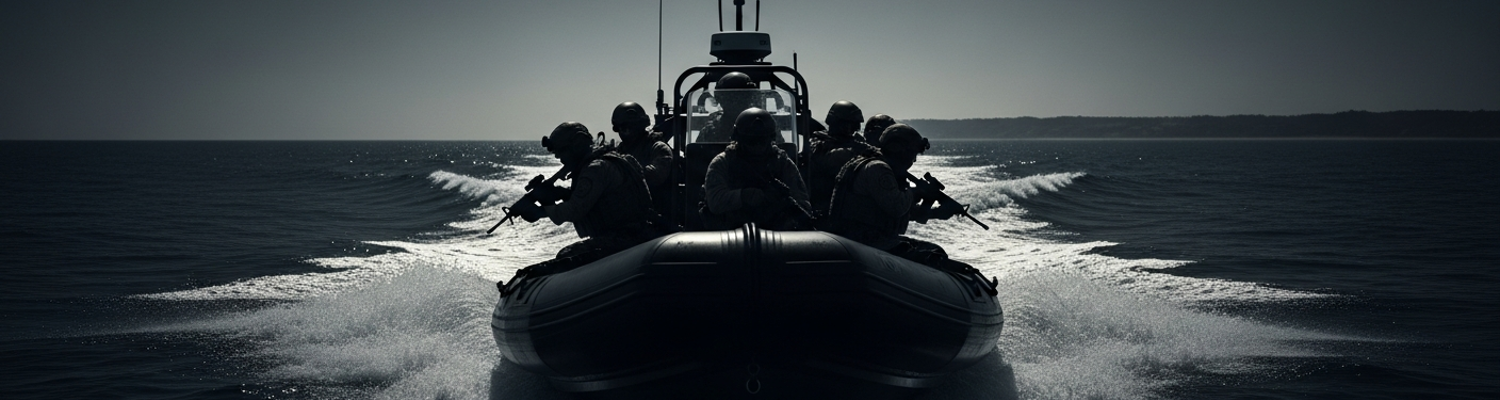

Post-Cold War Maritime Control
The arithmetic of the coastal abyss was unforgiving. Opposing the blue-water fleets of Western powers, the adversary arrayed a force optimized for littoral strangulation, not open-ocean combat. Intelligence estimates from the period detailed over 300 rocket-assisted patrol boats, many derived from the Swedish Boghammar Marin design. Each was capable of 45 knots and armed with a mix of heavy machine guns and 107mm rockets. A dense, overlapping network of shore-based anti-ship missile batteries, concealed in coastal terrain and numbering in the hundreds, supported these craft. The sheer volume of potential targets, each a low-cost, high-speed threat, was engineered to overwhelm the sophisticated but numerically inferior defenses of a modern naval destroyer. The operational calculus created a zone of inescapable dread, where a single billion-dollar warship could be swarmed to death by a thousand cheap speedboats.
A close review of U.S. Army operational logs shows a service grappling with its own relevance after the fall of the Berlin Wall. The threat of large-scale land war in Europe had diminished. Army doctrine began a significant turn toward expeditionary and joint operations. This was not a simple budgetary consideration; it was a strategic reorientation. Senior leaders recognized that future conflicts would be fought in the world’s littorals, the cluttered and complex coastlines where more than half the global population resides. The Army’s extensive but often overlooked fleet of watercraft became a focal point. Units like the 7th Transportation Brigade, traditionally tasked with logistics-over-the-shore (LOTS) to supply land campaigns, were re-examined. A new emphasis was placed on using their Landing Craft Utility (LCU) and Landing Craft Mechanized (LCM) vessels for sea control in shallow waters inaccessible to the Navy’s deep-draft ships. Archival evidence from Joint Chiefs directives (including JCS Directive 2100.01B) shows a new doctrinal push. It envisioned Army mariners establishing sea-based fire support platforms and interdicting enemy movements in contested archipelagos, a mission that blurred traditional service boundaries.
This doctrinal shift was driven by the changing character of naval warfare. The age of fleet-on-fleet engagements was being supplanted by the rise of asymmetric naval threats. State and non-state actors, unable to compete with conventional naval power, innovated. They embraced strategies of saturation and surprise, using weapons and tactics that were difficult for high-tech warships to counter. A key threat emerged in the form of Fast Inshore Attack Craft (FIAC), small speedboats often armed with anti-tank guided missiles or simply packed with explosives. These vessels would hide among civilian maritime traffic, making them nearly impossible to identify until the final moments of an attack. Compounding this was the proliferation of advanced sea mines and mobile coastal missile launchers that could deny access to critical chokepoints. The tactical problem was one of geometry and clutter. A multi-billion dollar Aegis cruiser was designed to track high-altitude bombers and sea-skimming missiles in the open ocean, not to differentiate a dozen explosive-laden speedboats from a fleet of fishing trawlers inside a crowded harbor.
The solution could not be found in larger ships or more powerful missiles. It required a new kind of soldier.
The necessity for clandestine Army special operations in the maritime domain became unavoidable. Where a destroyer saw only a mass of radar contacts, a small, covert team could provide clarity. A review of mission profiles for Special Forces Operational Detachments-Alpha (ODAs) and Ranger Regimental Reconnaissance Companies from this period shows a marked increase in maritime infiltration training. These units were tasked with missions a naval vessel could not perform. They would clandestinely insert via low-profile submersible or modified civilian craft, gather human intelligence in port cities, and conduct direct action against the leadership of FIAC cells. Operational logs detail the specific equipment required for these tasks, including closed-circuit rebreathers that left no bubble trail, man-portable thermal imagers for identifying armed personnel from a distance, and specialized maritime ladders and grapnels for boarding suspect vessels at night. These small, highly trained teams could operate within the civilian population, identify specific threats, and neutralize them before they could coalesce into an overwhelming swarm, providing the surgical precision that a conventional naval response lacked.
1997 Army Policy Implementation Gap
A close review of Pentagon directives from 1997 reveals a new, overarching strategic framework profoundly shaping Army operations. Stemming from the first Quadrennial Defense Review, a high-level policy of total battlespace awareness, internally dubbed a form of ecosystem management, was put into effect. The directive was a product of post-Cold War thinking. It viewed the operational environment not as separate domains of land, sea, and air, but as a single, interconnected system of systems. Every asset, from a satellite to a supply truck, was to be tracked, deconflicted, and optimized by a centralized joint command structure. Archival evidence shows the goal was maximum efficiency and the elimination of inter-service redundancy. This created intricate new layers of digital reporting and joint approval processes for any planned action. It ensured every unit’s movement was visible to high command and synchronized across the entire theater. The system was designed to provide commanders with a god’s-eye view, managing risk by eliminating uncertainty.
This top-down conceptualization was tailored explicitly for conventional, large-scale deployments. The Army's extensive watercraft fleet, particularly the assets of the 7th Transportation Brigade, was a key component in this vision. Planners envisioned these vessels executing massive logistics-over-the-shore operations in a future conflict. Landing Craft Utility boats, each displacing over 400 tons, and larger Logistics Support Vessels (LSV) were seen as sea-going shuttles. They formed a conveyor belt of supplies from Navy sea-bases to established beachheads. Their operational templates, codified in thick doctrinal manuals, were built around predictable schedules, defined sea lanes, and robust, high-bandwidth communications linking them to the theater-wide digital grid. A typical LCU mission profile involved moving dozens of vehicles and hundreds of tons of cargo in a slow, deliberate, and highly visible manner. Its massive radar and thermal signature were an accepted part of a conventional force projection.
Clandestine operations required the exact opposite.
The disparity between this bureaucratic model and the granular needs of special operations forces created a dangerous implementation gap. An examination of mission requests from this period highlights the immense friction. A Special Forces Operational Detachment-Alpha, tasked with a covert reconnaissance of a hostile port, required a fast, low-signature vessel that could blend in with local maritime traffic. When they submitted their request through official channels, the management software, designed to assign the most efficient asset, offered them a 174-foot LCU-2000. The craft had a top speed of 11 knots and a crew of thirteen, making it utterly unsuitable for a clandestine insertion. The request form itself demanded specific grid coordinates for the entire mission duration, a manifest of all personnel, and a detailed timeline. This data, if intercepted, would compromise the entire operation. Operational logs show teams being forced to either cancel missions or procure assets through non-standard, and often far riskier, means. The very system designed to manage risk became a primary source of it, blinding commanders to the ad-hoc solutions being implemented on the ground and creating a shadow logistics network completely invisible to the joint headquarters’ pristine digital map.
Remote Coastal FOB Operational Exigencies
The operational hub for ODA 5113, a maritime-focused team from the 1st Special Forces Group, was little more than a collection of rotting structures and sandbags designated Forward Operating Base Viper’s Tooth. Perched on a desolate, windswept sandbar at the mouth of a critical enemy-controlled estuary, its position was both strategic and profoundly vulnerable. The location offered an unparalleled vantage point for monitoring the launch and recovery cycles of enemy fast attack craft. This came at the cost of total isolation. Resupply was contingent on weather, enemy activity, and the whims of a theater-level logistics system that prioritized larger, conventional forces. An examination of maintenance logs and supply requisitions from the detachment paints a grim picture of systemic neglect. The team was operating at the far end of a strained and indifferent supply chain, a fact that shaped every aspect of their existence.
This was not a forward operating base in the sense of the large, sprawling compounds seen in other theaters. It was a place of constant, grinding attrition.
The salt-saturated air and fine, abrasive sand were relentless. They infiltrated every mechanism and electronic device. The team’s primary insertion platforms, a half-dozen Zodiac F470 Combat Rubber Raiding Craft, were in a perpetual state of disrepair. A review of the ODA’s informal maintenance records, kept separately from the official reports uploaded to the joint logistics network, shows that of their six 55-horsepower outboard engines, no more than two were ever fully mission-capable at one time. The primary point of failure was the water pump impellers, which were quickly destroyed by sand and sediment sucked up during clandestine launches from the shallow shoreline. The team possessed only two spares. Further requests were denied, with the automated system classifying the parts as non-essential for a unit of their size. This forced the detachment’s engineering sergeants (18C) to spend more time attempting to fabricate makeshift repairs than on mission-critical tasks.
The exigencies of this resource scarcity directly crippled operational capability. One after-action report details a planned reconnaissance and direct action mission against a known FIAC refueling point deep within the estuary. The mission was scrubbed just hours before launch. The cause was not enemy action or poor weather. Instead, the base’s lone portable generator, which powered both their intelligence-gathering equipment and their water purifier, had failed. The only way to repair it was to cannibalize a control module from one of the two functioning Zodiac engines, leaving the team with a single, unreliable boat. The Detachment Commander, a Captain, was forced to choose between mission execution and clean drinking water. He chose water. This pattern was constant. The team’s Special Forces Medical Sergeant (18D) maintained a dwindling supply of IV bags and specific medications, operating under a self-imposed rationing system. Communication back to higher headquarters was similarly degraded. The team’s primary high-frequency satellite radio was non-operational for 47 consecutive days due to a single failed power converter, a part the centralized supply system simply could not source in a timely manner. This forced the team to rely on insecure, line-of-sight radios, effectively cutting them off from encrypted updates and isolating them from the very command structure that had sent them there.
Improvised Maritime Detection Methods
The nightly patrols conducted by ODA 5113 were exercises in extreme sensory deprivation and claustrophobia. A close review of mission logs shows that teams would launch from FOB Viper’s Tooth in their Zodiac F470s just after dusk. The unreliable 55-horsepower outboards were throttled down to a near-idle to minimize noise and wake signature. These patrols were not swift transits but slow, methodical sweeps of the designated sectors within the estuary, often lasting six to eight hours. Packed into the tight confines of the rubber craft, the operators would sit straddling the gunwales, motionless for hours, enduring the constant slap of brackish water and the chilling dampness that permeated their gear. The world beyond the boat was a black void. The only sounds were the low burble of the engine, the creak of the composite deck plates, and the whispered commands of the coxswain. The psychological strain was significant. Operating in near-total darkness, cut off from reliable communication, and acutely aware that their single point of mechanical failure could leave them stranded deep within an enemy-controlled watercourse.
Lacking any functional long-range sensors, the detachment was forced to innovate. Archival evidence from the team’s internal after-action reports details the creation and use of a jury-rigged acoustic detection system. This was not a piece of sophisticated military hardware, but a crude assembly of scavenged and commercial parts. The core component was a commercially available piezoelectric contact microphone, typically used for musical instruments, which the team’s engineering sergeant had waterproofed with multiple layers of marine epoxy. This was attached to over 300 feet of shielded coaxial cable, which was then fed into a small, battery-powered pre-amplifier cannibalized from a non-functional PRC-117G radio. The resulting signal was monitored through a standard set of infantry communication headphones. During patrols, the team would cut their engine, drift in a predetermined channel, and lower the microphone into the water. This process made them a static and highly vulnerable target. The operators would then listen for hours, attempting to discern the specific acoustic signatures of enemy craft from the background noise of tidal flows and marine life. The audio was often a garbled mess of static and distortion. Trained ears could sometimes pick out the high-rpm whine of a Boghammar’s waterjet or the distinct, low-frequency thrum of a diesel engine running just below the surface.
Visual confirmation was the final, and most dangerous, step. An acoustic detection, however faint, would trigger a tense, silent process of observation. The operators would use their AN/PVS-7 night vision goggles, single-tube biocular devices that provided a grainy, monochromatic view of the world with severely limited depth perception. Through the green-hued display, a low-profile narco-submersible appeared as little more than a thin, dark line, its hull almost entirely submerged to reduce its radar and visual profile. These vessels were designed for stealth, often employing fiberglass construction and dark paint to blend with the water’s surface at night. The only truly distinguishable features were often the small cockpit and the snorkel tube for the diesel engine’s air intake. Distinguishing this faint silhouette from a floating log, a patch of seaweed, or the crest of a small wave required intense focus and experience. An operator might supplement the PVS-7 with a handheld thermal imager, hoping to catch the faint heat signature from the engine’s exhaust, which was often routed through external pipes to be cooled by seawater. A positive identification was a moment of extreme tension, culminating in the quiet radio transmission of a bearing and a range, turning an ambiguous sound into a solid target.
Psychological Toll of Unseen Dangers
The operational environment of the estuary was defined by constant, gnawing attrition from threats that were rarely seen. A close review of ODA 5113’s after-action reports reveals that the primary source of this attrition was not direct enemy fire, but the persistent and often undetectable presence of advanced sea mines. The adversary deployed a vast number of Kilo-9 multi-influence bottom mines, small, non-metallic ordnance delivered by low-profile semi-submersibles. These mines were designed to rest on the estuary floor, activating not on contact, but through a sophisticated trigger combining acoustic, magnetic, and pressure sensors. This made them exceptionally difficult to detect with the team’s limited equipment. The mines were not intended to sink large vessels but to cripple small craft by disabling their propulsion. The detonation of a Kilo-9 would send a focused hydraulic shockwave upward, a force powerful enough to shear the propeller shaft off a Zodiac’s outboard motor or shatter its lower unit casing. The result was not a catastrophic explosion but a mission-ending mechanical failure, stranding an insertion team deep in hostile waters. This constant, invisible threat generated a unique form of grinding warfare where equipment was lost at a steady rate and every transit was a gamble against a hidden enemy.
The psychological toll on the operators was profound. The sustained stress of operating under the continuous threat of unseen dangers created an environment of hypervigilance that degraded both human and machine. An examination of the detachment’s informal medical logs, kept by the team’s 18D medic, shows a significant increase in stress-related physical ailments, including fatigue, slower reaction times, and chronic sleep deprivation. Operators returning from six-hour night patrols exhibited symptoms consistent with Combat Stress Reaction, such as disconnection from their surroundings and an inability to prioritize tasks. The sensory experience of the patrols was a key contributor. Crammed into a rubber boat in near-total darkness, the world reduced to the grainy, two-dimensional image of a night vision device, every shadow or piece of floating debris could be a mine or an enemy ambush point. The constant, low-level fear strained team cohesion, with post-mission debriefs noting increased irritability and friction between operators. This mental exhaustion was as corrosive as the saltwater on their equipment, a silent killer of operational effectiveness.
Identifying the high-speed naval threats required a combination of improvised technology and raw nerve. Lacking sophisticated radar, the team had to get close. The primary threat was the adversary’s fleet of rocket-assisted patrol boats, which could hide among civilian traffic and then accelerate to over 45 knots for a swarm attack. A close analysis of mission logs details the standard procedure for identifying these craft. The process began with a passive acoustic search, using their jury-rigged hydrophone to listen for the signature of a Boghammar’s high-RPM waterjet. A positive acoustic detection would trigger a tense stalk. The operators would use handheld thermal imagers to scan the contact, searching for the distinct heat signature of multiple high-power outboard engines clustered together, a configuration not typically seen on civilian fishing vessels. Final visual confirmation fell to operators using gyrostabilized binoculars alongside their night vision goggles, looking for the characteristic low-slung profile and the unmistakable shape of 107mm rocket pods mounted amidships. This was the most dangerous phase, requiring the Zodiac to close to within a few hundred meters, well inside the effective range of the enemy’s heavy machine guns. A moment of identification became a moment of extreme vulnerability.
Critical Sonar Failure and Tactical Pivot
A review of the operational timeline for the night of 22 October shows ODA 5113 launched two Zodiac F470s from FOB Viper’s Tooth at 21:05 Zulu. Their objective was a kinetic interdiction of a suspected narco-submersible, believed to be using a deep, tidally-scoured channel on its approach to a clandestine refueling point. The two raiding craft, designated CHALK 1 and CHALK 2, proceeded under the power of their single 55-horsepower outboards at a creep, just fast enough to maintain steerage way against the outgoing tide. The world was a monochromatic green smear through their AN/PVS-7 night vision goggles. These single-tube devices offered a flat image with no depth perception, making navigation a tense exercise in interpreting faint shapes on the water’s surface. For two hours, the boats maintained a staggered formation, leapfrogging between pre-planned listening posts. At 23:17, CHALK 1, the lead element, cut its engine and drifted into position within the target channel. The night was utterly black, with no moon and a thick cloud layer that absorbed the faint starlight.
This was the moment of maximum vulnerability.
The engineering sergeant on CHALK 1 unspooled the improvised acoustic kit, lowering the epoxy-coated piezoelectric microphone into the black water. For nineteen minutes, the only sound in his headphones was the hiss of static and the low-frequency rumble of tidal flow over the estuary floor. Then, at 23:36, he registered a faint, intermittent metallic whine. It was a weak signal, but consistent with the acoustic signature of a small submersible’s electric drive. He gave a hand signal to the detachment commander. The decision was made to retrieve the sensor and reposition 500 meters further down the channel to attempt a cross-bearing. As the sergeant began reeling in the coaxial cable, a sudden, sharp pop echoed in his headset, followed by dead silence. A post-mission analysis concluded that the marine epoxy, weakened by constant exposure and abrasion, had developed a hairline fracture. Saltwater penetrated the casing and shorted the delicate solder points connecting the transducer to its shielded cable, instantly rendering the system useless.
Now acoustically blind, the team was forced to rely on visual and thermal sensors. Based on the last faint bearing, CHALK 1 restarted its engine and began a dead-slow search pattern, the operators scanning the black water with thermal imagers. They were hunting for the faint heat bloom of an engine exhaust snorkel. It was during this slow, methodical sweep that the catastrophic failure occurred. At 00:09, while maneuvering in the center of the channel, the entire Zodiac lurched violently, accompanied by a percussive crack that was felt more than heard. The outboard engine, which had been at a low idle, suddenly screamed as its RPMs redlined. A multi-influence Kilo-9 bottom mine, armed by the subtle pressure change of the craft’s passage overhead, had detonated. The focused hydraulic shockwave, designed not to sink but to disable, traveled vertically through the water. The force was sufficient to fracture the gearcase of the outboard’s lower unit and shear the propeller shaft clean from the gear assembly. The Zodiac was instantly disabled, adrift in the main channel, deep inside hostile territory.
Asymmetric Close-Quarters Engagement
The percussive shock of the Kilo-9 mine had instantly transformed ODA 5113 from predator to prey. A review of the after-action report for CHALK 1 shows the hydraulic force of the detonation did exactly what it was designed to do; it did not kill, but it did cripple. The Zodiac’s outboard engine was wrecked, its lower unit housing fractured and the propeller shaft sheared. They were dead in the water at 00:09 Zulu. Adrift in the main channel, bathed in the green glow of their own night vision devices. The sudden, violent scream of the over-revving engine had undoubtedly broadcast their exact position across the estuary. A desperate, close-quarters engagement was no longer a possibility; it was an inevitability. The Detachment Commander, his own ears ringing from the sub-surface blast, made a single, critical decision. Survival superseded the original mission. He signaled CHALK 2, the support boat, to hold its position and prepare to lay down covering fire, turning their two-boat interdiction element into a hasty, static defense.
It was in this moment of extreme vulnerability that the true nature of the enemy’s operation revealed itself. At 00:14, operators on both Zodiacs detected a new surface contact. It was not the low-profile submersible they had been hunting. Instead, thermal imagers revealed the large, lumbering heat signature of a vessel masquerading as a civilian fishing trawler, which had been loitering near the channel entrance. Now, it was closing on their position. As the ODA prepared to engage the trawler, a previously unknown and highly dangerous asymmetric threat emerged. Operational logs state that at a range of approximately 400 meters, two bay doors, previously hidden and flush with the trawler’s hull, dropped open. From these bays, two small, low-profile surface craft were launched. These were not the Boghammar patrol boats the team had trained to counter; they were something new. A close analysis of the event, compiled from multiple operator statements, describes them as unmanned surface vessels (USVs), each approximately ten feet long, packed with explosives, and guided remotely. The USVs immediately accelerated towards the two Zodiacs at a speed estimated to be in excess of 50 knots, their wakes cutting brilliant white lines through the dark water. The team was now facing a three-pronged attack: a mothership providing suppressing fire and two high-speed suicide boats designed to finish them off.
The entire operational outcome was then fundamentally altered by the actions of a single individual. Attached to ODA 5113 for this mission was a Staff Sergeant from the 55th Signal Company (Combat Camera), a specialist tasked with documenting the use of improvised equipment and new enemy tactics. His imagery was intended to provide a visual record for after-action reviews and intelligence assessments. As the trawler opened fire and the USVs began their attack run, the COMCAM operator made a conscious choice. He slung his M4 rifle and raised a helmet-mounted AN/PVS-14 connected to a digital recording device, supplemented by a handheld still camera with a telephoto lens. While the rest of the team engaged the multiple threats, he became a designated observer, his sole purpose to document. A review of the recovered media shows a chaotic but clear record of the engagement. He captured imagery of the trawler’s hidden launch bays, the specific design of the explosive USVs, and their speed and maneuverability.
This documentation proved to be of far greater strategic value than the sinking of a single narco-submersible. While ODA 5113 fought for survival, the COMCAM operator was gathering the first concrete intelligence on a new weapon system that had, until that moment, been only a rumor. The high-resolution photographs and video footage were dissected by intelligence analysts back at theater command. They revealed the enemy’s ability to deploy explosive USVs from seemingly harmless civilian vessels, a tactic that posed a grave threat to both special operations teams and conventional naval warships operating in the littorals. The mission, a tactical failure that resulted in the loss of a boat and the compromise of an operation, became a monumental intelligence success. The operator’s footage directly led to a theater-wide revision of rules of engagement and the rapid development of new defensive systems specifically designed to counter the swarm tactics of small, high-speed USVs.