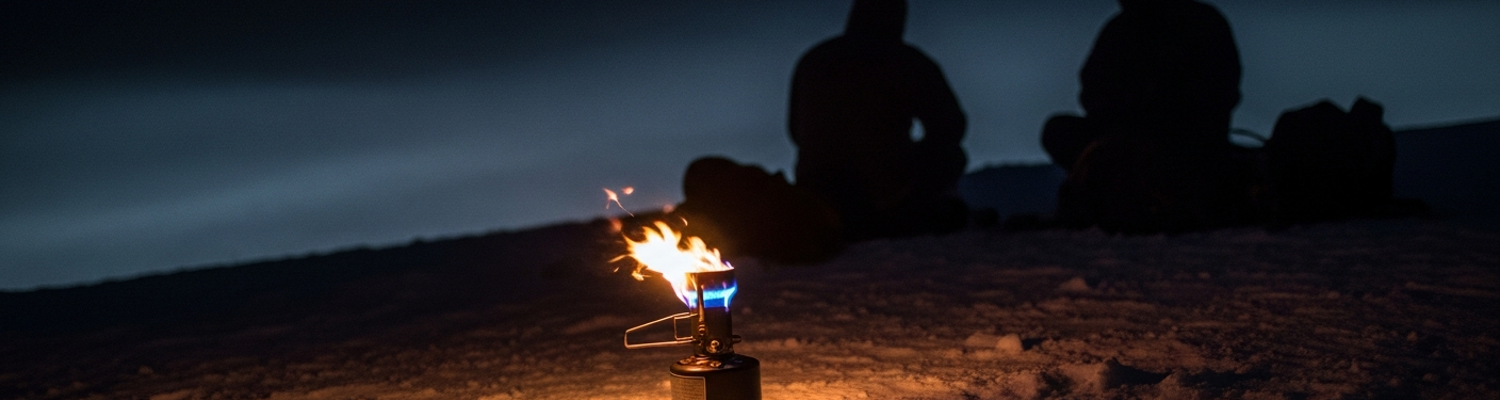

A review of operational logs from the Italian Campaign reveals a recurring problem for high-altitude patrols: the inability to reliably generate heat. Without it, water could not be purified, rations remained frozen, and frostbite became as dangerous as any enemy. Elite soldiers, trained for mountain warfare, found their effectiveness blunted by the absence of a functional heat source. Existing field kitchens were designed for rear echelons, not for small, mobile units operating in rugged terrain. The crisis was one of applied physics.
The problem was fire.
Archival evidence shows the US Army Quartermaster Corps had anticipated this technological gap. The establishment of mountain divisions required a complete reevaluation of individual equipment. An initial attempt, the M-1941 stove, proved too heavy and consumed too much material. Facing an urgent operational need, the military turned to the civilian sector, specifically to the Coleman Company of Wichita, Kansas. The government laid out demanding requirements: the new stove had to be lightweight, no larger than a quart-sized thermos, capable of operating from -60 to +125 degrees Fahrenheit, and able to burn multiple types of fuel. Coleman, leveraging its experience in commercial camping equipment, delivered a design in sixty days. This design, known commercially as the Model 520, was designated by the military as the Stove, Mountain, M-1942. Its first major deployment saw 5,000 units accompany American forces during the invasion of North Africa in November 1942.
The M-1942 was a study in compact engineering. Its foundation was a brass fuel tank, with later models using steel to conserve brass for shell casings. The apparatus stood only eight and a half inches high. A hand-operated pump integrated into the filler cap was used to pressurize the one-pint fuel tank. This pressure forced fuel vapor through a generator assembly, where it was pre-heated before reaching the burner, a feature intended to ensure ignition in extreme cold. Several manufacturers, including Aladdin and Prentiss-Wabers, would produce the stove alongside Coleman to meet wartime demand. The complete kit included a two-piece aluminum case that doubled as cooking pots and a specialized wrench that also served as a handle. The design was intended for issue at a rate of one stove for every two to four soldiers.
It weighed just over three pounds when filled.
This balance of portability and power defined the stove’s core function. The M-1942 could generate over 5,000 BTUs, an impressive output for its size, capable of burning for more than three hours on a full tank. This was enough heat to rapidly melt snow for drinking water or prepare rations for a small group. The single-burner design, however, had no simmer control; it was either off or roaring at full blast. This intense, focused flame was excellent for boiling but made more delicate cooking nearly impossible and increased the risk of sudden flare-ups. The entire system, including the nested cookset, was designed to fit inside a standard mountain rucksack. This self-contained unit provided the individual soldier with a capability previously unavailable on the front lines: the ability to make fire on demand, anywhere.
The M-1942’s rapid development cycle meant that deep, systemic flaws were embedded in its design. The promise of fire on demand was frequently broken. The first major hurdle emerged from its multi-fuel capability, a key logistical requirement that proved to be a significant compromise. The stove was designed to burn nearly any available gasoline, but leaded vehicle gasoline of the era was far dirtier than specialized white gas. This caused rapid carbon buildup inside the narrow vaporizer tube. The buildup would constrict fuel flow, leading to a weaker, yellow flame instead of the intended roaring blue, and eventually clog the generator entirely. The design also lacked any meaningful temperature control. This blowtorch functionality was excellent for boiling water quickly but consumed its one-pint fuel supply in as little as two hours, creating a constant demand for resupply on long-range patrols.
Wind was its constant enemy.
Early testing at high-altitude training grounds like Camp Hale, Colorado, immediately exposed the stove’s susceptibility to wind. The open-air design of the burner head offered almost no protection from the elements. Even a moderate breeze could cause the flame to sputter, lift away from the burner, or extinguish completely. For soldiers of the 10th Mountain Division attempting to melt snow for drinking water in the Apennines or the Aleutians, this was a serious failure. A task that should have taken minutes could stretch into a fuel-wasting ordeal, forcing soldiers to remain exposed in static positions for longer than tactically advisable. Field reports document soldiers creating makeshift windscreens from rocks, ration tins, or by clustering their bodies around the temperamental device, often compromising their own cover and concealment.
The most dangerous flaw, however, was its unreliable performance in sub-zero cold. The heart of the problem was the hand-operated pump, essential for pressurizing the fuel tank. The pump relied on a leather cup to form a seal against the inside of the pump cylinder. In freezing temperatures, this leather would shrink, stiffen, and lose its pliability, failing to create an effective seal. Without sufficient pressure, the stove could not properly atomize fuel in the generator. This led to a cascade of failures, from a weak flame to dangerous flare-ups as raw liquid fuel was ejected from the burner head. An even greater danger lay in the Non-Return Valve (NRV), a small internal seal meant to prevent pressurized fuel from flowing back into the pump tube. When this seal failed, a common occurrence as the original rubber pips aged and hardened, the pump cylinder could fill with gasoline. Multiple after-action reports describe instances where the pump handle would be violently ejected, followed by a spray of ignited fuel.
The first widespread complaints against the M-1942 stove emerged from the Aleutian Islands campaign. Deployed with American forces, including the 7th Infantry Division, from late 1942, the stove’s theoretical capabilities were immediately challenged by the region’s unique environmental hostility. The Aleutians were defined by a penetrating, damp cold and sudden, violent winds known as williwaws. The stove’s open burner head offered almost no protection against these winds, making ignition a frustrating battle. Soldiers reported spending precious minutes and fuel attempting to light the device, often having to build elaborate windscreens that compromised their tactical positions. The constant dampness and salt spray also accelerated corrosion on the stove’s steel components. A more insidious problem was fuel contamination. Pervasive moisture meant that water frequently found its way into fuel supplies, which, when fed into the stove, would flash to steam and extinguish the flame.
Its reputation did not improve in Europe.
The soldiers of the 10th Mountain Division, operating in the high-altitude conditions of the Italian Apennines during 1944 and 1945, documented a different set of systematic failures. Here, the primary issue was fuel quality. The stove's multi-fuel design became a significant weakness when the only available fuel was low-grade, leaded gasoline meant for vehicles. This dirty fuel caused rapid carbon buildup in the stove’s narrow generator tube. Instead of a powerful blue flame, soldiers were left with a weak, sooty yellow flame that dramatically increased boiling times and coated their cooking pots with thick black residue. Field maintenance became a constant necessity. Troops had to repeatedly disassemble the generator assembly to manually clear the carbon deposits, a difficult task in freezing conditions with gloved hands. The procedure often involved heating the generator with a separate flame until it glowed red and then quenching it, a process not practical in a forward combat zone.
The breaking point for the M-1942’s design came during the Ardennes Offensive in the winter of 1944-1945. The campaign was marked by record-breaking cold. The most common point of failure was the hand pump. The pump relied on a small leather cup to create a seal, but in the Ardennes cold, the leather would shrink, stiffen, and fail to provide adequate pressure. An even more serious issue arose from the Non-Return Valve. This rubber component became hard and brittle in the cold, frequently failing its seal. After-action reports from units like the 101st Airborne Division at Bastogne describe instances where this valve failure caused the entire pump assembly to be violently ejected, spraying ignited gasoline. For soldiers already suffering from frostbite, this final betrayal by their equipment made the M-1942 a dangerous liability.
The M-1942 stove’s vulnerability to the elements forced immediate, soldier-level engineering. A review of logs from the 10th Mountain Division in Italy and the 7th Infantry Division in the Aleutians shows a consistent pattern of improvised windbreaks. The stove’s exposed burner head could not sustain a flame in anything more than a slight breeze. Soldiers were forced to construct shields from whatever materials were at hand. Empty C-ration cans were hammered flat. The steel blades of M-1943 entrenching tools were driven into the ground to provide a barrier. In the absence of hard cover, soldiers would form a human wall, huddling their bodies around the sputtering device, making a small patrol a more concentrated and visible target. The glint from a piece of scavenged tin could betray a position to an enemy observer miles away.
In the cold of the Ardennes, a more insidious problem emerged, often misidentified in field reports as frozen fuel lines. The white gasoline itself did not freeze, but microscopic water droplets in the fuel tank did. As water is denser than gasoline, these droplets would settle at the bottom of the tank, directly next to the fuel pickup tube. In sub-zero temperatures, they would form tiny ice crystals that were then drawn into the fuel line, completely blocking the narrow generator tube. The effect was the same as a total clog. The only field-expedient solution was to keep the stove warm. Soldiers slept with the three-pound metal object in their sleeping bags or carried it inside their field jackets, a dangerous practice, as a leaking fuel cap could leave a man soaked in flammable gasoline.
Archival maintenance manuals heavily emphasized the single most important step for successful operation: preheating the generator. The M-1942 could not function by simply turning a valve. For the stove to produce a clean blue flame, the liquid gasoline had to be vaporized into a gas before it reached the burner. This was the sole function of the generator tube, a hollow brass pipe that ran directly above the burner head. The correct procedure required the user to first fill a small priming cup at the base of the generator with a thimble’s worth of fuel. This fuel was then lit, creating a small, localized fire that would envelop the generator tube for 30 to 60 seconds. Only once the tube was sufficiently hot could the main valve be opened. A rushed soldier who skipped this step and opened the main valve on a cold generator would be met with a stream of raw, liquid gasoline. This liquid would shoot out of the jet, hit the burner plate, and erupt into a massive, uncontrolled orange fireball, wasting fuel and instantly revealing a nighttime position.
An analysis of Quartermaster Corps supply records reveals the M-1942’s most significant operational handicap was its dependence on a single, specialized fuel type. While designed with a multi-fuel capability, its delicate generator assembly could only function reliably when burning clean, unleaded gasoline, known as white gas. Standard military-issue motor gasoline, or Mogas, was rife with lead additives that would rapidly foul the system. This created a severe logistical problem. It meant that a separate supply chain had to be established and maintained solely for these small stoves. A squad of mountain troopers could not simply refuel their M-1942 from a nearby jeep; they were dependent on specific one-gallon cans of white gas being pushed forward through the same strained supply lines that carried ammunition and medical supplies. When these specialized fuel cans failed to arrive, the stoves became useless weights of brass and steel.
The stove demanded its own logistics tail.
This weight, combined with its associated fuel, presented a direct tax on soldier mobility. The stove itself, when filled, weighed just over three pounds. Its two-piece aluminum case added to the bulk. In the context of a fully loaded mountain trooper carrying over 70 pounds of equipment, every ounce was scrutinized. The stove was a rigid object that occupied significant volume within a rucksack. The true burden, however, was the extra fuel. The one-pint tank offered, at best, a little over three hours of burn time. For a multi-day patrol, this was insufficient. Soldiers were forced to carry additional fuel in separate metal canteens, adding several more pounds to their load. This cumulative weight directly impacted a soldier’s stamina over the rugged terrain of the Apennines. Field reports from the 10th Mountain Division document the physical toll and the constant clatter of the nested metal pots against the stove’s body during reconnaissance patrols.
Beyond fuel and weight, the M-1942’s mechanics required a level of training that was difficult to execute under combat conditions. Its safe use depended on a precise, multi-step ignition sequence. The operator had to work a small hand pump 20 to 30 times to pressurize the tank. Next, they had to crack the main valve just enough to release a small amount of liquid fuel into a tiny priming cup. Overfilling this cup would lead to a large, uncontrolled flame. This priming fuel was then lit and had to burn for at least a full minute to sufficiently preheat the generator. Only after this phase could the main valve be opened. This inherent complexity meant that units often designated one or two men per squad as the primary stove operators. This created a new point of failure; if the designated operator was wounded or killed, the rest of the squad was often left with a machine they were unable to use safely.
The end of the Second World War did not immediately end the M-1942’s service, but its operational flaws ensured its days were numbered. Post-war Quartermaster Corps evaluations were deeply dissatisfied with the stove’s performance, particularly its temperamental nature and dangerous failure modes. Before 1942, the individual soldier had no reliable means of generating heat on the front line. The M-1942, for all its faults, was the first large-scale attempt to solve this problem, with over a million units produced. It forced the military to confront the physics of high-altitude and cold-weather operations at the squad level. This flawed machine, by its existence, created the institutional demand for something better. Its failures provided the exact blueprint for its own replacement.
Its successor was born from its failures.
The direct replacement, designated the Stove, One-Burner, M-1950, began appearing in 1951, just in time for the winter campaigns of the Korean War. Developed in a joint effort between the Army and manufacturers like Coleman and Rogers, the M-1950 was an exercise in targeted engineering, designed specifically to correct the M-1942’s weaknesses. While visually similar, the M-1950 was more compact with a wider, more stable base. Archival technical manuals (TM 10-496) show design changes to the components that failed most often in the cold: the pump assembly and check valve were improved to reduce the risk of seal failure and subsequent fuel leakage. The M-1950 was issued to troops fighting in Korea, who faced conditions just as harsh as those in the European Theater. Its deployment marked a clear generational shift, phasing out the last of the troublesome M-1942s.
Parallel to the development of a better liquid-fuel stove, a different, far simpler philosophy was gaining traction. This was the move toward solid-fuel heat sources. The concept centered on small, foldable metal stands used with solid chemical fuel tablets like trioxane. These tablets, issued in packs of three, were lightweight, virtually foolproof, and stable across a wide temperature range. A soldier simply had to place a tablet on the stand and light it. The resulting flame was less powerful than the output of an M-1942, but it was silent, almost smokeless, and completely reliable. It could not rapidly boil a large pot of water, but it was more than sufficient to heat a canteen cup of coffee or a can of rations. This represented a change in thinking: providing a guaranteed, low-output heat source for every individual was deemed more effective than a high-output but temperamental machine shared among several men. The M-1942 was a machine that demanded a trained operator; a trioxane tab demanded only a match.