
North Atlantic Transit of U-1105
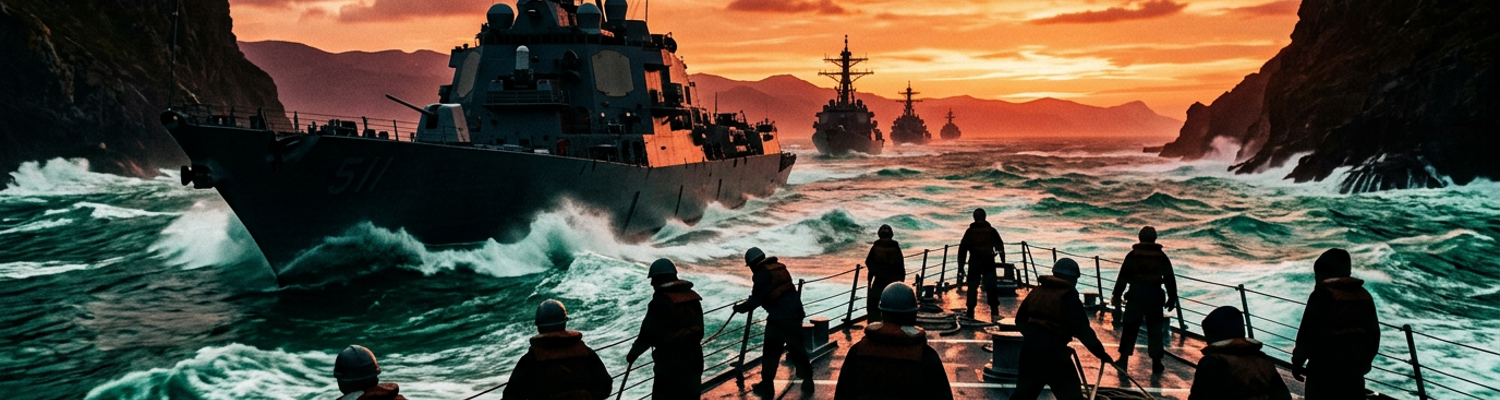
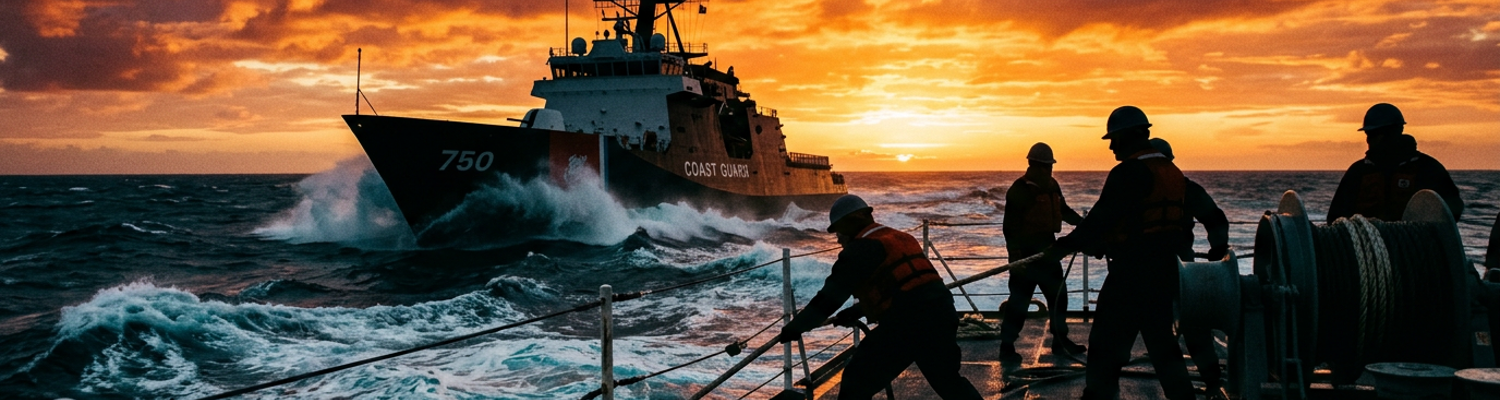
Seawater hammered against the low steel casing of U-1105 as towering thirty-foot swells swept across the winter North Atlantic. Lieutenant Commander Hubert Murphy commanded a mixed American and British prize crew aboard the surrendered Type VIIC/41 submarine. International authorities had allocated the vessel to the United States Navy as a war prize late that autumn, tasking the skeleton crew with navigating the boat thousands of miles to the Portsmouth Naval Shipyard without an escort ship. Freezing spray continuously washed over the conning tower, encasing the open bridge in heavy ice and eliminating any safe footing across the narrow wooden deck slats. Massive breaking seas repeatedly rolled the narrow submarine up to fifty degrees, straining the structural hull and threatening to capsize the top-heavy boat. Deck watches dogged down every topside hatch, spinning heavy brass handwheels to seal the vessel against the incoming water.
Water tore large expanses of the experimental Alberich synthetic rubber tiles directly from the outer hull as the storm reached hurricane strength. German engineers had originally glued these specialized four-millimeter panels across the steel plating to absorb Allied sonar pulses and evade acoustic detection. The brittle adhesive could not withstand the immense hydraulic suction created by the crashing crests of the North Atlantic swells, causing entire sheets of rubber to peel away into the ocean. Crashing breakers also warped the exterior deck framing, sheared heavy anti-aircraft gun mounts off their deck plates, and bent the snorkel mast backward against the winter gale. Torn rubber fragments drifted into the exterior free-flooding vents, blocking the drainage pathways and trapping extra water weight inside the superstructure casing. Internal compartments shuddered with every impact, hurling men against steel valves and loosening pipe joints throughout the cramped vessel.
Pipe joints leaked saltwater directly into the auxiliary systems, contaminating the main fuel supply and the engine cooling circuits. Engine mechanics faced immediate catastrophic engine failure as the two supercharged diesel motors sputtered on the brackish fuel mixture. American machinists and British engine room artificers crawled into the flooded bilges with flashlights to locate the compromised lines hidden beneath the floor plates. Mechanics manually isolated the contaminated fuel pipes, cutting through the damaged sections with hacksaws and redirecting fuel flow through improvised bypass loops made from spare copper tubing. Salt encrustations also gummed the heat exchangers, forcing the engineering team to strip down the cooling pumps by hand while standing knee-deep in oily sludge. Wrenches and rubber patches allowed the exhausted men to purge the lines, replace cracked valve seals, and keep the diesel powerplants running on a single steady feed.
Diesel engines kept the vessel moving westward through the storm, but persistent electrical shorts soon disabled the main radio transmitter. Water dripping from condensation on the overhead bulkheads shorted out the primary communication circuits, cutting all contact with shore commands and leaving the submarine completely isolated. Naval authorities in Washington feared the prize submarine had foundered with all hands after ten days of complete radio silence across the Atlantic listening stations. Electricians inside the submarine bypassed ruined terminal blocks with spare copper wire, constantly scraping green corrosion off wet contacts to preserve compass power and bilge pumps. Exhausted crewmen manually hauled buckets of water from the motor spaces whenever auxiliary drainage pumps clogged with loose debris and rubber fragments. Lieutenant Commander Murphy guided the battered U-1105 past the harbor entrance at Portsmouth, New Hampshire on January 2, 1946, securing the damaged submarine to the pier.
Acoustic Exploitation of Alberich Anechoic Coating
Pier cleats held the heavy mooring cables tight as naval engineers stepped onto freezing timber staging to inspect the exposed outer hull. Technical teams from the Portsmouth Naval Shipyard set up floodlights and began a physical analysis of the Oppanol rubber adhesive bonding and tile peeling patterns left across the steel plating. Technicians found that the adhesive had turned brittle under continuous hydrostatic pressure and violent Atlantic waves, creating hollow air pockets where water forced the panels away from the hull. Shipwrights scraped stubborn adhesive residue with stiff putty knives, hammered pry bars under stubborn edges, and chiseled off loose four-millimeter synthetic rubber tiles to determine why entire sections had ripped away. Cold winds numbed the fingers of the inspectors as they measured the thickness of the remaining adhesive bed with depth gauges, noting that moisture had penetrated the seam lines between adjacent tiles. Workers labeled each detached rubber specimen by its original hull coordinate before packing them into wooden crates.
Wooden crates arrived at the Naval Research Laboratory in Washington and the MIT Acoustic Laboratory in Massachusetts for immediate acoustic evaluation. Civilian scientists mounted the four-millimeter synthetic rubber sound-absorption tiles inside experimental freshwater tanks to test their reflective properties against active sonar pulses. Researchers discovered that handling the fragile tiles required constant improvisation, as the brittle synthetic rubber crumbled whenever technicians attempted to clamp it against standard test fixtures. Laboratory machinists hand-cut custom brass holding frames and applied fresh binding agents to simulate the original steel hull backing without distorting the internal sound-deadening cavities or crushing the small circular air holes molded inside each tile. Electricians wired underwater sound projectors and hydrophones directly across the water tanks, battling cold drafts and faulty vacuum-tube amplifiers to generate clean sound pulses across multiple test sweeps. Teams worked through long shifts adjusting microphone depths and replacing corroded cables to ensure every test pulse struck the tile samples at precise ninety-degree angles.
Angles of incidence determined the accuracy of the acoustic impedance measurements documenting tile attenuation of Allied active sonar frequencies. Physicists recorded these readings across multiple test sweeps, confirming that the perforated rubber layers absorbed incoming sound energy by converting sound waves into internal heat and reducing the returning echo strength by roughly fifteen decibels. Hydrophones measured the reflected sound pressure levels across dozens of calibrated frequencies, showing that the coating achieved its best performance against British search equipment operating in the fourteen-kilohertz band. Technicians soon discovered an operational flaw during pressure-tank experiments, noting that deep water pressure compressed the rubber and filled the internal sound-dampening voids once immersion depth increased. Moisture also seeped beneath edges where the Oppanol rubber adhesive had loosened, creating an unintended reflective boundary layer that bounced sound pulses right back toward search vessels. Research teams packed their voltage charts, damaged tile segments, and acoustic graphs into courier satchels, transferring the final documentation directly to naval ordnance officers.
Bureau of Ships Chesapeake Bay Salvage Experiments
Ordnance officers postponed the planned demolition orders, transferring the intact hull to the Bureau of Ships for deep-salvage doctrine evaluations. Naval leadership recognized that the fleet lacked proven postwar recovery methods for raising sunken submarines from mud-choked coastal waters, using the prize hull to validate deep-salvage procedures. Crews towed U-1105 south from Washington into the lower Chesapeake Bay, deliberately scuttling the vessel in roughly one hundred feet of water off Point No Point to simulate the loss of an active submarine. Heavy estuarine currents immediately complicated the operation, as powerful tidal rushes swept through the open channel, stirred up thick river silt, and cut underwater visibility to zero. Deckhands aboard the salvage ships USS Salvager and USS Windlass deployed four-point mooring arrays with heavy anchors, struggling through hours of rough water handling to hold both ships steady directly over the submerged target. Rigging teams then winched heavy messenger hawsers under the submarine hull, fighting the shifting tidal drag to establish guide paths for the primary recovery equipment.
Equipment rigging required heavy reinforced cylindrical steel pontoons to slide into the water along those submerged messenger hawsers. Rigging specialists flooded the internal compartments of each cylinder with seawater to overcome surface buoyancy, sinking them in matched pairs along both sides of the submarine casing to provide hundreds of tons of buoyant lift. Shipfitters connected flexible high-pressure air lines between the ship decks and specialized air blow manifolds mounted along the tops of the submersible pontoons. Surging currents repeatedly swung the flooded pontoon cylinders out of alignment, twisting the descending lines and snapping auxiliary steel wire ropes against the submarine superstructure. Winch operators fought to maintain even tension on the surface cables, but the sweeping estuarine currents rolled the heavy pontoons until their attachment clamps bound up against the hull. These sudden shifts jammed the heavy chains into the outer hull plating, fouling the messenger hawsers and trapping the uninflated pontoons in deep bottom mud.
Mud gripped the tangled cables as navy divers descended along weighted shot lines into the dark river channel to assess the fouled rigging. Encased in stiff canvas dresses and heavy brass helmets, the divers walked across steel deck plates while estuarine currents pushed against their air hoses and threatened to sweep them off the wreck. Technical improvisation became essential on the riverbed, as the men drove steel wedges into jammed fairleads and used portable hydraulic jacks to pry open tangled cable loops that threatened to crush their fingers. Divers also discovered that silt accumulation and marine corrosion had frozen several vital valve configurations on the submerged wreck, preventing surface pumps from expelling water from the flooded internal ballast tanks. Technicians on the surface quickly ground down spare pipe wrenches into narrow profiles, sending the modified hand tools down on weighted messenger lines so the divers could manually reset the stubborn valve linkages in the pitch-black water. Working in twenty-minute shifts before cold water and physical exhaustion set in, the divers hammered valve wheels free and cleared the last fouled lines.
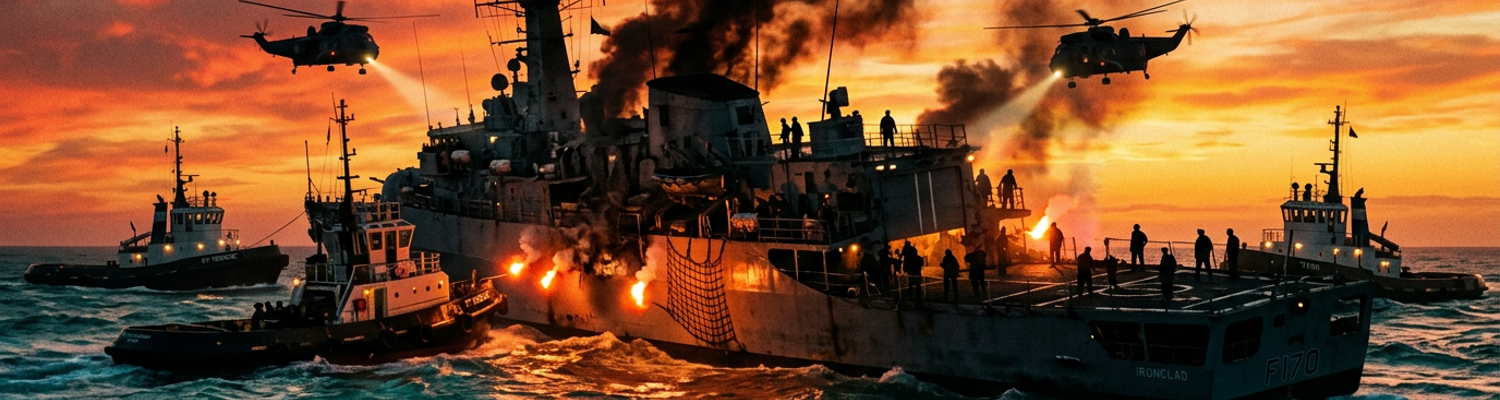
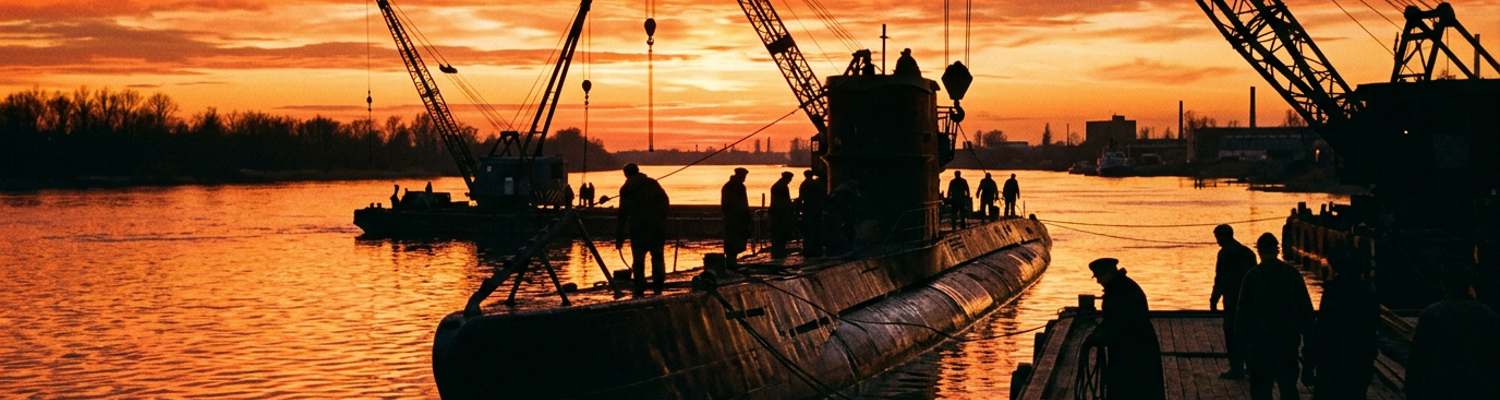
Lines running clear to the surface allowed compressors aboard Salvager and Windlass to force high-pressure air through the deck supply hoses. Deck officers tracked pressure gauges as the air blow manifolds directed pressurized air into the flooded pontoon chambers and the open submarine ballast tanks, gradually displacing hundreds of tons of trapped water through bottom relief ports. Expanding air pockets built positive buoyancy inside the pontoons, but the thick mud gripped the steel keel and produced groaning metal noises that vibrated through the water column as the lifting force increased. Increasing air volume finally broke the bottom suction with a sharp jolt, lifting the submarine free from the silt amidst a heavy release of foam and surface bubbles. Salvager and Windlass took the buoyant submarine under tow between their hulls, moving the suspended prize up the Potomac River toward Piney Point.
Controlled Submergence and Pontoon Recovery Operations
Piney Point anchorage held the submarine steady until naval commands ordered the salvage ships to redirect the hull back into the Chesapeake Bay to expand underwater recovery doctrine. Engineers subsequently oversaw the execution of five controlled sinkings and four successful pontoon recoveries across test grounds to systematically test the physical limits of standard fleet salvage equipment. Each controlled scuttling required technicians to vent the internal buoyancy compartments and let the submarine settle into thick, waterlogged silt on the bay floor. Heavy bottom mud exerted enormous hydraulic suction on the curved keel, holding the hull fast against the lifting cables and preventing the submerged pontoons from breaking the wreck free. Machinists aboard the support tenders immediately began the field fabrication of specialized pneumatic couplings and hull patches to counteract mud suction and maintain trim. Divers took these custom steel plates beneath the surface, bolting the patches over open drainage vents and driving pneumatic jetting nozzles deep beneath the bilge to deliver directed blasts of compressed air.
Air pressure sliced through the mud banks, breaking the muddy vacuum and allowing the salvage pontoon cradles to bear the full weight of the submarine. Critical mechanical failures threatened the recovery the moment salvage operators attempted to lift the boat off the bottom. Marine sediment and deep saltwater corrosion seized the main Kingston valves along the bottom of the submarine ballast tanks, preventing sea water from exiting the flooded chambers in an orderly sequence. This valve failure produced severe uneven ballast flooding, causing the hull to roll sharply and rise toward the surface in erratic buoyancy ascent phases that repeatedly slung the pontoons out of alignment. Water surged uncontrollably between partially vented compartments, threatening to flip the submarine upside down and snap the heavy steel chains securing it to the surface tenders. Technicians carried out emergency troubleshooting of the stubborn Kingston valves while suspended in total darkness against the lurching hull, hammering jammed mechanical stems with heavy drift pins until the mechanisms broke free.
Mechanisms finally opened, allowing surface pumps aboard Salvager and Windlass to force high-pressure air through the restored valve linkages. Pressurized air displaced the remaining ballast water and stabilized the submarine trim as the pontoons lifted the steel hull to the surface. This difficult sequence of submergence and recovery was repeated until the fifth drop, where irreversible hull flooding and structural strain prevented the pontoons from making a fifth lift. The resulting record of four successful pontoon recoveries out of five attempts delivered critical salvage performance data to the Bureau of Ships, proving that improvised pneumatic tools and field patches could overcome treacherous bottom suction in coastal channels. Riggers uncoupled the pontoon slings, drained the auxiliary hoses, and secured the floating U-1105 to the towing bitts of the salvage vessels. Deckhands coiled the air supply lines and stowed their fabrication tools, clearing the vessel decks for the final journey back up the Potomac River.
Potomac River Demolition and Final Hull Rupture
River tugboats guided the stripped submarine into the broad channel to begin preparations for the Bureau of Ordnance underwater shock trial staged off Piney Point, Maryland on September 19, 1949. Strong estuarine currents surged around the unpowered hull, pushing the mooring lines past their safe load limits and rolling the vessel erratically across the narrow test area. Engineers hurried to secure heavy ground tackle to keep the target stationary, but the dragging current jammed the primary winch drums aboard the support tenders and bent the steel hawser fairleads. Deckhands freed the fouled drums with heavy sledgehammers and improvised a multi-point anchor harness using discarded anchor chain to hold the submarine firmly over the deepest part of the river channel. Technicians then worked from open workboats in choppy water to attach measuring gauges along the external plating, preparing the vessel for the explosive shock evaluation.
Explosives crews lowered the weapon assembly from a crane barge, adjusting heavy steel suspension bridles beneath the submarine keel. Water pressure and shifting river silt immediately jammed the mechanical depth-release pelican hooks, preventing the crew from leveling the explosive cradle. Mechanics leaning over the gunwales of a utility boat used iron pry bars and cutting torches to modify the twisted brackets, freeing the jammed linkage until the cradle hung straight. Moisture simultaneously penetrated the secondary firing circuits, causing electrical short circuits that registered as false fault warnings on the remote instrumentation panel. Electricians stripped the waterlogged rubber insulation with pocketknives, wrapped the copper splices in layers of tarred friction tape, and repacked the underwater junction boxes with heavy grease to restore electrical continuity. Engineers confirmed solid test signals across every circuit, cleared the danger radius of all personnel, and handed the firing keys to the demolition officer.
Demolition officers closed the primary circuit to initiate the detonation of a 250-pound Mark 6 depth charge suspended thirty feet beneath the submarine hull. Tremendous shock pressure slammed upward through the river water, crushing the lower casing and lifting the center of the vessel several feet out of the water. Internal frames deformed instantly along the engine spaces, buckling structural bulkheads and tearing heavy machinery from reinforced foundation beds. Expanding explosive gases exerted secondary hydraulic pressure against the weakened steel, generating complete structural failure and pressure hull rupture down to the keel that sent U-1105 into ninety-one feet of water. Cascading river water poured into the wide rupture along the bottom, pulling the stern downward and rolling the conning tower heavily to port.
Port side plating struck the riverbed as churning silt clouded the bottom of the Potomac River. Survey craft moved into the test zone to mark the position of the sunken wreck with floating navigation buoys while engineers recorded the blast measurements from their remote instruments. Navy divers prepared surface-supplied diving gear to inspect the submerged hull, descending through the murky water column to examine the torn keel plates and document the extent of the structural damage. Sonar operators mapped the resting outline of the shattered submarine on their scopes, confirming that the hull remained firmly embedded in the bottom mud. Command vessels retrieved the acoustic hydrophones and firing cables from the water, securing the lines to deck cleats as the salvage group departed the test range.