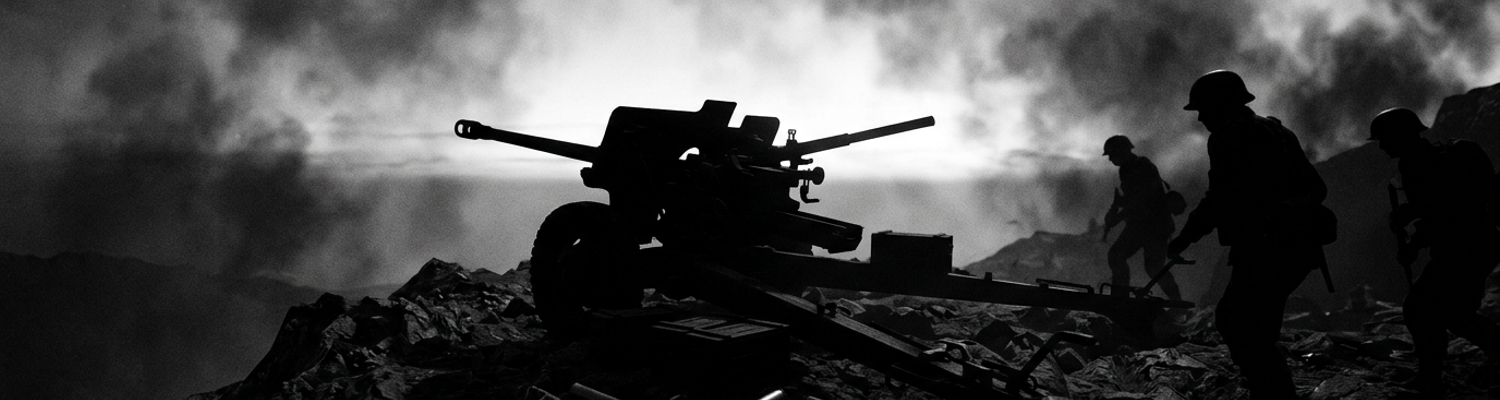

Ordnance Department Procurement and the 37mm Gun M3
19 April 1945. Coordinates 26 15 32 N 127 44 12 E. Kakazu Ridge.
The 37mm Gun M3 deployed along this jagged limestone escarpment was already considered functionally obsolete against heavy armor. The weapon system originated a full decade earlier under entirely different tactical assumptions.
The Ordnance Department needed a dedicated tank killer.
Operational logs and procurement records from the mid 1930s indicate American infantry units relied heavily on the .50 caliber Browning machine gun for armor defense. Reports filtering back from the Spanish Civil War demonstrated the inadequacy of heavy machine guns against modern mechanized threats. Observers noted the German 3.7 cm Pak 36 punching through light Republican armor with high velocity solid shot. US Army planners initiated a rapid domestic development cycle at the Aberdeen Proving Ground. Engineers tested multiple prototypes under the T3 designation. The final iteration featured a 53.5 caliber barrel with a manually operated vertical block breech. Following successful firing trials, the weapon was adopted by the US Army in 1938 as its primary light anti tank artillery piece. Production commenced at the Watervliet Arsenal in New York. Early ballistic tests confirmed the M3 armor piercing projectile could penetrate 1.5 inches of face hardened steel at a range of 1000 yards. Planners calculated this specific performance metric would easily defeat the standard 15mm to 30mm armor plates found on contemporary light tanks rolling off assembly lines in Europe and Asia. Deliveries of the system entered inventory exactly as global rearmament accelerated.
Mobility dictated the entire engineering process.
When examining the historical record regarding the M4 mount, the design specifications prioritized rapid deployment by infantry battalions across highly uneven terrain. The hardware features a lightweight carriage designed for rapid towing and manual positioning by gun crews. Engineers built the lower assembly with a split trail configuration. They bolted pneumatic tires to a solid steel axle. The entire unit weighed exactly 912 pounds. This strict weight limit allowed a standard quarter ton Willys jeep or a Dodge weapons carrier to tow the gun at highway speeds. A standard five man detachment could unhitch the weapon from a prime mover in seconds under direct enemy fire. Two men would grab the steel trail handles. They physically dragged the gun into defilade positions where motorized vehicles could not operate. Once positioned, the crew spread the two trail legs outward to establish a stable firing platform. Heavy steel spades welded to the end of each trail dug directly into the soil to absorb the 2000 pound recoil force. The gunner operated dual handwheels on the left side of the breech to control a 15 degree traverse and a depression limit of minus 10 degrees. Axle clearance kept the weapon just 38 inches off the ground.
A 5mm steel shield provided the only crew protection against incoming shrapnel.
Initial field exercises in Louisiana during 1940 and 1941 exposed mechanical stress points in the recoil mechanism. Hydro spring mechanisms housed beneath the barrel frequently leaked hydraulic fluid after sustained firing sequences. Ordnance teams retrofitted the recoil cylinders with thicker rubber seals and heavier springs. Distribution across active infantry regiments occurred rapidly. Each standard infantry battalion received an anti tank platoon equipped with three of these guns. Ammunition production scaled up to supply high explosive, armor piercing, and canister rounds to depots across the Pacific and European theaters. The canister round, designated M2, packed 122 steel balls into a brass casing. Firing the M2 converted the anti tank weapon into a large bore anti personnel scattergun. Physical dimensions of the breech block limited the amount of propellant that could be packed behind the projectile. Propellant burn rates capped the muzzle velocity at 2900 feet per second.
The barrel could not be lengthened without destroying the center of gravity.
Engineers attempted to bore the chamber out to accept a larger 57mm round. Modified prototypes immediately cracked the M4 axle upon firing. Brass trunnion bearings shattered under the increased recoil pressure. Ordnance cancelled the modification program on October 12 1941. Combat units deployed with the original 37mm tube.
Armor Penetration Deficits in European Trials
Operational logs from November 1942 detail the initial combat testing phase of the M3 platform across the Atlantic. US II Corps anti tank platoons conducted live fire exercises against captured German armor plates at the Salisbury Plain military training area. Coordinates 51 13 12 N 1 58 48 W marked the exact firing line. Gun crews tested the M51 Armor Piercing Capped shot. The 37mm projectile weighed exactly 1.92 pounds. Gunners fired at face hardened Krupp steel plates salvaged from disabled Axis vehicles shipped back from the North African front. Striking steel plates exceeding 30mm in thickness at a standard engagement distance of 500 yards caused an immediate structural failure of the projectile. The soft steel ballistic cap collapsed instantly upon impact. High carbon steel forming the underlying penetrator shattered into jagged fragments. Kinetic energy dissipated outward across the surface of the target rather than punching through the dense crystalline structure of the armor plate. Ordnance testing officers documented these exact mechanical failures in their field notebooks. The weapon system encountered severe armor penetration deficits against thicker armor during early European trials. Memos containing these ballistic data tables traveled directly to the War Department in Washington via diplomatic pouch.
The physics of the carriage design prevented any rapid upgrades to the breech pressure.
Combat reports from the Tunisian campaign validated the bleak proving ground data three months later. Elements of the 168th Regimental Combat Team deployed M3 guns in shallow defensive wadis near Sidi Bou Zid on February 14 1943. Topographic maps place this engagement at coordinates 35 02 24 N 9 29 06 E. German Panzerkampfwagen IV Ausf. G medium tanks advanced across the flat desert floor in a wedge formation. These specific enemy vehicles carried 80mm of face hardened frontal steel bolted directly to their chassis. American gun crews held their fire until the range closed to an extremely dangerous 300 yards. They engaged the advancing columns with rapid sustained fire. The 37mm platform proved incapable of defeating front facing hull armor on modern medium tanks. High speed camera footage from later Aberdeen Proving Ground recreations showed the exact metallurgical failure mechanism. The M51 shot struck the 80mm glacis plate of a Panzer IV at a 30 degree angle of obliquity. Deflection occurred immediately as the angled armor forced the incoming mass upward. Friction burned off the exterior paint. Heavy steel tracks kept rolling forward over the American positions.
Gunners resorted to aiming at the optical glass viewports and exposed drive sprockets.
Chief of Ordnance Major General Levin H. Campbell Jr. reviewed the after action reports arriving from North Africa. Typed documents confirmed a total mechanical inadequacy of the 37mm system against upgraded German mechanized units. First Armored Division forces lost over 100 tanks and dozens of towed anti tank guns in a single week of fighting around the Kasserine Pass. Campbell authorized an immediate re equipping process for the entire European Theater of Operations. Manufacturing plants in Michigan halted modifications on the 37mm carriage. Planners shifted production lines to fabricate the British designed 57mm Ordnance QF 6 pounder, designated the M1 in US military service. This heavier weapon weighed 2520 pounds empty. It required a significantly larger prime mover to pull it across muddy terrain. Heavy halftracks replaced the quarter ton jeep.
The original lightweight towing requirement was abandoned entirely.
Quartermasters crated the surviving M3 units scattered across the Mediterranean basin. Transport ships hauled the obsolete guns away from the European combat zones. Military supply chains redirected thousands of these 37mm platforms to the Pacific Theater. Japanese tank designers still utilized thin riveted armor plates ranging from 12mm to 25mm in thickness on their primary combat vehicles. Standard M51 shot could easily penetrate a Type 95 Ha Go light tank at a maximum visual range of 1000 yards. Marine Corps supply officers requisitioned large stockpiles of high explosive and canister ammunition to accompany the redirected guns. Wooden crates containing the hardware arrived at island staging areas painted in flat olive drab.
Tactical Shift to M2 Canister Antipersonnel Loads
A close review of operational logs from the Southwest Pacific Area command during late 1942 reveals an urgent shift in ammunition procurement. Marine Corps infantry battalions engaged in dense jungle combat on Guadalcanal reported that high explosive shells detonated harmlessly in the upper canopy. Solid armor piercing shot passed cleanly through Japanese infantrymen without causing secondary fragmentation. Field commanders submitted formal requests to the War Department for a specialized close quarters munition. Ordnance teams pivoted toward developing the M2 canister shot antipersonnel round. Engineers at the Frankford Arsenal in Philadelphia initiated a rapid redesign of the standard 37mm brass casing. They discarded the solid steel penetrator and the impact fuses entirely. Technicians focused on creating a localized area denial weapon capable of stopping massed infantry assaults at ranges under 300 yards. The development cycle required recalibrating the internal chamber pressure of the M3 breech to handle a completely different payload weight. Ballistics experts calculated that the existing hydro spring recoil mechanism could safely absorb the firing stresses of a 1.9 pound mass exiting the muzzle at 2500 feet per second. Factory production lines converted from turning out armor piercing caps to stamping thin walled tin cylinders designed to rupture immediately upon leaving the gun barrel.
Forward supply depots began receiving wooden crates of the newly manufactured M2 ammunition in January 1943.
Archival blueprints detail the exact internal geometry of this specialized ordnance. Assembly line workers packed hundreds of steel shot balls to convert the anti tank weapon into a high rate shotgun. Each 3/8 inch steel sphere was coated in a thin layer of cosmoline to prevent saltwater corrosion during trans Pacific shipping. Workers layered these projectiles inside a fragile tin matrix. They seated the entire payload atop a base charge of smokeless powder. When the gunner pulled the firing lanyard, the firing pin struck the center primer. This ignited the propellant base. Expanding gases generated 30000 pounds of pressure per square inch inside the steel breech block. This kinetic force propelled the tin casing down the 53.5 caliber rifled barrel. The centrifugal force generated by the rifling grooves tore the thin tin walls apart before the projectile even cleared the muzzle brake. The steel shot expanded outward in a cone shaped cloud. At a range of 100 yards, the metal spheres covered a kill zone measuring roughly 30 feet wide and 15 feet high. The physical density of the shot pattern ensured that any soft target within the frontal arc sustained multiple impacts. Gun crews trained to rapidly extract the spent brass casing and slam a fresh M2 round into the open breech.
Experienced loader personnel could cycle the weapon twenty times in sixty seconds.
Examining the combat records from the Bougainville campaign illustrates the practical application of this modified hardware. Japanese infantry units frequently launched nighttime assaults across riverbeds and open clearings. American anti tank platoons integrated their M3 guns directly into the frontline infantry positions. Emplacement crews dug the split trail carriage deep into the volcanic soil. This ensured the 38 inch axle height sat flush with the surrounding terrain. Sandbags reinforced the 5mm steel shield. Gunners pre aimed the weapon along expected avenues of approach. They locked the traverse handwheels to cover specific choke points. When enemy forces initiated a charge, the gunner depressed the firing pedal. The blast ejected a dense cone of flying steel spheres at supersonic speeds. The concentrated spread pattern stripped the bark from palm trees and instantly neutralized concentrated troop formations. Tracer elements were entirely absent from the M2 canister design. The lack of glowing pyrotechnics prevented enemy spotters from tracing the firing signature back to the concealed gun pit. The weapon fired its scatter payload in total darkness. Empty brass casings piled up around the gunners feet as the loader continuously fed new rounds into the smoking chamber. The barrel temperature routinely exceeded 400 degrees Fahrenheit during sustained defensive barrages.
Crew members poured canteen water directly over the hot steel tube to prevent chamber cook offs.
Okinawa Assault and 96th Infantry Division Deployment
Landing manifests from April 1 1945 detail the exact equipment loads carried ashore by the 96th Infantry Division. Amphibious tractors drove onto the Hagushi beaches on Okinawas western coast. Navy coxswains dropped the steel ramps of LSTs directly onto the coral reef. Quartermasters directed the offloading of the 37mm Gun M3 alongside standard supply crates. Major General James L. Bradley commanded the division. He ordered his regiments to push rapidly inland toward the heavily fortified southern sector of the island. Gun crews from the 383rd Infantry Regiment hitched their anti tank weapons to quarter ton Willys jeeps. The lightweight 912 pound carriage allowed the motorized columns to drag the hardware through deep coastal mud that immobilized heavier artillery pieces. Rain saturated the dirt roads leading toward the Shuri Line. Heavy truck tires dug deep ruts into the volcanic soil. The 37mm platforms bounced behind the jeeps on pneumatic tires. They advanced directly behind the lead rifle companies.
Jeep engines overheated constantly while pulling the anti tank platforms up the steep limestone inclines.
Archival topographic maps from mid April pinpoint the exact geological obstacles facing the American advance. Elements of the 96th Infantry Division collided with the outer rings of the Japanese defenses at Kakazu Ridge. Coordinates 26 15 32 N 127 44 12 E marked a jagged limestone formation featuring severe elevation changes and deep ravines. Enemy engineers had spent months carving interconnected bunkers into the reverse slopes. This specific topography created massive dead spaces across the battlefield. Standard heavy machine guns could not depress their barrels far enough to engage targets hiding within the deep gullies. Mortar teams struggled to drop high explosive rounds accurately into narrow rock fissures. General Bradley authorized anti tank platoon commanders to detach their 37mm guns from the rear echelon and move them to the very edge of the forward defensive lines.
Five man crews unhitched the M3 carriages from their towing vehicles and physically pushed the 912 pound weapons into the combat zone.
Examining the physical mechanics of this deployment reveals a grueling labor process. Soldiers grabbed the steel trail handles and dragged the guns up steep inclines under heavy mortar fire. They muscled the low profile weapons into shallow defilade positions overlooking the blind spots between the infantry companies. The 38 inch axle height allowed the gun tube to sit almost flush with the jagged coral outcroppings. Crewmen spread the split trail legs to their maximum width. They hammered the heavy steel spades directly into the porous limestone to prevent the weapon from sliding backward during recoil. Gunners rotated the elevation handwheels to point the 53.5 caliber barrels straight down into the rocky ravines. Extreme negative depression angles allowed the M3 to cover the exact dead spaces where Japanese infantry units massed for nighttime counterattacks.
Gunners locked the traverse handwheels securely in place to maintain aim on the narrow choke points.
Combat logs from the 383rd Infantry Regiment document the mechanical efficiency of this close quarters setup. Japanese forces initiated mass infiltration attempts up the steep ravines as soon as the sun set. American gunners waited in the darkness behind the 5mm steel armor plates. Enemy riflemen armed with 6.5mm Arisaka rifles fired blindly at the American lines. Copper jacketed bullets struck the M3 gun shields. The angled steel deflected the incoming small arms fire away from the loaders working the breech block. When the advancing troops reached a range of fifty yards, the gunners triggered the firing mechanism. The M2 canister rounds detonated instantly upon leaving the muzzle brake. Each blast sent 122 steel balls traveling down the narrow limestone corridors. Heavy shot rebounded off the hard rock walls. This multiplied the lethality of the spread pattern within the enclosed dead spaces. Loaders ejected the smoking brass casings and slammed fresh rounds into the chamber.
Empty brass casings piled up around the axle assembly as the loaders continuously fed the breech.
Revetment Failures Under Japanese Mortar Fire
Operational logs from April 19 1945 reveal the immediate engineering challenges facing the 96th Infantry Division along the Kakazu escarpment. Gun crews from the 383rd Infantry Regiment could not leave their 37mm M3 anti tank platforms exposed on the bare limestone. Company commanders ordered the immediate construction of hasty defensive revetments to shelter the hardware. Elements of the 321st Engineer Combat Battalion moved up the slope with pickaxes and standard issue folding entrenching tools. They struck solid coral immediately beneath a thin layer of topsoil. Digging standard gun pits proved physically impossible with hand tools.
Combat engineers resorted to high explosives.
Technicians from the demolition platoons drilled shallow holes directly into the porous rock. They packed half pound blocks of TNT into the fissures and wired the charges to hand cranked blasting machines. The resulting detonations fractured the jagged crust into manageable chunks. Infantrymen cleared the debris by hand. They formed rough U shaped depressions measuring exactly six feet wide and four feet deep. This specific geometry allowed the five man gun crews to muscle the 912 pound M3 carriage down into the pit. The 38 inch steel axle sat well below ground level. Engineers stacked coarse burlap sandbags around the forward edge of the crater. They filled them with the pulverized coral dust generated by the TNT blasts. They packed the bags tightly around the guns 5mm steel armor plate. Only the 53.5 caliber barrel and the optical sights protruded above the improvised parapet.
The split trail legs locked firmly against the rear wall of the blast crater.
Japanese observers tracked this entire construction process from concealed spotting towers on the reverse slope of Kakazu West. Artillery officers of the Japanese 32nd Army relayed the exact grid coordinates of the newly dug American revetments to their heavy weapons companies. Standard 81mm mortar fire gave way to a coordinated bombardment from Type 97 150mm heavy mortars. These specialized indirect fire weapons fired a 56 pound high explosive projectile at an extremely steep angle. The high trajectory allowed the heavy shells to clear the ridge crest and drop almost completely vertically onto the forward slopes.
The incoming projectiles bypassed the frontal protection of the U shaped berms entirely.
Examining the physical mechanics of the bombardment illustrates the total structural failure of the hasty defensive positions. The Type 97 shells carried an 11 pound picric acid bursting charge. Fuses detonated the payload upon contact with the dense coral outcroppings immediately surrounding the gun pits. The concussive blast waves shattered the brittle limestone base rock. Jagged chunks of geological debris accelerated outward at supersonic speeds. This secondary fragmentation shredded the burlap sandbags lining the parapets. Thousands of pounds of loose coral dust and shattered rock collapsed directly inward on top of the 37mm platforms.
The collapsing walls buried the lower carriage assemblies under feet of heavy debris.
Mechanical components of the M3 jammed instantly under the sudden weight. The mass of the collapsed revetment pinned the split trail legs to the floor of the pit. This completely immobilized the weapon. Dirt packed tightly into the exposed traverse gears on the left side of the breech block. Gunners stripping the elevation handwheels found they could no longer rotate the 53.5 caliber barrel to track targets. The destruction of the sandbag walls completely removed the physical cover isolating the five man crews from the blast zone. The 5mm steel gun shield provided adequate deflection against small caliber rifle bullets but failed entirely against large mass artillery fragments. Heavy steel shrapnel from the 150mm casings punched straight through the thin armor plating. High velocity metal tore into the hydro spring recoil cylinders housed beneath the barrel.
Loaders dropped their canister rounds directly into the dirt as the protective berms disintegrated.
Repelling Suicidal Night Charges at Kakazu Ridge
A close review of operational logs from the 383rd Infantry Regiment details the immediate aftermath of the Japanese heavy mortar barrages on April 19 1945. Stripped of external cover by the destruction of the defensive sandbag revetments, the 37mm Gun M3 detachments sat completely exposed. Five man gun crews waited on the bare limestone shelves of Kakazu Ridge. As darkness fell over coordinates 26 15 32 N 127 44 12 E, elements of the Japanese 62nd Division began moving out from their subterranean bunker complexes on the reverse slope. Utilizing the deep jagged ravines, enemy platoon commanders masked their approach from American listening posts. These infiltration units operated under strict orders to eliminate the forward anti tank positions before initiating a broader assault on the main infantry line. Wearing rubber soled tabi boots, Japanese soldiers crept up the steep coral inclines. They carried 6.5mm Arisaka rifles and ten kilogram canvas satchel charges packed with picric acid. The jagged topography funneled these assault teams directly toward the isolated 37mm gun pits.
The infiltration shifted into a mass frontal assault at exactly 0215 hours.
Archival evidence shows the exposed American crews faced coordinated wave style suicidal night charges originating from multiple blind spots simultaneously. Surging out of the narrow rock fissures in groups of twenty to thirty men, enemy infantry initiated the attack. They sprinted directly at the 5mm steel gun shields. Overwhelming standard rifle and machine gun defenses on the flanks, the sheer volume of attackers broke through the perimeter. Japanese assault troops closed the distance to within ten yards of the M3 carriages. Assault teams pulled the friction fuses on their Type 99 demolition charges. Attackers hurled the heavy canvas bags directly at the 37mm barrels and the exposed split trail legs. Detonations of this proximity generated high velocity overpressure waves. Rupturing the eardrums of the American loaders, the blasts warped the thin steel armor plates. The shields buckled. Gun commanders ordered their crews to abandon armor piercing ammunition entirely.
Loaders reached blindly into the wooden ammunition crates for the M2 canister rounds.
Examining the physical mechanics of this perimeter defense reveals a chaotic high speed loading cycle executed in total darkness. The M2 canister shell transformed the vulnerable anti tank platform into a heavy static shotgun capable of halting localized infantry breaches. Grabbing the brass casing, a loader slammed the 1.9 pound munition into the open breech block. The gunner depressed the firing pedal instantly. Expanding gases propelled the tin walled cylinder down the 53.5 caliber rifled tube at 2500 feet per second. Exactly as it cleared the muzzle brake, centrifugal force tore the fragile casing apart. A dense cone of 122 steel spheres ejected directly into the charging Japanese formations. Saturating a thirty foot wide kill zone at point blank range, the 3/8 inch shot provided immediate suppression. Steel balls punched through the canvas satchel charges and shredded the advancing infantrymen before they could throw their explosives.
The lack of tracer pyrotechnics kept the muzzle flash relatively brief.
Anti tank platoons relied entirely on this localized area denial capability to survive the night. Jammed with coral dust from the earlier mortar strikes, the M3 traverse handwheels frequently failed. Gunners simply locked the breech in place and fired straight down the center of the ravines. The physical density of the canister spread pattern compensated for the inability to aim. Flanking the gun pits, hard limestone walls amplified the lethality of every single shot. Striking the dense coral at supersonic speeds, steel balls rebounded at unpredictable angles. This ricochet effect tore through secondary waves of attackers moving up the narrow defiles. Loaders extracted the spent brass casings and fed new rounds into the smoking chamber at a rate of fifteen shots per minute. Rapidly degrading the hydro spring recoil mechanism, the sustained internal chamber pressure held at 30000 pounds per square inch. Barrel temperatures spiked past 400 degrees Fahrenheit. The intense heat burned the bare hands of the crewmen attempting to clear jammed extractors. By 0400 hours, empty brass cylinders formed a pile deep enough to bury the steel axle assembly.
Field Improvisations with Salvaged Tank Armor Plates
Maintenance logs from April 21 1945 reveal an unauthorized engineering program initiated directly behind the Kakazu lines. Ordnance officers of the 96th Infantry Division recognized the complete ballistic failure of the factory issue M3 gun shield. Standard supply chains offered no replacement armor kits for the functionally obsolete 37mm platform. Supply units operating near the Hagushi beachhead received urgent handwritten requisitions for thicker metal from the forward company commanders. Elements of the 796th Ordnance Light Maintenance Company established an open air fabrication yard exactly three miles behind the active infantry positions. Technicians drove M31 recovery vehicles across the contested terrain to retrieve the burned out hulks of Japanese Type 97 Chi Ha medium tanks.
Mechanics stripped the wrecked enemy vehicles down to their bare steel chassis.
Archival evidence shows these field supply units systematically harvested the 25mm frontal armor plates from the disabled Japanese armor. Welders ignited oxy acetylene torches to cut the riveted high carbon steel down into angular geometric sections matching the low profile of the M3 carriage. Cutting through face hardened armor required specific gas mixtures to prevent the salvage pieces from losing their metallurgical temper. Crews unbolted the original 5mm shield from the axle assembly and discarded the warped metal into scrap piles. Mechanics hoisted the heavy Type 97 armor blocks using chain block and tackle systems rigged to the heavy booms of standard M3A1 half tracks. They positioned the salvaged tank plates directly over the exposed traverse gears of the 37mm platform. Heavy duty arc welders fused the 25mm rolled homogeneous armor directly to the trunnion mounts. They consumed thousands of mild steel welding rods in the process. The intense heat of the continuous welding arcs frequently melted the brass elevation gears located inches away from the fusion points. This specific field modification provided five times the frontal protection of the original factory configuration. Loaders operating the breech block now stood behind hardened steel thick enough to deflect a direct hit from a 50mm knee mortar high explosive fragmentation shell.
The gross weight of the towed carriage immediately increased by 215 pounds.
Adding the salvaged tank armor solved the immediate crew survivability issue but created a severe imbalance in the firing platforms center of gravity. Gun crews fired the M2 canister rounds at maximum cyclic rates during the intense night engagements on the Kakazu escarpment. Sustained internal chamber pressure hitting 30000 pounds per square inch generated a violent kinetic rearward reaction. The original factory spades welded to the end of the split trail legs were engineered exclusively for soft European topsoil. Striking the hard porous limestone of Okinawa, these single steel wedges failed to gain adequate purchase against the slick rock.
The recoil force pushed the weapon backward three inches with every single trigger pull.
A close review of operational logs from the 321st Engineer Combat Battalion details the mechanical solution to this carriage instability. Forward supply units began fabricating dual trench spades from structural steel scavenged from bombed out Japanese sugar mills located in the southern sector. Blacksmiths operating coal fired field forges heated half inch steel I beams until the metal glowed bright orange. They hammered the softened steel into aggressive wedge shaped profiles measuring exactly eight inches long and four inches wide. Welding teams attached these secondary spades directly behind the primary factory spades on the lower tubular trail assemblies. The intense structural modifications required reinforcing the hollow trail legs with solid steel rebar to prevent the entire assembly from snapping under the added stress. The resulting dual spade configuration doubled the ground contact area and completely altered the recoil absorption physics of the carriage. Infantrymen dragged the modified M3 guns back into the active blast craters along the ridge. Five man crews used ten pound sledgehammers to drive both sets of steel wedges deep into the dense coral rock.
Firing trials conducted on the reverse slope proved the dual trench system completely arrested the rearward slide.
Gunners locked the traverse handwheels and fired thirty consecutive canister rounds without having to physically reposition the 1127 pound carriage.
Heavy Artillery Intervention and Obsolescence
Fire mission logs from April 24 1945 detail the exact chronological sequence that relieved the exhausted anti tank platoons. Gun crews of the 383rd Infantry Regiment had maintained a continuous localized defense along the jagged limestone escarpment at coordinates 26 15 32 N 127 44 12 E for ninety six consecutive hours. Loaders manually cycled thousands of M2 canister rounds through the overheating breeches of their 37mm M3 platforms. The sustained internal chamber pressure permanently warped the 53.5 caliber barrels. Steel shot scraped away the internal rifling grooves completely. Japanese infantry from the 62nd Division massed for another nighttime assault in the deep ravines below the American lines. Enemy commanders staged over eight hundred soldiers in the narrow rock defiles. Major General James L. Bradley ordered a complete tactical shift. He authorized a concentrated bombardment utilizing the 96th Infantry Divisions heavy artillery battalions. Forward observers radioed grid coordinates back to the rear echelon firing batteries. The 361st Field Artillery Battalion trained their 105mm M2A1 howitzers directly on the reverse slopes of Kakazu Ridge.
Heavy 155mm M1 gun batteries located three miles away at the Hagushi beachhead joined the fire mission.
Examining the physical mechanics of this artillery sweep reveals the total destruction of the Japanese staging areas. American gunners loaded 95 pound high explosive projectiles into the breeches of the long range artillery pieces. Quartermasters fitted these specific shells with newly declassified VT proximity fuses. Radar transceivers inside the nose cones emitted continuous radio signals as the projectiles traveled through the night sky. The fuses detonated the picric acid payloads exactly fifty feet above the rocky ravines. Airbursts directed thousands of jagged steel casing fragments downward at supersonic speeds. The fragments penetrated the deep limestone fissures where standard direct fire weapons could not reach. Shockwaves collapsed the interconnected bunker complexes dug into the coral outcroppings. This mechanized intervention completely neutralized the enemy infantry columns before they could launch their charges against the 37mm gun pits. Heavy divisional artillery swept the entire sector clean of organized resistance.
The artillery barrage lasted exactly forty two minutes.
Archival evidence shows the immediate aftermath of this bombardment triggered an irreversible shift for the American infantry battalions. Ordnance inspectors from the 796th Light Maintenance Company arrived at the forward gun pits at dawn to evaluate the surviving anti tank hardware. Technicians ran bore gauges down the steel tubes of the M3 platforms. Measuring the internal diameter confirmed the barrels were completely shot out and incapable of accurately firing standard M51 armor piercing ammunition. The intense heat from the sustained canister barrages had melted the hydro spring recoil seals. Hydraulic fluid leaked continuously onto the coral rock. The dual spade field modifications had physically torn the tubular steel trail legs apart under the stress of continuous rapid fire. Division command officially ordered the immediate withdrawal of the 37mm systems from the frontline order of battle. Five man crews unbolted the salvaged Japanese tank armor plates from the trunnion mounts. They hitched the 912 pound carriages to the back of quarter ton Willys jeeps for the final time.
Drivers towed the ruined weapons down the muddy coastal roads toward the rear salvage yards.
Procurement records from May 1945 indicate the War Department permanently struck the 37mm Gun M3 from the standard infantry Table of Organization and Equipment. Supply officers replaced the towed hardware with man portable 2.36 inch M9 bazookas and heavier 57mm anti tank guns. The bazookas offered superior armor penetration without requiring a dedicated towing vehicle. Combat engineers at the beachhead staging areas ignited oxy acetylene torches. They cut the warped 53.5 caliber barrels into three foot sections. Mechanics stripped the brass elevation gears and traverse handwheels from the breech blocks to recycle the raw materials. The brutal defensive stand on the Okinawa escarpment marked the absolute final operational combat usage of this specific weapon system. Cargo ships transported the chopped steel carriage assemblies back to foundries in California. Heavy industrial crushers reduced the remaining axle components to scrap metal.