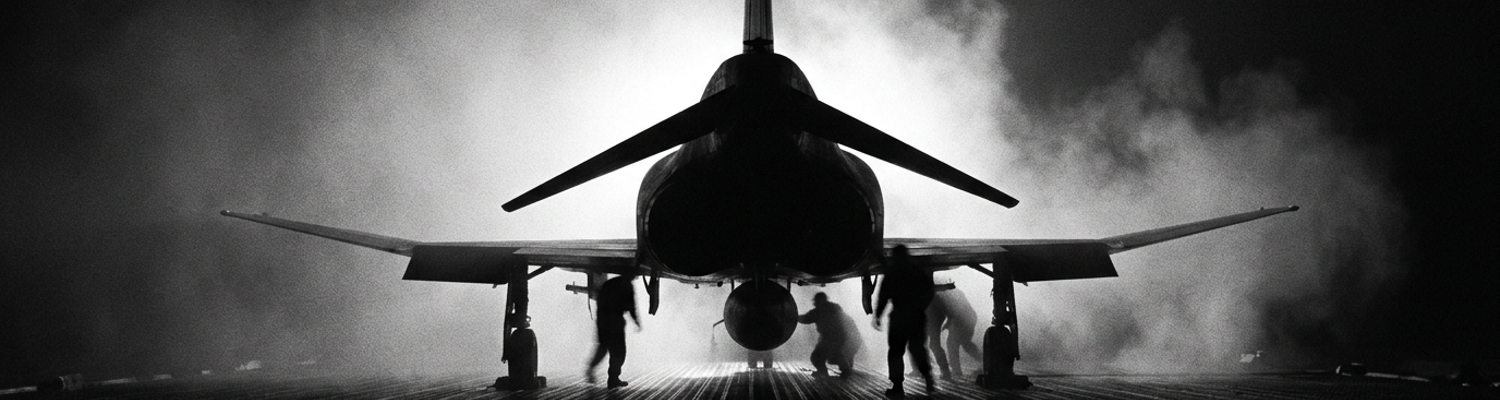

Chu Lai Operations and Command Architecture
Five hundred-pound Mark 82 low-drag bombs sat on the tarmac. Rows of seven hundred-and-fifty-pound M117 demolition canisters stood beside them. Crews stacked one-thousand-pound Mark 83 casings on open wooden dunnage alongside BLU-27 napalm firebombs filled with rubberized aluminized fuel. Cluster munition dispensers designated CBU-24 packed 665 individual BLU-26/B bomblets per casing. Rocket armament included LAU-10/A pods housing five-inch Zuni folding-fin rockets. Rail-mounted AIM-7E Sparrow radar-guided missiles and infrared AIM-9D Sidewinders hung ready on weapons skids. Suspended beneath wing pylons and recessed into fuselage troughs, this ordnance covered revetments along the central coast of South Vietnam.
Steel and high explosive saturated every square yard of Chu Lai.
Archival evidence shows that by June and July of 1969, Marine Fighter Attack Squadron 314 pushed twin-engine McDonnell Douglas F-4B Phantoms through continuous sortie cycles at Chu Lai Air Base under Marine Aircraft Group 13. Situated on the Quang Tin coastal plain at coordinates 15 degrees 24 minutes North 108 degrees 42 minutes East, the base forced flight crews and ground personnel into an unyielding physical grinder. The operational strip relied on interlocking aluminum AM-2 airfield matting baked by ambient runway temperatures regularly surpassing 115 degrees Fahrenheit. Fine laterite dust and salt spray whipped off the South China Sea. The grit ate away at electrical connections and blew past engine intake screens into General Electric J79-GE-8 axial-flow turbojets. Ground crews in sandbagged revetments turned around armed jets within thirty minutes. They fought blistered skin, toxic JP-4 exhaust fumes, and hydraulic system blowouts along high-pressure lines. Pilots sat strapped into Martin-Baker ejection seats in heat-soaked cockpits for hours. Their flight suits soaked in sweat while dual-turbine bleed air struggled to cool avionics bays. Aviation mechanics worked sixteen-hour shifts replacing blown tires caused by arresting-hook catches on M-21 arresting cables. They ran on minimal sleep while Viet Cong 122mm rocket strikes disrupted repair cycles at two in the morning.
A close review of operational logs indicates that mechanical strain was compounded by systemic command friction originating hundreds of miles away in Saigon. Under Seventh Air Force single-manager directives established by Military Assistance Command Vietnam, strike aircraft belonging to Marine Aircraft Group 13 were stripped of their localized direct-support relationship with Marine ground battalions. Command authority over VMFA-314 flight schedules flowed through the Seventh Air Force Tactical Air Control Center at Tan Son Nhut Air Base. Marine Direct Air Support Centers found themselves subordinated to rigid joint air tasking orders. Tactical decision-making turned into an administrative bottleneck. Instead of responding immediately to tactical air controllers embedded with foot patrols in the surrounding jungle, Phantom crews sat on fifteen-minute alert pads burning engine hours while Air Force computers processed targeting packages. Seventh Air Force schedulers frequently diverted Marine strikes away from troops in contact. They redirected armed F-4Bs toward deep interdiction routes along the Ho Chi Minh Trail in Laos or secondary target grids near the Demilitarized Zone. Flight officers spent precious fuel orbiting airborne battlefield command and control aircraft. They waited for radio clearance codes from controllers unfamiliar with Marine radio procedures.
Autonomy vanished into an inflexible procedural grid.
When examining the historical record from mid-1969, this command architecture generated acute mental exhaustion across the entire squadron hierarchy. Pilots experienced severe combat fatigue. They had to calculate complicated diverted flight plans on the fly while watching radar warning receivers scream over hostile airspace without direct coordination with local ground spotters. Squadron leadership at Chu Lai found their operational authority split between Marine Group commanders demanding close support for local perimeters and distant Air Force managers tracking flight hours like factory quotas. Flight line personnel rebuilt complex APQ-72 radar sets and replaced bleed-air valves under blackout conditions. They watched fully loaded Phantoms idle at runway holding points until joint clearance windows expired. By July 1969, the combination of physical sleep deprivation, relentless launch rotations, and centralized bureaucratic delays pushed aircrews toward a distinct psychological breaking point across the revetments of MAG-13. Flight surgeons logged skyrocketing instances of chronic insomnia, tremors, and severe stress reactions among aviators tasked with flying multiple combat sorties every twenty-four hours. On July 15, maintenance logs recorded twenty-two consecutive F-4B departures from Chu Lai with zero aborts. Flight lines took incoming mortar fire from perimeter tree lines during the launches.
Stratospheric Buffalo Hunter Flight Operations
The air sixty thousand feet above the Gulf of Tonkin regularly dropped past minus sixty degrees Fahrenheit.
Archival evidence shows that Ryan Model 147 Buffalo Hunter unmanned reconnaissance drones operated by the 350th Strategic Reconnaissance Squadron under the 100th Strategic Reconnaissance Wing flew sustained profiles in these sub-zero stratospheric conditions exceeding 60,000 feet. Air-launched from DC-130 director aircraft staging out of U-Tapao Royal Thai Navy Airfield, high-altitude variants such as the 147T and 147H relied on specialized Teledyne CAE J69 and J100 turbojets. These engines featured extended compressor blades engineered to grab thin air. Extreme cold repeatedly attacked the internal mechanics of these pilotless aircraft. Lubricating oils hardened within actuator drives. This jammed the flight-control trim tabs that kept the drones stable along pre-programmed dead-reckoning lines. Barometric altimeters and pitot tubes suffered severe icing when passing through moist cirrus layers. The ice blinded the onboard flight programmers. Camera bay heating blankets frequently lost electrical power. Shutter mechanisms on high-resolution Fairchild photographic gear froze solid before collecting intelligence over North Vietnamese staging areas. When autopilot gyroscopes drifted due to cold-induced voltage drops in the internal power converters, the drones slipped off their planned headings. No cockpit crew existed to notice the deviation.
Unmanned machines drifted blind through active combat corridors.
A close review of operational logs indicates that Marine strike routes departing Chu Lai required continuous vertical deconfliction to prevent mid-air collisions with high-altitude reconnaissance assets. VMFA-314 F-4B Phantoms climbing out of the Quang Tin sector on deep interdiction tasks had to punch directly through the operational altitudes utilized by the drone recovery corridors. Radar controllers at the Marine Air Control Squadron 2 facility at Danang and the Air Force Tactical Air Control Center at Tan Son Nhut monitored these conflicting blocks using ground-based radar. The radar frequently lost the drone airframes. The compact composite structure of the Ryan 147 combined with radar-absorbent blankets inside its fuselage produced an inconsistent blip on controller scopes. Heavily loaded Marine Phantoms climbing on full internal fuel with external bomb racks burned through fuel margins whenever air controllers placed sudden altitude restrictions on their climb paths. Marine aviators already suffering from physical fatigue and oxygen-system headaches had to process rapid-fire altitude changes over the radio. They held level at intermediate flight levels while searching black skies for unlit drone airframes.
Human error mounted with every diverted climb.
When examining the historical record from mid-July 1969, radar plots confirmed that erratic drone descents repeatedly compromised primary attack corridors. Drones experiencing engine flameouts or mechanical programmer failures plummeted out of the stratosphere. They dropped through lower airspace blocks at rates exceeding three thousand feet per minute. Tactical air direction centers had to scramble voice frequencies. Controllers screamed emergency altitude separations to Marine flight leaders whose attention was fixed on fuel burn rates and weapons arming panels. Rear-seat Marine radar intercept officers had to scan their AN/APQ-72 radar displays for high-speed descending targets while simultaneously monitoring navigational check points along hostile territory. On July 19, an F-4B flight returning to Chu Lai at bingo fuel was forced to execute an immediate three-thousand-foot split-S dive to miss an unguided Model 147 plunging toward the sea. The sudden avoidance maneuver over-stressed the Phantom wing pylons. The Marine crew brought a structurally warped jet back onto the aluminum planks of Chu Lai.
Incompatible Signal Protocols and Telemetry Drops
Archival evidence shows that Military Assistance Command Vietnam headquarters at Tan Son Nhut Air Base in Saigon and the 1st Marine Aircraft Wing headquartered at Danang maintained divergent signal distribution and encryption standards. Seventh Air Force automated communications centers managed air operations through fixed-station TSEC/KW-7 crypto systems and high-level teleprinter distribution loops tied into the Defense Communications System. 1st Marine Aircraft Wing operated tactical field infrastructure centered on the AN/TYQ-2 Marine Tactical Data System. They deployed TSEC/KY-28 Nestor voice security equipment inside tactical cockpits. Cryptographic key lists distributed through naval channels to Marine Aircraft Group 13 at Chu Lai rarely synchronized with the Air Force air tasking cycles disseminated from Saigon. Signal officers in Saigon sent flash operational directives using point-to-point teletype codes. Marine ground stations could not parse these codes without manual re-keying at intermediate relay stations. Decryption teams at the Chu Lai Direct Air Support Center were forced to transcribe incoming Air Force traffic by hand. They re-encrypted the tactical data on Marine-specific frequency rotors and transmitted the coordinates to VMFA-314 duty officers over unshielded landlines. A simple target coordination change often experienced an administrative lag of forty minutes between the operations bunker in Saigon and the alert revetments on the Chu Lai flight line.
Encrypted data streams regularly collapsed into indecipherable static.
A close review of operational logs indicates that incompatible communications hardware caused frequent telemetry blackouts and lost datalinks across northern I Corps air networks. Ryan Model 147 Buffalo Hunter reconnaissance drones operated by the 350th Strategic Reconnaissance Squadron transmitted flight position data using proprietary S-band downlinks matched to Air Force AN/MSQ-39 mobile control vans. Marine ground-controlled intercept units belonging to Marine Air Control Squadron 4 at Monkey Mountain possessed no receiving gear compatible with these specialized Air Force datalink frequencies. This facility sat at coordinates 16 degrees 07 minutes North 108 degrees 18 minutes East. The Marine AN/TPS-32 long-range search radars sweeping the approaches to the Demilitarized Zone registered only intermittent skin returns from the composite-skin drones. Relay transmitters positioned atop peak elevations suffered severe phase-shift errors when attempting to interface Air Force microwave signals with Marine tactical communications vans. Signal cables connecting AN/TRC-97 tropospheric scatter terminals to Chu Lai tactical air direction centers overheated under constant ambient temperatures exceeding 100 degrees Fahrenheit. The heat stripped the digital sync pulses off the incoming telemetry streams. Datalink signals repeatedly dropped without warning for twelve to twenty minutes at a stretch. This created complete operational blind spots across hundreds of square miles of active airspace between Hue and Quang Tin province.
Controllers stared at empty displays while loaded aircraft traversed blind corridors.
When examining the historical record from late July 1969, these communications blackouts imposed a crushing psychological burden on ground controllers and aircrews. Marine radar intercept officers strapped into the rear cockpits of VMFA-314 F-4B Phantoms suffered auditory fatigue. KY-28 crypto gear in their avionics bays repeatedly lost synchronization. The equipment emitted piercing square-wave tones directly into their flight helmets. Radar operators stationed inside windowless AN/TYA-11 communications vans at Chu Lai worked eighteen-hour shifts in stifling heat. They tracked multiple high-speed radar blips with grease pencils on edge-lit plexiglass plotting boards when digital datalinks vanished. Chronic sleep deprivation and the constant dread of mid-air collisions eroded technician morale. This produced severe mental exhaustion and hand tremors among men responsible for keeping strike packages clear of runaway drones. On July 22, 1969, an unmonitored Model 147 drone crossed through the Chu Lai climb-out corridor at coordinates 15 degrees 35 minutes North 108 degrees 30 minutes East. A total telemetry drop severed its command link with the U-Tapao airborne control ship. The duty controller at Chu Lai had zero electronic contact with the drone. Two incoming F-4Bs from VMFA-314 low on fuel and descending through cloud cover were separated from the rogue airframe by less than five hundred feet of vertical clearance.
Technicians scraped molten insulation from burned patch panels later that night.
Perimeter Rocket Attacks on Combat Operations Centers
Shrapnel from incoming artillery moves at four thousand feet per second.
Archival evidence shows that during the dark early hours of July 1969, Viet Cong and North Vietnamese Army rocketeers positioned Soviet-manufactured 122mm 9M22M single-tube rocket systems in the dense scrub brush along the Ky Sanh river basin. They zeroed in on the perimeter of Chu Lai at coordinates 15 degrees 24 minutes North 108 degrees 42 minutes East. The stabilized finned munitions carried forty-two-pound high-explosive warheads. These slammed into the Marine Aircraft Group 13 perimeter wire and penetrated outer staging aprons. Heavy blasts sheared through aluminum AM-2 matting. They fractured unreinforced sandbag revetments and threw red laterite dirt into the exposed intake cowlings of parked F-4B Phantoms. Multiple rocket impacts splintered timber revetments housing the Marine Tactical Data System. The explosions ripped unshielded multi-conductor wiring trunks from external terminal boxes. Fuel bladders holding aviation kerosene ruptured on the western pad. This ignited localized fires that illuminated the flight line for forward observers hidden in the outer tree lines. Flight crews scrambled from canvas cots directly into mud-filled drainage trenches under sustained fragmentation. They were deafened by consecutive detonations that shook the concrete foundations of the MAG-13 tactical headquarters.
Ground defenses returned blind fire into the night fog.
A close review of operational logs indicates that direct hits severely damaged the primary electrical power generation plant supplying the Marine combat operations centers. High-velocity fragments from a 122mm rocket explosion punctured the cast-iron cylinder blocks and radiator cooling coils of the central Detroit Diesel generator complex. The impacts bled hydraulic fluids and engine coolant across the concrete pad. The main three-phase 400Hz and 60Hz step-down distribution transformers failed instantly under short-circuit loads. Power collapsed completely across the underground Marine Aircraft Group 13 Combat Operations Center and the Direct Air Support Center bunkers. Tactical air controllers lost all edge-lit plotting consoles, radar display screens, and teletype loops precisely as VMFA-314 aircraft were cycling back toward the coast. Watchstanders were forced to rely immediately on emergency auxiliary power. They scrambled through pitch-black smoke-filled corridors to hand-crank trailered MEP-006A diesel utility generators. The switchgear failed to transfer cleanly. Voltage surges across the auxiliary bus line blew out circuit breakers. The surges burned through sensitive rectifier assemblies inside the tactical communication consoles. This delayed the full restoration of primary radio channels for forty-seven minutes.
Batteries decayed rapidly in the coastal heat.
When examining the historical record from late July 1969, this loss of primary electrical infrastructure triggered acute mental failure among watch officers and flight coordinators. Marine controllers worked inside damp unventilated bunkers where internal temperatures climbed past ninety-five degrees within fifteen minutes of generator loss. Airmen gripped red-lens flashlights between their teeth. They transcribed fragmented F-4B radar vectors by hand on grease-pencil acetate boards while breathing toxic battery fumes and lingering smoke from shattered junction panels. Severe sleep deprivation compounded by four continuous nights of perimeter barrages and the physical disorientation of blast concussions produced severe mental degradation across the command staff. Tactical officers miscalculated bingo fuel margins and mixed up squadron call signs. They sent outbound strike flights into holding orbits directly over active rocket launch sectors. Ground crews outside tried to service aircraft tires and replenish five-hundred-pound bomb loads with hand tools under intermittent mortar fire. Their hands shook from adrenaline exhaustion and sustained auditory trauma. On July 24, a junior watch officer collapsed unconscious onto a dead radar console after thirty straight hours of tracking targets under emergency DC battery backup.
Manual Air Traffic Triage and Trauma Coordination
Archival evidence shows that inside the Chu Lai Tactical Air Direction Center, radar watchstanders tracked unguided Ryan Model 147 Buffalo Hunter reconnaissance drones using manual edge-lit plexiglass plotting boards. Air Force director planes launching these drones from international waters frequently lost programmatic telemetry. This left the pilotless aircraft to drift through the coastal corridor unannounced. Marine Air Control Squadron 2 operators lacked automated digital handoff links to Air Force radar cells at Monkey Mountain or Tan Son Nhut. Watchstanders stood shoulder-to-shoulder in unventilated AN/TYA-11 mobile shelters. They transcribed garbled high-frequency voice reports onto vertical transparent panels with chinagraph grease pencils. Vacuum tubes inside the AN/TPS-32 display amplifiers burned out under sustained heat. This left permanent phosphor burns across the screens and stripped ground controllers of automated altitude readouts. Operators calculated drift angles, airspeeds, and fuel depletion lines by hand. They used mechanical slide rules and grease marks spaced along five-nautical-mile range rings.
Grease pencil tips snapped under fingers slick with sweat.
A close review of operational logs indicates that the absence of automated radar handoffs created dangerous air traffic bottlenecks for returning Marine Fighter Attack Squadron 314 Phantoms. Autopilot gyroscopes on wandering Buffalo Hunter drones suffered severe voltage dropouts. This caused the pilotless airframes to climb and dive erratically between fifteen thousand and thirty-five thousand feet across active descent channels. Controllers worked without cross-service radar data links. Supervisors ran between separate radio consoles to verify radar blips manually against telephone reports from Air Force tracking sites. High-pitched feedback screamed through HS-33 flight headsets as unshielded signal lines absorbed electromagnetic interference from backup diesel generators outside. Marine ground directors were forced to calculate closure rates by eye as armed F-4Bs entered terminal holding patterns alongside pilotless drones. On July 25, 1969, three rogue Model 147 airframes drifted directly across the Chu Lai approach path at four hundred knots. Controllers scrubbed and redrew vertical altitude grids every ninety seconds to prevent mid-air collisions.
Radar scopes went completely black.
When examining the historical record from the third week of July 1969, sensor failures struck the air traffic center precisely as casualty evacuation flights surged. Shrapnel from 122mm rocket impacts cut the primary coaxial cables feeding the AN/TPN-8 tactical approach radar. This blinded controllers to low-altitude coastal approaches. Controllers had to coordinate Boeing Vertol CH-46 Sea Knights from Marine Medium Helicopter Squadron 262 scrambling to pick up casualties in the Que Son valley while incoming medevacs approached the base. Triage doctors inside the Marine Aircraft Group 13 medical bunker treated blast lacerations, traumatic amputations, and shrapnel wounds sustained during perimeter rocket barrages. They demanded immediate priority arrivals for dying personnel. Duty air controllers simultaneously held five low-fuel VMFA-314 Phantoms in a blind oceanic orbit at coordinates 15 degrees 30 minutes North 108 degrees 55 minutes East. They tried to prevent high-speed jets from descending into low-flying rotary-wing casualty flights. Tower frequencies choked under overlapping transmissions. Controllers tracked multiple inbound medevac helicopters by engine noise and periodic radio altitude calls alone.
Watch teams reached complete operational collapse.
Air traffic controllers worked twenty-two-hour shifts on two hours of broken sleep. They breathed stagnant bunker air thick with grease smoke and the smell of blood from triage stretchers lined up outside the command door. Muscle tremors spread through the arms of watch personnel as physical exhaustion took hold. Watch officers made split-second procedural decisions to drop low-fuel Phantoms through dense cloud layers without positive radar separation. A three-degree error on a manual grease plot would cause an F-4B to slice through a medical helicopter. Flight surgeons logged seven cases of acute disorientation and uncontrollable hand shaking among Chu Lai air controllers between July 24 and July 27. At 0340 hours on July 26, a duty controller handling two inbound casualty flights, three bingo-fuel jets, and a runaway drone dropped his radio headset. He froze at the plotting board. His relief took the microphone thirty seconds later. The relief cleared an inbound CH-46 carrying four critically wounded Marines directly onto runway one-seven.
Corpsmen unloaded four litter patients onto the gravel blast berm at 0344 hours.
Psychological Toll of Sustained High-Tempo Standoffs
Physical endurance limits dictate operational failure rates.
Archival evidence shows that by July 26, 1969, continuous seventy-two-hour flight rotations stripped VMFA-314 crews of baseline physical recovery at coordinates 15 degrees 24 minutes North 108 degrees 42 minutes East. Maintenance personnel inside the sandbagged Chu Lai revetments turned around F-4B Phantoms on forty-minute cycles. They breathed atomized hydraulic fluid while ambient flight line heat reached 118 degrees Fahrenheit. Mechanics went forty-eight hours without uninterrupted sleep. They worked on live ordnance beneath bare floodlights while perimeter flares drifted overhead. Aviation technicians torqued J79-GE-8 afterburner fuel control valves with trembling hands. They stripped screw heads and failed to seat primary O-ring seals on high-pressure fuel manifolds. In the cockpit, radar intercept officers experienced severe mental tunnel vision during sustained night sorties. Pilots misread AN/APQ-72 radar altimeter readouts and barometric sub-scales. They set descent collars twenty millibars off target during blind approach runs over the South China Sea. Flight surgeons attached to Marine Aircraft Group 13 issued five-milligram dextroamphetamine tablets to keep aviators conscious through mandatory triple-sortie taskings. Chemical stimulants caused paranoia, auditory distortions, and acute fine-motor degradation during tactical maneuvers.
Exhaustion destroyed basic muscle memory across the squadron.
A close review of operational logs indicates that managing conflicting airspace while under active rocket bombardment forced ground controllers into severe psychological collapse. Inside the Chu Lai Tactical Air Direction Center, radar operators tracked unannounced Buffalo Hunter Ryan Model 147 drones that drifted through descent paths without functioning telemetry transponders. Watchstanders worked in stifling AN/TYA-11 vans as Soviet-made 122mm 9M22M rocket rounds struck the blast berms less than three hundred yards away. The impacts rattled plotting boards and snapped overhead power lines. Seventh Air Force schedulers at Tan Son Nhut failed to coordinate drone flight windows with Marine Air Control Squadron 2. This left Marine controllers to separate inbound fuel-starved Phantoms from runaway reconnaissance drones by shouting raw bearing calculations over degraded voice channels. Duty officers experienced panic attacks and dissociation as radar screens cluttered with false returns from perimeter dust and rocket smoke. On the night of July 27, two radar operators abandoned their grease-pencil stations during an incoming rocket salvo. They left four airborne F-4B crews holding in unmonitored sectors with less than eight hundred pounds of JP-4 remaining per airframe.
Radio discipline collapsed across the network.
When examining the historical record from the final week of July 1969, the accumulated operational strain paralyzed entire maintenance sections. Ordnance handlers dropped five-hundred-pound Mark 82 bomb bodies off aero-33C transport trailers. Their hands seized from muscular dehydration. They nearly crushed arming wire assemblies against live fuses. Flight leaders returning from Laos botched routine arresting-gear rollouts on the AM-2 aluminum runway. They missed the number-one M-21 recovery wire because extreme optical fatigue distorted their perception of approach angles and runway edge lighting. At least eleven VMFA-314 aviators presented to the group sick bay with acute combat fatigue syndrome. They displayed involuntary facial tics, severe gastrointestinal spasms, and non-responsive catatonic states following twelve-hour cycles of continuous alert pad idling under direct sun. Group commanders ignored medical warnings. They ordered flight surgeons to certify incapacitated pilots as fit for combat to satisfy daily sortie quotas assigned by Saigon.
Flight surgeon logs from July 28 recorded three aviators physically vomiting into their oxygen masks before engine ignition.