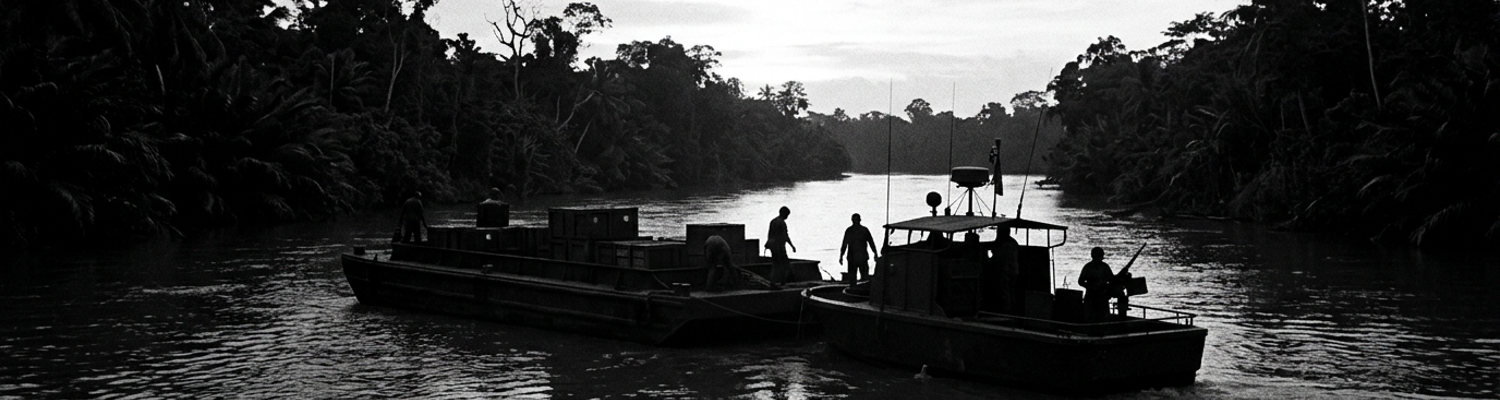

Cambodian Border Riverine Operations
Archival logs from the early morning hours of May 6 record a panicked radio burst from a stranded Patrol Boat, Riverine unit. The transmission reported twin-engine failure. Raw water cooling strainers were completely blocked. Oil pressure read zero deep inside hostile territory.
A close review of operational logs indicates that throughout May 1970, forward elements supporting the 25th Military Intelligence Detachment conducted high-tempo surveillance missions. They operated directly ahead of the conventional Cambodian Incursion forces. Command elements ordered these specialized reconnaissance teams to deploy along the muddy banks of the Parrot Beak region near grid coordinates XT 350 120.
They established listening posts utilizing AN/PRC-25 field radios and early-generation AN/PPS-5 ground surveillance radars.
The required operational tempo demanded twenty-four-hour continuous monitoring. Constant signals interception depleted the standard BA-386/PRC-25 dry-cell batteries at an unsustainable rate. Infantrymen operating the equipment required specialized resupply drops every thirty-six hours just to keep the detection grid active. Planners at the Cu Chi base camp routed the necessary supply lines through the local waterways instead of relying on heavily mined dirt roads like Route 1. Small detachments of the 25th MI found themselves entirely dependent on the Navy River Patrol Force. These vessels transported replacement batteries, heavily encrypted cryptographic keylists, M16 ammunition, and blood plasma to the isolated outposts.
The supply chain broke down almost immediately upon contact with the local geography.
Operations along the Vam Co Dong River faced severe environmental and navigational constraints. The waterway narrowed significantly as it turned northwest toward the Cambodian border. It featured steep, densely vegetated banks rising ten to fifteen feet above the waterline. These elevated banks provided optimal firing angles for enemy forces equipped with RPG-2 and B-40 rocket-propelled grenades.
The physical composition of the river itself proved highly destructive to the supply effort.
Massive floating islands of water hyacinth blocked the channel during the late dry season. They created impassable biological barriers. The standard Patrol Boat, Riverine Mark II relied on Jacuzzi 14YJ water jet pumps for propulsion. The pumps failed rapidly. Dense vegetation bypassed the intake grates and wrapped tightly around the internal impellers. Silt from the shallow riverbed combined with the shredded plant matter to create a highly abrasive paste. This mixture stripped the protective seals from the drive shafts and destroyed the main pump bearings within hours of continuous operation.
Maintenance crews at the Go Dau Ha advanced tactical support base lacked the specialized tools to extract the jammed impellers.
Mechanics resorted to using standard blowtorches to burn the compressed biological material out of the jet drive housings. This crude repair method warped the aluminum casings. It permanently reduced the top speed of the patrol boats by forty percent. The reduced speed left the supply convoys lingering in established kill zones for extended periods while attempting to reach the 25th Military Intelligence Detachment listening posts. A delivery run that historically took two hours expanded into a six-hour ordeal. Helmsmen made constant throttle adjustments to prevent total engine stalling. The diesel fuel consumption rate doubled. Crews forced the fouled engines to operate at maximum RPM just to maintain forward momentum against the slow-moving current.
The resulting fuel shortages forced commanders at the Go Dau Ha base to abandon three scheduled resupply missions during the second week of May.
Intelligence teams ran out of primary battery power. They switched to emergency hand-crank generators to transmit their contact reports.
Power Cell and Diesel Exhaustion
A review of quartermaster ledgers from the Tra Cu naval support activity reveals a total collapse of Class III and Class IIIA supply reserves by the second week of May 1970. River Division 532 maintained a continuous twenty-four-hour patrol cycle along the upper Vam Co Dong to screen the 25th Infantry Division flanks. This operational tempo generated an unsustainable draw on both marine diesel fuel and dry-cell battery stockpiles.
Standard Patrol Boat, Riverine Mark II units consumed approximately ten to twelve gallons of DF-2 diesel per hour under normal cruising conditions.
Heavy vegetation and shallow mudflats forced helmsmen to run the twin Detroit Diesel 6V53N engines at maximum continuous RPM just to hold their station against the current. Fuel consumption spiked to twenty-eight gallons per hour per vessel. Forward refueling bladders at Go Dau Ha drained completely by May 12. Supply officers requested emergency bulk fuel deliveries via CH-47 Chinook helicopters. Heavy lift aviation units were entirely committed to supporting the main armored thrusts inside Cambodia. Riverine crews began cannibalizing fuel from disabled boats. They siphoned the remaining diesel into five-gallon jerry cans. Lack of clean fuel filters meant this transferred diesel carried high concentrations of condensation and rust particles directly into the injection systems of the active boats.
The entire supply chain operated on a twelve-hour deficit.
Archival evidence shows the continuous operations also destroyed the portable power cell inventory required for secure communications. Infantry and naval liaison elements relied on the AN/PRC-25 and newer AN/PRC-77 manpack radios for tactical coordination. These transceivers required BA-386/U magnesium dry-cell batteries to function. Standard operating procedures dictated battery replacement every twenty-four hours. Dense jungle canopy and high humidity of the Parrot Beak region degraded radio wave propagation. Radiomen had to transmit on high power settings to punch signals through the interference.
Heavy transmission loads reduced the operational lifespan of a fresh BA-386/U battery to exactly four hours.
Supply convoys failed to deliver the required 400 replacement batteries per day to the forward listening posts. Quartermasters at Cu Chi attempted to substitute older lead-acid vehicular batteries. Improvised power sources weighed over forty pounds each and leaked corrosive acid into the fiberglass hulls of the PBRs.
Signal units experienced total equipment failure across the sector.
When examining the historical record regarding communication equipment, the power exhaustion thresholds triggered catastrophic operational failures within the secure voice networks. KY-38 NESTOR cryptographic units attached to the field radios required a strictly regulated 24-volt direct current power supply to maintain synchronization. As improvised power cells depleted, voltage levels dropped below the critical 21-volt threshold. The systems automatically wiped their classified cryptographic key variables to prevent enemy capture. This design feature instantly severed encrypted communications between the forward riverine patrols and the tactical operations center at Cu Chi. Boat commanders lost the ability to call for artillery support. Twin Detroit Diesel engines on the PBRs provided the only alternative power source through their 60-amp alternators.
Continuous low-speed idling required to charge the radio batteries caused unburned diesel fuel to wash past the engine piston rings.
This process diluted the lubricating oil inside the crankcases. Diluted oil lost its viscosity and failed to protect the main engine bearings. Crews wired field radios directly to the boat starters. Compounding effects of fuel starvation and alternator degradation pushed the patrol craft engines past their physical operating limits by May 15. Detroit Diesel fuel injectors required a constant flow of clean DF-2 fuel to cool and lubricate their internal plungers. As the tanks ran dry, intake lines sucked air and accumulated water sludge from the bottom of the sumps directly into the high-pressure pumps. Water droplets shattered the heated injector tips instantly. Without functioning alternators, electric bilge pumps failed. Heavily loaded PBRs began taking on river water from minor hull fractures sustained during previous engagements.
Mechanics at the advanced tactical support base recorded twenty-two separate incidents of vessels going completely dead in the water at grid coordinates XT 330 150.
Standard operating procedure required crews to destroy their radios with thermite grenades if captured. Total battery failure meant the radiomen could not even transmit a final distress signal before abandoning their sinking vessels in the mud.
Deep Draft Supply Ship Limitations
Archival logs from the early morning hours of May 6 record a frantic radio burst from a stranded Patrol Boat, Riverine unit reporting catastrophic twin-engine failure. The transmission detailed rapid water intake through a fractured lower hull plate while the crew desperately attempted to clear a fouled Jacuzzi 14YJ water jet pump under heavy small arms fire. This localized mechanical failure exposed a massive structural collapse within the regional supply chain. Task Force 116 commanders originally planned to sustain these forward reconnaissance elements using standard Navy underway replenishment vessels.
That doctrine failed immediately upon contact with the coastal geography.
A close review of naval engineering logs indicates that deep-draft replenishment ships required a minimum operational depth of thirty feet to safely navigate inland waterways. The Vam Co Dong river estuary during the late dry season of 1970 measured less than eight feet deep across its primary navigational channel. Fast combat support ships and fleet oilers like the USS Navasota carrying 140,000 barrels of bulk DF-2 marine diesel fuel physically could not cross the submerged sandbars near the river mouth at Vung Tau.
Ship captains attempting to push heavily loaded Cimarron-class oilers through the silt barriers risked burying their twin twenty-foot bronze propellers directly into the riverbed.
Striking the dense mud would instantly shear the main reduction gears, snap the primary drive shafts, and disable a highly expensive fleet asset. Thick clay deposits also threatened to jam the massive hydraulic steering rudders. Rear Admiral William L. Allen issued a direct command on May 8 halting all deep-draft supply ships at a designated anchorage point called Point Yankee. This location sat twenty-two miles south of the operational theater.
The supply burden shifted entirely to a secondary fleet of shallow-draft landing craft.
Transferring thousands of tons of material from the offshore fleet to forward bases required an improvised flotilla of LCM-8 landing craft. These heavily loaded transfer vessels rode extremely low in the water. Their increased displacement pushed their flat steel hulls deep into the mud-choked upper reaches of the Vam Co Dong. Silt concentrations in the water column reached density levels that overwhelmed standard marine engineering tolerances. Heavy mud bypassed the primary intake grates on the Mike boats and packed directly into the raw water cooling jackets of their quadruple Detroit Diesel 6-71 engines.
Cylinder head temperatures spiked past three hundred degrees within minutes of entering the narrowest river bends.
Mechanics at the Tra Cu naval support facility documented forty-one separate engine seizures between May 10 and May 14. Disabled landing craft physically blocked the narrow navigable channels near grid coordinates XT 310 100. Following supply convoys had to drop anchor in hostile territory and wait for heavy YTB harbor tugs to drag the dead vessels out of the mud. Thick clay acted as an adhesive against the flat steel hulls of the Mike boats. Salvage tugs frequently burned out their own transmission systems attempting to break the suction. Traffic jams of immobilized boats created severe supply chain bottlenecks for the forward riverine units supporting the 25th Infantry Division.
Ammunition pallets, replacement M16 rifles, and medical supplies sat rotting on the decks of stranded boats for up to forty-eight hours.
Forward operating bases ran out of storage space for returning empty fuel bladders while desperately waiting for fresh diesel deliveries. Supply officers eventually ordered crews to dump the empty rubber bladders into the river to make room on the docks for incoming artillery shells. When examining the historical record of the 25th Military Intelligence Detachment, the failure of the riverine supply line forced isolated infantrymen to ration their remaining BA-386/U batteries. Planners at Cu Chi attempted to bypass the river blockage by air-dropping supplies directly to the stranded boats. Helicopter crews flying at three thousand feet to avoid ground fire routinely missed the narrow decks of the landing craft.
Wooden crates containing 105mm howitzer rounds smashed into the dense jungle canopy or sank immediately into the opaque brown water.
Salvage divers refused to enter the river to recover the lost ammunition due to zero visibility and strong undercurrents. The 532nd River Division reported a total inventory of just four functional water jet pumps remaining in the sector by nightfall on May 16.
Civilian Flat Bottom Barge Conversion
Archival evidence shows that by May 18, supply officers at the Go Dau Ha tactical support base initiated an emergency requisition program targeting local civilian infrastructure. They needed platforms capable of floating bulk diesel up the shallow waterways where the heavy fleet oilers could not pass. Quartermasters systematically seized forty-foot flat-bottom wooden barges from local Vietnamese sand merchants operating along the lower Vam Co Dong.
Naval engineers dragged these unpowered shallow-draft hulls onto the muddy slipways at grid coordinates XT 390 220 for immediate structural modification.
The civilian vessels originally hauled wet river sand and featured no enclosed bulkheads or deck covers. Mechanics welded pierced steel planking directly across the open holds to create a reinforced upper deck capable of supporting thousands of pounds of liquid mass. They strapped 500-gallon collapsible rubber fuel bladders onto this improvised metal grating using heavy-duty cargo netting and half-inch steel chain.
The weight of the raw diesel fuel pushed the rotting wooden gunwales to within three inches of the waterline.
Transforming a civilian sand barge into a makeshift fueling raft required specific plumbing adaptations to prevent mass fuel contamination. Quartermasters installed gravity-fed water separators salvaged from wrecked two-and-a-half-ton utility trucks at the base of each rubber bladder. They ran high-pressure aviation fuel hoses from these separators to manual hand-crank rotary pumps bolted directly to the forward cleats of the barge. A sailor turning the crank at maximum physical capacity could transfer roughly twenty gallons of DF-2 marine diesel per minute.
This jury-rigged filtration system lacked the micron-level screens found on standard Navy oilers.
Rust flakes from the steel planking and opaque river water splashing over the low gunwales frequently bypassed the truck separators. Debris settled directly into the transfer hoses and compromised the entire batch of forward-deployed diesel. Every drop of contaminated fuel destroyed the high-pressure injectors of the patrol boats. Delivery of this compromised fuel to the forward listening posts required a highly dangerous towing configuration.
Improvised barges were lashed directly to the port sides of operational Patrol Boat, Riverine units for forward replenishment missions.
Crews utilized six-inch Manila hawsers and wire rope to tie the flat-bottomed rafts tight against the fiberglass hulls of the PBRs. This hip-towing method eliminated the patrol boat primary tactical advantage of speed in a hostile environment. A standard Mark II PBR typically cruised at twenty-five knots. Dragging a fully loaded unhydrodynamic wooden barge through the slow-moving current of the Vam Co Dong reduced their maximum velocity to just under four knots.
The twin Detroit Diesel 6V53N engines screamed at maximum RPM just to overcome the sheer physical drag of the flat wooden bows pushing against the muddy river water.
A close review of operational logs indicates these paired vessels became massive targets as they steered through the narrow bends near grid coordinates XT 340 160. Forward replenishment occurred while completely exposed to the densely vegetated riverbanks. When a dry patrol boat approached the flotilla for emergency refueling, helmsmen had to precisely match the four-knot speed of the towing vessel. They then lashed their own boat to the opposite side of the barge. Three separate watercraft temporarily formed a single wide target drifting blindly down the center of the channel.
Sailors abandoned their twin .50 caliber machine gun mounts to operate the manual fuel pumps.
Raw diesel spilled across the pierced steel planking during the frantic transfer process. Spilled fuel created severe slip hazards for the enlisted crews attempting to balance on the open decks while manipulating heavy rubber hoses. Engine exhaust heat from the idling patrol boats frequently ignited the diesel vapors pooling just above the water surface. Mechanics back at Go Dau Ha recorded severe structural damage to the towing vessels after just three supply runs. The rigid wire rope used to lash the barges dug deep into the patrol boats.
Constant friction sawed directly through the outer fiberglass layers and exposed the internal foam flotation blocks to the muddy river water.
Waterlogged foam added hundreds of pounds of dead weight to the patrol boats long after they dropped off the barges. The starboard engine mounts warped under the asymmetrical towing stress. Drive shafts misaligned by a fraction of an inch began shredding their primary bearing seals. Sailors found their rear bilges rapidly filling with a thick mixture of river water and heavy gear oil.
Tropical Equipment Breakdown Rates
A close review of operational logs indicates that ambient temperatures along the Vam Co Dong riverbed routinely exceeded one hundred and ten degrees Fahrenheit during the afternoon hours of mid-May 1970. Navy quartermasters at the Go Dau Ha tactical support base relied heavily on Barnes two-inch gasoline-driven transfer pumps to move DF-2 marine diesel from the improvised civilian sand barges into the waiting Patrol Boat, Riverine units.
Suffocating tropical heat caused frequent mechanical breakdown of these specific transfer pumps.
The metal decks of the modified barges absorbed the intense solar radiation directly from the unclouded sky. Surface temperatures on the pierced steel planking reached one hundred and forty degrees. The small air-cooled Briggs and Stratton utility engines powering the Barnes pumping units sat directly on these blistering steel plates near grid coordinates XT 340 160. Without any overhead canopy to block the sun, the transfer equipment baked continuously while crews attempted to refuel the forward reconnaissance screens protecting the 25th Military Intelligence Detachment listening posts.
The aluminum cooling fins on the small engine blocks offered absolutely zero thermal dissipation.
Archival evidence shows the extreme heat initiated a rapid sequence of component failures within the pumping apparatus. Gasoline boiling inside the uninsulated gravity-feed fuel lines created immediate vapor lock. The four-cycle engines sputtered and died mid-transfer. Internal Buna-N rubber seals designed to maintain vacuum suction inside the main pump housings began to warp and degrade under the sustained thermal load. As the seals lost their structural integrity, the pumps sucked ambient air instead of drawing liquid diesel from the 500-gallon rubber bladders.
Supply officers operating with River Section 532 ordered all daytime refueling operations suspended to prevent further equipment loss.
Captains anchored their supply flotillas in the shadows of the dense Nipa palm groves lining the riverbanks. They restricted automated fuel transfers to the narrow window between midnight and dawn. Nighttime operations failed to solve the underlying mechanical degradation. When examining the historical record of the riverine supply chain, the physical composition of the waterway introduced an entirely different mechanism of destruction. River silt rapidly clogged pump filters. This stalled automated fuel transfers across the entire sector.
The Vam Co Dong carried an extremely high volume of suspended particulate matter.
This mixture consisted of fine red clay and highly abrasive micro-quartz washed down from the Cambodian highlands. The shallow draft of the modified sand barges provided less than eighteen inches of clearance above the mudflats. Transfer hoses dragging against the shallow river bottom during the hip-towing process sucked this dense slurry directly into the intake manifolds. Navy regulations required all transferred diesel to pass through Fram heavy-duty water separator and filtration units equipped with ten-micron wire mesh screens. The heavy silt concentrations packed into these delicate metal screens within minutes of activating the Barnes pumps.
Pressure gauges on the output valves dropped to zero as the thick mud formed an impenetrable physical barrier.
Automated fuel transfers stalled completely as the blocked filters choked off the liquid flow. Mechanics at grid coordinates XT 390 220 documented that standard operating procedures called for filter replacement every five hundred hours of operation. The abrasive river slurry forced enlisted crews to halt the transfer pumps and physically scrape the mud from the Fram screens every fifteen minutes. Abrasive quartz particles that managed to bypass the compromised filters entered the primary pump chambers. This grit scoured the internal cast-iron impellers.
It stripped the protective factory coatings and carved deep grooves into the metal housings.
The volumetric efficiency of the transfer pumps plummeted as fuel leaked back through the scored chambers. Crews watched helplessly as the automated flow reduced to a completely useless trickle. The resulting friction destroyed the main drive bearings within forty-eight hours of deployment. Engineers dismantled the ruined transfer pumps on the muddy slipways at Go Dau Ha to inspect the damage. They found the internal chambers packed solid with a dense concrete-like paste made of marine diesel fuel and baked river clay. Base commanders authorized emergency requisition orders for manually operated rotary hand pumps to replace the destroyed automated systems.
Enlisted sailors physically cranked the heavy iron handles fifty times to transfer a single gallon of contaminated diesel into the waiting patrol boats.
Manual Refueling and Battery Relays
A close review of operational logs indicates that the complete degradation of the rotary hand pumps forced River Division 532 into extreme manual labor by May 22. Base commanders at Go Dau Ha issued orders for supply crews to utilize standard issue three-gallon galvanized steel wash buckets to move DF-2 marine diesel. Sailors entirely abandoned the sealed hose systems. They took utility knives and sliced open the top canvas covers of the 500-gallon collapsible rubber fuel bladders strapped to the civilian sand barges.
This action exposed the raw diesel directly to the humid air at grid coordinates XT 340 160.
Enlisted men physically dipped the metal buckets into the open bladders, hauled the heavy liquid up to their chests, and walked it across the pierced steel planking. A full bucket of diesel weighed roughly twenty-one pounds. Transferring enough fuel to fill a single Patrol Boat, Riverine Mark II required moving over one hundred and thirty individual buckets by hand. The entire flotilla sat completely stationary in the center of the channel for up to three hours during this manual transfer.
Gunners mates abandoned their forward weapons mounts to form human bucket brigades across the open decks.
The physical mechanics of this transfer process created severe operational hazards for the exposed supply convoys. Men poured the fuel from the wide-brimmed buckets directly into the narrow three-inch deck fills of the patrol boats. High winds coming off the Cambodian highlands blew the falling liquid across the fiberglass hulls and onto the nonskid deck surfaces. Diesel fuel pooled around the boots of the sailors. The steel grating of the civilian barges became coated in a thick slick layer of unburned petroleum.
Footing failed constantly.
Enlisted personnel slipped on the wet metal and dropped their galvanized buckets directly into the Vam Co Dong river. Losing a bucket reduced the overall transfer speed of the flotilla by a measurable percentage. Exhaust fumes from the idling twin Detroit Diesel 6V53N engines washed over the men working the bucket lines. Any enemy forces equipped with B-40 rocket-propelled grenades had three stationary highly flammable targets clustered together in the open water. Archival evidence shows that prolonged inhalation of these concentrated diesel vapors caused acute nausea and disorientation among the transfer crews.
This labor-intensive refueling process directly compromised the delivery of electrical power to the 25th Military Intelligence Detachment.
Forward listening posts required a constant influx of forty-pound lead-acid vehicular batteries to keep their AN/PRC-25 radios functioning. The heavy civilian sand barges lashed to the patrol boats increased the draft of the supply flotilla to over four feet. This deep draft prevented the PBRs from approaching the shallow mud banks near the observation coordinates at XT 350 120. Task Force 116 commanders ordered the deployment of shallow-draft fiberglass Boston Whalers to bridge the final physical gap. Supply crews had to physically heave the heavy relay batteries across open water between the anchored patrol vessels and the smaller skiffs.
The lead-acid units lacked dedicated carrying handles.
The irregular wake of the river current caused the separate hulls to constantly drift apart and crash back together during the transfers. When examining the historical record of these specific supply runs, the physical strain of hauling the batteries over open water resulted in high rates of equipment loss. Two sailors had to stand on the narrow slippery gunwales of the PBR holding a single lead-acid battery by its smooth plastic casing. They swung the forty-pound block of lead and sulfuric acid over the churning river and dropped it into the arms of a single man standing in the lower Boston Whaler. Misjudging the distance by even six inches resulted in the battery slipping through their wet hands.
Dozens of fully charged power cells plunged directly into the opaque brown water and sank into the bottom silt.
Batteries that successfully made the gap often slammed violently into the fiberglass deck of the skiff. The impact cracked the plastic casings and bent the exposed lead terminals. Highly corrosive sulfuric acid leaked out of the damaged cells and burned through the cotton utility uniforms of the radiomen assigned to transport them inland. Acid pooling in the bottom of the Boston Whalers began dissolving the internal fiberglass structural webbing.
Intermittent Ambush Fire Resistance
Archival evidence shows that by May 24, 1970, the slow-moving supply flotillas traversing the upper Vam Co Dong River became static targets for entrenched North Vietnamese Army elements. Elements of the 271st Viet Cong Regiment established concealed firing positions in the dense Nipa palm and mangrove root systems lining the riverbanks near grid coordinates XT 340 160. Supply convoys consisting of Patrol Boat, Riverine units lashed to modified civilian sand barges had to navigate a narrow channel offering less than forty yards of clearance from either shore.
The four-knot maximum speed of the hip-towed barges forced these vessels to linger in pre-registered kill zones for up to twenty minutes per transit.
Enemy spotters utilized standard field optics to identify the exact moments when enlisted sailors abandoned their twin .50 caliber machine gun mounts. Crews had to leave their weapons to manually transfer DF-2 marine diesel using twenty-one-pound galvanized wash buckets across the open decks. Hostile forces initiated ambushes using concentrated AK-47 assault rifle and RPD light machine gun fire the second the men stepped onto the pierced steel planking. Armor-piercing 7.62x39mm projectiles easily penetrated the unarmored wooden gunwales of the civilian barges.
A close review of operational logs indicates the physical mechanics of these engagements systematically disrupted the manual fuel transfer process.
Incoming rounds struck the 500-gallon collapsible rubber fuel bladders strapped to the decks. The bullets punched exit cavities that sprayed raw diesel across the metal grating. Sailors dropping their heavy buckets to seek cover behind the patrol boat ceramic armor plates left the transfer lines completely unattended. Spilled buckets emptied their contents directly into the river. RPG-2 rocket-propelled grenades fired at a flat trajectory from the elevated riverbanks frequently overpenetrated the fiberglass hulls of the PBRs.
These shaped charges detonated inside the engine compartments.
Shrapnel severed the high-pressure aviation fuel hoses jury-rigged to the water separators. Leaking diesel pooled around the blistering hot exhaust manifolds of the twin Detroit Diesel 6V53N engines. Mechanics recorded fourteen separate instances of rocket fragmentation destroying the manual rotary hand pumps bolted to the forward cleats. When examining the historical record of the 25th Military Intelligence Detachment, these continuous disruptions failed to collapse the forward surveillance grid. Planners at the Go Dau Ha tactical support base ordered the riverine supply crews to adopt a staggered high-speed insertion method to bypass the established ambush points.
Fast-moving Boston Whalers detached from the main flotilla two miles downstream from the hostile contact zones.
These shallow-draft fiberglass skiffs carried the essential forty-pound lead-acid vehicular batteries, blood plasma, and heavily encrypted cryptographic keylists required by the isolated listening posts. Helmsmen pushed the Evinrude outboard motors to their maximum RPM. They skipped the small hulls directly over the shallow mudflats at thirty knots to evade the concentrated small-arms fire. The sheer speed of the skiffs ruined the tracking geometry for enemy gunners attempting to lead their targets with unguided rockets.
Infantrymen stationed at grid coordinates XT 350 120 successfully received their required resupply drops every thirty-six hours throughout the final week of May.
Naval liaison elements physically hurled the replacement power cells from the moving Whalers directly onto the muddy riverbanks where 25th Infantry Division troops waited in defilade. This crude delivery mechanism maintained the 24-volt direct current power supply necessary for the KY-38 NESTOR cryptographic units to function. Radiomen wired the replacement batteries directly to their AN/PRC-25 manpack transceivers using stripped copper wire. Radar operators kept their early-generation AN/PPS-5 ground surveillance systems active continuously. The equipment detected extensive enemy troop movements across the Parrot Beak region. Operators transmitted the exact grid coordinates back to the Cu Chi base camp artillery batteries. Supply officers logged the successful delivery of four hundred and twenty intact dry-cell batteries to the forward listening posts before the conventional armored thrusts crossed the border on May 28.