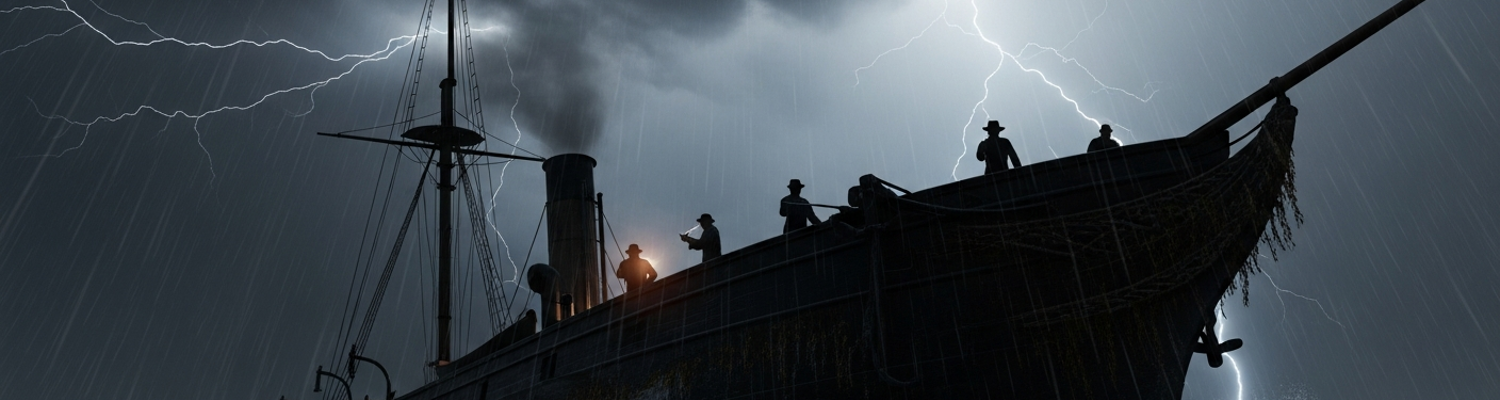

The Strategic Fantasy
3,500 miles of coastline. One hundred eighty inlets and harbors. On April 19, 1861, President Abraham Lincoln ordered a blockade of the seceding states, a directive demanding the United States Navy seal a shoreline longer than the entire Atlantic coast of Europe. The strategic imperative was absolute. The means to achieve it were functionally non-existent.
The operational concept came from General-in-Chief Winfield Scott’s Anaconda Plan. His strategy was not one of dramatic land battles but of slow, suffocating economic pressure. The plan involved a massive naval blockade to cut the Confederacy off from European war materiel and halt its cotton exports, the primary source of foreign currency. A complementary thrust down the Mississippi River would split the rebellion in two. Scott envisioned a methodical constriction that would bring the Southern states to terms with less bloodshed than a direct invasion. This idea was met with scorn in political circles. The public and press clamored for a swift, decisive land victory. The plan was derided as too passive, its serpentine imagery earning it a derisive nickname that would nonetheless carry into history.
Navy Secretary Gideon Welles and his department were handed the directive and forced to confront their own deficiencies. The U.S. Navy of early 1861 was a shadow of the force required. Out of roughly 90 total vessels, only 42 were in active commission. Many of these were scattered across the globe on foreign stations. A significant portion of the fleet consisted of aging sailing vessels, hopelessly outmatched by steam. Of the modern steam-powered ships, many were laid up for long-term repairs. The crisis was immediate. Welles and his assistant Gustavus Fox initiated a frantic program of acquisition and construction. They purchased anything that could float and carry a gun. Merchant steamers, passenger ferries, tugboats, and harbor pilot boats were pressed into service, creating a “soapbox navy” diverse in capability but unified in its often-subpar condition. The mechanical strain was punishing. Boilers designed for intermittent commercial use were run continuously, leading to frequent failures. Engines broke down under the stress of constant patrol. The demand for coal was insatiable, with up to a fifth of the fleet at any time occupied with refueling. This unprecedented expansion from 76 ships in 1861 to over 671 by 1865 was a bureaucratic and industrial war fought in shipyards long before the vessels ever saw combat.
This hastily assembled fleet faced the unforgiving geography of the Southern coast. The shoreline was a blockader’s nightmare. It was a complex maze of deep-water ports like Charleston and New Orleans, but also a sprawling network of shallow coastal sounds, shifting sandbars, and countless unguarded inlets. Ports like Wilmington, North Carolina, offered multiple avenues of approach protected by powerful fortifications such as Fort Fisher. A close blockade was nearly impossible. Blockade runners, designed for speed and shallow draft, could exploit these geographic features, slipping past Union patrols on moonless nights or in bad weather. A single Union vessel might be tasked with watching a 20-mile stretch of coastline, a wholly impractical assignment. This forced the Union strategy to evolve. It focused its limited resources on capturing key ports like Hatteras, Port Royal, and New Orleans to establish forward coaling stations and bases of operation, slowly tightening the cordon by seizing the very ports they were meant to be watching from afar.
The War Against Metal and Wood
The decision to blockade the southern coastline subjected the Union’s navy to an environment as corrosive to metal and wood as it was to combat readiness. The warm, saline waters of the Southern Atlantic and Gulf of Mexico became a relentless enemy. For the new ironclad vessels, this environment proved exceptionally hostile. A review of the operational history of ships like the monitors of the South Atlantic Blockading Squadron reveals a constant struggle against galvanic corrosion. This electrochemical process occurred where iron hull plates were fastened to the underlying wooden structure with different metals, creating a natural battery in the saltwater electrolyte. The less noble iron would sacrifice itself, corroding at an accelerated rate (documented in post-recovery analysis of the USS Monitor, NARA Record Group 19). This was not a slow decay. It was an aggressive consumption of the ship’s armor.
For the far more numerous wooden ships, many of them converted merchant vessels never intended for continuous naval service, the threat was biological. The warm coastal waters were a breeding ground for wood-boring shipworms, which could riddle a hull in a single season. Constant immersion weakened timbers, leading to structural flexing in heavy seas and making the ships leaky and difficult to handle. The southern sun baked the exposed topside planking, causing it to shrink and open seams, while the perpetually submerged portions became waterlogged and prone to rot.
The heart of each steam-powered blockader, its engine and boilers, was a source of constant anxiety. Most of these vessels were propelled by machinery designed for intermittent commercial use, not the ceaseless demands of blockade duty. Official records of the blockading squadrons are filled with reports of engine failures at the worst possible moments. A typical entry might note a pursuit of a blockade runner abandoned because of a ruptured boiler tube or a seized piston. The Martin watertube boiler, a common design, was particularly susceptible to failure. Repeated heating and cooling cycles caused metal fatigue and cracking in the boiler plates. The use of dirty river water or saltwater when fresh water was unavailable introduced mud and corrosive salts into the system. This led to internal scaling that insulated the iron from the water, creating dangerous hotspots and dramatically increasing the risk of a catastrophic boiler explosion. The engine rooms were cauldrons of intense heat, where engineering crews worked continuously to patch leaky gaskets and clear fouled lines.
A ship’s speed was its lifeblood. This speed was systematically bled away by an unseen biological force. The warm, nutrient-rich waters fostered explosive marine growth. Archival evidence shows that a ship could accumulate a thick carpet of algae, tubeworms, and barnacles on its hull and propeller in a matter of months. This fouling dramatically increased the surface roughness of the hull, creating immense frictional drag. A vessel that was clean upon leaving Norfolk might lose several knots of its top speed after a single summer on station off Charleston. This loss of speed was directly tied to a massive increase in fuel consumption. A fouled ship could require up to 40% more power, and thus coal, to maintain its station-keeping speed. The only effective solution was to take the vessel off the line entirely for cleaning. This involved the laborious process of careening: beaching the ship at high tide or heaving it over on its side at a wharf to allow sailors to physically scrape the hull clean with hand tools. This process could take a vessel out of the fight for days or weeks, a dangerous absence for the thinly stretched blockade lines.
The Unseen Enemy
The warm, humid air and stagnant waters of the Southern coastline constituted a biological battlespace for which the Union Navy was dangerously unprepared. For sailors assigned to the blockading squadrons, particularly the East and West Gulf Blockading Squadrons, the most persistent and lethal enemy was the mosquito. Operating in the swamps and river deltas from the Texas coast to the Carolinas, these insects were the vectors for malaria and yellow fever. Medical science of the era had not yet identified the mosquito as the culprit, attributing the fevers to bad air rising from rotting vegetation. Yellow fever, when it struck, was catastrophic. An outbreak could sweep through a vessel with terrifying speed, incapacitating a crew in days. The arrival of a single infected blockade runner or a stopover in a port like New Orleans could introduce the virus to a ship, leading to a cascade of cases characterized by fever, jaundice, and the terminal sign of black vomit. Malaria was a more chronic but equally debilitating threat. Its recurring cycles of fever and chills sapped the strength of sailors for months. Naval surgeons' logs from vessels on station detail the widespread use of quinine as both a preventative and a cure, though its supply could be inconsistent.
Insects were not the only killers.
A review of operational logs reveals a second front in the war against disease, fought in the food barrels and water casks. The standard naval ration of salted meat and hardtack biscuit, while calorically dense, was critically deficient in vital nutrients. This led directly to widespread cases of scurvy. Over 30,000 cases were officially recorded among Union troops, and sailors on long deployments were especially vulnerable. The symptoms were horrific: lethargy, bleeding gums, intense joint pain, and the reopening of old wounds. Though the preventative power of citrus fruits was known, applying this knowledge was a logistical challenge. Resupplying vessels on station with fresh vegetables was difficult and infrequent. Compounding the nutritional deficiencies were the appalling sanitary conditions. Overcrowded ships, many of them converted merchant vessels not designed for large crews, quickly became breeding grounds for dysentery and typhoid fever. Contaminated water and food supplies led to explosive outbreaks of what sailors called the bloody flux, a form of severe diarrhea that could kill through dehydration. With over 1.5 million cases of diarrhea and dysentery recorded in the Union army, the naval figures, though less centralized, reflected a similar crisis.
The heat was a weapon.
The subtropical climate of the blockade zone was a force multiplier for every other hardship a sailor faced. Manning a ship off the coast of South Carolina or in the Gulf of Mexico during the summer meant enduring months of oppressive heat and humidity. For the engineering crews, the conditions were beyond punishing. Confined to poorly ventilated engine rooms next to massive boilers, they toiled in temperatures that could exceed 120 degrees Fahrenheit. Heatstroke and exhaustion were common. The constant dampness meant clothing and bedding were perpetually wet, fostering fungal infections and other skin ailments. This environment degraded morale and physical health simultaneously. It accelerated the decay of the ships and the spread of disease, creating a vicious cycle. A sailor already weakened by malaria or poor nutrition was far more susceptible to heatstroke or the gastrointestinal diseases that thrived in the warm, wet conditions aboard ship.
A Broken Medical Chain
The Navy’s war against disease was crippled from the outset by a broken supply system. Medical materiel, particularly the critical anti-malarial agent quinine, was a constant source of anxiety for squadron commanders. A review of operational logs from the blockading squadrons reveals a service perpetually on the edge of a public health disaster. The Union’s own blockade created bizarre logistical hurdles for its own forces. While federal pharmaceutical laboratories in Philadelphia and New York worked to ensure an adequate supply of quinine, the distribution to a fleet of over 600 ships scattered across thousands of miles of coastline was a bureaucratic nightmare. The Navy's Bureau of Medicine and Surgery was outpaced by the conflict’s scale. Medical supplies were often shipped by the Quartermaster Department, which prioritized ammunition and food, frequently leaving vital medicines sitting on docks for weeks. This scarcity was felt most acutely on station. A single ship running low on quinine could see its combat effectiveness plummet as malaria took hold, leaving a hole in the blockade for runners to exploit.
There was no floating ambulance corps.
The system for evacuating and treating the seriously sick and wounded was dangerously inadequate, defined by improvisation. At the war’s start, the Union Navy possessed no dedicated hospital ships. Early efforts relied on converting captured enemy vessels or civilian steamers into makeshift hospital transports, but these were often little more than ferries for the wounded, lacking proper facilities or sufficient medical staff. The most notable success was the USS Red Rover, a former Confederate steamer captured in 1862 and converted into the Navy’s first true hospital ship. The Red Rover was a significant advancement, featuring an operating room, an elevator, specialized patient galleys, and a professional medical complement that included female nurses from the Sisters of the Holy Cross. It served with distinction in the Mississippi Squadron, treating thousands of patients. But it was only one ship. For the vast blockading squadrons on the Atlantic and Gulf coasts, no equivalent existed for much of the war. Sick and wounded sailors were either kept aboard their own cramped, unsanitary vessels or transferred to rudimentary shore facilities at Key West or Port Royal. These shore hospitals were frequently overwhelmed and understaffed.
Compounding the shortages was a systemic failure of coordination. An examination of joint Army-Navy operations exposes a deep bureaucratic friction between the two services’ medical departments. The Army and Navy operated with entirely separate chains of command, medical hierarchies, and supply depots. No standardized protocol for handling casualties in a combined amphibious assault existed. After actions like the attacks on Charleston or Fort Fisher, Army and Navy surgeons often found themselves competing for the same limited resources or establishing redundant field hospitals. Medical records were not shared. Patient transfers between services were handled on an ad-hoc basis, creating confusion and delaying care. Dr. Jonathan Letterman’s revolutionary reforms of the Army’s ambulance and field hospital system had no direct parallel or immediate implementation within the Navy’s dispersed squadrons. The result was a medical effort fractured by inter-service rivalry.
The War in Washington
The Union war effort at sea was hamstrung by a civil war within its own naval administration. A close examination of the historical record reveals a deep, corrosive conflict between the Navy Department’s powerful bureau chiefs in Washington and the commanders of the blockading squadrons. Secretary of the Navy Gideon Welles presided over a department where bureau chiefs operated as feudal lords, fiercely protective of their own authority. The Bureau of Construction and Repair, under the conservative John Lenthall, and the Bureau of Steam Engineering, led by the brilliant but dogmatic Benjamin Isherwood, controlled the hulls and engines of the fleet. These men, physically and professionally distant from the operational theater, dictated vessel design and repair specifications based on their own theories, which frequently clashed with the urgent needs of squadron commanders like Samuel F. DuPont or David Farragut. A commander might plead for faster vessels with shallower drafts to pursue blockade runners, but Isherwood, obsessed with engine reliability for long-term cruising, would insist on heavy, complex machinery that reduced speed. Lenthall, a traditionalist in wooden shipbuilding, was slow to embrace the full potential of ironclads, creating friction over the design and production of ships needed to counter Confederate armor. This structural division ensured that the men facing the enemy were in a constant state of dispute with the men who held the purse strings thousands of miles away.
This departmental infighting translated directly into crippling operational delays.
A warship on blockade duty was a machine in a constant state of decay. When a critical part failed, the process for initiating repairs was catastrophically slow. Archival evidence from squadron logs shows a nightmarish bureaucratic path. A captain’s urgent request for yard work had to travel up the chain to the squadron commander, who then had to formally petition the Navy Department in Washington. There, the request would be scrutinized by Lenthall’s or Isherwood’s bureau, which would then approve the work and assign the vessel to a northern navy yard. A ship vital to the blockade off Charleston could be taken off the line for weeks, sometimes months, for repairs that should have taken a fraction of the time. This problem extended to the assignment of new vessels. A squadron commander might identify a tactical need for a specific class of ship, but the bureaus in Washington, juggling production schedules and political pressures, would often assign whatever vessel was next available, regardless of its suitability for the specific environment.
The delivery of coal and ammunition was defined by gross inefficiency. Coal was the lifeblood of the steam-powered fleet. The entire logistical system depended on a fleet of slow, vulnerable colliers making the long journey from northern coal ports to forward bases. Official records show that at any given time, as much as 20 percent of the blockading fleet was not on station but was instead occupied with refueling. Delays caused by storms or bureaucratic holdups could leave a squadron commander perilously low on fuel, forcing him to shrink his patrol area. Ammunition was a similar story. While the Bureau of Ordnance under John Dahlgren produced high-quality cannon, distribution was chaotic. Supply ships carrying vital shells and powder were often de-prioritized. It was not uncommon for a warship to find that the ammunition delivered to its squadron depot did not match the caliber of its guns, a failure that rendered a powerful fighting vessel temporarily useless.
Command Disunity and Tactical Failure
An examination of the Union naval command structure reveals an organization at war with itself. Operational authority was fractured and strategic objectives were frequently undermined by officials far from the conflict. The Navy Department in Washington, led by Secretary Welles and Assistant Secretary Gustavus V. Fox, exerted a level of tactical control that consistently interfered with squadron commanders. Fox, a former naval officer with unshakeable faith in the offensive power of monitor-class ironclads, relentlessly pushed for aggressive, ship-only assaults on heavily fortified Confederate ports. This fixation clashed directly with the assessments of experienced commanders on station.
The most damaging instance was the April 1863 attack on Charleston. Rear Admiral Samuel F. DuPont, commander of the South Atlantic Blockading Squadron, maintained that a purely naval assault with his slow, cumbersome monitors against the formidable defenses of Fort Sumter was operationally unsound. He understood the technical limitations of his vessels, their slow rate of fire and vulnerability to strong currents, and argued for a combined Army-Navy operation. Despite DuPont’s warnings, Welles and Fox, feeling political pressure for a victory, ordered the attack to proceed.
It was a complete failure. The Union fleet was severely battered. The USS Keokuk was hit 90 times and sank, while inflicting minimal damage on the forts. In the aftermath, Welles and Fox blamed DuPont for the defeat, effectively ending the career of a highly capable officer whose primary fault was being correct.
This command friction was not an isolated incident. The lack of a unified command structure created systemic failures in coordination, most notably in joint Army-Navy operations. The services operated as separate entities, making synchronized action nearly impossible. A catastrophic example was the first attempt to capture Fort Fisher, the fortress guarding Wilmington, North Carolina, in December 1864. The plan called for a massive naval bombardment by Admiral David D. Porter’s fleet to suppress the fort’s guns, followed by an amphibious assault by Major General Benjamin Butler’s army forces. Joint planning was superficial. Porter’s bombardment, though immense, was largely ineffective against the fort’s well-designed earthworks. General Butler, after landing a portion of his troops and making a cursory inspection, unilaterally decided the fort was too strong to be taken by assault. He ordered a complete withdrawal without seriously consulting Admiral Porter. The decision infuriated the Navy and squandered the massive effort, allowing the vital port of Wilmington to remain open.
The compromised effectiveness of the blockade was a direct result of this disunity. The top-down interference from Washington and the repeated failures of inter-service cooperation fostered a climate of frustration and caution among squadron commanders. The public disgrace of an officer like DuPont sent a clear message: failure, even when predicted, would not be tolerated. This environment discouraged tactical innovation and risk-taking. On the decks of the ships, sailors and junior officers witnessed these high-level disputes and operational breakdowns firsthand, leading to a decline in morale. They saw well-conceived plans collapse not from enemy action, but from what they perceived as incompetence or rivalry between their own commanders. This toxic command climate created hesitation, which in turn led to predictable patrol patterns and exploitable gaps in the blockade line. For every four or five successful blockade-running attempts, only one vessel was captured or destroyed, a rate that allowed the Confederacy to import hundreds of thousands of rifles and millions of pounds of essential war materiel until the final months of the war.