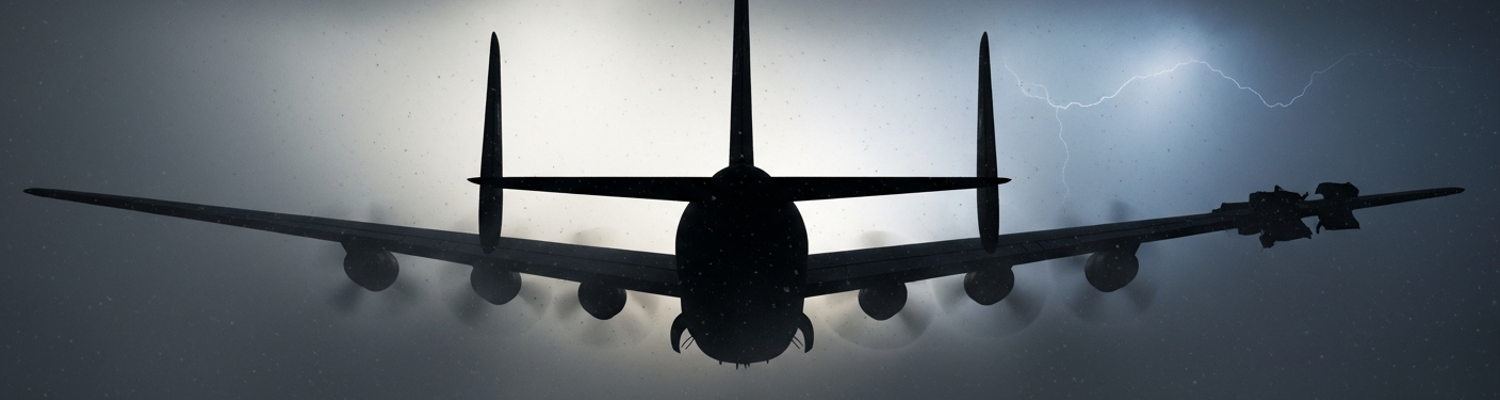

The timeline was impossible. In the immediate aftermath of the first Soviet atomic test in 1949, American defense planners were consumed by a single fear: a surprise bomber attack over the pole. The directive was simple in concept, yet bordered on the fantastical in execution. It was to create a continental-scale, impenetrable shield against nuclear-armed aircraft. The schedule for this unprecedented engineering and organizational feat was not measured in years. It was measured in the estimated production cycles of the Soviet Union’s new long-range bomber fleet. Every stage, from the drawing board to the front line, was compressed by this overwhelming urgency. This pressure would forge the very DNA of early Cold War command and control doctrine.
Archival evidence shows that the first attempt at a solution was a brute-force technological one. The Semi-Automatic Ground Environment, or SAGE. Born from MIT’s Lincoln Laboratory, SAGE was a breathtakingly ambitious project to link dozens of radar stations into a single, unified air picture, processed by massive vacuum-tube computers. Each SAGE Direction Center was a concrete behemoth. It housed an AN/FSQ-7 computer that weighed 250 tons, contained nearly 50,000 vacuum tubes, and consumed enough power for a small town. The theory was elegant. Radar data would be converted into digital signals, fed to the central computer, and displayed on consoles where Air Force officers could vector interceptor aircraft to destroy incoming threats. A close review of operational logs indicates constant struggles with vacuum tube failures, data-link dropouts between radar sites, and software glitches that could render an entire sector blind. The system was centralized by design, making each Direction Center a high-value target. A single well-placed bomb could decapitate the air defense of an entire region. This was a purely Air Force system, built by the Air Force for the Air Force, a technological fortress that inadvertently walled off its sister services.
This technological isolationism directly fed the fires of inter-service conflict over asset allocation. While the Air Force poured billions into SAGE and its dedicated fleet of fighter-interceptors, the U.S. Army was developing its own answer to air defense: the Nike missile program. The Army, with its historical mission of point defense, argued that its Nike-Ajax and later nuclear-tipped Nike-Hercules missiles were the only sure way to protect specific cities and military installations. This created a direct and bitter conflict. Air Force Air Defense Command (ADC) and the Army’s Air Defense Command (ARAACOM) became locked in a struggle for control of American airspace. Air Force generals saw Army-controlled missile batteries as a threat to their own pilots, fearing fratricide as missiles and interceptors converged on the same target. The Army believed the Air Force’s command network was not reliable enough to control its weapons in a crisis and was deeply reluctant to cede launch authority. This was not a matter of pride. It had tangible, dangerous consequences. The two services developed entirely separate command and control systems that were deliberately incompatible. The Navy, focused on fleet defense, was building its own sophisticated Naval Tactical Data System (NTDS), a decentralized network designed to protect carrier groups. NTDS was a revolutionary concept, but its data links and protocols were incompatible with SAGE. A naval task force and the continental air defense system could be looking at the same threat and be unable to share that information electronically.
These divisions were mirrored in the world of intelligence. The advent of new reconnaissance platforms like the CIA’s U-2 spy plane created a torrent of valuable, but highly sensitive, information. This set off vicious authority disputes. The Central Intelligence Agency, which ran the U-2 program, maintained iron-fisted control over the resulting intelligence. The Air Force, which provided pilots and logistical support, felt it had a primary claim to the data for its own targeting and air defense assessments. Strategic Air Command, tasked with nuclear retaliation, demanded direct access to any intelligence that could reveal Soviet capabilities or intentions. To resolve these escalating conflicts, the Defense Intelligence Agency (DIA) was established in October 1961. Its goal was to synthesize intelligence from all branches and eliminate duplicative efforts. The DIA quickly became just another combatant in the bureaucratic war, fighting for its own authority against the established intelligence arms of the Army, Navy, Air Force, and the formidable CIA. A review of declassified reports from the period reveals numerous instances of conflicting intelligence assessments being circulated. Different agencies provided contradictory warnings to field commanders based on the same raw data, filtered through the lens of their own organizational biases.
Decades before the Cold War, the Joint Army and Navy Board was established to prevent operational conflicts. Archival records show it was a body with no true power to enforce its decisions. It could only advise, leaving the services to frequently ignore its findings in favor of their own procurement and war planning. This legacy of unresolved disputes was inherited directly by the Joint Chiefs of Staff after the National Security Act of 1947. That act created an independent Air Force but failed to mandate the mechanisms for genuine operational integration. The old Joint Board’s history haunted the new defense structure. Service chiefs continued to prioritize their own domains, budgets, and strategic doctrines over a unified national defense strategy. A close review of planning documents from the period reveals a persistent pattern. Jointness was a concept for after-action reports, not a principle for operational design.
Aerial reconnaissance became a dangerously fragmented enterprise. A collection of jealously guarded fiefdoms. The U.S. Navy, focused on anti-submarine warfare and fleet protection, operated its own long-range patrol aircraft, like the P2V Neptune and later the P-3 Orion. These scanned the Atlantic and Pacific for Soviet vessels. Their intelligence product was funneled directly into the Navy’s own command structure. The Air Force controlled a massive fleet of strategic reconnaissance aircraft, from converted RB-47 Stratojet bombers to the high-flying U-2, tasked with peering deep into the Soviet interior. The Army maintained its own aerial assets for battlefield reconnaissance, developing aircraft like the OV-1 Mohawk to find and fix enemy ground forces. Each service developed unique and incompatible systems for data collection, processing, and dissemination. A Navy patrol plane detecting a Soviet submarine could not electronically pass that target information to an Air Force SAGE sector responsible for continental air defense, even if the submarine was capable of launching missiles at the United States. The data was technically and bureaucratically incompatible.
The national early warning system was built with colossal blind spots. The Distant Early Warning (DEW) Line, a string of powerful radars stretching across the Canadian arctic, was an Air Force project designed to detect one specific threat: Soviet bombers flying over the North Pole. It was a technological marvel, but its vision was tunneled. The system had little to no capability to integrate real-time tracking data from the Navy’s barrier patrols of radar picket ships and aircraft extending into the Atlantic and Pacific. A coordinated Soviet strike would not appear as a single, coherent attack to American commanders. It would be registered as three separate, isolated events by three separate, isolated command systems. NORAD in Colorado, the Navy’s CINCLANTFLT in Norfolk, and the Army’s USAREUR in Germany. The electronic eyes of the nation were not just unblinking. They were looking in different directions, unable to share what they were seeing until it was far too late. The system lacked the processing architecture to fuse these disparate streams of threat data into a single, intelligible picture for the National Command Authority.
The air over the North Atlantic was a gaping wound in America’s Cold War defenses. The Greenland-Iceland-United Kingdom (GIUK) Gap was a vast maritime corridor, an unavoidable channel for Soviet forces to break out into the Atlantic. Ground-based radar chains like the DEW Line were built to detect bombers coming over the pole. Planners knew that long-range Soviet aircraft, specifically the Tupolev Tu-95 Bear, could bypass this network by flying south through this very gap. The mission was therefore one of airborne early warning. It was a desperate attempt to place eyes in a blind spot. A patrol barrier to detect Soviet bombers before they could get within striking distance of North America or the sea lanes connecting the U.S. to Europe. From 1961, the Atlantic Barrier mission shifted its focus squarely to this region. The entire concept rested on keeping aircraft aloft around the clock, in all weather, to plug the hole that land-based technology could not.
This was the Navy’s responsibility.
The instrument for this task was the Lockheed EC-121 Warning Star, a propeller-driven adaptation of the Super Constellation airliner. It was a flying collection of compromises. Into its elegant, triple-tailed airframe were crammed tons of sensitive, power-hungry, and temperamental vacuum-tube electronics. A typical crew numbered over twenty men. A mix of flight crew, navigators, and a large contingent of radar operators and technicians who spent missions staring into flickering green scopes. The aircraft was defined by its two massive radomes: a bulbous AN/APS-20 search radar slung beneath its belly and a tall, fin-like AN/APS-45 height-finder radar on its back. These systems were plagued with issues. The Wright R-3350 engines were notoriously complex and prone to oil leaks and in-flight failures. The constant, deafening vibration they produced took a heavy toll on both the electronic components and the crew. A review of operational logs indicates that radar and electronic system failures were a constant feature of the long flights. The AN/APS-20, a design dating to 1945, had a respectable range against ships but was less effective against aircraft, especially in the high sea states of the North Atlantic which created significant radar clutter that could obscure targets. Missions could last over 15 hours, pushing the aircraft and its human occupants to their limits in one of the world’s most unforgiving environments.
Flying from Naval Air Station Keflavik in Iceland, crews from squadrons like AEWBARONLANT faced a relentless operational tempo. The station was a bleak outpost on a volcanic plain, a forward base for projecting power into the gap. Patrol tracks were plotted as barrier lines that the EC-121s would fly back and forth. The fundamental flaw, however, was not technological. It was bureaucratic. The Navy EC-121s were a Navy system, collecting analog data for a Navy mission. The continental air defense, centered on NORAD and its SAGE system, was an Air Force domain built on a digital architecture. When a Navy Willie Victor crew detected a Soviet Bear bomber, that information could not be electronically passed to the Air Force’s command network. The process was a throwback. A Navy radio operator would have to transmit the contact report via high-frequency voice radio, a slow and often unreliable method. That report would then have to be manually entered into the Air Force system, losing precious minutes. An Air Force F-102 interceptor scrambled to meet the threat would receive its instructions from a SAGE controller who was effectively blind to the real-time data being gathered by the Navy patrol plane only a few hundred miles away.
By late 1963, a new threat was emerging from Soviet arctic bases. Photographic intelligence from CIA assets and signals intelligence from NSA listening posts had collected fragmented data on a new generation of Soviet interceptor. It was larger than the MiG-21, with a powerful air-intercept radar and performance characteristics that suggested a significant leap in capability. This information, however, was held in tightly controlled strategic assessments within the intelligence community. It was deemed too sensitive, its sources too valuable, to be disseminated as a routine tactical update to flight crews. The threat briefings for Navy EC-121 crews flying the GIUK gap still focused on the known performance of older MiG-19 and Yak-25 interceptors. The crews were flying blind into a kill zone they were not authorized to know existed.
On a bleak afternoon in November 1963, an EC-121 from NAS Keflavik was at the furthest point of its patrol track. The radar operators in the back were fighting the usual sea clutter on their scopes when they picked up two contacts. They were fast. Faster than any Bear bomber. The contacts were closing from the northeast at a speed that exceeded the performance envelopes listed in their threat manuals. Before the crew could fully process the anomaly, two sleek, delta-winged aircraft materialized out of the gray overcast. They were not MiGs. They were the new aircraft, a design later designated the Sukhoi Su-15. One of the Soviet pilots positioned his aircraft off the EC-121’s wing, while the second dropped back. Without warning, a cannon flash lit the sky. 30mm rounds tore through the Warning Star’s right wing, shredding the number four engine and igniting a fuel fire. Another burst struck the fuselage, sending shrapnel through the aft crew compartment.
The attack was a direct result of an intelligence breakdown.
The loss of the outboard engine and the fire raging on the wing sent the EC-121 into a sickening, uncontrolled bank. Inside, the pilot and co-pilot fought the controls, the yoke bucking in their hands. The flight manual had no procedure for this scenario. The damage was too severe. In the rear of the aircraft, two radar technicians were down with severe shrapnel wounds, and the cabin was filling with acrid smoke. The crew was on its own, hundreds of miles from base, in a crippled aircraft its designers never intended to survive combat. Believing the wing was about to shear off, the aircraft commander ordered preparations to ditch in the frigid North Atlantic.
What followed was a five-hour exercise in pure, unscripted airmanship. The flight manual was useless. The crew had to invent a new way to fly. A post-incident analysis of flight logs shows the pilots, with no outside engineering support, discovered through trial and error that they could exert a crude form of directional control. They used asymmetric power, throttling back the engines on the good wing to counteract the drag from the damaged one. They manipulated the wing spoilers, normally used as air brakes, to help manage the unending tendency to roll. They shifted fuel between internal tanks, moving the center of gravity forward to add a small degree of longitudinal stability. The navigator, working on a smoke-filled flight deck, plotted a desperate course for the nearest friendly runway.
They were writing the emergency checklist as they flew.
The return journey was a protracted battle against aerodynamic instability. For hours, the pilots fought the aircraft, making constant, minute adjustments to engine power and spoiler deployment to keep it from deviating into a final, unrecoverable spin. The most critical information, the existence and lethality of the new Soviet interceptor, was trapped with them. Their attempts to transmit a detailed contact report were hampered by damaged radios and the simple fact that there was no direct, secure data link to the NORAD command center that needed the information most. The warning was being passed by voice, from a Navy aircraft to a Navy station, to be relayed through bureaucratic channels to the Air Force. It was a process that guaranteed the tactical data would be hours old before it reached anyone who could act on it.
The crippled bomber made an emergency landing at a remote airfield in Iceland. The moment the wheels touched the runway, the damaged landing gear on the right side collapsed. The aircraft slewed off the tarmac, the burning wing digging into the frozen ground before the fuselage finally came to a stop. The crew scrambled to evacuate, pulling their wounded comrades from the wreckage. The on-site medical response was primitive. The base dispensary was not equipped for complex trauma or severe burn injuries. The two wounded radar operators were stabilized with battlefield dressings in a makeshift triage area on the hangar floor. The wait for a dedicated medical evacuation flight from a better-equipped facility in the UK or Germany would take hours. Precious hours. For the men on the ground, the consequences of high-level command and control failures were not abstract. They were measured in pain, in delayed care, and in the fresh intelligence about a new Soviet weapon system that was now locked in a chaotic debriefing room, far too late to help the next crew.