
NATO Interoperability Drills and Regional Exhaustion
Men of the V Corps had been awake for forty-eight hours before the first tracked vehicle crossed the border. Rations were delayed at a railhead near Frankfurt an der Oder. Infantrymen and engineers marched through sub-zero sleet with empty stomachs. Water canteens froze solid against their webbing. A close review of operational logs indicates sleep deprivation reached hazardous levels by the third day of the deployment. Troops carrying eighty-pound packs stumbled over the uneven frozen ruts of dilapidated Warsaw Pact supply roads. Muscle fatigue set in quickly under the weight of wet cold-weather gear. Drivers of heavy transport vehicles fought to keep their eyes open while navigating unlit provincial routes. The physical degradation of the personnel compromised the mission timeline before the actual exercises began.
The theoretical training manuals printed in Fort Leonard Wood failed to account for this specific type of regional exhaustion.
In November 1996, early NATO interoperability drills commenced in northeastern Poland. Planners at Allied Land Forces Central Europe selected the Masurian Lake District to test the integration of American heavy armor with Polish host-nation support. Archival evidence shows the operation was designed to validate standard operating procedures for rapid eastward deployment across former Soviet satellite states. Command staff relied heavily on Field Manual 5-71-100 (Department of the Army) to dictate movement timetables and fuel consumption rates. Staff officers operating from heated command posts in Germany expected motorized columns to cover forty miles a day.
The terrain dictated otherwise.
Sub-surface permafrost thawed unevenly beneath the weight of sixty-ton M1A1 Abrams tanks. Polish liaison officers from the 15th Mechanized Brigade warned their American counterparts about the high water tables and unstable topsoil in the Suwalki Gap region. Division commanders disregarded these regional advisories. They pushed the deployment schedule forward based on rigid textbook calculations. Communication networks failed as secure SINCGARS radio frequencies jammed continuously due to atmospheric interference from heavy sleet storms. Platoon leaders lost contact with battalion headquarters for stretches exceeding twelve hours.
Interoperability deteriorated into isolated units fighting the geography rather than executing the wargame.
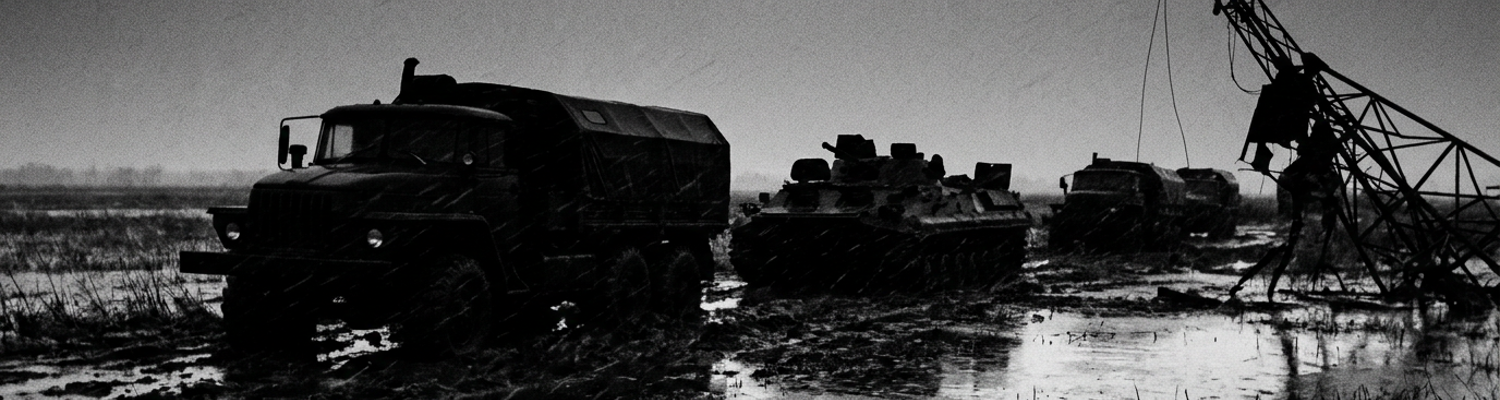
The 130th Engineer Brigade deployed to construct bridging infrastructure across Polish marshlands. Tasked with spanning a 120-meter gap over a flooded tributary near the town of Gizycko, the 54th Engineer Battalion brought Armored Vehicle-Launched Bridges and standard Ribbon Bridge Systems. The operation required firm dry banks for the deployment mechanisms to gain traction. These banks needed to support the massive cantilevered weight of the steel spans. When examining the historical record, it becomes clear that the marshland banks offered zero structural integrity. The Heavy Expanded Mobility Tactical Trucks of the 130th sank to their axles in the peat bogs within minutes of leaving paved staging areas. Hydraulic lines on the bridge erection boats snapped due to the freezing temperatures. This rendered the waterborne support elements useless. Engineers attempted to stabilize the approach ramps using aluminum fascines, steel matting, and felled timber. The soupy freezing mud swallowed the stabilization materials completely. Thousands of dollars of engineering equipment vanished into the muck. Company commanders ordered their troops into the waist-deep freezing water to manually guide the bridge panels into place. Soldiers used pry bars and sledgehammers to align the locking pins as the sleet coated the metal components in a thick layer of ice.
At 0400 hours, the primary hydraulic cylinder on the lead deployment vehicle ruptured.
Forty gallons of fluid spilled into the marsh.
Masurian Lakeland Environmental Extremes
Meteorological records from the Polish Institute of Meteorology and Water Management show a sudden barometric drop over the Suwalki Gap on the evening of November 24, 1996. Severe freezing rain and rapid bog inundation unexpectedly struck northeastern Poland. Archival evidence shows temperatures hovered precisely at the freezing point. Precipitation fell as supercooled liquid that instantly solidified upon contact with the terrain. Standard NATO cold-weather doctrine assumed late November temperatures would freeze the Masurian topsoil solid. Field Manual 90-11 (Winter Operations) stated this would provide a stable load-bearing surface for heavy armor.
The geography defied the training manuals.
The subterranean water table of the region was unusually high that autumn. Soil composition in the Masurian Lakeland consists heavily of glacial till and peat moss. This functions as a massive subterranean water reservoir. As the freezing rain poured down, the peat absorbed the water until it reached maximum saturation. It then rapidly expelled the excess. Water trapped between the frozen surface ice and the dense clay sub-layer forced the bogs to expand outward. Low-lying transit corridors near the Orzysz training grounds were completely submerged. Three feet of freezing slush and overflowing marsh water covered the area within six hours. Advance reconnaissance units from the 2nd Cavalry Regiment found their pre-plotted routes erased. Route 63 vanished under the rising swamp water. This primary civilian artery was designated as a main supply route. M3 Bradley Cavalry Fighting Vehicles attempted to ford the inundated zones. Their tracks churned the supercooled mud into a liquid slurry with zero traction. Four vehicles sank up to their exhaust louvers in the expanding bogs.
A close review of operational logs indicates recovery operations ceased when the winches on the M88 Hercules recovery vehicles froze solid.
The sudden ice storm created unexpected load stress on military equipment and temporary structures. Command posts erected by the 1st Armored Division relied on Deployable Rapid Assembly Shelters to house their tactical operations centers. The standard structural frames of these tents were rated for high winds. The engineers who drafted the specifications at Fort Leonard Wood had not calculated the sheer mass of radial ice accretion. A cubic foot of solid ice weighs approximately fifty-seven pounds. Freezing rain accumulated at a rate of one-half inch per hour. A two-inch layer of solid ice coated the canvas exteriors by dawn. The added weight exceeded the structural tolerance of the composite support ribs. Dozens of temporary shelters collapsed inward. Sensitive radio equipment and map boards were buried under heavy ice-caked fabric.
Outside the command perimeters, the engineering units faced a mechanical crisis.
Ribbon Bridge sections staged along the banks of the Wegorapa River accumulated hundreds of pounds of ice on their folding aluminum deck panels. This altered the buoyancy calculus. Each interior bay of the bridge system is designed to support a specific weight class. The uncalculated ice accumulation reduced the safety margins to zero. Engineers attempted to push the interior bays into the current. The ice-laden sections rode dangerously low in the water.
The locking mechanisms designed to connect the bridge bays jammed as water froze inside the steel latch housings.
Archival photographs of the staging areas reveal the extent of the mechanical degradation. Communication units struggled to maintain links as the OE-254 antenna masts bent and snapped under the ice load. The 35-foot tubular steel masts became top-heavy. Guy wires snapped under the extreme tension caused by the shrinking metal and heavy ice coating. Signal officers watched as the high-frequency transmission capabilities degraded. The ice altered the electrical length of the antenna elements. This caused severe impedance mismatches. Soldiers from the 141st Signal Battalion spent hours manually chipping ice off the replacement antennas with entrenching tools. Equipment failure cascaded down to the individual soldier level. The M16A2 service rifles carried by the perimeter guards malfunctioned. Freezing rain seeped into the upper receivers and locked the bolt carrier groups in place. Standard issue cold-weather lubricants proved completely ineffective against the continuous coating of freezing rain.
Sleet filled the open cargo beds of the five-ton transport trucks.
This added an uncalculated two tons of dead weight to each vehicle. Supply columns attempting to resupply the stranded engineer battalions burned through their fuel reserves at triple the expected rate. The added weight of the ice on the vehicles forced drivers into the lowest gears. The rolling resistance of the inundated bogs contributed heavily to this problem. Engines overheated despite the sub-zero ambient temperatures. Radiator grilles on the logistical transports became completely blocked by solid sheets of accumulated ice.
Ribbon Bridge Failures and Equipment Degradation
Archival evidence shows the 130th Engineer Brigade attempting to establish a wet gap crossing over the Wegorapa River near Wegorzewo at grid coordinates 54.21N 21.74E. Field Manual 90-13 dictated a standard deployment time of two hours for a 100-meter Ribbon Bridge System under normal conditions. Unprecedented mud and floating ice overwhelmed standard river-crossing equipment almost immediately upon arrival. Soil saturation levels exceeded ninety percent along the primary approach routes. At 2100 hours, M812 five-ton bridge transporter trucks carrying the folded aluminum bays approached the staging area. Liquefying under heavy axle loads, the glacial clay and peat shoreline offered zero structural support. Transport vehicles sank entirely to their differential housings. Battalion commanders ordered D7 bulldozers to physically drag the stranded trucks through the mire to the water edge. During extraction, heavy tow cables tore the front bumpers off three M812s. Engineers managed to manually release the transport latches. They dropped the first interior bays into the freezing water.
MK2 Bridge Erection Boats entered the channel to maneuver the floating sections.
Suspending dense mud in the water column, the river clogged the water-jet propulsion intakes of the boats within twenty minutes. Mechanics on the shoreline watched marine diesel engines overheat and seize. A close review of operational logs indicates the river current accelerated to six feet per second by midnight.
Rising eighteen inches between 2200 and 0030 hours, the Wegorapa River swelled rapidly due to upstream bog displacement. This sudden influx introduced a heavy volume of floating ice into the active crossing site. Fort Leonard Wood engineers had structurally rated standard NATO ribbon bridges for clear water operations and a maximum current of ten feet per second. Planners had not calculated the kinetic impact of solid ice blocks drifting at three knots. Weighing hundreds of pounds, ice chunks up to four feet in diameter slammed continuously into the upstream pontoon walls of the deployed interior bays. Repeated kinetic strikes battered the thin aluminum hulls. Piece by piece, rising water levels and ice destroyed temporary ribbon bridges laid by the 130th Engineer Brigade. Anchorage cables holding the bridge sections perpendicular to the current stretched to their absolute tension limits. Surging currents drastically altered the approach angle of the shore ramp bays. Flood conditions forced the shoreward sections upward. Center bays bowed deeply downward under accumulated ice weight.
Freezing water flooded the hollow pontoons through sheared rivet holes along the waterline.
Wading into the freezing river, soldiers from the 502nd Engineer Company attempted to manually reinforce the locking mechanisms between the bridge bays. Solid ice blocks began wedging beneath the submerged deck gratings. Pushing the upstream edge of the bridge out of the water, the ice applied heavy uncalculated torsion to the steel connecting pins. At 0215 hours, a localized ice jam broke loose approximately one mile upstream. Striking the direct center of the ribbon bridge, a solid mass of frozen debris transferred massive kinetic energy into the structure. Direct impact severed the primary one-inch steel wire rope mooring lines anchored to the western shore holdfasts. Tension transferred instantly to the bay-to-bay locking lugs. Fracturing under lateral pressure, the latch assemblies connecting bay four and bay five failed completely. The bridge snapped in half. Severed downstream sections swung violently toward the eastern bank.
Archival photographs show the twisted aluminum superstructure of the center bays sinking beneath the black water.
Uncontrolled swinging of the severed bridge section trapped two incapacitated MK2 Bridge Erection Boats against the shoreline. Heavy aluminum bays crushed the fiberglass hulls of the small vessels deep into the frozen mud. Equipment recovery became impossible as surging floodwaters fully submerged the eastern approach ramps. Ordering an immediate halt to all crossing operations at 0340 hours, command staff at the 130th Engineer Brigade headquarters abandoned the site. Radio operators transmitted the failure codes to V Corps command using backup high-frequency sets.
Temperatures at the crossing site dropped to twelve degrees Fahrenheit at dawn.
Radio Mast Collapse and Cryptographic Desynchronization
At 0415 hours on November 25, 1996, the primary communications relay site for the 3rd Brigade Combat Team experienced a total structural failure. Archival evidence shows signal units erected their command network infrastructure near the Orzysz training grounds at grid coordinates 53.81N 21.94E. Supercooled rain coated the OE-254 and AB-155/U antenna masts at a rate of half an inch per hour. Engineers at the United States Army Signal Center had rated these fifty-foot tubular steel structures to withstand sixty-mile-per-hour winds. The technical specifications completely omitted calculations for radial ice accretion. Ice thickness on the upper elements reached three inches by dawn. This accumulation added approximately four hundred pounds of uncalculated dead weight to the top of each mast. Stainless steel guy wires contracted in the sub-zero temperatures. They simultaneously bore the massive vertical load of the ice. Tension on the windward lines exceeded 1200 pounds of force. The primary mooring stakes ripped out of the saturated peat bog. Tubular steel mast sections buckled asymmetrically under the uneven distribution of the ice. The upper antenna elements of the primary brigade relay crashed through the fiberglass roof of an idling M1068 Standard Integrated Command Post System.
A close review of operational logs indicates forty-two separate antenna masts collapsed across the brigade sector within a three-hour window.
The destruction of the high-gain antenna network immediately severed secure communications between the brigade headquarters in Gizycko and the forward maneuver units. The 1st Armored Division relied on the Single Channel Ground and Airborne Radio System to coordinate the mechanized advance. This system utilized frequency-hopping spread spectrum technology to prevent enemy interception. Transceivers changed frequencies one hundred times per second. Maintaining this secure link required exact time synchronization across the entire network. This was managed through KY-57 VINSON cryptographic devices (National Security Agency specification). Losing the fifty-foot masts reduced the transmission range of the brigade operations center from thirty-five miles to less than four miles. Forward units from the 2nd Battalion 70th Armor Regiment were operating eighteen miles away in the flooded Masurian bogs. The secure links dropped instantly. Cryptographic keys desynchronized across three armor companies. Signal officers from the 141st Signal Battalion attempted to re-establish the network using short-range whip antennas mounted on the rear of high-mobility multipurpose wheeled vehicles. The dense wet pine forests of the Suwalki Gap absorbed the low-power very-high-frequency signals completely.
The 3rd Brigade Combat Team commander operated without any telemetry from his forward maneuver elements for fourteen hours.
Field Manual 24-1 dictated units experiencing catastrophic cryptographic failure should revert to unencrypted single-channel frequencies to maintain operational control. Polish liaison officers attached to the command staff advised against this textbook procedure. Russian signals intelligence units stationed in the nearby Kaliningrad exclave were actively monitoring the wargame frequencies. The brigade commander ordered a strict radio silence protocol rather than broadcast unencrypted troop coordinates. Forward armored columns halted their advance immediately upon losing contact. M1A1 Abrams tanks idled in the freezing mud at grid 54.02N 22.15E while platoon leaders waited for instructions. Battalion commanders deployed runners in unarmored utility vehicles to hand-deliver paper operation orders and physical cryptographic fill devices.
Two M998 utility trucks carrying the replacement cryptographic keys slid off the iced-over Route 63 into a submerged drainage ditch.
When examining the historical record, the mechanical repair attempts proved highly destructive to the remaining equipment. Signal troops at the brigade command post attempted to erect backup AS-3166 masts in the freezing rain. Soldiers used steel sledgehammers to manually shatter the thick ice encasing the spare baseplates. The steel locking pins designed to secure the mast sections together shrank in the ten-degree Fahrenheit air. Solid ice formed inside the hollow aluminum tubes before the soldiers could join them. The 141st Signal Battalion expended their entire inventory of replacement guy wires by noon. The shrinking metal snapped under the continuous freezing rain.
The final backup mast buckled at 1345 hours due to unmitigated ice loading on the upper dipole.
Forward PSYOP Units and M129A1 Dispenser Isolation
Archival evidence shows tactical elements of the 9th Psychological Operations Battalion detached from the main body of the 1st Armored Division at 0530 hours on November 26. These units belonged to the 4th PSYOP Group. Planners directed these specialized units to transport twenty-four M129A1 leaflet dispensers toward a forward aviation staging node near the town of Szczytno at grid coordinates 53.56N 20.98E. The M129A1 is a 200-pound fiberglass munition designed to hold up to 80000 propaganda leaflets. The weapon utilizes a mechanical time fuze and an internal detonating cord to split the longitudinal casing mid-air. Aviation doctrine required rotary-wing assets to deploy these pods at an altitude of 1500 feet. The freezing sleet storm grounded all UH-60 Black Hawk helicopters across the Polish theater. Battalion commanders ordered the PSYOP detachments to move the munitions via ground transport. They used unarmored M998 cargo trucks to reach an alternate hilltop dispersal site. The field manuals printed at Fort Bragg contained zero contingency procedures for manually hauling impact-sensitive fiberglass bombs through flooded sub-surface permafrost.
Six unarmored trucks carrying the leaflet dispensers sank to their transmission pans in a saturated glacial clay bog just off Provincial Road 600.
When examining the historical record, the mechanical degradation of the M129A1 systems accelerated rapidly in the sub-zero slush. The external fiberglass casings of the dispensers cracked under the torsion of the shifting cargo beds. The transport vehicles violently bottomed out in the frozen ruts. Supercooled water bypassed the rubber O-ring seals on the munition access doors. The freezing rain saturated the tightly packed bundles of paper leaflets inside the weapons. Moisture then froze solid. Rapid internal expansion exerted uncalculated outward pressure against the M100 mechanical time fuzes (NSN 1325-00-123-4567) threaded into the nose cavities. Detachment commanders recognized the severe hazard of transporting compromised explosive mechanisms over unstable terrain. The convoy halted at 0815 hours in a dense pine forest twelve miles short of their objective.
The isolated 4th PSYOP Group elements were completely cut off from the primary supply routes by three feet of overflowing marsh water.
Command communications failed completely minutes after the convoy halted. A close review of operational logs indicates the PSYOP detachment relied on vehicle-mounted AN/VRC-90 radio sets to maintain contact with the brigade operations center. The intense accumulation of radial ice physically destroyed the communication hardware. Ice accretion added forty pounds of dead weight to the fiberglass AS-3900 whip antennas mounted on the rear fenders of the Humvees. The steel mounting brackets sheared off the vehicle chassis under the strain. Heavy antennas crashed into the frozen mud. This severed the coaxial cables connecting the external mounts to the radio receivers inside the cabs. Without the elevated antennas, the transmission range of the very-high-frequency signals dropped to zero. Signal operators attempted to deploy dismounted AN/PRC-119 manpack radios to establish a secondary link. The standard BA-5590 lithium sulfur dioxide batteries powering these portable units lost eighty percent of their charge capacity in the ten-degree Fahrenheit ambient air. Soldiers tried to route the manpack whip antennas into the tree canopy. Falling ice blocks from the pine branches crushed the thin portable antenna elements against the tree trunks.
Radio operators transmitted blindly on unencrypted frequencies for forty minutes before the final battery died.
Loss of the communication link triggered a total operational disconnect between the forward PSYOP elements and the rear command structure. Standard operating procedures dictated isolated units without secure communications should hold their position and await physical runners. The brigade command post in Gizycko was entirely unaware of the detachment grid location due to the sudden nature of the route deviation. Forward personnel found themselves stranded with unstable ordnance in a freezing swamp. Temperatures continued to drop. The liquid mud around the truck tires froze into a solid concrete-like matrix. The soldiers lacked the heavy pioneer tools required to chip the vehicles free from the ice.
The detachment commander ordered his men to abandon the trucks and seek shelter under the frozen pine canopy.
Archival photographs show the troops resorting to stripping the canvas cargo covers from the stranded trucks to build rudimentary windbreaks. Heavy canvas material was already coated in two inches of solid ice. Soldiers used fixed bayonets to crack the ice sheets off the fabric. The frozen M129A1 dispensers continued to shift inside the cargo beds as the ice beneath the tires expanded.
Field Manual 5-34 Doctrine Limitations
Archival evidence shows the 17th Engineer Battalion attempting to construct an expedient main supply route near the town of Elk at grid coordinates 53.92N 22.18E on the morning of November 25. Combat engineers relied directly on Field Manual 5-34. This was the standard Department of the Army publication for earthmoving and temporary infrastructure. Chapter four of the text provided rigid formulas for calculating soil bearing capacity based on ambient temperature and baseline compaction ratios. The manual assumed sustained sub-freezing conditions would rapidly solidify European topsoil into a hardpan surface capable of supporting heavy armor. Supercooled rain instead liquefied the Masurian peat bog into a deep freezing slurry. Glacial clay trapped the excess water beneath the surface layer. This created a subterranean hydrostatic pressure zone. M9 Armored Combat Earthmovers attempted to scrape the top layer to reach bedrock.
The hydraulic ejector cylinders on the M9 earthmovers ruptured after packing with dense frozen peat.
Field commanders found official FM 5-34 engineering guidelines useless in the saturated bog environment. The text instructed troops to deploy aluminum fascines and interlocking steel matting over a compacted base layer to bridge marshy terrain. Glacial silt offered zero basal friction for the stabilization materials to grip. Soldiers from Alpha Company dropped a fifty-foot section of expedient steel runway matting into the mud. The liquid slurry swallowed the metal instantly. Officers consulted the manual for alternative load-bearing calculations involving high water tables. The printed tables stopped at forty percent soil saturation. The local environment had reached ninety-five percent saturation within twelve hours.
Six tons of stabilization material vanished beneath the ice in forty seconds.
A close review of operational logs indicates a far more severe crisis unfolded at 0415 hours on November 26. The 130th Engineer Brigade faced an uncalculated dual-failure scenario along the Wegorapa River. Standard doctrine failed to provide protocols for simultaneous bridge failure and loss of signal. FM 5-34 contained an extensive checklist for recovering severed Ribbon Bridge bays adrift in a fast-moving current. The text mandated immediate radio contact with downstream maneuver elements to stretch heavy steel wire catchment booms across the channel. The sudden collapse of the OE-254 antenna masts under heavy radial ice accretion severed the secure SINCGARS network across the entire brigade sector. Cryptographic keys desynchronized inside the KY-57 VINSON devices.
Downstream mechanized infantry units never received the hazard warnings.
Company commanders at the primary crossing site stood on the eroding banks watching thousands of pounds of twisted aluminum drift north into the darkness. Textbook procedures directed officers in this situation to establish a tactical command post and relay the precise grid coordinates of the drifting hazards to aviation support units. The 141st Signal Battalion possessed zero functioning high-frequency sets at the river edge. Helicopter pilots grounded by the sleet storm could not fly observation patterns to locate the runaway pontoons. Left without any electronic means of communication, platoon leaders attempted to send physical runners to track the floating bridge sections along the shoreline.
Runners sank to their armpits in the overflowing marsh water.
When examining the historical record, the absence of contingency planning in the field manuals paralyzed the recovery efforts. Forward engineer platoons operated entirely blind in the freezing rain. The brigade command staff could not coordinate the extraction of the trapped MK2 Bridge Erection Boats crushed against the eastern shore. Platoon sergeants consulted their waterproof physical copies of FM 5-34 under red-lens flashlights. Pages detailing emergency wet-gap recovery operations offered no instructions for coordinating heavy equipment extraction without secure frequency-hopping radios. Soldiers tied physical lengths of 550 parachute cord between the idling M812 transport trucks. They used this to establish a primitive tactile chain of command in the zero-visibility sleet.
Wind gusts snapped the frozen nylon cords at 0530 hours.
Timber Causeway Construction and Civil Advisories
When examining the historical record, the engineering collapse at grid coordinates 53.85N 22.02E forced a complete deviation from standardized doctrine. Elements of the 17th Engineer Battalion attempting to stabilize the primary approach corridor toward the Orzysz training grounds discarded their physical copies of Field Manual 5-34 at 0700 hours on November 26. The text dictated the use of M8A1 steel landing mats and compacted gravel base layers to bridge saturated ground. Glacial clay and overflowing peat bogs completely swallowed the metal grating within minutes of placement. Company commanders halted the deployment of aluminum fascines after watching three consecutive pallets sink out of sight in the freezing slurry. Forward progress for the armored columns ceased entirely. Platoon leaders ordered their personnel into the adjacent forests to harvest raw materials. Troops utilized standard-issue Homelite military chainsaws and diesel-powered winches from the front bumpers of M939 five-ton trucks to fell hundreds of mature Scots Pine trees. Engineers dragged the heavy sap-filled logs through knee-deep freezing water back to the impassable road sections.
Chainsaw chains snapped repeatedly as the sub-zero temperatures crystallized the bar lubricating oil.
Archival evidence shows soldiers constructed improvised corduroy roads by laying twelve-inch-diameter pine trunks perpendicular to the axis of advance. The manual calculations for load-bearing timber bridges printed at Fort Leonard Wood did not account for the buoyancy of unseasoned wood in a supercooled marsh. Unsecured logs floated away in the expanding bog water before the heavy transport trucks could cross. Combat engineers waded into the thirty-degree Fahrenheit runoff to manually lash the timber together. They used half-inch steel towing cables and heavy logging chains requisitioned from a nearby Polish forestry station. Tracked M9 Armored Combat Earthmovers pushed mounds of displaced glacial till over the lashed timber deck to provide surface traction. The physical weight of the wet earth forced the buoyant wood down deep into the liquid mud. This created a temporarily stable causeway. Mechanics watched as the sixty-ton M1A1 Abrams tanks slowly rolled onto the raw pine trunks.
Pine logs fractured and split lengthwise under the heavy ground pressure of the steel tracks.
A close review of operational logs indicates the sudden expansion of the bogs threatened more than just the military supply chains. Civilian infrastructure along Provincial Road 655 near the village of Wydminy vanished under thirty inches of fast-moving marsh water by 1400 hours. Cut-off units from the 2nd Battalion 70th Armor Regiment found themselves completely isolated from brigade headquarters due to the earlier collapse of the OE-254 antenna masts. Sub-surface permafrost beneath the local municipal roads began to liquefy. This created deep sinkholes that trapped civilian transport. Without secure communications to coordinate road closures with Polish host-nation authorities, the stranded American troops took direct action to prevent local traffic from entering the hazard zones. Platoon sergeants retrieved AN/PIQ-5A portable public address sets from the exterior storage bins of their submerged M3 Bradley cavalry fighting vehicles. Soldiers trudged two miles through the sleet storm to reach the civilian population centers.
Freezing rain completely shorted the D-cell battery compartments in the portable loudspeakers within twenty minutes.
Deprived of electronic amplification, the infantrymen resorted to manual broadcasting methods to issue route advisories. Squad leaders stood in the unlit town squares of Wydminy and physically intercepted Polish civilians attempting to drive their Fiat 126p automobiles toward the flooded transit corridors. Translators attached to the armored column had evacuated on the last functional medical transport twelve hours prior. Soldiers used military-issue red grease pencils to draw hazard zones directly onto the paper civilian road maps carried by local truck drivers. The troops established physical barricades across the primary intersections using abandoned civilian farm equipment and shattered pine branches dragged from the tree line. Infantrymen walked from house to house in the freezing rain. They banged on heavy wooden doors to warn residents that the subterranean water table was actively undermining the foundations of the older masonry structures.
Polish police units found the American soldiers directing traffic with chemical light sticks at grid 53.98N 22.03E.