
Tactical Operations Centers in War Zone C
PRC25 tactical radio transceivers consumed heavy BA386 battery packs faster than supply helicopters could deliver fresh dry cells across the flooded jungle clearings of War Zone C. Saturated moisture from daily monsoon downpours seeped into the aluminum housing seals, forcing radio operators to scrape corroded terminal contacts with pocket knives while managing frantic calls through heavy atmospheric static. Mortar fragments from an enemy bombardment thirty minutes earlier had severed the primary whip antennas strung above the sandbagged command bunker, reducing the signal strength of the remaining operational transceivers to erratic crackles. Heavy diesel exhaust from an exterior generator drifted into the low timber entryway, mixing with the sharp smell of spent cordite and stagnant swamp mud that clung to every boot and uniform. Wet earth squeezed through the gaps between the rough hewn log roof beams, dripping thick water onto the grease pencil tactical maps where operators marked the positions of battered frontline companies. Output meters on the primary PRC25 dropped with every push to talk transmission, indicating that the unit battery was rapidly failing.
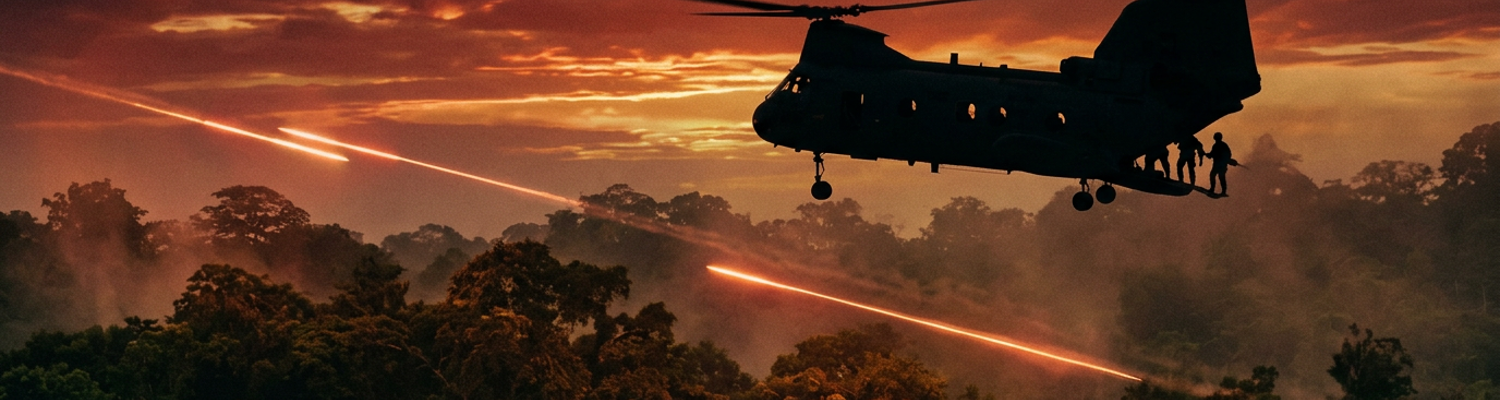
Battery failures forced operators to shout triage categories over the loud noise of outgoing artillery support fire as medics carried the first wave of blast casualties directly from the perimeter trenches into the bunker entryway. Triage priority sheets accumulated rapidly beside the radio station as corpsmen attempted to route shrapnel wounds, blast concussions, and severe blood loss toward an overwhelmed battalion dressing station. Incoming medical evacuation helicopters circled through the thick overcast, with pilots demanding immediate smoke marker verification because concealed enemy machine gun positions still fired from the tree lines. Radio operators toggled between handset frequencies with mud covered fingers, transmitting compass headings and wind directions while requesting gunship escorts to suppress enemy fire. Gunship escorts saturated the tree line with rocket fire, allowing the medical evacuation helicopters to drop below the cloud base and approach the perimeter wire.
Perimeter wire shook under the heavy rotor wash as soldiers assigned to Combat Artist Team I squeezed into the narrow corridor beside the failing radio consoles, recording the logistical crisis through rapid sketches on heavy paper. Charcoal lines captured the dull stares of shell shocked riflemen who had carried their wounded squad leaders inside, as well as the tangled piles of severed field telephone wire and discarded ration cartons littering the dirt floor. Sketch pads absorbed water droplets dripping from the sandbag ceiling, yet the artists continued rendering the stark conditions of frontline triage and damaged perimeter bunkers. Neither artist spoke or interrupted the urgent radio traffic, choosing instead to draw the torn canvas litters, civilian structural damage from the perimeter hamlet, and the blood soaked field dressings piling up near the entryway. Their charcoal sketches caught the exact moment the primary transmitter went silent, recording the frantic operators as they unlatched the battery compartment to inspect the dead terminals.
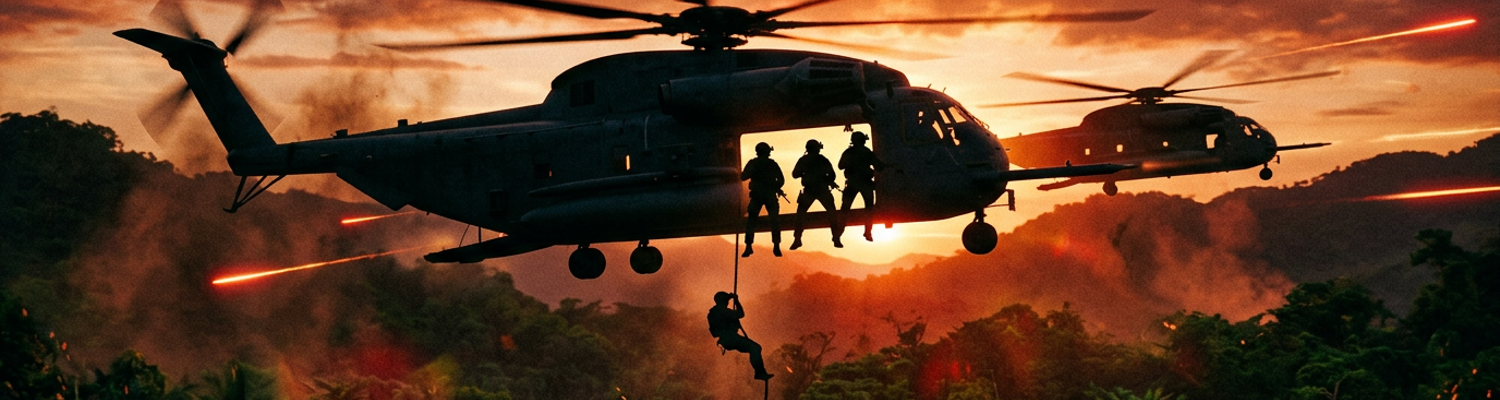
Terminal failures forced the radio operators to unbolt an intact battery casing from a flooded auxiliary receiver and splice the raw copper wires directly into the PRC25 chassis. Small sparks jumped from the improvised connection, but the signal meter returned to the operational band just as the lead evacuation helicopter broke through the cloud base over the perimeter wire. Crew chiefs set their helicopter skids into the deep mud of the landing zone, keeping the rotor blades turning at full power to avoid sinking into the saturated ground. Litter bearers ran from the bunker trench into the rotor wash, lifting three critically wounded infantrymen onto the cabin deck under covering fire from the perimeter berm. Flight controllers confirmed the departure of the loaded helicopter over the crackling radio link and immediately cleared a second aircraft to deliver a replacement pallet of dry cell batteries into the red smoke.
Deployment of Combat Artist Team I in 1966
Smoke markers billowed red clouds across the landing zone as battery crates carrying fresh BA386 power packs slammed into the sodden clearing, splitting open along their wooden seams as the unloading detail dragged the cargo toward the dugout. First Lieutenant John O Wehrle guided his team through the low bunker doorway to avoid the churning rotor wash, shielding a thick portfolio of heavy drawing paper against his soaked fatigue jacket. Wehrle served as the military officer in charge of Combat Artist Team I, an experimental field unit established in August 1966 by the Office of the Chief of Military History to record ground operations through direct observation. Curator Marian McNaughton had organized the project from Washington to build an authentic historical collection, selecting soldiers with civilian art backgrounds and sending them into forward combat zones rather than rear headquarters. Civilian supervisor Frank M Sherman managed program administration and logistical backing from the United States, giving Wehrle the operational leeway to move his small detachment directly into active combat sectors including War Zone C.
War Zone C mud tracked across the plank flooring as riflemen from the perimeter security squad crowded past Wehrle at the dugout entrance, making room for the communications section to rip open the fresh battery boxes. Specialist Roger A Blum and Specialist Robert C Knight squeezed into the corner near the radio bench, pulling sketchpads and drawing pencils out of rubberized waterproof bags. Blum drew the jagged wire splices and the dented transceiver chassis, recording how operators scraped corrosion from the terminal plugs under the dim glow of an emergency flashlight. Knight focused a 35mm rangefinder camera on the shattered timbers of the overhead blast shield, documenting the physical destruction left behind by the mortar impacts before rain could wash away the details. Both artists wore standard field uniforms stripped of rank insignia, moving alongside combat infantrymen while carrying charcoal sticks, ink pens, and rolls of black and white film in their ammunition pouches.
Ammunition pouches rattled against film canisters in the open canvas pack beside Specialist Ronald E Pepin as he knelt near the medical triage station at the bunker exit, uncapping a bottle of waterproof black ink to sketch wounded infantrymen waiting for the second evacuation flight. Specialist Paul Rickert stood a few paces behind him, using heavy watercolor paper and dry brushes to record the subdued expressions of dazed soldiers slumped against sandbag barriers. Specialist Felix R Sanchez worked quickly with charcoal sticks on a flat wooden drawing board, sketching the broken field telephone wires, punctured fuel drums, and civilian structural damage across the perimeter hamlet. These five enlisted men worked under Wehrle and Sherman to bypass standard military public relations conventions, recording the exhaustion of frontline troops without staging heroic postures or hiding operational distress. Incoming mortar reports from the freshly powered radio interrupted their work, prompting Sanchez to shield his drawing board with his body while the tactical officer shouted new coordinates into the transmitter handset.
Transmitter handsets relayed the new coordinates to defensive artillery batteries, prompting the tactical officer to call down heavy fire into the nearby tree line to suppress the hostile mortar crews. Concussion waves from the outbound 105mm howitzer rounds shook loose red dirt from the sandbag ceiling, showering grit over Sanchez and Rickert as they finalized their charcoal sketches. Wehrle inspected each completed sheet before tucking the paper into heavy fiber mailing tubes, preparing the raw visual records for transport back to headquarters alongside outgoing medical evacuation manifests. Radio operators monitored the artillery frequency, confirming that the defensive barrage had broken the enemy fire mission just as the second supply helicopter touched down in the mud to offload additional rations and field wire. Litter bearers ran back out into the rain with the mailing tubes and wounded soldiers, loading the cargo directly onto the open deck of the transport.
Operation Attleboro and Frontline Jungle Engagements
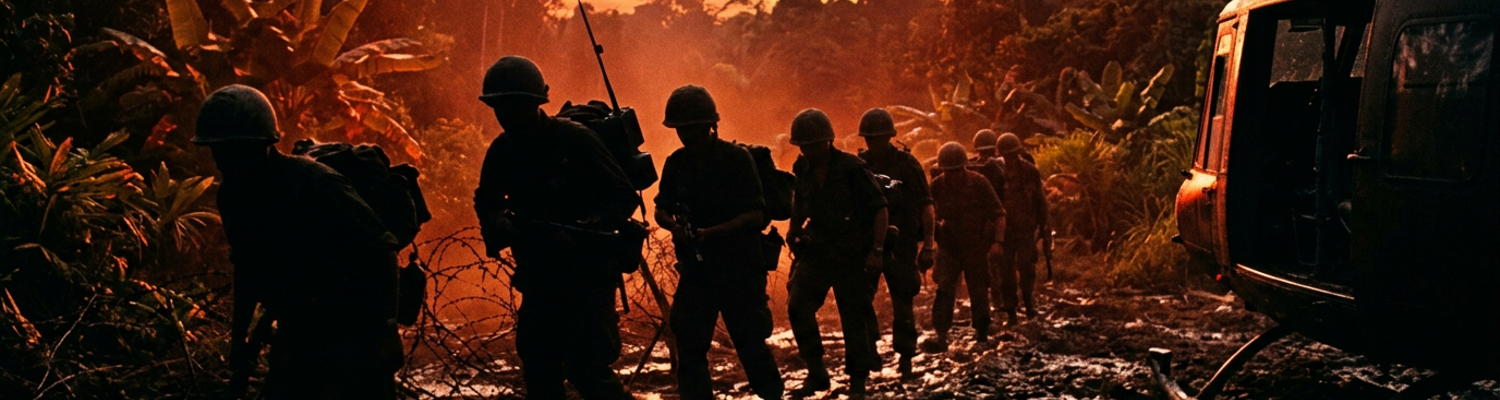
Transport helicopters lifted away with the wounded, clearing the landing zone so riflemen from the 1st Infantry Division could push the forward command post deeper into War Zone C. Field commanders initiated Operation Attleboro across the province to hunt dispersed enemy regiments, dragging the communications section and the combat artists through thick bamboo thickets and swollen creeks. Specialist Roger A Blum and Specialist Robert C Knight walked in the center of the infantry column, carrying their sketchpads and cameras alongside heavily loaded machine gunners who scanned the canopy for snipers. Saturated mud sucked at the boots of every man, slowing the tactical advance and forcing radio operators to shoulder drenched field equipment while monitoring warning transmissions from surrounding battalions. First Lieutenant John O Wehrle tracked the lead company scouts as they took grazing automatic weapons fire from a concealed bunker line, prompting the artists to drop flat into the dirt and document the riflemen returning fire with M16 rifles. Concussion waves from supporting mortar rounds shook the ground around the forward perimeter, tearing branches from the canopy and scattering debris over the artists as they sketched the infantrymen dragging a wounded radioman toward a shallow drainage ditch.
Drainage ditches carried thick ribbons of engine grease and ash past the contested perimeter of the Iron Triangle, where frontline elements of the 25th Infantry Division joined the assault to encircle hostile strongpoints. Black smoke poured from burning settlements scattered along the edge of the clearing, sparked by white phosphorus marker rounds that pinpointed concealed sniper nests for incoming fighter bombers. Specialist Felix R Sanchez and Specialist Paul Rickert set their drawing boards against a fallen tree trunk, rapidly recording the raging fires, the collapsed civilian huts, and the terrified livestock fleeing through the cratered soil. Soldiers from the 25th Infantry Division spread out in a defensive line to protect the temporary forward operating base, stacking cracked ammunition crates and wet sandbags to fortify the exposed tactical radio hub. Enemy mortar rounds exploded along the perimeter trench line just as the radio operators established contact with division artillery, throwing hot shrapnel into the dirt barriers only yards from where Sanchez shaded the outline of a burning supply depot. Combat engineers advanced through the clearing with axes and demolition charges to level the smoldering village ruins, uncovering a camouflaged trapdoor hidden beneath the scorched floorboards of an abandoned shelter.
Shelter floorboards splintered under the pry bars of the engineers, revealing the narrow wooden ladder of a subterranean Viet Cong tunnel complex that snaked beneath the jungle floor. Specialist Ronald E Pepin stepped toward the dark shaft with an electric lantern, peering into the reinforced gallery while infantrymen checked their pistols and prepared to clear the underground chambers. Pepin used thick charcoal sticks to sketch the cramped dimensions of the subterranean network, documenting timber reinforced walls, abandoned telephone wires, and medical supply caches stored inside airtight earthenware jugs. Stagnant air and the stench of decay drifted up through the tunnel opening, forcing the soldiers above ground to take turns guarding the subterranean shaft with shotguns and tear gas canisters. First Lieutenant Wehrle photographed the tunnel entrance and collected detailed sketches of the multi level bunker layout, preserving accurate operational drawings of the fortified subterranean command rooms before demolition specialists set explosive charges. Demolition wires unspooled across the red clay as engineers cleared everyone back from the hole, detonating twenty pound blocks of C4 explosive that collapsed the subterranean tunnels in a violent eruptive plume of subterranean dust.
Dust plumes drifted across the sandbag revetments of the forward operating base as the tactical radio section received flash reports of an enemy counterattack pressing against the western defense wire. Radio operators keyed their handsets through waves of loud static, shouting coordinates to battalion fire direction centers while artillery crews fired high explosive shells point blank into the tree line to break the enemy charge. Specialist Blum and Specialist Knight moved along the fighting bunkers under the artillery roar, sketching riflemen firing through embrasures, overheated machine gun barrels being swapped with asbestos gloves, and field medics applying tourniquets to leg wounds. Ammunition bearers ran back and forth between flooded trenches carrying green metal cans of linked ammunition, keeping the frontline perimeter firing while tactical commanders planned a helicopter borne assault to cut off the retreating hostile units. Captains in the tactical operations center marked grease pencil arrows across the operations map toward the Cambodian border, ordering mechanized units to sweep the jungle clearings at dawn to secure the perimeter of War Zone C.
Raw Documentation of Field Casualties and Logistics
War Zone C perimeter security depended on M113 armored personnel carriers rumbling toward those forward coordinates, yet the heavy vehicle tracks churned the main supply trail into deep red trenches of impassable sludge. Impassable sludge halted rear echelon trucks and forced the forward casualty clearing station to hold dozens of wounded riflemen on wet ground. Medics laid casualties on canvas litters beneath torn poncho shelters while waiting for delayed evacuation helicopters, bandaging chest wounds and administering plasma bottles hung from low branches. Specialist Ronald E Pepin and Specialist Paul Rickert set up their drawing boards right along the muddy clearing line, sketching the bandaged infantrymen before dust off choppers could reach the sector. Graphite pencils scratched across soaked paper as Pepin recorded torn uniforms, makeshift splints, and exhausted soldiers staring into space while corpsmen applied direct pressure to arterial bleeds. Rickert shaded the sagging rows of stretchers and the stacks of discarded battle dressings, documenting the raw physical toll of the assault before surgical teams back at Tay Ninh could even receive the men.
Tay Ninh surgical teams waited miles away while mortar rounds burst along the perimeter of the clearing station only minutes after Rickert finished his sketch, throwing hot shrapnel into the adjacent hamlet where civilian homes burned alongside broken supply trucks. Specialist Felix R Sanchez stayed in the open to capture the immediate aftermath, using dark charcoal sticks to draw splintered peasant carts, dead draft oxen, and weeping families digging through smoldering wall posts. Explosions along the roadway collapsed earthen culverts and splintered wooden bridges, shattering the battalion supply line and leaving crates of small arms ammunition burning beside punctured gasoline drums. Sanchez worked with rapid deliberate hand strokes under the falling ash, recording how village children clutched salvageable cooking pots while supply sergeants tried desperately to drag scorched rations out of the debris. Shrapnel from intermittent detonations continued to strike the mud banks around the hamlet, forcing Sanchez to wipe soot and sulfur residue off his drawing sheets between rapid pencil passes.
Pencil passes required steady hands, yet riflemen from the perimeter defense could spare no security escorts or dedicated machine gun crews to guard these sketch artists as they moved through active danger zones. First Lieutenant John O Wehrle led his team without any specialized protection, carrying only standard field gear and sidearms while navigating the same contested clearings as frontline infantry. Specialist Roger A Blum and Specialist Robert C Knight crawled along exposed drainage ditches and crater rims completely on their own, dividing their attention between keeping their sketch kits dry and scanning the tree line for snipers. Commanders concentrated every available weapon squad along the fighting bunkers, leaving the artists to make their own tactical choices about cover, concealment, and movement across fire lanes. Blum recorded an exhausted machine gun team clearing a jammed feed tray while enemy rounds snapped through the high grass above his helmet, working entirely unprotected just yards from the fighting.
Fighting intensified until pilots from the delayed medical evacuation detachment finally guided their UH1 helicopters down through the mortar smoke, touching their skids into the churned mud beside Blum and Knight. Litter bearers hoisted the most critical casualties onto the vibrating cargo decks while the artists rolled their damp charcoal sheets and slotted them into waterproof cardboard canisters. Wehrle handed the sealed document tubes directly to the flight medic, logging the sketches alongside field casualty tags so the visual records would travel directly on the outbound triage flight. Rotor wash whipped rain and spent brass across the mud as the helicopters lifted into the low overcast, clearing the forward landing zone for another flight of transport choppers carrying fresh ammunition. Radio operators inside the tactical operations center logged the departure over the PRC25 network, immediately ordering fresh rifle squads to push through the destroyed hamlet and secure the western tree line.
Schofield Barracks Studio Work and Program Legacy
Tree line sectors fell quiet as rifle squads pushed through the smoking brush to secure the perimeter, marking the final tactical mission before Combat Artist Team I concluded sixty days of embedded combat duty across the battlefields of South Vietnam. Flight orders routed First Lieutenant John O Wehrle and his five enlisted artists away from the forward operations bunker to Tan Son Nhut Air Base, where transport aircraft flew the detachment east across the Pacific to Schofield Barracks, Hawaii. Schofield Barracks provided the unit with converted maintenance workshops and quiet barracks quarters on the island of Oahu, giving the men dedicated studio facilities to convert their raw field sketches into finished paintings. Solvents, linseed oil, and clean white linen canvases replaced the damp charcoal sticks and mud spattered drawing boards the artists had carried through monsoon trenches and helicopter assaults. Enlisted painters washed red jungle clay from their uniforms and brush cases, spreading their gear across wide concrete floors far removed from mortar concussions and radio static. Supply sergeants delivered wooden easels and workbenches to the studio floor, allowing the artists to unpack their battered fiber mailing tubes and unroll dozens of graphite drawings collected during jungle firefights.
Jungle firefights lived on through the graphite drawings pinned to plywood easels, guiding the soldiers as they mixed oils on wooden palettes under official directives that guaranteed their completed canvases would remain completely uncensored by military leadership. Specialist Roger A Blum applied heavy brushstrokes of dark umber, crimson, and fiery orange to create his major canvas titled Attack at Twilight, recreating the sudden violence of evening ambushes where muzzle flashes cut through dense jungle foliage and shadowy riflemen scrambled for defensive cover. Specialist Paul Rickert focused his brushes on the psychological aftermath of frontline combat, painting stark depictions of combat fatigue that captured the blank stares, hollow cheeks, and slumping postures of infantrymen drained by unrelenting mortar fire and sensory shock. Canvases filled with scenes of exhausted litter bearers, damaged supply trucks, and blood soaked casualty clearing stations recorded the physical realities of the ground war without romantic heroism or public relations polishing. Wehrle supervised the application of quick drying varnish over each completed frame, inspecting the dried oil surfaces before loading the artwork into heavy wooden crates built for transpacific cargo shipment.
Cargo shipments carrying the finished canvases arrived at the Office of the Chief of Military History in Washington, where curator Marian McNaughton formally accepted the crates to establish the permanent archival collection for the official Army Vietnam Combat Artists Program. Program officials cataloged the paintings alongside field logs and tactical after action reports, demonstrating that soldier artists embedded on the front lines preserved historical realities that official military photographers often missed. Marian McNaughton and civilian supervisor Frank M Sherman used the operational success of Team I as the administrative blueprint to dispatch eight subsequent combat artist teams into Southeast Asia over the following four years. Technicians prepared traveling museum exhibitions from the new collection to show civilian audiences and military leaders the direct, unvarnished conditions endured by frontline rifle platoons. Archivists stamped accession numbers directly onto the wooden stretchers of Attack at Twilight and Rickert's studies of combat fatigue, sliding the oil paintings into climate controlled steel vault racks inside the central Army art repository.