
Formation and Pretense of Submarine Squadron Fifty
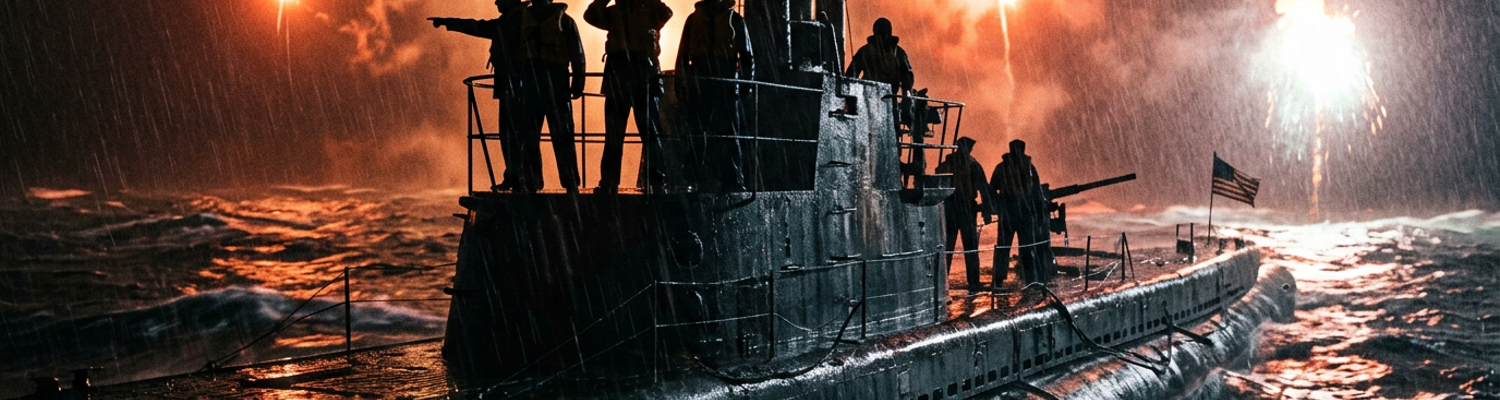
United States Navy submarine doctrine manuals printed in early 1942 promised crews rapid acoustic detection and reliable Mark 14 torpedoes. Submariners arriving off the coast of French Morocco found jammed firing pins and malfunctioning depth-control diaphragms. Warheads ran ten feet below targets. Heavy Atlantic swells tossed three-hundred-foot fleet hulls violently against shallow continental shoals. Archival evidence shows that Submarine Squadron 50 originated in administrative friction rather than sound tactical calculation. On September 3, 1942, the Navy officially established Submarine Squadron 50 at Submarine Base New London in Groton, Connecticut. Captain Norman S. Ives took command. Ives received instructions to assemble an expeditionary strike group earmarked specifically for the European theater of operations. He answered directly to Commander in Chief, United States Fleet, Admiral Ernest J. King. Six newly commissioned Gato-class fleet submarines formed the operational core of the unit. These included USS Barb, USS Blackfish, USS Gunnel, USS Herring, USS Shad, and USS Runner.
Ives had under his command the most advanced underwater warships in the world.
They were sent to perform tasks suited for wooden fishing trawlers.
When examining the historical record of Atlantic naval distribution in late 1942, the decision to withhold these specific hulls from the Pacific war stands out as a severe strategic error. Pacific Fleet submarine commanders in Pearl Harbor begged for long-range fleet boats to sever Japanese maritime supply lines across thousands of miles of open ocean. Gato-class vessels measured 311 feet in length. They displaced over 1,500 tons on the surface. These boats carried fuel loads designed for seventy-five-day patrols spanning twelve thousand nautical miles. Washington redirected these fleet submarines into narrow European choke points and North African coastal shelves. Their deep draft and broad turning radius became active liabilities. Ives and his crews drew stationary reconnaissance lines, coastal blockades, and harbor watch assignments off Safi, Casablanca, Fedala, and Port Lyautey. The assigned waters sat in depth zones ranging from fifteen to thirty fathoms. This left less than eighty feet of water beneath the keel when submerged. Three-thousand-horsepower propulsion systems and heavy auxiliary gear were wasted. Lookouts watched empty Atlantic coastlines for Vichy French traffic that barely moved.
Mechanical failure plagued the squadron from the day of departure. Four of the six assigned boats carried Hooven-Owens-Rentschler double-acting diesel engines. These powerplants were known across the submarine service for severe defects. On USS Gunnel, internal gear teeth sheared clean off the drive shafts. Harmonic vibration fractured drive pins within the cylinder assemblies during the Atlantic crossing. Gunnel assumed her combat station off Casablanca to support Operation Torch on November 8, 1942. By that time, all four main diesel engines had suffered complete drive-train breakdowns. The boat crawled on a single auxiliary generator. Weapons systems compounded the propulsion failures when targets appeared. Submarines fired Mark 14 torpedoes fitted with defective Mark 6 magnetic exploders. The weapons ran an average of four to eleven feet deeper than set depths. They passed harmlessly beneath the hulls of Vichy naval vessels or exploded prematurely on ocean swell crests miles from the target.
Official naval dispatches and wartime press releases constructed a thoroughly distorted picture of the Moroccan deployment. Press communiques issued through Washington framed the preliminary submarine screen of Operation Torch as a complete success. They claimed that squadron patrols had neutralized French naval resistance before Allied troops hit the beaches. A close review of operational logs indicates that the squadron inflicted negligible damage while suffering near-total operational paralysis. USS Herring sank the French cargo vessel Ville du Havre off Casablanca. The squadron accomplished little else of tactical value during the amphibious invasion. Captain Ives and his staff filed reports pointing out that French coastal batteries, Vichy destroyers, and Allied aircraft routinely depth-charged their periscopes without distinction. War planners used the Moroccan campaign as promotional leverage. They justified establishing an independent American submarine base at Rosneath, Scotland. They argued that Squadron 50 had validated the concept of American fleet submarine operations in European waters.
Mechanical Failures of Hooven-Owens-Rentschler Diesels
When examining the historical record of submarine engineering in 1942, the decision to install Hooven-Owens-Rentschler diesels stands out as an unmitigated technical disaster. The Hamilton, Ohio firm had adapted a German MAN two-stroke, double-acting nine-cylinder design. This attempted to double power output by firing fuel charges both above and below each piston head. This configuration created severe thermal distortion along the cylinder liners. It subjected the internal drive assemblies to heavy torsional vibration. Archival evidence shows that as engine revolutions per minute climbed above cruising thresholds, harmonic frequencies shattered the wrist-pins connecting the pistons to the connecting rods. Shorn wrist-pin fragments dropped directly into the crankcases. They scored cylinder walls and tore through lower crosshead assemblies. The gear systems suffered equally destructive mechanical breakdown. The reduction gear trains driving the camshafts and scavenging blowers were machined from steel alloys unable to withstand cyclic shock loading. Gear teeth stripped clean off their hubs during sustained running blocks. This left propulsion shafts dead and filled engine room bilges with metal shavings.
Machinists spent entire patrol shifts fishing sheared gear teeth out of sump pans with hand magnets.
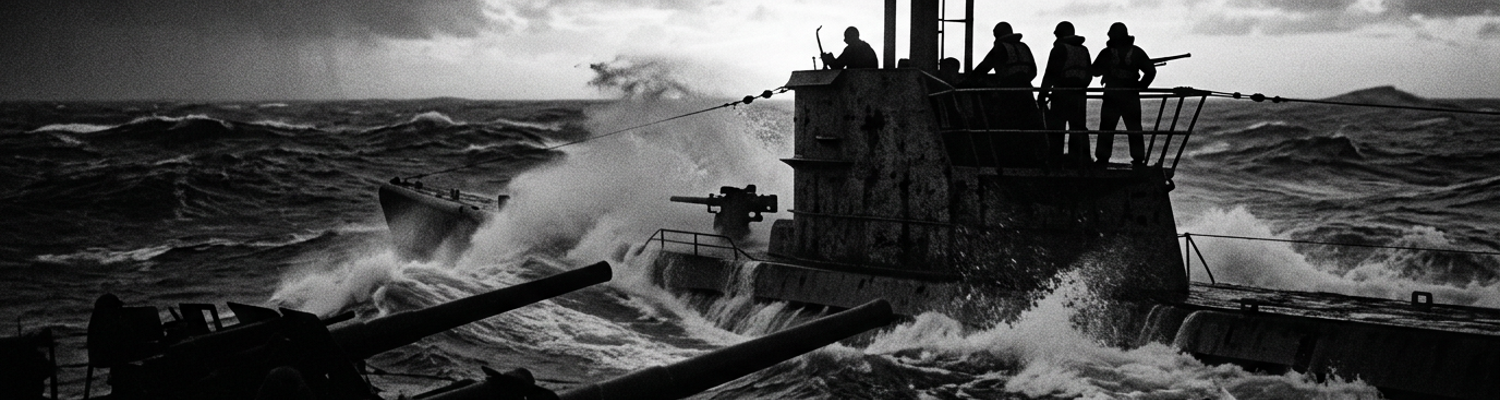
A close review of operational logs indicates that USS Gunnel became the prime casualty of these engineering defects while crossing the Atlantic toward French Morocco. On October 19, 1942, the submarine cleared New London bound for her combat station off Fedala. She carried four nine-cylinder H.O.R. main engines rated at sixteen hundred horsepower each. Within days of entering open-ocean swells, coolant jackets cracked along the cylinder liners under thermal cycling. Saltwater leaked past the seals and flooded the crankcase sumps. This contaminated the circulating lubricating oil with abrasive brine and unburned fuel residues. Contaminated oil degraded into an acidic sludge that wiped out the babbitt metal bearings supporting the crankshafts. Metal-on-metal friction seized the wrist-pin bushings on engine after engine. Lieutenant Commander John S. McCain Jr. brought the boat within sight of the North African coast on November 6. Three of his four main engines had suffered total mechanical failure. McCain held command over a frontline fleet boat running on twenty-five percent of its rated surface power before firing a single torpedo.
Submarine doctrine required boats to run at twenty knots on the surface to reach assigned coordinates under cover of night. They needed to recharge drained battery cells and submerge into firing sectors before sunrise. Gunnel could do none of this. Deprived of her main propulsion plant, the crew fell back on a single auxiliary diesel generator. This was commonly designated the dinky engine. This auxiliary unit, manufactured by General Motors, was engineered strictly to supply low-amperage current for interior lighting and domestic electrical loads while tied to a pier. Forcing the small generator to drive the boat electric propulsion motors capped surface speed at barely five knots. The sluggish crawl destroyed McCain transit timetable. Recharging the main battery bank stretched into fourteen-hour ordeals in waters patrolled by Vichy search planes and French destroyers. Gunnel arrived off Fedala twelve hours behind schedule. She was fully exhausted of electrical reserves. The boat had to crash-dive into shallow coastal water with battery cells drained to thirty percent capacity.
Task Force 34 Atlantic Underway Replenishment Breakdowns
A close review of operational logs indicates that the transit of Task Force 34 in late October 1942 turned into an engineering crisis. North Atlantic winter swells battered the fleet between Bermuda and the Azores. Heavy ocean rollers running twenty to twenty-five feet tossed screening destroyers into thirty-degree rolls. They attempted alongside replenishment from fleet oilers USS Chemung and USS Kennebec. Six-inch reinforced rubber fueling hoses stretched across turbulent fifty-yard gaps of open ocean. Destroyer hulls plunged into deep wave troughs while seventy-six-hundred-ton oilers lifted on swell crests. Dynamic tension repeatedly exceeded equipment ratings. Hose couplings ripped out of their deck flanges. They sprayed fuel across working parties and dumped thousands of gallons of Navy Special Fuel Oil into the sea. Steel span wires parted under sudden snap loads. They whipped violently across open forecastles and smashed deck winches on destroyers USS Ellyson and USS Corry. Repair parties scrambled across oil-soaked decks with fire axes to sever tangled lines before broken gear drifted aft into spinning propulsion shafts.
High-tensile steel cables snapped under eight tons of dynamic tension.
Archival evidence shows that mechanical wreckage on deck triggered failures beneath the waterline across the escort group. Destroyers buried their forecastles into green water during repeated replenishment approaches. This submerged deck-level fuel-sounding tubes, air vents, and tank manholes. Seawater forced its way past dried gaskets directly into bunker storage spaces and settling tanks. The resulting brine contaminated the heavy fuel oil. It produced an emulsion that overwhelmed shipboard centrifugal purifiers. Atomizer burner tips inside four-hundred-pound Babcock and Wilcox boilers choked on saltwater within minutes of intake. Fire rooms across the screen suffered sudden burner flameouts. This cut steam to the turbine reduction gears. On destroyers like USS Eberle and USS Roe, boiler pressure gauges dropped from six hundred pounds per square inch to atmospheric levels in under ninety seconds. Fire room crews worked in complete darkness under emergency lanterns. They hand-drained fuel headers and pulled fouled burners while hulls rolled thirty degrees without engine control.
Saltwater in the fuel manifolds extinguished firebox flames in seconds.
When examining the historical record of the Atlantic crossing, these breakdowns unraveled the task force defense schedule four days prior to the Moroccan landings. By November 4, fuel logs aboard five destroyers recorded bunker reserves below fifteen percent of total capacity. Captains informed squadron commanders that their ships lacked the fuel to sustain twenty-five-knot anti-submarine sweeps. Depleted tanks destroyed the vessels ballasting stability in heavy seas. Task force commander Rear Admiral H. Kent Hewitt ordered sweeping speed reductions across the Western Naval Task Force. Nineteen troop transports carrying thirty-five thousand assault troops slowed to eight knots. Stricken destroyers fell out of formation to drift in the open ocean. They waited hours for emergency over-the-stern fueling lines. This breakdown opened fifteen-mile blind spots across the screen shielding battleship USS Massachusetts and carrier USS Ranger. Escorts spent thirty-six hours dead in the water cleaning fuel lines while German wolfpack Streitaxt operated three hundred miles to the northeast.
Operational Collapse of North African Intelligence Promises
When examining the historical record of Allied intelligence planning for Operation Torch, diplomatic assessments provided by Robert Murphy formed the foundational premise of the Western Task Force assault. Operating under civilian diplomatic cover in Algiers as the personal representative of President Franklin D. Roosevelt, Murphy coordinated a network of twelve Office of Strategic Services vice-consuls stationed throughout Morocco and Algeria. Murphy sent repeated communiques to the Joint Chiefs of Staff and Major General Dwight D. Eisenhower. He asserted that French army and naval garrisons would offer zero resistance to an Anglo-American landing. OSS dossiers detailed secret agreements with sympathetic French officers. They promised assault commanders that local colonial commands would stand down their coastal defenses the moment American ships materialized on the horizon. Planners in Washington treated these backchannel assurances as actionable tactical facts. Amphibious doctrine was modified accordingly. Transports received orders to approach unshielded anchorages off Fedala, Casablanca, and Safi without preparatory naval bombardments to avoid offending French sovereign pride.
Archival evidence shows that this intelligence network collapsed completely within hours of the initial landings. In Rabat, Resident-General Auguste Nogues learned of the Allied approach around 0200 on November 8, 1942. Pro-Allied division commander General Antoine Bethouart attempted to place him under house arrest. Nogues broke the cordon. He rallied colonial Tirailleur and Chasseur battalions and declared martial law across the protectorate. Sixty miles southwest in Casablanca, Vice Admiral Francois Michelier demonstrated an even more uncompromising hostility toward Murphy overtures. Michelier commanded French naval forces in Morocco. He had received repeated American radio appeals on naval emergency frequencies but rejected them as British deceptions. Subordinates informed him that unidentified hulls were maneuvering off the shoreline. The admiral issued standing battle orders to engage all encroaching vessels on sight. French destroyers were ordered out from the inner basin of Casablanca harbor. Fortress gunners armed high-explosive shell inventories against the American fleet.
Vichy commanders treated American assault ships as direct foreign invaders.
A close review of operational logs indicates that coastal defense batteries opened sudden, coordinated counter-battery fire against assault formations off Fedala and Casablanca at daybreak. At Cap Fedala, the Batterie du Pont de Blondin directed four 138.6-millimeter rapid-fire naval guns onto troop transports lowering wooden Higgins boats four miles out. Shell bursts straddled the transports USS Leonard Wood and USS Thomas Stone. They showered working decks with jagged shrapnel fragments and forced assault transports to cut their mooring cables. Off Casablanca, Battery El Hank mounted four 194-millimeter coastal rifles. It opened coordinated fire alongside the stationary battleship Jean Bart. Moored inside the commercial mole, Jean Bart fired fifteen-inch armor-piercing shells from her single operational quadruple turret. It targeted heavy cruiser USS Augusta and battleship USS Massachusetts. American landing craft heading toward Red and Blue Beaches encountered plunging artillery salvos. These blew thirty-six-foot personnel carriers out of the water before coxswains reached the surf line.
One hundred and forty miles to the south at Safi, assault waves from the 47th Infantry Regiment ran into an identical wall of artillery fire. Four 130-millimeter naval guns at Batterie Railleuse sat on cliffs two miles northwest of the harbor. They locked onto transport area coordinates alongside the three-gun Batterie des Passes near the port jetty. These emplacements hammered the approaching assault destroyers USS Bernadou and USS Cole. Both vessels attempted to force the entrance of the commercial harbor. Counter-battery fire from the old battleship USS New York and light cruiser USS Philadelphia required nearly two hours and hundreds of high-caliber explosive shells to silence the cliff-top casemates. American artillery spotters adjusted naval gunlines onto the concrete bunkers. By that time, shrapnel had torn through dozens of open landing craft, leaving troops dead on the wet pebble beaches of French Morocco.
Tactical Paralysis along the Moroccan Coastline
Archival evidence shows that Submarine Squadron 50 failed to deliver on its primary operational mandate during the assault on French Morocco. Assigned to provide preliminary reconnaissance and offensive interdiction barriers along the African shelf, fleet boats found themselves physically crippled before the opening salvos landed. Off Fedala, USS Gunnel drifted in heavy coastal breakers. Three of her four Hooven-Owens-Rentschler diesels were completely destroyed by sheared reduction gears and shattered wrist-pins. Lieutenant Commander John S. McCain Jr. had to nurse a single small auxiliary generator. This limited surface maneuvers to barely five knots, making intercept calculations impossible against rapidly moving surface contacts. Sixty miles north off the mouth of the Sebou River near Mehedia, USS Shad suffered equivalent tactical paralysis. Commanded by Lieutenant Commander Edgar J. MacGregor III, Shad operated within thirty-fathom shoals to reconnoiter defenses for the Northern Attack Group. The boat grappled with persistent electrical distribution grounds and cooling water intake blockages caused by Atlantic mud. Inflexible patrol box boundaries forced both boats to hold stationary patrol lines rather than vectoring into dynamic attack positions. This prevented them from firing a single torpedo at incoming or outgoing Vichy vessels.
Not one American torpedo struck a French warship during the initial landings.
A close review of operational logs indicates that the breakdown in inter-service communications endangered Allied submarines far more than Vichy anti-submarine measures. Western Naval Task Force operational orders omitted real-time identification frequencies for Submarine Squadron 50. This left surface gunnery officers and naval aviators completely ignorant of American patrol coordinates. At daybreak on November 8, Gunnel surfaced to establish infrared navigation signals meant to guide assault transports toward Blue Beach. Lookouts spotted an American Army Air Forces P-40 Warhawk diving out of the morning sun instead of guiding troop barges. The fighter sprayed fifty-caliber machine-gun rounds directly across Gunnel conning tower. This forced McCain to order an immediate crash-dive into seventy feet of water. Less than three hours later, the submarine attempted to regain periscope depth. An American bomber bracketed the conning tower with high-explosive ordnance, detonating depth bombs at a depth of 150 feet. Offshore, heavy cruisers USS Wichita and USS Tuscaloosa poured eight-inch high-capacity salvos into coastal sectors where Shad and sister hulls were submerged. American submarine crews spent the morning hours huddled on ocean bottoms with auxiliary lights extinguished. They evaded friendly naval artillery rather than conducting beachhead guidance.
Friendly fire drove American periscopes out of the coastal shallows.
When examining the historical record of the surface engagement off Casablanca, the myth of submarine deterrence dissolves entirely against the timeline of the French counterattack. At 0900, Vice Admiral Francois Michelier dispatched the French 2nd Light Squadron under Rear Admiral Gervais de Lafond to strike the exposed Allied transport anchorage off Fedala. The destroyer Milan led alongside Fougueux and Boulonnais. They were followed by the light cruiser Primauguet, flotilla leader Albatros, and destroyers Brestois and Frondeur. Seven French combatants sprinted straight out through Casablanca harbor breakwater behind a thick smoke screen. Submarine Squadron 50 defensive patrol lines sat completely out of position to detect or intercept the sortie. Heavy surface warships of Task Force 34 intercepted the sortie with brutal long-range naval gunfire rather than submerged ambush. Battleship USS Massachusetts trained sixteen-inch main batteries onto the approaching formation. It shattered Fougueux and sank her at 1040. Heavy cruisers USS Augusta, USS Tuscaloosa, and light cruiser USS Brooklyn poured rapid six-inch and eight-inch salvos into the smoke screen. Navy Wildcat and Dauntless aircraft from USS Ranger strafed the surviving ships until Milan and Albatros were forced to beach themselves on rocky headlands. Submarine logs confirm that while French destroyers burnt across the surface, American torpedo tubes sat locked behind their outer bow doors miles away.
The squadron never fired a shot.
Technological Fallout and Post-Operation Re-Engining Programs
Archival evidence shows that immediately following the Moroccan armistice on November 11, 1942, Submarine Squadron 50 received orders directing its battered hulls north to Naval Base II at Rosneath, Scotland. Stationed on the Gare Loch under the direct operational command of the British Flag Officer Submarines, the American boats took up station across the Bay of Biscay. They were to intercept outbound German U-boats departing the submarine pens at Brest, Lorient, and Saint-Nazaire. American fleet submarine design proved unsuited to the tactical demands of the European theater. Constructed for long-range transpacific reconnaissance, Gato-class submarines displaced over fifteen hundred tons and stretched 311 feet in length. This made them dangerously unwieldy in shallow coastal approaches. Submerging these vessels required thirty-five to forty-five seconds. This was more than double the dive time achieved by British S-class or German Type VII boats. High-flying Junkers Ju-88 maritime patrol bombers assigned to Fliegerfuhrer Atlantik repeatedly caught the high American shears on the surface before crews could secure deck hatches. British naval liaisons discovered that the massive hulls lacked the ballast control needed to hold steady depth within Biscay erratic temperature layers and sharp continental drop-offs.
The Pacific fleet boats were oversized targets in European waters.
A close review of operational logs indicates that propulsion catastrophes off Casablanca forced the Navy Department to implement an immediate fleet-wide re-engining program. Lieutenant Commander John S. McCain Jr. brought USS Gunnel back across the Atlantic on a single low-output auxiliary generator. The boat docked at the Portsmouth Navy Yard with four cracked main engine blocks. Yard inspectors found sheared camshaft drive gears, ruined babbitt bearings, and fractured cylinder liners across every Hooven-Owens-Rentschler double-acting installation. Bureau of Ships engineers ordered the total removal of H.O.R. diesels from every front-line submarine in service. Shipyard crews at Portsmouth, Mare Island, and Groton cut away outer hull plating to hoist out the nine-cylinder Hamilton engines. Industrial plants replaced the German-derived powerplants with ten-cylinder Fairbanks-Morse 38D8-1/8 opposed-piston diesels or General Motors Cleveland 16-278A two-stroke V-engines. These retrofits eliminated the destructive harmonic vibrations that shattered internal wrist-pins. They returned surface output to over five thousand brake horsepower and cleared the boats for redeployment to the Pacific.
Foundries melted down the discarded H.O.R. engine blocks for scrap.
When examining the historical record of Allied planning, the intelligence failures off Safi, Fedala, and Casablanca triggered an immediate overhaul of joint assessment procedures. Major General Dwight D. Eisenhower stripped civilian diplomatic representatives of sole vetting power over military intelligence. He cited the inaccurate political forecasts submitted by Robert Murphy. Joint Intelligence Committee directives prohibited assault planners from organizing amphibious operations around assumed enemy stand-downs or unverified political agreements. Command staffs had to substantiate all garrison posture estimates with aerial photography, signals intelligence, and physical beach surveys conducted by specialized reconnaissance units before landing forces hit shore. Engineering teams addressed the mechanical failures that broke Task Force 34 fueling operations during the Atlantic crossing. Bureau of Ships personnel redesigned underway replenishment hardware. They replaced rigid pipe flanges with bronze quick-release couplings built to withstand violent dynamic loads in heavy seas. Fleet oilers received constant-tension hydraulic deck winches. These automatically took up span-wire slack as screening destroyers rolled through twenty-five-foot Atlantic troughs. Shipbuilders retrofitted destroyer decks with raised, gasketed fuel-sounding tubes and spring-loaded vent caps to keep green water from washing down into bunker oil tanks.