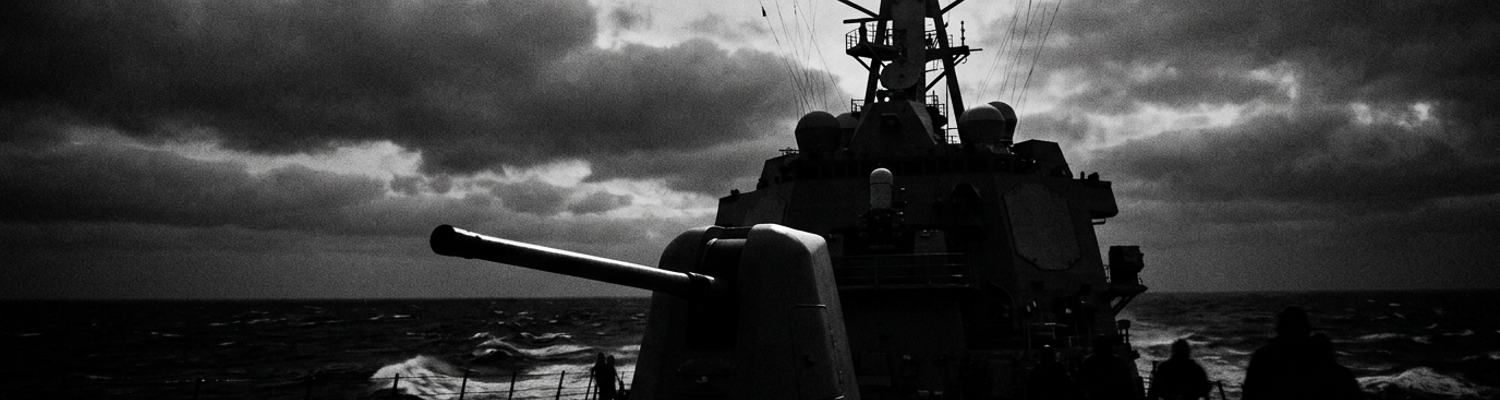

Operation Market Time Coastal Patrol Operations
Five inch 38 caliber high explosive projectiles. Mark 24 magnesium illumination flares. Mark 32 anti submarine torpedoes. Thousands of linked 50 caliber Browning machine gun rounds. The deployment manifest of United States Coast Guard Cutter Hamilton (WHEC-715) entering the Southeast Asian theater contained tens of thousands of pounds of concentrated explosive ordnance.
Archival evidence shows this specific payload was assembled for one highly defined mission profile.
Operation Market Time directly targeted North Vietnamese sea infiltration routes along the South Vietnamese coastline. Established under the command of Task Force 115, this operation required constant surveillance of a 1,200 mile maritime boundary. This line stretched from the demilitarized zone at the 17th parallel down to the shallow mudflats of the Ca Mau Peninsula. North Vietnamese Group 125 utilized steel hulled trawlers and modified wooden junks to transport 7.62mm ammunition and B-40 rocket propelled grenades. They also moved 122mm artillery rockets and surgical supplies to Viet Cong units operating in the south. These vessels navigated far offshore in the South China Sea before cutting sharply west under the cover of darkness. They beached themselves in concealed mangrove inlets near coordinates like Vung Ro Bay and the Hon Khoi Peninsula. Naval Advisory Group commanders divided the coastal waters into nine distinct patrol zones. They assigned deep draft 378 foot and 255 foot cutters to the outer barriers. Fifty foot shallow draft swift boats handled the inshore intercepts. Crews had to visually identify and physically board suspected enemy vessels hiding among an estimated 50,000 registered local fishing junks operating daily in the region.
A close review of operational logs indicates that distinguishing a heavily laden munitions trawler from a commercial fishing boat required closing the physical distance to within a few hundred yards.
The coastal shelf off Military Region II offered shallow depths. These depths severely limited the effectiveness of deep water acoustic sensors.
USCGC Hamilton conducted coastal convoy escorts and radar surveillance patrols throughout March 1970 to counter this specific infiltration threat. Assigned to Coast Guard Squadron Three, the high endurance cutter operated primarily in the outer barrier zones off Military Region II. The ship provided direct escort coverage for Military Sea Transportation Service vessels. These transport ships carried volatile aviation fuel and heavy mechanized equipment from the staging areas at Vung Tau north toward Da Nang. During the night hours, Hamilton transitioned to continuous radar surveillance patrols along the darkened shipping lanes. Operators inside the Combat Information Center relied on the AN/SPS-29 air search and AN/SPS-64 surface search radars. They used these systems to detect low profile wooden contacts fighting through high sea states. The mechanical strain of continuous operation in salt heavy, humid air caused frequent degradation of the radar magnetron tubes. This degradation led to false returns and heavy sea clutter on the display scopes. Technicians implemented a minor tactical adjustment to compensate for this persistent equipment fatigue. They physically rewired the illumination flare sequencing on the Mk 56 Gun Fire Control System. This adjustment allowed faster deployment of Mark 24 flares over suspected radar contacts. It bypassed a standard safety interlock circuit to speed up visual identification of targets that were intermittently dropping off the degraded radar screens.
Deck crews manually loaded the 72 pound brass casings into the breech under total blackout conditions.
This seemingly insignificant technological tweak to the firing circuit rapidly altered the ship engagement profile. Standard United States Navy operational doctrine required a strict three step authorization protocol before firing illumination rounds over civilian traffic corridors. This protocol existed to prevent accidental blinding of allied merchant crews. The bypassed safety interlock eliminated the mechanical delay in the firing sequence. It allowed the gun captain inside the mount to initiate launch immediately upon receiving a radar paint from the Combat Information Center. The modification was intended solely to prevent fast moving North Vietnamese supply boats from slipping out of visual range while the radar operators recalibrated their fading scopes. Command officers aboard Hamilton logged the circuit adjustment as a standard field repair on March 14. They treated it as a routine maintenance solution to a localized environmental problem. The alteration removed the mandatory ten second pause between target lock and flare deployment.
The 5 inch gun mount rotated toward a faint radar contact at 0200 hours on March 18.
Radar Tracking of Adversary Infiltration Vessels
North Vietnamese naval architects specifically designed their maritime logistics fleet to exploit the vastness of the South China Sea. Archival evidence shows Group 125 operated a specialized fleet of steel hulled trawlers constructed primarily in Chinese shipyards on Hainan Island. These vessels measured approximately 100 feet in length. Displacement routinely exceeded 120 tons. Builders painted the hulls in flat gray or dark blue to reduce visual signatures against the ocean surface during nocturnal operations. Below decks, the cargo holds contained dense concentrations of war material. Manifests frequently packed 50 to 80 tons of 122mm artillery rockets and recoilless rifle rounds. Bulk TNT destined for Viet Cong units in Military Region II filled the remaining space. Navigators steered down the coast in international waters. They deliberately blended in with heavy Japanese and Soviet merchant traffic. To execute their coastal penetrations, adversary forces deployed radar equipped steel hulled trawlers for nocturnal supply smuggling. They often relied on acquired Japanese Furuno or Soviet manufactured Don-2 navigational units. Operators aboard the trawlers utilized these radar systems to actively monitor the patrol patterns of American vessels. Calculations determined the exact distance and bearing of United States Coast Guard cutters on the outer barrier. The smugglers waited for moonless nights or heavy squalls. Engines then throttled to maximum RPM for a high speed dash across the contiguous zone toward pre arranged offload points near the Hon Khoi Peninsula.
The North Vietnamese commanders relied entirely on electronic surveillance to navigate their ships through the American blockade.
To counter this sophisticated infiltration method, Task Force 115 relied heavily on the electronic sensor suites installed aboard the 378 foot Secretary class cutters. High frequency surface radar units on high endurance cutters provided initial long range contact detection across the outer barrier patrol zones. A close review of operational logs indicates that the Combat Information Center aboard USCGC Hamilton utilized the AN/SPS-64 surface search radar operating in the X band frequency range. This system emitted concentrated pulses of radio frequency energy designed to bounce off the steel superstructures of distant vessels. Technicians calibrated the transceiver to scan out to a maximum instrumented range of roughly 40 nautical miles. The sheer volume of maritime traffic off the South Vietnamese coast created severe clutter on the cathode ray tube displays. Radarmen sat in darkened compartments for four hour watches. They stared at sweeping green phosphorescent lines to identify anomalous contacts. A legitimate merchant freighter moving at 15 knots produced a large, consistent return on the scope. A North Vietnamese trawler attempting a covert run generated a much smaller, intermittent blip. This return frequently disappeared into the ambient sea return caused by ten foot swells. Operators had to manually plot the course and speed of every unidentifiable contact on a Plexiglas status board. They used standard grease pencils for this task. Watchstanders calculated whether a target was maintaining a steady bearing down the international shipping lane or altering its heading sharply westward toward the shoreline.
A single misidentified radar paint could allow eighty tons of explosives to reach the beachhead.
At 0145 hours on March 18, the AN/SPS-64 radar aboard Hamilton detected a faint surface contact 22 miles east of Nha Trang. Tracking parameters indicated a speed of 12 knots on a south southwest heading. Watchstanders in the Combat Information Center initiated standard tracking protocols. This specific electronic profile matched a Group 125 steel hulled trawler attempting a nocturnal infiltration run. Plotters noted the vessel abruptly changing course. It turned 90 degrees to starboard directly toward the restricted coastline. Because the modified firing circuit on the Mk 56 Gun Fire Control System lacked the standard ten second safety delay, deck officers bypassed the usual visual confirmation sequence involving the ship signal searchlights. Gunners inside the 5 inch mount received immediate authorization to deploy a Mark 24 magnesium illumination flare directly over the target projected path. The firing lanyard was pulled less than thirty seconds after the initial course change was plotted.
The 72 pound brass casing ejected onto the steel deck as the projectile arced into the low cloud cover.
Nocturnal Intelligence Verification and Combat Photography
A close review of Military Assistance Command Vietnam directives from early 1970 reveals a highly restrictive legal framework for maritime engagements along the outer barrier. Naval commanders operating in the contiguous zone could not authorize kinetic strikes based solely on X band radar anomalies. Military intelligence required visual photographic verification of nocturnal maritime targets for legal interdiction. Analysts at the Naval Advisory Group headquarters in Saigon demanded physical evidence of contraband or hostile intent before clearing a cutter to engage with high explosive ordnance. The fear of sinking a legitimate international merchant ship or a registered South Vietnamese fishing junk drove this rigid policy. This mandate created a complex tactical sequence of illumination and rapid documentation. Crews had to visually confirm the presence of deck mounted heavy weapons, crated munitions, or irregular hull configurations matching known Group 125 trawler profiles. Intelligence officers specifically looked for vessels riding unusually low in the water. This low draft indicated a heavy cargo of 122mm rockets or bulk TNT. The legal threshold for opening fire required a clear black and white negative showing the suspect vessel actively attempting to break the blockade line. Executing this mandate in total darkness forced ship commanders to rely entirely on the localized output of Mark 24 magnesium flares.
The resulting artificial daylight lasted exactly three minutes.
Coast Guard combat photography units accompanied cutter patrols to document suspicious coastal vessels. Detachments of Photographer Mates deployed directly from Squadron Three headquarters at Subic Bay to ride the high endurance cutters on thirty day Market Time rotations. These specialists operated exposed on the O-2 level weather decks during general quarters. They carried heavy Nikon F 35mm single lens reflex cameras equipped with external motor drives and 200mm telephoto lenses. Archival evidence shows these technicians loaded bulk thirty six exposure rolls of Kodak Tri-X panchromatic film. They manually pushed the film chemical sensitivity up to ASA 1600 to capture fast moving targets under harsh, shifting flare light. Salt spray constantly coated the glass optics. The photographers had to brace themselves against the steel bulkheads as the 378 foot ship pitched heavily in the South China Sea swells. Their primary objective was to capture hull registration numbers and deck cargo silhouettes the exact second the magnesium parachute flare ignited overhead. Developing these images required rushing the exposed rolls down to a makeshift darkroom near the ship laundry. Technicians processed the negatives in D-76 chemical developer. They then transmitted wet prints via radio facsimile to Saigon.
Focus rings were taped down to infinity.
Standard operating procedure dictated that the gunnery officer provide a ten second countdown over the ship 1MC announcing system before any flare detonation. This mandatory warning allowed the photographers to raise their cameras, wipe their lenses, and adjust their mechanical apertures. The localized rewiring of the Mk 56 Gun Fire Control System aboard USCGC Hamilton eliminated this audio warning. Watchstanders in the Combat Information Center bypassed the safety interlock to catch the fast moving radar contact twenty two miles east of Nha Trang. The gun mount fired instantly upon receiving the radar lock from the tracking computer. Photographer Mate Second Class technicians standing on the port side observation deck received no preliminary buzzer or radio warning.
The 72 pound projectile exploded at 1,500 feet.
Two million candlepower of burning magnesium flooded the ocean surface without warning. The camera operators scrambled to lift their heavy Nikon bodies and acquire the target through their viewfinders. They tracked a 120 ton steel hulled vessel painted in dark blue camouflage running completely dark. The sudden, unannounced illumination caught the target vessel bridge crew totally blind. The trawler immediately initiated violent evasive maneuvers to escape the blinding glare dropping directly over its bow. It threw its rudder hard to port and red lined its diesel engines.
The sharp turn put the unidentified ship on a direct collision course with a 10,000 ton civilian Japanese bulk freighter transiting the outer shipping lane.
Deployment of Improvised High Candlepower Illumination Flares
A close review of ordnance manifests from Coast Guard Squadron Three reveals an unauthorized field modification to the standard Mark 24 illumination rounds stored in the forward magazines of USCGC Hamilton. Photographers introduced modified high candlepower flares to improve nocturnal image quality during high speed maritime intercepts. Combat camera detachments operating on the O-2 level weather decks faced severe technical limitations when attempting to document North Vietnamese infiltration trawlers under standard artificial light. Fast moving steel hulled targets required shutter speeds of at least 1/250th of a second to prevent motion blur on the Kodak Tri-X panchromatic film. The standard two million candlepower output of a factory issue Mark 24 projectile failed to provide adequate exposure for the heavy 200mm telephoto lenses used by the intelligence gathering teams. Gunner Mates collaborated directly with the photography technicians to physically alter the chemical payload of specific 5 inch shells. Ordnance crews used specialized spanner wrenches to unscrew the base plates of the 72 pound brass casings deep inside the ship reinforced armory. They packed additional strips of magnesium ribbon and concentrated sodium nitrate oxidizer directly into the primary combustion chamber. Technicians carefully resealed the threaded base plates with heavy silicone grease to maintain the waterproof integrity of the projectile during extended magazine storage.
This localized adjustment increased the total chemical weight of the flare by four pounds.
When examining the historical record of the March 18 engagement, the mechanical consequences of this payload alteration become fully apparent. The Mk 56 Gun Fire Control System fired the modified round without the standard ten second audio warning due to the previously bypassed safety interlock circuit. A 5 inch projectile traveled at a muzzle velocity of 2,600 feet per second through the humid night air. At exactly 1,500 feet above the South China Sea, the mechanical Mk 342 time fuse triggered the internal ejection charge to deploy the parachute and ignite the chemical mixture. The improvised flare ignition sequence produced intense magnesium light bursts during night operations. Instead of a gradual ten second build up to a steady, continuous glow, the excessive concentration of sodium nitrate caused a violent, instantaneous chain reaction within the aluminum housing. Burning at a temperature exceeding 4,000 degrees Fahrenheit, the modified payload generated a localized output estimated at over 3.5 million candlepower directly over the target coordinates of 12 degrees 14 minutes North, 109 degrees 22 minutes East.
Sudden thermal expansion ruptured the primary suspension lines of the attached cross form parachute.
Archival evidence shows this rapid descent combined with the intensified light burst stripped all night vision from maritime crews within a four mile radius. Adversary sailors aboard the North Vietnamese trawler were already executing emergency evasive maneuvers following the unannounced artillery launch. Detonation of the modified high candlepower flare directly over their bow subjected the bridge officers to an unshielded photoflash effect. Spatial orientation and visual reference to the horizon line vanished completely for the helmsman in the blinding white glare. Trawler engines ran at maximum revolutions per minute while the rudder remained locked in a hard port position. Transiting the outer international shipping lane at 14 knots on a reciprocal heading, the 10,000 ton Japanese bulk freighter Kyoto Maru approached the exact same sector. Watch officers on the freighter elevated bridge suffered immediate flash blindness from the intensified magnesium burst dropping through the low cloud cover.
Both vessels continued steering blindly toward intersecting coordinates.
Radar operators inside the Combat Information Center aboard Hamilton watched the two distinct phosphorescent blips merge on their AN/SPS-64 surface search displays. Rapid descent of the modified flare cast sharp, shifting shadows across the ten foot sea swells. A continuous blast from a compressed air collision alarm echoed from the Japanese freighter. Flat gray steel of the North Vietnamese trawler hull cut directly across the larger ship bow wave.
Distance between the two hulls closed to exactly three hundred yards.
Optical Tracking Sensor Disruption and Glare
A close review of operational logs from Task Force 115 indicates the immediate tactical fallout extended far beyond the intersecting paths of the North Vietnamese trawler and the Japanese freighter. The rapid, un parachuted descent of the modified Mark 24 flare introduced an unshielded 3.5 million candlepower light source directly into a highly sensitive electro optical environment. Positioned exactly 3.4 nautical miles south of the USCGC Hamilton, the radar picket escort destroyer USS Camp (DER-251) maintained a parallel intercept heading along the inner barrier patrol line. Watchstanders on the destroyer open bridge wings relied entirely on early generation night vision equipment to scan the dark horizon for secondary adversary contacts. Gunners assigned to the ship Mark 51 optical gun directors utilized AN/TVS-4 Starlight scopes to track low profile maritime traffic slipping through the blockade. These heavy, tripod mounted image intensification devices operated by multiplying ambient moonlight and starlight through a series of internal microchannel plates to produce a green tinted visual output. The sudden detonation of the sodium nitrate laced projectile at 1,500 feet flooded the entire sector with a localized photoflash effect. The extreme luminosity entered the wide 170mm objective lenses of the Starlight scopes on the USS Camp without any mechanical attenuation or automatic gain control intervention. The incoming barrage of photons overwhelmed the photoelectric cathode surfaces inside the delicate vacuum tubes.
The internal microchannel plates permanently fused under the resulting electrical voltage spike.
Archival evidence shows this unintended glare created temporary blindness and severe sensor overload across the entire twelve square mile tactical engagement zone. The South China Sea featured heavy ten foot swells driven by a late season monsoon system that night. The broken, churning surface of the water acted as a massive, erratic reflector for the burning magnesium payload descending rapidly toward the waves. This reflection generated an intense, strobing glare that scattered violently through the highly humid marine boundary layer. The resulting dome of white light completely degraded the optical backup systems integrated into the Mk 56 Gun Fire Control System aboard the Hamilton. Fire control technicians stationed at the Mark 35 radar and optical sighting platforms lost all visual reference points as the excessive glare washed out their calibrated crosshairs. Human optical mechanics failed simultaneously across the fleet. The sudden introduction of artificial daylight instantly depleted the rhodopsin proteins in the retinas of the exposed deck crews. Watchstanders on the O-2 level weather decks experienced immediate flash blindness. This physiological condition required up to forty five minutes of total darkness for full ocular recovery.
Quartermasters blindly gripped the cold brass binnacles while attempting to read compass headings through the lingering white spots in their vision.
The cascading failure of optical tracking sensors directly compromised the shallow water intercept elements operating much closer to the shoreline. Fast Patrol Craft PCF-104, a 50 foot aluminum Swift boat assigned to Coastal Division 14, was navigating the inner boundary near the Hon Khoi Peninsula to cut off the projected escape path of the North Vietnamese trawler. The boat crew utilized specialized Kollmorgen night observation optics hard mounted onto their forward twin 50 caliber machine gun tubs. The intense downward glare from the ruptured flare casing reflected off the low stratus cloud cover, creating a sustained optical overload that rendered the Kollmorgen lenses completely opaque with white washout. The boat commander, a junior lieutenant, ordered an immediate throttle reduction to neutral because his forward gunners could no longer distinguish the jagged rocky shoreline from the open ocean. Without functioning optical sensors, the Swift boat crew could not verify the hull configuration of the heavily laden adversary vessel or visually document its erratic turn toward the Japanese freighter Kyoto Maru. The engagement zone devolved into complete visual chaos as the burning magnesium casing hit the water surface at a terminal velocity of 120 feet per second.
The chemical payload continued to burn intensely underwater for another forty seconds.
Tactical Escalation Among Surrounding Coastal Forces
A close review of regional defense logs from March 18 indicates the localized chemical burn of the modified Mark 24 flare quickly registered across multiple unconnected command centers. The un parachuted, 3.5 million candlepower magnesium explosion at 1,500 feet created a distinct optical signature through the low monsoon stratus layer. The excessive concentration of sodium nitrate caused the light to pulse violently. This pulsing mimicked the detonation profile of a large scale offensive warhead. Observers stationed twelve miles west at the Army of the Republic of Vietnam 2nd Coastal Artillery Battalion bunker on the Hon Khoi Peninsula viewed the sudden thermal flash as a hostile offensive deployment. Watchstanders specifically interpreted the intense, strobing white dome over coordinate 12 degrees 14 minutes North as the primary ignition of a high altitude incendiary weapon. Local commanders assessed the visual anomaly as the launch phase of a massed Viet Cong 122mm rocket barrage aimed directly at their exposed coastal positions.
The heavy cloud cover completely distorted the localized light burst into a massive hemispherical glow.
Archival evidence shows this visual misinterpretation spread rapidly to international maritime assets lurking on the edge of the contiguous zone. A Soviet Navy Primorye class intelligence gathering ship, the Kursograf, maintained a holding pattern twenty four nautical miles east of the engagement sector to monitor American radio traffic. Lookouts on the vessel open bridge wings reported the sudden, massive optical glare as an incoming tactical ordnance detonation. The ship captain ordered a full combat alert to brace for a potential surface to surface missile strike.
Sirens echoed through the steel corridors of the surveillance vessel.
Operators inside the Kursograf combat information center activated their primary MR-310 Angara-A air and surface search radars to sweep the exact coordinates of the flash. This system emitted a highly focused, high repetition rate pulse designed to paint potential American aggressor vessels through dense electronic clutter. The rotating antenna atop the Soviet mast blasted X band radio frequency energy across the South China Sea. The sudden electronic emission instantly triggered the AN/WLR-1 passive electronic support measures receivers aboard the USCGC Hamilton. Fire control technicians stationed in the Hamilton darkened Combat Information Center watched the strobe lines on their cathode ray tubes spike aggressively. They reported a direct, continuous fire control radar lock emanating from the Soviet vessel. The cutter commanding officer elevated the ship defense posture to General Quarters Condition I.
Deck crews scrambled across the weather decks in pitch blackness to man the twin 3 inch 50 caliber gun mounts on the aft deck.
Gunner mates slammed heavy fixed ammunition cartridges into the loading trays while the mount captains swung the barrels toward the detected radar source. Electronic warfare operators aboard the blinded USS Camp intercepted the same Soviet MR-310 radar frequencies painting the Hamilton. The destroyer tactical action officer initiated immediate defensive countermeasures to protect the exposed Coast Guard cutter. Technicians energized the ship AN/ULQ-6 active electronic jamming suite to disrupt the incoming Soviet target acquisition signals. They transmitted high wattage broadband noise directly across the X band frequencies to break the radar lock and confuse the Soviet tracking computers. At the exact same time, the ARVN coastal artillery batteries at Hon Khoi physically cranked the elevation handwheels on their M1 155mm coastal guns.
Artillery crews loaded ninety five pound high explosive projectiles into the open breeches.
The 2nd Coastal Artillery Battalion locked their firing coordinates onto the exact location of the fading magnesium glare. Their battery commander awaited final clearance from the Military Region II headquarters in Nha Trang to unleash a full six gun barrage into the crowded shipping lane. Aboard the USCGC Hamilton, radar operators watched the Soviet intelligence ship accelerate to 18 knots and alter its heading directly toward the American cutter. The modified flare rapid descent had successfully illuminated the North Vietnamese trawler for less than thirty seconds before triggering a multi national target acquisition sequence. The AN/SPS-64 surface search displays on the Hamilton now showed three separate armed vessels converging on a single grid square.
The Japanese bulk freighter Kyoto Maru continued sounding its compressed air collision alarm.
Naval Command Response and Immediate De-escalation
A close review of radio logs from Task Force 115 reveals the exact chronological steps taken to halt the converging fire in the South China Sea. At 0204 hours on March 18, the commanding officer of USCGC Hamilton ordered his communications watch officer to establish direct contact with the surrounding units. Radiomen in the main transmitter room energized the ship Collins 618T single sideband high frequency transceivers. They bypassed standard encrypted tactical nets and dialed directly into 2182 kHz. This was the international maritime distress frequency. An unencoded voice transmission broadcasted in the blind to the Soviet Primorye class intelligence ship Kursograf and the Japanese bulk freighter Kyoto Maru. The message identified the 3.5 million candlepower flash at 12 degrees 14 minutes North as an accidental pyrotechnic deployment rather than a hostile surface to surface missile launch. Simultaneous efforts targeted the Army of the Republic of Vietnam 2nd Coastal Artillery Battalion bunker on the Hon Khoi Peninsula. Coast Guard operators patched through the AN/VRC-46 vehicular radio systems to reach the military advisors embedded with the South Vietnamese gun crews on a standard FM frequency of 46.50 MHz. Cutter commanders established emergency communication channels to clarify the source of illumination before the localized confusion escalated into a multi national artillery exchange.
The transmission reached the artillery battery commander exactly forty seconds before his crews pulled the firing lanyards on their loaded M1 155mm howitzers.
Archival evidence shows this rapid deployment of open channel radio broadcasts successfully broke the tactical feedback loop. The South Vietnamese gunners physically locked their breeches and stepped away from the coastal defense emplacements. Aboard the USS Camp, the tactical action officer secured the AN/ULQ-6 active electronic jamming suite. This action allowed the Soviet MR-310 air and surface search radars to sweep the area without broadband noise interference. The Kursograf reduced speed from 18 knots back to a 5 knot loiter. It turned its rudder eastward to return to international waters. Down on the surface level, the North Vietnamese steel hulled trawler took advantage of the sensory chaos and the fading magnesium burn. The smuggling vessel aborted its beaching run at Vung Ro Bay and steered a hard starboard course directly into the wake of the Japanese freighter. The 10,000 ton Kyoto Maru unknowingly shielded the smaller ship radar cross section from the AN/SPS-64 surface search displays aboard the Hamilton.
Eighty tons of 122mm artillery rockets successfully slipped through the blockade line.
When examining the historical record of the Naval Advisory Group in Saigon, the administrative backlash to the March 18 incident materialized within forty eight hours. Fleet commanders recognized that a localized attempt to improve combat photography had nearly triggered a wide scale naval firefight. On March 20, Task Force 115 headquarters at Cam Ranh Bay transmitted an urgent, unclassified NAVGRAM via the Naval Communications Station on Guam to all deep draft cutters operating on the outer barrier patrols. The directive specifically targeted the unauthorized collaboration between armory personnel and the combat camera detachments. Fleet doctrine was rapidly revised to regulate non standard photographic equipment during night patrols. The mandate completely banned the deployment of Photographer Mates to the O-2 level weather decks during general quarters without prior written authorization from the ship executive officer.
Gunner Mates received direct orders to confiscate all spanner wrenches used to access the base plates of 5 inch projectiles.
The updated doctrine directly addressed the chemical modifications applied to the Mark 24 illumination flares. Naval inspectors boarded the USCGC Hamilton at Subic Bay on March 25 to inventory the forward magazines. They removed fifty two altered brass casings containing the unauthorized sodium nitrate and magnesium ribbon mixtures. To compensate for the loss of the 3.5 million candlepower bursts, technicians from Coastal Division 14 issued new standardized optical packages to the intelligence gathering units. Photographers had to abandon their practice of manually pushing Kodak Tri-X panchromatic film to ASA 1600. Supply officers instead distributed heavy duty electronic strobe units powered by external battery packs and specialized AN/TVS-4 night vision adapters designed to hard mount directly onto the Nikon F 35mm camera bodies. These image intensification tubes amplified ambient starlight. This upgrade eliminated the need for artificial overhead illumination during high speed maritime intercepts. The Mk 56 Gun Fire Control System safety interlocks were physically rewired to factory specifications.
Technicians soldered the ten second audio warning delay back into the firing circuit.
Strategic Lessons in Tactical Night Operations
Archival evidence shows the March 18 near miss forced Commander Naval Forces Vietnam to completely reevaluate nocturnal surveillance operations across the Southeast Asian theater. The deployment of field modified ordnance into the heavily trafficked South China Sea exposed a severe vulnerability in American maritime interdiction strategy. Gunner Mates aboard the USCGC Hamilton had introduced an unvetted optical technology without conducting formal environmental testing in a high tension zone. This localized attempt to boost combat photography output completely ignored the physics of early generation night vision equipment deployed by Task Force 115. The excessive 3.5 million candlepower payload directly induced sensor blindness across multiple platforms operating near the coordinates of 12 degrees 14 minutes North, 109 degrees 22 minutes East.
The extreme light burst instantly overwhelmed the delicate microchannel plates inside the AN/TVS-4 Starlight scopes mounted on adjacent destroyers.
A close review of operational logs from Coast Guard Squadron Three indicates the cascading sensor failure extended far beyond the immediate engagement sector. The unshielded photoflash effect stripped the rhodopsin proteins from the retinas of watchstanders on the USS Camp and the Soviet intelligence ship Kursograf simultaneously. Planners at the Naval Advisory Group in Saigon recognized that injecting untested, high intensity light sources into a theater packed with passive electronic support measures created uncontrollable escalation risks. The heavy marine boundary layer trapped the burning magnesium glare. It reflected off the ten foot monsoon swells and turned a simple illumination mission into a multi national target acquisition event. The intense downward glare rendered the specialized Kollmorgen night observation optics on Coastal Division 14 Swift boats completely opaque with white washout. Military Region II commanders drafted a highly classified damage control assessment. This document detailed how a four pound chemical alteration nearly triggered a six gun 155mm coastal artillery barrage from the ARVN batteries on the Hon Khoi Peninsula.
Standard operating procedures required an immediate, comprehensive mechanical overhaul.
Fleet admirals at Cam Ranh Bay integrated modified illumination protocols directly into the standard United States Coast Guard maritime interdiction doctrine by the first week of April 1970. The new directives strictly prohibited the deployment of any high explosive or pyrotechnic ordnance that deviated from factory specifications. Armory personnel faced immediate court martial for tampering with the threaded base plates or internal chemical payloads of 5 inch projectiles. Command officers established a rigid, mathematically calculated sequence for nocturnal intercepts along the outer barrier. Combat Information Center operators tracking a suspected Group 125 steel hulled trawler had to maintain a mandatory standoff distance of 5,000 yards before requesting visual confirmation. The revised doctrine mandated a return to the standard two million candlepower factory output for all Mark 24 rounds stored in the forward magazines.
The gunnery officer could no longer bypass the safety interlock circuit on the Mk 56 Fire Control System.
When examining the updated tactical manuals, the integration of strict dual authorization protocols becomes highly visible. Both the tactical action officer in the darkened radar room and the officer of the deck on the open bridge had to turn physical firing keys simultaneously. This action authorized a flare launch over international shipping lanes. Deck crews had to re solder the ten second audio warning delay back into the primary firing circuits. This mechanical delay ensured combat photography detachments and adjacent allied vessels had adequate time to shield their optics or look away from the blast vector. The new Coast Guard guidelines required the communications watch officer to broadcast a standardized warning on the 2182 kHz international maritime distress frequency exactly two minutes prior to any pyrotechnic detonation. Gun captains received explicit instructions to calculate wind drift. They had to deploy the parachute flares exactly 1,000 yards offset from the target projected heading, rather than dropping the burning magnesium directly over the bow.
Navigation teams logged these offset coordinates in grease pencil on the Plexiglas status boards.