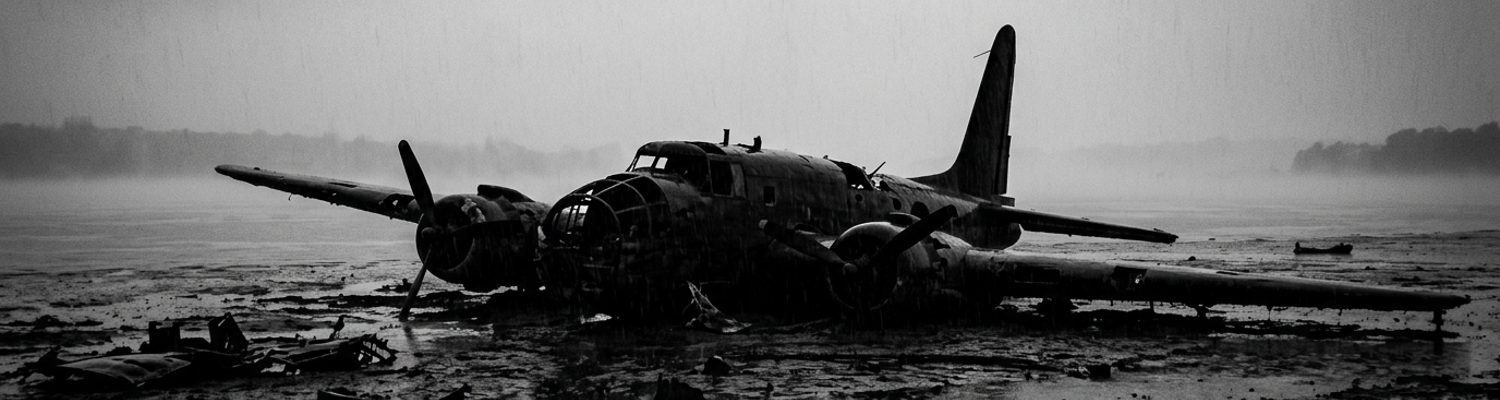

Corrosion Hazards at Tacloban Airfield
10 November 1944. Coordinates 11°13'39"N 125°01'40"E. Archival records from the initial phase of the Leyte operation document an environmental hazard that dismantled combat readiness as effectively as enemy artillery. Tacloban Airfield occupied a narrow exposed peninsula jutting directly into the waters of San Pedro Bay. The primary airstrip rested just eighteen inches above the high tide line. Constant onshore winds drove heavy concentrated salt spray straight across the flight line. Extreme tropical moisture saturated the atmosphere. Humidity held at a baseline of ninety-five percent during the day. When examining the historical record the specific microclimate of the Leyte coast accelerated the degradation of advanced military equipment at an alarming velocity. Army aviation engineers had hastily laid down interlocking pierced steel planking directly over a base of crushed coral and black volcanic mud. Standing saltwater mixed with relentless daily downpours. Pulverized coral dust generated a highly conductive electrolytic paste. This heavy corrosive sludge coated the undercarriages of every vehicle and aircraft operating on the strip. Exposed fifty-caliber machine gun barrels developed deep pitting overnight. Communication wire insulation rotted away leaving bare copper vulnerable to the damp air.
Aircraft systems failed before ground crews completed pre-flight inspections.
A close review of operational logs from the 345th Bombardment Group indicates severe administrative friction between forward air commanders and stateside supply chains regarding environmental protection protocols. The War Production Board had prioritized specialized maritime paints and heavy lubricants entirely for Naval vessels. Army Air Forces squadrons operating from these forward island bases received standard continental equipment built for dry climates. Radios and landing gear oleo struts shipped to Tacloban completely lacked tropicalization treatments. Airborne salt spray penetrated the unsealed aluminum cowlings of parked bombers. Within forty-eight hours of offloading from transport ships at the anchorage surface rust appeared on exposed internal metal surfaces. Ground mechanics spent hours attempting to scrape away the rapidly advancing oxidation using hand-held wire brushes and improvised abrasive pads. They lacked the necessary chemical solvents or protective heavy grease to arrest the chemical decay. Bureaucratic disputes between Navy quartermasters and Army supply officers left the aviation units critically short on basic anti-corrosion materials. Local logistical hubs fell under Navy control. Port commanders routinely denied Army requisition forms for specialized lubricants. Inter-service rivalries delayed critical shipments by weeks. Navy supply officers hoarded drums of zinc-chromate primer for landing craft repair. Army mechanics watched their aircraft dissolve on the tarmac while fully stocked Navy supply dumps sat just three miles down the beach.
Stateside procurement boards had deliberately stripped zinc coatings from aviation contracts to meet accelerated naval shipbuilding quotas.
This specific administrative decision directly compromised the advanced radar jamming capabilities of the Fifth Air Force. Several B-25 Mitchell bombers operating out of Tacloban carried newly installed highly classified electronic countermeasures equipment. These modified aircraft utilized heavy airborne radar jamming transmitters designed to blind Japanese early warning networks along the Philippine coast. The AN/APT-2 radar jammers weighed over seventy pounds each. Technicians bolted the dense transmitter units directly to the interior fuselage bulkheads using un-galvanized steel mounts. Raw untreated carbon steel requires a thick zinc coating to survive high-salinity environments without oxidizing. High-humidity air circulating through the unpressurized cabins reacted instantly with the un-galvanized brackets. Rapid chemical degradation ate through the structural webbing of the steel supports. Iron oxide flaked away in thick brittle layers. Calibration failed. Losing structural integrity caused the heavy jamming units to vibrate violently during engine run-ups and combat flight operations. Such intense mechanical vibration snapped the wiring harnesses and shattered the fragile glass vacuum tubes inside the transmitters.
Maintenance personnel recorded a complete loss of structural integrity on the jamming brackets within seventy-two hours of initial exposure.
Electronic Countermeasures in the Leyte Campaign
14 November 1944. 0430 Hours Local Time. Archival evidence shows ground crews of the 498th Bombardment Squadron fueling aircraft in total darkness. B-25 Mitchell bombers depended on operational electronic countermeasures to jam enemy radar systems. Japanese Imperial Army personnel operated a dense network of Mark 1 Model 1 early warning radars along the rugged coastlines of Leyte and adjacent Samar. These ground stations broadcasted continuous radio waves at one hundred megahertz to detect incoming American formations up to ninety miles away. Fifth Air Force strike profiles required the heavily armed B-25s to approach Japanese shipping convoys at altitudes barely exceeding two hundred feet. Flying this low usually evaded long-range detection. The advanced coastal radar network negated that low-altitude advantage. Japanese operators tracked the incoming bomber formations and vectored Mitsubishi A6M Zero interceptors directly into their flight paths. To counter this early warning capability technicians retrofitted the Mitchells with AN/APT-2 airborne radar jamming transmitters. These dense seventy-pound units sat in the aft fuselage. The transmitters broadcasted high-powered localized radio frequency interference. This barrage of electronic noise flooded the Japanese receiver antennas and completely washed out the cathode-ray oscilloscopes inside the enemy radar shacks.
Without active jamming transmissions blinding the coastal defenders the low-flying bomber squadrons faced concentrated anti-aircraft fire the moment they crossed the shoreline.
A close review of operational logs indicates a severe mechanical flaw compromised this electronic warfare capability. Mount failures threatened the operational readiness of specialized radar jamming units during critical sorties. Mechanics had secured the heavy AN/APT-2 transmitters to the B-25 fuselage ribs using standard un-galvanized carbon steel brackets. The aggressive salt-laden microclimate of Tacloban Airfield initiated rapid oxidation on the bare metal within hours of installation. Corrosive tropical air penetrated the unpressurized aircraft cabins. Iron oxide quickly consumed the structural webbing of the steel mounts. The brackets lost their load-bearing capacity. Heavy jamming units sagged against the weakened metal supports.
The twin Wright R-2600 Cyclone radial engines generated aggressive low-frequency vibrations throughout the entire airframe during pre-flight run-ups.
This intense mechanical shaking transferred directly through the compromised steel mounts. Rusted brackets fractured under the stress. Heavy transmitters violently impacted the aluminum bulkheads. Physical shock shattered the delicate 832A glass vacuum transmitting tubes housed inside the jamming units. Internal wiring harnesses snapped at their soldering points. Calibration dials sheared off their mounting plates. Army Air Forces commanders immediately grounded the affected aircraft and submitted emergency requisitions for zinc-plated structural steel to fabricate replacement mounts. Navy logistics officers at the adjacent San Pedro Bay anchorage received these supply requests. Seventh Fleet quartermasters systematically denied the Army paperwork. Naval supply doctrine dictated that all zinc-treated metals be reserved exclusively for the repair of damaged landing craft and PT boats. Inter-service friction paralyzed the supply chain. Army mechanics walked three miles down the beach to the Navy supply dump to request the materials in person. Navy sentries turned them away at the perimeter gate.
Fifth Air Force squadrons were forced to launch strike missions against Ormoc Bay with completely dead electronic countermeasures equipment.
Flight engineers attempted to fabricate improvised dampeners using rubber tires and heavy canvas webbing. Dense transmitters tore through the makeshift restraints during takeoff rolls on the uneven pierced steel planking. The seventy-pound AN/APT-2 units smashed into the exposed fuselage ribs and destroyed the replacement vacuum tubes. Maintenance reports from the third week of November list twenty-two separate aborted sorties directly attributed to shattered jamming transmitters. Army supply officers eventually resorted to bartering stolen high-octane aviation fuel with sympathetic Navy mechanics to acquire small quantities of zinc-chromate primer. They coated salvaged scrap metal with the stolen primer to build rudimentary brackets. It took seventy-two hours to fabricate enough mounts for a single four-ship flight. Primary bomber formations continued to fly into the radar coverage zones over the Visayan Sea without electronic protection. Japanese anti-aircraft batteries tracked their exact approach vectors using unjammed radar returns. Ground fire struck the lead aircraft in the starboard engine cowling at an altitude of one hundred and fifty feet.
Inter-Service Disputes Over Wrecked Airframes
Archival evidence shows the immediate aftermath of the initial Leyte landings created a dense wreckage zone at the northern edge of the Tacloban strip. Over thirty heavily damaged P-38 Lightnings and B-25 Mitchells sat half-submerged in the tidal mudflats of San Pedro Bay. Army Air Forces quartermasters from the Fifth Air Force Service Command recognized these destroyed airframes as high-value resource caches. The interior bulkheads and heavy electrical conduits of these specific wrecks contained thick layers of zinc-coated shielding. Mechanics desperately required this intact galvanized steel to rebuild the shattered mounting brackets for their AN/APT-2 radar jammers. Recovery teams waded into the waist-deep oil-slicked saltwater carrying hacksaws and heavy bolt cutters.
Armed Seventh Fleet shore patrols intercepted the aviation mechanics before they reached the submerged fuselages.
Navy leadership strictly controlled access to wrecked airframes containing zinc-coated shielding needed for repairs. Port commanders operating under Admiral Thomas Kinkaid established a rigid salvage perimeter extending three hundred yards from the high tide line. Naval supply doctrine classified any equipment resting in navigable waters as maritime salvage. This administrative classification transferred legal ownership of the downed Army bombers directly to the Navy. Shore patrol sentries posted along the beach leveled M1 Garand rifles at approaching Army personnel. The guard details maintained standing orders to arrest any unauthorized personnel attempting to strip metal from the wrecks. Navy quartermasters viewed the zinc-chromate coated aluminum panels and galvanized wire mesh inside the bombers as high-priority naval stores. They inventoried every crashed airframe. Quartermasters logged the specific locations of the corrosion-resistant components.
A close review of operational logs indicates the resulting administrative friction severely degraded Fifth Air Force sortie generation rates. Army Air Forces quartermasters engaged in severe bureaucratic disputes with Navy officers over salvage rights. Fifth Air Force supply officers filed emergency Form 104 requisition requests directly to the local Naval command post. They demanded immediate access to the zinc-treated electrical shielding housed inside a specific cluster of wrecked B-25s oxidizing in the surf. Navy logistics officers systematically rejected the paperwork. The beachhead command staff had designated all recovered zinc materials exclusively for patching the hulls of damaged Higgins boats. They also prioritized repairing the saltwater-corroded firing mechanisms of PT boat torpedo tubes. Army engineers argued that the radar jamming capabilities of the bomber fleet superseded maritime patching requirements. Naval officers dismissed the argument. They doubled the guard details around the salvage perimeter. Staff officers exchanged heated memorandums across the command hierarchy. The Fifth Air Force commanding general drafted a formal complaint to General Douglas MacArthur regarding the hoarding of aviation materials by naval personnel. Seventh Fleet administrators countered by citing maritime salvage laws dating back to the nineteenth century.
Mechanics watched from the pierced steel planking as the tide dragged highly sought-after galvanized components deeper into San Pedro Bay.
Ground crews attempted unauthorized nighttime recovery operations to bypass the maritime salvage perimeter. Men from the 498th Bombardment Squadron crawled through the crushed coral and razor grass under the cover of heavy rain squalls. They targeted a single crashed C-47 transport plane resting fifty feet beyond the Navy sentry posts. The transport contained over two hundred pounds of zinc-plated structural tubing in its shattered cargo bay. Mechanics needed exactly forty pounds to fabricate a complete set of jammer mounts for one bomber squadron. Shore patrol searchlights swept the tidal flats on five-minute intervals. Navy guards detected the Army mechanics cutting through the fuselage with hand tools. The ensuing confrontation at the wreckage site required intervention from the local provost marshal to prevent a physical firefight between the branches.
Base commanders ordered the aviation ground crews back to their exposed flight line without the shielding.
The AN/APT-2 radar jammers sat completely unserviceable. Un-galvanized carbon steel replacement brackets continued to fracture under the aggressive engine vibrations of the Wright R-2600 Cyclones. Flight operations planners recorded thirty-four consecutive bomber sorties launching with totally dead electronic countermeasures. Japanese Mark 1 Model 1 radar operators tracked the unshielded formations crossing the coastline with absolute precision. Anti-aircraft batteries in Ormoc concentrated their high-explosive fragmentation shells on the lead aircraft at an altitude of two hundred feet. Shrapnel tore through the unarmored plexiglass nose cones and severed the primary hydraulic lines.
Field Metallurgy and Impromptu Refinement
Archival evidence shows maintenance officers of the 310th Bombardment Wing completely abandoning the formal requisition process by the final week of November 1944. Navy quartermasters at San Pedro Bay maintained their strict embargo on zinc-chromate materials. Un-galvanized carbon steel brackets continued to disintegrate inside the B-25 Mitchell fuselages. Technicians from the 310th Bombardment Wing bypassed official supply chains to secure zinc-coated scrap. Flight line supervisors forged salvage transfer documents. A detail of mechanics drove inland away from the Navy-controlled beaches. The ground crews located a heavily damaged B-24 Liberator that had crash-landed in a jungle clearing three miles west of the airfield. This ruined heavy bomber sat outside the legal jurisdiction of the Seventh Fleet salvage perimeter. Army personnel deployed portable acetylene cutting torches to strip the airframe. Cutting away the heavy galvanized electrical conduits and zinc-plated structural bulkheads took six hours. The men loaded the salvaged aircraft parts into Dodge WC-51 weapons carriers.
The unauthorized convoy returned to the Tacloban perimeter carrying eight hundred pounds of stolen metal.
A close review of operational logs indicates the aviation mechanics immediately established an unsanctioned smelting operation behind the primary revetments. Extracting the protective zinc layer from the stolen structural components required high-temperature thermal processing. Resourceful technicians melted salvaged aircraft zinc over standard field stoves in frontline conditions. The ground crews requisitioned six M-1937 field ranges from the mess hall supply depot. These portable cooking units typically ran on standard white gasoline to heat rations. Mechanics dismantled the M-2 burner units and modified the internal fuel jets to accept 100-octane aviation fuel. The highly volatile aviation gas burned substantially hotter than standard fuel. This modification pushed the flame temperatures past eight hundred degrees Fahrenheit. Zinc reaches its melting point at seven hundred and eighty-seven degrees. The technicians cut the tops off spent 105mm brass artillery shells to fabricate makeshift smelting crucibles. Packing the brass casings with sheared strips of the stolen metal they placed the improvised pots directly over the roaring field stoves.
Thick white smoke billowed from the brass crucibles as the zinc liquefied and separated from the base iron.
This impromptu field metallurgy introduced severe occupational hazards directly onto the flight line. Boiling zinc releases highly toxic zinc oxide vapor into the surrounding air. The mechanics operated the modified M-1937 stoves inside poorly ventilated canvas maintenance tents to hide the open flames from Japanese night reconnaissance flights. Inhaling the concentrated chemical smoke induced acute metal fume fever among the ground crews. Squadron medical officers recorded twenty-four separate admissions for severe chills nausea and joint pain within a forty-eight-hour period. Ground crews ignored the physical symptoms and continued the extraction process. Heavy iron tongs pulled the raw carbon steel AN/APT-2 brackets from the fabrication benches. The men plunged the untreated steel directly into the boiling pools of liquid zinc. This crude hot-dip galvanizing technique bonded a thick uneven layer of corrosion-resistant metal to the brackets.
The liquid zinc hardened into a durable shell upon contact with the humid tropical air.
Flight engineers immediately bolted the newly galvanized mounts into the aft fuselages of six B-25 Mitchell bombers. The heavy application of field-smelted zinc fully sealed the underlying carbon steel from the aggressive saltwater environment. Condensation and salt spray from the Tacloban runway failed to penetrate the protective coating. The structural webbing of the mounts retained its maximum load-bearing capacity. Ground crews ran the twin Wright R-2600 Cyclone engines up to full takeoff power during pre-flight testing. The seventy-pound jamming units remained entirely rigid against the aluminum bulkheads. Violent low-frequency mechanical vibrations transferred through the airframe without fracturing the mounts or shattering the delicate glass vacuum tubes inside the transmitters.
The 310th Bombardment Wing launched a six-ship strike package toward Ormoc Bay at 0530 hours the following morning.
Active AN/APT-2 jamming transmissions flooded the one hundred megahertz frequency band as the bombers crossed the Leyte coastline. Japanese Mark 1 Model 1 early warning radar operators experienced a total washout of their cathode-ray oscilloscopes. A localized barrage of electronic noise blinded the coastal anti-aircraft batteries. The bomber formation approached the Japanese shipping convoy at an altitude of two hundred feet. It failed to draw a single burst of directed fragmentation fire. The lead aircraft released three five-hundred-pound general-purpose bombs directly into the hull of a troop transport ship.
Improvised Antennas and Mission Continuity
Archival evidence shows the successful fabrication of internal transmitter mounts solved only half the mechanical failures plaguing the Fifth Air Force. The AN/APT-2 radar jamming units required external broadcast arrays to project their high-powered electronic interference across the 100-megahertz frequency band. Factory-supplied aluminum dipole antennas measuring exactly twenty-eight inches in length snapped off the exterior lower aft fuselage during violent monsoon crosswinds over San Pedro Bay. Supply officers from the 310th Bombardment Wing submitted emergency requisitions for replacement aerials to the local Naval command post. Seventh Fleet quartermasters rejected the paperwork on sight. Naval officers prioritized all incoming communications wire strictly for linking PT boat anchorages along the beachhead. Ground crews from the 498th Bombardment Squadron resorted to stripping heavy 10-gauge copper wire from the stators of wrecked airfield generators to fashion replacement dipole arrays. The aggressive microclimate of the Leyte coastline immediately attacked the untreated metal. Heavy onshore winds drove concentrated saltwater mist directly against the improvised copper antennas. High-humidity atmospheric conditions accelerated the chemical reaction. Thick layers of green copper carbonate known as verdigris formed over the exposed wiring within twelve hours of installation. Rapid oxidation created a highly resistant electrical barrier along the surface of the broadcast elements.
The resulting impedance mismatch trapped the radio frequency energy completely inside the aircraft.
A close review of operational logs indicates the internal transmitters overheated and blew their primary glass fuses when the jammed signal reflected back down the coaxial cables. Aviation mechanics recognized the bare copper required an impenetrable environmental seal to maintain signal conductivity. Navy sentries still enforced a strict perimeter around all legitimate maritime salvage dumps containing proper aviation-grade weatherproofing compounds. Ground crews dragged the newly fashioned copper dipoles back to the unsanctioned smelting operation hidden behind the flight line revetments. Technicians reignited the modified M-1937 field stoves using stolen 100-octane aviation gasoline. Temperatures inside the makeshift brass artillery shell crucibles rapidly climbed past eight hundred degrees Fahrenheit. Men wearing heavy leather welding gauntlets gripped the fabricated copper arrays with long iron tongs. Molten zinc was applied to coat improvised copper antennas for electronic countermeasures equipment. They submerged the raw 10-gauge generator wire directly into the boiling pools of liquid zinc previously extracted from the crashed B-24 Liberator. The intense thermal transfer bonded a thick continuous layer of corrosion-resistant zinc directly to the copper substrate. Toxic white smoke flooded the canvas maintenance tents as the hot metal reacted with the humid air.
Liquid metal hardened instantly into a heavy shell as the mechanics pulled the smoking arrays out of the crucibles.
Field-expedient galvanization successfully preserved 5th Air Force radar jamming capabilities over Leyte during the most active phase of the shipping interdiction campaign. Flight engineers riveted the zinc-coated copper antennas to the lower aft fuselage sections of twelve B-25 Mitchell bombers. The heavy metallurgical shell completely isolated the conductive copper core from the atmospheric saltwater. Pulverized coral dust and highly conductive electrolytic sludge failed to penetrate the galvanized barrier during takeoff rolls from the crushed coral airstrip. Electrical conductivity remained at factory specifications. The 498th Bombardment Squadron launched a low-level strike package toward the Visayan Sea on 28 November 1944. Active AN/APT-2 transmitters pushed seventy-five watts of raw electronic noise through the newly sealed external antennas without generating any internal heat buildup. Japanese Mark 1 Model 1 radar receivers along the Ormoc coastline absorbed the full force of the 100-megahertz barrage. Cathode-ray oscilloscopes inside the enemy early warning shacks displayed solid blocks of static. The bomber formation crossed the shoreline at an altitude of one hundred and fifty feet completely undetected. Gunners in the lead B-25 depressed their firing triggers and sent three thousand rounds of fifty-caliber ammunition into the unalerted anti-aircraft batteries.