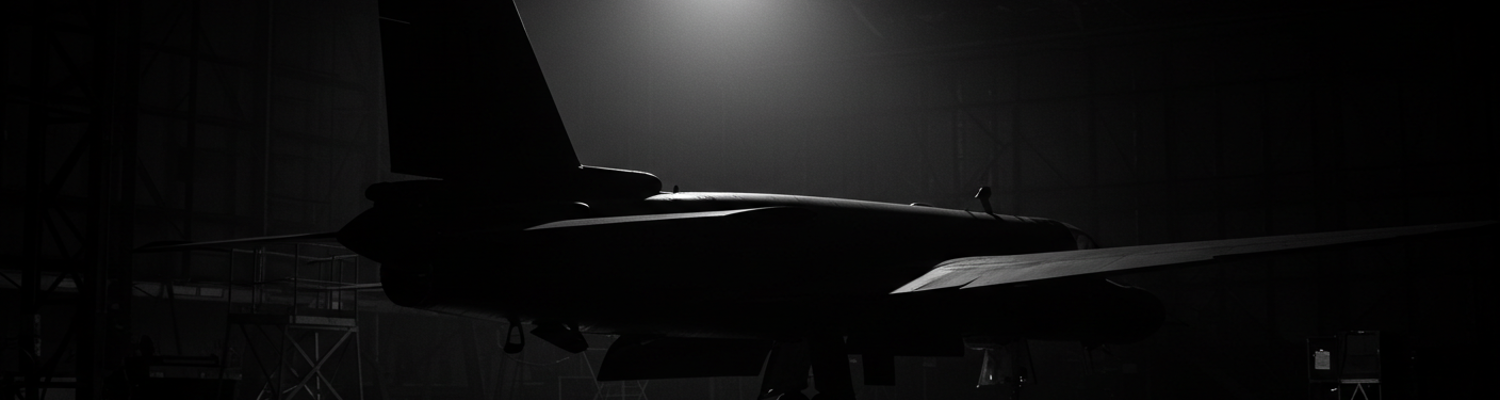

Early Cold War Reconnaissance Imperatives
The squeal of the APR-9 radar intercept receiver was the only warning. Deep inside the RB-47H Stratojet’s pressurized bomb-bay capsule, three electronic warfare officers, the Crows, saw the bloom of light on their screens. A Soviet Fan Song air defense radar, linked to an SA-2 surface-to-air missile battery, had acquired them. Miles above the Barents Sea on July 1, 1960, the mission to provoke Soviet defenses had succeeded. Up front, the pilot, co-pilot, and navigator flew a planned route in international airspace. For the Crows in the back, surrounded by humming electronic racks, the world had shrunk to the urgent task of analyzing the signal before an attack.
This was the sharp end of the intelligence war. It was a high-stakes hunt for data driven by a specific fear in Washington: a profound uncertainty about the scale of the Soviet Union’s strategic threat.
The central anxiety in Washington was the bomber gap. A close review of intelligence assessments from the mid-1950s reveals a palpable sense of alarm. The 1955 Tushino Air Show was an effective piece of psychological warfare. Western observers watched a show of force. What appeared to be 28 Myasishchev M-4 Bison four-engine jet bombers flew past. The display, later revealed to be a deception involving a small number of aircraft flying repeated passes, created the illusion of a large-scale production program. Analysts extrapolated that the Soviets could have hundreds of intercontinental bombers by the early 1960s. This force, composed of the M-4 and the Tupolev Tu-95 Bear, seemed capable of striking American cities with nuclear weapons. National Intelligence Estimates from the period show that while the total number of Soviet heavy bombers was projected to be around 165 by mid-1962, the potential for a surprise attack that could cripple Strategic Air Command (SAC) bases was taken as a serious possibility. Existing intelligence from border listening posts and human agents was insufficient. The fear was not just of the bombers themselves, but of the industrial might that could produce them in secret, on a scale that could guarantee a successful first strike.
This was a problem that could only be solved with pictures and electronic signals.
The urgency to map the Soviet Union’s military-industrial complex was absolute. It was not enough to count bombers on airfields. SAC needed the precise locations of the factories that built the aircraft, the nuclear facilities like Mayak and Tomsk-7 that produced fissile material, and the research centers designing the next generation of weapons. This data was fundamental to building the Single Integrated Operational Plan (SIOP), the United States' master plan for nuclear war. Every potential target, from aircraft plants in Kuybyshev and Kazan to ICBM launch complexes then under construction, needed to be identified, geolocated, and assessed. The intelligence gathered on these missions directly informed America’s own defense spending and strategic posture, justifying the production of B-47 and B-52 bombers to counter the perceived Soviet advantage. The lack of information was a strategic vulnerability of the highest order. It justified extreme risks.
Two distinct and specialized aircraft became the primary tools for this perilous work. The Lockheed U-2, known as the Dragon Lady, was a high-altitude solution. Essentially a powered glider with a single powerful jet engine, the U-2 was designed by Kelly Johnson’s Skunk Works to fly above 70,000 feet, beyond the reach of Soviet interceptors and most radar of the day. Its long, narrow wings gave it exceptional range and endurance, allowing its high-resolution A-2 camera systems to photograph vast swaths of territory. Flying the U-2 was notoriously difficult, requiring a pilot in a full pressure suit to manage a fragile airframe at the edge of space. In contrast, the RB-47H Stratojet was a derivative of a frontline bomber, designed to fly not over the USSR, but along its sensitive borders on ferret missions. These aircraft, operated by the 55th Strategic Reconnaissance Wing, were packed with electronic intelligence (ELINT) gear and the three-man EWO crew to operate it. Their job was to fly provocative routes, tempting Soviet air defense commanders to illuminate their radar systems, which the Crows would then analyze and map. It was a deadly game; numerous RB-47s were attacked, and on July 1, 1960, the crew that detected the Fan Song radar was shot down over the Barents Sea, with four of the six crewmen killed.
Clandestine Field Engineering Solutions
A close review of operational logs from U-2 forward operating bases reveals a constant battle against the physics of high-altitude flight. The primary sensor, the A-2 camera system, was an assembly of three separate K-38 framing cameras. It proved acutely vulnerable to the environment 70,000 feet above the earth. Engineers from the 55th Organizational Maintenance Squadron and attached technical representatives discovered that the extreme cold routinely caused catastrophic failures. Lubricants in the camera’s mechanical shutters and film advance mechanisms would freeze solid. The specialized thin-base film became so brittle it would shatter within the transport system. Early troubleshooting involved creating custom-blended, low-viscosity lubricants designed not to congeal at -60 degrees Celsius. When this proved insufficient, engineers began a series of unauthorized but necessary field modifications. They cannibalized heating elements from aircraft de-icing systems and fabricated custom wiring looms to wrap the camera bodies and film magazines. This introduced new problems, as the thermal output could create optical distortions in the 24-inch focal-length lenses. The work was a cycle of trial and error, conducted in secrecy and under time pressure to meet launch windows dictated by weather and Soviet military posture.
This reality forced constant improvisation.
For the crews of the RB-47H Stratojet, the engineering challenge was not cold, but electronic chaos. The three Electronic Warfare Officers were sealed in a cramped, windowless capsule in the aircraft’s bomb bay, surrounded by racks of humming receivers. Their primary tool was the AN/APR-9 airborne intercept receiver, a system designed in the 1940s to mechanically sweep a wide frequency band to detect Soviet radar signals. Against increasingly sophisticated Soviet jamming, the APR-9 often failed. Archival evidence shows that EWO crews frequently had to perform real-time troubleshooting during missions deep in hostile airspace. When faced with powerful barrage noise jamming that saturated their panoramic displays with static, the Crows would physically bypass receiver front-ends. They would manually tune the system’s underlying cavity resonators to find a quieter portion of the spectrum. On numerous occasions, the direction-finding function of the associated APD-4 system would fail. This forced the officers to resort to manually rotating directional antennas and interpreting raw signal strength on their oscilloscopes to get a rough bearing to a new Soviet radar emitter.
The electronic war was a duel of measures and countermeasures. As Soviet forces began employing more advanced deception jamming techniques, which created false targets on radar scopes, USAF engineers on the ground had to rapidly devise fixes. After a mission, the 35mm film recordings from the RB-47H’s receivers would be rushed to analysis. Technicians would study the specific waveforms of the new jamming signals and work to develop hardware filters. These filters could be physically soldered into the receiver chassis before the next flight. A common improvised modification involved adding a traveling-wave tube amplifier ahead of an APR-9 receiver to boost the gain, helping to pull the faint signature of a Soviet radar out from the morass of jamming noise. When Soviet air defense radars began using frequency-hopping techniques to evade detection, engineers at bases like RAF Brize Norton would modify the servo control systems that drove the APR-9’s tuning heads, altering their scan rates in an attempt to catch the fleeting signals. It was a process of reverse engineering an opponent’s technology with scavenged parts and battlefield ingenuity, often just hours before the next crew climbed into the cockpit.
Aviator Experiences High-Altitude Missions
The pre-flight sequence for a U-2 mission was a clinical, silent ritual. Hours before a multi-hour mission over hostile or Soviet-proximate territory, the designated aviator would begin a lengthy and isolating preparation. It started with a high-protein, low-residue meal, the steak and eggs breakfast, designed to minimize gastrointestinal activity during the long flight. Following this, the pilot entered the Physiological Support Division area, a space that felt more like a medical facility than a flight line. Here, all personal effects, including wedding rings and watches, were removed. The pilot would then don what was essentially a form-fitting spacecraft, the S1034 full-pressure suit. Technicians would assist the pilot, rolling the suit up the legs and arms before zipping it up the back, a process requiring a team of assistants. The final step on the ground was a mandatory one-hour period of pre-breathing pure oxygen from a reclined chair. This procedure was critical for purging nitrogen from the bloodstream to prevent decompression sickness, the bends, at the U-2’s operational altitude where the cockpit was only pressurized to the equivalent of 29,000 feet. This entire sequence was conducted with minimal conversation, a quiet, methodical ritual that underscored the physical and psychological pressures of flying to the edge of space for up to nine hours.
The silence of the ready room was replaced by the thin whisper of air at 70,000 feet.
Once airborne, the mission became a delicate and dangerous balancing act. U-2 pilots were tasked with flying precise, pre-planned routes over areas like the Barents Sea or deep within the Soviet interior to photograph ICBM sites, nuclear production facilities, and bomber airfields. At the same time, crews of RB-47H Stratojets flew provocative ferret missions along the borders of the Soviet Union and its client states, deliberately triggering air defense radars so the Electronic Warfare Officers in the back could map their locations and capabilities. For the U-2 aviator, the primary struggle was with the aircraft itself. At altitudes above 70,000 feet, the U-2 operated in a flight envelope known as the coffin corner. Here, the margin between the aircraft’s stall speed and its maximum Mach number was sometimes as narrow as five to seven knots. A slight decrease in speed could induce a high-altitude stall. A slight increase could lead to Mach buffet and structural failure. This left no room for error, requiring constant, fatiguing attention during flights that lasted many hours. The pilot was not just a photographer but the core of the guidance system, a human computer responsible for bringing the fragile airframe and its precious intelligence payload back home.
This environment demanded a culture of extreme pragmatism. The aviator ethos was not one of reckless daring, but of methodical, in-flight troubleshooting. Historical records show numerous instances of pilots confronting life-threatening emergencies with stark composure. An engine flameout at 70,000 feet, a known issue with early U-2 models, turned the aircraft into a massive glider. The pilot then had to execute a complex multi-step restart procedure while descending through hostile airspace, all while manually flying the unstable aircraft. A Taiwanese U-2 pilot, Major Hsi-Chon Hua, experienced just this in 1959, gliding his powerless aircraft through clouds over the Rocky Mountains to a rough but successful night landing. Other emergencies were physiological. Multiple cases of decompression sickness were recorded, where nitrogen bubbles forming in the blood caused severe neurological symptoms, including confusion and memory loss. In one documented case, a pilot suffering from hypoxia due to contaminated oxygen had to activate his emergency supply and coordinate a spiral descent from over 60,000 feet, his cognitive state rapidly deteriorating. These were not theoretical dangers but frequent operational events that required pilots to diagnose and solve complex mechanical and medical problems alone, miles above the earth.
Mission Compromise Crew Medical Triage
After-action reports from compromised reconnaissance flights reveal a unforgiving calculus in the seconds following an attack. For the six-man crew of the RB-47H Stratojet from the 55th Strategic Reconnaissance Wing, flying in international airspace over the Barents Sea on July 1, 1960, the mission ended. An instant of explosive decompression and mechanical violence. A Soviet MiG-19’s cannon fire, 111 rounds in total, shredded the RB-47H’s left wing, fuselage, and engines. Inside the pressurized crew compartments, the event was a sensory cataclysm. Shrapnel from the disintegrating airframe would have become a cloud of high-velocity projectiles, capable of causing deep lacerations, penetrating trauma, and severe fractures. The immediate drop in cabin pressure would induce hypoxia, a rapid depletion of oxygen causing confusion and impaired judgment within seconds. For the three Electronic Warfare Officers sealed in the rear capsule, their primary egress route was a ventral hatch, a difficult exit even under ideal conditions. For the pilots and navigator up front, the priority was a fight to control a mortally wounded aircraft while simultaneously initiating bailout procedures. Medical triage in this environment was not a structured process. It was an instantaneous, personal assessment of survival probability amidst total chaos.
Survival was a matter of seconds.
The human cost of such a compromise was immediate and absolute. Of the six crewmen aboard the RB-47H shot down on July 1, 1960, four were killed. Major Willard Palm, the aircraft commander, died after ejecting into the frigid arctic water. The other three, reconnaissance officers Captains Oscar Goforth and Eugene Posa, and navigator Captain Dean Phillips, were lost in the attack and subsequent crash. The two survivors, co-pilot Captain Bruce Olmstead and navigator Captain John R. McKone, ejected successfully. They spent six hours in the icy Barents Sea before being picked up by a Soviet trawler. McKone had sustained a broken back during the ejection. Instead of a US Air-Sea Rescue team, their recovery was handled by the KGB. Their medical treatment was delayed and administered in Moscow’s Lubyanka prison. This outcome represented a total mission failure: the loss of a sophisticated intelligence-gathering asset, the death of highly trained personnel, and the capture of American servicemen who were then subjected to months of interrogation. The intelligence they had gathered was lost, replaced by a diplomatic crisis and a significant counterintelligence victory for the Soviet Union.
This single incident was part of a larger, undeclared war fought in the stratosphere. Throughout the Cold War, over 40 U.S. reconnaissance aircraft were shot down by hostile fire, with hundreds of airmen killed or missing. The 55th Strategic Reconnaissance Wing alone experienced multiple losses, including an RB-50 downed over the Sea of Japan in 1953, which became the wing’s first Cold War casualties. Each aborted mission, whether it ended in a shootdown or an operational accident, created a dangerous void in the intelligence picture. A failure to photograph a suspected ICBM site or map a new radar installation meant that Strategic Air Command planners were left blind, increasing the risk of strategic surprise. The secrecy surrounding these ferret and overflight programs meant that the losses were not publicly acknowledged, and the crews could not be honored. Analysis of casualty records indicates that for decades, the families of airmen lost on these missions were often given little information, their sacrifice hidden by the classification of the operations themselves.
Intelligence Photo Interpretation Debates
Every U-2 and RB-47 mission was followed by a demanding analog process. Canisters of exposed film, often hundreds of meters long, were rushed from forward operating bases to the National Photographic Interpretation Center (NPIC) facilities, where technicians developed the negatives. These were not simple snapshots. They were high-resolution images captured from over 70,000 feet, each frame a potential key to Soviet strategic intentions. Teams of photo interpreters, or PIs, then began their work in darkened rooms, hunched over massive light tables. They unspooled the film, frame by frame, peering through stereoscopes that provided a three-dimensional view of the terrain below. The work was a painstaking search for irregularities. An interpreter might spend hours examining the shadow cast by a structure to calculate its height, or use calipers to measure the length of a new aircraft fuselage on a distant airfield. They looked for the tell-tale signatures of military activity: the distinctive star-shaped layout of a newly constructed SA-2 surface-to-air missile site, the track marks in the mud left by heavy vehicles near a rail line, or the unique gantry structure of an ICBM launch pad at a remote site like Tyuratam. Every detail was documented, measured, and cross-referenced against existing intelligence, forming the raw data that would fuel Washington’s strategic calculus.
Every frame was a potential battleground.
This limited, hard-won imagery became the subject of ferocious inter-agency battles. The Central Intelligence Agency, which ran the U-2 program, had its own team of analysts at NPIC. The U.S. Air Force, tasked with countering the Soviet threat and planning nuclear strikes, had its own intelligence arm with deeply ingrained institutional perspectives. The result was a constant state of conflict. A prime example was the missile gap of the late 1950s. Following early U-2 flights over the Tyuratam missile test range, which captured the first images of the launch complex for the R-7 ICBM, analysts from the CIA and the Air Force came to drastically different conclusions. Air Force analysts, often taking a worst-case view, argued that the Soviets were engaged in a crash production program that could result in hundreds of ICBMs within a few years. CIA analysts, however, interpreted the same imagery with more caution, projecting a much smaller force of perhaps a few dozen missiles. In reality, the Soviets had only four operational ICBMs at the time. This dispute was not academic. It was fought in classified briefings and policy papers, fueling public anxiety and driving political debate over defense spending. The Air Force’s consistent dissent from CIA estimates, believing the agency underestimated the Soviet drive for military superiority, became a recurring feature of Cold War intelligence analysis for decades.
These analytical disputes had direct and dangerous consequences for U.S. war planning. The output of the photo interpretation process fed directly into the National Strategic Target List (NSTL), the master catalog of objectives for a nuclear war. This list, maintained by the Joint Strategic Target Planning Staff (JSTPS), was the foundation for the Single Integrated Operational Plan (SIOP), America’s detailed blueprint for nuclear conflict. An ambiguous shape on a grainy photograph could lead to entirely different threat assessments. A new industrial complex near a major city could be interpreted by one agency as a civilian tractor factory, while another might see a hardened production facility for biological agents or nuclear components. Each interpretation carried weight. The identification of a new radar installation, for example, could alter the planned ingress routes for Strategic Air Command bombers. The discovery of what was believed to be a hardened command bunker would immediately mark it as a high-priority countervalue target for destruction. The process of mapping the air defenses around cities like Moscow was a prime example of this uncertainty. Analysts would try to piece together the defensive ring from scattered images of SA-2 sites, which often had non-standard layouts due to terrain, and suspected interceptor airfields. The resulting gaps in the intelligence picture meant that SIOP planners had to make assumptions, increasing the risk for bomber crews and creating uncertainty about whether key Soviet command, control, and military-industrial targets would actually be destroyed in an attack.