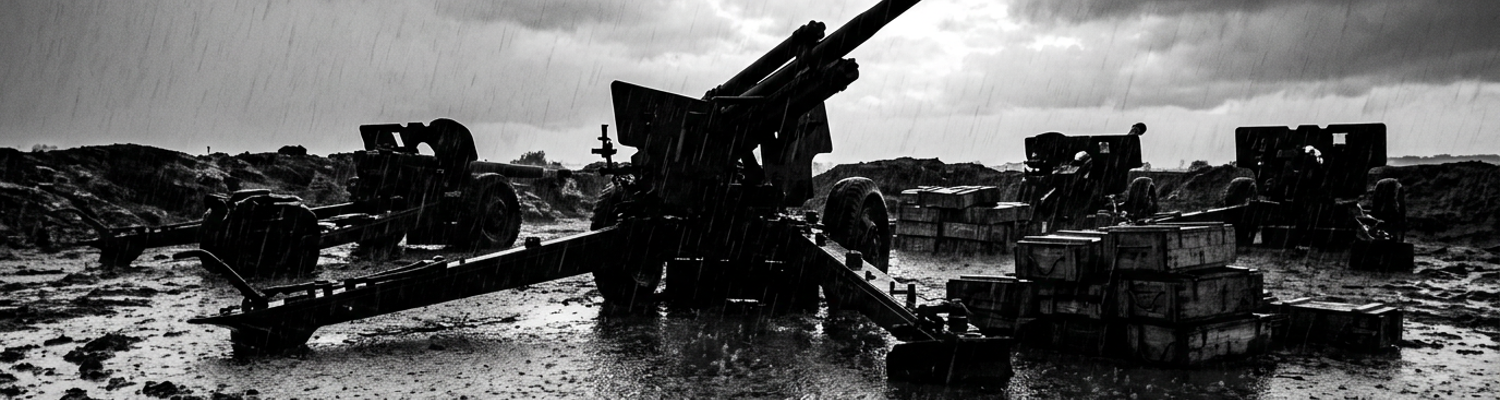

Structural Failure and Triage Overload
Private First Class Arthur Miller of the 3rd Engineer Battalion knelt in twelve inches of standing water. He packed red laterite clay into a canvas sandbag using a standard folding entrenching tool. He hoisted the forty-pound sack onto a reinforced timber joist spanning the 1st Battalion 9th Marines command bunker along the northern perimeter of Hill 158. Early monsoon rains dissolved the clay almost as fast as he could pack it. This runoff threatened to expose the narrow firing slits to the open terrain bordering the Demilitarized Zone. At exactly 1400 hours a North Vietnamese 152mm high-explosive round struck the bunker roof at a steep plunging trajectory. The hardened steel casing penetrated five feet of densely packed sandbags and heavy wooden beams. It detonated deep inside the subterranean command center. Eleven men died instantly in the confined blast. Eighteen others sustained severe concussive and shrapnel injuries.
This specific structural failure initiated a sustained bombardment phase.
By late September 1967 the 12th Marines positions at Con Thien faced relentless North Vietnamese Army counter-battery fire. A close review of operational logs (NARA Record Group 338) indicates that North Vietnamese Army batteries positioned north of the Ben Hai River utilized Soviet-manufactured M-46 130mm field guns. They executed their barrages against the American positions with extreme precision. The M-46 guns possessed a maximum effective range of 27.5 kilometers. This hardware capability placed the enemy firing positions completely outside the 14.6-kilometer reach of the American M114 155mm howitzers. The 11.5-kilometer range of the 105mm pieces operated by the 2nd Battalion 12th Marines proved completely inadequate. Between September 19 and September 27 over 3000 incoming rounds struck the American firing pits. On September 25 alone 1200 heavy artillery shells cratered the 158-meter elevation of the firebase.
Gun crews attempted to return fire using pre-calculated coordinates.
The enemy weapons sat safely beyond their maximum trajectory. The monsoon rains flooded the firing pits with red clay runoff. Artillerymen manually hauled 33-pound 105mm projectiles while wading knee-deep in water. Enemy spotters utilized the muzzle flashes from the American howitzers to adjust their own azimuths. They dropped 130mm shells directly onto the exposed Marine gun emplacements. The terrain was stripped of all vegetation and heavily cratered. The base was reduced to a bare laterite mound.
Every outgoing American artillery volley instantly drew a heavier concentration of incoming high explosives.
Overrun triage positions and mounting casualties strained forward medical capabilities beyond operational thresholds. Archival evidence shows that the sheer volume of shrapnel injuries rapidly overloaded the primary battalion aid stations located near the center of the Leatherneck Square combat zone. The September monsoon flooding washed out the main ground supply route connecting Con Thien to the logistics hub at Dong Ha. This completely eliminated the possibility of ground-based ambulance transport. Infantrymen strapped mud-caked casualties to the exterior engine decks of M-48A3 tanks. They drove them across exposed terrain under direct fire just to reach the central medical bunker. Inside the aid station Navy corpsmen worked on dirt floors contaminated by standing water. They depleted their supplies of whole blood and plasma within hours.
CH-46 Sea Knight helicopters attempting airborne medical evacuations faced concentrated 12.7mm and 37mm anti-aircraft fire during their descent.
Pilots frequently aborted landings or hovered for only seconds. Ground crews threw wounded personnel onto the ramps before the aircraft took evasive action. The enemy barrage eventually targeted the medical facilities directly. Heavy 152mm shells began penetrating the reinforced roofs of the triage bunkers. They detonated directly inside the operating spaces. Medical personnel attempting to stabilize the wounded were killed instantly. Deceased personnel were stacked outside the bunker entrances. The interior space was entirely consumed by the dying.
Surface Landline Obliteration and Network Collapse
Lance Corporal David Vance of the Headquarters and Service Company Communications Platoon knelt in a waterlogged bomb crater at grid coordinate YD 113704. He used a TL-29 electrician knife to strip two inches of polyethylene insulation from a severed WD-1/TT field wire. He twisted the exposed copper and steel strands into a tight square knot. This secured the physical link between the northern perimeter observation posts and the central artillery grid. As he reached to his web gear for a roll of rubber friction tape a North Vietnamese 130mm artillery shell detonated thirty meters away. The blast overpressure threw Vance against the laterite clay wall. High-velocity shrapnel sliced through the newly spliced cable in a dozen different places instantly.
The standard WD-1/TT wire formed the primary communication link between the forward observer posts overlooking the Demilitarized Zone and the Fire Direction Center.
Archival evidence shows that by late September 1967 the North Vietnamese Army systematically obliterated these surface-laid networks using M-46 130mm and M-1937 152mm artillery batteries. The explosive yield of a single 130mm shell displaced up to 300 cubic feet of earth upon impact. Hot jagged steel traveling at 3000 feet per second severed the thin plastic field wire across the entire northern sector simultaneously. A close review of operational logs indicates that concentrated bombardments frequently destroyed the primary and secondary landlines within minutes of an initial barrage. The physical shockwaves from the detonating ordnance snapped the brittle copper cores even when the outer sheathing appeared intact. This created invisible internal faults that completely disabled the sound-powered TA-1 field telephones.
Forward observers stationed at the northern perimeter trenches lost all voice contact with the 2nd Battalion 12th Marines gun batteries.
These spotters resorted to firing green and red star cluster flares to request defensive fire missions. This inaccurate method failed to provide the Fire Direction Center with specific azimuth or elevation data. The loss of direct landline communication forced the artillery crews into unobserved firing configurations. Restoring the physical network required human intervention under continuous enemy observation. Marine wiremen operated in two-man teams. They traced the black communication lines by hand through the flooded trench systems and exposed crater fields to locate the severed ends. Repairing a single break required a wireman to manually expose the internal wiring. They tied the specialized knot and wrapped the splice to prevent grounding in the wet mud.
Heavy shelling routinely interrupted this mechanical process.
North Vietnamese forward spotters positioned on the elevated ridges of the DMZ directed 82mm mortar fire at any movement detected outside the main defensive bunkers at Con Thien. Wiremen attempting to splice cables along the northern perimeter were pinned down in the mud for hours. They were unable to raise their heads or utilize their tools without drawing immediate explosive counter-fire. Every attempted repair exposed the maintenance teams to direct blast overpressure. When examining the historical record of the 1st Battalion 9th Marines the casualty rates among the communication platoons peaked during the final week of September.
Environmental factors compounded the tactical danger.
The monsoon rains filled the impact craters with highly acidic laterite runoff. This immediately degraded any exposed copper wiring before a splice could be fully sealed with friction tape. Wiremen crawled on their stomachs through this abrasive slurry. They dragged heavy DR-8 wire reels on their backs to run entirely new lines when the existing networks sustained too many breaks to repair. Enemy 130mm shells frequently landed directly on the newly laid routes before the wiremen could even reach the Fire Direction Center to test the connections. A repair team would successfully splice a severed line at grid coordinate YD 114705. A fresh artillery barrage would obliterate the same cable fifty meters further down the trench network ten seconds later.
The overlapping blast radii of the incoming high explosives guaranteed that any static surface wire would be shredded into unrecoverable fragments.
Commanders eventually ordered the wiremen to stop leaving the subterranean bunkers. Without the ability to maintain the WD-1/TT field wire the defensive artillery grid collapsed into isolated pockets. Forward observers relied on PRC-25 radio sets. The frequency modulation signals required line-of-sight transmission antennas that were highly vulnerable to the incoming shrapnel. The PRC-25 antennas protruded above the sandbag parapets. This drew immediate sniper and mortar fire from the surrounding tree lines. A direct hit on an antenna mount shattered the ceramic base insulators and destroyed the internal radio transceivers. The 2nd Battalion 12th Marines gun batteries sat entirely disconnected from the infantry companies they were assigned to protect. They waited for fire mission coordinates that the forward observers could no longer transmit.
Radio Antenna Destruction and Decentralized Artillery Control
Archival evidence shows that by September 25 1967 the secondary communication layer at Con Thien completely degraded under artillery bombardment. The AN/PRC-25 manpack radio sets formed the standard tactical network for the 2nd Battalion 12th Marines. These frequency modulation transceivers required clear line-of-sight transmission paths to communicate with the central Fire Direction Center located at grid coordinate YD 115705. Achieving the necessary range across the heavily cratered terrain dictated the use of AT-271 ten-foot multi-section whip antennas. Artillery crews mounted these long tubular structures directly onto the sandbag parapets of their firing pits to maximize signal reach above the mud walls.
North Vietnamese 130mm airburst projectiles detonated continuously above the American positions.
They saturated the airspace with high-velocity steel fragments. A single proximity-fused M-46 shell scattered thousands of jagged splinters in a downward cone. This dense shrapnel pattern sheared the protruding aluminum antenna masts in half. Blast overpressure also shattered the ceramic base insulators connecting the antennas to the RT-505 receiver-transmitters. The resulting loss of signal isolated every gun crew. Battery commanders faced an immediate breakdown in standard operational procedure. A close review of operational logs indicates that standard protocol required forward observers to transmit target coordinates to the central Fire Direction Center. The center then computed specific deflection and quadrant elevation data for the entire battalion.
The central command post normally utilized plotting boards and firing tables to calculate environmental variables like wind speed and barometric pressure.
Severed radio links removed this centralized processing hub from the firing chain completely. Officers commanding individual emplacements were forced to assume autonomous control over their 105mm M101A1 howitzers. Isolated sections operated from flooded subterranean bunkers without any incoming intelligence regarding broader enemy troop movements along the Demilitarized Zone. Executive officers resorted to pulling out waterproof map boards and graphical firing scales directly inside the gun pits. They calculated ballistic trajectories by hand using red-lens flashlights. Marines attempted to maintain defensive indirect fire support along the DMZ without central fire direction center control.
Infantry elements of the 1st Battalion 9th Marines defending the northern perimeter trenches at Hill 158 relied entirely on this artillery coverage to repel ground assaults.
To provide this support without real-time targeting data isolated battery commanders ordered their gun captains to execute pre-planned defensive fire missions. Gun crews manually adjusted their M101A1 howitzers to strike pre-registered grid squares along the trace line separating North and South Vietnam. Sweating artillerymen shifted the heavy steel trails of their guns through knee-deep laterite mud. They aligned the M12A7C panoramic telescopes with aiming stakes they had driven into the earth weeks prior. Loaders rammed 33-pound high-explosive projectiles with point-detonating fuses into the breeches. They fired blindly into the designated kill zones north of the perimeter.
The heavy monsoon rains washed away the chalk markings on the ammunition crates.
Loaders identified Zone 5 and Zone 7 powder charges by touch in complete darkness. The crews fired at a sustained rate of four rounds per minute. This decentralized approach stripped the American response of its usual concentrated mass. Instead of a coordinated battalion-level volley individual guns fired sporadically based on localized command decisions. Gun captains tracked their ammunition expenditures on grease-pencil boards while standing in contaminated water. When examining the historical record it becomes clear that these isolated batteries could not coordinate counter-battery fire against the enemy 130mm positions located across the Ben Hai River.
Crews focused entirely on saturating the immediate wire perimeter to prevent North Vietnamese sappers from breaching the infantry trenches.
An M101A1 howitzer at position YD 116702 expended 300 rounds over a four-hour period without receiving a single radio transmission confirming target effects. That specific gun captain ordered his crew to cease firing only when the recoil mechanism overheated and seized.
Low Altitude Flight Paths and Cargo Sling Interdiction
Archival evidence shows that the onset of the northeast monsoon in late September 1967 fundamentally degraded the operational capacity of Marine Medium Helicopter Squadron 164. Cloud ceilings dropped to exactly two hundred feet above the laterite plateau at Con Thien. Driving rain reduced pilot visibility to less than a quarter-mile. This forced the twin-rotor CH-46A Sea Knight transports to approach the base using low-altitude terrain-following flight paths. The aircraft departed the Dong Ha logistics hub carrying heavy internal payloads and external sling loads. They flew directly beneath the dense nimbostratus clouds to maintain visual ground reference.
North Vietnamese anti-aircraft battalions tracked these predictable approach vectors.
A close review of operational logs indicates that NVA gunners established overlapping fields of fire using 37mm M1939 automatic cannons and 14.5mm ZPU-4 heavy machine guns positioned along the ridgelines immediately north of the Demilitarized Zone trace line. The low cloud cover forced pilots directly into the effective range of these weapons. As the CH-46A transports neared grid coordinate YD 117710 enemy gunners acquired the aircraft by tracking the acoustic signature of the General Electric T58-GE-8B turboshaft engines through the heavy rain. The unarmored aluminum skin of the Sea Knights provided zero ballistic protection against armor-piercing incendiary ammunition.
A single 37mm projectile impact routinely severed the primary and secondary hydraulic lines running along the upper fuselage spine.
This mechanical damage caused an immediate loss of cyclic control. Pilots flying at 150 feet lacked the necessary altitude to execute emergency autorotation procedures before the airframes struck the ground. Downed aircraft crashed directly into the flooded impact craters outside the defensive wire. This killed the aircrews and scattered their unexploded cargo across the contested perimeter. The resulting wreckage physically blocked the designated approach vectors for subsequent flights. Helicopter insertion of standard 105mm high-explosive ammunition and palletized combat rations became physically unsustainable by September 28.
Standard resupply protocol required the transport helicopters to carry 4000-pound sling loads suspended beneath the fuselage on external cargo hooks.
To detach these heavy nylon nets a CH-46A had to enter a stationary hover exactly twenty feet above the primary landing zone at the center of Leatherneck Square. North Vietnamese forward observers stationed on Hill 86 continuously monitored this specific 100-square-meter patch of cleared laterite. The moment an approaching aircraft transitioned from forward flight to a stationary hover spotters initiated pre-registered artillery strikes via field telephone. NVA batteries positioned across the Ben Hai River fired M-46 130mm shells timed with mechanical point-detonating fuses. They struck the landing zone within twenty seconds of the helicopter arrival.
Blast fragmentation shredded both the external cargo nets and the hovering airframes simultaneously.
Ground crews from the 2nd Battalion 12th Marines waited in flooded trenches to manually guide the supply pallets to the earth. Standard operating procedure required a Helicopter Support Team Marine to stand directly underneath the hovering 17000-pound aircraft. They discharged the static electricity buildup using a specialized grounding wand before touching the nylon cargo slings. Shrapnel from the incoming 130mm artillery barrages routinely killed these personnel before they could attach the wand. Pilots reacted to the intense surface-to-air threat by prematurely triggering their electronic cargo release mechanisms while still traveling at forty knots.
Pallets of wooden ammunition crates dropped from fifty feet in the air and smashed into the flooded terrain.
The impact shattered the brass point-detonating fuses on the 105mm artillery shells. This rendered the ordnance entirely unusable for the gun batteries. The heavy crates broke apart on impact and sank immediately into the acidic red mud. Base commanders officially closed the main landing zone at 1400 hours on September 29.
Munitions Depletion and Mechanical Point Detonation Adjustments
Archival evidence shows that the official suspension of helicopter resupply flights on September 29 directly triggered an ammunition crisis for the 2nd Battalion 12th Marines. The six M101A1 105mm howitzers belonging to Battery D sat in flooded firing pits along the southern edge of Leatherneck Square. These crews normally expended up to two thousand projectiles daily to suppress North Vietnamese Army troop movements. Artillerymen utilized high-volume defensive fire missions to saturate the heavily vegetated approaches bordering the Demilitarized Zone. They loaded thirty-three-pound M1 high-explosive shells into the breeches and pulled the lanyards at a sustained rate of three rounds per minute during peak engagements.
The resulting suppressive barrages kept the NVA infantry battalions pinned down outside the perimeter wire.
The cessation of incoming supply pallets severed this supply chain completely. Gun captains walked through the flooded trenches to conduct physical inventory counts of their remaining ordnance. They found hundreds of wooden ammunition crates shattered by earlier high-altitude helicopter drops. The acidic red clay had dissolved the cardboard packaging tubes and compromised the propellant charges inside. When examining the historical record it becomes clear that forward 105mm howitzer crews faced critical ammunition shortages precisely as enemy ground activity increased. North Vietnamese sappers from the 324B Division began probing the concertina wire surrounding Hill 158 under the cover of the monsoon rains.
The Marine gunners needed to maintain heavy defensive barrages to repel these advancing infantry units.
The physical stockpiles in the ready-racks dwindled to double digits. Loaders resorted to salvaging dropped munitions from the mud surrounding the primary landing zone at grid coordinate YD 117710. They waded through waist-deep runoff to retrieve individual M1 shells that had broken loose from their pallets. The brass M51A5 point-detonating fuses attached to the noses of these salvaged projectiles frequently exhibited severe impact damage. Firing a howitzer with a bent fuse risked a premature detonation inside the gun tube. Marine ordnance technicians sat on overturned ammunition boxes in the dark. They used standard pliers to carefully unscrew the damaged fuses from the explosive payloads.
They replaced the broken components with functional fuses cannibalized from white phosphorus shells.
A close review of operational logs indicates that battery commanders implemented strict rationing protocols to preserve the remaining high-explosive ordnance while defending the fire base against potential ground assault. Officers ordered their gun captains to cease all pre-planned unobserved fire missions along the DMZ trace line. The 12th Marines restricted the expenditure of 105mm shells strictly to confirmed visual targets located within two hundred meters of the American defensive trenches. Infantrymen from the 1st Battalion 9th Marines reported enemy movement in the tree lines. The artillery crews refused to fire. They waited in the flooded pits while NVA soldiers cut through the outer layers of the tactical wire network.
Forward observers only requested fire missions when the enemy troops physically breached the final defensive barrier.
Artillery loaders stacked their last remaining M1 high-explosive shells directly next to the howitzer trails. They calculated the exact number of projectiles required to neutralize a specific localized breach. Gun captains authorized the release of only three rounds per target. The rationing forced the artillerymen to maximize the lethality of every single shot fired from the M101A1 howitzers. Gunners adjusted the powder increments by hand. They discarded the Zone 7 bags and loaded only the Zone 1 charges to achieve the shortest possible trajectory. They depressed the gun tubes to zero degrees of elevation to fire directly into the advancing North Vietnamese infantry.
Loaders adjusted the mechanical time fuses to detonate the shells exactly four-tenths of a second after leaving the muzzle.
The resulting airbursts scattered steel fragmentation directly over the enemy troops caught in the concertina wire. The recoil mechanisms slammed backward violently with each shot. Hydraulic fluid sprayed across the sandbag walls. A loader at position YD 116702 slammed a thirty-three-pound shell into the breech. He verified the mechanical fuse setting with his thumb and stepped back into the knee-deep water. The gunner pulled the lanyard. A smoking brass casing ejected onto the mud floor.