
Flight Deck Aftermath on USS Tripoli
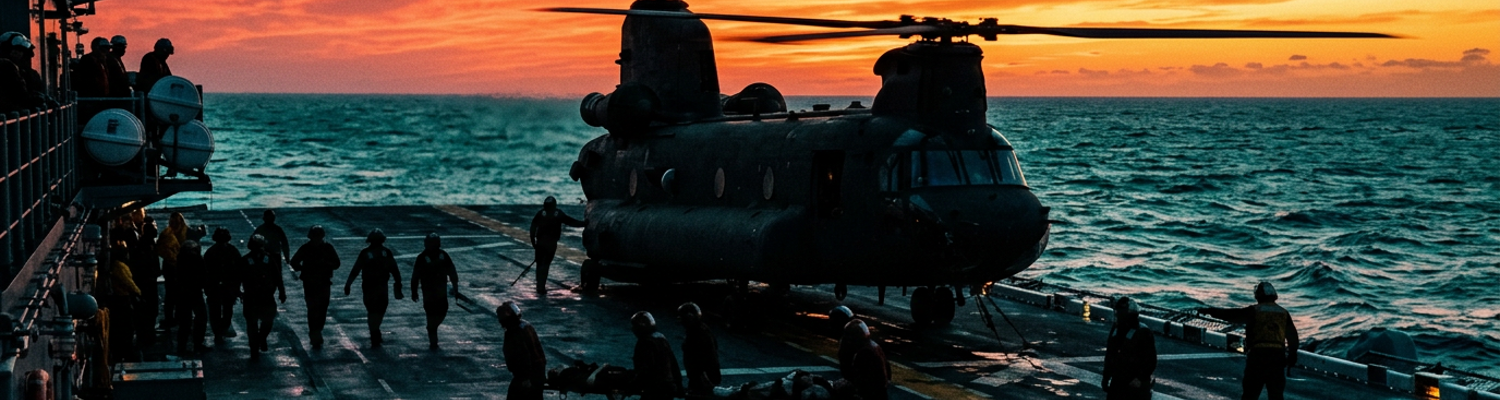
Navy corpsmen locked steel clamps onto soaked field dressings as consecutive emergency medevac recoveries swept onto the flight deck of USS Tripoli from the I Corps Tactical Zone in late January 1969. Flight deck directors wearing yellow jerseys waved glowing wands through the twilight haze, steering two battered twin-rotor transports toward landing spots five and six while rotor wash pelted the catwalks with sea spray. Flight surgeons and litter teams ran directly toward the aft ramps before the dual turbine engines had even begun their cooldown cycles. Rotor wash subsided into a whistling whine as the throttles pulled back, leaving a sudden quiet across the non-skid deck that replaced hours of gunfire heard over tactical radios. Sailors braced against the remaining gusts of hot exhaust, waiting for the massive rotor blades to stop spinning so the rescue operations could proceed without slicing into carrying parties. Deck workers finally sprinted under the slowing aft rotors as the pilots locked the mechanical blade brakes to stabilize the airframes.
HMM-164 flight crews shut down their bloodstained Boeing Vertol CH-46D Sea Knights to turn them over immediately to deck handling crews. Cockpit switches clicked into off positions while aviators unstrapped their harnesses, stepping down from control cabins where spent shell casings, emergency medical wrappers, and drying red pools coated the ribbed metal cargo decks. Handling crews in blue shirts immediately choked the landing gear with wooden blocks and secured tie-down chains to flight deck padeyes against the rolling swells of the South China Sea. Crew chiefs pointed out jagged shrapnel tears along the fuselage skins and hydraulic fluid seeping from ruptured lines near the aft transmission housings. Deck teams used chemical wash solutions and push brooms to scrub away slick fluids and body matter around the rear ramps, clearing a sure-footed path for the rescue teams. Litter bearers gripped the aluminum handles of wire basket stretchers waiting inside the dark cargo bays.
Stretcher bearers rushed the incoming litters across flight deck landing spots directly to the ship aircraft elevators for descent into surgical spaces. Elevators dropped smoothly past the hangar deck level, carrying casualties suffering from blast trauma, fragmentation wounds, and jungle fevers out of the windy maritime air. Surgical teams waited inside the brightly illuminated medical ward below, immediately dividing the casualties into priority categories for emergency amputations, transfusions, and chest tube insertions. Corpsmen called out blood types and vital signs while wheeling gurneys across tile floors toward the operating tables, leaving elevator operators free to cycle the mechanical platforms back to the flight deck. Elevator platforms rose back flush with the flight deck surface, where naval officers and Marine logistics coordinators gathered to evaluate the condition of both the aircraft and the deck operations.
Marine maintenance officers opened flight logbooks directly on the wing sponsons to document battle damage and record immediate mechanical failures before the next launch order arrived. Mechanics tallied bullet strikes on titanium rotor components, fuel cell punctures, and transmission stress values caused by emergency full-power pullouts from contested landing zones ashore. Squadron leaders jotted operational notes on clipboard rosters, highlighting how tight elevator cycles had kept rotor spots clear while simultaneously warning that hydraulic line shortages would soon ground two helicopters. Aviation machinists used patch kits, safety wire, and hand tools under red deck illumination to seal small leaks and repair damaged control rods. Flight deck officers signed off on fuel deliveries and ammunition reloads for the patched helicopters, positioning fuel hoses at spot three for immediate hookup.
Special Landing Force Bravo Casualty Reception
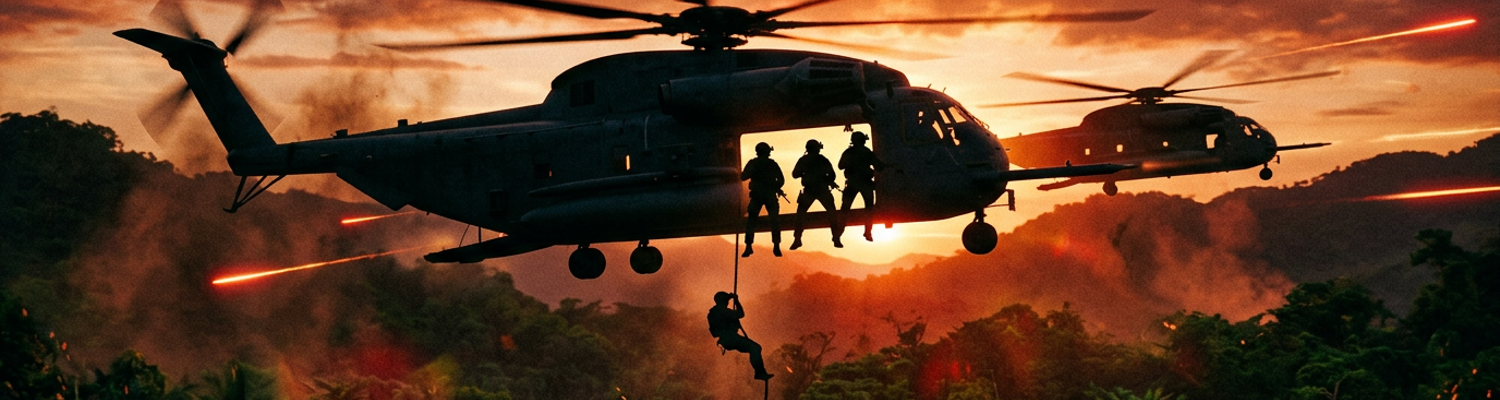
Fuelers dragged heavy black rubber nozzles across the non-skid surface to lock them onto the fuel sponsons of the newly landed Sea Knights. Marine Medium Helicopter Squadron 164 operated as the dedicated Aviation Combat Element for Special Landing Force Bravo, flying continuous round-trip shuttles to pull wounded Marines of Battalion Landing Team 3/26 out of fierce firefights ashore. Rifle companies hitting contested littoral landing areas and dense jungle canopies in the northern I Corps Tactical Zone took steady mortar and automatic weapons fire from entrenched enemy positions, creating a sudden casualty influx back toward the amphibious assault ship. Pilots flew their twin-rotor aircraft through coastal fog and tree branches to yank bleeding infantrymen out of tiny jungle clearings, taking anti-aircraft fire and pushing their turbine engines to maximum power limits. Ground crews rapidly clamped static discharge wires onto the landing gear while triage personnel sprinted past the fuel hoses toward the rear cargo ramps.
Crew chiefs leaned out from those open cargo ramps in sweat-soaked flight gear to coordinate immediate transfers with the waiting shipboard medical personnel. Emergency flight deck handoffs between squadron crew chiefs, aerial corpsmen, and shipboard medical triage teams aboard USS Tripoli had to take place in seconds while rotor blades still spun above their heads. Aerial corpsmen who had spent the flight pumping manual breathing bags and tightening tourniquets on the vibrating cabin floor shouted critical casualty updates directly into the ears of shipboard doctors over the roar of shipboard machinery. Squad members with sucking chest wounds, traumatic amputations, and severe shrapnel lacerations were lifted out of the metal fuselage onto waiting wire litters and canvas stretchers. Triage doctors quickly marked colored grease-pencil letters across patient foreheads to establish immediate operating room priorities before the stretchers rolled inward.
Stretcher bearers wheeled those marked casualties past the island structure directly toward the ship aircraft elevators for rapid transit down to surgical spaces. The sheer density of wounded Marines coming off the northern I Corps battlefields quickly filled the primary medical ward, forcing hospital corpsmen to stage stable casualties along the hangar deck bulkheads. Flight surgeons worked side by side with squadron corpsmen on the rolling deck, clamping spurting arteries and swapping depleted blood plasma bottles right as the litters reached the elevator platform. Shipboard corpsmen handed bundles of fresh battlefield dressings, full plasma units, and clean blanket rolls back to the exhausted aerial corpsmen waiting by the elevator edge. Elevator operators pulled mechanical hydraulic levers to drop the wounded into the belly of the ship, keeping the elevator surface clear for the next inbound wave of casualties.
Operations clerks recorded these round-trip turnaround times and airframe damage notes onto clipboards inside the flight deck control office to evaluate the remaining lift capacity of the squadron. Squadron leaders and maintenance chiefs reviewed the raw numbers, realizing that the intense pace of jungle extraction missions and beachhead medevacs had depleted their ready supply of cabin litter straps and portable oxygen bottles. Maintenance crews used high-pressure air hoses and solvent buckets to clear pooled blood and jungle mud from the cargo deck tie-down tracks so fresh troops and cargo pallets could be loaded without slipping. Deck directors in yellow jerseys checked off the completed fuel loads and signaled the crew chiefs to secure the aft ramps. Flight deck officers waved green wands to clear spot three, directing the reloaded CH-46D transports to lift off toward the coastal landing zones where Battalion Landing Team 3/26 remained engaged in combat.
Turbine Wear and Mechanical Stress in CH-46D Helicopters
Mechanics unlatched the access cowlings of the remaining CH-46D helicopters parked on spots five and six right as the sound of departing transports faded into the sea wind. Inspection teams thrust mirrors and flashlights directly into the intake ducts of the General Electric T58-GE-10 turboshaft engines to evaluate the grit ground into the rotating machinery. Abrasive silica sand ingested during emergency extractions from dry riverbeds and dusty coastal drop zones had scoured the titanium and steel compressor blades down to blunt stubs, causing dangerous power loss whenever pilots pulled collective pitch to lift off. Crew chiefs scraped powdery white sand and dark volcanic soil out of the engine intake screens, pointing out thin scalloped leading edges where spinning blades had lost their aerodynamic shape. Power degradation from this constant abrasive scouring meant these twin engines could no longer deliver their rated horsepower, leaving overloaded aircraft struggling to clear coastal tree lines under heavy fire. Maintenance chiefs logged each engine as critically degraded and immediately tagged the damaged powerplants for complete teardown in the ship hangar deck below.
Technicians hoisted the tagged engines from their rear fuselage mounts while structural inspectors turned their wrenches toward the central drive shafts and twin rotor heads. Emergency medevac flights had packed twice the authorized passenger limit of wounded infantrymen, ammunition crates, and treating corpsmen into the cargo bays, subjecting the aircraft to violent strain during maximum-power vertical climbs. This chronic overloading drove dynamic components and rotor hub assemblies far past their normal operating tolerances, bending pitch housing bearings and accelerating metal fatigue across the swashplates. Mechanics wiped red dye penetrant along the forward and aft transmission mounts to detect microscopic stress cracks spreading through the load-bearing aluminum ribs. Maintenance logs showed that the constant violent shuddering during heavy pullouts had loosened hinge pins and stretched rotor blade retention straps beyond factory safety limits. Inspector teams marked several primary rotor hubs with yellow chalk circles, declaring the critical assemblies unsafe for flight until replacement parts arrived from supply stores.
Inspectors moved their flashlights from the chalked rotor hubs down along the scarred fuselage skins to compile comprehensive battle damage assessments for the squadron commander. Small arms penetrations riddled the aircraft from nose to ramp, showing where enemy rifle fire had struck the transports while pilots held steady low-altitude hovers above contested jungle landing zones. High-velocity bullets had punched jagged holes through the skin of the rotor blades, unbalancing the spinning airfoils and sending violent control shakes into the cockpit sticks. Solid copper-jacketed rounds had also torn upward through cabin bulkheads, shredding internal electrical wiring and severing pressurized hydraulic lines that sprayed red fluid into the cargo spaces. Aviation mechanics clamped metal sleeves over the punctured hydraulic lines and riveted aluminum patches over the hollow bulkheads, working rapidly to restore minimum system pressure before the next wave of casualties called for urgent rescue.
Machinists filled external hand pumps with fresh hydraulic fluid and pressurized the patched aircraft lines to check for persistent leaks beneath the cabin flooring. Flight deck supervisors compared the growing list of grounded transports against the active flight roster, finding that only half of the squadron Sea Knights remained cleared for combat operations. Maintenance officers hurried down metal ladders into the shipboard parts supply lockers to requisition spare rotor blades, hydraulic seals, and replacement compressor spools from naval stores. Sailors rolled heavy pneumatic rivet guns and portable nitrogen carts out of the hangar deck storage bays to speed up structural airframe repairs before daylight broke. Maintenance crews wiped grease and sweat from their faces under the red floodlights, tightening the final locking wire on an aft transmission casing just as flight deck loudspeakers crackled with radio calls for another urgent offshore casualty extraction.
Hangar Deck Maintenance Under Severe Salt Corrosion
Deck handlers chained the damaged Sea Knights to the elevator platforms to lower the aircraft into the enclosed hangar bay of USS Tripoli before the next launch wave began. HMM-164 ground mechanics stepped into the stifling high-humidity compartment to begin round-the-clock repair shifts on every airframe pulled from the flight deck. Trapped tropical heat and thick engine fumes hung heavy between the steel bulkheads, soaking work uniforms in sweat while technicians inspected white salt encrustations along exposed rivets, access doors, and external wiring bundles. Moisture mixed with airborne ocean brine had already begun corroding delicate electrical terminals and binding mechanical control linkages across the rotor tunnels during repeated overwater transit flights from the coast. Exhausted maintenance crews organized two twelve-hour work details to strip away salt-caked inspection panels, degrease corroded magnesium housings, and track airframe cracks without interrupting the operational tempo of the squadron. Technicians aimed portable floodlights into the engine bays to identify which turbine assemblies required immediate chemical decontamination before salt crystals baked permanently onto the internal metals.
Freshwater hoses connected to shipboard washdown risers delivered steady flushes directly into the compressor inlets of the General Electric turboshaft engines. Ground mechanics performed these continuous freshwater turbine flushes on every recovered helicopter to dissolve thick salt cakes and flush out briny residues that threatened to melt into destructive slag inside hot combustion chambers. Specialists then used pressurized air sprayers to apply oily anti-corrosion barrier coatings across exposed magnesium gearboxes, rotor head hinges, and exterior aluminum sheet metal. These petroleum-based barrier coatings shielded sensitive metal alloys from maritime salt spray degradation during low-altitude hover operations, but the sticky film quickly gathered abrasive sand and hot exhaust soot that crews had to scrape away by hand between flight cycles. Mechanics scrubbed the gritty sludge off critical flight control rods with wire brushes and solvent rags, checking every linkage for microscopic pit marks and chemical flaking that could cause sudden steering failures under heavy combat loads. Inspectors running vernier calipers across the cleaned linkages discovered severe metal loss on several primary control rods, leaving multiple airframes grounded until replacement parts could be secured.
Maintenance chiefs faced severe supply constraints as replacement stocks of dynamic helicopter parts ran completely dry in the shipboard storerooms. Mechanics immediately began the ad hoc cannibalization of heavily damaged airframes parked along the aft hangar bulkheads to keep mission-ready helicopters flying into the combat zone. Work crews systematically stripped intact swashplates, central rotor drive shafts, and delicate avionics packages out of battle-shredded transports that were already deemed unfit for flight. Riggers supported the heavy forward rotor heads with overhead chain hoists while machinists unbolted seized drive shafts and transferred the salvaged components directly onto helicopters scheduled for dawn departures. Tool operators worked through the night with socket wrenches and drift pins to free stubborn titanium bolts, transferring critical parts across the oily deck before recording the part swaps in squadron maintenance logs. Avionics technicians spliced cannibalized cockpit wiring harnesses and installed salvaged radio transceivers into stripped instrument panels, testing each circuit with handheld multimeters under the glare of yellow hangar work lights. Crew leads tightened the final mounting bolts on a transplanted swashplate, signaling the elevator team to hoist the rebuilt transport back toward the flight deck for immediate engine start.
Post-Mission Debriefs and Flight Line Logbook Audits
Steel elevator cables hummed as the lift carried the repaired Sea Knight upward, leaving pilots and co-pilots to trudge away from the noisy hangar bay into the air-conditioned silence of the squadron ready room. Exhausted aircrews peeled off sweat-drenched flight suits and tossed grease-stained flight helmets onto vinyl chairs before collapsing behind long briefing tables covered in charts and clipboards. Operations officers and flight surgeons immediately initiated exhaustive ready-room debriefs conducted in late January 1969 correlating pilot flight times against onboard casualty survival rates. Medical personnel matched the precise airborne transit minutes logged by cockpit crews with vital signs recorded by shipboard triage teams down in sickbay, proving that every extra minute spent in flight drastically reduced a wounded Marine chance of surviving shock and arterial bleeding. Pilots traced their inbound flight paths across grease-penciled plastic map overlays, explaining how low coastal cloud ceilings, heavy automatic weapons fire, and severe cabin overloading had forced them to pull back their airspeed and add critical minutes to what should have been direct transit runs back to USS Tripoli. Flight surgeons jotted down detailed notes on the physiological toll of these extended flights, documenting how severe aircraft vibration and unpressurized cabin altitudes accelerated hypothermia and internal blood loss among critical litters lying on the corrugated metal deck.
Clerks opened red-lined master flight logs beside the medical notes to isolate the tactical causes behind those extended transit times, compiling raw operational log entries documenting delays caused by escort gunship coordination lapses and hot landing zone suppressive fire windows. Pilots detailed multiple rescue attempts where twin-rotor transports were forced into vulnerable low-altitude orbits over coastal paddies because escorting Bell UH-1E gunships had broken formation to refuel or had exhausted their rockets before suppressive fire runs were complete. Entry after entry noted that ground commanders in the jungle clearings could not establish direct FM radio contact with approaching attack helicopters, forcing Sea Knights to circle within small arms range until gunships cleared the surrounding tree lines. Transport pilots described hovering through relentless sniper fire while waiting for gunship crews to lay down white phosphorus smoke screens, explaining that brief coordination breakdowns repeatedly closed narrow extraction windows and trapped bleeding infantrymen in exposed rice paddies. Operations officers underlined these specific failure points with grease pencils, noting that poor radio frequency discipline between infantry forward air controllers and gunship pilots routinely added ten to fifteen minutes of stationary hover exposure per extraction. Duty officers transferred these raw combat logs directly into the flight line audit files so tactical commanders could overhaul coordination protocols between assault support elements and ground units before the next morning operations.
Officers spread those audited combat logs alongside maintenance inspection sheets on the ready room plotting table, beginning a formal tabulation of rotor-hour-to-casualty ratios utilized by squadron operations officers to quantify the physical cost of contested aeromedical extraction. Ledger columns balanced total airframe flight hours against the number of wounded soldiers pulled from jungle landing zones, showing that every litter patient recovered from heavy fighting cost the squadron multiple flight hours and thousands of pounds of scarce aviation fuel. Operations planners calculated that intense combat hover time degraded dynamic aircraft components three times faster than standard transport flights, eroding turbine blades, fatiguing hydraulic pumps, and loosening structural rivets for every single casualty delivered to shipboard surgery. The raw data proved that continuous emergency casualty extraction under fire was rapidly exhausting the flyable inventory of the squadron, consuming replacement parts faster than Navy supply ships could replenish the Tripoli storerooms. Squadron leaders used these concrete mathematical ratios to establish strict limits on maximum hover durations, mandate tighter gunship coordination windows, and demand scheduled maintenance stand-downs to keep the remaining Sea Knights from suffering catastrophic mechanical failures during future littoral assaults.
Revision of Littoral Aeromedical Evacuation Protocols
Medical officers compiled those urgent operational numbers into formal after-action reports dispatched directly to Fleet Marine Force Pacific to overhaul aeromedical evacuation doctrine across the western Pacific. Physicians documented how unorganized casualty handoffs at landing spots five and six had overwhelmed shipboard doctors during rapid recovery cycles, proving that patient survival depended on orderly sorting before litters ever reached an operating table. The resulting directive mandated standardized flight deck triage staging on all amphibious assault ships before wounded personnel could be routed down to offshore surgical intervention. Corpsmen marked dedicated triage squares on the non-skid surface with yellow reflective tape, creating clearly designated deck zones where flight surgeons could apply pressure dressings, administer whole blood, and establish airway priority right beside the aircraft cargo ramps. Staff doctors logged every patient transfer through this newly formalized staging line, identifying severe structural delays as litters moved from the open weather deck into the ship interior. Naval hospital corpsmen mapped every physical choke point that delayed bleeding casualties during transport between the exterior flight deck lifts and the cramped surgery suites below.
Shipfitters unbolted heavy steel compartment bulkheads along the main transit routes to reconfigure the casualty receiving areas of the amphibious assault ship. Work crews stripped away narrow doorway coamings and relocated administrative lockers to eliminate dangerous transit bottlenecks between the flight deck lifts and the primary trauma wards. Damage control teams widened the central corridor leading from the number one aircraft elevator directly into sickbay, painting wide red boundary lines on the deck plates so litter bearers could sprint past incoming flight crews without halting. Surgeons rearranged operating tables and pre-operative holding cots to create a continuous one-way patient flow that prevented rolling stretchers from jamming together outside surgical ward doors. Corridor sentries cleared secondary gear, fire hoses, and spare parts crates out of adjacent passageways, locking rolling stretchers into wall brackets to guarantee an unobstructed route into the operating rooms. Medical clearances and clear passageways meant little if engine failures continued to disable inbound Sea Knights over the water, forcing aviation planners to address the severe mechanical destruction documented during the day recoveries.
Aviation engineers drafted immediate doctrinal updates requiring dedicated freshwater washdown stations and engine particle separators for carrier-deployed Marine medium helicopter squadrons. Fleet maintenance commands ordered naval shipyards to weld permanent freshwater rinse arches and high-pressure hose reels along the carrier catwalks so ground crews could flush corrosive salt buildup out of helicopter compressor sections immediately after shutdown. Squadron technicians received blueprints for forward-fitting vortex tube engine particle separators over the turbine inlets to screen out abrasive beach sand and dry riverbed silt before grit could scour spinning compressor blades. Aircrews calculated that these intake barrier filters would eliminate the severe power loss that had nearly dropped overloaded casualty flights into coastal tree lines during beachhead extractions. Logistics officers submitted emergency requisitions to naval supply depots for prototype intake filter kits while flight deck welders assembled the high-pressure washdown manifolds along spot six. Maintenance chiefs clamped test fittings onto the newly installed freshwater rinse lines and signaled flight deck crews to run the initial pressure checks before the next wave of damaged aircraft returned from the coast.