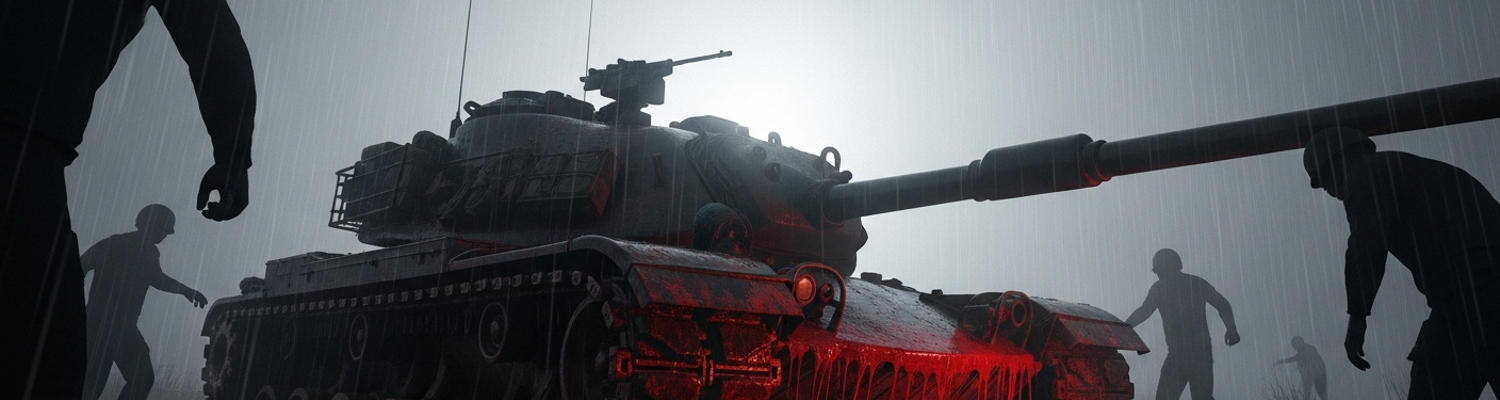

Silence at Con Thien was a physical weight. From the exposed rise of Hill 158, Marine observers could see for miles across the Demilitarized Zone. A featureless plain of red earth and scrub. It was an ideal observation post. It was also a perfect target. The quiet offered no peace, only the tense intake of breath before a predictable storm. Every Marine in the bunkers knew the North Vietnamese Army artillery, concealed to the north, had them registered. The silence was the space between bombardments, a pause stretching nerves taut. Then came the flutter of incoming shells. The sound would build to a roar as hundreds, sometimes over a thousand, rounds of artillery and rockets walked across the small perimeter in a single day.
The shelling was the start of a cascading failure.
A close review of operational logs from 1967 reveals the almost complete futility of conventional helicopter medical evacuations. The primary landing zone at Con Thien earned the simple, accurate name Death Valley. NVA gunners had pre-sighted every viable approach and landing spot with mortars, recoilless rifles, and heavy anti-aircraft machine guns. A Marine from the 3rd Battalion, 26th Marines, wounded by shrapnel, would be carried to an aid station knowing rescue was a near impossibility. When a CH-46 Sea Knight or UH-34 Seahorse helicopter attempted a daylight mission, it was met with a wall of fire. The aircraft, vulnerable to heavy machine gun rounds, were often waved off, forced to abort, or shot down. The main supply route by ground was impassable due to flooding. Air was the only option. This forced medevac attempts into a deadly calculus where the risk of losing a helicopter and its crew was weighed against the certain death of wounded men on the ground. The result was a functional paralysis of the medevac system.
The price was paid inside the wire.
The casualty rates inside the static defenses were ruinous. Operation Kingfisher, from July to October 1967, saw Marine units suffer 340 killed and over 1,400 wounded. The base’s design turned it into a container for ordnance. Bunkers and trenches meant for protection became designated impact zones. Archival evidence (NARA Record Group 127) shows rocket and mortar fire accounted for up to 80% of Marine deaths in some engagements. In one 34-day period, over 600 Marines were wounded by indirect fire alone. The 3rd Battalion, 26th Marines, lost 40% of its strength in two battles in early September. This was not maneuver warfare. It was attrition. Marines were bled out in their own fighting positions. Wounds were almost entirely from shrapnel. With no evacuation possible, moderate injuries became fatal through blood loss and infection.
The living were trapped with the dying.
This breakdown had a corrosive impact on unit combat effectiveness and troop morale. The unwritten contract of the Marine Corps, that every effort would be made to save a wounded man, was broken daily. Marines witnessed their injured comrades being moved to overcrowded aid station bunkers. They would lie there for hours or days, their screams a constant feature of life on the hill. This experience shattered cohesion and fostered a sense of hopeless abandonment. The base earned names that reflected this psychological state. The Meat Grinder. Our Turn in the Barrel. The DMZ itself was called the Dead Marine Zone. The psychological toll manifested as combat fatigue and a documented decrease in the aggressiveness of patrols operating outside the wire. When a man knew that being wounded was likely a death sentence, his willingness to expose himself to fire diminished sharply.
Operational logs and meteorological records from late 1967 reveal an adversary more potent than any NVA division. The weather itself. The northeast monsoon arrived with a vindictive fury, fundamentally altering the operational environment. On September 16, the skies opened, dumping seventeen inches of rain in a single 72-hour period. This deluge fell on the pulverized red clay of Quang Tri Province, transforming the area into an impassable sea of mud. Visibility was frequently reduced to less than fifty feet. A perpetual low cloud ceiling seemed to merge with the horizon. The sustained downpour turned trenches and bunkers into flooded pits and completely washed out the main supply route, Route 561, connecting Con Thien to the logistics hub at Cam Lo.
This weather neutralized American air power.
The quantified impact on fixed-wing close air support was catastrophic for the defenders. The 1st Marine Aircraft Wing’s squadrons of A-4 Skyhawks and F-4 Phantoms, the leathernecks’ flying artillery, were rendered almost entirely impotent. These aircraft relied on clear weather and visual flight rules for their attack runs. Pilots had to physically see their targets to deliver ordnance accurately and avoid hitting friendly positions yards away. The monsoon’s low cloud deck and persistent fog made such visual acquisition impossible. Intelligence reports might indicate NVA artillery, but if a pilot could not see the ground, he could not attack. This grounded hundreds of planned sorties. It stripped the Marines of their most effective response to the enemy bombardment.
Reconnaissance was blinded.
The tactical reconnaissance mission, flown by units like the Army’s 220th Reconnaissance Airplane Company and Marine Observation Squadrons, was completely curtailed. Their slow-moving O-1 Bird Dog aircraft were designed to fly low over the battlefield, allowing observers to spot enemy gun flashes and direct artillery fire. During the monsoon, this was a suicidal proposition. The same clouds that stopped the jets made these low-level flights impossible. Mission logs show frequent cancellations. A specific mission from Dong Ha on September 10th was scrapped almost immediately after takeoff, a common occurrence that left commanders without intelligence. Without the ability to see into the NVA’s sanctuary, counter-battery fire was reduced to guesswork.
The primary fixed-wing assets of Marine Aircraft Group 11 (MAG-11), headquartered at Da Nang Air Base, represented the apex of conventional airpower available to the 1st Marine Aircraft Wing. The group’s force projection rested on two platforms: the McDonnell F-4 Phantom II and the Douglas A-4 Skyhawk. The F-4 was a powerful, twin-engine, all-weather fighter-bomber capable of carrying up to 16,000 pounds of ordnance. Squadrons like VMFA-314 and VMFA-542 flew the Phantom, a complex weapon system whose main role in Vietnam devolved into that of a bomb truck. The A-4 Skyhawk, flown by squadrons such as VMA-311, was a smaller, single-engine attack aircraft prized for its agility and reliability. It was a simple, rugged machine, capable of delivering roughly 8,500 pounds of munitions with precision. Both aircraft operated on the principle of overwhelming firepower.
This doctrine of visual attack created a vulnerability.
The operational effectiveness of MAG-11 was entirely predicated on a pilot’s ability to see the ground. Standard procedure for a close air support mission required the pilot to visually acquire the target, often marked by a forward air controller with a white phosphorus smoke rocket. The established weather minimums for such visual flight rules missions were a cloud ceiling no lower than 1,000 feet and forward visibility of at least three miles. A commander could waive these minimums in a desperate situation, but doing so invited disaster. Dropping a 500-pound Mark 82 bomb from an F-4 or A-4 required a clear line of sight. During the 1967 monsoon season at Con Thien, these minimums were a fantasy. Meteorological records show cloud ceilings were frequently below 500 feet with visibility reduced to near zero by fog and torrential rain, grounding the fleet.
The pre-existing mission profiles for air interdiction and close air support were rendered useless by the weather. A typical attack run involved a dive or strafing pass, with the pilot physically aligning his aircraft with the smoke marker and the target. The monsoon’s low cloud deck made these profiles impossible. A pilot descending through the soup would have only seconds to acquire the target, release ordnance, and pull up before impacting the terrain. The risk of fratricide or losing an aircraft was unacceptably high. While the F-4 possessed a ground-mapping radar and some A-4 models had systems for bad-weather delivery like the AN/TPQ-10, these were not suited for the close-quarters fighting at Con Thien. Radar-guided bombing was effective against large, static targets like bridges but lacked the pinpoint accuracy needed to eliminate a specific mortar pit. The command and control loop, managed by units like Marine Air Support Squadron 2 (MASS-2), was designed around a pilot seeing what the FAC was seeing. When visibility dropped, the entire system of coordinated air attack broke down.
The defining characteristic of the engagement at Con Thien during late 1967 was the sheer volume of North Vietnamese Army artillery fire. A close review of operational logs reveals a methodical bombardment designed to paralyze the garrison. During the peak of the siege in September, the base absorbed at least 200 artillery and mortar rounds daily. This was a systematic effort to destroy the defenses. The intensity peaked on September 25, when an estimated 1,200 NVA rounds impacted the confined area. In one nine-day period between September 19 and September 27, a recorded 3,077 shells battered the Marine positions. The NVA gunners, operating from camouflaged positions and caves within and north of the Demilitarized Zone, utilized a mix of heavy artillery, including 130mm field guns with a range that outstripped much of the Marines' counter-battery assets. This continuous, high-intensity shelling transformed the static defense of Con Thien into a battle of pure endurance.
The consequences were felt most acutely within the supposedly secure fortifications. Archival evidence shows the structures designed to protect the Marines became the epicenters of casualty events. The base, composed of interconnected trenches and bunkers reinforced with sandbags, timber, and steel plating, could not withstand direct hits from heavy artillery. A direct impact on a bunker frequently resulted in catastrophic collapse. Shrapnel from airbursts and ground impacts proved even more lethal in the narrow confines of the trenches. Analysis of casualty data from a battle on September 10 involving the 3rd Battalion, 26th Marines, shows rocket and mortar fire accounted for 75% of the 34 Marines killed. A single platoon from Echo Company, 2nd Battalion, 9th Marines, saw its strength reduced from 45 men to just 12 who could walk away unscathed. These were not casualties sustained during maneuver warfare but were inflicted upon men holding a fixed position.
While the garrison endured this onslaught, Marine Aircraft Group 11 was engaged in a frustrating campaign of air interdiction. The primary mission was to destroy the NVA guns firing on Con Thien. This effort was part of Operation Neutralize, which involved thousands of airstrikes. F-4 Phantoms and A-4 Skyhawks flew sorties against known and suspected NVA artillery positions north of the Ben Hai River. These missions faced immense challenges. The NVA guns were well-camouflaged, often mounted on rails that allowed them to be rolled back into caves after firing. Even when weather permitted flight, which it often did not, the political prohibition on ground operations inside the DMZ meant that aerial observation and post-strike damage assessment were severely limited. While B-52 Arc Light strikes delivered enormous tonnages of ordnance on suspected concentrations, the shelling of Con Thien continued.
The operational environment at Con Thien was defined by its geology and the transformative effect of the monsoon. Quang Tri Province is dominated by red clay soil, a type notorious for its high iron oxide content. With the onset of the monsoon in mid-September 1967, the ground underwent a catastrophic change. The red clay became a viscous, glutinous morass with the consistency of grease. Unpaved tracks and roads, including the critical Route 561, effectively dissolved. What were once dirt roads became impassable rivers of mud, severing the outpost’s primary terrestrial link for logistics and evacuation. The terrain itself became an enemy.
This was not a battlefield for wheeled or tracked vehicles.
The specific mechanical challenges posed by this environment were insurmountable for standard vehicles. Even light, supposedly all-terrain vehicles like the M151 jeep and the M274 Mechanical Mule were rendered ineffective. The Mule's performance degraded significantly on wet ground, where it struggled for traction. Heavier tracked vehicles faced a different but equally debilitating set of problems. The LVTP-5 Amtrac, a large amphibious tractor, proved mechanically unreliable during sustained inland operations. Its suspension system was not designed for Vietnam’s rough terrain, and long-distance overland travel led to frequent breakdowns of the powertrain and drive components. In the Con Thien mud, these vehicles, along with M48 tanks, would bog down completely. Their weight became a liability. The fine, abrasive mud infiltrated wheel bearings, clogged track assemblies, and over-strained engines and transmissions. The battlefield became a parking lot of disabled armor.
Movement slowed to a crawl, then stopped.
The failure of mechanized ground mobility had a direct impact on casualty evacuation procedures. With helicopters unable to land and the MSR washed out, the traditional ground evacuation chain was irrevocably broken. Ambulance jeeps could not navigate the quagmire. The only remaining method was to carry the wounded on stretchers by foot. This presented a horrifying ordeal for the litter bearers, who had to struggle through knee-deep mud while under direct observation and fire from NVA artillery. A journey of a few hundred meters could take hours. For a Marine wounded inside the Con Thien perimeter, there was functionally no way out. The inability to move casualties from the forward aid stations to better-equipped facilities at Dong Ha meant that men with survivable wounds were left to die from blood loss, shock, and infection.
The paralysis of both air and conventional ground transport forced the Marines at Con Thien into a state of desperate invention. After-action reports from Operation Kingfisher show a command structure grappling with a crisis for which it had no procedural solution. Standard ambulance jeeps were mired. Main supply routes were nonexistent. This forced ground units to devise their own casualty evacuation schemes, abandoning doctrine for any ad-hoc method that offered a sliver of hope.
This improvisation led to the use of tracked combat vehicles in a role for which they were never intended. The M50 Ontos, a light anti-tank vehicle mounting six 106mm recoilless rifles, and the M42 Duster, a self-propelled anti-aircraft gun with twin 40mm cannons, became makeshift ambulances. Both vehicles were built on light tank chassis, giving them superior cross-country mobility in the red clay. Their tracked suspension allowed them to churn through mud that would swallow a jeep whole. The methods were crude. Wounded Marines were loaded onto the flat engine decks or strapped into litter baskets hastily affixed to the vehicle’s exterior. The Ontos, whose name meant The Thing in Greek, was particularly ill-suited for the task. Its thin armor offered scant protection. Transporting the wounded on the exterior of a vehicle packed with high-explosive ammunition was a terrifying gamble. The Duster, with its open-topped turret, offered slightly more space but no overhead protection from air-bursting shells. These battlefield ambulances were not a solution, but a mark of extreme desperation.
When even the tracked vehicles could not navigate the terrain, the responsibility fell to stretcher teams. This was the most elemental and brutal form of evacuation. A wounded Marine would be strapped to a litter and carried by four of his comrades on foot. Archival accounts detail a horrifying ordeal. The bearers, already exhausted, had to carry a 150-pound man plus his equipment through a landscape of sucking, waist-deep mud, all while under the constant threat of NVA artillery. A journey of just a few hundred meters from a trench line to the battalion aid station could take hours of agonizing effort. The physical strain was immense. The litter bearers themselves became easy targets for enemy gunners. They navigated a maze of flooded trenches and shell craters, struggling for footing with every step. This method slowed the evacuation chain to a near-total halt.
Operational logs for III Marine Amphibious Force leading into the 1967 monsoon season reveal a systemic failure to develop adequate logistical contingencies. Planning priorities for the new strongpoints along the Demilitarized Zone were overwhelmingly focused on fortification construction and the pre-positioning of ammunition. Archival evidence shows detailed projections for artillery shells and construction materials. It contains glaring omissions regarding preparations for mass casualty events under weather-degraded conditions. There was no significant increase in the stockpiling of medical supplies like whole blood, plasma, and intravenous fluids at the firebase itself. The underlying assumption within the command structure was that the existing MEDEVAC system, reliant on CH-46 and UH-34 helicopters, would remain functional. This assumption failed to account for the dual effect of the monsoon grounding all aircraft while simultaneously rendering ground routes impassable.
The available equipment was for a different war.
This planning gap was most physically manifest in the lack of dedicated, all-terrain ground medical evacuation assets positioned near Con Thien. The standard M151 ambulance jeep was entirely useless in the red clay mud. While the Marine Corps possessed tracked vehicles like the LVTP-5, these amphibious tractors were mechanically unsuited for sustained overland operations. The command failed to procure and pre-position a fleet of more suitable vehicles, such as the U.S. Army’s M113 Armored Personnel Carrier, which had been adapted into a reliable tracked ambulance. The absence of such a vehicle forced ground units into the desperate use of combat platforms like the M50 Ontos and M42 Duster as casualty transports. This improvisation was a direct consequence of a failure to anticipate the terrain’s challenges.
Communication breakdowns between air and ground elements were a constant feature of the siege. The primary communications hub for air requests, the Direct Air Support Center (DASC), was located miles away and relied on a fragile network of relays. On the ground, platoons and companies used the AN/PRC-25 radio, a line-of-sight FM system whose signal was easily blocked by terrain and degraded by the dense, moisture-laden atmosphere. A request for an urgent medevac from a forward platoon could fail simply because the radioman could not establish contact with the company command post. Even when a request reached the DASC and a helicopter was launched, the final link between the pilot and the ground unit often failed. The lack of a common, weather-proof, and secure communication protocol between the wounded man’s unit, the air mission commander, and the transport asset created a fatal disconnect.
The operational autopsy following the 1967 siege of Con Thien reveals a series of foundational adjustments to Marine Corps doctrine. The breakdowns in aviation and medical evacuation forced a deep institutional reckoning. The most immediate changes came to medical evacuation protocols. The failure of helicopter-only MEDEVAC drove a new emphasis on ground-based casualty evacuation and a doctrinal acceptance that forward aid stations had to be equipped for prolonged patient care. Planners acknowledged that total reliance on aircraft was a vulnerability. This led to the widespread adoption of any available tracked vehicle as a battlefield ambulance. The U.S. Army’s M113 armored personnel carrier, with its superior mobility in mud, became a sought-after asset. Post-1967 planning saw a greater push for dedicated tracked ambulances. A new emphasis was placed on increasing the stocks of whole blood and IV fluids at the battalion aid station level.
Joint air-ground coordination procedures underwent a substantial overhaul. The chaos at Con Thien exposed fatal flaws in the existing system. The response was both technological and procedural. Secure voice communications became a high-priority requirement, mitigating the risk of NVA artillery targeting landing zones by listening to unencrypted radio traffic. A system known as sav-a-plane was introduced, a radio procedure to broadcast the location and trajectory of friendly artillery fire to all aircraft in an area, making the pilot responsible for avoiding the fire. This reduced the need for restrictive fire plans and gave pilots more freedom of action.
The most significant long-term development was the accelerated fielding of true all-weather aviation assets. The impotence of MAG-11’s visual-dependent A-4 Skyhawks and F-4 Phantoms during the monsoon made it clear that a new capability was needed. This answer was the Grumman A-6A Intruder. The A-6 was a revolutionary integrated weapons system designed from the ground up for night and bad-weather strikes. Its two-man crew, a pilot and bombardier/navigator, operated the highly advanced Digital Integrated Attack/Navigation Equipment (DIANE) system. This suite combined search and tracking radars with an inertial navigation system and a ballistics computer. It allowed the crew to create a radar map of the terrain ahead, identify a specific target, and deliver an 18,000-pound payload with precision, all without ever visually seeing the ground. An A-6 flying in the monsoon conditions that grounded the Phantoms at Con Thien could have still navigated to the NVA artillery positions and attacked them with a level of accuracy that was pure science fiction in 1967. This capability was supplemented by tactical navigation systems like LORAN-D, a ground-based radio system that allowed aircraft to pinpoint their location for bombing runs with zero visibility. The lessons of Con Thien directly spurred the transition from a visual-only air force to one that could bring firepower to bear, anytime, in any weather.