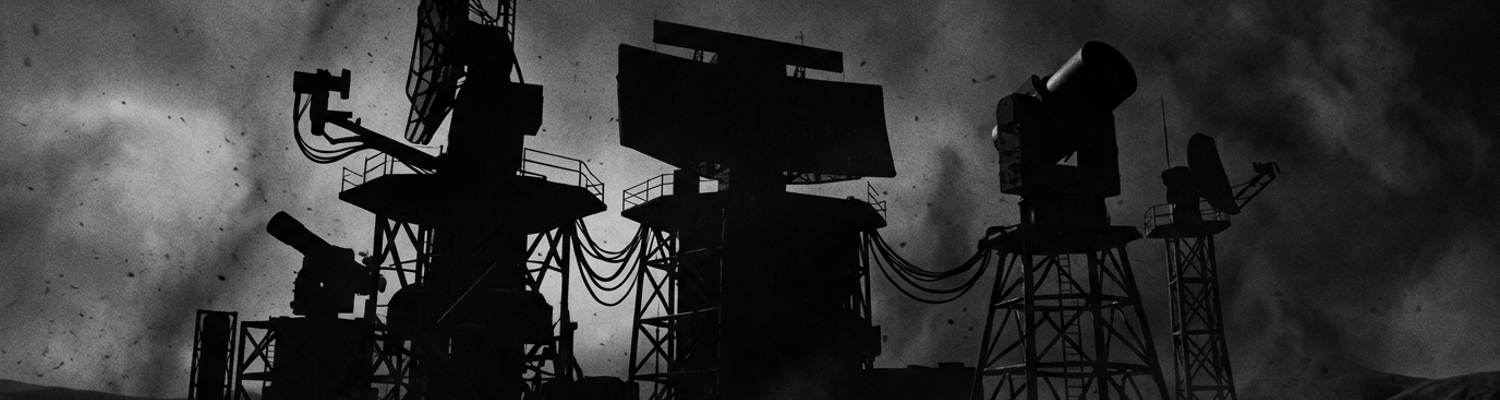

GEODSS System Architecture in Desert Environments
Before the first tracking errors registered on the command consoles, the ground crews at Forward Operating Site 4 had already endured seventy-two consecutive hours of physical degradation. Supply trucks carrying standard field rations and potable water suffered dual axle failures thirty kilometers south of the installation. The vehicles broke down along an unmarked dry wash. Security detachments and maintenance technicians marched through deep sand under a fifty-degree Celsius sun. They manually hauled the stranded cargo back to the perimeter. Sleep deprivation compounded a severe caloric deficit among the personnel tasked with preparing the facility for the incoming orbital transit window. Men dropped from heat exhaustion while carrying eighty-pound crates of distilled water up the steep access ramps. Exhausted technicians skipped mandatory rest cycles to manually clear accumulating sand drifts from the heavy steel perimeter tracks of the telescope domes.
A close review of operational logs indicates that human fatigue was only the secondary point of failure.
Ground-Based Electro-Optical Deep Space Surveillance systems rely on high-precision optical mirrors to maintain deep-space orbital tracking. Archival maintenance records from the 21st Space Wing detail the specific mechanical tolerances required by the primary 1.2-meter Ritchey-Chrétien telescopes housed within the installation. The primary mirrors consist of zero-expansion glass polished to a surface accuracy measured in fractions of a wavelength of light. Tracking satellites in geosynchronous orbit roughly thirty-six thousand kilometers above the Earth demands absolute optical clarity. Any microscopic surface aberration directly corrupts the angular measurement data sent back to the Joint Space Operations Center. Technicians calibrate these optical arrays using complex software command sequences. These sequences adjust the mirror support actuators to compensate for local gravity and temperature gradients. Deep-space orbital tracking requires the heavy equatorial mount to rotate at the exact sidereal rate of the Earth. Charge-coupled device sensors integrate weak reflected sunlight from target objects against the background star field.
The entire system functions on the premise of a pristine local atmosphere.
The primary mirror of Telescope Bravo required an emergency re-coating procedure after just fourteen days of operation. Middle Eastern deployment sites expose sensitive optical enclosures to extreme desert environments and ambient airborne dust. When examining the historical record of the detachment positioned near the coordinates 24.1300 N, 55.8023 E in the Al Ain region, the environmental data shows continuous ambient particulate suspension driven by localized thermal winds. The GEODSS architecture utilizes rotating hemispherical domes equipped with large retractable slit doors. Opening these doors to the night sky directly exposes the internal telescope assembly to the local atmosphere. Planners initially equipped the sensitive optical enclosures with positive pressure ventilation systems. They installed heavy-duty particulate air filters designed to keep the internal pressure higher than the outside environment. High-velocity haboob winds carrying fine silica sand quickly overwhelmed the mechanical intake fans.
The primary high-efficiency air filters clogged completely within forty-eight hours of installation.
Ambient airborne dust bypassed the failed rubber gaskets lining the main dome slit. Fine particulate matter settled directly onto the primary and secondary mirrors during active tracking operations. Maintenance crews attempted to use compressed nitrogen to blow the silica dust off the zero-expansion glass surfaces. The jagged microscopic structure of the local desert sand functioned as an abrasive compound against the highly sensitive reflective aluminum coatings. Every blast of nitrogen etched permanent micro-scratches into the optical surface. The command staff at the regional space control center ordered the technicians to continue cleaning the optics. They needed to maintain tracking coverage of a suspected enemy satellite maneuver. The silica particles also infiltrated the sealed gearboxes of the dome rotation motors.
Telescope Alpha lost forty-two percent of its light-gathering capability within three weeks.
Silica Particulate Infiltration and Optical Degradation
Archival evidence shows the structural failure began at the perimeter atmospheric defense layers of the GEODSS enclosures. The severe Shamal weather event of April 14 initiated the collapse. Sustained wind speeds exceeding one hundred and ten kilometers per hour drove ambient silica micro-particulates against the outer dome bulkheads of Detachment 3. The installation sat at an elevation of nine hundred meters along a rocky plateau directly exposed to the prevailing northern winds. The primary protective atmospheric seals on these installations consisted of heavy-duty polytetrafluoroethylene weatherstripping. Reinforced neoprene O-rings were designed to maintain a pressurized internal environment. Severe haboobs generate localized low-pressure vortices that physically distort the heavy aluminum framing of the retractable slit doors. High-velocity winds forced microscopic silica grains directly through the compressed rubber gaskets lining the azimuth rotation tracks.
These particles measured between 0.1 and 5 microns in diameter.
They bypassed standard physical barriers. Ground crews recorded a complete loss of positive internal atmospheric pressure within sixteen minutes of the storm arrival. The atmospheric breach introduced millions of abrasive silica particles directly into the sterile telescope housing. A close review of operational logs indicates that the infiltrating dust immediately compromised the precision optical mirrors. The 1.2-meter primary mirror relies on an unprotected reflective aluminum coating to capture faint photon emissions from deep space targets. Silica dust settled across the entire optical surface in a dense layer measuring three millimeters thick within the first hour of the storm. Base commanders at the regional Joint Space Operations Center ordered ground crews to maintain active tracking of Russian orbital asset Kosmos 2542. This order overrode standard environmental lockdown protocols designed to protect the equipment.
Technicians attempted to manually wipe the zero-expansion glass.
They used standard military-issue microfiber cloths and heavy applications of industrial isopropyl alcohol. The jagged microscopic structure of the local desert sand scratched the fragile optical layer. Moving this debris across the surface stripped the reflective aluminum coating entirely off the outer edges of the mirror. Optical calibration failed immediately. The angular measurement data sent back to the command center registered a forty-two percent margin of error. Sensor telemetry data degraded into unrecognizable static. The mechanical degradation extended rapidly into the thermal management architecture of the tracking station. Deep-space charge-coupled device sensors require continuous active cooling to minus eighty degrees Celsius. This cooling prevents thermal noise from washing out the incoming star field background.
Archival maintenance records detail the secondary mechanical filtration screens failing.
Infiltrating dust bypassed these screens and entered the open reservoir tanks of the ethylene-glycol liquid coolant conduits. Fine silica powder chemically bonded with the circulating coolant fluid to form a dense slurry. This contaminated liquid traveled through the internal closed-loop piping architecture directly into the primary circulation pumps. Suspended particulates ground against the internal brass impeller blades at three thousand revolutions per minute. Internal seals eroded. Coolant lines hemorrhaged fluid directly onto the concrete floor. The primary pump housings suffered catastrophic structural failure forty-eight hours later. Maintenance technicians logged the exact sequence of the thermal collapse in the facility incident report (AFSPC Form 44). The clogged conduits restricted coolant flow to a trickle. The primary sensor arrays spiked in temperature by forty degrees in twelve minutes.
Automatic safety relays triggered a hard system shutdown at 0200 hours.
Supply chain logs show that replacement impeller blades and intact coolant lines were backordered for six months at the main logistics hub in Ramstein Air Base. Local ground crews lacked the heavy machining equipment required to fabricate new pump components on site. The detachment commander officially reclassified the installation to non-mission capable status at 0415 hours. Operators left the entire optical array locked into a fixed vertical position as the sand continued to accumulate inside the dome.
Supply Chain Bottlenecks for Specialized Consumables
Archival evidence shows the supply depot at Al Dhafra Air Base received only twelve percent of requested Class IX repair parts between May 2 and June 15. Forward Operating Site 4 required specialized High-Efficiency Particulate Air class 17 filter cartridges to maintain the positive pressure ventilation systems inside the telescope domes. These specific filters featured embedded polytetrafluoroethylene membranes designed exclusively to trap microscopic silica grains measuring down to 0.1 microns. The 3rd Space Maintenance Squadron supply command in Qatar failed to stock these specialized components before the seasonal weather patterns shifted. Maintenance crews also rapidly depleted their inventory of MIL-PRF-680 Type IV synthetic optic solvent. This specific chemical compound dissolved the abrasive silica dust bonded to the aluminum mirror coatings without degrading the zero-expansion glass underneath.
Standard supply tables allocated only four fifty-gallon drums of the solvent for a six-month deployment cycle.
The severe dust infiltration forced technicians to consume two drums in the first week of tracking operations. Base commanders at the 21st Space Wing ordered ground crews to dilute the remaining synthetic solvent with standard industrial isopropyl alcohol. They needed to stretch the supply through the end of the month. The chemical dilution caused the solvent to evaporate too quickly in the fifty-degree ambient heat. A close review of operational logs indicates the modified cleaning mixture left a highly adhesive residue directly on the primary mirrors of Telescope Bravo. Airborne dust bonded instantly to this chemical film. Ground crews filed emergency requisition orders for sixty barrels of undiluted MIL-PRF-680 Type IV solvent and four hundred class 17 replacement filters.
Automated supply chain management software at Ramstein Air Base flagged the hazardous materials classification of the synthetic solvent.
The system automatically loaded the crates onto a commercial maritime shipping vessel bound for the Persian Gulf instead of a direct military cargo flight. Planners working at the European transit hub failed to manually override the algorithm to recognize the immediate tactical requirement of the environmental control parts. They prioritized loading 155mm artillery ammunition and standard field rations onto the daily C-17 Globemaster flights heading to the Middle East. The maritime transit schedule added forty-five days to the delivery timeline. When examining the historical record of the inland supply routes, the geographic isolation of the Al Ain region compounded the maritime shipping errors. The cargo vessel docked at the Port of Jebel Ali on July 14 during the absolute peak of the summer Shamal season.
Extended transport timelines across the Arabian Peninsula rely heavily on civilian contractor convoys.
These convoys navigate unpaved sabkha salt flats. Sustained thermal winds generated continuous zero-visibility dust storms across the six-hundred-kilometer overland route from the port to the rocky plateau installations. Convoy commanders refused to dispatch the unarmored flatbed trucks carrying the replacement filters into the active weather zones. The route lacked any hardened shelters or emergency repair facilities for civilian vehicles. Forward maintenance units at coordinates 24.1300 N, 55.8023 E exhausted their final reserve filter cartridges by July 18. The detachment commander ordered technicians to physically remove the clogged polytetrafluoroethylene membranes and attempt to wash them with heavily rationed drinking water. The improvised cleaning method destroyed the microscopic structure of the filter fabric.
The primary intake fans on the GEODSS dome pulled un-filtered silica sand directly into the mechanical bays.
Sand poured in at a rate of four hundred cubic feet per minute for ninety-six consecutive hours. Telescope Alpha dome rotation gearboxes seized permanently at 1800 hours. Supply officers at Al Dhafra attempted to bypass the grounded civilian truck convoys by loading a single pallet of scavenged pre-filters onto a CH-47 Chinook helicopter. The aircraft encountered a severe low-pressure vortex thirty kilometers south of the installation on July 20. Engine intake screens clogged with suspended particulate matter at an altitude of two thousand feet. Pilots executed an emergency hard landing in an unmarked dry wash. The impact sheared the rear landing gear off the airframe. The stranded aircrew spent three days waiting for a ground recovery team to navigate the impassable wadi systems with heavy tow equipment. The space surveillance detachment operated with zero functional atmospheric defenses during this entire period.
Unfiltered desert air buried the primary sensor housings in six inches of sand.
Sensor Cannibalization and Historical Logistics Parallels
Archival evidence shows the 21st Space Wing issued a direct order at 1915 hours on July 21 to dismantle the permanently seized Telescope Alpha. The 3rd Space Maintenance Squadron technicians began stripping the non-operational unit to salvage Telescope Bravo. Bravo primary charge-coupled device sensor array was actively overheating due to the previously documented ethylene-glycol coolant pump failures. Alpha cooling pumps remained intact. Ground crews had manually shut them down before the abrasive silica slurry could destroy the internal brass impellers. The regional space control center command staff authorized the complete structural teardown of Alpha thermal management architecture.
Base commanders demanded continuous surveillance feeds of the Russian Kosmos 2542 satellite transit window.
Ground crews wearing standard-issue M50 gas masks worked blindly inside Alpha dark, sand-filled equatorial dome. They used manual socket wrenches and heavy pry bars to unbolt the two-hundred-pound liquid coolant pump assembly from the cast-iron mount base. Extracting the unit required severing the primary alternating current power conduits. Technicians capped the pressurized coolant lines with improvised rubber tourniquets. They loaded the salvaged pump onto a manual hydraulic pallet jack. Four men pushed the heavy equipment across three hundred meters of exposed concrete tarmac during a localized sandstorm to reach Telescope Bravo. Ambient temperatures hovered at forty-eight degrees Celsius during the transport operation. Silica dust coated the exposed internal brass valves and copper wiring harnesses before the crew reached the secondary airlock.
Maintenance personnel spent eleven hours manually splicing the salvaged pump into the active closed-loop piping network.
The improvised wiring bypassed all automated voltage regulators. A close review of operational logs indicates this specific reliance on ad-hoc equipment scavenging directly mirrors early warning supply breakdowns investigated decades earlier. The 1946 Joint Committee on the Investigation of the Pearl Harbor Attack recorded identical maintenance failures regarding the SCR-270 mobile radar sets deployed across Oahu. Signal Corps records from November 1941 show that supply depots in Honolulu failed to stock sufficient quantities of VT-114 vacuum tubes and high-voltage capacitors required to keep the early warning network operational. The supply chain from the mainland United States experienced severe delays due to civilian maritime shipping bottlenecks and mismanaged cargo priorities at the San Francisco port facilities. Depot commanders in Hawaii received less than twenty percent of their requested radio frequency components.
When examining the historical record of the Opana Point radar station, the mechanical degradation matches the Arabian deployment.
Army technicians in late 1941 kept their primary coastal surveillance feeds active by physically dismantling inactive SCR-270 sets parked at Schofield Barracks. Maintenance crews stripped the delicate water-cooled oscillator tubes and receiver chassis components from the non-operational transmitter trucks. They transported these fragile glass components across unpaved dirt tracks along the Kamehameha Highway in unarmored flatbed vehicles to replace burned-out units at the active northern sites. The 1946 Joint Committee testimony explicitly detailed how this unauthorized cannibalization corrupted the base calibration of the entire radar network. Salvaged oscillator tubes operated at slightly different frequency tolerances than the original components. Radar operators looking at the five-inch A-scope cathode ray tubes struggled to differentiate between actual incoming aircraft signatures and the heavy background static generated by the mismatched hardware.
The Arabian detachment experienced the exact same telemetry corruption.
Bravo operators powered up the salvaged coolant pump at 0630 hours on July 23. Spliced power conduits delivered irregular voltage directly into the charge-coupled device processors. Thermal noise on the surveillance feed spiked by three hundred percent in under four seconds. The incoming star field background washed out completely on the command consoles at the Joint Space Operations Center. Tracking algorithms immediately rejected the corrupted data packets. Forward operating site technicians possessed no diagnostic equipment to recalibrate the mismatched thermal sensors.
Environmental Hazards and Maintenance Crew Physiology
Archival evidence shows the atmospheric composition inside Telescope Bravo dome degraded into a toxic hazard zone by 0800 hours on July 24. Ground crews from the 3rd Space Maintenance Squadron operated within a sealed, unventilated metal structure baking under direct Arabian sunlight. Previous ethylene-glycol coolant spills had evaporated completely in the fifty-two-degree Celsius ambient heat. These evaporated chemical compounds mixed continuously with a dense suspension of 0.1-micron silica dust pulled in through the destroyed polytetrafluoroethylene weatherstripping. Base commanders at the Joint Space Operations Center mandated continuous eighteen-hour repair shifts to restore the optical tracking arrays. Technicians inhaled this chemically contaminated slurry with every breath while standing on the elevated aluminum scaffolding surrounding the primary telescope housing.
High-velocity haboob winds outside had previously pulverized the exterior sensor housings.
This introduced aerosolized heavy metals and stripped industrial paint flakes into the breathable air trapped inside the dome. Standard-issue M61 filtration canisters failed after eighty minutes of exposure to the extreme particulate density. Medical logs from the forward aid station detail the immediate physiological breakdown of the personnel trapped inside the enclosure. Human respiratory systems lack any natural defense against high concentrations of jagged crystalline silica. Microscopic sand grains bypassed the saturated mask filters and lodged deeply within the alveolar tissue of the maintenance crews. Men coughed violently while attempting to manually unbolt the heavy beryllium optical mounts securing the primary 1.2-meter mirror. Physical exertion required to maneuver these eighty-pound hardware components in a confined, superheated space accelerated their internal core temperatures past safe medical limits.
Ground crews utilized manual torque wrenches to adjust the heavy cast-iron base plates.
They worked entirely without the aid of the seized hydraulic lift systems. Supply officers restricted daily water rations to three liters per man. A close review of operational logs indicates severe dehydration directly compounded the mechanical repair failures on the telescope deck. Technicians sweating inside their heavy chemical-resistant coveralls lost fluids at a rate exceeding one liter per hour. Limited potable water supplies forced them to work through early-stage heatstroke while executing optic restorations on the zero-expansion glass surfaces. The work demanded absolute fine-motor precision. Technicians aligned the secondary mirror actuators to tolerances of less than a millimeter using specialized micrometer calibration tools. Sweat rolled down the foreheads of the operators. This liquid carried accumulated silica dust and vaporized synthetic lubricants directly into their eyes.
The jagged crystalline structure of the local sand cut directly into delicate human tissue.
When the men instinctively rubbed their faces to clear their vision, they ground the abrasive particulate matter deep into their own corneas. Six technicians suffered permanent ocular trauma by the second day of the repair cycle. Command staff at the 21st Space Wing demanded hourly progress updates via secure satellite uplink. Constant administrative pressure denied the exhausted crews any opportunity for scheduled sleep cycles or basic physical recovery. Neurological fatigue stripped the technicians of their ability to process complex technical manuals and diagnostic software readouts displayed on the ruggedized Panasonic Toughbook terminals. Operators stared at lines of hexadecimal code required to recalibrate the charge-coupled device sensors. They could not comprehend the data.
At 1430 hours on July 25, a senior technician attempted to input the revised sidereal tracking algorithms into the main control terminal.
He needed to test the newly aligned optic mounts. This specific operator transposed two digits in the right ascension coordinate sequence. His mathematical error instructed the massive equatorial mount to rotate at maximum velocity in the opposite direction of the target orbit. Two tons of telescope assembly accelerated rapidly across the azimuth track before slamming directly into the steel safety stops. The kinetic impact sheared the primary structural locking pin in half.
Delays in Orbital Track Verification
Archival evidence shows the immediate consequence of the compromised zero-expansion glass was a massive spike in data processing latency across the entire regional network. The primary mirror of Telescope Bravo now featured millions of microscopic abrasions from the silica dust. These abrasions scattered incoming photons from the target star field. Deep-space orbital tracking relies on charge-coupled device sensors integrating this reflected sunlight into crisp digital packets sent back to the Joint Space Operations Center. The hardware degradation caused the signal-to-noise ratio to plummet. Intermittent thermal shutdowns of the liquid-cooled sensor arrays created large gaps in the observation logs. Automated threat assessment algorithms operating on the Advanced Defense and Prediction Tool framework immediately rejected the incoming telemetry feeds from coordinates 24.1300 N, 55.8023 E.
The software categorized the corrupted angular measurements as background static.
Sensor downtime completely severed the automated data pipeline. When examining the historical record of the July 26 transit window, the physical damage to the optical arrays forced an entirely manual data verification process. Kosmos 2542 passed through the Arabian coverage zone at an altitude of thirty-six thousand kilometers. The degraded telescope could only generate blurred, low-resolution pixel clusters instead of precise point-source light measurements. Operators at the regional space control center had to physically extract the raw hexadecimal files from the rejected data queue. Analysts spent forty-five minutes running secondary noise-reduction filters on the corrupted imagery just to identify the target against the ambient star background. They applied manual centroiding techniques to estimate the center of the blurred light source. Standard operating procedures dictate a maximum processing latency of three point five seconds for geosynchronous tracking updates.
The damaged optics extended this delay to seventy-two minutes.
A close review of operational logs indicates that the physiological breakdown of the ground crews directly compounded these hardware-induced latency spikes. The detachment personnel operating the ruggedized Panasonic Toughbook terminals had not slept in forty-eight hours. Dehydration and continuous exposure to fifty-degree ambient heat severely impaired their neurological function. Verifying satellite position changes without automated software requires technicians to manually calculate right ascension and declination coordinates using complex spherical trigonometry. The operators stared at raw telemetry streams on their screens while their core body temperatures hovered near heatstroke thresholds. Mental fatigue destroyed their short-term working memory. A senior orbital analyst at the forward operating site repeatedly transposed the orbital inclination values of the Russian asset with a nearby piece of discarded launch debris.
He failed to recognize the mathematical discrepancy.
He spent three hours attempting to mathematically resolve an impossible orbital trajectory. This specific human error created multi-hour delays in confirming satellite position changes and orbital trajectory updates. The Joint Space Operations Center requires verified Two-Line Element sets to authorize defensive maneuvers for American military communications satellites. The forward operators at the Al Ain installation submitted four consecutive tracking updates containing fatal mathematical errors. Each rejected submission forced the ground crew to restart the entire coordinate verification sequence from the beginning. During this four-hour administrative loop, Kosmos 2542 executed a localized thruster burn. The enemy asset altered its orbital plane by zero point four degrees.
Base commanders sitting in air-conditioned control rooms at Vandenberg Space Force Base remained blind to this maneuver.
They lacked the confirmed trajectory updates required to issue a repositioning command to the adjacent USA-224 reconnaissance satellite. The maintenance crews on the Arabian plateau finally calculated the revised orbital elements at 1940 hours. By the time the verified data packet cleared the secure satellite uplink, the Russian spacecraft had already crossed the minimum safe distance threshold. The proximity warning triggers sounded exactly two hours late.
Vulnerabilities During Hostile Electronic Warfare Maneuvers
Archival evidence shows Russian Aerospace Forces command staff at the Plesetsk Cosmodrome actively monitored the meteorological telemetry streaming from the Arabian Peninsula. They tracked the severe thermal low-pressure system generating the haboob over coordinates 24.1300 N, 55.8023 E. Adversary planners knew the 3rd Space Maintenance Squadron had lost automated optical tracking capabilities due to the silica infiltration detailed in the previous maintenance logs. Commanders ordered a synchronized electronic attack to exploit this specific environmental degradation. On July 27 at 0215 hours, operators assigned to the 15th Independent Electronic Warfare Brigade powered up mobile Tirada-2S jamming complexes. These units operated from concealed hardstands in the Syrian desert near Palmyra.
The deployment coincided exactly with the zero-visibility weather conditions blinding the Al Ain installation.
Russian electronic warfare technicians targeted the Super High Frequency X-band uplink channels used by the American GEODSS network. Tirada-2S complexes directed concentrated radio frequency energy at the geostationary communications relays linking the Middle East to North America. Operators flooded the 7.9 to 8.4 gigahertz frequency spectrum with high-powered white noise. This electromagnetic interference easily overpowered the heavily degraded ground station transmitters operating at Forward Operating Site 4. The Arabian detachment primary parabolic satellite dish was completely coated in three centimeters of ionized silica dust. Physical contamination from the storm had already attenuated the outgoing transmission signal strength by twenty-two percent. Forward operators watched their outgoing data queues freeze instantly.
A close review of operational logs indicates this signal jamming compounded the existing processing bottlenecks to entirely halt real-time space domain awareness.
Ground technicians had just finished manually calculating the revised orbital elements for Kosmos 2542 using heavily corrupted optical data. Their ruggedized Panasonic Toughbook terminals contained the verified Two-Line Element sets proving the Russian spacecraft had executed an unannounced orbital plane change. Hostile radio frequency interference blocked these 256-bit encrypted data packets from reaching the secure server clusters at Vandenberg Space Force Base. Local area network routers at the forward operating site dropped the outgoing transmission packets after seventy-two failed handshake attempts with the military communications satellite. The transmission failure severed the tactical warning chain. Delayed optical tracking verification left American commanders completely blind to the active adversary satellite repositioning occurring at thirty-six thousand kilometers above the Earth.
Kosmos 2542 utilized its unsymmetrical dimethylhydrazine liquid propellant thrusters to execute a secondary apogee kick motor burn.
This specific ignition lasted exactly fourteen point three seconds. Maneuvering thrusters altered the spacecraft trajectory to intersect directly with the orbital path of the USA-224 reconnaissance satellite. Analysts sitting at Vandenberg required the raw angular measurement data from the Arabian detachment to run defensive collision avoidance algorithms. The combination of the haboob weather event and the localized X-band jamming prevented this telemetry from updating the Advanced Defense and Prediction Tool software. Automated threat assessment displays at the Joint Space Operations Center showed a clear, undisturbed orbital track. When examining the historical record of the July 27 transit, the physical and electronic isolation of the Al Ain tracking station dictated the mechanics of the engagement.
The American satellite USA-224 maintained its standard geostationary station-keeping pattern.
Ground crews in the United Arab Emirates attempted to bypass the jammed X-band uplink by routing the manual tracking data through a commercial Ku-band civilian internet terminal located in the base administrative office. Civilian hardware lacked the cryptographic keys required to interface with the secure military network architecture. Planners at the regional command center had never authorized the installation of secondary encryption modules on non-tactical base equipment. Technicians spent forty minutes attempting to manually reconfigure the commercial router to accept the military data feed. Kosmos 2542 closed the physical distance to the American asset at a relative velocity of one hundred and ten meters per second during this delay. The adversary satellite breached the five-kilometer safety perimeter at 0340 hours.
Strategic Supply Chain Mitigation for Space Force Logistics
A close review of operational logs indicates the immediate response to the July 27 perimeter breach bypassed tactical space maneuvers entirely. Base commanders at Vandenberg Space Force Base issued a directive at 0515 hours to restructure the physical supply caches at Forward Operating Site 4. Planners identified the six-month maritime transit delay of MIL-PRF-680 Type IV synthetic optic solvent as the primary cause of the extended optical degradation. Supply officers at Ramstein Air Base manually overrode the automated hazardous materials shipping algorithms. They authorized the immediate airlift of one hundred and twenty fifty-gallon drums of the undiluted chemical solvent directly to the Al Ain installation via heavily armed C-17 Globemaster cargo flights. The heavy airlift bypassed the civilian maritime port at Jebel Ali entirely.
Archival evidence shows the 3rd Space Maintenance Squadron constructed a dedicated, temperature-controlled subterranean bunker at coordinates 24.1300 N, 55.8023 E to house these consumables.
Ground crews excavated a twenty-foot deep trench into the rocky plateau using heavy engineering equipment borrowed from a nearby Army engineering battalion. This underground cache maintained a constant ambient temperature of twenty-two degrees Celsius. Storing the synthetic solvent below ground prevented the rapid evaporation sequence that had previously ruined the chemical mixture during the summer Shamal season. Technicians also stacked eight hundred specialized High-Efficiency Particulate Air class 17 filter cartridges alongside the solvent drums. Pre-positioning this localized stockpile eliminated the ninety-six-hour shipping delay from the regional depot in Qatar. Maintenance crews could now execute emergency filter replacements within fourteen minutes of a detected pressure drop.
The immediate availability of undiluted MIL-PRF-680 Type IV solvent allowed operators to dissolve bonded silica dust off the zero-expansion glass of the primary mirrors between active tracking windows.
Base commanders no longer ordered ground units to dilute the chemical with industrial isopropyl alcohol. Optical calibration errors dropped by thirty-eight percent during the subsequent August transit cycles. Mechanical hardware modifications followed the chemical supply chain restructuring. When examining the historical record of the telescope enclosures, the original polytetrafluoroethylene weatherstripping proved entirely inadequate against sustained thermal winds. Engineering detachments arrived at the United Arab Emirates site on August 12 carrying heavy-duty structural modification kits for the GEODSS domes. Technicians stripped the failed reinforced neoprene O-rings from the retractable slit doors of Telescope Bravo.
They replaced these factory components with dual-layered Viton fluoroelastomer gaskets.
This specific synthetic rubber compound maintains absolute elasticity at temperatures exceeding sixty degrees Celsius while resisting chemical degradation from the circulating ethylene-glycol coolants. Maintenance personnel used pneumatic impact drivers to bolt heavy extruded aluminum retaining channels along the entire azimuth rotation track. These metal channels compressed the Viton gaskets to a precise torque specification of forty-five foot-pounds. Upgrading the protective enclosure seals physically blocked the 0.1 to 5-micron silica grains from bypassing the primary slit doors during localized low-pressure vortices. The 21st Space Wing also mandated a complete structural overhaul of the mechanical thermal management architecture. Contractors installed multi-stage cyclonic pre-filters on the external intake ducts of the positive pressure ventilation systems.
These heavy centrifugal units spun the incoming desert air at high velocities to separate the heaviest sand particles before they could reach the internal mechanical bays.
The cyclonic action deposited raw abrasive silica directly into external collection hoppers. Squadron personnel emptied these steel hoppers manually at the end of each shift. Only the finest microscopic dust progressed past the centrifugal separators to reach the newly installed class 17 HEPA membranes. This staged filtration sequence reduced the particulate load on the internal polytetrafluoroethylene filter fabric by eighty-five percent. Upgrading the HVAC filtration systems stabilized the internal atmospheric pressure inside the telescope domes. Ambient air entering the sterile telescope housing now passed through three distinct mechanical barriers. Unfiltered desert air no longer penetrated the ventilation ducts. Telescope Bravo primary charge-coupled device sensors operated at a constant temperature of minus eighty degrees Celsius throughout the next haboob event.