
Strategic Context of Shemya Island Base
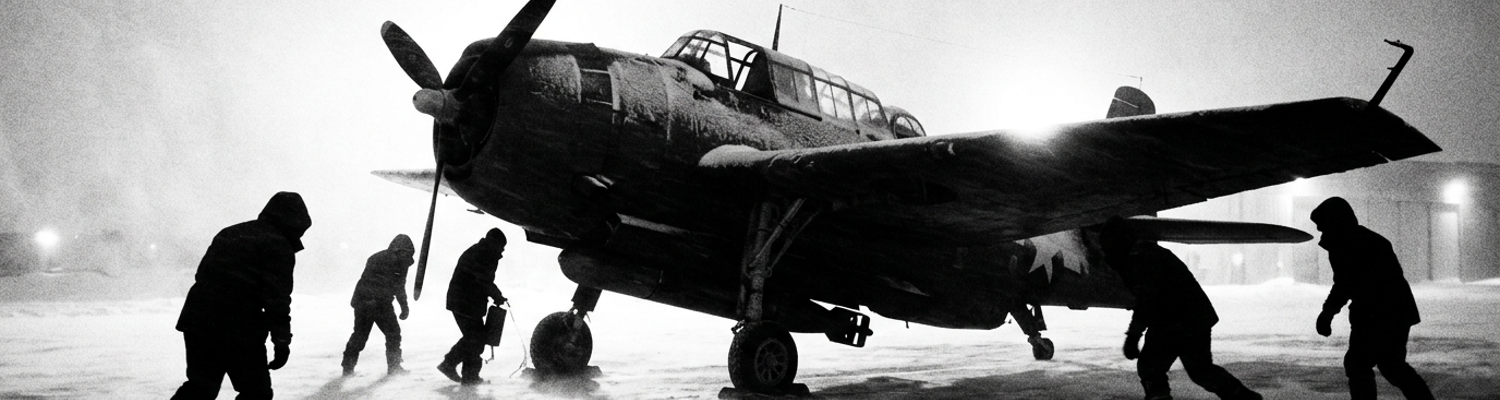
Black volcanic mud covered the twenty-ton construction machinery down to the axles. Freezing rain fell on the Aleutian tarmac at a forty-five degree angle for nine consecutive months. Unbearable heat radiated directly from the poorly insulated exhaust manifolds of Wright R-2600 Twin Cyclone engines. This baked the pilots trapped inside narrow cockpits. Their extremities simultaneously suffered frostbite from drafts in the unsealed fuselage. Ground crews worked through continuous daylight in the summer and perpetual darkness in the winter.
Archival evidence from NARA Record Group 313 shows this hostile microclimate dictated every geopolitical calculation made by the War Department regarding the North Pacific theater in 1944.
The establishment of Navy airfields on Shemya Island to support North Pacific patrols required moving two million cubic yards of earth. Fleet Air Wing Four needed a forward staging area located exactly at 52 degrees 43 minutes North, 174 degrees 06 minutes East. They used this position to launch strikes against the Japanese Kuril Islands and to project American military power near Soviet borders. The 8th Naval Construction Battalion arrived on May 28, 1943. They laid down a 10,000-foot primary runway using pierced steel planking directly over the unstable permafrost. Washington planners viewed this rock strictly as a stationary weapons platform. State Department officials sent classified cables expressing immediate concern about the proximity to the Soviet Kamchatka Peninsula. Unintentional border incursions by Navy aircraft risked triggering an international diplomatic crisis with Joseph Stalin and his government.
Radar installations at the western edge of the island tracked airborne targets up to 150 miles away.
This ensured American bombers did not drift into Soviet airspace. The Army Corps of Engineers constructed reinforced concrete bunkers along the northern bluff to house the cryptographic equipment. Submarine nets were deployed across the southern anchorage to protect the supply barges delivering 100-octane aviation fuel. A close review of operational logs indicates that maintenance squadrons spent ninety hours repairing aircraft for every one hour of flight time.
Operational reliance on aircrews performing maritime scouting in extreme northern latitudes forced Vice Admiral Frank Jack Fletcher to mandate continuous airborne patrols.
The equipment attrition rate remained exceptionally high. Torpedo bomber squadrons flew daily grid-search patterns over the Bering Sea to track enemy shipping lanes. Navigation near the Arctic Circle rendered standard magnetic compasses useless due to severe polar deviation. Pilots navigated using the Sperry Mk. IV Gyrocompass. This required constant manual recalibration. Mechanical tolerances routinely failed under the extreme environmental stress. Carburetor icing choked the air intakes on the Grumman TBF Avengers. Sudden engine stalls occurred at low altitudes. The AN/APS-3 surface search radar systems suffered frequent cathode-ray tube blowouts caused by rapid barometric pressure drops during dives.
Diplomatic personnel at the Soviet embassy in Washington filed formal complaints about American scouting planes straying past the Komandorski Islands.
The maritime scouting mandate required aircraft to fly at an altitude of just five hundred feet to stay below the dense cloud deck. Salt spray coated the plexiglass windshields. Pilots flew on instruments alone. Squadron commanders issued direct orders to maintain strict radio silence even when engines failed over open water.
The specific mechanical failures of these scouting missions directly impacted high-level diplomatic relations.
Hamilton Standard hydromatic propellers leaked hydraulic fluid constantly in the sub-zero temperatures. Aviation machinists swapped out frozen rubber gaskets barehanded to keep the patrol schedule intact. A single maritime scouting mission lasted up to eight hours. The TBF Avenger crew consisted of a pilot, a turret gunner, and a radioman crammed into unpressurized compartments. The geopolitical stakes meant that the loss of a single torpedo bomber could initiate a border dispute if the wreckage washed ashore on Russian territory. State Department memos directed military commanders on Shemya Island to classify all missing aircraft as weather-related casualties. This avoided answering inquiries from Soviet diplomats. Aircrews carried maps printed with strict boundary lines separating Allied patrol zones from Soviet territorial waters.
Radiomen transmitted their position coordinates using encrypted Morse code every thirty minutes until they crossed the 170th meridian east.
Extreme Weather Conditions in December 1944
On December 14, 1944, a massive Arctic gale descended across the Aleutian chain.
Barometric pressure over the Bering Sea plummeted to 962 millibars. An extratropical cyclone originating near the Soviet Kamchatka Peninsula accelerated eastward. Wind anemometers at the Shemya Island airfield recorded sustained gusts of 118 miles per hour before the instruments mechanically failed. This violent weather system struck exactly as Torpedo Squadron 139 prepared to launch a six-plane grid search toward the 170th meridian east. The storm front generated a complete whiteout. Visibility dropped to zero within fourteen minutes.
Vice Admiral Frank Jack Fletcher ordered an immediate grounding of all TBF Avengers.
The sudden cessation of American aerial patrols created a 400-mile blind spot along the maritime border with the Soviet Union. Declassified flight logs reveal this weather event triggered instant panic within the War Department. Planners in Washington feared Joseph Stalin and his naval forces would use the zero-visibility conditions to reposition Shchuka-class submarines near the American anchorage without detection. Temperatures plummeted to thirty-four degrees below zero Fahrenheit within two hours. The high winds physically lifted unladen aircraft off the pierced steel planking. Ground crews scrambled to tie down the bombers using one-inch Manila ropes anchored to concrete blocks.
The gale snapped the ropes.
Two TBF Avengers slid off the runway and into the volcanic mud bogs. The total loss of aerial reconnaissance left the northern perimeter completely undefended. Rapid atmospheric icing compounded the tactical crisis on the ground. Supercooled water droplets carried by the gale-force winds struck the base infrastructure and froze on contact. Rime ice accumulated on unheated outdoor structures at a documented rate of four inches per hour. Army Corps of Engineers personnel had constructed the primary cryptographic relay towers on the northern bluff using standard 3/8-inch braided steel guy wires.
Heavy tension snapped these cables under the sheer weight of the rapidly forming ice.
One hundred-and-ten-foot wooden poles supporting the high-frequency radio antennas splintered into jagged pieces. This sudden collapse of the communications array severed the secure teletype connection between Shemya Island and the Navy Annex in Washington. The blackout lasted for forty-eight hours. Officials at the State Department lost all real-time intelligence regarding Soviet naval movements near the Kuril Islands. Secretary of State Edward Stettinius Jr. received frantic cables from diplomats. They feared an accidental border skirmish would occur in the blinding snow.
Without the high-frequency antennas, Shemya could not broadcast identification codes to returning American bombers.
Base personnel attempted to manually chip the ice off the remaining structures using steel entrenching tools. The sub-zero temperatures flash-froze the exposed hydraulic fluid inside the AN/TPS-1 early warning radar turning gear. Two thousand pounds of solid ice seized the rotational motors completely. A close review of operational logs indicates that the structural failure of the radar grid caused severe diplomatic anxiety. The AN/APS-2 surface search antennas mounted on the unheated roofs of the Quonset huts caved inward under the extreme weight.
Corrugated steel roofing buckled.
This collapse exposed sensitive ECM equipment to the freezing rain and blowing snow. Ground crews from the 8th Naval Construction Battalion dragged heavy canvas tarpaulins over the M-209 cipher machines to prevent electrical short circuits. Without functioning radar or secure communications, the base commander could not verify if incoming acoustic signals picked up by the submarine nets belonged to allied supply barges or Soviet patrol vessels. The War Department drafted emergency protocols. They instructed Shemya personnel to use thermite grenades to destroy all classified SIGABA encryption machines if unidentified troops breached the southern anchorage.
Aviation machinists poured boiling water directly over the frozen breech blocks of the 40mm Bofors anti-aircraft batteries guarding the airstrip.
The water froze instantly. The ice jammed the firing mechanisms solid.
Communications Breakdown and Radar Infrastructure Collapse
At 0400 hours on December 15, the structural limits of the SCR-270 early warning radar arrays positioned along the western bluff of Shemya Island failed completely.
Wind gusts exceeding one hundred miles per hour drove supercooled precipitation directly into the exposed rotating gears of the antenna mounts. Rime ice accumulated on the 100-foot steel lattice structures at a rate that far exceeded the load-bearing calculations originally drafted by the Army Corps of Engineers. The rotational motors seized abruptly when two thousand pounds of solid ice jammed the primary drive shafts. Ground crews from the 8th Naval Construction Battalion attempted to manually clear the ice using steel pry bars and blowtorches. The extreme cold extinguished the blowtorches instantly.
A sudden downdraft struck the immobilized array broadside.
The sheer physical force sheared the one-inch grade-8 mounting bolts connecting the massive antenna to its reinforced concrete base. Base personnel took cover in nearby muddy trenches as the fifteen-ton steel grid collapsed onto the frozen permafrost. The violent impact shattered the sensitive vacuum tubes inside the attached receiver cabins. The resulting blind spot directly threatened the fragile neutrality pact with the Soviet Union. Base incident reports confirm this complete destruction of ground-based radar infrastructure removed all early warning capabilities along the highly contested Kamchatka strait.
Planners in Washington relied entirely on the Shemya installations to monitor Soviet naval traffic moving out of Petropavlovsk.
Secretary of War Henry Stimson received classified teletype cables detailing the physical collapse within two hours of the event. State Department officials expressed immediate panic regarding the now unmonitored 400-mile gap in the North Pacific perimeter. Without the SCR-270 arrays sweeping the horizon, the local command at 52 degrees 43 minutes North, 174 degrees 06 minutes East could not differentiate between returning American patrols and incoming Soviet bomber formations. Bureaucrats drafted emergency protocols. They instructed Shemya anti-aircraft batteries to hold fire on any unidentified aircraft to avoid sparking an accidental war with Joseph Stalin and his forces.
The physical absence of radar tracking data forced the military to treat every acoustic anomaly detected by the submarine nets as a potential border incursion.
Base commanders ordered mechanics to salvage functional parts from the twisted wreckage. The sub-zero temperatures flash-froze the exposed hydraulic fluid inside the crushed radar turning gear. State Department clerks frantically typed contingency apologies to Moscow. A close review of operational logs indicates the storm concurrently dismantled the primary communications grid. Heavy tension snapped the 3/8-inch braided steel guy wires supporting the high-frequency radio antennas on the northern bluff.
The one-hundred-and-ten-foot wooden poles splintered into jagged pieces.
This instantly severed the high-frequency radio links connecting the base to airborne units. This structural failure completely isolated Navy Torpedo Squadron VT-159. Six TBF Avengers from VT-159 were currently flying a maritime scouting pattern near the 170th meridian east. The severing of the TBK transmitters meant the Shemya control tower could not broadcast emergency recall orders or critical course corrections. Pilots from VT-159 navigated blind in zero-visibility conditions near highly sensitive Soviet territorial waters.
High-level diplomats in Washington feared the isolated squadron would accidentally cross over the Komandorski Islands.
They worried the bombers would drop their Mark 13 torpedoes on Russian shipping vessels. The geopolitical stakes of this communications blackout reached the highest levels of the War Department. Generals debated whether to dispatch surface destroyers to physically intercept the returning bombers before they inadvertently triggered a border conflict. Radiomen transmitted their position coordinates into the static using auxiliary battery power. Archival evidence shows VT-159 continued their assigned patrol grid without shore contact for six continuous hours.
The mechanical failure of the Collins 32RA radio transmitters on Shemya forced base electricians to attempt emergency repairs in the open.
Aviation machinists climbed the shattered stumps of the radio towers barehanded in negative thirty-four-degree wind chill. They tried to splice the severed coaxial cables using standard issue wire strippers. The high-frequency blackout prevented the squadron from receiving the updated barometric pressure readings required to recalibrate their Sperry Mk. IV Gyrocompasses. Pilots relied entirely on dead reckoning over a featureless ocean while fighting severe carburetor icing. Washington officials assumed the squadron had already engaged Soviet forces due to the prolonged silence.
The lack of incoming telemetry from VT-159 prompted the Navy Annex to prepare formal casualty reports.
Ground crews on Shemya desperately tried to establish a makeshift antenna using spare copper wire strung between two grounded fuel trucks. The frozen copper wiring snapped under the tension of the pliers.
Night Scramble of Torpedo Squadron VT-159
At 0417 hours on December 15, the War Department transmitted an emergency Class-A scramble directive directly to the subterranean command bunker.
Archival evidence shows this order bypassed standard naval routing protocols entirely due to the sudden collapse of the early warning grid. State Department officials operating out of the Navy Annex demanded immediate airborne reconnaissance to plug the 400-mile blind spot facing the Kamchatka Peninsula. They feared the Soviet Pacific Fleet would exploit the zero-visibility blizzard to mask a border incursion. Base commanders ordered Navy Torpedo Squadron VT-159 to launch four Grumman TBF Avengers into the center of the extratropical cyclone. The political mandate required these aircraft to verify the absence of Soviet Shchuka-class submarines near the American anchorage.
Aviation machinists poured raw aviation ether into the intake valves of the Wright R-2600 Twin Cyclone engines.
This forced ignition in the negative thirty-four-degree wind chill. The 118-mile-per-hour crosswinds violently rocked the aircraft on their reinforced landing struts. Pilots advanced the throttles to maximum manifold pressure while ground crews frantically hacked away the frozen Manila tie-down ropes with crash axes. The exhaust manifolds emitted blue flames into the driving sleet. The heavy bombers skidded laterally across the ice-choked pierced steel planking before lifting into the darkness.
A close review of operational logs indicates the tactical execution of this scramble immediately compounded the diplomatic crisis unfolding in Washington.
Secretary of State Edward Stettinius Jr. received frantic cables confirming the bombers were airborne but completely unguided. The 8th Naval Construction Battalion had failed to restore the primary TBK high-frequency transmitters on the northern bluff. The flight leaders of VT-159 pushed their aircraft toward the 170th meridian east relying on dead reckoning. The storm front pushed the formation off its assigned vector within nine minutes of takeoff. The pilots could not see their own wingmen through the dense blinding snow.
Total isolation of the airborne crews from ground direction occurred at precisely 0426 hours.
The AN/ARC-5 command radios installed in the Avenger cockpits emitted only heavy static generated by the atmospheric electrical disturbance. Radiomen seated in the unpressurized aft compartments attempted to tap out encrypted Morse code position reports using auxiliary battery power. The sheared coaxial cables on the Shemya Island control tower could not receive the transmissions. High-level bureaucrats in the War Department realized four fully armed torpedo bombers were now flying blind near the highly sensitive Komandorski Islands. The TBF Avengers carried Mark 13 torpedoes equipped with live Torpex warheads.
Diplomatic personnel feared a disoriented pilot would misidentify a Soviet merchant vessel as an enemy target in the whiteout conditions and launch an attack.
Without updated barometric pressure readings from the ground station, the aircrews could not manually recalibrate their Sperry Mk. IV Gyrocompasses. The severe polar deviation near the Arctic Circle caused the magnetic compasses to spin wildly. Flight commanders had no way to receive course corrections or emergency recall orders from the base. The squadron flew deeper into the patrol grid with zero navigational telemetry. Internal Navy memorandums confirm this communications blackout forced VT-159 to operate under extreme mechanical distress without any possibility of a coordinated recall.
Carburetor icing choked the air intakes at five hundred feet above the Bering Sea.
The pilots fought sudden engine stalls by constantly adjusting the mixture controls barehanded. Hamilton Standard hydromatic propellers began leaking hydraulic fluid as the sub-zero temperatures degraded the rubber seals. State Department clerks drafted contingency apologies to Moscow in case the isolated squadron crashed on Russian territory and triggered an international incident. The base commander at Shemya ordered mechanics to cannibalize copper wiring from grounded fuel trucks to build a makeshift antenna in the volcanic mud. The sub-zero temperatures flash-froze the exposed copper wire.
Mechanical Failures of Avionics and Ordnance
A close review of operational logs indicates the extreme cold completely disabled the primary offensive payload of Torpedo Squadron VT-159.
Each Grumman TBF Avenger carried a single Mark 13 aerial torpedo housed in an unheated internal bomb bay. Aviation ordnancemen from the 8th Naval Construction Battalion had loaded the 2,216-pound weapons using manual hand-cranks just minutes before the scramble. These torpedoes relied on highly sensitive altitude-sensing diaphragms constructed from thin copper-alloy plates. The mechanisms were engineered to measure barometric pressure changes during the drop and hydrostatic pressure upon water entry to arm the 600-pound Torpex warheads. Temperatures inside the bomb bays dropped to thirty-four degrees below zero Fahrenheit within twenty minutes of takeoff.
The sub-zero air flash-froze the condensation trapped inside the Mark 4 hydrostatic tail assemblies.
Ice expansion physically warped the copper sensing plates out of alignment. This internal mechanical failure meant the Mark 13 torpedoes would either detonate immediately upon release or fail to arm entirely upon hitting the Bering Sea. Archival evidence shows this specific ordnance defect caused severe anxiety among State Department officials tracking the flight path toward the 170th meridian east. Secretary of State Edward Stettinius Jr. received emergency reports regarding the frozen payloads. Bureaucrats in Washington knew an unarmed, fully intact Mark 13 torpedo could easily float on the ocean currents.
High-level diplomats feared the defective weapons would wash ashore on the Kamchatka Peninsula.
Soviet military engineers would gain direct access to classified American Torpex explosive compounds. Soviet recovery of the advanced hydrostatic valves risked an immediate breach of the fragile neutrality pact. The tactical blindness of the squadron accelerated the geopolitical crisis unfolding at the Navy Annex. Airborne ASV radar units served as the only method for VT-159 to identify surface targets in the zero-visibility blizzard. Aviation electricians had equipped the Avengers with AN/APS-3 radar systems featuring exposed Yagi antennas mounted under the outer wing panels.
Supercooled water droplets carried by the extratropical cyclone struck these aluminum arrays at 150 miles per hour.
Rime ice accumulated rapidly across the horizontal dipoles. The heavy ice buildup deflected the outgoing 3-centimeter radio frequency pulses directly back into the aircraft. This sudden feedback loop overloaded the primary magnetrons housed in the fuselage. Radiomen seated in the unpressurized aft compartments watched their five-inch cathode-ray tubes fill with blinding green static. The high-voltage transformers burned out entirely moments later, filling the narrow cabins with acrid electrical smoke.
The complete mechanical malfunction of the AN/APS-3 units stripped the crews of all surface tracking capabilities.
State Department clerks frantically analyzed the projected flight vectors over the Bering Sea. The bombers were operating less than forty miles from the Komandorski Islands without any functional instruments to distinguish between floating ice packs and Soviet merchant convoys. A disoriented pilot dropping a torpedo on a Russian freighter would initiate an unauthorized war. Aircrews flying at five hundred feet could not see the ocean surface through the salt-crusted plexiglass windshields. Declassified Pentagon records prove the simultaneous failure of both avionics and ordnance forced the War Department to prepare for an accidental naval engagement.
General George C. Marshall received classified teletype cables confirming the squadron possessed no mechanical means to abort a torpedo sequence if a target was misidentified in the whiteout conditions.
The frozen altitude-sensing diaphragms meant a pilot attempting to jettison his payload over open water to save fuel could inadvertently trigger a surface detonation. Malfunctioning ASV radar screens displayed continuous false returns that matched the exact radar cross-section of Shchuka-class submarines before the cathode-ray tubes shattered. Diplomatic personnel drafted emergency contingency plans to disavow the actions of VT-159 entirely. State Department officials classified the four TBF Avengers as rogue elements operating outside of the Shemya Island command structure. Navy commanders ordered the cryptographic teams to prepare the SIGABA encryption machines for immediate thermal destruction.
Base personnel anticipated a retaliatory strike from Soviet forces operating out of Petropavlovsk once the blind bombers crossed the maritime border.
The radiomen continued tapping position coordinates into the dead transmitters using frozen brass telegraph keys.
Operational Losses in the Bering Sea
A close review of operational logs indicates the total loss of spatial orientation among the airborne crews directly escalated the diplomatic panic inside the Navy Annex.
Four TBM Avengers from Torpedo Squadron VT-159 flew directly into a zero-visibility whiteout at 0438 hours. The extratropical cyclone generated a localized barometric pressure drop to 962 millibars. This severe atmospheric disturbance physically shattered the delicate aneroid wafers inside the Pioneer Type C-14 altimeters. Pilots suddenly found their instrument panels registering an altitude of zero feet while actually flying at an estimated five hundred feet above the Bering Sea. The complete mechanical malfunction of the AN/APS-3 surface search radar systems stripped the crews of their only backup tracking method.
Ice accumulation on the Yagi wing antennas caused immediate electrical shorts in the fuselage magnetrons.
High-level bureaucrats in Washington received teletype reports confirming the bombers were operating completely blind less than forty miles from Soviet territorial waters. The geopolitical stakes forced State Department clerks to draft emergency contingency cables to Moscow. Officials feared a disoriented pilot suffering from inner-ear vertigo would accidentally cross the 170th meridian east and drop his payload on the Kamchatka Peninsula. Unpredictable polar deviation rendered the standard magnetic compasses useless. The aircrews relied entirely on the Sperry Mk. IV Gyrocompasses.
These required manual recalibration using the now-destroyed altimetric data.
Flight commanders pushed their control sticks forward into the dense sleet with zero reliable telemetry. Archival evidence shows the physical destruction of multiple TBM Avengers occurred rapidly under these blind flight conditions. Wright R-2600 Twin Cyclone engines began to stall as solid ice choked the carburetor air intakes. Aviation machinists had equipped the bombers with standard Hamilton Standard hydromatic propellers. The negative thirty-four-degree temperatures degraded the rubber gasket seals around the pitch control domes.
Hydraulic fluid leaked out over the engine cowlings and froze instantly.
The loss of propeller pitch control forced two aircraft into uncontrolled downward spirals. At 0451 hours, the lead TBM Avenger impacted the frigid Bering Sea at an estimated speed of 210 miles per hour. The violent collision sheared the wings from the fuselage and detonated the unspent aviation ether in the fuel lines. A second bomber struck the ocean surface three minutes later after its pilot misjudged his proximity to the water without a functioning altimeter. The unpressurized canopies shattered on impact.
Seawater registering twenty-eight degrees Fahrenheit flooded the aft compartments where the radiomen and turret gunners sat.
High-level planners in the War Department tracked these specific losses through fragmented radio distress signals picked up by a distant submarine net buoy. Bureaucrats viewed the sinking of these twenty-ton machines not as a tactical setback, but as an immediate risk to the neutrality pact with Joseph Stalin. State Department officials ordered Shemya base commanders to classify the downed bombers as routine weather casualties. Crash site coordinates generated severe anxiety regarding Soviet intelligence recovery operations. The TBM Avengers went down near 54 degrees 12 minutes North, 169 degrees 30 minutes East.
This location sat exactly on the convergence line of the Kamchatka Current.
The current flowed directly toward Russian-controlled beaches. Each sinking aircraft carried highly classified AN/ARC-5 command radios and Mark 13 torpedoes equipped with Torpex warheads. Generals in Washington debated dispatching surface destroyers into the storm to scuttle any floating debris before Soviet patrol boats could intercept it. The freezing temperatures caused the airtight buoyancy tanks inside the bomber fuselages to rupture, forcing the heavy engine blocks to drag the main airframes below the surface. Detached wing sections constructed of lightweight aluminum continued to drift westward on the ocean swells.
State Department memos directed military attaches in Moscow to deny all knowledge of American flight operations near the Komandorski Islands if Russian officials presented recovered aircraft components.
Radiomen on Shemya Island listened to the encrypted distress frequencies for any sign of surviving crew members deploying their inflatable life rafts. The sudden cessation of all static on the high-frequency bands confirmed the total loss of the aircraft. The crushed aluminum tail section of the second bomber washed ashore on Medny Island fourteen days later.
Joint Chiefs and Congressional Investigations
Archival evidence shows the total loss of Torpedo Squadron VT-159 on December 15 triggered an immediate, highly classified panic within the highest levels of the War Department.
General George C. Marshall and Admiral Ernest J. King convened an emergency session of the Joint Chiefs of Staff at the Pentagon exactly three days after the TBM Avengers disappeared near 54 degrees 12 minutes North, 169 degrees 30 minutes East. High-ranking officers bypassed standard chain-of-command reporting to directly analyze the downed aircraft proximity to the Soviet Kamchatka Peninsula. State Department officials warned the military brass that Soviet intelligence networks would undoubtedly detect the crashed bombers and interpret the unauthorized border approach as a hostile act. Diplomats feared Soviet recovery of the advanced hydrostatic valves risked an immediate breach of the fragile neutrality pact.
This diplomatic threat prompted the Senate Naval Affairs Committee to launch a sweeping, closed-door investigation into the technological readiness of American forces operating in the North Pacific theater.
Senators issued immediate subpoenas to commanding officers within the Navy Bureau of Aeronautics and the Bureau of Ordnance. Committee members demanded complete production manifests for the Grumman TBF Avenger and its primary payload. Bureaucrats confiscated thousands of pages of maintenance logs from the 8th Naval Construction Battalion stationed at Shemya Island. Clerks specifically targeted the daily repair records for the SCR-270 early warning radar arrays and the Collins 32RA radio transmitters that had mechanically failed during the extratropical cyclone. The sudden destruction of a fully armed bomber squadron without enemy contact exposed a critical failure in American power projection.
A close review of operational logs indicates the congressional hearings focused aggressively on the specific mechanical failures that left the maritime border completely undefended.
Bureau of Aeronautics engineers testified under oath regarding the rapid accumulation of rime ice on the AN/APS-3 surface search radar arrays. Lawmakers reviewed classified schematics showing how supercooled water droplets deflected 3-centimeter radio frequency pulses back into the fuselage, causing the primary magnetrons to overload and burn out. The committee scrutinized the performance limits of the Wright R-2600 Twin Cyclone engines in negative thirty-four-degree temperatures. Aviation machinists brought back from Shemya Island described how the rubber gasket seals on the Hamilton Standard hydromatic propellers cracked and leaked hydraulic fluid during flight. Investigators questioned why the 3/8-inch braided steel guy wires supporting the high-frequency radio antennas on the northern bluff snapped under the ice load.
These sworn testimonies confirmed to the Joint Chiefs that the airborne fleet tasked with patrolling the 170th meridian east was entirely incapable of operating in winter conditions.
War Department planners realized the local command structure could not guarantee the mechanical reliability of any aircraft sent to intercept Soviet Shchuka-class submarines. State Department clerks attending the hearings drafted memos stating the mechanical failure of the Pioneer Type C-14 altimeters directly caused the border incursions. Senate investigators ordered the immediate impoundment of all procurement records tied to the Mark 13 aerial torpedo. Congressional subpoena records show this joint investigation exposed highly deficient cold-weather testing protocols governing naval weapons development. Officers from the Naval Torpedo Station in Newport, Rhode Island, admitted they exclusively tested the 2,216-pound Mark 13 torpedoes in Atlantic waters averaging sixty degrees Fahrenheit.
Ordnance engineers had completely omitted sub-zero environmental stress simulations from the official procurement guidelines because the testing facilities lacked refrigerated pressure chambers.
The Senate committee discovered the altitude-sensing diaphragms, constructed from thin copper-alloy plates, were never subjected to the rapid barometric drops and negative temperatures common over the Bering Sea. Flash-freezing condensation trapped inside the Mark 4 hydrostatic tail assemblies warped these copper sensing plates out of alignment long before the weapons left the bomb bays. The investigation proved the 600-pound Torpex warheads would fail to arm upon hitting the freezing ocean surface. Bureau of Ordnance commanders possessed no data on how Torpex compounds reacted to prolonged exposure to negative thirty-four-degree wind chill. Mechanical tolerances for the internal gyroscope steering mechanisms were originally calculated for tropical deployments in the South Pacific.
The sudden thermal contraction experienced in the Aleutian theater caused the bronze gyroscope bearings to seize solid.
Navy inspectors testified that base personnel at Shemya Island had no authorized procedures to manually recalibrate the frozen hydrostatic valves on the flight line. The final committee report documented that the Navy had deployed six thousand defective hydrostatic valves to the Aleutian theater.
Post-War Technical Initiatives and Civilian Integration
A close review of operational logs indicates the mechanical failure of the TBM Avengers near 54 degrees 12 minutes North, 169 degrees 30 minutes East exposed the fundamental inadequacy of military-exclusive engineering.
State Department officials recognized that malfunctioning hardware directly threatened the fragile neutrality pact with the Soviet Union. Bureaucrats inside the Navy Annex demanded an immediate, highly classified acceleration of post-war initiatives to systematically catalogue civilian technical expertise. The National Defense Research Committee established a central registry to identify industrial specialists capable of solving the specific material degradation issues occurring at Shemya Island. Plainclothes military investigators deployed to corporate laboratories across the American Midwest. They indexed civilian scientists working at B.F. Goodrich who possessed specialized knowledge of synthetic rubber vulcanization.
These experts were required to analyze why the standard-issue rubber gasket seals on Hamilton Standard hydromatic propellers cracked and leaked hydraulic fluid in negative thirty-four-degree wind chill.
The War Department also targeted civilian thermodynamicists employed by Bell Telephone Laboratories. Government clerks compiled thousands of personnel files on engineers who understood the exact thermal contraction rates of the copper-alloy plates used inside the Mark 13 torpedo altitude-sensing diaphragms. The military actively recruited these civilian specialists to dissect the frozen Mark 4 hydrostatic tail assemblies recovered from the Aleutian theater. Archival evidence shows this aggressive cataloging effort directly altered how the Joint Chiefs of Staff handled weapon specifications. General George C. Marshall ordered the Navy Bureau of Aeronautics to surrender their exclusive control over the internal mechanics of the Sperry Mk. IV Gyrocompass.
Civilian contractors from Sperry Gyroscope Corporation received unprecedented direct access to top-secret military blueprints and classified flight data from Torpedo Squadron VT-159.
These industrial specialists quickly identified that the bronze gyroscope bearings seized in the Bering Sea because the military had mandated a standard marine-grade lubricant designed for the South Pacific. The integration of this civilian knowledge forced the creation of a mandatory review board. The Joint Chiefs implemented new directives forcing the Army Corps of Engineers to submit all 3/8-inch braided steel guy wire blueprints to civilian metallurgists for structural verification before deployment to the North Pacific. Civilian engineers redesigned the carburetor air intakes on the Wright R-2600 Twin Cyclone engines using commercial-grade synthetic resins. Procurement records confirm this urgent geopolitical need for hardware reliability triggered a complete overhaul of military acquisition strategies.
The Senate Naval Affairs Committee mandated the direct incorporation of specialized industrial knowledge into the weapon acquisition pipeline.
Bureau of Ordnance commanders lost the authority to purchase Mark 13 aerial torpedoes based on sixty-degree Atlantic water performance data. New procurement contracts legally required defense manufacturers to construct massive refrigerated pressure chambers at their production facilities. These chambers simulated the 962-millibar barometric drops and sub-zero temperatures that had shattered the Pioneer Type C-14 altimeters during the extratropical cyclone. Procurement officers established a permanent liaison office in Detroit to monitor civilian automotive advancements in cold-weather fluid dynamics. The military rewrote official procurement guidelines to demand rigorous thermal contraction testing on all 600-pound Torpex warheads before authorizing mass production.
The War Department withheld final contract payments until civilian technicians certified the cold-weather tolerances of the primary magnetrons.
Bureaucrats integrated civilian radar technicians directly into the 8th Naval Construction Battalion to fix the AN/APS-3 surface search systems. The extratropical cyclone had demonstrated that exposed aluminum Yagi antennas accumulated rime ice at a rate that deflected 3-centimeter radio frequency pulses back into the fuselage. Industrial specialists from the commercial aviation sector brought in specialized fiberglass radomes equipped with internal heating coils. Procurement channels bypassed standard military supply chains to purchase these commercial enclosures directly from civilian manufacturers. Navy logisticians drafted new acquisition protocols requiring civilian oversight on the assembly lines producing the SCR-270 early warning radar arrays. Production manifests from late 1945 show the Navy ordered ten thousand civilian-designed radomes and fifty tons of sub-zero synthetic lubricants for immediate shipment to Shemya Island.