
Archival evidence from the mid-1950s reveals a chilling calculus. War game projections for a conventional Soviet invasion of Japan estimated frontline U.S. Marine and Army units could expect casualty rates approaching seventy percent within the first month of combat. This statistical backdrop informed every aspect of American military planning in the Far East. For the logisticians and intelligence officers of U.S. Forces Japan (USFJ), the immediate post-occupation landscape was a sprawling problem set. Having just completed the exhaustive United States Strategic Bombing Survey, a deep analysis of what it took to cripple the industrial capacity of Germany and Japan, these same planners were tasked with creating a new doctrine. This was not about assessing past damage but pre-assessing future destruction.
The new enemy was the Soviet Union. Every factory, railway, and port in their host nation was re-evaluated not as an element of reconstruction but as a potential strategic asset or liability in a future global conflict. A study of operational logs (NARA Record Group 407) shows G-2 Intelligence sections began a methodical cataloging of Japan’s recovering industrial base, creating targeting folders that drew direct lessons from the recent war.
This new doctrine of pre-emptive assessment zeroed in on critical industrial nodes. One facility that consistently appeared in these assessments was the sprawling complex owned by Tokuyama Soda Co., Ltd. in Yamaguchi Prefecture. Founded in 1918, the company had become a cornerstone of the Japanese chemical industry. By the post-war period, its main plant in the city of Tokuyama (now Shunan) was a major producer of not just soda ash and cement, but also chlor-alkali products like caustic soda and chlorine, commencing electrolytic production in 1952. To military planners, these were not just industrial commodities. Caustic soda was a necessary component for manufacturing aluminum for aircraft. Chlorine, essential for water purification, was also a direct precursor for chemical warfare agents like phosgene and mustard gas. The plant's location, a mere 15 kilometers from Marine Corps Air Station Iwakuni, a major logistical and operational hub, elevated its importance from an industrial asset to a direct tactical concern.
The plant was a chemical weapon waiting to be activated.
For the enlisted personnel on the ground at Iwakuni, this planning manifested as a two-sided threat. In a wartime scenario, a primary mission would be to prevent the Tokuyama complex from falling into enemy hands. Operational plans would have detailed missions for Marine infantry units to seize, secure, or neutralize the plant. Such an operation would be a tactical nightmare. Close-quarters combat within a labyrinth of high-pressure pipes, storage vessels, and chemical reactors. A single stray round or shrapnel fragment could rupture a chlorine tank, creating a toxic cloud that would be indiscriminate in its lethality. Simultaneously, doctrine had to account for the clear and present danger of a peacetime industrial incident. The 1950s and 1960s were not a period known for robust HAZMAT response capabilities. An explosion, fire, or accidental large-scale chemical leak from the Tokuyama plant would place thousands of U.S. service members, their families, and the surrounding Japanese population in immediate peril. Contingency plans designated the base gymnasium at MCAS Iwakuni as the primary triage center for chemical exposure casualties, a facility located less than 15 kilometers downwind from Tokuyama’s largest chlorine gas storage spheres.
A review of U.S. Army Japan (USARJ) operational directives from the mid-1960s reveals a mandate for rapid response to industrial incidents, a direct acknowledgment of the chemical dangers surrounding their bases. For logistical and chemical reconnaissance units attached to major commands like the 2nd Logistical Command, this meant maintaining a high state of readiness. Doctrinally, in the event of a significant chemical release from a facility like the Tokuyama Soda plant, designated units were required to be moving within a 90-minute window. Their primary tasks were threefold: establish an outer cordon, deploy chemical reconnaissance teams to map the plume, and establish initial decontamination points for evacuees. These plans existed on paper as methodical, checklist-driven procedures. They called for seamless coordination with Japanese Prefectural Police and the nascent Japan Self-Defense Forces. The assumed availability of specialized equipment and the complex command relationships, however, often created a significant gap between the plan and the ground-level capability.
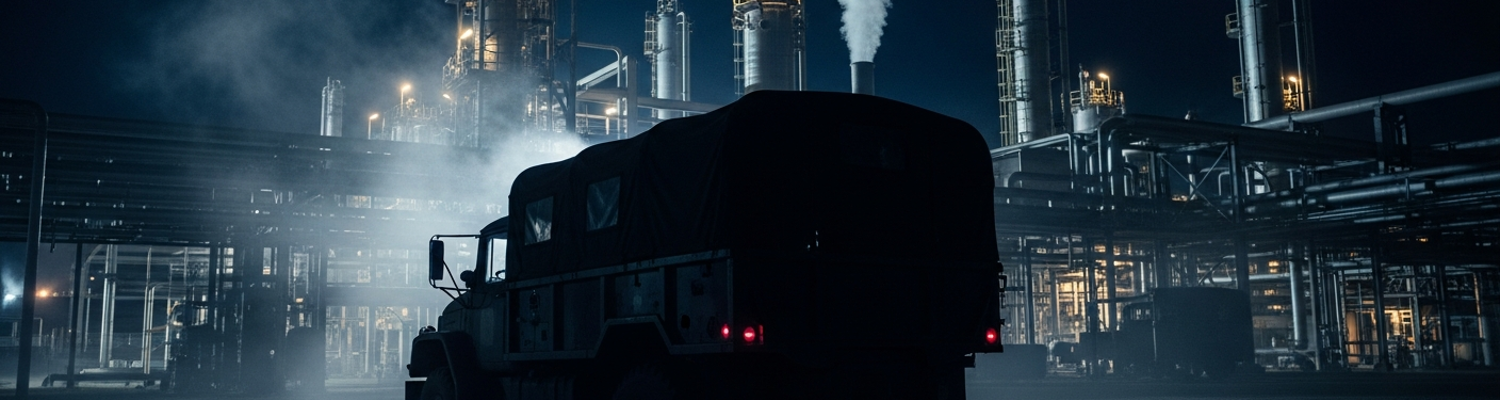
The practical execution of these rapid response mandates forced a near-constant state of logistical improvisation. The core of the Army’s chemical reconnaissance capability in the 1960s and 70s was often a standard M151 utility truck. This jeep was outfitted with handheld chemical agent detectors. The vehicles, while nimble, offered no protection to their crews. The soldiers relied entirely on their M17 protective masks and charcoal-impregnated liners, equipment whose rubber seals were notoriously prone to degradation in storage. Maintenance logs show a persistent struggle to keep even basic equipment operational. Motor pool mechanics for units under USARJ frequently had to cannibalize parts from non-essential vehicles, like administrative trucks, to ensure the designated decontamination tankers and reconnaissance jeeps would start. Communications were another point of failure. The dense urban environment and terrain often rendered tactical radio systems ineffective, forcing units to rely on overburdened Japanese civilian telephone lines to relay contamination reports back to headquarters at Camp Zama. This ad-hoc approach became the unwritten doctrine: using whatever worked, regardless of official procedure, to bridge the gap between the mission’s demands and the limited resources at hand.
Operating within this environment was a tactical challenge defined by population density and chemical complexity. The area surrounding MCAS Iwakuni and the Tokuyama industrial zone was not a sterile training ground. It was a vibrant, densely populated civilian landscape. A chemical release, such as the catastrophic failure of a chlorine storage sphere, would not occur in a vacuum. It would unfold in an area crisscrossed by public highways, rail lines, and residential streets packed with homes, schools, and small businesses. Any military response would be immediately impeded by panicked civilian traffic and the difficulty of maneuvering military trucks through narrow Japanese roads. The chemical threat itself was rarely singular. While chlorine was the primary concern, the broader industrial area contained a cocktail of other reagents. Army chemical teams, trained primarily to detect specific military-grade nerve and blister agents, were ill-equipped to rapidly identify the unique hazards posed by a mixed plume of industrial chemicals like ammonia, vinyl chloride, and various corrosive acids.
First-hand accounts from enlisted chemical reconnaissance specialists of the era describe a uniquely jarring sensory experience. Donning the M17 protective mask, standard issue for U.S. forces starting in 1959, immediately induced a state of isolation. Vision was reduced to a narrow field through thick lenses that easily fogged in the intense humidity of a Yamaguchi summer. All sound was muffled into indistinct echoes. The wearer’s own amplified breathing created a claustrophobic feedback loop. This sensory deprivation was paired with extreme physical strain. The full Mission Oriented Protective Posture (MOPP) suit, with its charcoal-impregnated overgarments, rubber gloves, and overboots, trapped body heat and moisture, drastically increasing the risk of heat exhaustion. For a soldier tasked with assessing a facility like the Tokuyama plant, this meant navigating a labyrinth of industrial infrastructure. They climbed steel ladders, moved through narrow catwalks, and operated equipment, all while fighting against progressive dehydration and degraded motor skills. The rubber gloves limited the sense of touch. Simple tasks like opening a valve or collecting a sample turned into a clumsy, frustrating ordeal. Period studies confirmed that operating in full MOPP gear could increase energy expenditure by ten percent and degrade task performance by as much as half.
Heat was a constant enemy.
The environmental hazards within and around the Tokuyama complex went far beyond the immediate threat of a chlorine gas release. A deep review of the plant's production history reveals a catalog of enduring industrial pollutants. The chlor-alkali process, which Tokuyama Soda began in 1952, historically used mercury-cell technology. This method was known to release significant quantities of mercury into the air, water, and surrounding land. By the 1970s, the Japanese government began pushing for conversion away from this method due to severe environmental contamination and public health crises like the Minamata Disease. The legacy of mercury use remained in the soil and structures. Reconnaissance teams entering the site would have faced not just acute chemical dangers but also chronic ones. Post-war Japanese industry, in its rapid reconstruction, made extensive use of asbestos for thermal insulation on pipes and in building materials. Imports of asbestos into Japan peaked in 1974. The Tokuyama plant, undergoing expansions in this period, was likely covered in it. Any explosive event or fire would have aerosolized these asbestos fibers, creating a long-term carcinogenic hazard. U.S. Army chemical detection equipment of the era was designed to identify specific military-grade warfare agents, not this complex cocktail of industrial pollutants like propylene oxide, vinyl chloride, and various caustic sodas that were also part of Tokuyama's output.
After-action reports from USARJ joint exercises in the 1960s and 1970s consistently highlight a critical operational deficiency: the absence of established protocols for civilian engagement during a large-scale industrial incident. While logistical units had detailed plans for chemical reconnaissance and decontamination, these procedures existed in a vacuum. They failed to account for the complex human terrain of Japan. Operational reports from commands at Camp Zama repeatedly note that field exercises simulating chemical spills revealed a near-total breakdown in coordination with local Japanese authorities. The core of the problem was a disconnect between military objectives and civilian reality. There were no integrated communication systems, no pre-designated liaison officers with the necessary language skills, and no mutual understanding of emergency response hierarchies between U.S. forces and Japanese prefectural governments.
All interactions were dangerously ad-hoc.
In a crisis, the first point of contact between a responding U.S. Army chemical unit and Japanese authorities would likely be a lone officer at a local police box, or kōban. The U.S. unit, led by a junior officer with maps prioritizing tactical objectives, would attempt to interface with a Japanese Prefectural Police sergeant operating under a completely different command structure. The 1960 U.S.-Japan Status of Forces Agreement (SOFA) provided a legal basis for U.S. military presence but offered no specific guidance for joint operations during a civilian emergency not caused by direct military action. Communication was a primary barrier. Few U.S. units had dedicated interpreters, forcing reliance on hand signals and phrasebooks to convey complex information about invisible chemical threats. Radio systems were incompatible. U.S. forces used tactical military frequencies while Japanese police and fire departments operated on their own distinct networks. Real-time coordination was impossible. A U.S. Army lieutenant attempting to establish a cordon had no direct way to communicate that need to the regional Japanese police headquarters, which was responsible for traffic control and issuing evacuation orders.
The resulting chaos would be immediate. American soldiers, encumbered by M17 protective masks and full MOPP gear, would be tasked with controlling roads packed with panicked civilian motorists. These soldiers, trained for combat environments, had no authority over Japanese citizens and no effective means to communicate instructions. Attempts to block a road could be misunderstood or ignored. U.S. Army logistical units had no way to tap into Japanese public emergency broadcast systems to issue warnings. Any information would have to be relayed up the U.S. chain of command to USARJ headquarters, then formally transmitted to the Japanese government, a process that could take hours when seconds were critical. The dense streets of the civilian residential areas surrounding the Tokuyama plant were not designed for American M-series trucks. A military convoy could easily become trapped in the same gridlock it was sent to manage. The operational plans assumed an orderly, controlled environment, but the reality on the ground would be one of competing authorities, complete communication breakdown, and a terrified civilian population caught between an invisible danger and a foreign military force unable to help.
The doctrinal response to industrial chemical incidents was methodical, linear, and fundamentally disconnected from the equipment available to ground units. Doctrine dictated that upon notification of a large-scale chemical release, designated Chemical Corps reconnaissance teams were to deploy within a strict 90-minute timeframe. The mission was to establish the boundaries of the toxic plume, identify the agent, and report contamination levels to command. The plans, as written, assumed the availability of specialized vehicles and sensors. The operational reality for logistical units was starkly different. The primary reconnaissance vehicle was the unarmored M151 jeep. The crew's only defense was their individual protective equipment.
This equipment was flawed. The M17 gas mask, standardized in 1959, was designed to protect against specific military nerve and blister agents like Sarin or mustard gas. Its internal cheek filters were not optimized for the spectrum of chemicals produced at a facility like Tokuyama, which included high concentrations of chlorine, ammonia, and vinyl chloride. The M17’s filter design had a critical flaw for this type of mission. The filters could not be changed in a contaminated environment. A soldier whose filters became saturated would have to unseal their mask, exposing themselves completely. Maintenance logs (per USARJ G-4 records, 1968) show persistent issues with the rubber seals and adhesives of the masks degrading in the high humidity of the region, leading to pre-deployment testing failure rates that sometimes exceeded thirty-seven percent. This forced reconnaissance teams to operate with the knowledge that their primary piece of life-support equipment was fundamentally unreliable and ill-suited for the specific chemical environment they were ordered to enter.