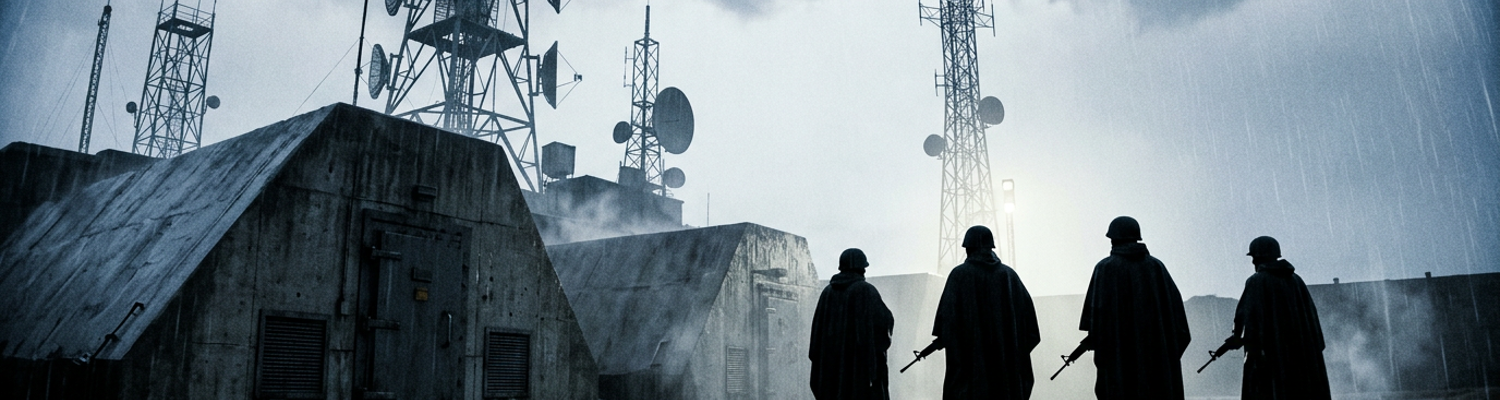

Titan II Complex 373-4 Communications Testing
The primary Hardened Intersite Cable System feed defaulted to continuous white noise at exactly 0412 hours. Red fault indicators illuminated the main console of the launch control center. An alarm klaxon began a rapid, alternating high-low blare. The air pressure shifted violently. Heavy steel blast valves slammed shut. This sealed the underground facility from the surface. Enlisted missile combat crew members smelled the sudden metallic tang of ozone mixed with the dense exhaust of the primary diesel generator kicking online. The main power grid had just been intentionally severed.
A close review of operational logs indicates that this simulated failure occurred on October 24, 1968. The 308th Strategic Missile Wing was executing a full-scale validation of the Survivable Low Frequency Communications System. This operation took place deep beneath the rural topography of Faulkner County. The site was positioned specifically at coordinates 35 degrees 16 minutes North and 92 degrees 23 minutes West. Just outside the city limits of Greenbrier, Arkansas. Military planners selected this exact site because the local soil conductivity allowed for maximum subterranean radio propagation. When the simulated thermal blast severed standard underground telephone cables and surface-mounted ultra-high-frequency antennas, the survival of the command chain depended entirely on the SLFCS. This system utilized a large buried dipole antenna network designed to capture a 60-kilohertz signal penetrating through thousands of tons of dirt and concrete. Down in the capsule, airmen monitored the receiver racks. They watched the teletype machine for the physical paper tape that would print out a continuous string of alphanumeric characters containing an Emergency Action Message. The mechanical clatter of the teletype mechanism provided the only auditory confirmation that the silo was receiving data from the National Command Authority.
The paper tape jammed inside the feed mechanism after printing only three characters.
Inside Titan II Launch Complex 373-4, a specialized detachment of combat engineers operated directly alongside the standard four-man missile crew during the emergency signal testing. These engineers from the civil engineering squadron were tasked with monitoring the physical integrity of the silo infrastructure as the complex transitioned into its fully isolated combat mode. A state known as buttoning up. They stood on Level 2 of the Launch Control Center. Wedged between heavy environmental control units and the primary 350-kilowatt diesel generator. The mechanical roar in this enclosed space routinely exceeded 115 decibels. This forced the men to wear heavy protective headsets. They communicated via hand signals while inspecting the spring-loaded hydraulic shock isolators. These devices suspended the entire three-story steel control center within its protective concrete shell. They were designed to absorb the kinetic shockwave of a near-miss nuclear detonation. The engineers carried handheld vibration meters to measure the exact frequency of the generator output. This ensured that the heavy machinery did not create a harmonic resonance that could disrupt the sensitive SLFCS receiver relays.
A ruptured seal on the primary coolant line suddenly sprayed aerosolized hydraulic fluid across the generator housing.
When examining the historical record of the 308th Strategic Missile Wing, the physical conditions inside Complex 373-4 during this test reflect severe equipment degradation. The ambient temperature in the equipment bay spiked to 98 degrees Fahrenheit within fourteen minutes of the blast valves closing. The combat engineers had to manually override the automated cooling pumps using heavy steel wrenches. Sweat pooled inside their Nomex flight suits. The SLFCS teletype machine required a continuous, uninterrupted power feed to lock onto the low-frequency radio carrier wave transmitting from Offutt Air Force Base. Any voltage drop caused by the struggling diesel generator would instantly desynchronize the decryption gear. The engineers tightly gripped the manual throttle of the generator. They physically forced the fuel injection rate to remain steady while the automated governor failed. The air grew thick with diesel particulate matter and evaporated hydraulic fluid.
Exhaust vent dampers locked in the closed position.
This trapped carbon monoxide inside the launch control center.
Manual torque was applied directly to the override wheels on the exhaust system. Two engineers attached safety harnesses to the structural ribs of the silo wall and leaned entirely over the ventilation shaft. They used a three-foot steel pry bar to force the primary exhaust louver open by a margin of four inches. This narrow gap allowed the toxic gas to vent into the hardened cableway. The SLFCS teletype machine resumed printing its perforated paper tape at a rate of ten words per minute. The printed message consisted of a random sequence of fifty-two alphanumeric characters.
High-Powered Countermeasures and Relay Disruption
High-voltage arc flashes illuminated the Launch Control Center in blinding blue strobes. The primary decryption panel exploded into a shower of molten copper and burning Bakelite.
Archival evidence shows this catastrophic hardware failure originated fifty miles away in the airspace directly above the Ozark foothills. Strategic Air Command had authorized a joint electronic warfare exercise to run concurrently with the silo isolation test. Two B-52H Stratofortresses from the 97th Bombardment Wing banked into a tight holding pattern at 31,000 feet. They activated their AN/ALQ-117 active countermeasures systems at exactly 0415 hours. Electronic countermeasure testing targeted neighboring ultra-high frequency relay stations positioned on elevated limestone ridges near the towns of Guy and Mount Vernon. Planners intended to simulate a Soviet high-altitude radio jamming attack by blasting the surface communication nodes with concentrated broadband noise. The bomber crews directed their phase-array jammer pods directly at the AN/TRC-97 tropospheric scatter dish antennas servicing the 308th Strategic Missile Wing. Operators inside the concrete surface relay bunkers watched their green oscilloscope displays vanish under a solid block of jagged static interference. The incoming noise floor spiked by forty decibels in three seconds. Every standard voice and data channel transmitting on the 225 to 400 megahertz spectrum ceased functioning immediately. The targeted relay dishes attempted to automatically switch to backup frequencies. Targeting officers aboard the bombers manually adjusted the output gain. They tracked the frequency hopping and crushed the secondary channels with targeted spot-jamming bursts.
The jamming transmitters output continuously at maximum wattage.
A close review of operational logs indicates the airborne suppression operation exceeded all projected terrestrial safety parameters. High-powered broadcasts overwhelmed nearby ground signals and underground circuitry. The downward-directed radio frequency energy saturated the highly conductive, wet topsoil of Faulkner County. This massive electromagnetic wave penetrated the earth and coupled directly with the buried, unshielded copper lines of the Hardened Intersite Cable System. Stray current traveled along the outer shielding of the coaxial cables. This turned the subterranean data lines into massive induction coils. Down in the launch capsule, the induced alternating current surged violently through the junction boxes mounted on Level 3. The 60-kilohertz signal of the Survivable Low Frequency Communications System completely distorted under the localized interference. Audio outputs inside the crew headsets suddenly screamed with a deafening 400-hertz electronic squeal. Enlisted technicians ripped the heavy plastic earcups off their heads in a panic. Blood trickled from the ruptured left eardrum of the deputy missile combat crew commander. The massive influx of stray radio energy bypassed the primary mechanical surge protectors. It fed directly into the delicate solid-state logic boards of the main launch sequencer. Ceramic capacitors on the decryption chassis swelled and detonated. Sharp metallic debris flew across the command deck.
Five individual circuit breakers on the primary power distribution panel snapped open with loud mechanical cracks.
Crew members grabbed heavy halon fire extinguishers from the bulkhead brackets. Acrid black smoke poured out of the steel ventilation grilles on the primary communications rack. The induced voltage had melted the protective Teflon insulation off the internal wiring harnesses. This exposed bare copper to the grounded chassis. Sparks arced across the narrow gaps between the metal equipment bays. Ground-level radio receivers designed to catch the faint emergency action messages from the airborne command post were completely deafened by the localized broadcast saturation. The B-52s continued circling overhead. They pumped thousands of watts of raw electromagnetic interference deep into the terrain. Inside the silo, the commander attempted to physically patch a localized field phone into the secondary communications port using a standard auxiliary cable. Burning through his Nomex flight gloves, the physical copper wire blistered his bare hands. Displacing the oxygen in the enclosed space, the heavier halon gas forced the enlisted men to drop to their knees to breathe the cooler air near the floor grates. Ambient temperatures along the metal console casing reached 140 degrees Fahrenheit.
The digital launch timer froze permanently at exactly T-minus nine minutes.
Underground Interlock Sensor Overload
Raw radio frequency energy traveling down the silo walls bypassed the primary grounding plates. It surged directly into the underground interlock sensor grid.
When examining the historical record of the 308th Strategic Missile Wing, the B-52H electronic warfare broadcast completely saturated the wet shale and limestone bedrock surrounding Complex 373-4. Highly conductive soil channeled the airborne jamming signal straight into the facility perimeter defense circuitry. Enlisted technicians from the security police detachment watched the primary console on Level 1 illuminate with cascading fault warnings at 0417 hours. The silo utilized a series of AN/TPS magnetic reed switches and solid-state proximity sensors embedded within the heavy concrete entryways to monitor the physical status of the blast doors. These specific components operated on a low-voltage 24-volt direct current loop designed to detect any unauthorized movement of the surface hatches. Concentrated electromagnetic interference induced an uncommanded alternating current spike exceeding 140 volts across the unshielded copper wiring of the security network. Glass enclosures housing the delicate reed switches shattered under the sudden electrical load. Copper contact points fused together. This created a permanent closed-circuit fault. Induced voltage overwhelmed the localized step-down transformers. The primary interlock control board emitted a high-pitched whine before trailing off into a hiss of burning fiberglass. Enlisted crew members smelled the distinct odor of melting plastic insulation mixing with the heavy halon gas already pooling on the floor grates.
The digital security status panel flashed a continuous red strobe pattern.
Archival evidence shows this specific electrical fault caused the automated defense systems to misinterpret the short circuits as a hostile surface breach. Logic boards inside the security sequencer registered a simultaneous forced entry across all three topside access hatches at coordinates 35 degrees 16 minutes North and 92 degrees 23 minutes West. The system immediately executed a fail-secure lockdown protocol. Heavy hydraulic pumps kicked online. A deep mechanical thud reverberated through the steel deck plates of the launch control center. Four-inch thick titanium deadbolts slammed into the reinforced concrete strike plates of the primary and secondary blast doors. Automated security locks engaged with a series of concussive bangs. This permanently sealed the enlisted personnel inside the subterranean capsule. The interlock safety protocol was hardwired to prevent any single door from opening if the system detected an adjacent door in the open position. Because the overloaded sensors falsely reported all doors as compromised, mechanical relays physically severed the manual override circuits. The Missile Combat Crew Commander ordered his deputy to physically pull the emergency release levers mounted next to the primary egress hatch.
The solid steel handles refused to move a single millimeter.
Physical isolation of the crew became absolute as the automated locks severed the final physical link to the surface. Hydraulic pressure holding the deadbolts in place exceeded three thousand pounds per square inch. Enlisted engineers from the civil engineering squadron attempted to bleed the hydraulic lines using a standard field wrench. The electrical surge had already welded the solenoid valves in the open position. Continuous flow of pressurized fluid from the backup accumulator tanks ensured the locking pins remained fully extended into the bedrock foundation. Down in the capsule, the breathable air supply dwindled as the automated lockdown also sealed the emergency intake baffles. Trapped in a steel cylinder, the men breathed toxic halon gas and carbon monoxide from the struggling diesel generator. Commanding officers resorted to striking the manual release linkage with a ten-pound sledgehammer. Kinetic impact chipped the green paint off the bulkhead but failed to dislodge the jammed locking mechanism. Internal temperatures of the equipment bay climbed to 102 degrees Fahrenheit as the primary cooling fans lost power.
A secondary hydraulic line blew its pressure seal.
Synthetic fluid sprayed across the locked egress hatch at a rate of four gallons per minute.
Command Link Failure and Entrapment
At 0422 hours, the primary Hardened Voice Channel panel inside the launch control center output a flat 60-cycle electrical hum. Archival evidence shows that this specific frequency indicated a total physical severance of the copper umbilical lines connecting the underground capsule to the surface support perimeter. Topside security detachments from the 308th Strategic Missile Wing watched their mobile command screens go completely black. Underground, the Missile Combat Crew Commander repeatedly depressed the push-to-talk actuator on his AN/GTC-29 intercom unit. The system returned only dense static. Directing his deputy to switch to the secondary maintenance network, they attempted to route a localized signal through the emergency elevator shaft wiring. High-voltage surges from the earlier electronic warfare test had already melted the localized step-down transformers. Surface crews lost all telemetry data regarding the physical conditions inside the silo.
A localized thermal overload tripped the final backup breaker on the communications rack with a sharp mechanical snap.
A close review of operational logs indicates that the physical severance occurred exactly at the primary junction box buried twelve feet below the Faulkner County topsoil. Unshielded wiring harnesses designed to carry standard 24-volt direct current voice signals had acted as a grounding path for the heavy airborne jamming broadcast. Copper contacts inside the junction box vaporized under the sudden electrical load. Surface engineers manually dug through the wet clay using trenching shovels to locate the damaged conduit. They found the heavy steel pipe surrounding the cables split open along its longitudinal weld. Heat generated by the short circuit had fused the internal insulated wires into a single solid block of copper and polyethylene. Down in the capsule, the crew stared at the blank status indicators on the primary console. Primary logic boards for the external communications array registered zero voltage.
Three combat engineers from the civil engineering squadron stood physically sealed inside the primary access portal when the communication lines failed.
This specialized maintenance team had entered the transition zone between the surface elevator and the main capsule at 0420 hours. Tasked with manually bleeding the secondary hydraulic lines, they were inspecting the heavy blast doors. When examining the historical record of the 308th Strategic Missile Wing, the fail-secure protocol triggered by the sensor overload instantly activated the heavy locking mechanisms on Blast Door 8 and Blast Door 9. Engineers were caught directly in the center of the six-by-eight-foot concrete entrapment area. Nine thousand pounds of steel slammed shut on both sides of the narrow corridor. Four-inch titanium deadbolts fired into the reinforced strike plates. The automated security sequencer interpreted the severed communication lines as a hostile takeover attempt and engaged the permanent lockdown pins.
Atmospheric conditions inside the access portal degraded immediately. Aerosolized hydraulic fluid from the ruptured secondary line coated the concrete walls in a slippery, toxic film. Grabbing emergency hand-cranks from the bulkhead brackets, the engineers attached them to the manual override gears on Blast Door 9. Two men braced their boots against the steel floor plates and pulled the three-foot levers with their full body weight. Internal locking gears refused to rotate. Hydraulic pressure inside the deadbolt cylinders exceeded the mechanical limits of the manual override system. Steel shear pins inside the hand-cranks snapped under the applied torque. Heavy levers broke off in the engineers hands. Ambient temperature in the small concrete box climbed to 110 degrees Fahrenheit. Hyperventilating, the trapped crew pulled in lungs full of synthetic fluid vapor.
The primary oxygen circulation vent in the ceiling sealed itself as part of the automated chemical defense protocol.
Trapped behind the blast doors, the engineers resorted to striking the titanium deadbolts with heavy steel wrenches. Kinetic impacts produced loud ringing noises but failed to dent the hardened metal. A specialized atmospheric monitor mounted on the southern wall indicated that carbon dioxide levels in the entrapment area reached 40,000 parts per million. The men dropped to the floor. They pressed their faces against the cold concrete to find breathable air near the floor drain. Inside the main control center, the missile crew watched the internal security feed display a continuous red fault light for the access portal. The deputy commander attempted to bypass the security sequencer by physically hot-wiring the door release relays using a set of alligator clips. Electronic override commands failed to process because the primary interface cable was melted into the bedrock. Secondary backup batteries inside the door frame depleted their final electrical charge at 0431 hours.
Hardline Static and Degraded Communications
A close review of operational logs indicates that at exactly 0434 hours, the Ballistic Missile Analyst Technician initiated emergency voice protocols using the complex secondary copper-wire telephone network. This specific circuit bypassed the primary digital sequencer and relied on a direct, unamplified physical connection running 120 feet vertically through the main personnel access shaft. Heavy lead shielding surrounded the 24-gauge copper wires to protect against localized electromagnetic pulses. The intense radio frequency saturation from the ongoing airborne electronic warfare exercise had already penetrated the wet shale surrounding the silo. Induced alternating current turned the physical telephone line into a massive induction coil. When the enlisted technician lifted the heavy Bakelite handset off the bulkhead cradle, the earpiece output a continuous wall of 120-decibel white noise. He physically braced his boots against the steel floor plates and shouted directly into the carbon microphone. The acoustic energy of his voice had to compete with the raw static generated by the overloaded circuitry. Down in the capsule, the ambient temperature hovered at 104 degrees Fahrenheit. Sweat dripped off the technician chin, pooling on the plastic surface of the handset. The physical hardlines were choking on the induced voltage. Copper terminal lugs inside the main junction box began to heat up rapidly, expanding and disrupting the physical connection. Up on the surface, military police personnel huddled inside the concrete security perimeter of the Launch Facility Support Building. They watched the red indicator lamp illuminate on their corresponding field switchboard.
The topside guard lifted his receiver and heard only the aggressive crackle of localized electrical arcing.
Archival evidence shows that standard Strategic Air Command doctrine required immediate positive identification before any manual rescue operations could commence. The trapped underground crew had to transmit a two-character alphanumeric authentication code extracted from their daily sealed envelopes. The Missile Combat Crew Commander broke the wax seal on his emergency binder and read the daily authenticator into the static-choked hardline. He shouted the phonetic designation for Bravo-Niner repeatedly into the mouthpiece. Down in the capsule, the heavy halon gas and carbon monoxide from the failing diesel generator caused him to cough violently between transmissions. The audio distortion caused by the 400-hertz background squeal severely clipped the vocal frequencies traveling up the copper wire. Sound waves hit the carbon granules inside the microphone, but the induced electrical current scrambled the analog signal. Surface units received a highly degraded audio feed that stripped away the hard consonants of the commander voice. The receiving security officer heard a garbled burst of static followed by a sound resembling Delta-Five. The topside guard keyed his handset to request a repeat transmission. His voice traveled down the line as a distorted, low-frequency rumble that the underground crew could not distinguish from the mechanical roar of the diesel engine. The commander screamed the correct code five more times.
Authentication failure triggered an automatic hostile duress classification for the entire subterranean facility.
When examining the historical record of the 308th Strategic Missile Wing, this specific communication breakdown halted all topside extraction efforts. The security police detachment commander ordered his men to step back from the primary access hatch. Protocol dictated that an unauthenticated transmission meant the launch control center was actively compromised by enemy saboteurs. The surface team locked ten-round magazines into their M16 rifles and took up defensive positions behind the concrete retaining walls. Rain began to fall across the Faulkner County topography, further increasing the electrical conductivity of the soil and amplifying the jamming signal from the bombers overhead. Below ground, the trapped enlisted personnel continued to scream the correct identification codes into the deadened handset. The heavy carbon microphone casing cracked under the grip of the panicked technician. The men took turns shouting into the receiver until their vocal cords gave out. The surface radio operator logged the incoming transmission as indecipherable hostile noise. The physical copper connection degraded further as the induced heat melted the rubber insulation near the upper junction box. Bare wires touched the grounded steel conduit.
The analog circuit shorted completely.
This severed the final vocal link at 0441 hours.
Manual Emergency Venting Procedures
When examining the historical record of the 308th Strategic Missile Wing, atmospheric degradation inside the primary blast lock at 0444 hours forced an immediate mechanical intervention. Three trapped combat engineers from the civil engineering squadron faced lethal concentrations of carbon dioxide and aerosolized hydraulic fluid. The automated environmental control system had entirely failed during the fail-secure lockdown. This left the men sealed in a six-by-eight-foot concrete entrapment area between Blast Door 8 and Blast Door 9. Ambient temperatures hovered at 112 degrees Fahrenheit. The senior enlisted technician ordered the immediate execution of manual emergency venting procedures to purge the toxic halon gas accumulating near the floor grates. He unclipped a heavy steel spanner wrench from his utility belt and approached the primary pneumatic bypass manifold mounted on the western bulkhead. This specific hardware consisted of a series of two-inch galvanized steel pipes painted bright yellow to indicate high-pressure airflow.
The cast-iron handwheel required 150 foot-pounds of rotational force to break the rusted factory seal.
Two engineers physically braced their bodies against the heavy steel blast door and pushed their combined weight against the three-foot wrench handle. Metal scraped against metal as the primary locking nut gave way with a loud mechanical crack. Bypassing the destroyed digital security sequencer, the technicians manually opened the heavy brass ball valves connecting the blast lock to the emergency high-pressure air cylinders. Compressed breathable air stored at 3,000 pounds per square inch violently decompressed into the narrow concrete corridor. This sudden influx of high-velocity oxygen was designed to forcefully displace the contaminated atmosphere. The heavy gas mixture of halon and carbon monoxide was shoved aggressively toward the ceiling exhaust vents. Steel check-valves inside the ductwork rattled loudly as the sudden change in air density forced the mechanical dampers into the open position.
Toxic vapor pushed vertically through eighty feet of reinforced concrete piping at a rate of four hundred cubic feet per minute.
A close review of operational logs indicates that this sudden expulsion of pressurized gas created a severe mechanical anomaly at ground level. The secondary hardened exhaust shaft terminated at a series of steel louvers positioned directly on the surface perimeter. Military planners had equipped these specific exhaust grilles with AN/VSS-1 passive pneumatic intrusion sensors to prevent foreign operatives from dropping explosives down the ventilation network. These specific components relied on delicate beryllium copper diaphragms calibrated to detect abnormal pressure differentials exceeding 0.5 pounds per square inch. The manual emergency venting initiated by the trapped engineers sent a concentrated shockwave of compressed gas straight up the narrow shaft. High-velocity exhaust slammed directly into the underside of the surface grilles. This easily exceeded the physical tolerances of the anti-sabotage hardware.
The physical displacement of the sensor plates closed a 12-volt direct current circuit.
Archival evidence shows this specific hardware interaction immediately triggered the external intruder alert sensors on the surface. Topside personnel from the 308th Security Police Squadron watched their secondary perimeter defense board illuminate with flashing red indicators at exactly 0447 hours. Logic boards inside the surface security post registered the sudden pneumatic pressure shift as a hostile forced entry attempt originating from inside the exhaust shaft. The surface team had already classified the subterranean facility under hostile duress following the degraded hardline communication failure seven minutes prior. Protocol dictated that an uncommanded pressure spike in the ventilation system confirmed an active underground sabotage operation. The security detachment commander deployed his men out into the heavy rain. He ordered them to form a tactical semi-circle around the concrete exhaust structure located fifty yards from the main support building. Wet clay sucked at their combat boots as they navigated the dark perimeter.
Three guards clicked the safety selectors on their M16 rifles to the firing position.
They aimed directly at the vibrating steel louvers.
Blast Lock Security Force Standoff
When examining the historical record of the 308th Strategic Missile Wing, the tactical response executed by the surface security detachment at 0448 hours relied entirely on false telemetry. High-pressure halon gas and carbon dioxide continued to scream through the surface exhaust louvers at a velocity of four hundred cubic feet per minute. Topside guards from the Security Police Squadron observed the heavy steel grilles vibrating violently under the sustained pneumatic pressure. The detachment commander evaluated the uncommanded venting alongside the earlier hardline communication failures and classified the event as an active subsurface hostile penetration. He directed a five-man fire team to advance on the primary personnel access hatch located twenty yards south of the exhaust structure. Rain hammered against their rubberized ponchos. The men carried standard-issue M16A1 rifles loaded with 55-grain full metal jacket ammunition. Two airmen mounted heavy AN/PVS-2 Starlight scopes to their carrying handles, scanning the dark perimeter for secondary saboteur teams. The electronic warfare jamming from the B-52H bombers overhead continued to saturate their PRC-77 field radios with deafening white noise. Stripped of all external command guidance, the surface team operated under standard hostile duress doctrine. This mandated lethal force against any unidentified personnel emerging from a compromised silo.
The primary access hatch suddenly shifted upward by a margin of two inches.
Archival evidence shows the trapped civil engineering detachment had managed to manually bleed the secondary hydraulic accumulator bank from inside the concrete entrapment area. Three enlisted combat engineers forced a specialized steel pry bar into the upper door seam. They applied their combined body weight to the tool, slowly breaking the vacuum seal of the heavy topside hatch. Pressurized synthetic hydraulic fluid sprayed out of the narrow gap. This coated the concrete retaining wall in a slick, highly flammable film. Up on the surface, the security fire team heard the distinct metallic scrape of the titanium locking pins retracting into the door frame. The detachment commander raised his left fist, signaling his men to form a tight, overlapping field of fire directly centered on the expanding opening. Five guards dropped to the wet clay, bracing their rifle handguards against the reinforced concrete lip of the access shaft. They disengaged their manual safeties with loud, synchronized metallic clicks. Down below, the exhausted engineers pushed the hundred-pound steel door open by another foot.
A thick cloud of gray halon gas rolled out of the subterranean shaft and spilled across the wet grass.
A near-fatal friendly fire standoff developed directly at the blast lock entry point as the topside guards aimed down their iron sights into the obscuring chemical vapor. The detachment commander tightened his finger on the trigger assembly of his M16A1, preparing to fire a three-round burst into the dark opening. He expected armed foreign operatives to breach the surface. The lead combat engineer shoved the heavy steel hatch completely open and grabbed the outer concrete rim with bare, blistered hands. He pulled his upper body out of the shaft, gasping for oxygen. The guard positioned on the left flank applied three pounds of pressure to his trigger sear. A close review of operational logs indicates the execution of lethal force was halted exactly one-half second before weapon discharge. The illumination from a localized lightning strike reflected off the silver reflective tape stitched onto the shoulder of the engineer soot-stained Nomex flight suit. This specific reflective pattern was a mandatory uniform regulation for all 308th Strategic Missile Wing maintenance personnel. The topside commander recognized the standard-issue civil engineering squadron patch sewn beneath the tape. He physically slammed his hand down on the barrel of the flanking guard rifle, driving the muzzle directly into the mud. The engineer collapsed onto the wet clay, vomiting aerosolized hydraulic fluid next to the detachment commander combat boots.
Resolution and Hardline Protocol Revisions
Archival evidence shows the topside security detachment commander physically knelt in the wet clay at exactly 0449 hours to examine the downed combat engineer. Rain washed the aerosolized hydraulic fluid off the man face. The security officer grabbed the plastic identification badge clipped to the chest zipper of the engineer Nomex flight suit. Intense ambient heat inside the blast lock had warped the polycarbonate casing, completely obscuring the printed photograph. The commander demanded the engineer recite his nine-digit service number. Choking on residual halon gas, the technician shouted the sequence directly into the officer ear over the roar of the B-52H bombers still circling at 31,000 feet. The numbers matched the daily access roster maintained on a waterlogged clipboard inside the detachment commander field jacket. He immediately raised his right hand and signaled a mandatory weapons safe command to the five-man fire team surrounding the primary access hatch. Guards lowered their M16A1 rifles and engaged the manual thumb safeties. They depressed the magazine release buttons, dropping the ten-round aluminum magazines directly into the mud.
Five individual rifle bolts locked to the rear with sharp metallic clacks.
Live 55-grain full metal jacket cartridges ejected from the firing chambers and landed in the wet grass. The detachment commander ordered two guards to sling their weapons and advance to the lip of the concrete shaft. They reached down into the heavy gray vapor pouring out of the silo. Grabbing the other two trapped engineers by their shoulder harnesses, the guards physically hauled the men out of the toxic entrapment area. Medical personnel from the 308th Strategic Missile Wing arrived twelve minutes later. They administered high-flow oxygen to the enlisted technicians using portable green cylinders. Down in the capsule, the primary missile combat crew sat sealed behind the secondary blast door until surface technicians manually cut through the welded hydraulic solenoid valves using an oxyacetylene torch at 0814 hours.
A close review of operational logs indicates this near-fatal hardware failure forced Strategic Air Command to immediately overhaul subterranean defense circuitry. Military planners issued a mandatory technical order in November 1968 targeting the electromagnetic vulnerability of the Hardened Intersite Cable System. The unshielded copper lines connecting the underground command post to the surface support perimeter acted as massive induction coils during the electronic warfare test. Engineers physically excavated the entire communication trench network surrounding Complex 373-4. They ripped out the standard 24-gauge copper wiring. Replacement protocols required the installation of heavily shielded coaxial cables wrapped in braided steel mesh and insulated with high-density polyethylene. Technicians installed heavy-duty transient voltage surge suppressors directly at the entry point of the primary launch sequencer. These specific mechanical relays were rated to instantly sever the connection if incoming electrical current exceeded 50 volts.
Contractors poured three feet of conductive concrete over the primary junction boxes to dissipate stray radio frequency energy into the bedrock.
The incident also mandated a complete redesign of the facility automated interlock sensor grid. The original AN/TPS magnetic reed switches embedded in the concrete entryways failed catastrophically under the induced alternating current. Concentrated electromagnetic interference had fused the copper contact points, causing the system to register a permanent closed-circuit fault. Air Force engineers removed every magnetic switch from the blast doors. They installed closed-loop optical proximity sensors that utilized concentrated light beams instead of physical copper contacts to verify door position. Because these optical sensors operated entirely on fiber-optic pathways, airborne jamming broadcasts could not induce stray voltage into the security network.
The fail-secure lockdown parameters underwent severe mechanical revision.
When examining the historical record, the uncommanded pneumatic pressure spike in the exhaust vents had triggered a false hostile duress classification. Technicians recalibrated the AN/VSS-1 passive pneumatic intrusion sensors mounted beneath the surface exhaust louvers. The delicate beryllium copper diaphragms were replaced with heavy-duty titanium plates. Planners updated the logic boards inside the security sequencer to demand a sustained pressure differential of 1.5 pounds per square inch for a full ten seconds before activating the automated deadbolts. This specific hardware delay ensured that sudden bursts of compressed air from manual emergency venting procedures would not trigger the perimeter defense board. Maintenance crews installed a dedicated, hardwired mechanical override lever on Level 1 of the launch control center. This heavy steel handle bypassed the electronic security sequencer entirely, connecting directly to the hydraulic reservoir via a heavy braided steel cable. Pulling the lever physically opened a dump valve on the primary accumulator tank, draining the pressurized synthetic fluid into a floor pan and forcing the titanium locking pins to retract by default.