
Philippine Campaign Engineer Challenges
The men were already exhausted before the first shots of the Luzon campaign were fired. Operational logs from the U.S. Sixth Army show a force worn thin by the preceding Leyte campaign, depleted by tropical diseases, and stretched by a vulnerable, overextended supply line. Hunger was a constant companion. Sustained rapid movement left units with no opportunity for proper rest. This physical degradation formed the grim backdrop against which the Army’s combat engineers would be asked to perform near-impossible tasks. For units like the 8th Engineer Combat Battalion attached to the 1st Cavalry Division, the mission was not one of static defense but of aggressive, high-speed support for an army driving hard for Manila.
The Japanese strategy on Luzon was one of destructive retreat. The island's infrastructure became a weapon of delay. Every river and ravine was transformed into a major obstacle. Archival evidence (NARA Record Group 407) shows that between the Agno River and Manila alone, retreating USAFFE forces in 1941-42 had destroyed fifteen major highway bridges. The Japanese had repaired some, but many were left as flimsy wooden structures incapable of supporting the weight of American M4 Sherman tanks and GMC CCKW supply trucks.
The advance of the 1st Cavalry Division’s fast-moving columns toward Manila was therefore entirely dependent on the speed of its 8th Engineer Combat Squadron. These engineers worked frantically to repair captured bridges or, more often, to construct entirely new spans. They relied heavily on the prefabricated M2 Bailey bridge, a modular truss system that could be assembled without heavy cranes. The process was a punishing exercise in manual labor. Steel panels and timber decking were manhandled into place, often while the men were submerged in chest-deep water. At the Novaliches Bridge, a crossing just miles from Manila, engineers from the 1st Cavalry Division raced against a burning fuse, disarming demolition charges under heavy Japanese sniper fire to keep the advance moving.
The advance was measured in river crossings.
These engineering tasks were frequently executed deep within contested territory, far ahead of the main body of troops and without the safety of conventional artillery or air support. The columns of the 1st Cavalry Division, designed for speed, included an engineer component just as exposed as the lead reconnaissance elements. For these small engineer teams, support was limited to what they carried. Their M1 rifles, carbines, and whatever machine guns were mounted on their vehicles. When a team from the 8th Engineers approached a bridge, they were not only construction workers but also their own security detail. They were sappers, probing for meticulously hidden charges. They were infantrymen, watching the dense jungle for any sign of a Japanese ambush. The pressure was unrelenting. Every silent bridge was a potential bomb. Every section of road could be mined. This forced the engineers into a dual role where the technical skills of demolition and construction were inseparable from the raw nerve of a frontline rifleman.
This operational environment created a uniquely dangerous set of challenges. An airborne unit like the 127th Engineer Battalion, attached to the 11th Airborne Division, experienced this with particular intensity. After parachuting into hostile territory, their first objectives were to secure and repair captured airfields or bridges. They were a specialized construction unit fighting as light infantry from the moment their boots hit the ground. A typical mission involved the battalion’s main force establishing a defensive perimeter while a platoon began the dangerous work of clearing a landing strip or assembling a pontoon bridge. The sounds of their labor, the hammering of steel and the grinding of engines, were an open invitation to any Japanese forces in the area. A single, well-placed mortar round could shatter a bridge section. A sniper could eliminate a key non-commissioned officer directing the complex assembly, bringing the entire divisional advance to a halt.
Covert Submarine Supply Lifeline
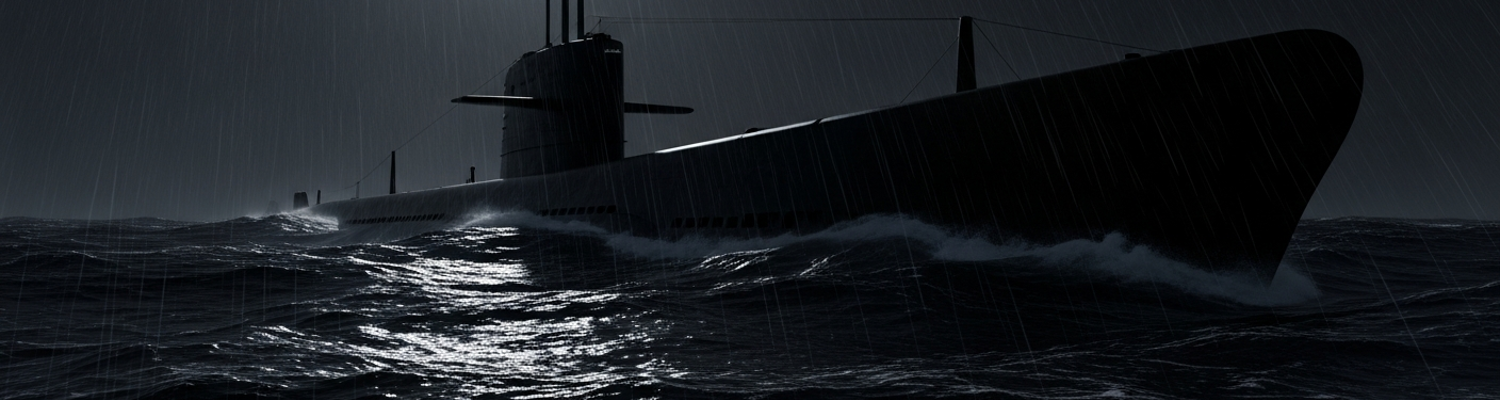
The decision to use fleet submarines as supply vessels was born of necessity. A review of Seventh Fleet operational logs shows an almost complete inability of surface ships or aircraft to penetrate the Japanese blockade and reach isolated guerrilla units and the forward-most American engineer teams on Luzon. The solution was as unorthodox as it was dangerous: press attack submarines, vessels designed as apex predators of the sea, into service as armed cargo haulers. This was a clandestine operation from inception. Submarines like the USS Nautilus (SS-168) and USS Narwhal (SS-167), both large Narwhal-class vessels, were tasked with these special missions. Their size made them suitable for carrying significant tonnage, but it also made them less maneuverable and easier to detect than smaller Gato-class fleet boats. The missions involved navigating treacherous, often poorly charted coastal waters at night, penetrating dense screens of Japanese destroyers and patrol craft that were constantly hunting for them. Every approach to a designated rendezvous point was a calculated risk, balancing the urgent need for delivery against the high probability of detection. The loss of the USS Seawolf (SS-197) in October 1944 on one such supply run was a stark reminder of the stakes.
These missions were a gamble.
The employment of these submarines for replenishment was a study in improvisation. A special unit, nicknamed Spyron or Spy Squadron, was organized to coordinate the effort, linking requisitions from guerrilla commanders and US Army units in the field with the submarines departing from Australia. The process was fraught with peril. A submarine would surface under the cover of darkness at a pre-arranged coordinate, often just a few thousand yards from enemy-held coastline. Contact was made with waiting shore parties, typically Filipino guerrillas in small outrigger canoes or rubber rafts. The transfer of cargo had to be done in complete silence and with maximum speed. Onboard the submarine, crews trained for combat became stevedores, manhandling crates and equipment through narrow hatches and onto the deck. A single dropped piece of equipment or a loud command could give away their position to listening posts on shore or passing patrol boats. These operations were the only lifeline for engineer units who had pushed ahead of the main force, their progress blocked by yet another demolished bridge, their own supplies of explosives and construction material exhausted.
The cargo itself presented a unique set of difficulties. Submarines are not designed to carry freight. To accommodate the bulk, archival evidence shows that vessels like the USS Narwhal underwent significant modification, with torpedo-handling gear stripped out of the forward torpedo rooms to create open space. Even with these changes, loading was a complex puzzle. Delivering heavy bridging components and construction equipment was particularly difficult. While a full Bailey bridge was out of the question, the submarines could carry the most important items that engineers could not fabricate on their own: high-strength steel pins and connectors for Bailey assemblies, demolition charges, welding equipment, and replacement parts for bulldozers and generators. A mission by the USS Nautilus on September 30, 1944, involved landing 95 tons of general supplies, which also included 70 drums of gasoline and four drums of oil, all of which had to be carefully maneuvered out of the boat and floated ashore. The image of sailors and guerrillas wrestling 600-pound steel bridge panels or fuel drums on a pitching deck in the middle of the night, miles inside enemy territory, speaks to the desperation of the Luzon campaign.
Submariner's Operational Stress
Patrol reports from the Seventh Fleet’s submarine force indicate the psychological burden on crews undertaking supply missions to Luzon was extreme. The very nature of their task placed them in constant, immediate peril. Japanese anti-submarine warfare was a persistent and lethal threat. Imperial Japanese Navy vessels actively hunted the sea lanes. Patrols were conducted by dedicated coastal defense ships, known as kaibōkan, which were smaller than fleet destroyers but equipped with hydrophones and depth charges specifically for this purpose. For a submarine like the USS Nautilus, a large and less agile boat modified for cargo, the approach to a Philippine rendezvous point was a nerve-wracking crawl through contested waters. Patrol reports from this period show that American submarine commanders lived in fear of detection from the air. A single enemy aircraft could vector in surface hunters to their position. Every foot of water was a potential trap, forcing commanders to spend as much time as possible submerged, navigating by instruments and sound alone, their only view of the enemy-held world a brief and dangerous glimpse through the periscope.
The hunt was constant.
When detection occurred, the threat became a violent, physical assault. The sharp, metallic ping of an active sonar search striking the hull was the prelude to an attack. Upon hearing it, the entire submarine would transition to a state of silent running. All non-essential machinery was shut down. The crew froze in place to minimize noise. The sound of a Japanese destroyer’s propellers passing directly overhead was an intimate terror, a clear signal that the enemy knew their location. A depth charge attack was not a distant explosion; it was a series of impacts on the pressure hull. Accounts from submariners describe these explosions as hammer blows that would violently whip the boat, knocking men off their feet. Lights would shatter. Cork insulation would rain down from the overhead. The immense water pressure from a near miss could spring leaks, rupture pipes, and cause gauges to explode. The psychological effect of these sustained attacks was debilitating, eroding a crew’s morale and performance. Each explosion was a roll of the dice, a test of the hull’s integrity. The crew could do little more than endure the barrage and pray the captain could maneuver them to safety.
Survival was measured in feet and seconds.
Compounding these moments of acute terror was the chronic stress of life in a submerged steel tube. Submarines on these extended special missions to the Philippines remained underwater for days at a time, creating an environment of profound sensory deprivation and physical discomfort. The air inside the boat quickly became a foul mixture of diesel fumes, battery acid, cooking odors, and the smell of over 100 unwashed men packed into a confined space. Temperatures in the engine and maneuvering rooms often soared past 100 degrees Fahrenheit, with humidity clinging to every surface. Sleep was a luxury, often taken in hot bunks just vacated by another crewman. This prolonged existence in a cramped, foul, and perpetually damp environment took a severe toll. The sustained operational tempo, combined with the poor living conditions, led to high levels of combat fatigue before the submarine even reached its objective. Performing the physically demanding work of offloading tons of supplies in the dead of night, often while listening for the approach of an enemy patrol boat, required a level of focus that was difficult to maintain for men already pushed to their psychological and physical limits.
Engineer's Relentless Battlefront Pressure
Operational logs from the U.S. Sixth Army on Luzon reveal a brutal operational design for its combat engineers. They were to function as the tip of the spear, but without armor. Units like the 8th Engineer Combat Battalion, attached to the 1st Cavalry Division, were integral parts of the high-speed columns dashing towards Manila. This doctrine placed them far ahead of the main body of forces and, critically, beyond the effective range of their own division’s artillery. Fire support was not a coordinated barrage from distant batteries; it was the M1 Garand in their hands and the .30-caliber machine gun mounted on their lead truck. These small engineer detachments were simultaneously construction crews and their own security details, advancing on a demolished bridge site knowing that Japanese forces were almost certainly waiting in ambush.
They were completely exposed.
The act of construction itself was a public announcement of their vulnerable position. Building a Bailey bridge was an exercise in loud, rhythmic, and exposed manual labor. An examination of after-action reports from the advance on Manila shows that Japanese defenders used the distinct sounds of hammers striking steel pins and the grinding of winches to pinpoint engineer locations for mortar and machine-gun fire. At countless river crossings between Lingayen Gulf and the outskirts of the capital, engineers from battalions like the 117th Engineer Combat Battalion worked under direct observation. They manhandled heavy steel panels and timber decking into place while submerged in water or perched on the skeletal framework of the growing bridge, presenting perfect targets for snipers. Japanese strategy on Luzon was not to hold ground but to inflict maximum delay and casualties. The engineers were the prime target. A single well-placed mortar round could shatter a critical bridge component, sending men and materials into the gorge below. The loss of a single non-commissioned officer directing the complex assembly could bring the entire divisional advance to a halt for hours, a delay measured in the lives of infantrymen waiting to cross.
This deliberate targeting produced a predictably high rate of attrition among the engineering units. The casualty lists for the Luzon campaign reflect a grim fact: the men building the bridges were suffering losses comparable to the infantry they supported. From January to June 1945, the Sixth Army sustained over 93,400 non-combat casualties, largely from disease, but the combat losses for engineers were severe. Units like the 127th Airborne Engineer Battalion, operating with the 11th Airborne Division, fought as light infantry from the moment they landed, securing drop zones and then immediately beginning construction under hostile conditions. Reports from their actions on Leyte and Luzon detail platoons setting up defensive perimeters with one hand while starting road and bridge work with the other. The dual role meant double the exposure. Medics attached to these units worked in impossible conditions, attempting to treat wounded on open riverbanks or half-finished bridges. Evacuation was a secondary concern to completing the bridge; the advance of thousands of men depended on it.
Psychological Erosion and Combat Fatigue
Patrol reports and Sixth Army operational logs from the Luzon campaign reveal a similar pattern of psychological pressure that afflicted submariners and combat engineers, though through different means. For both groups, the operational tempo was relentless, creating a cumulative burden that stripped away mental resilience. The submariner endured this in profound isolation and confinement, while the engineer faced it in total, exposed vulnerability. The symptoms were often the same: heightened startle responses, irritability, an inability to concentrate, and a disconnection from one’s immediate surroundings. This condition, known then as combat fatigue, was a predictable consequence of placing men in a state of constant, heightened alertness for prolonged periods. The human nervous system is not designed to exist for weeks on end in a state of fight-or-flight, yet the missions on Luzon demanded exactly that.
The threat was inescapable.
For the submariner, the assault began with the ping of Japanese active sonar. It was the sound of discovery. A depth charge attack was a violent and personal event inside a sealed pressure hull. Survivors describe the experience as a series of hammer blows that would physically whip the submarine, shattering lights and throwing men across compartments. The concussive force could spring dozens of small leaks, filling the already foul air with a mist of seawater and hydraulic fluid. The crew could do nothing but remain silent, often for hours, while the destroyer captain above hunted them. This acute terror was layered on top of the chronic stress of simply existing. Submerged for days, the air became toxic. Sleep deprivation was standard. This combination produced a specific form of combat fatigue characterized by extreme anxiety, tremors, and what became known as the thousand-yard stare, an unfocused gaze that signified a complete disconnection from the terrifying present.
Engineers on Luzon experienced a different form of this erosion. The submariner’s world was one of claustrophobic dread; the engineer’s was one of agoraphobic terror. Units like the 8th Engineer Combat Battalion were not only expected to build under fire; they were deliberately targeted. The very sounds of their work, the rhythmic clang of steel pins being driven into Bailey bridge panels, served as a beacon for Japanese mortar teams and snipers. After-action reports detail a consistent pattern: as construction began, so did the incoming fire. This created a psychological trap where the tools required for their mission were the very things that endangered their lives. The constant, unpredictable threat of indirect fire conditions the nervous system to expect danger, diminishing the ability to feel safe even in moments of calm. Medics reported treating men for frantic heart rates, uncontrollable trembling, and an inability to prioritize tasks. The pressure was amplified by the knowledge that the advance of an entire division depended on their speed. A delay at a single bridge could cost hundreds of lives in the infantry units waiting behind them.
Breaking Points and Human Resilience
U.S. Army medical records from the Pacific theater (Record Group 112) show that what was then termed combat fatigue was an expected outcome. In the prolonged, high-intensity fighting on Luzon, one in four casualties was attributed to this condition. For the submariners and engineers, the breaking point manifested in different ways but stemmed from the same source: the complete exhaustion of the body’s fight-or-flight response. Army studies determined that the breaking point for a frontline soldier could be reached in as little as 60 days of continuous combat. For the engineers of the 8th and 117th Engineer Combat Battalions, who sometimes remained in action for 80 days without relief, this threshold was routinely crossed. Medics reported treating men for severe trembling, an inability to concentrate, and hyperventilation. For submariners, the psychological damage was compounded by confinement. The thousand-yard stare became common among crewmen who had endured depth charge attacks, a sign of complete dissociation from their immediate, terrifying environment.
The wounds were not always visible.
In the absence of formal psychiatric care near the front, the primary coping mechanism was the cohesion of the small unit. Historical analysis of U.S. Army practices in World War II shows a deliberate effort to keep units together from training through deployment, fostering the bonds necessary to endure combat stress. For an engineer squad on a half-finished Bailey bridge under sniper fire, or a submarine crew running silent while a destroyer hunted them, trust in the men next to them was the only anchor. This reliance was built during long periods of shared work and hardship. Another tool for survival was a pervasive and dark gallows humor. Jokes about death and injury became a way to create psychological distance from the horror of their situation. An engineer who had just seen a comrade fall might turn to the man next to him and remark on the inelegance of the death, a grim but effective method for warding off a complete breakdown.
The cost of these sustained operations extended far beyond combat deaths. During the Luzon campaign, a large percentage of all medical evacuations were for psychiatric reasons, a rate that was highest in the Pacific theater. In total, nearly 1.4 million American servicemen were treated for combat fatigue during the war. This figure represents an enormous loss of manpower. For those who remained, the physical toll was also severe. The Sixth Army’s 93,400 non-combat casualties on Luzon were not just from tropical diseases but also from the complete physical and mental collapse of men pushed past the point of endurance. Medical officers near the front lines adopted a strategy of immediacy, proximity, and expectancy, providing rest, hot meals, and sedation for a few days in the hope that a man might be returned to his unit. This approach acknowledged that these men were often simply exhausted. While 50-70% of men treated this way could return to combat, it was a temporary fix for a systemic problem.