
National Intelligence Estimate 12-65 and Fulda Defense
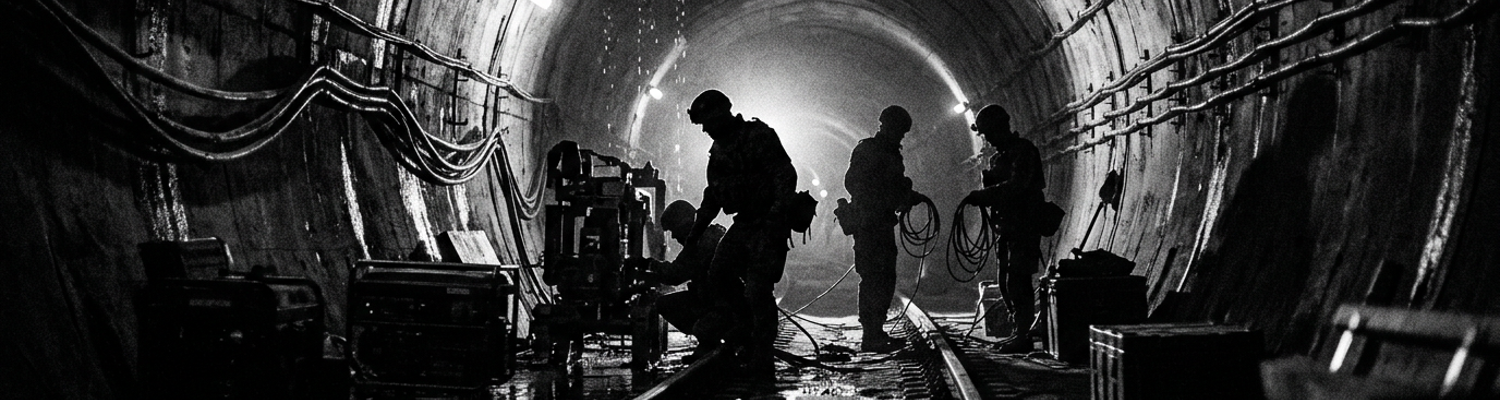
Flash traffic from the 54th Engineer Battalion command post at Bebra broke across the V Corps tactical communications network at 0412 hours. The message warned of an immediate live misfire and a catastrophic continuity breach inside a concrete highway demolition tube. Two engineer specialists lay severely burned near the detonation access port.
The Cold War ran on wire and high explosives.
When examining the historical record from mid-1965, the intelligence arriving at V Corps headquarters in Frankfurt painted an alarming strategic picture. In August 1965, the intelligence community issued National Intelligence Estimate 12-65. This document outlined overwhelming Warsaw Pact mechanized armor densities poised across West Germany. It detailed an echeloned force capable of mobilizing over one hundred combat divisions within two weeks. CIA and Defense Intelligence Agency analysts calculated that the Group of Soviet Forces in Germany maintained twenty front-line divisions on four-hour alert. Heavy concentrations of T-55 and newly fielded T-62 main battle tanks backed these units. Planners faced an armor-to-anti-tank guided missile ratio favoring the East by nearly four to one along the Thuringian salient.
If the Soviet 8th Guards Army burst through the border screening forces of the 14th Armored Cavalry Regiment, their lead reconnaissance elements could traverse the eighty kilometers between the Inner German Border and the Rhine River within forty-eight hours.
NATO command had days to seal the gap.
A close review of operational logs indicates that USAREUR and V Corps planners mandated accelerated operational testing of pre-chambered demolition infrastructure across critical Fulda Gap transit arteries. Under directive orders originating from Campbell Barracks in Heidelberg, engineer staff officers forced a rapid schedule of live and simulated functional checks. These checks targeted subterranean charges built into West German civilian infrastructure. West German authorities had pre-drilled hundreds of vertical demolition chambers embedded directly into bridge abutments, roadbeds, and highway underpasses. Military personnel had to guarantee that these concrete-lined chambers could accept standard M180 cratering demolition kits and M112 C4 blocks under combat conditions. Technicians systematically verified wiring harnesses, blasting caps, and remote firing devices. The M180 kits weighed over forty pounds each. Teams hauled them by hand down narrow access ladders.
Choke points were the only equalizer against massed armor.
Archival evidence shows that combat engineers prioritized rail culverts and highway choke points around Bebra to delay potential Soviet armored thrusts toward Frankfurt. Situated along the Fulda River valley, Bebra served as a strategic railroad junction connecting the central railway corridor from Eisenach directly to the industrial centers of Hesse. Bundesstrasse 27 ran through the same narrow defile. Steep, heavily forested ridgelines restricted armored vehicles to single-file columns. Units from the 23rd and 54th Engineer Battalions focused their preparations on the dual-track railway bridges, culverts crossing the Fulda tributaries, and elevated bypass ramps surrounding the town. Blowing these pre-rigged structures would force Warsaw Pact tank columns into impassable mud flats along the river bottom. Command blueprints assigned explosive yields up to twelve hundred pounds of military dynamite per culvert. These charges were targeted to trigger massive structural collapses across the tracks at coordinates 50 degrees 58 minutes North, 09 degrees 47 minutes East.
Electronic Receiver Upgrades in the 23rd Engineer Battalion
Radio spectrum dominance dictated survivability along the border.
When examining the historical record from early autumn 1965, combat engineers of the 23rd Engineer Battalion began retrofitting reinforced demolition chambers across eastern Hesse. Operating out of installations near Hanau and Fulda, they installed experimental frequency-agile electronic receivers to counter Soviet electronic jamming. Intelligence reports from the Army Security Agency warned that Soviet electronic warfare units stationed across the border in Thuringia operated R-330 and R-405 high-power jammers. These systems were capable of blanking standard tactical VHF frequencies across a fifty-kilometer front. Standard hardwired landlines running from bridge abutments to firing bunkers presented vulnerabilities to pre-assault artillery strikes and sabotage by East German reconnaissance commandos.
To bypass both wire destruction and static radio jamming, the experimental receivers integrated rapid channel-hopping crystal banks. These banks were designed to jump across thirty-two preset frequencies between 30 and 76 megahertz. Field teams retrofitted these receiver chassis into water-resistant aluminum housings. They bolted the units directly into the concrete sidewalls of the shafts beneath Bundesstrasse 27 and adjacent railway tunnels. Command directives ordered these modifications carried out without closing civilian traffic routes. Technicians worked inside dark shafts while civilian freight trains rattled the tracks overhead.
Radio silence meant nothing without a verified firing pulse.
Operational logs indicate that the electronic receivers were intended to ensure instantaneous remote detonation of critical barrier assemblies. USAREUR engineers recognized that Soviet motor rifle regiments could cross the border corridor at speeds exceeding thirty kilometers per hour. This left no margin for delayed demolition firing sequences. The experimental units utilized encoded binary pulse sequences. They required an interrogation signal and a matched dual-tone command signal to trigger the firing capacitors. If an unauthorized frequency or broadband white noise swamped the receiver, the internal circuits defaulted into a locked state rather than triggering a false explosion. An internal secondary timer held reserve charge for a command override. Transmitters mounted on armored command personnel carriers stationed on the ridgeline of the Knuellgebirge held line-of-sight paths down into the Bebra rail basin. These were calibrated to detonate multiple bridge spans simultaneously with zero millisecond propagation delay. West German territorial defense officials insisted on tamper-resistant safeguards to prevent Soviet sappers from disarming the emplaced explosive assemblies. Engineers spliced the receivers directly into anti-disturbance trembler switches and continuous-loop continuity wires wrapping the main charges.
Working beneath five feet of damp reinforced concrete eliminated every margin for human error.
A close review of operational logs indicates that field installation procedures in subterranean culverts required working parties to arm circuitry in close proximity to live initiator charges. Inside the narrow drainage culverts running beneath the Bebra rail switching yard, engineer teams of three men entered wet shafts measuring less than forty-eight inches in internal diameter. Standing in several inches of runoff water, technicians had to secure the receiver output leads directly to M6 electric blasting caps and five-pound Composition B booster blocks packed inside the structural cavities. Technical manuals prohibited arming caps while electronics were hooked up to live DC dry-cell battery packs. Operational field schedules pressed by V Corps commanders forced teams to conduct continuity tests with the caps already inserted into the high explosives. A technician holding an insulated screwdriver had his face twelve inches from eighty pounds of military dynamite while wiring the receiver relays. Grounding straps frequently detached from corroded cold-water pipe contacts. This left the primary blasting circuits exposed to accidental capacitive discharge from the wool uniform layers of the soldiers and the sensitive solid-state switching transistors inside the experimental receiver box.
Inductive Coupling and Premature Rail Culvert Detonation
Overhead alternating current lines turned standard military wiring into an unintentional antenna.
When examining the historical record, Deutsche Bundesbahn electrification standards along the Fulda-Bebra railway corridor operated on a single-phase 15,000-volt alternating current system at a frequency of 16.7 Hertz. Above the tracks at kilometer marker 211.4, heavy copper catenary wires carried massive electrical loads to power freight locomotives pulling military and commercial tonnage north toward Kassel. Directly beneath these electrified rails sat an engineered drainage culvert. Combat engineers from Company B, 23rd Engineer Battalion had routed two hundred feet of unshielded 16-gauge twin-lead copper firing wire through this space. Standard operating procedure called for field telephone wire to connect the remote receiver terminal to the explosive charge. The wire run sat alongside the overhead catenaries for nearly sixty meters along the track embankment. The alternating magnetic field generated by the high-voltage lines continuously sliced through the open loop of the unshielded firing leads. No coaxial shielding encased the run. Grounding stakes driven into the damp embankment soil completed an accidental circuit path with the wet track ballast. This transformed the entire firing layout into a passive inductive pickup.
Current accumulated undetected inside the damp drainage channel.
Archival evidence shows that this electromagnetic induction pushed parasitic current directly toward the demolition assembly. The experimental solid-state receiver mounted inside the rail sap featured low-impedance output switches that lacked filtering chokes, transient suppression diodes, or bleed resistors to ground external voltage spikes. Standard M6 military electric blasting caps required an all-fire current threshold of approximately 0.45 to 0.5 amperes to heat their internal bridge wires to the flashpoint of the lead styphnate base charge. At 0418 hours, an eastbound freight train hauled by a Class E 40 electric locomotive accelerated away from the Bebra marshaling yard. This action drew an immediate surge of over six hundred amperes through the catenary system. This abrupt current draw induced a sudden proportional electromagnetic surge in the demolition wiring below. The induced voltage overwhelmed the small internal resistance of the unshielded circuit. It instantly drove over 1.2 amperes of alternating current into the bridge wire of the primary initiator inside the engineered rail sap. Detonation occurred without any signal ever leaving the command transmitter.
Eighty pounds of Composition B detonated at zero range.
A close review of operational logs indicates that the immediate subterranean blast breached the underground demolition chamber instantly. Detonation velocity inside the confined sap reached over eight thousand meters per second. This created a catastrophic localized overpressure that struck the surrounding nineteenth-century sandstone masonry. The shock front had nowhere to expand except through the narrow forty-eight-inch culvert barrel and upward into the track foundation. Tons of crushed basalt ballast, concrete lining fragments, and splintered rail ties collapsed downward as the masonry arch cracked along its structural centerline. Dense smoke laced with toxic carbon monoxide and vaporized soil sealed off the culvert entrance. This suffocated the shaft and severed all primary tactical communications with the surface team. Three combat engineers were stationed within eight feet of the explosive pocket when the bridge collapsed. A squad leader and two demolition specialists from Company B were buried under twelve vertical feet of compacted railway stone and fractured brickwork at military grid coordinate NB 512-887.
Blast Casualties and Triage at the 97th General Hospital
The subterranean detonation crushed the engineered sap.
Rescue elements from the 54th Engineer Battalion reached the collapsed culvert at 0435 hours. Heavy equipment operators deployed hydraulic jacks and heavy timber shoring to stabilize the fractured masonry arch. Extraction of the buried working party required forty minutes of manual digging through compacted basalt ballast and shattered concrete. The localized overpressure wave had inflicted massive blunt polytrauma on the three combat engineers. The squad leader suffered traumatic amputations of both lower extremities below the knee. The two demolition specialists sustained severe blast lung injuries resulting from pulmonary barotrauma. The shockwave forced alveolar gas directly into their pulmonary venous circulation, creating systemic arterial gas embolisms.
Survival depended entirely on immediate surgical intervention.
Medical evacuation helicopters from the 4th Armored Division aviation section arrived at a makeshift landing zone near the Bebra marshaling yard. UH-1B Huey crews transported the stabilized casualties directly to the 97th General Hospital in Frankfurt. The facility served as the primary medical hub for V Corps personnel in West Germany. Emergency receiving bay personnel initiated mass casualty triage protocols upon the arrival of the medevac flights. Trauma surgeons and combat medics worked simultaneously to manage hypovolemic shock and secure compromised airways. Blood pressure readings on the squad leader hovered at 60 over 40 millimeters of mercury.
Blood loss dictated the pace of the surgical response.
A close review of medical logs indicates that the amputee required immediate application of pneumatic tourniquets and rapid infusion of type O negative whole blood. Surgical teams operating under combat trauma guidelines performed emergency bilateral guillotine amputations to debride necrotic tissue and prevent fatal sepsis. The surgeons utilized Gigli saws and Kelly forceps to clamp severed femoral arteries. The two specialists suffering from blast lung required immediate endotracheal intubation and positive pressure ventilation to maintain oxygen saturation. Shrapnel wounds from fractured sandstone and vaporized copper wiring complicated the thoracic injuries. Surgeons spent hours extracting debris from the chest cavities of the patients. The chaotic triage environment in the forward aid station and the sterile operating rooms of the 97th General Hospital highlighted the severe physical costs of the accelerated demolition testing program. The injuries sustained in the Bebra culvert represented the first major casualties of the border fortification effort.
Pentagon Escalation Management and False Alarm Protocols
Unexplained shockwaves along the border triggered automated crisis machinery across two continents.
When examining the historical record from the early morning hours of October 14, 1965, seismic and acoustic sensors along the Inner German Border initially registered the detonation as potential hostile artillery or sabotage activity. Subterranean geophone arrays and acoustic microbarograph stations operated by border surveillance detachments of the 14th Armored Cavalry Regiment near Rasdorf registered an instantaneous ground-displacement spike at 0418 hours. The shock profile pointed directly to coordinates NB 512-887. This location marked where the Fulda-Bebra railway infrastructure crossed narrow sandstone defiles. Forward counter-battery radar installations detected no incoming ballistic trajectories. Tactical watch personnel at V Corps tactical operations center in Frankfurt categorized the explosion as a probable covert strike. Intelligence staff evaluated the event as an effort by forward East German sabotage commandos or Soviet 8th Guards Army sappers to sever strategic NATO reinforcement routes before launching a general armored offensive. Alert sirens immediately activated across forward cavalry observation posts from OP Alpha to Herleshausen. Combat units prepared to respond to an unconfirmed invasion.
Teletype lines inside the National Military Command Center flared with highest-priority flash traffic.
Archival evidence shows that Pentagon and CIA watch officers initiated rapid backchannel communications to determine whether the explosion signaled the start of a Warsaw Pact offensive. Inside the National Military Command Center beneath the Pentagon, the Joint Chiefs of Staff operations team opened secure conferencing channels over KY-3 TSEC encrypted phone lines with the CIA Directorate of Intelligence and the United States Military Liaison Mission in Potsdam. Communications technicians cross-referenced real-time signal intercepts gathered by Army Security Agency listening posts in Kassel and Teufelsberg. They tracked whether the Soviet 8th Guards Army and the 120th Guards Motor Rifle Division in Thuringia were breaking radio silence. Defense planners considered upgrading European command forces to DEFCON 3. They weighed whether the rail collapse at Bebra matched Soviet tactical doctrine for severing NATO lateral transit corridors immediately prior to armored breakout operations. Watch officers routed urgent queries through established diplomatic backchannels in Geneva and direct liaison channels to Soviet military authorities at Zossen-Wuensdorf. They demanded confirmation of whether frontline Warsaw Pact motorized divisions were maintaining garrison positions.
The crisis unraveled forty minutes later inside a shattered concrete culvert.
A close review of operational logs indicates that commanders quickly halted general alert procedures and border mobilizations after identifying the blast as an internal electrical initiation failure. Combat engineer officers from Company B of the 23rd Engineer Battalion surveyed the damaged drainage channel at kilometer marker 211.4. They confirmed that magnetic induction from a 15,000-volt Deutsche Bundesbahn catenary line had triggered the M6 blasting caps without hostile intervention. Field telephone reports confirmed no hostile ground movements or gunfire along the border screening sector. V Corps commanders immediately aborted general battle positions for the 3rd Armored Division. They stopped heavy tank columns from the 14th Armored Cavalry Regiment before lead M60A1 vehicles crossed deployment lines into defensive assembly areas around Fulda. Flash messages dispatched at 0452 hours ordered all forward units to cease alert preparations, stand down mobilization measures, and immediately sever electrical firing circuits linked to subterranean demolition chambers throughout Hesse. The order terminated the immediate threat of accidental war.