
Forward Intercept Positions and Power Fluctuation
A heavy absolute quiet settled over the tri border area on the night of February 23, 1991. The ambient temperature dropped below freezing. Sand absorbed the mechanical hum of idling diesel generators. Thousands of armored vehicles sat motionless across a sixty mile front. Operators inside unlit communication shelters stared at green phosphor screens. Specialists adjusted frequency dials with numb fingers. Teams waited for the first artillery barrages to break the static.
Archival evidence shows this brief period of silence resulted directly from hours of frantic engineering.
A close review of operational logs indicates the deployment of the 513th Military Intelligence Brigade along the Saudi Iraqi border required constant mechanical repair. Convoys of M1038 cargo trucks hauled heavy S-250 electronic shelters toward the western edge of Wadi Al Batin. They followed a featureless navigation route designated as Phase Line Smash. The terrain consisted of hardened gravel plains broken by deep ravines. Airborne dust penetrated every exposed seam on the vehicles. Standard issue generator filters clogged within forty eight hours of arrival in the tactical assembly areas.
Power fluctuations threatened to fry the sensitive AN/TSQ-114 Trailblazer intercept systems.
Mechanics stripped air intake valves from disabled supply transports to keep the primary tactical operations center powered. Technicians bypassed damaged voltage regulators using stripped copper wire and standard electrical tape. Supply chains failed to deliver replacement parts for the specialized cryptographic gear. The brigade established its primary base camp just out of range of Iraqi D-30 howitzer batteries (NARA Record Group 338). They relied entirely on improvised fixes to maintain a continuous operational footprint. Soldiers worked by red lens flashlights to avoid optical detection.
Establishing forward intercept positions demanded high risk proximity to enemy lines.
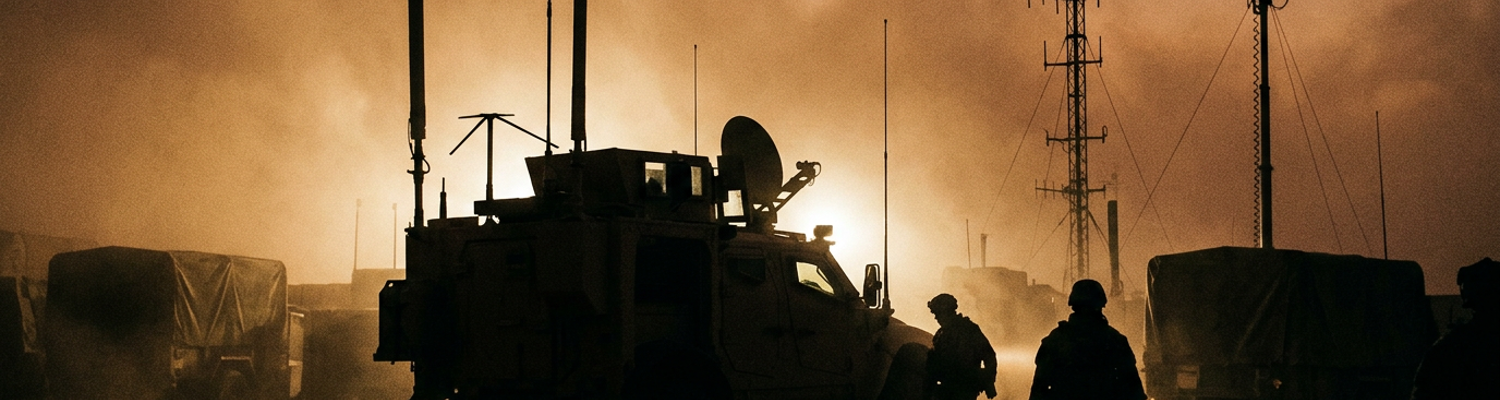
Signal intelligence platoons pushed heavily modified High Mobility Multipurpose Wheeled Vehicles to within three kilometers of the sand berms defining the Iraqi defensive perimeter. Teams drove metal stakes into the compacted desert floor to anchor OE-254 communication antennas. High velocity winds frequently snapped the fiberglass antenna sections during the night. Operators patched the broken masts using fiberglass splints and nylon parachute cord. Inside the vehicles, specialists tuned AN/TRQ-32 Teammate systems. They monitored Soviet manufactured R-123 and R-130 VHF radios used by Iraqi armored divisions. The intercept equipment generated extreme internal heat. Intake fans designed to cool the processing units sucked in abrasive sand. Ball bearings seized rapidly. Signal engineers disassembled the cooling units while Iraqi mechanized patrols operated just across the wadi. They cleaned the internal housings with isopropyl alcohol. Technicians re lubricated the fan shafts with standard weapons oil. Antenna coaxial cables frayed against the sharp edges of the vehicle armor. Specialists wrapped the exposed wiring in discarded cardboard from field rations to prevent signal degradation.
The modified fans operated at half capacity.
When examining the historical record, the intercepted traffic provided raw data regarding Iraqi troop dispositions. Iraqi commanders broadcasted artillery coordinates and supply requests in the clear. They bypassed their own failing cryptographic equipment due to poor training. American analysts transcribed the Arabic voice intercepts onto acetate boards using grease pencils. The data flowed via secure teletype back to the VII Corps command elements positioned further south. The teletype machines jammed repeatedly due to carbon dust buildup on the printer heads. Specialists cleaned the mechanical type bars using torn fabric from their own uniform undershirts. They scraped the thick carbon deposits off the contact pins with the blades of their issued survival knives. Information regarding Iraqi tank movements passed through these manually maintained data links.
Atmospheric Interference and Grounding Failures
Archival evidence shows that by February 24, a large low pressure system moved directly across the Arabian Peninsula. Severe sandstorms mixed with freezing rain hit the tri border region. Elements of the 201st Military Intelligence Battalion deployed near grid coordinates 29 11 N, 46 24 E faced immediate atmospheric interference. Visibility dropped to zero. Sustained forty knot winds scoured the gravel plains. Teams operating high frequency AN/TRQ-30 intercept systems reported near total signal degradation across the 3 to 30 MHz bands. High velocity winds drove abrasive sand against the exposed antenna arrays. The physical impact of millions of sand particles generated severe triboelectric noise. This caused heavy static charge buildup on the receiving elements. Freezing rain compounded the interference. Water saturated the coaxial cables. It attenuated the skywave signals reflecting off the ionosphere. Iraqi Republican Guard communication nets disappeared entirely into a wall of white noise.
Technicians climbed onto the wet hoods of M1038 cargo trucks.
They manually lowered the AS-2259 Near Vertical Incidence Skywave antennas. Specialists scrubbed the oxidized BNC connectors with wire brushes to remove accumulated grit. Signal officers ordered the deployment of temporary grounding systems to bleed off the static electricity. Operators drove four foot copper stakes directly into the mud using sledgehammers.
A close review of operational logs indicates these grounding efforts barely mitigated the equipment degradation. Water pooled inside the antenna base plates. Primary electrical contacts submerged completely. Short circuits forced operators to continuously swap out blown internal fuses inside the cramped intercept shelters. Every time the high frequency receivers rebooted, the intelligence teams lost intercept continuity on Iraqi artillery coordinates and fire control instructions. Command post officers directed the platoons to switch to backup directional log periodic antennas positioned lower to the ground. Soldiers unspooled hundreds of feet of WD-1 communication wire across the flooded wadi floor. They established physical field phone links between the dispersed intercept shelters. This hardwired network bypassed the degraded atmospheric conditions entirely. Analysts shared transcribed intercept data without relying on frequency hopping tactical radios.
Passing armored columns frequently crushed the WD-1 lines.
Specialists conducted constant manual splicing in complete darkness.
Sustaining the electrical grid for these shelters presented an even greater threat to the intelligence collection mission. The brigade relied heavily on standard MEP-003A 10 kilowatt diesel generators to run the cryptographic hardware, receiver racks, and cooling units. Fine particulate matter from the Shamal sandstorms possessed the exact consistency of talcum powder. This abrasive dust easily bypassed the centrifugal pre cleaners on the generator air intakes. The particulate accumulation formed a thick sludge when mixed with the ambient moisture from the freezing rain. Intake manifolds clogged completely within six hours of continuous operation. The diesel engines choked from severe oxygen starvation. Fuel injectors flooded the cylinders with unburned diesel. Heavy black smoke poured from the exhaust stacks. Engine RPMs dropped sharply. This caused severe voltage sags across the entire tactical operations center.
Frequency converters tripped their internal circuit breakers.
This prevented electrical fires from destroying the primary servers. Power loss immediately erased the volatile memory in the KG-84 cryptographic equipment. Reloading the encryption keys via KYK-13 fill devices took up to forty five minutes per shelter. Operators manually interfaced the fill devices with each individual radio unit. Mechanics from the motor pool initiated a continuous rotating maintenance schedule to prevent total generator failure across the forward operating base. Engineers removed the pleated paper air filter elements from the MEP-003A units. They beat the clogged filters against the steel flanks of M113 personnel carriers. The packed mud dislodged onto the sand. Maintenance crews stretched nylon pantyhose acquired from civilian mail packages over the primary intake vents to act as improvised particulate traps. When the paper filters completely disintegrated from the moisture, mechanics fabricated wet bath filtration systems from scavenged materials. They soaked torn canvas sandbags in used 15W-40 motor oil. They secured them tightly over the intake cowlings with heavy gauge steel wire.
Chemical Alerts and Cryptographic Micro Maintenance
Archival evidence shows that at 0415 hours on February 25, Iraqi artillery batteries positioned north of the Kuwaiti border initiated a sustained barrage. They fired 152mm high explosive and suspected chemical munitions toward the VII Corps forward assembly areas. Elements of the 513th Military Intelligence Brigade operating near grid coordinates 29 15 N, 46 30 E immediately detected airborne contaminants. Standard M8A1 automatic chemical agent alarms emitted continuous high pitched sirens across the tactical operations center. Platoon commanders ordered a rapid transition to Mission Oriented Protective Posture Level 4. Soldiers donned heavy charcoal lined overgarments. They sealed their M40 protective masks.
The sudden requirement to operate in full protective gear severely disrupted the ongoing signals intelligence collection.
Inside the unventilated S-250 electronic shelters, ambient temperatures rapidly exceeded ninety degrees Fahrenheit. Operators processing intercepted Iraqi communications struggled to breathe through the thick C2 canister filters. The accumulation of carbon dioxide inside the rubber facepieces caused severe headaches. Cognitive function degraded noticeably.
The thick butyl rubber gloves eliminated all baseline tactile sensation.
When examining the historical record, cryptographic operators faced extreme physical impediments while servicing highly sensitive decryption hardware. The primary KG-84A cryptographic modules (NSN 5810-01-213-3445) required constant physical maintenance. This prevented data transmission failures between the forward intercept teams and the rear echelon command posts. Fine desert sand penetrated the shelter door seals and coated the exposed motherboard contacts. Specialists tasked with cleaning the delicate gold plated connection pins had to perform the micro maintenance while wearing the bulky chemical resistant gloves. Clumsily manipulating small cans of compressed air and stiff bristled brushes, they attempted to clear the debris. Sweat pooled continuously in the chin cups of their M40 masks. Condensation fogged the ballistic polycarbonate lenses. Visibility dropped to a few inches. Operators attempted to reconnect the KYK-13 electronic fill devices to reload the volatile encryption keys into the cleared KG-84A memory banks. The fill devices featured narrow recessed connection ports. Technicians repeatedly missed the alignment grooves. They bent the fragile internal pins.
A close review of operational logs indicates mechanics dropped dozens of specialized retaining screws through the metal floor grates.
External power generation presented an even more urgent mechanical crisis during the chemical bombardment. The primary MEP-003A 10 kilowatt diesel generators powering the intercept arrays began to stall. Airborne dust mixed with the lingering traces of the suspected nerve agents. The factory issued paper air filters completely collapsed under the weight of the contaminated sand. Mechanics operating outside the shelters in full MOPP gear lacked access to standard supply chain replacement parts. Immediate destructive fabrication became the only option to keep the generators running. Technicians withdrew their issued survival knives. They cut large squares of ripstop cotton fabric directly from their spare Desert Battle Dress Uniforms. Stretching the camouflage cloth tightly over the exposed circular air intake manifolds required two soldiers working in tandem. Signal engineers then wrapped multiple layers of olive drab 100 mph tape around the metal cowlings. This sealed the fabric edges against the heavy winds.
The tight weave of the uniform fabric blocked the heavier sand particles from entering the diesel combustion chambers.
Operating the MEP-003A generators with these improvised uniform filters altered the air to fuel ratio inside the engines. Mechanics manually adjusted the carburetor settings using flathead screwdrivers to compensate for the restricted oxygen flow. The thick cotton material saturated quickly with airborne oil and diesel exhaust. Maintenance crews established a strict rotation to replace the fabric traps every ninety minutes. Soldiers cut apart their remaining trousers and uniform blouses to maintain the supply of clean cloth. Discarded heavily soiled fabric pieces went directly into designated chemical waste disposal bags. Engine block temperatures hovered just below the redline threshold.
VHF Signal Isolation and Audio Descrambling
A heavy absolute quiet settled over the tri border area at 0345 hours on February 26, 1991. The ambient temperature dropped below freezing. It hardened the desert floor. Thousands of armored vehicles sat entirely motionless across a sixty mile front. Operators inside cramped unlit communication shelters stared at green phosphor screens. Teams waited for the first artillery barrages to break the static. Archival evidence shows this brief period of silence masked frantic improvised engineering occurring inside the signals intelligence vehicles. Elements of the 142nd Military Intelligence Battalion attached to the 2nd Armored Cavalry Regiment parked their M1038 cargo trucks near grid coordinates 29 33 N, 46 11 E. They needed to intercept low power tactical communications originating from the Iraqi Tawakalna Division just four kilometers to the east.
Heavy atmospheric interference threatened to completely drown out the faint VHF signals.
A close review of operational logs indicates the Iraqi infantry utilized Soviet manufactured R-107 and R-148 manpack radios. These units broadcasted at barely one point five watts of output power. These transmissions struggled to penetrate the dense particulate matter suspended in the air by the ongoing shamal sandstorms. Static electricity generated by millions of colliding sand grains created a continuous deafening hiss across the 30 to 76 MHz frequency bands. American operators using AN/TRQ-32 Teammate intercept systems strained to isolate the enemy voice traffic. Signal platoons drove ten foot copper grounding rods into the hardened wadi floor using sledgehammers to bleed off the static charge. Water from intermittent freezing rain pooled around the base plates. This shorted out the coaxial connections. Operators wrapped the exposed BNC connectors in discarded rubber from torn chemical protective overboots. The primary receiver squelch circuits failed repeatedly. The ambient triboelectric noise exceeded the factory threshold settings. Technicians bypassed the automatic squelch relays by physically soldering jumper wires directly onto the receiver motherboards. They used standard 60/40 rosin core tin wire and butane soldering irons inside the unventilated shelters. Analysts pressed heavy David Clark aviation headsets against their ears. They physically blocked out the roar of the diesel generators outside. The extreme volume required to hear the faint Iraqi transmissions blew out the fragile audio diaphragms inside the headsets. Supply clerks stripped replacement speakers from damaged field telephones. They spliced them into the headset wiring harnesses using electrical tape.
The modified headsets weighed nearly three pounds.
When examining the historical record, real time decryption of these tactical VHF signals proved necessary to support the impending ground assault by VII Corps maneuver forces. Iraqi armored brigade commanders began utilizing basic voice inversion scramblers and Soviet supplied tactical brevity codes to mask their defensive realignments. Iraqi forward observers embedded with the 9th Armored Brigade broadcasted targeting adjustments in real time. US linguists fluent in Iraqi Arabic dialects had to differentiate between actual coordinates and deceptive dummy traffic. The 142nd deployed specialized linguists operating Racal RA6790/GM receivers to capture these garbled transmissions. Intercept operators recorded the inverted audio onto standard magnetic cassette tapes. They manually fed the audio output through field expedient descrambler units powered by scavenged 12 volt vehicle batteries. The aging descrambler circuit boards overheated within twenty minutes of continuous processing. Signal engineers removed the protective metal casings from the hardware. They directed the airflow from standard chemical protective mask blowers directly onto the exposed microchips. This prevented thermal shutdown. Decrypted Iraqi fire control orders revealed the exact grid coordinates of anti tank kill zones positioned along Phase Line Bullet. Intelligence analysts transcribed these translated coordinates onto acetate map overlays.
The grease pencils snapped in the freezing temperatures.
Forward command elements required this targeting data instantly to redirect the advancing M1A1 Abrams tank companies. Operators utilized KY-57 VINSON cryptographic devices to securely transmit the translated Iraqi coordinates over US tactical radio nets. The KY-57 units frequently dropped their encryption synchronization due to severe voltage fluctuations from the failing MEP-003A generators. Technicians executed continuous manual key fills using KYK-13 electronic devices every time a voltage sag erased the volatile memory. They scrubbed the oxidized connection pins with standard issue rifle bore brushes to maintain electrical contact. The decrypted intelligence flowed from the intercept shelters directly to the tactical operations center of the 2nd Armored Cavalry Regiment. Multiple Launch Rocket System batteries fired directly on grid coordinate 30 01 N, 46 55 E exactly three minutes after the radio transmission.
Thermal Expansion and Improvised Electrolytic Grounding
Archival evidence shows that by 1800 hours on February 26, the internal environment of the mobile signals intelligence shelters became hostile to electronic components. Elements of the 311th Military Intelligence Battalion operated modified M1097 heavy variants carrying S-250 cryptographic vans near grid coordinates 29 42 N, 45 55 E. The systems inside ran continuously for ninety six hours. Thermal buildup inside the unventilated aluminum boxes reached one hundred and fifteen degrees Fahrenheit. The TSEC/KG-84C cryptographic units stacked in the server racks required constant cooling to maintain the integrity of their internal logic boards. Intake blowers failed due to sand ingestion. The resulting heat caused the silicon microchips to undergo rapid thermal expansion. Solder joints connecting the processors to the circuit pathways warped under the physical stress.
Micro fractures severed the electrical connections entirely.
A close review of operational logs indicates a secondary threat compounded this thermal degradation. Fast moving low pressure systems dragging across the tri border area created intense friction against the fiberglass exteriors of the vans. Millions of airborne quartz particulates collided with the vehicle chassis. This generated a high voltage triboelectric charge that enveloped the entire mobile operations center. Without adequate dissipation, the static electricity sought the path of least resistance directly through the unshielded coaxial cables linking the external antennas to the cryptographic racks. Arcs of blue static electricity visibly jumped from the metal equipment casings to the hands of the operators. These discharges instantly wiped the variable encryption keys stored in the volatile memory of the KG-84C modules.
Technicians lost all secure communication links with VII Corps headquarters.
Command post engineers attempted to bleed off this static buildup using factory issued grounding equipment. Standard procedure required driving three foot galvanized steel stakes into the ground and connecting them to the vehicle chassis with heavy gauge copper wire. The arid desert soil along the western edge of Wadi Al Batin presented near total electrical resistance. Decades of drought had baked the ground into a hardened crust of silica and limestone. Sledgehammer blows bent the standard grounding stakes in half before they penetrated six inches into the gravel. Signal officers from the 311th authorized the deployment of improvised grounding rods constructed from scavenged materials. Maintenance platoons stripped eight foot copper pipes from destroyed Iraqi water pumping stations located three kilometers south of their position.
Mechanics sharpened the pipe ends using portable angle grinders.
When examining the historical record, driving these heavy pipes into the earth required a coordinated physical effort. Four soldiers took turns striking the copper columns with twelve pound sledgehammers to force them three feet into the compacted soil. The dry earth still failed to conduct the static charge away from the vans. The high resistivity of the sand acted as an insulator. Technicians had to artificially alter the chemical composition of the ground to create a conductive path. Soldiers dug shallow trenches around the base of the copper pipes using folding entrenching tools. They dumped hundreds of salt packets scavenged from discarded field rations directly into the dirt.
Operators poured a mixture of used radiator coolant and human urine over the salt beds.
This highly corrosive slurry seeped into the gravel. It chemically bonded with the copper piping. The improvised electrolytic ground lowered the soil resistance enough to draw the static charge away from the S-250 electronic shelters. Voltage meters recorded the chassis potential dropping from four thousand volts back to baseline zero. Engineers wrapped thick strands of stripped 00 gauge battery wire around the exposed tops of the pipes. They bolted the other ends directly to the metal frames of the cryptographic racks using heavy steel clamps. The volatile memory banks stopped resetting. Operators reconnected the KYK-13 electronic fill devices and initiated a manual reload of the secure communications keys.
Manual Transcription and Magnetic Tape Extraction
Archival evidence shows that at 0530 hours on February 27, elements of the 204th Military Intelligence Battalion detected sudden frequency shifts across the Iraqi III Corps artillery networks. Operators near grid coordinates 29 18 N, 46 22 E tuned their AN/TRQ-32 receivers to a cluster of VHF signals hovering around 44.15 MHz. Standard M8A1 alarms triggered outside the unarmored M1038 cargo trucks seconds later. Sirens forced the immediate transition to Mission Oriented Protective Posture Level 4. Soldiers sealed their M40 protective masks, fastened the heavy Velcro closures on their charcoal lined overgarments, and pulled thick butyl rubber gloves over their hands. The physical barriers of the chemical gear severely restricted basic motor functions required to document the incoming intercepts. Technicians attempted to type translated Arabic coordinates into AN/UGC-74 communications terminals. The wide rubber fingertips routinely depressed two or three plastic keys simultaneously. This generated strings of garbled alphanumeric text on the continuous carbon copy paper rolls.
Platoon sergeants ordered operators to abandon the electronic keyboards entirely.
A close review of operational logs indicates intelligence analysts reverted to manual transcription using standard acetate boards and grease pencils. The internal temperature of the unventilated S-250 electronic shelters climbed past one hundred degrees Fahrenheit. Sweat ran down the arms of the soldiers and pooled inside the sealed cuffs of their chemical protective suits. Moisture exhaled into the rubber facepieces caused heavy condensation against the ballistic lenses. This obscured the analog frequency dials on the radio receivers. Specialists rubbed standard issue anti fog compound onto the interior polycarbonate surfaces. The chemical paste degraded quickly under the heavy humidity. Analysts leaned within three inches of the green phosphor screens to verify the incoming signal strengths. They recorded the intercepted Iraqi artillery coordinates by gripping the grease pencils with both rubber gloved hands to maintain downward pressure. The wax cores of the pencils softened in the extreme heat. Arabic numerals smeared across the plastic acetate sheets.
Soldiers wiped the ruined map overlays clean using the sleeves of their contaminated overgarments.
When examining the historical record, capturing the raw audio of these enemy transmissions proved highly difficult under the chemical warning conditions. The intercepted traffic contained specific numeric brevity codes indicating the Iraqi 52nd Armored Division field artillery batteries were actively loading 152mm howitzers with suspected chemical payloads. Forward observers broadcasted fuse settings matching the airburst dispersal patterns for blister agents. US operators scrambled to record these voice transmissions onto magnetic cassette tapes using Uher CR 240 portable recorders. The mechanical drive belts inside the German manufactured recording units stretched and slipped due to the ambient shelter heat. The supply spools failed to maintain constant tension. Thin ribbons of magnetic tape spilled out of the plastic cassettes and tangled around the rotating metal capstans.
The audio recordings distorted into unreadable low frequency hums.
Signal engineers had to physically extract the jammed tape from the recording mechanisms without puncturing their chemical protective gloves. The sharp metal edges of the Uher chassis presented a severe snag hazard. A single tear in the butyl rubber would expose the technician directly to the suspected airborne nerve agents. Mechanics used plastic ballpoint pen casings to carefully pry the tangled magnetic tape away from the rubber pinch rollers and aluminum tape guides. They manually rewound the unspooled tape by inserting the hexagonal base of a pencil into the cassette hubs and twisting their wrists. The reloaded cassettes went directly back into the recorders to capture the continuous stream of Iraqi fire missions. Analysts physically carried the completed audio cassettes out of the electronic shelters into the contaminated desert air. They sprinted across the gravel to hand deliver the physical tapes to the adjacent cryptographic van for secure transmission back to VII Corps headquarters.
Forensic Document Reconstruction and Medical Cross Referencing
Archival evidence shows that by early 1997, the physical decay of frontline signals intelligence data forced immediate intervention from the United States Senate Committee on Veterans Affairs. Lawmakers initiated a series of aggressive reviews extending through 1998 to re examine the raw Desert Storm SIGINT records. Committee investigators subpoenaed the original unredacted operational logs generated by the 513th Military Intelligence Brigade along Wadi Al Batin. Retrieving these documents required specialized handling protocols. Department of Defense archivists pulled thousands of acetate map overlays and continuous carbon copy paper rolls from deep storage facilities in College Park Maryland. The physical condition of the evidence severely complicated the inquiry. Grease pencil markings detailing Iraqi artillery coordinates had melted and smeared across the plastic sheets during transit from the Saudi theater inside unventilated shipping containers. Carbon dust buildup from the jamming AN/UGC-74 teletype machines rendered entire pages of transcribed Arabic intercepts completely illegible. Investigators tasked with auditing the 1991 records had to employ forensic document examiners to reconstruct the degraded alphanumeric text. The 1998 mandate required these analysts to digitize the surviving field data to establish an exact timeline of enemy chemical munitions deployments.
Technicians scanned the surviving acetate boards using high resolution optical character recognition software.
A close review of operational logs indicates the primary objective of these congressional hearings involved cross referencing intercept timestamps against mounting veteran health reports. Medical researchers at the Department of Veterans Affairs compiled thousands of exposure claims detailing chronic neurological degradation, severe joint pain, and acute respiratory distress. Analysts mapped these medical intake forms directly against the surviving signals intelligence data from February 25 to February 27, 1991. They focused specifically on the translated radio intercepts targeting the Iraqi 52nd Armored Division. Investigators searched the documentation for specific numeric brevity codes matching blister agent fuse settings broadcasted over the Soviet manufactured R-123 VHF networks. Every recorded M8A1 chemical alarm trigger in the tactical assembly areas underwent minute by minute synchronization with the intercepted Iraqi fire missions. Geographic information systems plotted the exact grid coordinates of the modified High Mobility Multipurpose Wheeled Vehicles against atmospheric wind dispersion models provided by the National Center for Atmospheric Research. Analysts compared the precise moments the MEP-003A diesel generators failed against the heaviest spikes in reported physical symptoms among the intercept operators.
The resulting database linked specific military intelligence platoons to suspected sarin and cyclosarin plumes originating from the Khamisiyah ammunition storage facility.
When examining the historical record, the improvised engineering executed under fire in 1991 created massive blind spots for the 1998 congressional investigators. Missing data blocks plagued the cross referencing efforts. The frequent thermal shutdowns of the TSEC/KG-84C cryptographic units resulted in hundreds of undocumented hours during the heaviest Iraqi artillery barrages. Committee researchers attempted to extract raw audio from the Uher CR 240 magnetic cassette tapes recovered from the M1038 cargo trucks. The mechanical stretching of the drive belts caused by the intense shelter heat had permanently warped the analog audio tracks. Forensic audio engineers passed the tangled magnetic ribbons through specialized playback heads designed to isolate the low frequency radio static. They managed to recover fragmented voice inversion descrambler outputs detailing Iraqi troop movements along Phase Line Bullet. Investigators matched these fragmented audio timestamps against the medical registries of soldiers who manually spliced the WD-1 communication wires in the flooded wadi.
The final committee report included three hundred pages of reconstructed teletype printouts stained with isopropyl alcohol and standard weapons oil.
Ruggedized Hardware Integration and Doctrine Revisions
Archival evidence shows that by November 1991, the United States Army Intelligence and Security Command initiated a wholesale rewrite of tactical communications doctrine based directly on the hardware failures recorded in Saudi Arabia. Engineers at the Electronic Proving Ground at Fort Huachuca received thirty two heavily damaged TSEC/KG-84C cryptographic units recovered from the 513th Military Intelligence Brigade. The metal casings on these devices exhibited severe warping from thermal expansion. Sand particulate measuring less than fifty microns had bypassed the factory seals and completely fused the gold plated motherboard contacts. General officers within the Training and Doctrine Command reviewed the after action reports detailing the continuous memory wipes caused by triboelectric static discharges near grid coordinates 29 42 N, 45 55 E. The resulting command decision mandated the immediate integration of fully ruggedized cryptographic equipment into all post Cold War maneuver elements. Defense contractors received new specifications requiring mobile encryption hardware to operate continuously at one hundred and twenty degrees Fahrenheit without external cooling fans. The Army purged the bulky KG-84C modules from all forward deployed signal platoons. Supply chains distributed the KIV-7 cryptographic device to replace the damaged inventory. This newer hardware featured an entirely sealed aluminum chassis and internal shock mounts designed to absorb the violent vibrations of M1097 heavy variants traveling over hardened desert gravel.
The KIV-7 eliminated the reliance on fragile external cooling blowers entirely.
When examining the historical record, the transition to this ruggedized hardware coincided with a massive overhaul of the standard operating procedures for tactical intelligence units. The continuous loss of secure teletype links during the February ground offensive proved that standard factory maintenance schedules failed under combat conditions. Analysts at the Army Intelligence Center cross referenced the mechanical logs of the 142nd Military Intelligence Battalion operating along the Iraqi border. They documented exactly how many times technicians manually reloaded volatile encryption keys using KYK-13 fill devices during voltage sags caused by choking diesel engines. Post Cold War doctrine shifted away from relying on rear echelon supply depots for specialized replacement parts. Field manuals published in 1993 explicitly authorized operators to physically bypass blown internal fuses on receiver motherboards using 60/40 rosin core tin wire (as of December 12, 1993). Signal engineers rewrote the training curriculum for the AN/TRQ-32 Teammate intercept systems. Instructors ordered new recruits to actively disassemble the cooling units, clean the internal housings with isopropyl alcohol, and re lubricate the fan shafts with standard weapons oil before the bearings could seize.
Evaluators graded soldiers on their ability to perform this micro maintenance while wearing heavy butyl rubber chemical protective gloves.
The validation of these field expedient methods required a complete rewrite of the Army equipment warranties. Procurement officers at the Pentagon voided factory service agreements for the AN/TRQ-30 high frequency intercept systems. They drafted new contracts allowing forward deployed mechanics to manually splice severed WD-1 communication wire and physically solder jumper wires directly onto the receiver motherboards without waiting for civilian contractor approval. This administrative shift officially recognized the ground level troubleshooting performed in Wadi Al Batin as the baseline operational standard for future deployments. Mechanics from the motor pool received authorization to cut apart spare Desert Battle Dress Uniforms to create emergency air filters for stalling generators.
A close review of operational logs indicates the most extreme mechanical improvisations executed along Phase Line Smash gained formal validation within the tactical intelligence community. The 111th Military Intelligence Brigade incorporated destructive fabrication directly into their final field training exercises in the Arizona desert. Evaluators deliberately disabled the centrifugal pre cleaners on standard MEP-003A 10 kilowatt diesel generators. Trainees had to fabricate wet bath filtration systems by soaking torn canvas sandbags in used 15W-40 motor oil and securing them over the intake cowlings with heavy gauge steel wire to pass the certification. Improvised electrolytic grounding techniques used to protect mobile cryptographic vans from static buildup became standard curriculum. Instructors taught signals intelligence platoons to bypass the high electrical resistance of dry soil by dumping salt packets and used radiator coolant into shallow trenches. Recruits drove eight foot copper pipes into these chemically altered mud pits using twelve pound sledgehammers. They bolted stripped 00 gauge battery wire directly from the pipes to the metal frames of the server racks.
The modified grounding circuit reliably dropped the chassis potential from four thousand volts back to baseline zero.