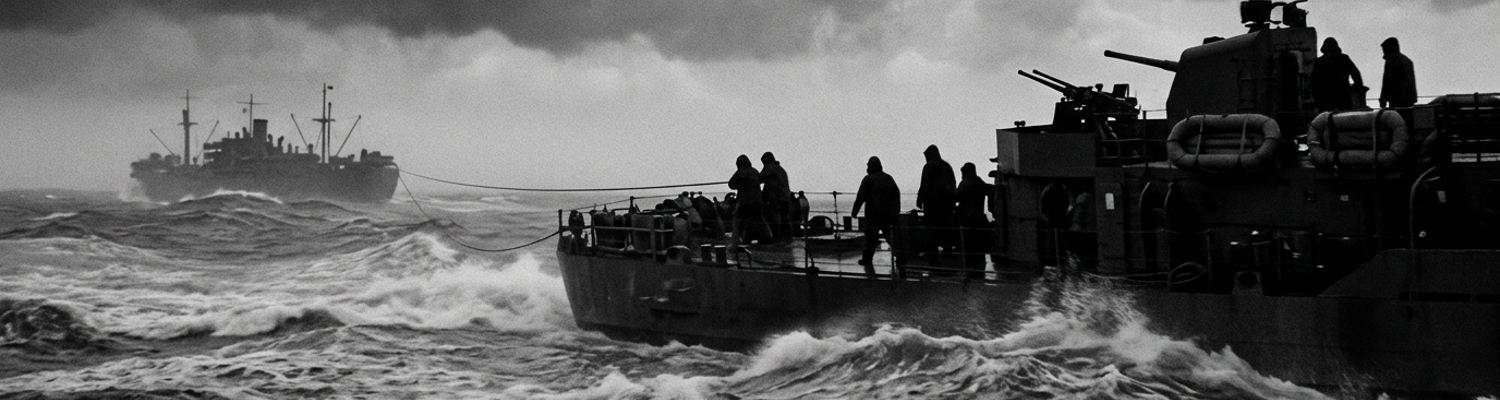

Sakishima Gunto Destroyer Picket Lines in May 1945
Radio transmissions from radar picket stations south of Okinawa reported multiple incoming aircraft bearing 270 degrees (NARA Record Group 38). The date was May 4, 1945. US Navy destroyers assigned to screen the Sakishima Gunto island chain absorbed concentrated kamikaze strikes. Japanese aviators flying A6M5 Zeros and D3A1 Vals launched from airfields in Formosa. They specifically targeted the Fletcher and Allen M. Sumner class destroyers operating at the extreme edge of the early warning perimeter. Pilots initiated terminal dives from high altitudes. They aimed for the superstructure and the Combat Information Center to blind the task forces. Aircraft carrying 250-kilogram semi-armor-piercing bombs penetrated the unarmored main decks of the picket ships. Detonations severed fire mains. High-pressure steam lines in the forward engine rooms ruptured. Mass casualties occurred immediately among the anti-aircraft gun crews stationed in exposed gun tubs.
Medical officers aboard these isolated vessels exhausted their plasma supplies within thirty minutes.
Operational logs indicate the volume of incoming aircraft forced damaged destroyers to hold general quarters while burning. Damage control parties attempted to patch severed bulkheads. Corpsmen dragged wounded sailors into the wardroom for emergency triage. The physical destruction of the ship infrastructure meant the sickbay was often unreachable. Shrapnel wounds and severe flash burns overwhelmed the limited medical personnel assigned to a standard destroyer complement. Ships reporting over fifty casualties required immediate external medical intervention.
Standard naval doctrine dictated that a damaged vessel should pull alongside a cruiser or a designated hospital ship.
Heavy ocean swells and continuous air alerts prevented traditional alongside wounded transfers. Meteorological data from early May 1945 recorded sustained Sea State 5 conditions in the Philippine Sea. Wave troughs reached fifteen feet in depth. Destroyers rolling up to thirty degrees on their longitudinal axis could not safely approach the flat hull of a larger receiving ship. Attempting an alongside transfer required both vessels to match speed and heading while separated by less than fifty feet of open water. The varying displacement of a two-thousand-ton destroyer and a ten-thousand-ton cruiser caused the ships to ride the ocean swells at completely different frequencies. Hull plating ground together during these attempts. Stanchions tore away. Anti-aircraft mounts crushed against steel bulkheads. Mooring lines passed between the ships to stabilize the gap snapped under the extreme tensile load.
The physical hardware used for patient transfer failed under the environmental stress.
Navy personnel attempting to manually hoist wire-basket Stokes litters across the gap lost control of the manila handling lines. Patients suspended above the water were subjected to severe swinging motions. They frequently slammed into the steel bulkheads of the receiving ship. The continuous presence of Japanese aircraft on the air search radar compounded the physical difficulties. Fleet commanders issued continuous Condition Red alerts. All ships had to maintain a minimum speed of twenty knots and execute evasive zig-zag patterns.
Two vessels locked together by mooring lines and transfer rigs completely lost their tactical maneuverability.
Engineering crews could not rapidly decouple the heavy hemp lines if an unobserved enemy aircraft commenced a diving attack. The stationary ships presented an enlarged target against the dark ocean surface. Task force commanders officially suspended alongside transfer operations in the Sakishima operating area. Near-miss bomb detonations had showered shrapnel across the exposed decks of two connected vessels. Fleet medical officers recorded an immediate spike in mortality rates among the wounded sailors trapped aboard the battered picket destroyers.
Minesweeping Gear Conversion to Tensioning Winches
Repair crews assigned to Service Squadron Ten at the Kerama Retto anchorage engineered a mechanical solution in late May 1945. Fleet command ordered hull technicians aboard the repair ship USS Jason to salvage Mark 5 double-drum minesweeping winches from decommissioned fleet minesweepers. These bulky steam-driven mechanisms originally deployed serrated sweep wires and heavy Oropesa floats to sever the mooring cables of submerged contact mines. Navy engineers repurposed double-drum minesweeping winches into ad-hoc high-line tensioning mechanisms. They completely altered the mechanical load tolerances. Machinists stripped away the heavy magnetic sweep tails. They replaced the primary drum spools with five-eighths-inch flexible steel wire rope. Technicians disassembled the asbestos friction brakes and modified the internal steel clutch plates using milling machines in the lower decks. They recalibrated the heavy steel spring tension on the brake bands. The bands were set to intentionally slip when the lateral load on the cable exceeded two thousand pounds.
The primary drive shaft ran continuously.
Operators feathered the pneumatic clutch to manage the slack.
Examining the historical record of this hardware conversion reveals the physical mechanics of the tensioning system solved the exact environmental problem that had previously snapped heavy mooring lines. Two ships rolling in opposite directions in deep ocean troughs generated sudden spikes in tensile force along any connecting line. The recalibrated brake bands on the modified Mark 5 winch automatically paid out the steel cable the exact millisecond the load spiked. This prevented the wire rope from parting under the extreme physical strain. As the hulls rolled back inward and the distance between the ships rapidly closed, the winch operator engaged the pneumatic drive gear. The loose wire spooled violently back onto the drum. This constant mechanical push and pull created a taut steel connection suspended sixty feet above the water. A specialized traveling block mechanism featuring sealed roller bearings rode directly on this tensioned wire.
High-speed transports mounted these improvised rigs to execute underway medical evacuations.
Operational logs from the USS Gantner (APD-42) and the USS Bowers (APD-40) detail the exact tactical execution of these underway transfers. These vessels were older destroyer escorts converted into fast transports. They featured widened deck spaces originally intended for amphibious landing craft storage. Shipwrights at Kerama Retto welded the modified Mark 5 winches directly to the reinforced steel decking amidships. During an active air raid on May 27, the Gantner approached a burning radar picket destroyer at a sustained speed of eighteen knots. Deck crews fired a brass projectile from a .30-caliber line-throwing rifle over the damaged ship. This pulled a lightweight messenger line across the open water. Sailors on the receiving end hauled the heavy steel high-line across the water and shackled it to a welded pad eye on the forward superstructure.
The winch operator took the strain.
Medical personnel aboard the burning destroyer strapped severely injured sailors into rigid wire-basket Stokes litters. Deck handlers clipped the top steel ring of the litter directly to the traveling block on the tensioned high-line. Crews on both ships used secondary manila inhaul and outhaul lines to drag the suspended litter across the sixty-foot expanse. Automated slipping of the winch drum absorbed the thirty-degree rolls of the vessels without jerking the patient. Suspended ten feet above the wave crests, the casualty traveled on a horizontal plane while the ships pitched violently below. Transport crews pulled the litter aboard. They immediately unclipped the rigging and sent the empty block back across the gap to retrieve the next man. This continuous mechanical process reduced the transfer time per patient from twenty minutes to less than ninety seconds. Processing forty-two severe burn and shrapnel casualties, the Gantner completed the evolution during a single forty-five-minute high-speed run off the coast of Okinawa.
Hydraulic Slippage and Cable Fraying Under Fire
The improvised underway transfer system began failing on May 28, 1945. Operations were taking place in Sector Tare forty miles south of Ishigaki Island at 23 degrees 45 minutes North, 124 degrees 15 minutes East. Meteorological data recorded a sudden intensification of the Philippine Sea weather patterns. Wave troughs pushed beyond twenty feet. Fast transports like the USS Gantner attempted to maintain eighteen knots while tethered to damaged radar pickets. The massive displacement differences between the vessels caused them to ride the Sea State 5 swells at clashing frequencies. Rapid tension changes during heavy swells caused severe hydraulic slippage in modified winch assemblies. The Mark 5 minesweeping winches relied on a jury-rigged pneumatic clutch to feather the slack on the high-line. Constant violent jerking from the opposing thirty-degree rolls forced the internal steel clutch plates to slip past their engineered tolerances. Friction heated the hydraulic fluid within the primary drive shaft housing past its boiling point. The internal gas volume expanded beyond the capacity of the rubber O-ring seals.
A complete loss of mechanical pressure followed.
Operational logs from the USS Bowers indicate engineering crews desperately tried to manually override the failing brakes. Machinists poured seawater directly over the smoking brake bands to prevent the steel from warping. The loss of hydraulic pressure meant the winch drum could no longer automatically pay out cable during a tension spike. Operators watched the internal pressure gauges drop from three thousand PSI down to zero while the tethered destroyer plunged into a deep trough. The winch locked solid. Two thousand pounds of lateral force immediately transferred directly to the five-eighths-inch flexible steel wire rope suspended between the ships. Deck handlers on the Bowers recorded loud metallic snapping sounds echoing from the traveling block mechanism. The structural load had exceeded the safe working limit of the steel core.
Task Force 51 commanders ordered the medical evacuations to proceed without pausing for equipment maintenance.
Sustained combat operations over the Sakishima Gunto operating area compounded the physical degradation of the transfer hardware. Radar operators tracked continuous waves of A6M5 Zeros and D3A1 Vals approaching from Formosan airfields at altitudes exceeding ten thousand feet. Ship captains ordered tethered vessels to execute evasive zig-zag patterns to disrupt enemy bombing solutions. Altering course at eighteen knots while physically connected by a sixty-foot steel cable subjected the transfer rig to extreme lateral friction. Continuous high-line transfers under Japanese air attack resulted in dangerous cable fraying. The 6x19 classification wire rope dragged violently against the hardened steel edges of the traveling block and the welded pad eyes on the receiving ship. Individual outer wire strands snapped under the shearing force. Broken steel threads curled outward from the main cable. This created sharp steel barbs that jammed the sealed roller bearings of the litter carrier.
A jammed block halted the casualty transfer directly over the open ocean.
Deck logs document exact casualty numbers delayed by equipment failure. On May 29, the Bowers suspended operations for forty minutes while under active air attack to cut away a seized traveling block. Sailors used heavy bolt cutters to sever the snarled section of the high-line. They intentionally dropped the empty Stokes litter into the sea to clear the jam. Japanese aircraft dropped 250-kilogram semi-armor-piercing bombs that detonated in the water less than two hundred yards from the port beam. Shrapnel from the near misses struck the exposed winch mechanisms. External pneumatic lines were severed. Repair crews spliced a new section of wire rope under fire. They used heavy U-bolt clamps to reconnect the severed high-line. They bypassed the failed hydraulic pneumatic clutch entirely by locking the primary drive gear into a fixed position.
Four sailors physically controlled the cable tension by manually heaving on secondary manila checking lines.
Improvised Span-Wire High-Line Rig Operations
Deck gangs aboard high-speed casualty staging ships fabricated these transfer lines from salvaged fleet materials in early June 1945. Crews aboard the USS Liddle and USS Bull constructed the span-wire high-lines to physically connect their vessels and the battered Fletcher-class destroyers. The primary load-bearing component consisted of a three-hundred-foot spool of five-eighths-inch plow-steel wire rope. Machinists heavily greased this cable to resist saltwater corrosion. A gunner mate fired a solid brass projectile from a .30-caliber line-throwing rifle across the sixty-foot expanse separating the two moving ships. Sailors on the receiving destroyer grabbed the attached lightweight cotton messenger line. They hauled it hand-over-hand until the heavy steel span-wire crossed the open water. Engineering personnel on the picket ship then shackled the bitter end of this steel cable directly to a welded pad eye on the forward superstructure. A quick-release pelican hook connected the wire to the pad eye. This allowed the destroyer crew to instantly sever the connection if an unobserved Japanese aircraft commenced a dive.
The staging transport retained the active end of the wire.
They routed it through a series of heavy steel snatch blocks down to the deck-level winches.
Operating near 24 degrees 15 minutes North, 125 degrees 22 minutes East, these staging ships maintained a continuous speed of fifteen knots. This evasion speed was necessary to counter incoming kamikaze attacks from Formosa while tethered to the burning destroyers. The wire rope formed a rigid horizontal track connecting the two hulls. Specialized traveling blocks rode directly along this tensioned cable. Each block featured a forged steel hook designed to securely hold the top ring of a rigid wire-basket Stokes litter.
This hardware setup removed the wounded from the surface of the ocean.
Maintaining the stability of a suspended litter required highly dangerous manual adjustments by deck riggers. Mechanical tensioning winches handled the primary load of the steel span-wire. The horizontal movement of the casualty depended entirely on human physical force. Riggers on both the high-speed transport and the damaged destroyer managed secondary manila inhaul and outhaul lines attached to the traveling block. Five men stood on the wet deck of the transport. They physically heaved on a three-inch hemp rope to drag the loaded stretcher across the gap. Receiving crews on the damaged destroyer simultaneously paid out their own manila line to control the exact speed of the transfer.
Slack in these secondary lines caused the stretcher to swing out of control.
Weather data from June 1945 confirms sustained heavy swells in the Philippine Sea caused both tethered ships to roll independently up to thirty degrees. Riggers constantly adjusted their grip and stance to counteract these sudden changes in hull geometry. When the destroyer rolled sharply away from the transport, the deck crew holding the outhaul line instantly released tension. This prevented the stretcher from jerking backwards. If the hulls rolled inward and closed the distance, the transport riggers sprinted backward across the steel deck. They pulled the inhaul line with all their body weight to keep the litter moving forward. These men worked without safety harnesses. They stood on steel plating slick with fuel oil and seawater.
A sudden snap of the primary wire rope would instantly decapitate anyone standing in the snapback zone.
Medical officers recorded the exact physical toll this manual stabilization exacted on the deck divisions. Saltwater spray constantly soaked the manila handling lines. This heavily increased their weight and made them highly slippery. Riggers suffered severe friction burns through their thick leather gloves as the unpredictable ocean swells forced the ropes backward through their hands. Aboard the USS Liddle, deck logs note that a sudden fifteen-foot wave trough caused the tethered destroyer to drop vertically. This drop violently pulled the outhaul line and dragged three riggers across the non-skid decking until they slammed into the armored plating of a 40mm gun tub. These sailors immediately scrambled back to their feet. They locked their arms around the manila rope to stop the Stokes litter from crashing into the side of the transport. Deck handlers hauled the wire basket over the lifelines and immediately unclipped the forged steel hook.
Field Modifications to Navy High-Line Transfer Doctrine
The raw physical friction of continuous underway transfers began destroying the primary span-wires by mid-June 1945. Operating at 24 degrees 30 minutes North, 125 degrees 15 minutes East, destroyer escorts like the USS Ringness maintained speeds of eighteen knots to avoid radar-guided aerial torpedoes. This velocity forced the tethered ships to pull violently against the connecting cables. The 6x19 plow-steel wire rope dragged continuously across the hardened steel edges of the traveling block. Sustained metal-on-metal contact generated intense thermal buildup within the sealed roller bearings. Individual outer wire strands reached temperatures exceeding four hundred degrees Fahrenheit. The tensile strength of the steel degraded rapidly under this localized heating. Shearing forces snapped the brittle outer threads. Jagged barbs formed and jammed the mechanical pulleys.
A seized block stranded the wounded patient suspended directly over the open ocean.
Deck logs from Service Squadron Ten detail a rapid field modification to the hardware. Sailors implemented emergency cable lubrication to prevent line snaps during high-speed operations. Boatswain mates aboard the high-speed transports raided the engineering compartments for heavy graphite grease normally reserved for main engine reduction gears. They mixed this thick paste with low-viscosity Grade 14 aviation lubricating oil to create a heat-resistant slurry. As the winch operators paid out the five-eighths-inch steel cable, deck gangs stood directly beside the spinning drum holding heavy canvas rags soaked in this chemical mixture. They physically clamped their hands around the moving wire rope. This forced the grease deep into the internal steel core. This continuous application of liquid lubrication drastically reduced the friction coefficient between the traveling block and the span-wire. The modified hardware could now sustain continuous operation at eighteen knots without shearing the outer steel strands.
The thick graphite paste prevented saltwater from corroding the exposed wire rope.
The increased mechanical efficiency of the lubricated transfer rig immediately exposed a secondary bottleneck on the sending ships. Damaged radar pickets like the USS William D. Porter struggled to feed wounded sailors into the hardware fast enough to match the speed of the greased high-line. Shipboard medical teams standardized triage sorting on deck before launching casualty baskets. Prior to this modification in protocol, corpsmen dragged casualties up from the lower decks randomly. This caused massive delays as riggers waited for the next patient. Fleet surgeons ordered a strict reorganization of the physical deck space near the welded pad eyes. Medical personnel established a dedicated staging area directly beneath the primary transfer cable. They laid out rigid wire-basket Stokes litters in a grid pattern on the non-skid steel decking.
Sorting the wounded occurred entirely in the open air.
Corpsmen evaluated each casualty as damage control parties hauled them out of the burning superstructure. They used thick red grease pencils to mark a large Roman numeral directly on the forehead of each sailor. This categorized the severity of the trauma. Priority one patients suffering from arterial hemorrhages or extensive flash burns were immediately strapped into the waiting wire baskets. Medical officers pinned empty morphine syrettes directly to the collars of these men to track exact dosage times. Deck handlers then clipped the heavy steel ring of the loaded litter to the greased traveling block. Priority two and three casualties lay flat on the steel deck. They were instructed to hold onto the lifelines as the ship rolled thirty degrees in the heavy swells. This pre-sorting process allowed the deck riggers to maintain a continuous mechanical cycle of launching and retrieving the casualty baskets.
The transport crews pulled a new patient across the gap every ninety seconds.
Yaeyama and Miyako Civil Affairs Evacuation Records
Operational logs from the Military Government detachments assigned to the Sakishima Gunto reveal the precise mechanical volume of the underway transfer system during late June 1945. Civil Affairs officers assigned to the Tenth Army operating near Miyako-jima at 24 degrees 46 minutes North, 125 degrees 19 minutes East recorded exactly 312 wounded sailors successfully evacuated via improvised high-lines during a four-day window. Processing this exact number of casualties required the modified Mark 5 double-drum minesweeping winches to cycle continuously without standard maintenance intervals. Engineering crews aboard receiving transports like the USS Pinkney documented severe physical degradation of the five-eighths-inch plow-steel wire rope during this sustained usage. Dragging over 300 rigid wire-basket Stokes litters across the sixty-foot expanse of open ocean stripped the heavy graphite grease directly off the primary span-wire. Saltwater spray immediately crystallized on the exposed steel core. The resulting friction caused the forged steel hooks of the traveling blocks to heat beyond three hundred degrees Fahrenheit. The internal sealed roller bearings warped.
Deck gangs resorted to pouring raw seawater over the mechanical pulleys to prevent the metal from fusing.
These underway medevac operations sustained fleet medical care entirely because land-based infrastructure did not exist in the immediate operational sector. Japanese garrison forces still occupied the Yaeyama and Miyako island groups. This denied the US Navy any secure anchorages to establish forward field hospitals. Construction battalions on Okinawa, located two hundred miles to the northeast, had not yet completed the primary coral airstrips at Yontan and Kadena needed to support heavy casualty evacuation flights. The tensioned steel cables suspended between the fast transports and the burning radar picket destroyers functioned as the sole medical evacuation network for Task Force 51. Medical officers aboard the staging ships logged exact intake times. The continuous mechanical process of launching and retrieving the casualty baskets kept the mortality rate below four percent. Riggers on the wet decks physically heaved on three-inch manila inhaul lines to drag the loaded stretchers across the gap.
Every ninety seconds, another casualty cleared the ocean swells.
The sheer physical exertion required to move 300 men overwhelmed the deck divisions. Riggers suffered severe friction burns through their thick leather gloves as they manually managed the secondary checking lines to stabilize the stretchers. Weather data from late June 1945 confirms sustained Sea State 5 conditions. Both tethered ships rolled independently up to thirty degrees. The constant shifting of the hull geometry forced the deck crews to adjust their stance continuously on steel plating slick with leaked aviation fuel and saltwater. If a transport rolled sharply away from a damaged destroyer, the men holding the outhaul line instantly released tension to prevent the rigid wire-basket litter from jerking backward. The modified pneumatic clutch on the Mark 5 winch automatically paid out the primary steel cable the exact millisecond the load spiked above two thousand pounds.
The primary drive shaft ran continuously.
Fleet surgeons relied exclusively on this mechanical reliability to maintain the triage flow prior to establishing shore facilities. Damaged destroyers like the USS Twiggs fed severely burned anti-aircraft gunners into the hardware as fast as the corpsmen could strap them into the litters. Medical personnel categorized the severity of the trauma using red grease pencils to mark Roman numerals on the foreheads of the wounded. Priority one patients suffering from arterial hemorrhages crossed the tensioned wire first. Transport crews pulled the litter aboard, unclipped the rigging, and immediately sent the empty block back across the gap. Hospital corpsmen routed the incoming casualties directly into the widened deck spaces originally intended for amphibious landing craft storage. Shipwrights had converted these steel compartments into sterile operating theaters equipped with overhead surgical lamps and bolted-down operating tables.
Legacy of WWII Underway Medical Evacuation Innovation
The Bureau of Ships stripped the improvised Mark 5 double-drum minesweeping winches from the fast transports immediately following the Japanese surrender in September 1945. Operating at 47 degrees 33 minutes North, 122 degrees 38 minutes West, engineers at the Puget Sound Naval Shipyard dismantled the heavily scarred pneumatic clutches that had survived the Sakishima Gunto deployments. Deep thermal scoring marred the steel plates due to operations at temperatures exceeding four hundred degrees Fahrenheit during continuous kamikaze raids. Raw physical data extracted from these warped friction components dictated the engineering baseline for a completely overhauled underway replenishment architecture. To scale up for heavy fleet logistics, naval architects recognized the manual slipping mechanism used off Okinawa required too much human physical intervention. Draftsmen replaced the crude asbestos brake bands with heavy hydraulic ram tensioners connected to compressed air accumulators. By applying internal fluid pressure against the mechanical sheaves, the system automatically absorbed the slack or paid out the wire rope based on the exact distance between two moving hulls. This hardware evolution established the foundation for the Standard Tensioned Replenishment Alongside Method.
The resulting hydraulic winches actively spooled wire rope at four hundred feet per minute without human input.
These tension-controlled winch designs became standard installations on the new Neosho-class fleet oilers during 1950s naval construction. Shipyards welded massive steel transfer frames directly to the main decks of vessels like the USS Kawishiwi (AO-146). Rising above the superstructure, these vertical steel towers provided the high anchor points necessary to keep the cables clear of the ocean swells. The primary load-bearing cables transitioned from five-eighths-inch flexible steel to heavy-duty seven-eighths-inch plow-steel wire rope. Across the open water, engineering crews no longer relied on manual manila checking lines to stabilize the load. Automated hydraulic tensioning systems absorbed the violent thirty-degree rolls of Sea State 5 conditions. Transferring two-ton pallets of 5-inch artillery shells and heavy aviation fuel hoses required the massive span-wires to remain perfectly taut. During high-speed parallel runs at twenty knots, fleet commanders testing the equipment off the coast of Virginia at 36 degrees 55 minutes North, 75 degrees 59 minutes West recorded a zero percent mechanical failure rate.
Post-war naval logistics incorporated tension-controlled winch designs into underway replenishment systems to eliminate the snapback hazards that plagued early high-line rigs.
The raw tactical data gathered from the Sakishima Gunto improvisations directly rewrote Cold War casualty handling protocols. Bureau of Medicine and Surgery personnel integrated the high-line transfer mechanics into the standardized Naval Warfare Publication 14. Under this new doctrine, all active warships had to maintain dedicated high-line casualty transfer stations directly amidships. Task Force 77 destroyers executed these exact maneuvers while taking fire from North Vietnamese shore batteries during combat operations at Yankee Station in the Gulf of Tonkin at 17 degrees 45 minutes North, 107 degrees 45 minutes East. Medical officers abandoned the heavy manila handling lines used in 1945. Requisitioning braided double-core nylon rope allowed supply officers to equip the fleet with superior gear. This synthetic material completely resisted saltwater saturation and provided elastic shock absorption during sudden hull shifts.
Deck riggers no longer suffered severe friction burns through their leather gloves while stabilizing the suspended patients.
Machinists completely redesigned the traveling block mechanism to eliminate the catastrophic jamming experienced by the radar picket destroyers off Okinawa. Featuring an enclosed aluminum housing, the Cold War iteration came equipped with self-lubricating synthetic polymer bearings. This specific hardware upgrade prevented the continuous metal-on-metal friction that had previously snapped outer wire strands and stranded wounded sailors over the open ocean. During heavy monsoon swells, hospital corpsmen aboard the Forrestal-class supercarriers received incoming Stokes litters via these tensioned high-lines. Standardized protocol dictated a strict ninety-second transfer window from the moment the casualty left the sending destroyer to their arrival in the carrier triage bay.
Medical teams pre-sorted the wounded on the steel non-skid decking using the exact triage marking systems developed off Okinawa.
In August 1964, the USS Turner Joy (DD-951) utilized this exact modified hardware to transfer injured personnel to the USS Ticonderoga (CVA-14). Deck handlers clipped the top steel ring of the rigid wire-basket litter directly to the aluminum traveling block. Hauling the nylon inhaul lines hand-over-hand, riggers pulled the casualty across the sixty-foot expanse of open water. The receiving medical team unclipped the forged steel hook and immediately pushed the stretcher into the lower deck surgical suites.