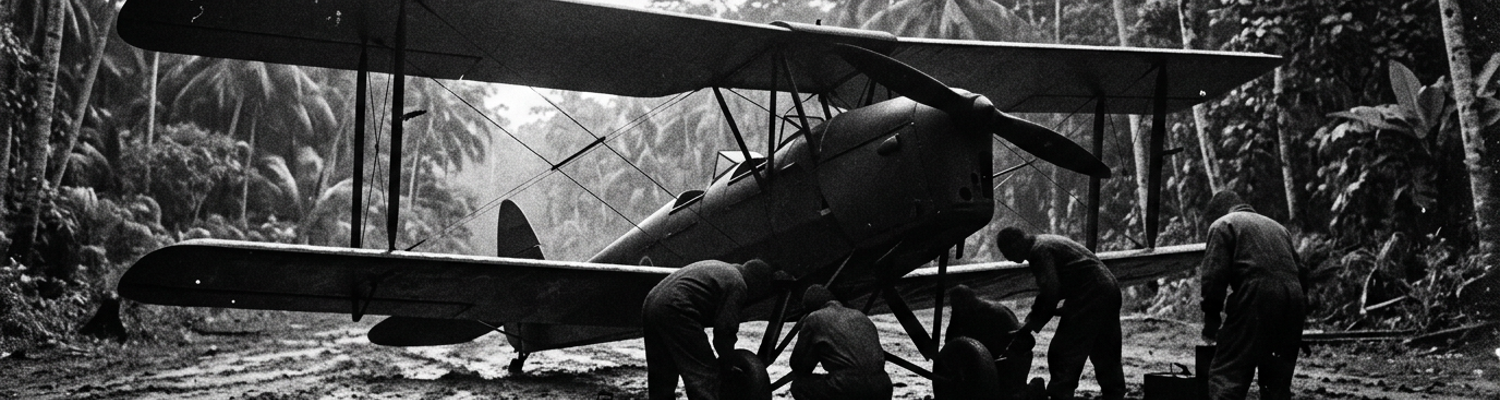

Ambush at Quilali and Ground Line Severance
Torrential downpours churned the mountain passes of northern Nicaragua into thick clay mud. The temperature fluctuated rapidly between freezing nighttime rains and suffocating daytime humidity. Dense jungle canopy enveloped the narrow trail clinging to the volcanic flanks of El Chipote. Footing was treacherous. Visibility rarely exceeded twenty paces. Archival evidence shows two United States Marine Corps patrol columns advancing into Nueva Segovia province in late December 1927. Captain Richard Livingston commanded a column of 115 Marines. They marched from Jinotega with a long mule pack train. First Lieutenant Merton A. Richal led a second force of 60 Marines and Nicaraguan Guardia Nacional constabulary troops. They moved from Telpaneca along the Jicaro River valley.
On December 30.
Less than a mile south of Quilali. Sandinista insurgent forces under General Augusto Cesar Sandino occupied elevated rock positions. They initiated a surprise attack on the lead elements of the Livingston column. Guerrillas fired automatic rifles. They detonated improvised pipe mortars packed with rawhide pouches of scrap iron and glass fragments. Five Marines died immediately. The supply mules scattered into the brush.
The forward patrol lost all tactical cohesion.
A close review of operational logs indicates Sandinista rifle fire severed the single-strand copper field telegraph lines. These lines ran along wooden poles beside the San Albino trail. The patrols lost all capability to transmit telegraphic distress signals. They could not request land reinforcements from headquarters garrisons at Jicaro and Ocotal. Runner messengers dispatched to reestablish contact died along the brush-lined trails. The second column under Lieutenant Richal marched directly into another ambush at Las Cruces Hill on January 1. This occurred six miles northwest of Quilali. Embedded guerrilla squads engaged the column from entrenched positions above the trail. They used heavy rifle fire and dynamite bombs. Gunnery Sergeant Edward G. Brown deployed a 37mm infantry gun. He suppressed rebel firing positions on the crest. This action allowed the survivors to maneuver. Mountain ridges rising above four thousand feet physically blocked visual flag and mirror signaling.
Both columns fought their way into Quilali.
They fortified a defensive perimeter within its stone-walled structures under continuous sniper fire. Ground communications ceased to exist. The combined engagements left the Marine force in a severe medical crisis. Captain Livingston suffered severe combat wounds. He turned command over to Lieutenant Moses J. Gould. Lieutenant Richal took a rifle bullet directly to the eye during the fighting at Las Cruces. First Sergeant Thomas G. Bruce died alongside seven other men. Over thirty Marines and constabulary soldiers sustained major traumatic injuries. These included compound femur fractures and deep shrapnel lacerations. The besieged garrison of fewer than two hundred effective riflemen lacked adequate surgical instruments.
They had no morphine.
They had no blood plasma. They lacked clean drinking water. Transporting critically injured personnel out by mule train required a six-day journey across hostile mountain trails. Medical staff acknowledged this timeframe guaranteed fatal systemic infections and shock. Air transport represented the sole remaining extraction method.
Construction of the Improvised Town Airfield
On January 1.
An Observation Squadron 7-M biplane dropped a weighted message cylinder into the besieged perimeter at Quilali. The coded message instructed command officers to prepare a landing site inside the village. Lieutenant Moses J. Gould selected the central thoroughfare of the settlement. This was a rutted dirt track running northwest to southeast along an eight-degree incline. Marines from the Jinotega and Telpaneca columns worked alongside Nicaraguan Guardia Nacional constables. They used basic entrenching tools and pickaxes. They used heavy hemp ropes to clear massive volcanic boulders from a 500-foot stretch of the roadway. The rough mountain soil was severely uneven. Deep erosion gullies threatened to snap the wooden landing gear struts of incoming aircraft. Ground crews packed wet clay into deep wheel ruts. They hauled away loose river stones by hand. They labored in shift rotations to create a flat touchdown surface.
Engineers worked without mechanized earthmovers.
Sandinista insurgent squads positioned on the surrounding high ground of El Chipote ridge maintained continuous aimed rifle fire on the working parties. Rebel marksmen armed with German-made Mauser Model 1893 bolt-action rifles firing 7x57mm cartridges targeted Marines working exposed along the open roadway. Captured Krag-Jorgensen carbines added to the incoming fire. Lieutenant Gould established fortified firing positions behind stone barricades at both ends of the street. He deployed Lewis light machine guns and a 37mm infantry gun under Gunnery Sergeant Edward G. Brown. Marine riflemen fired heavy counter-battery volleys into the surrounding jungle treeline. They fired whenever insurgent muzzle flashes appeared along the mountain slopes. Men on the clearing detail rotated constantly between shoveling heavy dirt and returning fire with Springfield M1903 rifles. They crouched behind improvised sandbag emplacements. High-velocity rounds ricocheted off the rocky soil. Two constabulary soldiers sustained major gunshot wounds while hauling heavy timber debris off the runway centerline.
Survival required absolute speed under fire.
The physical dimensions of the central dirt road posed an immediate collision risk. The two-seater Vought O2U-1 Corsair biplane piloted by First Lieutenant Christian F. Schilt possessed an upper wingspan of thirty-four feet and six inches. This left virtually zero lateral margin on the narrow village street bordered by ancient tile-roofed buildings. Lieutenant Gould ordered the systematic demolition of adjacent residential structures along both sides of the roadway. This ensured sufficient wing clearance during low-altitude approaches through the surrounding mountain peaks. Marine working parties set fires to thatch roofs. They chopped down heavy wooden support beams with axes. They pulled down thick adobe brick walls using hemp hauling cables attached to mule teams. Dust and acrid smoke from burning timbers filled the air. Crews flattened several homes. They widened the improvised flight corridor to over sixty feet across. Tearing down these heavy clay structures eliminated blind spots. Insurgent snipers could easily ambush approaching biplanes from those spots on short final approach.
The runway had no mechanical arresting gear.
Mechanical logs from Observation Squadron 7-M document a specific hardware deficiency. Schilt operated an O2U-1 Corsair lacking wheel brakes. Ground crews had to physically slow the aircraft upon rollout on the incline. Gould organized a specialized handling team of ten Marines. They sprinted alongside the biplane as its main tires touched the dirt at fifty miles per hour. These men grabbed the lower wingtips simultaneously. They used their combined weight and heavy boots dragging through the deep mud to friction-stop the aircraft. This prevented the plane from crashing into the remaining stone walls at the dead end of the 500-foot strip.
Aerial Evacuation Sorties Under Hostile Fire
First Lieutenant Christian Schilt operated modified Vought O2U-1 Corsair biplanes onto the improvised 500-foot dirt strip at Quilali.
A 450-horsepower Pratt and Whitney R-1340-88 Wasp radial engine powered the aircraft. The engine displaced 1,344 cubic inches. The O2U-1 biplane lacked factory wheel brakes. This required mechanical alterations and specialized manual deceleration techniques on the ground. Schilt operated in tandem with multi-engine Fokker TA-2 trimotor transports. These transports staged out of Ocotal to drop heavy cargo. Schilt adapted his light biplane for extreme short-field performance. He removed non-essential equipment. He removed flight instruments. He stripped structural armament to maximize lift capacity. He approached the narrow central roadway along an eight-degree slope. He dropped the biplane into steep sideslips to bleed off airspeed. He cleared mountain crests exceeding four thousand feet in elevation. Turbulent downdrafts and thermal air currents rising off the jungle canopy destabilized flight controls during low-altitude passes. Schilt made split-second throttle adjustments near stall speed.
Engine power alone could not overcome the physical hazards of the terrain.
A close review of operational logs indicates Schilt executed 18 high-risk sorties between January 6 and January 8. Sandinista guerrillas positioned on the elevated ridgelines of El Chipote swept the runway with Mauser rifle fire during every touchdown and takeoff roll. Specialized Marine handling teams sprinted alongside the moving aircraft upon touchdown. They grabbed lower wingtips to drag the biplane to a stop before it slammed into stone barricades at the runway end. Heavy propeller wash threw thick clouds of red clay dust into the air. This revealed the exact location of the aircraft to rebel marksmen hidden along the surrounding tree line. Projectiles punctured the canvas skin. They shattered wooden wing struts. They pierced the aluminum fuel piping of the Corsair during these touchdown sequences. Aircrews performed field repairs using canvas patches and wire ties between flights. Operations continued uninterrupted across three days of torrential downpours. Shifting mountain fog and low cloud ceilings complicated the approaches. Mortar fire impacted the perimeter.
Hostile marksmen targeted the low-flying biplane on every departure.
Archival evidence shows the aerial operation delivered over fourteen hundred pounds of medical supplies. They brought in field rations and radio batteries. They delivered replacement commanding officer Captain Harold D. Campbell directly into the defensive perimeter. On return flights. Schilt successfully evacuated 18 wounded Marines. Their severe traumatic injuries required immediate field surgery. Medical personnel loaded casualties into the narrow rear observer compartment. They secured men with compound fractures and shattered limbs onto improvised canvas stretchers. Extracting these incapacitated men removed a massive burden from the besieged force. It prevented fatal systemic infections from taking hold in the unsanitary conditions of Quilali. Schilt flew through heavy rifle crossfire during climb-out. He banked past the Jicaro River valley to haul the casualties to field hospital facilities in Ocotal. Flying low over hostile territory. Schilt maintained full control of his damaged aircraft despite fuel leaks and compromised flight surfaces. The mission concluded on January 8. The last injured Marine cleared the combat zone.
The final flight departed Quilali.
Mechanical Degradation of Landing Gear Systems
The mechanical strain of landing on the improvised street of Quilali destroyed aircraft structural components at an unprecedented rate.
Observation Squadron 7-M operational logs document severe damage to the Vought O2U-1 Corsair biplane. Engineers originally designed this aircraft for smooth paved runways or naval aircraft carrier decks. It suffered catastrophic undercarriage destruction upon impacting the eight-degree incline of the rutted dirt thoroughfare. First Lieutenant Christian F. Schilt attempted to compensate for the complete absence of wheel brakes by landing into a steep slope. The rough mountain terrain transferred heavy physical energy directly into the fixed landing gear struts. Deep erosion gullies and embedded volcanic boulders struck the main rubber tires at fifty miles per hour. This sheared axle bolts. It snapped the wooden support assemblies. Ground handling teams seized the lower wingtips to drag the aircraft to a halt. The sudden asymmetric friction forces buckled the steel-tube cross-bracing. This ruptured the lower shock-absorbing oleo struts. Repeated heavy impacts fractured the wood-plank tailskids. Splintered timber drove directly into the aft fuselage fabric. Each violent touchdown threatened to collapse the entire lower wing structure under the weight of the airframe. Aircrews inspected the entire axle assembly after every single rollout.
Metal fatigue compounded structural failure.
Environmental heat combined with extreme flight profiles pushed the 450-horsepower Pratt and Whitney R-1340-88 Wasp radial engine beyond its designed thermal limits. This occurred during operations between January 6 and January 8. Ambient tropical temperatures exceeded ninety degrees Fahrenheit in the narrow Jicaro River valley. This reduced the cooling efficiency of ambient air flowing over the nine air-cooled cylinders of the engine. Schilt had to clear four-thousand-foot mountain peaks surrounding El Chipote while operating near maximum takeoff weight. He held the biplane in low-speed climbs. These high-angle climbs drastically restricted airflow across the cylinder cooling fins. The lack of adequate airspeed caused cylinder head temperatures to spike dangerously into redline thresholds. This thinned engine lubricating oil. It caused severe valve float. Frequent short-haul sorties between Ocotal and Quilali permitted zero cooling downtime on the ground. Insurgent rifle fire required Schilt to keep the radial engine running continuously during casualty loading. Extended idling in the dusty village corridor sucked thick clouds of abrasive red clay into the un-filtered carburetor intake. This scored piston walls. It accelerated mechanical breakdown.
Overheated oil spewed across the cockpit windscreen.
The complete absence of forward supply depots in Nueva Segovia province forced Marine ground crews to maintain the aircraft without standard replacement parts. The nearest naval aviation supply depot at Managua lay over one hundred miles to the south across impassable mountain trails. Mechanics at the Ocotal staging base relied entirely on cannibalized components and scrap metal. Schilt suffered fractured landing gear struts on his O2U-1. Technicians scavenged heavy steel tubing and axle assemblies from an obsolete World War I DeHavilland DH-4 biplane. This aircraft sat rotting in an airfield hangar. Ground crews hammered the oversized DH-4 steel struts into shape by hand. They secured them to the airframe of the Corsair with salvaged bailing wire. They used heavy hemp cordage and custom-welded brackets. Bullet holes puncturing the aluminum fuel lines and canvas wing coverings required immediate attention. Mechanics patched them using rubberized tape and shellac. They cut scrap canvas strips from discarded supply bags. Mechanics worked around the clock in the open dirt at Ocotal. They used basic hand wrenches and makeshift blacksmith forges. They re-rigged bent flight control cables. They replaced shattered wooden tailskids with hand-carved local hardwood.
Field mechanics improvised every repair without blueprinted manuals.
Expedient Aircraft Field Repairs in Quilali
Observation Squadron 7-M ground mechanicians operated under total supply isolation.
This isolation threatened to collapse the air operation. Standard naval aviation replacement parts were completely unavailable in Nueva Segovia province. Technicians created expedient structural components out of local debris. Mechanicians retrieved discarded iron strapping from .30-06 Springfield ammunition crates. They found heavy scrap iron plates. They gathered rolls of galvanized baling wire salvaged from local farm storage sheds. Ground crews repaired cracked engine mount brackets and reinforced weakened wing struts. They used basic hand tools consisting of open-end wrenches and metal snips. They used ball-peen hammers and heavy pliers. Mechanics bound high-tension steel baling wire around split wooden tailskids. They secured the splints with hand-hammered iron brackets to withstand touchdown forces on the eight-degree slope. Punctured aluminum fuel lines received layers of rubberized tape wrapped tightly with copper wire. Canvas wing skin tears were covered with heavy burlap cloth from ration sacks. Mechanics coated these patches in shellac. Broken control cables were spliced using steel wire loops. Makeshift clamping nuts held these loops together. Mechanics fashioned replacement shackle pins from scrap iron rods using hand files and portable vise clamps.
Scrap wire replaced factory hardware.
Sandinista riflemen occupying entrenched positions along El Chipote ridge swept the dirt street with aimed fire during every single landing sequence. High-impact contacts with volcanic boulders and deep erosion gullies repeatedly crushed the main landing gear assemblies of the Vought O2U-1 Corsair biplane. Ground mechanics armed with heavy sledgehammers and crowbars sprinted onto the active thoroughfare. Mauser bullets struck the surrounding clay. Men dropped into the mud beneath the idling 450-horsepower Pratt and Whitney radial engine. They pounded crushed steel support struts directly back into alignment. Insurgent snipers targeted the working ground crews from the treeline. Mechanics tightened bent tension wires. They straightened buckled cross-bracing. Heavy hammer strikes reshaped flattened wheel rims on the active runway. This allowed the rubber tires to rotate freely for the subsequent takeoff roll. Mechanics worked mere feet from spinning wooden propeller blades. They re-seated dislodged axle pins before the airframe could settle into the mud. Adjustments to the oleo shock struts were performed under direct rifle crossfire. Mechanics used hand wrenches to re-align bent mounting bolts.
Bullets ricocheted off the active runway throughout every repair cycle.
These expedient mechanical repairs kept the sole available aircraft flight-ready across three days of continuous combat from January 6 to January 8. Without persistent field patching. Structural failures would have grounded the biplane after its initial touchdown attempt. Ground mechanicians kept the compromised airframe rigid enough to complete 18 dangerous evacuation sorties into the fire-swept mountain perimeter. First Lieutenant Christian F. Schilt relied on these improvised fixes. He extracted 18 critically wounded Marines and Guardia Nacional constables. These men faced fatal infections inside the village triage station. Each outbound flight evacuated casualties to the Ocotal field hospital. Incoming flights delivered fourteen hundred pounds of medical supplies. They brought radio batteries and small-arms ammunition. Mechanicians maintained turnaround times under ten minutes per sortie. They executed emergency structural adjustments while the engine ran continuously to prevent thermal stalling. Ground crews monitored cylinder head temperatures. They refueled the aircraft using hand-pumped gasoline drums while enemy rounds clipped the wingtips. Emergency rigging adjustments ensured the elevator and rudder controls maintained full deflection authority despite stretched flight wires. The structural integrity of the wing spars held together under maximum takeoff weight on every steep climb out of the valley.
The final flight cleared the mountain pass without structural failure.
Tactical Legacy of Early Marine Field Mechanics
First Lieutenant Christian F. Schilt earned the Medal of Honor for extraordinary heroism in aerial flight between January 6 and January 8.
He served with Marine Observation Squadron 7-M. Schilt volunteered to pilot an unarmed Vought O2U-1 Corsair biplane into the 500-foot dirt thoroughfare of Quilali. Sandinista insurgents under General Augusto Cesar Sandino maintained relentless Mauser rifle fire from the surrounding ridgelines of El Chipote. Across 18 hazardous sorties. Schilt landed on the narrow eight-degree incline. Ground crews sprinted alongside to grab the lower wings. They physically dragged the airframe to a stop. His flights delivered fourteen hundred pounds of emergency medical provisions. They brought radio batteries and a replacement commanding officer. Captain Harold D. Campbell arrived directly to the encircled perimeter. On return trips. Schilt squeezed 18 critically injured Marines with compound fractures and deep shrapnel wounds into the aft observer seat. He extracted them through dense rifle crossfire to the field hospital at Ocotal. Official Navy Department records indicate President Calvin Coolidge presented Schilt with the highest military decoration of the nation. He risked his life to preserve the besieged patrol.
Engineers kept the aircraft flying when standard supply lines ceased to exist.
The brutal operational environment at Quilali established the indispensable role of forward aviation maintenance in expeditionary warfare. Primary naval supply depots in Managua sat over one hundred miles away across impassable mountain terrain. Ground mechanicians had to maintain flight operations without factory spare parts or standardized repair facilities. Mechanics stationed at Ocotal and along the active Quilali street established a rudimentary forward maintenance capability. They fabricated structural components directly from local scrap metal and farm debris. Repeated heavy landings on the volcanic clay fractured the wooden tailskids of the Corsair. The impacts crushed its main landing gear cross-bracing. Technicians used baling wire and iron crate strapping. They used hand-forged steel brackets to rebuild the undercarriage under direct infantry fire. Field mechanics re-rigged stretched elevator cables using hand files and improvised clamping nuts. Engine crews patched ruptured aluminum fuel lines with rubberized tape. This aggressive forward repair capability proved a specific tactical concept. Expeditionary aviation units could not survive in isolated combat zones without organic technical personnel authorized to perform structural battle damage repairs on the front line.
Combat survival depended on mechanical ingenuity in the mud.
A close review of operational logs indicates the improvised air transport techniques pioneered at Quilali directly influenced the development of early United States Marine Corps close air support doctrine. Prior to the 1928 expedition. Marine aviation functioned primarily as an uncoordinated aerial reconnaissance asset. It operated independently of ground infantry commanders. The direct integration of tactical air transport and emergency casualty evacuation under fire at Quilali demonstrated a new capability. Aviation assets could actively sustain isolated infantry units cut off from ground supply lines. Lessons recorded during the flight operations were compiled into post-campaign battle evaluations at Marine Corps Schools Quantico. These evaluations provided empirical data for the seminal 1940 Small Wars Manual. Marine strategists incorporated these field-tested air transport and forward maintenance protocols directly into emerging amphibious warfare concepts. They established the structural framework for the Marine Air-Ground Task Force. The tactical coordination established in the mountain valleys of Nueva Segovia province created the doctrinal framework for close air support. This air-ground task force integration was utilized during World War II landing operations at Guadalcanal and Saipan.
The mountain air strip transformed aviation from an auxiliary service into a primary combat element.
Documentary records from Marine Observation Squadron 7-M confirm the maintenance protocols executed in the dirt at Quilali redefined military expectations for aircraft operational readiness under primitive conditions. Flight mechanics established standardized emergency turn-around procedures. They serviced the 450-horsepower Pratt and Whitney radial engine while it idled between sorties under enemy sniper fire. Hand-pumped fuel distribution and manual landing gear alignments were executed in less than ten minutes per landing cycle. Field-rigged control wire tension checks happened simultaneously. They kept a single compromised airframe fully operational across three days of continuous infantry engagement. These early field mechanics proved tactical aviation could remain persistent in hostile environments without fixed base infrastructure. The technical solutions forged along the rutted dirt thoroughfare permanently shifted military aviation strategy toward decentralized forward-deployed technical self-sufficiency. The final entry in the squadron maintenance log for January 8 recorded the replacement of a shattered tail skid with a hand-carved piece of local mahogany.