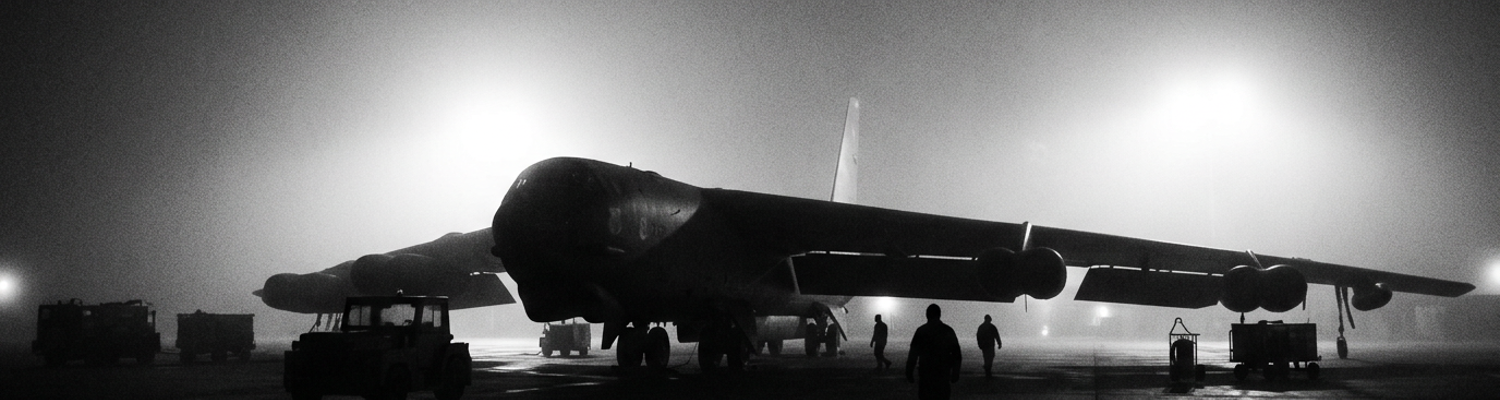

SAC DEFCON 2 Mobilization in Florida
24 October 1962. 1500Z. Coordinates 25 29 18 N 080 23 01 W.
Strategic Air Command escalated to Defense Readiness Condition 2. This triggered a massive reconfiguration of flightline operations across the Florida peninsula. General Thomas Power transmitted the readiness order unencrypted. Soviet listening posts intercepted the directive immediately. Homestead Air Force Base absorbed a heavy influx of dispersed B-47 Stratojets from the 19th Bombardment Wing. Tactical F-100 Super Sabres filled the remaining ramp space.
Ground crews initiated the strict fifteen-minute alert protocol.
Mechanics loaded explosive starter cartridges into engine nacelles. Technicians supplied continuous electrical power to warm up the complex analogue navigation gyroscopes. Aircraft stood on the tarmac fully armed with Mk 36 nuclear payloads. They were completely topped off with JP-4 jet fuel. Weapons specialists utilized hydraulic lift trailers to hoist the heavy nuclear devices into the bomb bays. Armed guards supervised the manual release linkages. Flightline technicians connected MA-3 auxiliary ground power units. This maintained onboard systems without draining internal batteries. The volume of aircraft crammed onto the Homestead aprons forced maintenance squadrons to work in tight quarters. Noise from idling engines deafened the ramp workers.
Planners cancelled all leave.
Base personnel constructed sandbag revetments around critical infrastructure. Security detachments established hardened perimeters around the alert pads using concertina wire and heavy machine gun emplacements.
This concentration of heavy bombers created an immediate supply deficit.
A review of Quartermaster operational logs (NARA Record Group 338) indicates a sudden surge in regional liquid oxygen demand. High-altitude bomber crews relied entirely on liquid oxygen. Designated as LOX, this fluid fed into their MD-1 oxygen regulators to keep aviators alive above 40,000 feet.
LOX boils at negative 297 degrees Fahrenheit.
The fluid constantly vents into the surrounding atmosphere to prevent pressure buildup and catastrophic tank rupture. Hundreds of aircraft sitting on continuous ground alert experienced rapid boil-off from their internal five-liter converters. Maintenance crews performed rolling top-offs every three hours. The base cryogenic generation plant operated at maximum output. It ran twenty-four hours a day until the primary compressor bearings began to fail from overheating. Regional military supply depots across Florida quickly drained their standard cryogenic reserves. Quartermaster units formed emergency convoys of heavy tanker trucks. They drove south down U.S. Route 1 to resupply the Homestead storage facilities. Logisticians at Robins Air Force Base in Georgia rerouted railcars carrying bulk industrial liquid oxygen to feed the Florida bases.
The standard Type A-3 fifty-gallon servicing carts proved entirely inadequate.
Base supply officers requisitioned commercial cylinder trucks from civilian welding suppliers in Miami. Engineers engaged in unglamorous technical troubleshooting to maintain the flow of cryogenic fluids. Transferring LOX from bulk storage tanks to the flightline carts requires precise pressure regulation. This prevents thermal shock to the specialized brass fittings. The accelerated transfer rates demanded by the DEFCON 2 tempo caused manifold valves to freeze completely solid under heavy ice accumulation. Technicians lacked the time to follow standard ambient-air thawing procedures outlined in the technical manuals. Mechanics used leather mallets to physically strike the frozen brass valves. They forced the mechanisms open. Liquid oxygen rapidly accelerates combustion. Stray grease or asphalt turns into a highly explosive hazard. Flightline safety officers ordered mechanics to scrub all improvised brass fittings with trichloroethylene solvent. This removed residual hydrocarbons before connecting them to the oxygen carts.
Supply personnel deliberately bypassed frozen pressure regulators.
Airmen manually controlled the flow of the highly volatile liquid. They listened to the pitch of the gas venting through the safety blowout valves. Exposure to the cryogenic liquid caused severe frostbite. Airmen wore heavy leather gloves that severely limited their manual dexterity when manipulating small fasteners. Improvised copper tubing replaced cracked transfer lines. Extreme cold caused standard rubber hoses to shatter upon impact with the concrete tarmac. A ruptured primary transfer hose on a 500-gallon liquid oxygen trailer required immediate action. Technicians clamped the line shut using heavy-duty C-clamps. They wrapped the breach with industrial canvas.
Florida Forward Alert Base Supply Bottlenecks
Regional industrial production logs from October 1962 reveal a total system failure within Florida commercial cryogenic manufacturing. Civilian air separation plants operated by the Linde Division of Union Carbide in Miami and Tampa received emergency Department of Defense directives. They diverted all industrial-grade liquid oxygen to military aviation depots. Producing cryogenic fluids requires forcing atmospheric air through heavy multi-stage centrifugal compressors. The compressed air then passes through expansion turbines and fractional distillation columns. This separates the oxygen from nitrogen and argon.
Facility managers ran these industrial compressors continuously for hundreds of hours.
This relentless operational tempo exceeded the manufacturer-specified thermal limits of the primary heat exchangers. Cooling water loops boiled off. Lubricating oil in the high-speed turbine bearings thinned out under the extreme friction. Plant engineers stationed mechanics next to the spinning turbines with handheld temperature probes. They monitored the rising metal heat. If a compressor seal failed, vaporized lubricating oil would mix with the concentrated oxygen. This would trigger an immediate facility-level explosion. Vibration from the overworked machinery cracked the concrete mounting pylons supporting the primary distillation towers.
Maintenance foremen ordered their crews to pack the overheating commercial compressor housings with bags of crushed ice.
They purchased this ice from local seafood markets. The supply collapse rapidly spread across every major military installation on the Florida peninsula. MacDill Air Force Base in Tampa and McCoy Air Force Base in Orlando absorbed secondary waves of dispersed B-52 Stratofortresses. These eight-engine heavy bombers utilized heavy ten-liter internal liquid oxygen converters. They required constant purging and refilling. Eglin Air Force Base in the panhandle demanded simultaneous resupply for its tactical fighter squadrons standing on runway alert. Geographic distance between these installations and the limited number of civilian production plants created an unmanageable transport geometry.
Liquid oxygen continuously evaporates during transit.
Standard military vacuum-jacketed transport trailers lose approximately one percent of their total cryogenic payload every twenty-four hours to atmospheric boil-off. Intense ambient heat and high humidity of the Florida autumn accelerated this evaporation rate drastically. Delays on the underdeveloped two-lane highway system directly reduced the volume of breathable oxygen reaching the flightlines. Traffic congestion along U.S. Route 1 trapped heavy military convoys. Trucks hauling 5,000-gallon bulk storage tanks sat behind civilian vehicles fleeing the Miami area.
Convoy commanders authorized military police outriders to physically force civilian station wagons off the asphalt.
Quartermaster units exhausted their inventory of specialized Type A-2 and Type A-3 servicing trailers within forty-eight hours of the DEFCON 2 declaration. Base supply officers at Homestead dispatched acquisition teams into local municipalities. They commandeered commercial welding supply trucks. These unarmored flatbeds carried pressurized gas cylinders entirely unsuited for the rapid transfer rates required by Strategic Air Command protocols. Civilian truck drivers unfamiliar with handling highly volatile aviation-grade liquid oxygen found themselves drafted into emergency transport columns. They drove directly onto active military aprons. Logisticians at the Florida East Coast Railway yards in Hialeah attempted to offload bulk cryogenic railcars directly into these requisitioned civilian delivery trucks. Transferring the fluid required specialized brass couplings. The civilian vehicles simply did not possess them.
Air Force machinists worked through the night on metal lathes.
They cut custom thread adapters out of solid brass stock. Transporting the heavy liquid oxygen cylinders over the uneven access roads leading to the Homestead tarmac caused the unsecured steel tanks to strike against each other violently. Commercial truck suspension systems sagged under the dense weight of the liquefied gas. Rear axles scraped against the pavement during tight turns.
Base safety inspectors recorded six separate incidents of commercial cylinder valves shearing off during transit.
Cryogenic Contamination at Homestead Base
Emergency requisition of civilian liquid oxygen transport vehicles introduced severe chemical contamination directly onto the Homestead Air Force Base flightline. By 0200 hours on October 26, the 19th Supply Squadron began receiving unarmored commercial flatbeds. These trucks hauled industrial-grade cryogenic cylinders from the Linde Division facilities in Miami. The commercial flatbeds navigated the congested U.S. Route 1 corridor. Constant vibration knocked loose internal rust scale.
Civilian tanks lacked the specialized micron filters standard on military Type A-3 servicing carts.
Civilian welding operations routinely exposed these commercial containers to atmospheric humidity and heavy hydrocarbon residues. Transferring the liquefied gas at negative 297 degrees Fahrenheit caused any ambient water vapor trapped inside the unpurged civilian tanks to flash-freeze instantly into microscopic ice crystals. Base logs indicate supply officers authorized the direct transfer of this compromised liquid oxygen into the internal converters of the fully armed B-47 Stratojets sitting on the alert pads. Ground crews attached the improvised brass thread adapters cut by base machinists to the commercial delivery valves. Aggressive mating of mismatched threads sheared off microscopic brass shavings. These fell directly into the cryogenic flow.
High-velocity liquid oxygen carried these metal fragments straight into the aircraft life support systems.
Maintenance records reveal catastrophic particulate buildup within the high-pressure delivery manifolds of the bomber fleet. The B-47 Stratojet utilized complex MD-1 oxygen regulators. These provided breathable gas to aviators operating above 40,000 feet. Precision instruments relied on internal spring-loaded poppet valves machined to tolerances of one ten-thousandth of an inch. Abrasive brass shavings, rust scale, and frozen water vapor crystals formed a destructive slurry. This mixture traveled at four hundred pounds per square inch through the aircraft tubing. Primary oxygen supply lines ran directly beneath the cockpit floorboards. Mechanics worked upside down in cramped quarters to access the jammed components.
Solid ice accumulation physically blocked the primary flow restrictors.
Microscopic metal fragments wedged the delicate poppet valves in the open position. High-pressure oxygen bypassed the regulators entirely and flooded the crew compartments. Aviators strapping into their ejection seats reported smelling ozone and tasting metallic dust through their rubber face masks. Flightline mechanics had to immediately ground six fully armed nuclear bombers. They stripped down the contaminated life support systems.
Technicians unbolted the aluminum manifold panels using flashlights gripped in their teeth.
Troubleshooting the contaminated delivery systems required ground crews to violate multiple safety protocols. Armed military police supervised the work directly. Mechanics disconnected the pressurized lines. They manually flushed the complex MD-1 regulators using liquid nitrogen brought over from the radar maintenance sheds. This extreme cold-shock tactic aimed to shrink the internal brass fittings just enough to dislodge the trapped metal shavings. Airmen utilized standard open-ended wrenches to crack the high-pressure B-nuts. They deliberately allowed the trapped gas to vent forcefully over their hands. Maintenance foremen ordered personnel to catch the purged cryogenic fluid in standard galvanized steel buckets.
Rapid expansion of the venting gas created localized fog banks across the concrete aprons.
Visibility dropped to less than ten feet around the servicing stations. Technicians working bare-handed to maintain tactile sensitivity suffered immediate frostnip on their fingertips when handling the super-cooled aluminum tubing. They reassembled the high-pressure lines and tested the flow rates by bleeding the oxygen directly into the humid Florida night air.
Base safety officers recorded a localized oxygen concentration of forty percent near pad seven.
Engineering detachments eventually constructed rudimentary inline particulate traps. They used copper mesh salvaged from destroyed radio antennas. Machinists packed this wire tightly into standard pipe unions. They installed them between the civilian delivery trucks and the military servicing carts. Improvised filters successfully captured the brass shavings. They rapidly clogged with frozen water vapor. Mechanics established a strict rotation to swap out the frozen copper mesh every fifteen minutes. Flightline commanders assigned dedicated runners to sprint between the alert pads and the maintenance sheds carrying the freshly cleaned filters. They thawed the ice-choked filters by dropping them into cans of heated trichloroethylene solvent before scrubbing the copper clean with wire brushes.
Frozen Valve Failures on Nuclear Bombers
Maintenance logs from the 19th Bombardment Wing dated October 26 detail a widespread mechanical breakdown. This linked directly to the accelerated liquid oxygen transfer rates. Ground crews stationed on the Homestead Air Force Base alert aprons attempted to force cryogenic fluid into the B-47 Stratojet internal converters. Pressures exceeded fifty pounds per square inch. Standard technical orders required a slow, phased transfer. This allowed the internal brass plumbing to acclimate to the negative 297 degree Fahrenheit liquid.
Flightline technicians bypassed these safety protocols entirely.
They kept pace with the strict Defense Readiness Condition 2 refueling schedules. Pumping super-cooled liquid oxygen through the aft wheel well filler ports at maximum velocity caused the surrounding ambient Florida humidity to condense. It froze instantly. Heavy ice rime over three inches thick encased the primary high-pressure check valves within minutes of initiating the transfer. Rapid thermal contraction of the brass housings warped the external threading. O-ring seals failed completely under the structural stress. Airmen reported hearing loud metallic cracking noises from the unpressurized wheel wells during the filling process.
The spring-loaded flapper mechanisms designed to seal the oxygen lines flash-froze in the fully open position.
This mechanical failure triggered immediate, uncontained venting of the primary breathing supply. Liquid oxygen poured out of the frozen filler ports. It spilled down the magnesium landing gear struts. The volatile fluid hit the sun-baked concrete tarmac. It instantly boiled into dense white vapor clouds that obscured the lower half of the bomber fuselage. Maintenance foremen ordered airmen to attempt manual closure of the jammed valves. They used brass, non-sparking wrenches to avoid igniting the oxygen-rich environment. Extreme cold transferred directly through the heavy leather safety gloves. This caused localized frostbite on their palms.
Physical force proved entirely ineffective against the solid ice blockages.
Internal valve stems snapped completely off when mechanics applied rotational torque to the frozen brass fittings. Raw oxygen flooded the concrete apron. Flightline safety officers recorded multiple instances of airmen abandoning their tools on the ramp as the venting gas reached nearby jet fuel vents.
Sheared metal components dropped directly into the cryogenic drainage trays.
Uncontained oxygen venting directly compromised the Single Integrated Operational Plan readiness posture across the Florida peninsula. Strategic Air Command regulations strictly prohibited any bomber from launching without a fully pressurized five-liter liquid oxygen converter. This sustained a three-man crew for eighteen hours. A B-47 Stratojet crew flying a high-altitude penetration profile toward Soviet airspace required continuous supplemental oxygen. They had to survive the unpressurized cockpit environment above 40,000 feet. Depleted cryogenic reserves meant guaranteed hypoxia for the aviators long before they reached their designated target coordinates. Flightline commanders reviewed the venting aircraft and issued immediate grounding orders for the affected airframes.
The regional strike roster shrank instantly.
Removing a nuclear-armed bomber from the active alert matrix required direct authorization from the base command post. It demanded a complete recalculation of the regional strike package. Officers transmitted the tail numbers of the grounded aircraft back to Strategic Air Command headquarters in Omaha via encrypted teletype using the primary secure communications relay.
The 19th Bombardment Wing temporarily lost fourteen percent of its regional strike capacity.
Troubleshooting the grounded bombers forced maintenance squadrons into hazardous repair operations. The aircraft remained fully loaded with Mk 36 thermonuclear weapons. Security detachments cordoned off the disabled B-47s using mobile light carts. Armed military police elements carrying M1 carbines stood watch. Mechanics crawled into the cramped, unheated aft wheel wells. They physically unbolted the shattered check valves from the main oxygen manifolds. The heavy nuclear payload occupying the adjacent bomb bay severely restricted their physical access to the primary pneumatic lines running along the fuselage spine.
Technicians utilized portable electric heat lamps.
They slowly melted the accumulated ice blocks encasing the damaged plumbing without triggering an explosion. Water runoff pooled on the tarmac. It mixed directly with residual hydraulic fluid and spilled JP-4 jet fuel. Supply runners scavenged replacement brass valves from older B-47E models parked on the secondary runway aprons. The base supply depot had completely exhausted its inventory of spare cryogenic fittings. Airmen installed the salvaged components using Teflon sealing tape and torque wrenches calibrated under the glare of portable floodlights.
Improvised Engineering and Manifold Warmers
Operational logs from the 19th Field Maintenance Squadron dated October 27 reveal a total mechanical paralysis of the primary cryogenic delivery systems at Homestead Air Force Base. Technicians operating the Type A-3 servicing trailers attempted to force liquid oxygen into the B-47 Stratojet internal converters at accelerated rates. They had to meet strict fifteen-minute alert windows. Pumping the negative 297 degree Fahrenheit fluid through the uninsulated external transfer lines caused the surrounding humid Florida air to rapidly condense. Solid ice blocks formed over the primary brass delivery manifolds within sixty seconds of initiating the transfer.
The ambient Florida humidity hovered near ninety percent.
This provided endless moisture to feed the rapid ice accumulation. Mechanics attempting to chip the ice away with heavy screwdrivers accidentally gouged the soft brass manifolds. This created high-pressure oxygen leaks. Extreme thermal drop caused the internal pressure regulator diaphragms to shrink and crack. Standard technical manuals required maintenance personnel to detach the frozen components and place them inside climate-controlled hangars for a four-hour ambient thaw cycle.
Flightline commanders rejected this procedure entirely.
Grounding the bombers for four hours directly violated Strategic Air Command readiness directives.
The regional strike roster demanded continuous cryogenic flow.
Ground crews immediately began fabricating makeshift manifold heating devices directly on the concrete alert aprons. Engineering detachments scavenged Herman Nelson BT-400 portable combustion heaters from the base motor pool. These gasoline-powered units typically warmed aircraft engines in Arctic environments. They burned aviation fuel at a massive rate. Mechanics dragged the heavy, wheeled heaters across the tarmac and positioned them ten feet away from the frozen liquid oxygen carts. They constructed crude containment boxes out of scrap three-quarter-inch plywood taken from discarded munitions crates. This enclosed the frozen brass manifolds. Airmen routed flexible canvas ducting from the heater exhaust ports directly into these wooden enclosures. The BT-400 units blasted 400,000 British Thermal Units of heated air over the ice-encased plumbing. Rapid thermal shock melted the exterior ice. It introduced severe structural stress to the super-cooled brass fittings.
Technicians monitored the makeshift warming process using handheld analog pyrometers.
Implementing these field modifications under extreme pressure required airmen to completely disregard standard explosive safety regulations. Maintaining alert readiness meant these improvised heating operations occurred less than twenty feet away from fully armed Mk 36 thermonuclear weapons loaded in the B-47 bomb bays. The nine-megaton gravity bombs contained conventional high-explosive lenses. These were highly sensitive to severe temperature fluctuations. Herman Nelson heaters utilized open internal flames to heat the forced air. Liquid oxygen venting from the nearby aircraft filler ports created a highly concentrated, combustible atmosphere directly over the alert pads. Base safety officers documented multiple instances where the high-pressure oxygen flow reversed into the canvas heating ducts. The gas accelerated the combustion rate inside the portable heaters. Exhaust temperatures spiked past six hundred degrees Fahrenheit. Flightline commanders authorized mechanics to physically wire the heater safety shutoff switches into the open position. This prevented the units from automatically aborting.
Airmen stood directly beside the vibrating plywood boxes with carbon dioxide fire extinguishers.
They watched the brass manifolds turn black from the intense, localized heat. Maintenance logs record eighty-two separate instances of scorched delivery valves during the first week of the crisis. Engineers from the 19th Bombardment Wing initiated secondary field modifications to the Type A-3 carts to ensure uninterrupted delivery. Machinists bypassed the cracked internal pressure regulators entirely. They cut the primary aluminum feed lines with hand hacksaws. Metal shavings fell onto the concrete. They mixed with the pooling condensation. Crews grafted commercial gate valves purchased from civilian hardware stores in Miami into the high-pressure military plumbing. Securing these civilian valves required airmen to wrap the uneven threads with heavy layers of industrial Teflon pipe tape. They clamped them down using heavy-duty vice grips. Technicians manually controlled the flow rate by physically turning the cast-iron valve wheels. They watched the frost line advance up the exterior of the aluminum tubing. Modified carts lacked any automatic over-pressure relief mechanisms. Operators relied entirely on visual cues to prevent catastrophic tank rupture.
A sudden pressure spike blew an improvised gate valve completely off its mountings on pad four.
Chemical Hazards and Technical Crew Injuries
Medical logs from the 19th Field Maintenance Squadron expose a widespread pattern of toxic exposure across the Homestead Air Force Base flightline during the final week of October 1962. Introducing civilian commercial liquid oxygen transport vehicles required ground crews to manufacture hundreds of custom brass thread adapters. They connected the mismatched plumbing. Liquid oxygen rapidly accelerates combustion when exposed to even microscopic amounts of hydrocarbon residue. This chemical reaction turns stray asphalt dust or ambient engine grease into a highly volatile explosive. Flightline safety officers mandated that airmen scrub every improvised brass fitting with trichloroethylene solvent. They did this before connecting the civilian tanks to the military Type A-3 servicing carts.
Maintenance personnel lacked specialized chemical-resistant protective equipment.
They applied the industrial degreaser using standard cotton rags while wearing standard-issue cotton fatigue uniforms. Intense Florida heat caused the trichloroethylene to evaporate rapidly. Dense clouds of toxic vapor formed around the refueling stations. Technicians working directly beneath the bomber fuselages inhaled these concentrated solvent fumes for hours at a time. The heavy vapor settled into the low-lying drainage depressions on the concrete apron.
Base medical personnel documented forty-seven cases of acute solvent intoxication within a single seventy-two-hour period.
The physical environment beneath the fully armed B-47 Stratojets degraded into a highly hazardous chemical slurry. Accelerated refueling schedules forced mechanics to vent excess liquid oxygen directly onto the tarmac. This relieved pressure inside the improvised civilian delivery manifolds. Super-cooled fluid mixed with pooling JP-4 jet fuel leaking from the overworked aircraft engines. Hydraulic fluid dripped from the landing gear struts. Trichloroethylene runoff from the continuous brass scrubbing operations saturated the concrete. Airmen crawled through this toxic mixture to reach the primary liquid oxygen filler ports located inside the aft wheel wells.
Humid air trapped the chemical vapors close to the ground.
Mechanics reported experiencing severe dizziness, nausea, and localized chemical burns where their solvent-soaked uniforms clung to their skin. Command personnel at the 19th Bombardment Wing explicitly denied requests to rotate the servicing crews away from the contaminated alert pads. Maintaining the strict Defense Readiness Condition 2 strike posture required every available trained technician to remain on the flightline. Squadron commanders authorized the distribution of highly caffeinated combat rations to keep the nauseated mechanics functioning. Emergency de-icing operations initiated by these exhausted crews resulted in severe physical trauma. Pumping negative 297 degree Fahrenheit liquid oxygen through uninsulated transfer lines caused the surrounding atmospheric moisture to flash-freeze. Solid ice blocks rapidly encased the primary brass delivery manifolds and the aircraft filler ports.
Standard technical manuals dictated a slow, ambient-air thawing process.
Flightline commanders ordered maintenance crews to bypass these regulations. They manually shattered the ice blocks using non-sparking brass mallets. Extreme cold transferred directly through the issued heavy leather safety gloves. The leather stiffened and cracked. This completely eliminated the manual dexterity required to manipulate small wrenches and valve handwheels.
Ground crews abandoned their protective gear entirely.
They attacked the frozen brass fittings bare-handed to maintain their grip on the hand tools. Human skin contains high moisture content that freezes instantly upon contact with super-cooled metal. Airmen accidentally bonded their hands directly to the brass manifolds.
Pulling away from the frozen plumbing tore the epidermis completely off their palms and fingers.
Uncontained liquid oxygen frequently splashed directly onto the unprotected skin of the maintenance crews during these violent de-icing attempts. The volatile fluid instantly froze the underlying cellular tissue. This caused deep cryogenic burns that physically resembled severe thermal damage. Medics from the 19th Tactical Hospital established a forward triage station directly adjacent to the alert aprons to process the mounting casualties. Flight surgeons treated the deep tissue necrosis by submerging the affected limbs in lukewarm water baths set up on folding tables. They wrapped the damaged hands in thick layers of sterile gauze coated with silver sulfadiazine cream.
The base supply depot rapidly exhausted its inventory of sterile bandages.
Quartermasters requisitioned civilian first-aid supplies from local pharmacies in Miami to treat the severe frostbite cases. Medical officers ordered technicians with first-degree cryogenic burns to return to the alert pads immediately after receiving basic field dressings.
Logistical Weaknesses in Strategic Deterrence
The October 1962 mobilization systematically stripped away the theoretical safety margins of Strategic Air Command supply networks. The 19th Bombardment Wing stationed at Homestead Air Force Base attempted to maintain an indefinite fifteen-minute alert posture. They used an infrastructure designed exclusively for short-duration exercises. Continuous ground readiness required the B-47 Stratojet internal five-liter liquid oxygen converters to remain at maximum capacity. Atmospheric boil-off forced maintenance crews into a never-ending cycle of rolling top-offs every three hours. Geographic distance between civilian air separation plants in Miami and the military aprons created an unmanageable transport geometry. Standard military vacuum-jacketed transport trailers lost significant volume to evaporation under the heavy Florida sun before ever reaching the flightline.
Quartermaster units mathematically lacked the physical hardware to service the concentrated fleet.
The base inventory of Type A-3 fifty-gallon servicing carts proved wholly insufficient to cover the sheer square footage of the alert pads. Planners at Strategic Air Command headquarters in Omaha had calculated resupply algorithms based on single-squadron deployments. They failed to account for forty-five heavy bombers parked simultaneously on the Homestead aprons. The nuclear deterrent relied on a supply chain that mathematically destroyed itself through standard operation. Quartermaster operational logs from October 28 indicate the primary base storage tanks dropped to seven percent capacity. Accelerated transfer rates demanded by continuous top-offs completely degraded the primary delivery hardware. Technicians operating the overworked servicing carts experienced a massive spike in mechanical failures across the primary pressure regulators. Intense operational tempos prevented any routine maintenance or ambient-air thawing cycles.
Ice accumulation physically crushed the brass manifold valves.
Flightline commanders documented the total failure of thirty-two separate Type A-3 carts within a four-day window. This hardware attrition rate forced ground crews to cannibalize parts from broken trailers to keep a fraction of the supply fleet functioning. Reliance on requisitioned commercial welding trucks only accelerated this degradation. Mismatched civilian cylinders lacked the specialized micron filters standard on military equipment. This directly introduced particulate contamination into the bomber life support systems.
Base supply officers recorded a complete exhaustion of spare brass fittings by the second week of the crisis.
The severe operational bottleneck triggered an immediate, large-scale revision to Air Force cryogenic handling protocols across all commands. By January 1963, Air Force Systems Command published a complete rewrite of Technical Order 42B-1-1 governing liquid oxygen transfer procedures. Logistics planners permanently banned the emergency requisition of unarmored commercial flatbeds and industrial-grade oxygen cylinders for aviation use. Revised directives mandated the installation of decentralized, hardened cryogenic generation plants directly on the grounds of every forward operating base. Engineers designed these new facilities with redundant multi-stage centrifugal compressors. This prevented the catastrophic overheating experienced during the October mobilization. The Department of Defense standardized all high-pressure thread pitches across both civilian and military hardware. This eliminated the need for custom-machined brass adapters. Procurement officers initiated the rapid phase-out of the vulnerable Type A-3 servicing carts. They replaced them with heavy-duty Type A-4 trailers featuring advanced vacuum insulation and reinforced thermal shielding.
Machinists integrated permanent copper-mesh particulate traps directly into the primary transfer hoses.
Maintenance records confirm the implementation of strict new transfer rate limitations to protect the aircraft plumbing. Updated technical orders explicitly required a phased, slow-drip cool-down period for all internal brass manifolds before initiating high-pressure flow. Flightline safety officers gained the direct authority to halt any refueling operation violating these temperature gradients, regardless of the alert condition. Ground crews received specialized chemical-resistant protective gear. They received insulated cryogenic handling gloves designed specifically to retain manual dexterity in negative 297 degree Fahrenheit environments. Command personnel outlawed the use of trichloroethylene solvent for field-expedient cleaning of oxygen fittings due to the severe vapor hazards. They mandated the use of dedicated, nitrogen-purged cleaning stations located inside climate-controlled hangars. Mechanics installed secondary over-pressure relief valves on all flightline transfer carts.
Technicians calibrated these safety blowouts to vent automatically at fifty-five pounds per square inch.