
Fleet Problem XXI and Hawaiian Carrier Strikes
Boiler rooms across the United States Fleet trapped choking heat and bitter soot as firemen pushed machinery past normal limits during weeks of sustained high speed operations. Sailors survived on dwindling rations of canned meat and stale bread while strict water hours restricted washing. Engine crews and deckhands remained encrusted with salt and grease under the tropical sun. Destroyers ran low on fresh lubricating oil, tenders rationed replacement valves, and repair crews patched cracked high pressure steam pipes using hand tools without adequate shore workshops or drydocks. Admiral James O. Richardson watched his men stagger through these mounting logistical strains from the bridge of his flagship as the Navy gathered more than one hundred and thirty warships to conduct Fleet Problem XXI. Planners divided this exhausted armada into opposing Purple and Maroon forces across Hawaiian waters and the open anchorages of Lahaina Roads in April and May 1940. Umpires designed these complex maneuvers to test whether a massive battle fleet could wage a sustained oceanic war thousands of miles from its main industrial bases on the mainland.
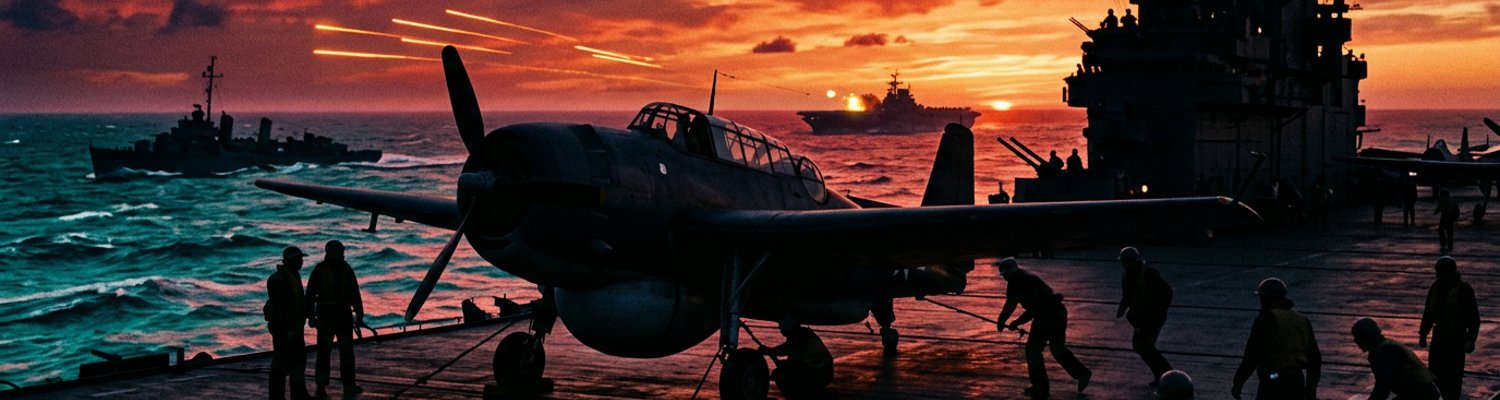
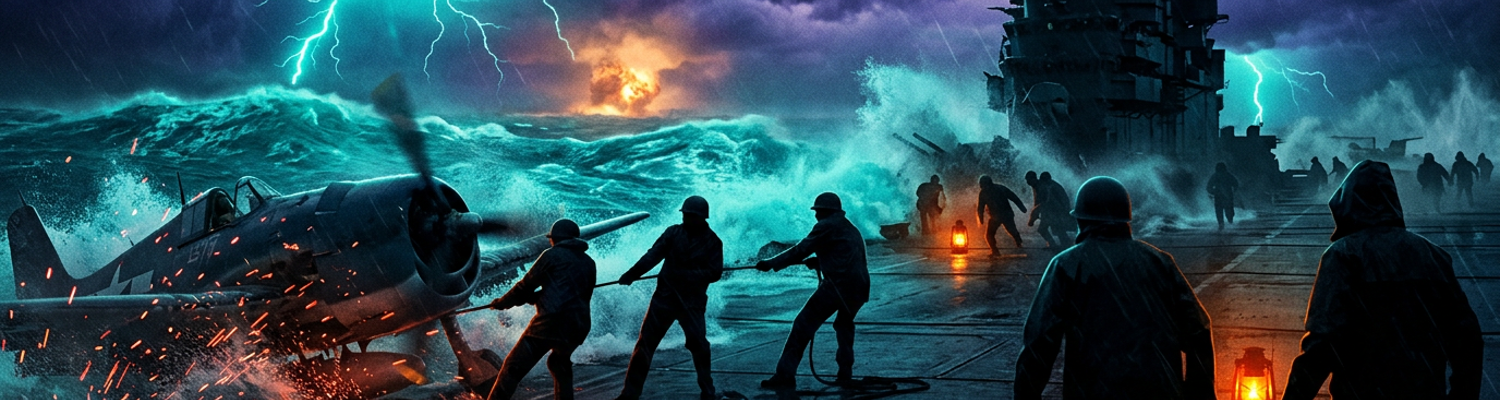
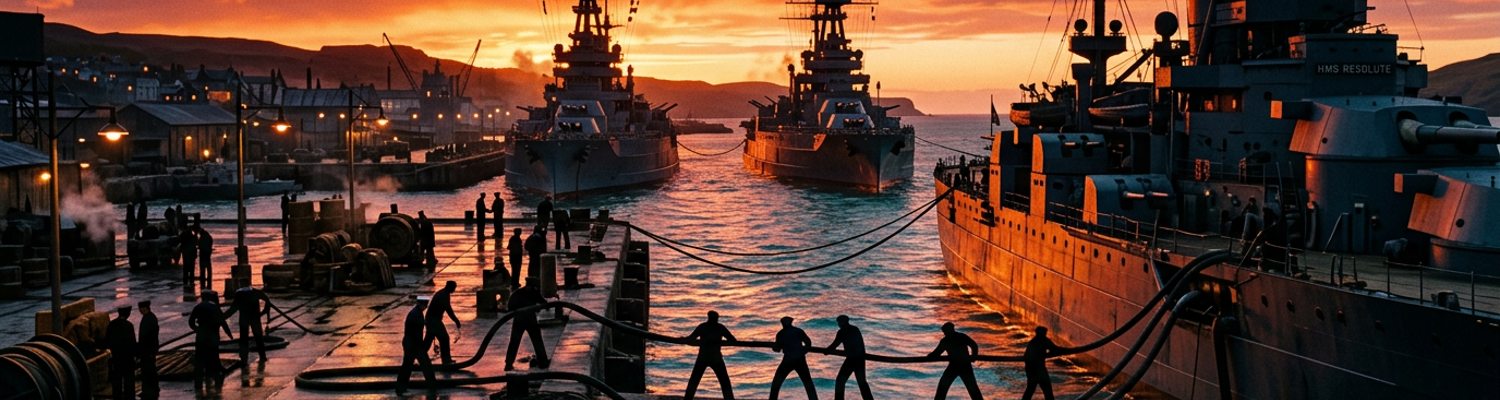
Maroon task forces launched mock offensives against island approaches to test that operational endurance, forcing Purple defenders to evaluate carrier task force survivability, night destroyer actions, and fleet logistics under contested conditions. Destroyer squadrons plunged through pitch black swells at thirty knots with darkened running lights. Helmsmen practiced close range torpedo attacks against battle lines while lookouts strained their eyes into the ocean spray to avoid collisions. Flight decks aboard the Lexington and Saratoga trembled beneath the roar of heavy radial engines as deck crews launched strike groups before dawn to see if carriers could survive counterattacks from opposing air wings. Oiler crews struggled alongside rolling battleships in rough seas, wrestling heavy fuel hoses across narrow gaps of open water to test whether ships could refuel while enemy submarines prowled the surrounding waters. Broken fuel lines, ripped steel tow cables, and overheated transfer pumps repeatedly proved that trying to supply warships during active combat exhausted the small number of auxiliary ships supporting the fleet.
Auxiliary shortages forced combat vessels to slow their maneuvers, allowing carrier aircraft to capitalize on these logistical delays and screening gaps by slipping past picket lines. Strike planes hit Pearl Harbor and surrounding army airfields before defensive fighters could warm their engines and take off. Exercise umpires marked direct bomb hits on anchored battleships, repair basins, and unarmored fuel storage tanks. Visual lookouts and short range surface patrols failed to spot fast carrier task forces advancing across the stormy northern ocean. Staff officers gathered the resulting casualty reports and concluded in official after action records that Oahu remained acutely exposed to coordinated naval air strikes. Admiral Richardson submitted these findings directly to the Chief of Naval Operations in Washington. Richardson argued that basing the fleet permanently in Hawaii placed capital ships in extreme danger without proper air defenses, long range patrol planes, or secure supply lines.
Forward Basing Directive and Logistical Strain
President Franklin D. Roosevelt disregarded these operational warnings and directed the Pacific Fleet on May 7, 1940, to remain forward deployed at Pearl Harbor rather than return to West Coast naval yards. Forward deployment functioned primarily as a diplomatic deterrent against Japanese expansion despite severe logistical strain. Civilian leaders rested their strategy on the political assumption that capital ships at Oahu would discourage Tokyo from striking south toward resource rich colonies. Admiral Richardson recognized that keeping more than one hundred warships anchored two thousand miles from their primary industrial repair centers crippled their operational capability instead of projecting actual strength. Sailors aboard battleships and cruisers watched their scheduled leaves, family transfers, and long planned shipyard overhauls in Bremerton, Mare Island, and San Pedro abruptly vanish. Mess halls exhausted their stores of fresh meat, engine crews lived on canned rations, and division officers recorded an immediate decline in crew morale. Men realized they were stranded on an island unprepared to house or support them.
Island supply depots could not sustain this massive influx of personnel, and battleships suffered continuous mechanical wear because mainland supply lines and auxiliary support vessels proved insufficient to maintain long term combat readiness. Pearl Harbor contained only one operational drydock capable of accommodating a modern capital ship. Dreadnoughts and heavy cruisers waited weeks for routine hull scrapings while marine growth accumulated on steel plates and reduced maximum steaming speeds. Commercial tankers and navy oilers could not transport fuel fast enough across the Pacific to sustain continuous fleet maneuvers. Richardson canceled scheduled gunnery drills and tactical exercises to preserve the meager petroleum stores on the island. Aviation mechanics at Ford Island lacked basic replacement parts, spare radial engines, and radio tubes. Dozens of patrol planes sat grounded in hangars instead of searching the northern maritime approaches. Ordnance workshops ashore possessed neither the specialized tools nor the air conditioned facilities required to overhaul delicate torpedo mechanisms. Sailors stockpiled unserviced weapons in exposed corrugated metal sheds along the waterfront.
Waterfront bottlenecks prompted Richardson to confront Chief of Naval Operations Harold R. Stark with detailed maintenance logs and fuel ledgers showing that the battle fleet was losing its operational readiness and sitting as stationary targets. Stark acknowledged that civilian leaders in Washington insisted on keeping the warships in Hawaiian waters strictly for political effect. Stark subordinated fleet readiness to foreign policy posturing. Richardson argued that a fleet unable to fire its main guns in realistic battle practice, unable to repair its hulls, and unable to refuel its destroyers could not deter a skilled adversary who understood naval realities. Warships remained tied to mooring quays in shallow water where narrow harbor channels prevented rapid escape. Anti torpedo netting remained uninstalled because naval planners feared it would block daily harbor traffic. Richardson filed formal travel orders to Washington to confront Roosevelt directly and demand the immediate withdrawal of the battle fleet back to California.
Admiral Richardson and Pearl Harbor Deficiencies
Richardson carried thick binders of fleet inspection logs into the Navy Department to personally confront Stark before taking his case to the White House. Stark listened as Richardson explained that keeping combat vessels pinned down at Oahu degraded crew training, exhausted machinery, and left the primary battle line exposed to a sudden raid. Stark acknowledged these severe logistical handicaps but told Richardson that civilian leaders viewed the fleet as a vital political shield to discourage Japanese moves toward the resource rich colonies of Southeast Asia. Richardson pressed his objections further and secured a private conference with President Roosevelt at the White House to lay out his tactical assessments in person. Roosevelt dismissed the plea to pull the ships back to California, arguing that forward deployed dreadnoughts exerted a powerful psychological restraint on military factions in Tokyo. Richardson bluntly told the president that senior fleet officers had lost confidence in civilian leadership because the administration demanded an offensive forward posture while refusing to provide the essential resources needed to protect the ships.
Ships moored along Battleship Row lacked the most basic defensive resources, and steel anti torpedo netting remained completely absent from the berths. Bureau of Ordnance planners had refused to install underwater wire nets around the moored dreadnoughts because harbor authorities feared the bulky barriers would restrict navigation through the narrow main channel and delay daily boat traffic. Richardson explained to Washington that leaving capital ships without torpedo protection invited disaster. Warnings extended far beyond the surface of the water to the fuel infrastructure supporting the fleet. Vulnerable fuel reserves sat clustered in unarmored above ground tanks across the hills overlooking Pearl Harbor. Millions of gallons of essential oil sat stockpiled in plain sight where a single wave of carrier bombers could destroy the entire reserve in minutes. Gun crews stationed on the warships and at adjacent army airfields suffered from inadequate anti aircraft gun coverage. Aging weapons and scarce ammunition reserves defended the entire base, leaving gunners unable to reach high altitude formations.
Bombers and low flying torpedo planes required early detection to defeat, and Richardson cautioned both Stark and Roosevelt that this weak gunfire defense made comprehensive reconnaissance vital. Inadequate long range patrol aircraft made maintaining comprehensive circular reconnaissance impossible. Aircrews flying twin engine patrol planes from Ford Island could monitor only narrow slices of the surrounding ocean each day because maintenance depots lacked spare engines and trained mechanics. Navigators calculated that shielding Oahu from surprise carrier strikes required continuous sweeps extending hundreds of miles in every direction. Operational requirements far exceeded the capacity of the small seaplane force stationed in Hawaii. Richardson pointed out that Japanese naval forces could easily exploit these massive blind spots to launch dawn attacks against Battleship Row and escape without ever being spotted. Roosevelt refused to alter his forward basing directive despite these detailed reconnaissance assessments, treating the warnings as an irritating challenge to executive diplomatic strategy.
Fleet Problem XXII Planning and Abrupt Cancellation
Officers serving as naval war planners developed four operational variations in autumn 1940 focusing on transpacific logistics and island seizures in the Marshall Islands. Staff teams at the Naval War College and the Office of Naval Operations recognized that the fleet could never reach the Western Pacific without securing intermediate bases and sustaining an uninterrupted pipeline of fuel, ammunition, and freshwater. Drafting tables filled with complex route charts and convoy schedules as planners calculated the staggering tonnage of fuel oil required to push dozens of combat divisions and auxiliary tenders across thousands of miles of hostile water. Each tactical variation assigned heavy cruisers, fleet carriers, and Marine assault units to batter fortified Japanese atolls. Planners exposed severe shortages of specialized amphibious transports and landing craft during these tabletop exercises. War gaming ledgers repeatedly demonstrated that any westward advance would leave supply lines dangerously thin and consume oil reserves far faster than civilian commercial tankers could replenish them at Oahu. Logistical calculations revealed that moving the battle line out of Hawaiian waters required the entire merchant fleet and every naval auxiliary in service.
Commanders submitted their completed exercise proposals to Washington for final executive review, but Chief of Naval Operations Admiral Harold R. Stark formally canceled Fleet Problem XXII on December 3, 1940. Stark faced urgent demands from President Roosevelt to reinforce the Atlantic patrol force against German submarines. Atlantic transfers drained essential destroyers, cruisers, and supply oilers away from Hawaiian waters. White House officials also worried that staging a massive mock invasion toward the Marshall Islands would antagonize Japanese diplomats and provoke an immediate military reaction from Tokyo. Front page newspaper reports announced the unprecedented decision to the American public, explaining that the annual high seas war games were being suspended because of the critical international situation. Naval commanders in Hawaii read the dispatch with deep dismay, recognizing that the service had abandoned its only proven method for testing tactical theories and exposing strategic flaws under realistic conditions. Staff officers filed the Marshall Islands blueprints away in locked headquarters cabinets, leaving the forward deployed warships without an active operational problem to execute.
Warships lost their primary testing ground when the cancellation halted large scale tactical open ocean training, effectively immobilizing the fleet within the Hawaiian anchorage. Capital ships were restricted to brief, piecemeal excursions within thirty miles of Oahu. Small task groups rotated just long enough to conduct basic gunnery drills before returning to their assigned moorings. Engineers strictly rationed bunker fuel to preserve the dwindling petroleum stocks on the island. Destroyers could not conduct high speed screening sweeps, and cruisers lost the opportunity to practice realistic night torpedo runs. Junior officers and newly assigned sailors missed out on the grueling, multi week maneuvers that had taught previous generations of naval crews how to navigate crowded waters under total radio silence and manage sudden battle damage. Mooring lines held the dreadnoughts against concrete quays week after week, keeping the heavy warships pinned to their berths while marine growth accumulated along their stagnant hulls.
Relief of Command and Unaddressed Anchorage Vulnerabilities
Hulls remained stationary and vulnerable as Roosevelt officially relieved Richardson of command in January 1941. The admiral had refused to endorse that vulnerable anchorage, prompting the administration to elevate Admiral Husband E. Kimmel without rectifying identified structural risks. Kimmel inherited an immobilized battle line anchored in the very positions Richardson had condemned, along with the same rigid administrative mandate to project deterrence from an unfortified outpost. Senior officers on Oahu watched the change of command take place aboard the battleship Pennsylvania, knowing that the White House had removed an outspoken critic rather than correcting the acute logistical and tactical vulnerabilities of the base. Richardson packed his belongings and returned to the mainland in early February, leaving his successor to cope with overcrowded berths, dwindling repair parts, and severe shortages of long range reconnaissance aircraft. Kimmel repeatedly petitioned the Navy Department for extra patrol planes, fuel oilers, and anti aircraft weapons to safeguard the island. Civilian and military officials in Washington insisted that the capital ships stay moored at Oahu to maintain diplomatic pressure on Tokyo.
Tokyo planners studied the harbor layout while steel baffles remained entirely absent from Battleship Row. Bureaucratic resistance and shallow water doctrine continually delayed the installation of anti torpedo baffles inside Pearl Harbor. Ordnance specialists in the Navy Department insisted that standard aerial torpedoes dropped from aircraft would dive at least seventy five feet into the mud before leveling out. Specialists convinced themselves that the forty five foot Hawaiian anchorage provided natural immunity against underwater attacks. Chief of Naval Operations Harold Stark reinforced these erroneous assumptions by issuing formal letters to Kimmel stating that harbor nets were unnecessary and would severely restrict naval traffic in the narrow channels. British carrier planes had already shattered that tactical theory at Taranto in late 1940 by dropping torpedoes fitted with wooden fins into shallow harbor waters. American naval planners dismissed the foreign operational data. Kimmel accepted the conclusions from Washington and suspended plans to install protective netting around the moored dreadnoughts. Harbor channels remained unobstructed while the outer hulls of the battleships sat completely exposed to enemy torpedo runs.
Torpedo runs threatened the anchored warships because the tactical intelligence and defensive warnings gathered during the 1940 exercises went largely unapplied prior to the December 1941 attack. Exercise logs from Fleet Problem XXI had clearly demonstrated that fast carrier task forces could evade visual lookouts by approaching through the stormy northern Pacific to launch devastating surprise strikes against Ford Island. Army and Navy commanders in Hawaii nevertheless refused to maintain continuous offshore aerial patrols. Commanders grounded scarce twin engine flying boats to preserve flight hours and prevent engine wear. Radar stations on the coastal peaks operated as experimental training posts during limited morning hours rather than as a linked early warning network directly connected to warship combat centers. Antiaircraft gunners aboard the dreadnoughts remained on peacetime readiness routines. Ready ammunition lockers remained locked and guns sat unmanned while the capital ships rested side by side along the mooring quays.
Quays held the ships in tight formations while ammunition handlers followed strict peacetime safety regulations. Regulations kept live shells locked inside magazines below armored decks, preventing deck watches from reacting quickly to sudden aerial targets. Kimmel and his staff focused their remaining fuel allowances on short gunnery drills southwest of Oahu, leaving the northern approaches completely unmonitored day after day. Fuel storage tanks containing millions of barrels of combustible oil sat unarmored on the hills overlooking the harbor, lacking the protective earth berms that Richardson had pleaded for in Washington. Army pursuit planes sat parked wingtip to wingtip on the ramps at Wheeler Field to guard against local sabotage. Fighters remained exposed to strafing runs instead of dispersing into protected earthen revetments. Mooring lines held eight battleships pinned along the concrete quays of Ford Island in clear daylight. Capital ships remained tethered to their berths without deployed torpedo netting, without offshore air cover, and without armed ready guns.