
The Strategic Port of Marseille in September 1944
28 August 1944. 0800 hours. Coordinates 43.2965 degrees North 5.3698 degrees East. General Jean de Lattre de Tassigny accepted the formal surrender of the German garrison inside the city. The French 1st Army and elements of the US 3rd Infantry Division secured the urban perimeter after ten days of heavy street fighting during Operation Dragoon. Securing the city center achieved only a fraction of the strategic objective directed by Allied High Command. The broader offensive pushing north toward the Vosges Mountains demanded an immediate high-capacity logistical intake point. Cherbourg and the Normandy beaches sat hundreds of miles away. They were heavily backlogged. The deepwater port of Marseille offered the necessary infrastructure to sustain the entire Southern Group of Armies.
Archival evidence shows the Allied advance required thirty thousand tons of supplies daily just to maintain forward momentum.
A close review of operational logs from the US Seventh Army reveals the specific geographic value of the Marseille harbor complex. The port featured over ten miles of deepwater berths. These concrete piers stretched from the Vieux-Port to the Bassin de la Joliette and the Bassin National. Liberty ships transporting Sherman tanks required a minimum draft of 27 feet to dock. They needed to unload directly onto the adjacent rail network. Planners in Washington drafted supply schedules assuming the rapid conversion of these docks for incoming convoys. Command decisions by General Alexander Patch prioritized the immediate deployment of engineer and naval clearance units to the waterfront. He ordered this before the infantry had completely cleared the surrounding hills.
The printed manuals carried by incoming officers predicted standard artillery damage. They expected easily repaired concrete fractures.
Records from the retreating German 19th Army detail a highly structured demolition operation. Generalmajor Hans Schaefer ordered his engineering units to systematically dismantle the port capacity. They destroyed all 120 heavy electric cranes. Engineers detonated charges inside the primary pumping stations. The demolition teams scuttled over two hundred ships directly across the main navigation channels. This created a dense underwater barrier of tangled steel and spilled fuel oil.
The destruction above the waterline masked the primary threat engineered to kill the incoming clearance divers.
Retreating forces seeded the harbor floor with advanced naval magnetic mines. The ordnance deployment focused heavily on the Luftmine B and the Torpedomine A. These weapons originally served in open-water anti-shipping roles. German engineers modified them for shallow harbor defense. They fitted the casings with highly sensitive magnetic influence firing mechanisms. The sensors detected the slight distortion in the local magnetic field caused by the approach of a steel-hulled vessel. The Luftmine B packed over 1,500 pounds of hexanite explosive. Detonation in the enclosed concrete basins of Marseille would create a highly destructive concussive shockwave.
Interspersed among the underwater wrecks were hundreds of delayed-action demolition charges.
These explosives were bolted to the surviving seawalls. They were wired with chemical long-delay fuses. The fuses relied on a glass vial of acetone slowly dissolving a celluloid retaining disc. The exact timing of the detonation was unpredictable due to ambient temperature variations in the Mediterranean water. US Navy Mine Disposal Unit personnel arriving at the Bassin de la Joliette found themselves facing devices completely absent from their stateside training curriculums. The divers had to descend into pitch-black water heavily contaminated with raw sewage. They operated entirely by touch. Fingers traced the outlines of unfamiliar anti-handling devices attached to the primer wells of the submerged mines. Rendering these weapons safe required the diver to manually extract the hydrostatic arming clocks. They had to cut the magnetic sensor leads using non-magnetic brass tools.
Deployment of US Navy Bomb Disposal Unit 2
4 September 1944. 0630 hours.
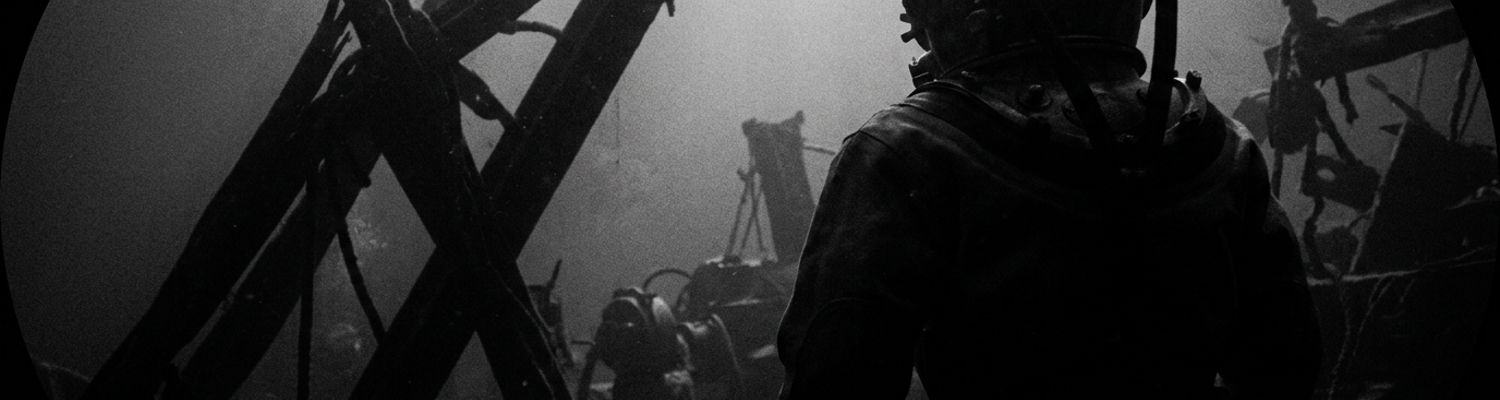
US Navy Bomb Disposal Unit 2 deployed directly into the shattered industrial ruins of the Bassin de la Joliette. They bypassed standard rear-echelon staging procedures. Officers drove their specialized ordnance technicians straight to the waterfront to assess the submerged demolition zones. General Alexander Patch demanded the port open immediately to supply the northward offensive. This environment presented a high-risk clearance challenge. It completely ignored every established safety protocol taught at the Naval Mine Warfare School in Yorktown. Millions of gallons of raw sewage and industrial runoff stagnated inside the enclosed concrete basins. Visibility beneath the surface was absolute zero. Heavy Mark V diving rigs became the only way to move through the toxic sludge. These suits consisted of 175-pound lead-weighted canvas and bulky copper helmets.
Plunging blindly into the dense wreckage tested the physical endurance of every man.
They operated entirely by touch. Crawling through the sunken debris on their hands and knees allowed the divers to search for unexploded ordnance. They dragged vulnerable surface-supplied air umbilicals through razor-sharp steel edges. A single severed air line meant death by drowning in the toxic slurry. The theoretical training manuals proved entirely useless against this terrain.
A close review of operational logs details a terrifying discovery along the main entrance channel known as the Passe des Roches. Technicians groping blindly along the ruined harbor piers located cold cylindrical steel casings. These were not standard moored contact variants. Ordnance teams identified them as advanced magnetic influence mines. Retreating Kriegsmarine engineers deliberately repositioned them to block the critical shipping channels. Highly sensitive firing mechanisms inside the weapons were calibrated to detect the localized magnetic signature of large steel-hulled Liberty ships.
Defensive units positioned the ordnance directly beneath the narrowest bottlenecks of the harbor approach.
They specifically targeted the heavily damaged Quai de la Tourette. Any Allied vessel attempting to bypass the scuttled blockships would inevitably pass within the lethal radius of the magnetic sensors. The weapons contained over 1,500 pounds of hexanite explosive. Detonating just one of these high-yield explosives in the enclosed harbor would create a massive concussive shockwave. The blast would crush the hulls of adjacent ships. It would liquefy the internal organs of any divers working in the water column.
A single diver wearing standard brass and copper gear could trigger a detonation.
Dismantling these specific devices required a radical shift in disposal tactics. Kriegsmarine engineers bolted the massive explosive payloads directly to the submerged concrete pylons of the Quai de la Tourette. Archival reports confirm the presence of secondary anti-handling devices wired directly into the primer wells. Rendering a weapon safe meant the technician had to stabilize his buoyancy in the blinding oil slick. He had to locate the hydrostatic arming clock entirely by feel. Standard steel wrenches carried by naval engineers were highly lethal in this environment. Steel meant death. Specialized non-magnetic beryllium-copper tools became the only acceptable instruments to dismantle the firing circuits. Extraction procedures demanded agonizingly slow movements. Technicians balanced on the slippery mud-covered explosive casing. They bypassed celluloid retaining discs slowly dissolving in the acetone vials of the chemical fuses. One slipped wrench meant immediate vaporization.
Exhausted divers worked in strict two-hour shifts.
They froze in the cold Mediterranean waters. They listened to the ominous ticking of delayed-action mechanisms echoing through their copper helmets. The physical toll of the operation forced medical officers to administer pure oxygen to technicians collapsing on the surface pontoons. Every dismantled component had to be hoisted to the surface for intelligence analysis. Unit records indicate twenty-three devices were neutralized in the first forty-eight hours.
Flaws of Prewar Naval Training Doctrine
When examining the historical record of the Bureau of Ordnance, the root of the tactical disconnect at Marseille traces directly back to Yorktown. Instructors at the Naval Mine Warfare School drilled the initial graduating classes using standard 1941 training manuals. These binders were rushed into print following the London Blitz. Bureau planners based their entire operational framework on reports from British Royal Engineer teams. Those teams defused Luftwaffe SC-250 general-purpose bombs embedded in dirt fields. The heavy binders focused exclusively on neutralizing unexploded aerial ordnance dropped on static land installations. Stateside ordnance commanders tailored the entire logistical supply chain to match this specific dry-land threat profile.
Technicians deployed to the Mediterranean theater carrying the standard Mark 1 Bomb Disposal Kit.
This canvas roll contained brass wrenches and mechanical stethoscopes for listening to clockwork fuses. It included bags of plaster of Paris designed to freeze moving gear trains. Applying any of these tools required a stable surface. It required consistent gravity and bright daylight. The early doctrine assumed the ordnance technician would approach a partially buried bomb on foot. He would assess the casing visually. He would retreat to a reinforced trench if a booby trap activated.
A diver confined inside a 175-pound Mark V suit could not run.
The printed diagrams provided zero instruction for neutralizing ordnance fully submerged in contaminated saltwater. US Navy Bomb Disposal Unit 2 arrived at the Bassin de la Joliette expecting to clear standard moored contact mines. Archival evidence shows the German 19th Army deliberately exploited this doctrinal blind spot. Kriegsmarine engineers discarded standard deployment methods entirely. Clearance teams plunging into the harbor found themselves facing heavy naval ground mines. Retreating defensive units stripped the standard hydrostatic arming mechanisms from Torpedomine A weapons. They replaced them with land-based anti-handling devices engineered specifically to kill explosive ordnance disposal personnel.
One specific modification involved the Zus 40 anti-withdrawal mechanism.
The 1941 manuals instructed technicians to unscrew the baseplate of a bomb to access the main detonator. Applying this exact procedure to a Zus 40 triggered a secondary spring-loaded firing pin hidden beneath the primary fuse well. The moment a diver turned his brass wrench, the release of tension snapped the pin directly into a percussion cap. Detonation followed within three tenths of a second. A close review of operational logs indicates the pitch-black underwater environment amplified the lethality of these unknown fuse types. The Bassin National was choked with sunken blockships. This trapped millions of gallons of bunker oil inside the enclosed concrete walls. Technicians operating at depths of forty feet possessed absolute zero visibility.
They encountered chemical long-delay fuses wired directly to the submerged concrete seawalls.
These devices utilized a glass vial of acetone slowly dissolving a celluloid retaining disc. The prewar doctrine assumed such fuses would be dropped from high-altitude aircraft. The doctrine relied on intense physical impact to shatter the internal vials. In Marseille, German divers manually crushed the vials underwater before retreating. Water pressure and temperature fluctuations drastically altered the chemical reaction times. Technicians working blindly had to extract the primer wells by touch alone. Grasping the slick firing horns required removing heavy canvas diving gloves in fifty-degree water. Commanding officers on the surface pontoons possessed no technical schematics for the magnetic-acoustic influence combinations discovered on the harbor floor.
Unit logs detail technicians attempting to apply the dry-land plaster freezing techniques underwater.
The plaster dissolved instantly in the harbor currents. The teams abandoned the manuals entirely to survive the clearance operation. Divers resorted to packing the exposed primer cavities with raw clay scraped from the harbor floor. This stalled the ticking clockwork gears. They cut the electrical leads using standard steel wire cutters coated in thick layers of axle grease. The grease masked stray magnetic signatures from the sensors. The manual extraction of a single 1,500-pound Luftmine B payload demanded up to four hours of continuous underwater labor.
Improvised Fuses and Hydraulic Pressure Hazards
When examining the historical record of the German harbor defense detachments in Marseille, a highly lethal pattern of ordnance modification emerges. Retreating Kriegsmarine engineers systematically dismantled the standard firing circuits on their stockpiled Luftmine B weapons. The stateside training manuals carried by US Navy Bomb Disposal Unit 2 assumed hydrostatic arming clocks functioned solely as depth-arming safeties for aerial drops. German technicians inverted this mechanical logic entirely. They extracted the pressure-sensitive aluminum diaphragms from the primary sensor housings. They re-machined the internal brass fittings.
These altered components were wired directly into the main detonator wells as highly sensitive anti-handling devices.
If an Allied clearance diver attempted to attach a standard canvas salvage balloon to hoist the weapon out of the mud, the slight decrease in ambient water pressure triggered the mechanism. The shifting pressure gradient compressed a secondary spring-loaded firing pin. This drove it directly into a fulminate of mercury percussion cap. Detonation of the 1,500-pound hexanite payload followed in less than two tenths of a second. A close review of operational logs from the Bassin de la Joliette clearance effort reveals the exact technical specifications of these pressure-sensitive hazards. The modified sensors were originally engineered for the advanced influence mines to detect the massive hydraulic displacement of a passing heavy cruiser.
Inside the confined concrete-lined docks of the Marseille harbor complex, German ordnance teams recalibrated the sensitivity of the pressure switches.
They adjusted the internal tension springs to react to a localized pressure shift of just a few inches of water column. The ambient hydrostatic pressure of the fifty-degree Mediterranean water established the baseline metric for the armed circuit. Any sudden alteration in this localized fluid dynamic instantly closed the electrical firing contacts hidden beneath the primer casing. A single technician wearing a standard Mark V diving rig displaced over two hundred pounds of water with every step. Shifts in hydraulic pressure during diver movement triggered unexpected fatal underwater explosions throughout the first week of September.
Technicians operating in absolute zero visibility had to navigate through dense underwater fields of scuttled tugboats.
A diver walking upright across the submerged concrete piers generated a localized hydrodynamic bow wave. This wave pushed ahead of his heavy copper helmet. As the technician approached a hidden Torpedomine A bolted to the harbor floor, this artificial pressure wave washed over the exposed hydrostatic sensor. The invisible wall of displaced water compressed the aluminum diaphragm just enough to trip the altered firing pin. Because water is an incompressible fluid, the resulting concussive shockwave traveled outward at 4,900 feet per second. The blast forces magnified exponentially against the enclosed concrete seawalls of the Bassin National.
The physiological destruction inflicted upon the explosive ordnance disposal personnel was absolute.
A magnetic mine detonating seventy feet away from a clearance technician generated enough overpressure to instantly crush the spun-copper diving helmet flat against the skull. The concussive wave liquefied internal organs. It ruptured lungs. It shattered the heavy lead-weighted boots laced to the diver feet. Surface support crews stationed on the wooden pontoons above the dive site received no warning from the underwater telephone lines. The men topside would only witness a sudden violent geyser of black mud boiling to the surface of the harbor. Medical officers attached to the US Seventh Army recorded these specific clearance fatalities as catastrophic barotrauma. General Alexander Patch timeline for opening the deepwater berths halted completely. Surface commanders realized their own physical movement was acting as the trigger.
Unit commanders ordered an immediate tactical adjustment to all underwater approach vectors.
Men had to crawl through the toxic sludge at a rate of inches per minute to minimize fluid displacement. Technicians abandoned the standard 35-pound weighted brass boots entirely. They wrapped their canvas feet in heavily greased rags. This allowed them to slide silently across the harbor floor without generating hydraulic ripples in the water column. The divers operated entirely blind. They felt for the cold steel of the modified pressure housings while actively suppressing their own breathing rates. This reduced the exhaust bubbles escaping from their exhaust valves. Extracting the cross-wired hydrostatic clock required the technician to insert a non-magnetic beryllium-copper shim directly into the firing pin channel before the diaphragm could register his physical presence.
Logistical Gridlock Off the French Coast
When examining the historical record of the Mediterranean Theater of Operations, a severe administrative failure compounded the physical dangers inside the Marseille harbor. Allied Force Headquarters in Naples transmitted a series of miscommunicated financial clearance orders directly to the inbound convoy commanders. These encrypted cables mandated an immediate halt for all underway replenishment ships approaching the southern French coast. The directives originated from a clerical error within the War Shipping Administration regarding the classification of specialized naval ordnance cargo. Logisticians misidentified the highly classified mine disposal equipment as standard civilian lend-lease material.
This specific classification triggered a mandatory bureaucratic hold.
The hold remained pending formal customs accounting by French port authorities. Those authorities did not exist in the ruined city. Liberty ship captains operating under civilian maritime contracts refused to advance past the designated holding areas without explicit financial indemnification from the War Department. The administrative freeze trapped thousands of tons of hardware in the deep water of the Gulf of Lion. Supply ships loaded with highly critical operational gear rode at anchor offshore while shore detachments faced severe shortages. US Navy Bomb Disposal Unit 2 rapidly depleted their initial deployment loadout during the first week of underwater clearance.
Technicians required constant replacements for specialized non-magnetic tools.
The corrosive mixture of saltwater and industrial runoff degraded the gear. Beryllium-copper wrenches snapped under the heavy torque needed to extract rusted primer wells. Thick canvas and rubber air umbilicals connecting the divers to the surface pontoons suffered continuous lacerations from the razor-sharp steel wreckage of the scuttled blockships. Replacement Mark V diving suits sat locked inside the cargo holds of the Liberty ship SS William Moultrie. High-pressure brass compressor valves and chemical oxygen generators were also trapped on board. That vessel dropped anchor exactly twelve miles outside the swept navigation channel at coordinates 43.0833 degrees North 5.1667 degrees East.
Surface support crews resorted to patching severed air lines with heavily greased friction tape.
A close review of operational logs indicates the supply deficit directly restricted the pace of the harbor clearance. Medical officers attached to the diving detachments exhausted their stockpiles of pure oxygen required to treat technicians suffering from decompression sickness. The anchored replenishment ships possessed fully stocked medical bays. They had heavy machine shops capable of fabricating replacement components for the modified German magnetic influence sensors. Shore units possessed only hand tools and raw materials scavenged from the destroyed waterfront. Divers working in the Bassin de la Joliette cannibalized ruined French fishing trawlers for scrap bronze to fashion crude shims for the hydrostatic arming clocks.
Bureaucratic disputes over cargo liability superseded the tactical requirements of the explosive ordnance disposal teams.
Communications officers on the waterfront transmitted repeated emergency requisition requests back to the Services of Supply headquarters in Oran. These transmissions detailed the exact inventory of non-magnetic extraction gear trapped aboard the halted cargo vessels. Radio operators on the offshore ships received the distress signals. They stayed bound by the conflicting financial clearance orders issued by higher logistics authorities. Master mariners commanding the merchant fleet demanded proper Form 104-B cargo manifests to authorize the transfer of military hardware to the active combat zone. Missing paperwork sat entirely unprocessed on desks in Naples. Technicians continued descending into the toxic water with failing equipment.
Prolonged anchorage exposed the heavily laden supply ships to shifting weather patterns.
High-velocity Mistral winds blowing down the Rhone Valley churned the Gulf of Lion. This forced the merchant captains to drop secondary anchors to maintain their holding positions. Physical distance between the offshore flotilla and the desperate naval engineers on the docks widened as the ships drifted against their heavy chains. Every hour the specialized gear sat secured in the holds increased the physical degradation of the men working the harbor floor. They extracted 1,500-pound hexanite payloads using cracked bronze wrenches and leaking diving suits.
Equipment Deficits and Non-Magnetic Tool Shortages
When examining the historical record of the 1944 harbor clearance, the mechanical demands of the German ordnance immediately outstripped the physical inventory of US Navy Bomb Disposal Unit 2. Technicians operating along the Quai de la Tourette confronted Luftmine B casings fitted with highly sensitive magnetic influence fuses. Disarming these sensors required extracting the primary hydrostatic clockwork and cutting the electrical leads to the detonator well. Stateside doctrine mandated the use of specialized beryllium-copper or solid brass wrenches to manipulate these components. The engineering tolerances of the German firing circuits detected minute fluctuations in the local magnetic field.
Applying a standard issue steel wrench near the aluminum sensor housing instantly altered this localized magnetic state.
This slight ferrous distortion tripped the internal relay switch. It closed the firing circuit. Detonation of the 1,500-pound hexanite payload followed in three tenths of a second. Applying standard steel tools meant immediate vaporization in the enclosed harbor. Archival evidence shows the administrative freeze off the coast trapped the required non-magnetic tool kits aboard the SS William Moultrie. Shore detachments possessed only a handful of brass hand tools salvaged from their initial deployment canvas bags. The corrosive industrial runoff inside the Bassin National rapidly degraded these few instruments.
Soft brass sheared and snapped under the heavy torque required to break the rust seals on the submerged primer wells.
Technicians resorted to fabricating crude spanners from scrap bronze stripped from the engine rooms of scuttled French fishing trawlers. These improvised tools lacked the precise dimensional tolerances needed to grip the delicate hex nuts of the German firing horns. Slipping a fabricated bronze wrench against the casing generated intense acoustic vibrations directly into the secondary anti-handling devices. The absence of non-magnetic implements compounded a severe deficit in standard safety equipment and controlled demolition supplies. A close review of operational logs indicates the clearance divers operated without blast-resistant deflector shields or functioning underwater communication lines.
Heavy Mark V diving rigs tore open on the jagged steel of sunken gantry cranes.
Support crews topside lacked the rubber vulcanizing kits necessary to seal the breached suits against the raw sewage and diesel fuel filling the harbor. Men descended into the toxic water column wearing canvas patched with heavy grease and friction tape. Contaminated harbor water flooded the copper helmets through the compromised exhaust valves. Planners originally intended for explosive ordnance disposal personnel to detonate deeply embedded mines in place rather than risk manual extraction. This protocol required hundreds of pounds of standard TNT blocks. It required waterproof detonating cord and electrical blasting machines to construct remote counter-charges.
The supply ships holding the demolition caches remained anchored twelve miles out in the Gulf of Lion.
Command decisions by General Alexander Patch explicitly forbade sympathetic detonations near the surviving concrete seawalls. Engineers determined that high-yield underwater explosions would permanently collapse the deepwater berths required for incoming Liberty ships. The strategic requirement to preserve the docks eliminated the option of controlled detonation. Without authorized C3 plastic explosives to carefully shape charges for precise disruption of the mine casings, technicians had to manually dismantle every device. Divers descended into fifty-degree water wearing canvas suits saturated with human waste and industrial chemicals.
Medical officers recorded severe chemical burns and rampant bacterial infections among the men working the harbor floor.
The lack of basic safety tethers meant a diver losing his footing on a submerged blockship fell uncontrolled into the deeper navigation channels. Surface tenders possessed no mechanical winches to haul exhausted personnel back to the wooden pontoons. Surface crews pulled the heavy umbilicals by bare hands. Down in the pitch-black water, technicians balanced on the slick hexanite payloads using uninsulated fingers to manipulate the rusted arming mechanisms. The physical extraction of a single cross-wired hydrostatic clock demanded up to four hours of continuous labor. Failing brass tools and leaking diving suits forced the men to work through millimeter-precise movements. They listened directly to the mechanical gear trains of the delayed-action mechanisms advancing inside the primer wells.
Field Improvisation Under Operational Strain
Archival evidence shows the complete collapse of the official supply chain forced Bomb Disposal Unit 2 to scavenge the ruined Bassin de la Joliette for raw materials. The highly sensitive magnetic influence sensors on the submerged Luftmine B devices detected any ferrous metal within a localized radius. Standard issue steel wrenches closed the firing circuits instantly. The offshore administrative freeze left the shore detachments with only a handful of stateside beryllium-copper spanners. These quickly sheared apart under the heavy torque required to break rusted primer seals.
Technicians turned to the shattered infrastructure of the Marseille shipyards.
They stripped wrecked French fishing trawlers for usable bronze. A close review of operational logs details the manufacturing process established on the wooden surface pontoons. Mechanics salvaged brass engine fittings from scuttled tugboats blocking the Quai de la Tourette. They pulled heavy copper wire and bronze propeller shafts. They melted these non-ferrous metals down in makeshift furnaces fueled by scavenged diesel and splintered dock timber. Engineers poured the liquid metal into rough sand molds packed inside empty ammunition crates to cast heavy spanners and specialized extraction shims. The cooling process warped the metal. This created crude instruments that barely resembled standard naval hardware.
These cast tools possessed severe mechanical flaws.
The improvised wrenches lacked the exact dimensional tolerances necessary to securely grip the delicate hex nuts securing the German firing horns. A diver operating in absolute zero visibility had to force the crude bronze spanner onto the rusted primer well entirely by touch. Sand-cast bronze is inherently brittle. The fabricated tools frequently snapped under pressure in the fifty-degree water. This sent violent acoustic shocks directly into the secondary anti-handling devices. Every broken tool required the exhausted diver to halt the extraction. He signaled the surface tenders through physical tugs on his umbilical line. He waited in the freezing mud while the topside crew cast a new implement.
Men sat submerged for hours holding the exposed firing chains with bare hands to prevent the internal clockwork from advancing.
When examining the historical record of the clearance effort, the lack of authorized demolition supplies dictated a massive shift in disposal tactics. General Alexander Patch explicitly forbade standard sympathetic detonations. He demanded the absolute preservation of the concrete seawalls for incoming Liberty ships. The supply ships anchored twelve miles out in the Gulf of Lion held the entire allotment of precision C3 plastic explosives. Shore detachments possessed no official logistics support to disrupt the unstable anti-removal devices wired into the Torpedomine A casings. Kriegsmarine engineers had inverted the hydrostatic arming clocks to function as highly sensitive pressure triggers. Any attempt to manually extract the fuse using the brittle fabricated tools risked compressing the spring-loaded firing pin.
Technicians engineered an unauthorized explosive bypass.
Clearance divers scraped raw hexanite explosive directly from the cracked casings of partially detonated German ordnance found along the harbor floor. They packed these small quantities of scavenged powder into hollow brass tubing salvaged from destroyed shipyard gantry cranes. This created an improvised directed-energy charge. The specific tactical objective was to sever the electrical leads connecting the modified Zus 40 anti-withdrawal mechanism to the main detonator without initiating the 1,500-pound primary payload. The margin for error was less than an inch. A diver wearing a 175-pound Mark V suit crawled through the toxic sludge to reach the targeted weapon.
He manually packed thick harbor clay around the brass tube to focus the blast wave directly against the base of the primer well.
The technician then wired the makeshift charge using frayed lengths of captured German demolition cord. These modified counter-charge techniques relied entirely on the exact physical placement of the brass tube against the steel casing. If the diver misjudged the angle in the pitch-black water, the resulting micro-detonation would fail to cut the wires. It could shock the primary hexanite payload into a full explosive yield. Surface crews triggered the improvised charges using scavenged civilian car batteries. The resulting underwater detonations produced a sharp localized concussive crack rather than a massive shockwave. Divers immediately descended back into the debris field to verify the disruption.
They felt through the settling cloud of pulverized mud and diesel fuel to locate the severed firing leads.
The focused blast of the brass-encased hexanite frequently warped the primer well. This locked the anti-handling device permanently in place while destroying its electrical connection to the detonator cap. Technicians then attached standard canvas salvage balloons directly to the neutralized mine casing to float the 1,500-pound weapon to the surface.
Tactical Lessons and Ordnance Disposal Reform
When examining the historical record of the Bureau of Ordnance, the administrative gridlock in the Gulf of Lion forced an immediate restructuring of inter-branch cargo routing. Allied Force Headquarters in Naples completely dismantled the civilian oversight protocols that trapped the SS William Moultrie at anchor. Misidentifying the ordnance gear as standard civilian lend-lease material had previously paralyzed the clearance effort. To bypass the War Shipping Administration, naval clearance units operating under General Alexander Patch required direct requisition authority. The breakdown in joint logistics communication demonstrated that relying on standard supply chains for specialized explosive ordnance disposal operations resulted in dead divers.
Inside Washington, planners drafted new transmission codes linking front-line diving detachments directly to the Services of Supply in Oran.
Permanent standing orders classified all non-magnetic extraction gear as Priority A-1 combat material. On the waterfront, radio operators received authorization to override master mariners commanding the merchant fleet. Officers transmitted secure logistical demands that superseded the conflicting financial clearance orders issued by higher headquarters. This direct radio link eliminated the mandatory bureaucratic hold pending formal customs accounting by non-existent French port authorities. Cargo manifests for classified mine disposal equipment bypassed civilian maritime contracts entirely. Archival evidence shows the doctrine rewrite extended far beyond administrative supply routing.
By late 1944, the Naval Mine Warfare School in Yorktown discarded the 1941 training binders entirely.
Instructors stopped drilling recruits on dry-land Luftwaffe SC-250 bombs embedded in dirt fields. Instead of open-air ranges, the new curriculum focused exclusively on the exact modifications German engineers applied to the Luftmine B and Torpedomine A weapons inside the Bassin de la Joliette. Training tanks filled with fifty-degree saltwater and industrial oil replicated the toxic environment of the French coast. Technicians learned to operate in absolute zero visibility. Wearing 175-pound Mark V diving suits, they practiced extracting hydrostatic arming clocks and cutting magnetic sensor leads by touch alone. Divers spent strict two-hour shifts freezing in the simulated Mediterranean waters. They listened to the ominous ticking of delayed-action mechanisms echoing through their copper helmets.
To simulate the celluloid retaining discs dissolving in acetone vials, instructors introduced chemical long-delay fuses into the underwater exercises.
Standard steel wrenches vanished from the official Bomb Disposal Kit. A close review of post-war equipment manifests indicates a total standardization of non-magnetic implements. To replace the brittle field improvisations, the Bureau of Ordnance contracted stateside foundries to mass-produce specialized beryllium-copper and solid bronze tools cast to exact dimensional tolerances. This industrial production eliminated the need for clearance teams to scavenge wrecked fishing trawlers for scrap metal. Technicians deployed with heavy canvas rolls containing non-ferrous spanners designed to grip delicate hex nuts without fracturing under heavy torque. Preventing the intense acoustic vibrations generated by slipping wrenches relied entirely on the engineering tolerances of the new beryllium-copper tools.
These precise measurements kept the secondary anti-handling devices from registering mechanical shocks.
Beyond physical equipment, the updated doctrine explicitly addressed the lethal hydraulic pressure hazards discovered along the Quai de la Tourette. Instructors taught incoming divers the exact fluid dynamics of a heavy diving rig moving through an enclosed concrete basin. They mapped out the precise internal tension spring adjustments German technicians used to recalibrate the acoustic-magnetic firing combinations. Generating a localized hydrodynamic bow wave of displaced water meant immediate detonation. New tactical approach vectors required explosive ordnance disposal personnel to abandon the standard 35-pound weighted brass boots.
To minimize fluid disturbance, divers trained to wrap their canvas feet in heavily greased rags.
They crawled across the harbor floor at a rate of inches per minute. This zero-displacement movement minimized the artificial pressure wave washing over exposed hydrostatic sensors. Trainees practiced inserting non-magnetic beryllium-copper shims directly into the firing pin channels of modified Zus 40 anti-withdrawal mechanisms. Executing these insertions before the pressure-sensitive aluminum diaphragms could compress the secondary spring-loaded firing pins into fulminate of mercury percussion caps became a mandatory survival skill. The revised manuals required technicians to bypass the primary detonator wells entirely by packing exposed primer cavities with raw clay to stall ticking clockwork gears. Standard steel wire cutters coated in thick layers of axle grease masked stray magnetic signatures from the sensors while men severed the electrical leads connecting the main detonator.