
Improvised Riverine Command Platforms
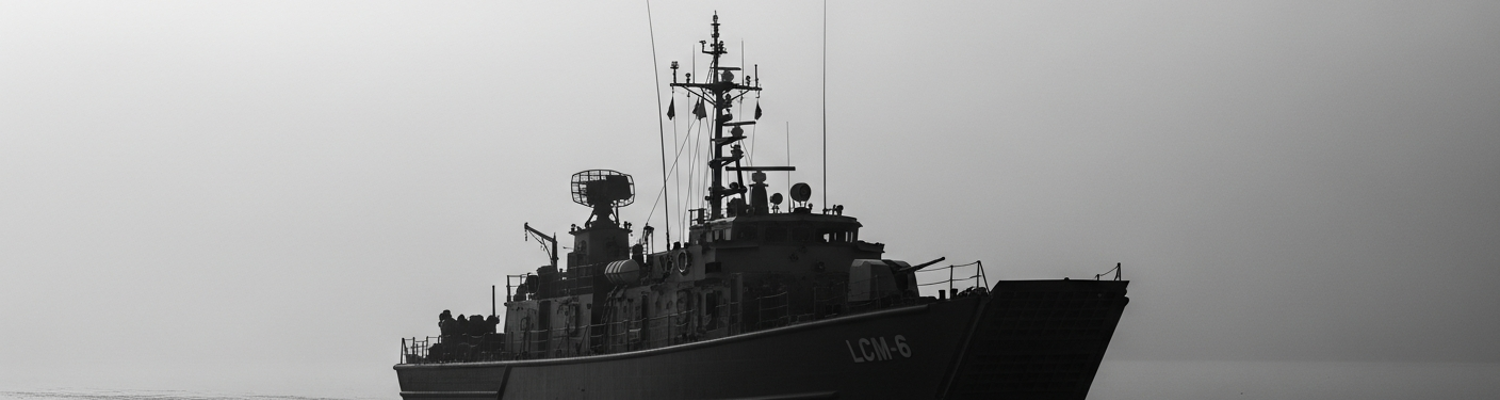
The urgent operational demands of riverine warfare in South Vietnam by late 1965 forced an immediate series of field modifications. With no dedicated command-and-control vessel available for the newly forming river assault squadrons, commanders ordered the rapid conversion of existing Armored Troop Carriers (ATCs) into makeshift Command and Communications Boats (CCBs). The ATC, a modified World War II-era Landing Craft Mechanized (LCM-6), was the designated workhorse, designed to carry a 40-man infantry platoon or a single M113 armored personnel carrier. Its large, open well-deck was its primary feature. The logic was simple: the well deck of the Tango boat, as it was known, offered available space. Shipfitters, often working in primitive forward-area conditions, were tasked with transforming these troop haulers into floating command posts. The process began by sacrificing a significant portion of the ATC's primary troop-carrying capacity. This ad-hoc conversion was not a planned evolution but a reactive measure, driven by the immediate need to place company and battalion commanders on the rivers alongside their maneuvering units.
Integrating the complex and bulky radio and radar suites required for command functions became a severe technical challenge. Archival evidence shows these were not minor additions. A functioning CCB needed to manage multiple radio nets simultaneously, linking the boat commander to Army units on the bank, air support, artillery, and the other boats in the flotilla. This necessitated installing a bank of radio sets, typically AN/VRC-46 systems, complete with their accompanying power supplies and cooling fans. These systems were not designed for the cramped, vibration-heavy environment of a small river craft. Technicians had to weld new racks and fixtures directly onto the boat’s structure, often inside the already crowded pilot house or in the repurposed well-deck space, which was covered with a makeshift steel roof. The most visible and problematic additions were the numerous whip antennas. To prevent interference, these antennas had to be spaced apart, creating a forest of vertical masts that made the boat a conspicuous and vulnerable target. Furthermore, the installation of a surface-search radar, such as the AN/SPS-64, presented its own set of problems. The rotating scanner assembly had to be mounted high on a new mast for a clear field of view, but this added significant top-side weight. The power draw from these combined electronic systems strained the ATC’s twin 6-cylinder diesel engines and their electrical generators, leading to frequent power fluctuations and equipment failures that could sever communications at critical moments.
The fundamental architecture of the Armored Troop Carrier was inherently unsuited for this dense command-and-control role. The ATC was designed as a shallow-draft landing craft, optimized for beaching and carrying cargo in its large forward well. It was never intended to be a stable, protected platform for sensitive electronic equipment and command personnel. A close review of operational logs (NARA Record Group 428) indicates that the added top-heavy weight from the new command module, radar mast, and multiple antennas dangerously altered the boat’s center of gravity, making it less stable in rough water and more prone to rolling. The flat bottom and shallow draft, ideal for navigating shallow canals, made the craft susceptible to the full force of a mine or rocket blast from below. Inside, the environment was a commander’s nightmare. The noise and vibration from the engines, located aft, made clear voice communication nearly impossible without robust headsets. The cramped, jury-rigged command spaces lacked adequate room for plotting maps, tracking unit locations, and managing the fluid, chaotic geometry of a riverine firefight. Unlike a purpose-built command vessel, there was no separation between the boat’s operational crew and the embarked command staff, leading to confusion and congestion during combat. The improvised nature of the conversion meant that armor protection for the new command spaces was often inconsistent, leaving commanders and their critical radio operators exposed to the same rifle and machine-gun fire they were trying to orchestrate a response to.
Technological Challenges of Early CCBs
The foundational flaw of the converted Command and Communications Boat (CCB) was a power deficit, engineered into the vessel from its very conception. An examination of the original vessel’s schematics reveals the scale of the problem. The base Armored Troop Carrier, a modified LCM-6 landing craft, relied on a modest 24-volt DC electrical system powered by generators coupled to its twin Detroit 6-71 diesel engines. This arrangement was designed to power engine starters, basic navigation lights, a few pumps, and perhaps a single radio. The emergency conversion to a CCB, however, introduced a parasitic electrical load for which the craft was never designed. Shipfitters piled on a suite of power-hungry electronics, including multiple AN/VRC-46 VHF radio sets for multi-channel communication, and often an AN/SPS-64 surface-search radar. These systems, particularly the vacuum-tube-heavy radios, drew a massive amount of current that the stock generators could not reliably supply.
Operational logs from the period show a consistent pattern of electrical failures. The generators, constantly running at maximum output, would frequently overheat or fail, plunging the command post into darkness and silence. More common were chronic voltage drops, or brownouts, that caused the sensitive radio and radar equipment to malfunction, reset, or burn out entirely. An embarked commander attempting to coordinate air support, ground troops, and his own flotilla would suddenly find his communication links severed. The power drain was so severe that it impacted the performance of the main engines, creating a dangerous feedback loop where the very act of commanding the mission degraded the vessel’s ability to maneuver.
The electrical system was a critical point of failure.
Compounding the power issues were severe signal integrity problems that made reliable communication a constant struggle. The sheer density of electronics packed into a small, vibrating steel hull created a hostile electromagnetic environment. The multiple whip antennas required for the banks of radios had to be clustered together on the limited topside space, creating co-site interference that caused transmissions to bleed over into one another or cancel each other out. A commander trying to use one net might find his transmission garbled by bleed-through from another. The boat’s own systems were a major source of interference. The unshielded, overloaded electrical wiring and straining generators produced a significant electromagnetic field, while the powerful vibrations from the diesel engines running at full throttle would physically travel up the antenna masts and create microphonic distortions in the radio signals. The result was a constant layer of static and noise that could make voice transmissions unintelligible, particularly during the chaos of a firefight when engine RPMs were high and multiple units were trying to talk at once.
The initial deployment of these compromised platforms into Vietnam’s I Corps Tactical Zone, specifically along the winding, narrow waterways of rivers like the Thu Bon, immediately exposed their deep-seated faults. The region’s geography was uniquely challenging, characterized by shallow channels, shifting sandbars, and dense bankside vegetation that provided perfect cover for ambushes. Viet Cong forces quickly learned the draft limitations of the American boats and could set up attacks from positions secured by streams too shallow for the CCBs to navigate. In these confined spaces, the top-heavy instability of the CCB became a lethal liability. The added weight of the command module, armor plating, and antenna farm raised the boat’s center of gravity, making it prone to severe rolling and difficult to maneuver quickly. A near-miss from an RPG or the blast from a command-detonated mine could threaten to capsize the vessel. The boat’s high, antenna-laden profile made it an obvious and immediate target for any enemy force, drawing fire precisely to the location of the command staff.
Thu Bon River Assault, 9th Marines
In late October 1966, elements of the 3rd Battalion, 9th Marines were tasked with conducting search and clear operations in the volatile region south of Da Nang. This area was bisected by the unpredictable Song Thu Bon river. The specific objective was to counter enemy activity along Liberty Road, a supply artery that terminated at the river’s southern bank. This operational area was a tactical nightmare. The Thu Bon delta was not a single, wide channel but a complex web of shifting sandbars, shallow tributaries, and mangrove swamps, all dominated by the notorious Go Noi Island, a longtime Viet Cong stronghold. Viet Cong forces used the terrain’s limitations to their advantage, establishing well-concealed firing positions on banks and in hamlets inaccessible to the shallow-draft American landing craft. A declassified command chronology from the 3rd Battalion, 9th Marines for October 1966 details the mounting enemy contact in the weeks leading up to the main riverine thrusts, noting a sharp increase in probes and ambushes after October 15th. The geography that made riverine insertion necessary also made it exceptionally dangerous, forcing the flotillas into predictable channels where they could be easily targeted.
A close review of operational logs from this period shows the strain placed on the improvised Command and Communications Boats during these missions. For an operation south of the Thu Bon, a commander aboard a CCB was not merely directing his own boats. He was the central node for coordinating Marine infantry companies like Company I and Company M of the 3/9, attached artillery from the 2nd Battalion, 12th Marines, and frequent fixed-wing and UH-1E gunship strikes. As the flotilla pushed into the confined waterways bordering Go Noi, the inherent design flaws of the CCB became pronounced. The boat’s high, antenna-laden silhouette, intended to facilitate communication, instead acted as a magnet for enemy fire. Viet Cong gunners, well-practiced in targeting these command vessels, would initiate ambushes by concentrating rocket-propelled grenade and recoilless rifle fire directly at the CCB, knowing that disrupting the command node could paralyze the entire operation. The top-heavy vessel, dangerously unstable from its ad-hoc armor and radar mast, struggled to maneuver in the narrow channels while under fire, its high center of gravity making it susceptible to capsizing from the concussion of a near-miss.
The electronic heart of the command boat often failed under the stress of combat. Declassified battalion reports from the 9th Marines in this exact timeframe note persistent electrical faults and power failures. One report explicitly states that the power demand frequently outstripped the vessel’s capacity, leaving the message center and technical shops unable to operate their equipment. For a battalion commander attempting to control multiple units during a chaotic firefight on the Thu Bon, this was catastrophic. A sudden power loss meant the simultaneous failure of multiple radio nets, severing his link to the Marines ashore who were taking fire, the artillery battery waiting for coordinates, and the air support circling overhead. The noise and vibration from the twin diesel engines, running at full throttle to evade fire, compounded the problem by creating electromagnetic and physical interference that garbled transmissions, assuming the radios had power at all. On the Thu Bon, the vessel designed to provide clarity and control often delivered only silence and confusion.
Environmental Impact on C2 Systems
The arrival of the northeast monsoon season in I Corps during late 1966 introduced a catastrophic operational variable for which the makeshift CCB was entirely unprepared. The weather system brought dense, persistent fog that blanketed the river basins, often reducing visibility to less than the length of the boat itself. A close review of operational logs from this period reveals a sharp increase in navigation difficulties and aborted missions directly attributed to weather. For a CCB commander on the Thu Bon, this was a form of sensory deprivation. Visual navigation by shoreline landmarks became impossible, forcing a near-total reliance on the vessel’s temperamental AN/SPS-64 radar and a magnetic compass. The fog, combined with intermittent, torrential downpours, created a disorienting, featureless battlespace where distinguishing friend from foe, or a sandbar from a channel, was a matter of electronic guesswork. The moisture-saturated air was a direct enemy to the boat’s electronics. It seeped into the non-marinized radio sets and power junctions, causing short circuits and voltage drops that would silence the command net without warning.
The most critical failure point was the breakdown of the radio link between the CCB and the dismounted Marine infantry units it was supposed to support. An examination of the hardware reveals an inherent incompatibility with the terrain and atmospheric conditions. Marines on the ground carried the AN/PRC-25 radio, a portable VHF/FM transceiver that was a workhorse of the war. The CCB was equipped with the more powerful, vehicle-mounted AN/VRC-46, which operated on the same frequencies. Both systems, however, were fundamentally dependent on line-of-sight propagation. On the winding channels of the Thu Bon, true line-of-sight was a fleeting luxury. The river’s sharp bends, high banks, and thick, wet jungle canopy created a physical wall that VHF signals could not reliably penetrate. During the monsoon, this problem became exponentially worse. The high moisture content in the air and the water clinging to every leaf absorbed and scattered the radio waves, a phenomenon known as signal attenuation. A Marine platoon only a few hundred meters inland from the river could be completely cut off from the CCB, their urgent calls for fire support or medical evacuation dissolving into static. The commander, floating blindly in the fog, was electronically deaf to the plight of his own men.
The tactical consequences of this communications paralysis were immediate. After-action reports from operations around Go Noi Island in late 1966 document multiple instances where Marine units, pinned down by Viet Cong ambushes, were unable to establish contact with their command element afloat. This forced platoons and companies into isolated fights for survival, unable to coordinate their movements or call upon the firepower available from artillery and air support. This tactical paralysis often led to the worst possible outcome: fratricide. In one documented incident from this period, a garbled transmission from a surrounded Marine platoon was misinterpreted by the CCB’s radio operator. Lacking positive confirmation of the unit’s location due to the broken communications link and with visibility at near-zero in the fog, the boat’s commander directed mortar fire based on the last known position. The rounds fell short, landing directly on the friendly perimeter and inflicting several casualties before the mistake could be rectified.
Consequences of Command Breakdown
The disabling of a Command and Communications Boat during a riverine assault had an immediate effect. When a Viet Cong B-40 rocket or 57mm recoilless rifle round found the conspicuous, antenna-laden superstructure of a CCB, the effect on the flotilla was instantaneous. The central command function of the operation was gone. A review of after-action reports from riverine engagements in late 1966 shows that the loss of the command platform created a tactical paralysis. Individual boat commanders, now electronically isolated, were left without direction. They had no way of knowing the commander’s intent, the location of friendly units, or the disposition of the enemy beyond what their own eyes could see. The carefully orchestrated plan for fire support from artillery barges or circling gunships disintegrated, as the single node capable of coordinating those assets was now a burning wreck or a silent hulk. In the fog-choked channels of the Thu Bon, this breakdown was absolute. Other boats in the column, suddenly leaderless, would either halt their advance and become stationary targets or begin firing indiscriminately at suspected enemy positions along the riverbank, a response that wasted ammunition and risked hitting unseen Marine patrols ashore.
This loss of command and control directly precipitated a surge in casualties. Viet Cong and NVA forces were highly adept at using the monsoon weather to their advantage, initiating ambushes during periods of low visibility when they knew air support would be grounded or ineffective. Their doctrine emphasized well-planned, coordinated attacks, often initiated by specialized sapper units trained to strike command centers. An ambush would erupt from both banks of a narrow channel, concentrating fire not just on the CCB but on multiple boats simultaneously. Without a functioning command net, Marine companies engaged on the riverbanks were cut off. Their portable PRC-25 radios, already struggling with the line-of-sight limitations and signal attenuation caused by the dense, wet foliage, could no longer reach a coordinating authority afloat. A patrol pinned down only a few hundred meters from the river was, for all practical purposes, alone. Accounts from this period detail the desperation of these isolated units, unable to call for artillery to suppress enemy machine guns or request emergency helicopter medical evacuation for their wounded. The inability to communicate in the disorienting fog also increased the probability of fratricide, as boat crews and ground elements lost situational awareness of each other’s locations.
The sudden influx of wounded personnel from these chaotic engagements completely overwhelmed the rudimentary medical facilities afloat. The primary vessel for casualty collection was often a standard Armored Troop Carrier, the same type of boat used for troop insertion. The large, open well-deck of an ATC was never intended to be a sterile treatment area; it was a steel-plated cargo bay. Navy Corpsmen, working in the open under monsoon rains, were confronted with a horrific scene. The deck, slick with a mixture of river water and diesel fuel, quickly became covered with blood. There was no triage room, only the open space of the well-deck where critically injured men lay next to the dead and the remaining infantrymen who were still trying to return fire. A single corpsman might be responsible for dozens of casualties with traumatic amputations, chest wounds, and severe burns. Supplies were limited to what could be carried in a medical pack. Performing life-saving procedures like starting an IV or clearing an airway was nearly impossible on the violently vibrating and rolling deck of a boat under fire. Helicopters, the primary method for evacuating the most serious cases to surgical hospitals, were often unable to fly in the zero-visibility conditions, forcing the wounded to endure hours-long journeys back to a secure landing zone, a delay that proved fatal for many.
Re-evaluating Riverine C2 Doctrine
An examination of the after-action reports filed by Marine and Navy units following the engagements on the Thu Bon River in late 1966 reveals a hopelessly fractured operational picture. The paperwork submitted by the commander of a Command and Communications Boat would meticulously detail electronic failures, power brownouts, and the loss of contact with ground elements, painting a picture of a vessel fighting its own systems as much as the enemy. In contrast, the report from a Marine platoon leader, often written days later from a rear base, would narrate a desperate, isolated firefight, characterized by an unnerving silence from the command net and an inability to request fire support or medical evacuation. A third report, from the commander of an Armored Troop Carrier in the same flotilla, might simply state that the CCB was observed taking a direct hit, after which all centralized command ceased. When collated at the III Marine Amphibious Force headquarters in Da Nang, these disparate accounts created a contradictory and confusing mosaic, making it nearly impossible to reconstruct a coherent timeline of events or assign a clear cause for operational failures.
This disconnect exposed a deep chasm between the strategic intent of riverine doctrine and the disorganized nature of its execution. Planners envisioned the CCB as the omniscient nerve center of a fluid, mobile force, a platform from which a commander could seamlessly orchestrate combined arms operations. The concept was for a single command node to direct infantry on the banks, artillery from firebases, and air support overhead, all while maneuvering a flotilla of assault craft. The individual on the CCB, however, was not a chess master but a captive in a steel box. He was physically present on the battlefield but often operationally impotent, his command authority severed by a faulty generator, an overloaded radio circuit, or the simple fact that line-of-sight VHF signals could not penetrate a few hundred meters of dense, wet jungle. This gap between the clean lines on an operational overlay map and the commander’s inability to speak to a platoon in crisis represented a fundamental failure of the system.
The systemic breakdown of command and control on the rivers forced a major re-evaluation of both hardware and tactics by Naval Forces Vietnam. The pattern of CCB failures was too consistent to be dismissed as isolated incidents. Technical assessment teams confirmed what the boat crews already knew: the converted landing craft were electrically and structurally unfit for the C2 role. This realization directly spurred the development of a new generation of riverine craft. The first orders for the entirely new Assault Support Patrol Boat (ASPB), or Alpha Boat, were placed with Gunderson Brothers Engineering Corporation on October 25th, 1966, precisely as the failures on the Thu Bon were unfolding. Unlike the ad-hoc CCB, the ASPB was designed from the keel up for river combat, with specifications calling for a mine-resistant hull, superior firepower, and the speed and maneuverability to survive an ambush. The design, completed by the Bureau of Ships in June 1966, incorporated lessons from the French experience in Indochina and specifically addressed the shortcomings of the LCM-based boats. The first ASPBs would not arrive in Vietnam until September 1967.