
OSIA Mandate and Winter Baseline Deployments
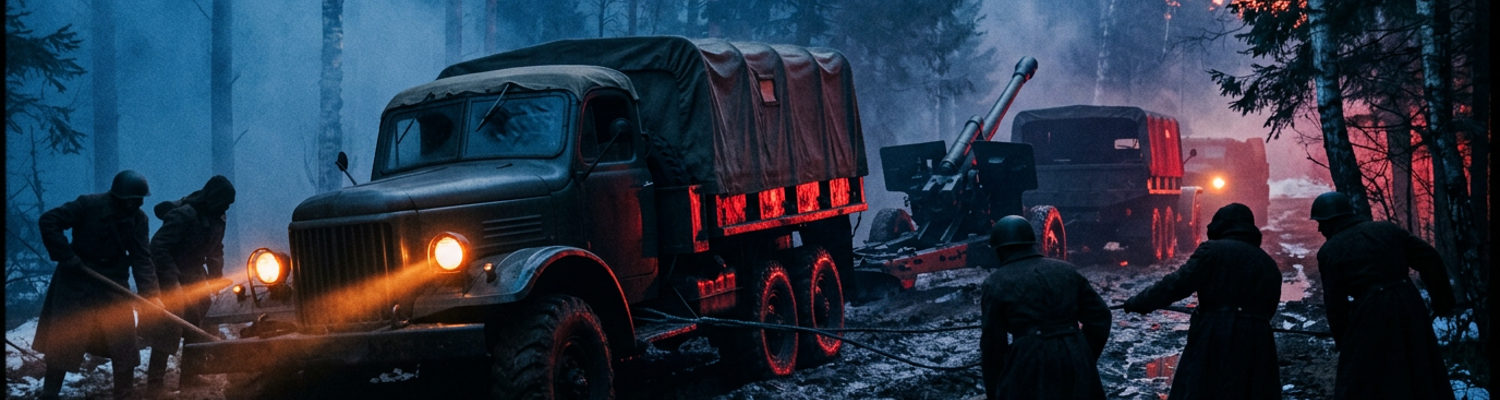
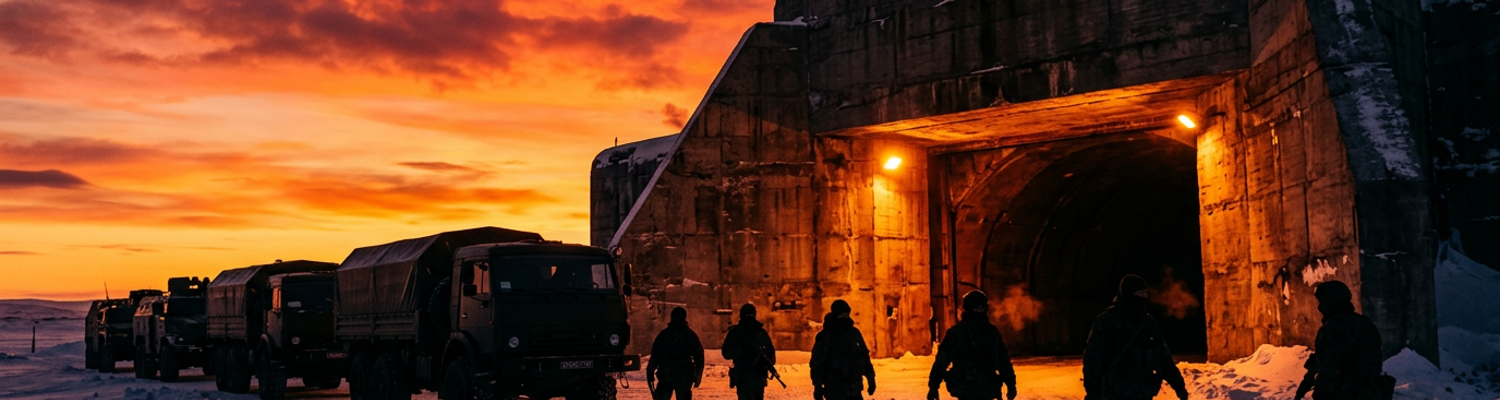
Lockheed C-141 Starlifter cargo aircraft touched down on icy Soviet airfields, unloading heavy pallets of ultrasonic testing gauges, calibration rods, and winter survival kits directly onto snowbound concrete aprons. Inspection teams transferred their equipment into olive-drab Mil Mi-8 transport helicopters and rugged Ural-4320 six-wheel-drive trucks that churned through deep snowdrifts to reach isolated Strategic Rocket Forces facilities. Hydraulic lines and air brakes routinely seized in the extreme subzero temperatures, forcing American inspectors and Soviet drivers to warm frozen wheel hubs with handheld torches along the rutted logging roads. Convoys eventually reached the outer perimeter gates of remote missile garrisons, where both militaries prepared for the execution of initial baseline counting quotas established under the newly ratified Intermediate-Range Nuclear Forces Treaty. Soviet sentries unlocked heavy steel gates to admit the convoy into the high-security technical zones, guiding the vehicles toward the dispersed bunker revetments housing the operational missile regiments.
Brigadier General Roland Lajoie understood that verifying these specific missile inventories required technical precision and complete familiarity with Soviet military organization. Lajoie directed the dispatch of US Army military intelligence and ordnance specialists to these remote Strategic Rocket Forces bases, pairing fluent Russian linguists with munitions experts who understood solid-fuel rocket stages and mobile launcher assemblies. Specialists carried standardized clipboards, optical sighting levels, and sealed verification logs as they moved between the snow-covered revetments. American intelligence officers checked each physical bunker against pre-declared map coordinates, walking alongside Soviet base commanders to begin the physical inventory of treaty-limited rocket systems.
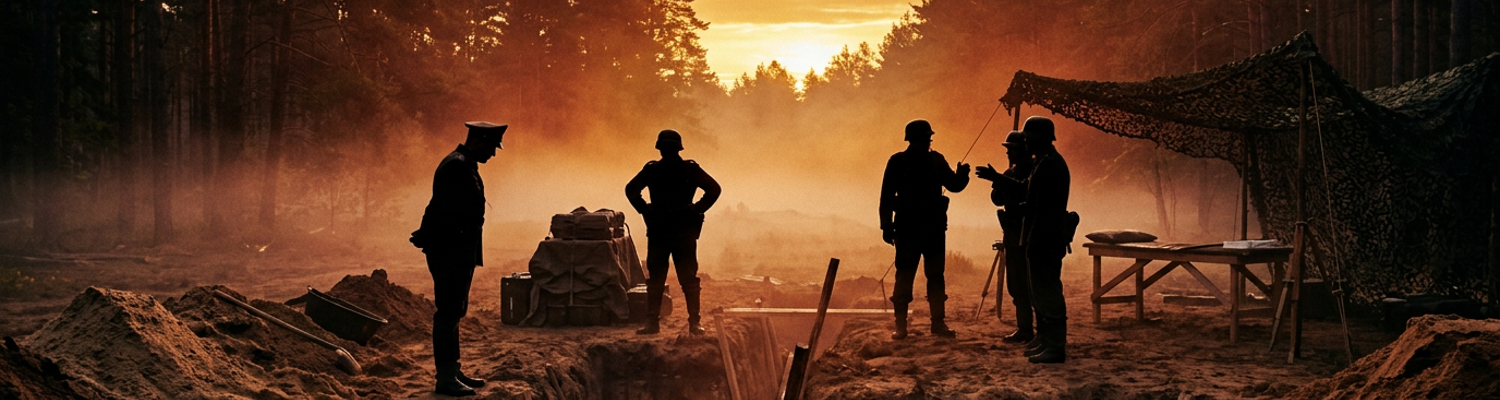
Steel blast doors on the Granit arch bunkers swung outward on heavy mechanical rollers to expose the first batch of these rocket systems to the winter wind. Reinforced concrete arches curved ten meters overhead, sheltering giant twelve-wheeled transporter-erector-launchers alongside cylindrical canisters built for RSD-10 Pioneer ballistic missiles. Soviet missile technicians kept portable diesel heaters running to prevent hydraulic fluid from thickening inside the launcher chassis parked along the central bay floor. American ordnance specialists stepped onto the frozen concrete pavement, raising battery-powered lanterns to verify launcher vehicle markings and measure the exterior dimensions of missile canisters. Soviet officers tracked every movement with military stopwatches, strictly enforcing treaty access timelines that granted inspectors limited minutes inside each individual bunker structure before an American warrant officer spotted an uncatalogued equipment trailer concealed under heavy protective cloth in a dark alcove.
Canvas tarpaulins covered the mystery trailer inside the alcove as Soviet escort officers stepped forward to declare that the vehicle carried exempt support equipment. Exactly five minutes remained on the inspection timer before the Americans had to sign the bunker logbook, and walking away without verifying the trailer risked triggering a formal non-compliance report that could halt baseline operations nationwide. The lead American intelligence officer retrieved the treaty protocol manual, pointing out the specific clause granting inspectors the right to measure any covered object large enough to contain a regulated missile stage. Ordnance specialists extended a rigid fiberglass measuring tape across the trailer frame under the watchful eyes of both delegations, recording an overall length two meters shorter than the minimum threshold for a Pioneer missile casing. Soviet officers reviewed the measurements on the clipboard, confirmed the numbers against their engineering drawings, and allowed the Americans to certify the Granit bunker inventory as compliant before the five-minute deadline expired.
Verification Hardware in Subterranean Granit Bunkers
Inspectors signed the compliant verification manifests on the clipboard and advanced through an interior blast portal leading directly into the adjoining missile storage gallery. Soviet engineers had constructed these subterranean Granit revetments out of interlocking prefabricated arches made from high-strength reinforced concrete that were bolted into place along a foundation slab before bulldozers buried the entire structure under several meters of compacted soil. Curved sidewalls formed an unbroken barrel vault that dissipated blast overpressure from potential nuclear strikes, while recessed drainage troughs and overhead utility raceways ran the entire length of the eighty-meter floor. Thick rubber gaskets sealed the heavy steel bulkheads separating each vault, maintaining steady climate control for sensitive rocket propellants despite the freezing temperatures outside. Flashlight beams swept across the damp concrete walls, illuminating floor anchor tracks designed to secure heavy transport dollies and mobile missile equipment.
Technicians unloaded sensitive diagnostic tools directly onto the concrete floor beside a row of tubular missile canisters mounted along these tracks. Specialists deployed battery-operated ultrasonic thickness gauges against the curved metal walls of each container, applying acoustic couplant gel to ensure sound pulses penetrated cleanly through the outer skin to measure the internal metal casing. Acoustic resonance probes tapped the exterior surfaces at calibrated intervals, allowing operators to detect the specific vibration pitch that distinguished a solid-fuel rocket motor from an empty cylindrical training shell. American warrant officers then spanned large mechanical calipers across the diameter of the casing rings, locking the vernier scales into place to confirm the exact outer dimensions against treaty tables. Soviet escorts leaned over the digital readouts, watching the numbers settle within millimeters of the agreed limits for regulated rocket stages.
Steel storage skids positioned along the southern wall required a separate verification protocol to confirm that their open cradles held no concealed rocket stages. Soviet Strategic Rocket Forces had previously assigned these heavy steel frames to support two-stage OTR-22 missile airframes and larger two-stage RSD-10 Pioneer delivery vehicles during depot transit. Inspection rules required the team to examine every contour of the empty saddles, checking that no dummy ballast containers or hidden booster sections rested inside the structural framework. American inspectors crawled beneath the elevated steel beams with inspection mirrors and fiber-optic borescopes, checking the hollow box rails and lock-down clamps for unrecorded modifications. Soviet officers stood beside the cradle uprights with stopwatch clipboards, timing each mechanical check to ensure the team adhered strictly to the allotted operational window.
Specialists clicked their measuring tapes against the saddle stops to finish the check within the operational window. Measurements verified that the distance between the support rings matched the declared blueprints for vacant OTR-22 frames, prompting inspection personnel to wipe the couplant gel from their ultrasonic probes. Technicians packed the mechanical calipers into padded aluminum transport cases and secured the instruments with safety latches. Soviet base officials compared the handwritten caliper measurements against their technical logbooks and stamped the completed survey sheets on the spot. Both delegations initialed the structural clearance records for the Granit bunker bays, signaling the ground crew to unbolt the secondary steel blast gates for transit to the adjacent storage sector.
Baseline Discrepancies at Unmanifested Tunnel Portals
Mechanics hauled on the heavy locking levers of the secondary blast gates to open the path to the adjacent storage sector. The massive steel panel swung inward to reveal a damp connecting corridor, prompting American inspectors to step past the threshold with battery lanterns raised to check the rough concrete walls against the official site diagrams provided by Soviet treaty negotiators in Geneva. Overhead utility conduits branched off toward what should have been a solid retaining wall, but the flashlight beams caught the distinct outline of a recessed entry frame embedded deep in the reinforced concrete. Thick rubber gaskets and heavy locking cams framed a blast-hardened steel bulkhead door that did not appear anywhere on the baseline facility maps. Western intelligence had operated under a major blind spot, assuming that Soviet engineers built Granit bunkers as self-contained barrel vaults rather than connecting them to subterranean auxiliary corridors running between adjacent missile storage bays. The lead American intelligence officer stopped at the unlisted threshold, laid his site diagram against the cold steel plate, and pointed directly at the blank space where the doorway stood.
Soviet escort officers formed an immediate physical barrier across the concrete threshold to block access to the doorway. Guards asserted that operational garrison regulations placed the hidden corridor outside the agreed treaty perimeter, prompting the Soviet base commander to step forward and insist that internal security rules strictly prohibited foreign personnel from examining sensitive garrison infrastructure. American inspectors countered that treaty verification provisions gave them the absolute right to inspect any interior space or portal large enough to conceal a regulated missile stage or launcher component. This sudden collision between international treaty rights and Soviet military sovereign secrecy brought the entire inspection to an abrupt halt, as failure to resolve the baseline discrepancy on the spot would force the American team to file an immediate non-compliance violation. Soviet sentries rested their hands on their holstered pistols as the American team leader tapped his wristwatch to formally start the five-minute dispute countdown permitted under operational inspection protocols.
Stopwatches marked the passing seconds of the countdown as both delegations gathered under the dim corridor lights to negotiate a practical resolution before the five-minute timer expired. The American team leader opened the technical verification manual, pointing out that inspectors did not need to walk the full length of the subterranean corridor to satisfy treaty requirements. He proposed using a rigid measuring rod and an optical inspection mirror through a cracked doorway, which would allow the Americans to confirm that the space could not hold an RSD-10 Pioneer missile while protecting sensitive Soviet communications gear deeper inside. The Soviet commander weighed the risk of a diplomatic breakdown against his orders to maintain base secrecy, consulting rapidly in low murmurs with his political and engineering officers. Exactly three minutes into the standoff, the commander made the operational decision to allow a limited physical measurement of the portal entrance, ordering Soviet technicians to insert a heavy brass socket wrench into the emergency release mechanism on the bulkhead frame.
Steel hinges groaned under the immense weight of the blast door as the socket wrench turned the release mechanism. The Soviet crew cracked the seal open thirty centimeters, keeping the opening shielded with a dark canvas screen while an American ordnance specialist pushed a calibrated fiberglass measuring rod through the narrow gap. He extended the marked staff until it touched the opposite concrete wall of the auxiliary passage, revealing an interior width of less than one and a half meters. This space was far too narrow to accommodate even the smallest solid-fuel missile canister or mobile launcher chassis declared under the treaty. American inspectors recorded the physical dimensions alongside the exact compass orientation of the unlisted bulkhead, noting that the passageway served solely as a utility and ventilation corridor between missile bays. Soviet officers reviewed the handwritten entry, stamped the supplemental field log, locked the bulkhead door back into its hardened steel frame, and signed the amended baseline annex to clear the inspection party to advance toward the final storage vaults.
Portal Access Standoffs and Dispute Timers
Flashlight beams swept across the rear wall of the final storage vault, striking the heavy rivets of another unmanifested steel portal missing entirely from the Geneva site plans. Armed Strategic Rocket Forces sentries snapped their Kalashnikov rifles across their chests and formed a rigid line in front of the door to physically block the advancing US Army inspectors. American warrant officers halted inches from the Soviet rifle barrels, raising their clipboards and pointing to the treaty mandate that granted them total access to any enclosed structure capable of housing regulated missile stages. Soviet escort officers stepped into the narrow gap between the opposing soldiers, shouting that the room behind the steel slab held sovereign launch-code equipment that fell strictly outside the treaty baseline. The senior Soviet colonel crossed his arms and declared the portal permanently closed, warning that his guards held strict orders to use physical force if foreign personnel attempted to touch the locking wheel. American inspectors immediately checked their digital wristwatches, starting the mandatory five-minute dispute countdown that would either yield access or trigger an immediate diplomatic breakdown.
Brigadier General Roland Lajoie stepped past his inspectors to prevent this diplomatic breakdown by placing himself directly between the armed sentries and the American verification team. Lajoie understood that filing an official treaty compliance violation notice right now would freeze verification flights, lock inspection teams out of missile bases nationwide, and threaten the survival of the entire Intermediate-Range Nuclear Forces Treaty. The digital timer on his clipboard showed three minutes remaining as he addressed the Soviet commander directly in fluent Russian to bypass the nervous civilian translators. Lajoie proposed an immediate operational compromise by offering to conduct only a threshold visual inspection, agreeing that his personnel would keep their boots on the corridor floor while scanning the interior with handheld lanterns. This localized concession assured the Soviet officers that no foreign hands would touch their sensitive electronics while still allowing American eyes to confirm that no concealed RSD-10 Pioneer missile stages rested inside the darkened chamber. The Soviet commander stared at Lajoie as the sweep hand of the countdown timer crossed into the final ninety seconds, visibly weighing the severe political fallout of an inspection halt against the strict security rules of his base.
Sentries from the Strategic Rocket Forces lowered their rifles on their commander quiet order to relax the strict security rules. Guards stepped aside to let two mechanics insert a heavy steel operating bar into the portal dogs, swinging the massive steel door open just far enough to break the rubber weather seal. Damp bunker air rushed outward through the sixty-centimeter gap as Roland Lajoie stood motionless on the outer threshold with the Soviet commander at his elbow. The general watched his lead ordnance specialist lean forward without crossing the doorframe, using high-intensity halogen light to illuminate bare concrete walls, ceiling utility trays, and a compact bank of electrical switchgear that left zero physical clearance for an intermediate-range missile. Both military delegations watched the inspection stopwatch stop with twenty seconds left on the countdown clock, formally verifying the empty utility space under the terms of the localized compromise. The successful threshold check averted an official treaty compliance violation notice that would have halted mutual inspection access nationwide, allowing the American team to sign the final vault register and pack their diagnostic gear for the return convoy.
Compliance Reporting and Subterranean Protocol Resolution
Ordnance specialists paused their packing of the diagnostic gear at the vault threshold to complete the required non-destructive radiation scans and volumetric dimension checks through the opened doorway without stepping inside the prohibited room. A technician extended a battery-powered gamma radiation detector past the door jamb on a telescoping aluminum boom, sweeping the sensor head in slow, methodical arcs across the interior air to verify the absence of radioactive warhead components. Another inspector aimed a pulsed optical distance meter along the ceiling and side walls, logging the room total depth at barely four meters and its width at three meters. These volumetric numbers confirmed that the small enclosure lacked the physical length, turning radius, and ceiling clearance necessary to conceal a fifteen-meter missile or its wheeled carrier. Technicians recorded the neutral radiological readings alongside the exact physical dimensions in duplicate field notebooks, certifying that the hidden bay housed nothing more than climate-control switches and power distribution panels. The inspection team stepped back onto the main gallery floor, allowing Soviet technicians to pull the heavy blast door shut and re-engage the steel locking dogs.
Steel blast doors clanged shut against their rubber gaskets as the locking dogs engaged, clearing both delegations to walk back through the vaulted tunnels to the garrison administration office. Soviet garrison commanders and American team leaders sat across a long wooden conference table under bare fluorescent tubes to reconcile the daily field manifests with the original baseline declarations. The Soviet garrison commander reviewed the handwritten dimensional logs and threshold survey sheets, cross-referencing each coordinate with his regimental sovereign property ledger and engineering blueprints. Both sides verified that the bunker complex contained only approved support infrastructure, with every primary storage bay and auxiliary utility chamber fully accounted for under treaty protocols. The Soviet garrison commander then applied his official ink stamp and signed the final compliance certificate, formally confirming the absence of unmanifested RSD-10 rocket stages or transporter-erector-launchers at the base. Brigadier General Roland Lajoie added his countersignature to the Russian-language and English-language copies, completing the legally binding field protocol that formally closed the site inspection.
Communications specialists carried the signed manifests from the closed site inspection to a mobile satellite terminal truck idling on the packed snow outside the headquarters building. Operators encoded the reconciled baseline data into secure teleprinter packets, transmitting the numerical logs over high-frequency satellite links directly to the Nuclear Risk Reduction Centers in Washington and Moscow. Duty officers at both operations hubs received the electronic manifests simultaneously over dedicated secure circuits, checking the transmitted coordinates and inventory tallies against the master treaty database. Watch officers in Moscow verified that the localized resolution at the Granit bunker satisfied sovereign base protection orders without compromising sensitive military electronics, while American analysts in Washington confirmed that the recorded bay dimensions fully eliminated the risk of hidden mobile missile systems. This simultaneous data reception resolved the compliance dispute that had threatened to freeze baseline inspections across the Soviet Union, establishing a functional precedent for handling unmapped structures at other Strategic Rocket Forces sites. American inspectors loaded their diagnostic cases onto the waiting Ural trucks and climbed into the passenger cabs to prepare for the convoy run back to the regional staging airfield.
Weapons Elimination and Institutional Impact
Diesel engines roared to life across the snowbound garrison yard to begin the convoy run back to the regional staging airfield. The heavy Ural trucks carried the inspection convoy through the perimeter security gates and onto the icy highway, where drivers guided the vehicles through deep ruts as American specialists reviewed their handwritten notes. Inspectors checked the recorded dimensions of the sealed utility space against the original Granit arch facility schematics before ground crews loaded the diagnostic cases and cold-weather gear aboard a Lockheed C-141 Starlifter transport waiting on the airfield apron. Intelligence officers immediately compiled the raw measurements into formal debriefing packets inside the aircraft, recognizing that the practical methods hammered out in the Granit arches solved access disputes that standard treaty manuals had completely failed to anticipate. Brigadier General Roland Lajoie took these successful field practices directly back to the On-Site Inspection Agency headquarters, directing his staff officers to convert the improvised bunker procedures into official operating guidelines for every verification team deployed across the Soviet Union. Field teams across Eurasia rapidly adopted these standardized measuring steps and compromise thresholds, ensuring that neither military walked away from disputed revetments or unlisted facility doors.
Ordnance specialists deployed these verified measuring routines directly to missile destruction ranges and static rocket test stands to ensure no doors remained unchecked. Inspectors used acoustic probes, optical distance meters, and certified oxyacetylene cutting torches to witness rocket motor burnouts, explosive demolitions in earthen pits, and the hydraulic crushing of airframes. Technical verification methods developed by the agency proved robust enough to prevent procedural disputes from stalling disarmament schedules across four continuous years of intense field operations, resulting in the successful elimination tracking of thousands of intermediate-range and shorter-range missiles by 1991. Technicians cut missile airframes into designated sections and sliced rocket motor casings into halves, confirming that every declared weapon system was rendered permanently unusable under direct visual observation. The final destroyed missile stages were crushed by bulldozers or blown apart with explosive charges, leaving American and Soviet military officers standing side by side along the blast revetments to sign the final destruction manifests.
Army planners gathered these stamped destruction manifests and bunker survey sheets to draft permanent institutional doctrine for larger strategic verification operations. Experience gained inside the Soviet Granit bunkers provided the practical foundation for the establishment of standardized US Army arms-control verification protocols applied during subsequent START I site inspections. Negotiators and military officers writing the START I implementation rules directly incorporated the Granit arch procedures, including precise shroud-draping rules, strict five-minute consultation limits, and safe-distance threshold checks for classified electronics. Warrant officers and intelligence analysts who had faced down armed sentries at unmanifested steel blast doors were assigned to lead new intercontinental ballistic missile survey teams, ensuring that tactical verification experience transferred directly into the new strategic arms framework. These comprehensive guidelines allowed inspectors to verify intercontinental missile silos, heavy bomber airfields, and ballistic missile submarine bases without triggering operational deadlocks between Washington and Moscow.
Instructors at military training centers converted the documented Granit bunker protocols into practical classroom drills to prevent future operational deadlocks. Soldiers practiced extending telescoping measuring tools through narrow mock-up blast portals, logging radiation counts from simulated warhead compartments, and managing rigid dispute timers under intense psychological pressure. Senior noncommissioned officers instructed new teams on how to negotiate localized visual compromises without surrendering the technical integrity of the verification perimeter. These rigorous field exercises turned the tense five-minute dispute at the Soviet missile bunker into an institutionalized doctrine of persistent verification, steady diplomatic composure, and disciplined technical rigor. American teams packed their diagnostic cases and boarded transport aircraft for the first START I baseline deployments, carrying standardized protocol binders based entirely on the physical procedures forged inside Soviet concrete vaults.