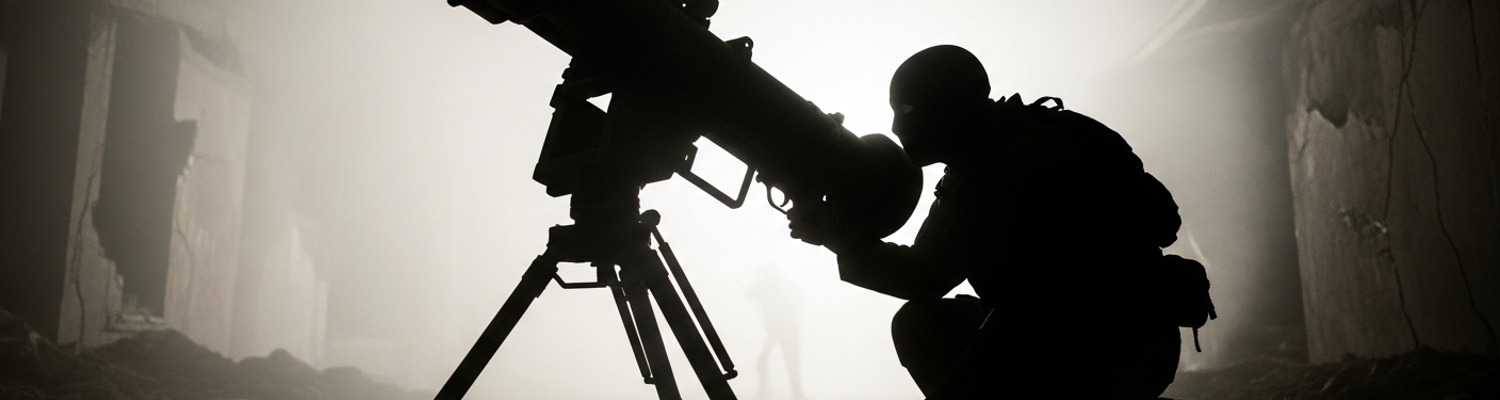

M47 Dragon Anti-Tank Missile Genesis
A doctrinal chasm opened in United States Army infantry platoons by the late 1960s. The problem was Europe. Specifically, the projected armor of Soviet T-55 and T-62 main battle tanks. The standard-issue 90mm M67 recoilless rifle was obsolete. It was a heavy, crew-served weapon whose armor penetration was increasingly suspect against modern threats. Its backblast signature was a liability, instantly revealing a crew’s position. This left a dangerous gap between the disposable, short-range M72 LAW rocket and heavy, vehicle-mounted anti-tank systems. The infantry squad lacked a man-portable weapon capable of destroying a main battle tank from a survivable distance.
The Army needed a Medium Anti-tank/Assault Weapon, or MAW.
The requirement, first outlined by the Army Ordnance Missile Command in 1959, solidified into a tangible program in the mid-1960s. The objective was a guided missile system light enough for one soldier to carry and operate. Following a proposal from Douglas Aircraft, the MAW program began. In February 1966, McDonnell Douglas received the development contract. The system received the designation XM47. The missile itself was designated XFGM-77A the following year, and the program was officially named Dragon. The development arc was protracted. The first successful guided test flight occurred in December 1967. The first launch from a portable tube followed in July 1968. Production contracts were not awarded until March 1972. The weapon was finally type-classified as standard equipment in February 1973, receiving its final M47 designation. The first M47 Dragon systems did not reach Army and Marine Corps units in Europe until January 1975, a full sixteen years after the initial requirement was identified.
The core of the Dragon’s design was its Semi-Automatic Command to Line-of-Sight wire-guided system. This SACLOS concept was highly advanced for a man-portable weapon of the era. It was also mechanically complex and placed an extreme burden on the operator. The weapon consisted of two main parts: the expendable fiberglass launch tube containing the missile and the reusable Kollsman SU-36/P tracker. After launch, the gunner’s sole task was to keep the tracker’s crosshairs centered on the target. An infrared sensor on the tracker followed a flare on the missile’s tail, detected any deviation from the line of sight, and transmitted correction commands through a pair of fine copper wires that unspooled from the missile. The Dragon used a radical method of propulsion and steering. The missile’s body was ringed by sixty small, solid-fuel rocket motors arranged in thirty pairs. These thrusters fired in sequential, explosive bursts to adjust the missile’s path. This created a distinctive popping sound and a jerky, unpredictable flight trajectory. The system eliminated the need for conventional control surfaces but demanded absolute stability from the gunner. Any sudden movement could cause the tracker to lose sight of the flare or snap the delicate guidance wires, sending the missile careening off-course.
The Dragon's Inherent Design Complexities
Upon its introduction, the M47 Dragon’s advanced concepts masked a collection of severe and debilitating design flaws. Operational logs and training reports reveal a weapon that was mechanically temperamental, difficult to employ effectively, and tactically restrictive. Its core problems stemmed from three interconnected areas: the backblast, the sensitive optical tracking system, and the fragile wire-guidance mechanism. These were not minor issues but fundamental characteristics of the Dragon’s design that would plague its service life.
The most immediate danger to the operator was the weapon’s ferocious backblast. Firing the missile generated a danger zone extending 30 meters to the rear in a 90-degree arc. A secondary caution zone reached out to 50 meters. This signature of blast, flame, and flying debris made it hazardous to fire from confined spaces, a direct contradiction of the anticipated combat environments of urbanized or heavily forested European battlefields. Field manuals provided guidelines for emergency use in enclosures, but training regulations strictly forbade it. This effectively denied infantry the ability to use the Dragon from fortified positions, bunkers, or the building-to-building fighting scenarios where a portable anti-tank weapon was most needed. The backblast also instantly revealed the gunner’s position, a vulnerability when the missile required up to 11.5 seconds of sustained tracking to reach its 1,000-meter maximum range. An enemy tank crew or its supporting infantry could easily spot the launch signature and suppress the exposed Dragon gunner before the missile impacted.
Compounding the exposure risk was the SU-36/P tracker’s extreme sensitivity. The gunner’s task was to keep the optical sight’s crosshairs perfectly steady on the target. This allowed the tracker’s infrared sensor to follow a flare on the missile’s tail and send corrections. The system was highly susceptible to battlefield conditions. Smoke from obscurants, dust kicked up by explosions, or heavy fog could cause the tracker to lose sight of the IR flare. If the tracker lost its lock, the missile would often ground itself. The system demanded absolute stability from the operator. He was instructed to fire from an awkward seated position, legs braced against the bipod. A natural breath at the wrong moment or a slight flinch from the delayed launch could break the tracker’s lock. This made engaging anything but a static target an exercise in frustration. A U.S. Army report (No. 79-B-11) found the hit rate in simulated combat conditions to be a mere 20 percent. The AN/TAS-5 night sight, while offering thermal capability, was even heavier at over 21 pounds, required coolant bottles, and emitted an audible hum, further complicating its tactical use.
The physical link between the tracker and the missile, a pair of fine, enameled copper wires, proved to be another point of frequent failure. These wires unspooled from the missile in flight, transmitting the tracker’s guidance commands. They were exceptionally fragile. Trial reports from arctic tests in 1982 noted multiple instances of broken guidance wires. Sometimes they snapped inside the launch tube itself. The wires could easily snag on vegetation in dense woodlands or on rubble in urban settings. Firing over bodies of salt water was also officially discouraged due to the risk of the wire short-circuiting. The missile’s unique popping propulsion, generated by 30 pairs of side-thrusters, created a jerky and unpredictable flight path that could put undue stress on the wire. In other instances, the wire would not unspool evenly, causing the missile to tug on the launch tube and shock the gunner’s aim. If the wire broke, the missile’s failsafe was to fire all thrusters and launch itself skyward, a clear announcement of a failed engagement.
A Singular Vision of European War
A review of declassified U.S. Army war gaming documents from the mid-1970s reveals a fixation on a singular style of warfare. The 1977 conventional battlefield assessments, which informed the M47 Dragon’s tactical employment, were overwhelmingly focused on defeating a massed Warsaw Pact armored assault across the plains of Central Europe. Planners envisioned a conflict dominated by large-scale, force-on-force engagements in open terrain. The Fulda Gap, a corridor in West Germany, was seen as a primary invasion route for Soviet tank armies. This scenario anticipated waves of Soviet T-62 and T-72 tanks advancing across rolling hills and farmland, where long, clear lines of sight would be the norm. NATO anti-tank doctrine prioritized standoff engagements. The Dragon, with its 1,000-meter range and the requirement for a gunner to remain in a seated, stable position for up to 11.5 seconds, was a direct product of this strategic forecast. The entire system was optimized for a killing field where a gunner could spot, track, and guide the missile to its target from a significant distance, blunting the numerical superiority of Soviet armor through technological attrition.
Intelligence assessments of the period critically downplayed lessons on asymmetric tactics being actively demonstrated in other conflicts. The extensive use of subterranean warfare by Viet Cong forces, for example, provided a clear blueprint for negating a technologically superior adversary’s overmatch in firepower. Archival evidence shows that Soviet military advisors and Spetsnaz doctrine were keenly aware of these tactics, incorporating them into their own special operations planning. These tactics involved complex tunnel networks that allowed small units to bypass prepared defensive lines, store supplies, and emerge suddenly in an enemy’s rear area to conduct lightning ambushes before disappearing. Against such a threat, the M47 Dragon was not just ineffective; it was a liability. A gunner, locked into the 11.5-second guidance sequence and focused intently on a target hundreds of meters away, would be defenseless against an enemy team emerging from a hidden spider hole just meters behind his position.
The planning failures extended to the expected European battlefield itself. While strategists focused on open-field tank duels, a high-intensity conflict in Germany would have inevitably involved extensive fighting in its dense urban centers. Here, the M47 Dragon’s design flaws became magnified. Intelligence assessments failed to prioritize the threat of urban anti-tank ambush tactics, where small, mobile hunter-killer teams could use the complex, three-dimensional environment of a city to devastating effect. Firing the Dragon from within a building was exceptionally hazardous. Field manuals specified that firing from an enclosure required a room of significant size with all doors and windows open to mitigate the lethal effects of overpressure from the missile’s backblast. In the rubble-strewn, confined spaces of a contested city, such ideal conditions would be nonexistent. The fragile, hair-thin guidance wire was prone to snagging on rubble, shattered trees, or power lines, causing the missile to lose guidance. An enemy team firing an unguided RPG from a third-story window could engage a tank and relocate before the Dragon’s slow-moving missile had even crossed the street.
The Subterranean Warfare Blind Spot
Intelligence products from the period reveal a failure to integrate battlefield data from Southeast Asia into European defense planning. The sophisticated use of tunnel networks by Viet Cong forces offered a stark, contemporary lesson in negating technological overmatch. These subterranean complexes, some stretching for hundreds of kilometers, allowed guerrilla forces to house troops, transport supplies, and mount sudden ambushes before disappearing. Archival analysis of Warsaw Pact training directives indicates that Soviet military advisors and Spetsnaz operational planners absorbed these lessons with intense interest. Their doctrine began to incorporate tactics centered on using pre-planned or opportunistic subterranean routes, such as sewers, subway systems, and purpose-built tunnels, to bypass NATO’s forward-facing defensive lines. The intent was to have small, specialized units emerge deep in an opponent’s rear area to strike high-value command posts, logistical hubs, and exposed anti-tank teams.
This created a specific and lethal threat to the M47 Dragon.
The weapon’s entire employment doctrine was predicated on a gunner remaining stationary and exposed for the duration of the missile’s flight. This could be up to 11.5 seconds to reach its 1,000-meter maximum range. During this time, the gunner was effectively blind to his immediate surroundings, his entire focus consumed by keeping the SU-36/P tracker’s crosshairs fixed on a distant target. A review of the system’s firing procedure shows a man locked in a seated position, completely vulnerable. This made a Dragon team an ideal target for a pop-up ambush executed by an enemy squad emerging from a hidden tunnel exit just meters behind them. The American intelligence focus on large-scale armored formations moving across open terrain failed to account for this three-dimensional threat, leaving Dragon gunners perilously unprepared for an enemy that could appear from beneath their feet.
The strategic disconnect was rooted in a profound intelligence failure regarding the likely nature of urban combat. While U.S. and NATO war gaming was dominated by scenarios involving massed tank battles in the Fulda Gap, the reality of a European conflict would have included close-quarters fighting in West Germany’s dense urban centers. Soviet doctrine, while preferring to bypass heavily defended cities to maintain momentum, had detailed procedures for storming them when necessary. These employed combined-arms “Storm Groups” to advance street by street. American intelligence assessments did not adequately weigh the implications of this urban dimension on its new anti-tank missile. The M47 Dragon was unsuited for this environment. Its massive backblast created a lethal danger zone extending 30 meters to the rear, making it hazardous to fire from enclosed spaces. Field manuals gave emergency guidance for firing from inside a building, but the requirements, a large room with all doors and windows open to vent overpressure, were a tactical fantasy in a rubble-choked city.
The Dragon's Subterranean Limitations
A close review of the M47 Dragon’s technical and field manuals reveals a weapon system at odds with the environmental realities of subterranean combat. Its design, optimized for open-field engagements against distant armored targets, became counterproductive when taken below ground. The weapon’s core operational limitations were catastrophic design characteristics that made it a liability in the close, dark, and confined spaces of tunnel warfare.
The most immediate physical danger was the weapon’s backblast.
Official warnings specified a lethal danger zone extending 30 meters to the rear of the launcher in a 90-degree arc. A secondary caution zone reached out to 50 meters. Firing the Dragon generates a massive wave of superheated gas and overpressure. In an open field, this dissipates. In a tunnel, that energy has nowhere to go. The resulting pressure wave, channeled by the tunnel walls, would be reflected back toward the gunner and any personnel behind him, causing severe or fatal internal injuries. The concrete and earth walls of a tunnel would amplify the effect, creating a contained, unsurvivable event. This physical characteristic single-handedly negated the Dragon’s use from within any subterranean complex, forcing gunners to expose themselves completely at a tunnel entrance to even attempt a shot.
Beyond the immediate physical hazard, the Dragon’s guidance system was functionally blind in underground conditions. The primary SU-36/P day sight was a simple 6-power optical scope, useless in the absolute darkness of a tunnel or at night without ambient light. While the system could be fitted with the AN/TAS-5 thermal night sight, this presented its own set of problems. The AN/TAS-5 was a heavy unit, weighing over 21 pounds, that required separate, single-use gas bottles for cooling that only lasted for two hours. Its effectiveness was compromised by the very environment it was in. The SACLOS guidance system depended on an infrared sensor in the sight tracking a flare on the missile’s tail. In the confines of a tunnel, the missile’s launch would kick up an immense cloud of dust and debris. Its own exhaust from the sixty side-thrusters could obscure the tracker’s line of sight to the flare. Heavy fog, smoke, or even condensation within a humid tunnel system could similarly cause the tracker to lose its lock, sending the missile into a wall.
These factors culminated in the weapon’s complete unsuitability for close-quarters engagements. The M47 Dragon’s warhead had a minimum arming distance of 65 meters. The missile had to travel this far from the launcher before it was capable of detonating. This feature, designed for gunner safety in open-field battles, made it impossible to engage a sudden threat appearing at the opposite end of a typical tunnel section. An enemy soldier 30 meters away was too close to be killed. The engagement would be over before the Dragon’s missile was even live. This limitation, combined with the backblast danger and the awkward, seated firing position the system demanded, made it a tactical absurdity in a close-quarters fight.
Desperate Ground Unit Improvisation
The chasm between the Dragon’s intended employment and its operational constraints forced ground units into a state of desperate, unpracticed improvisation. Official doctrine, born from war games centered on the open terrain of the Fulda Gap, envisioned clean, long-range engagements. The soldier’s experience was one of compromise and immediate danger. The weapon’s firing procedures reveal a system that demanded a stable, seated position and an unwavering aim for up to 11.5 seconds, a lifetime when under fire. This was a tactical impossibility in anything but a prepared, secure location. In the chaotic, rubble-strewn environments of anticipated European combat, soldiers were forced to invent firing positions on the spot. They attempted to brace the bipod against shattered walls or jam it into piles of debris, actions that could introduce the very instability the sensitive tracker could not tolerate. Even a slight, involuntary movement from the gunner could cause the tracker to lose its lock on the missile’s infrared flare, grounding the round.
To counter the enormous backblast, troops would attempt to fire from the corners of buildings, hoping to vent the blast sideways. This was a dangerous gamble, as the overpressure could still channel unpredictably through a ruined structure. Field manuals offered guidelines for firing from an enclosure in an emergency, but they were clinically detached from any tactical possibility. The result was that gunners were often forced into the open, completely exposed, to take a shot. The weapon’s operational flaws created a vicious cycle: the system’s sensitivity and slow flight time demanded a stable, protected position, yet its backblast made firing from any effective cover a suicidal act.
The exposure of the gunner was absolute.
From the moment a gunner assumed the awkward seated firing position, he was a target. The process was a sequence of vulnerabilities. Attaching the heavy SU-36/P tracker to the launch tube was a deliberate, clumsy action. There was a noticeable delay between pulling the trigger and the missile’s launch, a gap that trained gunners had to learn not to flinch during. The launch itself created a massive signature of flame and debris, instantly broadcasting the gunner’s location. For the next 11.5 seconds, the gunner was completely occupied, his vision locked into the 6-power optical sight, trying to keep the crosshairs steady on a target 1,000 meters away while the missile slowly popped its way forward. During this time, he was blind and deaf to his immediate surroundings, making him a perfect target for enemy infantry who could close the distance and kill him before his missile ever reached its destination.
Strategic Obsolescence and Replacement
The operational record of the M47 Dragon is one of disappointment. A U.S. Army report examining its performance under battlefield conditions found its hit rate to be a mere 20 percent. This statistic was the mathematical distillation of the weapon’s numerous design flaws. During the Iran-Iraq War, Iranian forces employing the Dragon found its single-stage HEAT warhead often incapable of defeating the frontal armor of Soviet-made T-72 tanks. A gunner could perform the entire 11.5-second guidance sequence perfectly, remaining exposed to enemy machine-gun fire, only to watch the missile impact the target with no effect.
The long-term impact of the intelligence community’s fixation on a Fulda Gap scenario was a generation of NATO infantry left dangerously ill-equipped for more probable forms of conflict. The Dragon was a weapon conceived for a static, long-range duel across open plains, yet the nature of warfare was evolving toward urban chaos and asymmetric ambush. Soviet special forces doctrine, having absorbed the lessons of guerrilla warfare from conflicts across the globe, was actively training to exploit the exact vulnerabilities the Dragon presented. The weapon demanded a stationary, exposed gunner, focused for a long duration on a distant target, making him a perfect victim for a pop-up attack from a hidden position.
The Army’s acknowledgment of this failure was implicit in its actions. As early as 1986, while the Marine Corps was funding stop-gap upgrades to create the Dragon II with a better warhead, the Army refused to participate. Its resources were instead directed toward a new program: the Advanced Anti-Tank Weapon System-Medium (AAWS-M). The requirements for this new weapon were a direct refutation of the Dragon’s entire design philosophy. The program sought a true “fire-and-forget” system that would allow a gunner to launch a missile and immediately seek cover, breaking the tether of wire-guidance that had anchored Dragon operators in place.
This effort culminated in the FGM-148 Javelin.
The Javelin represented a generational leap in infantry anti-tank capability. Where the Dragon gunner had to manually track a target for the missile’s entire flight, the Javelin used a sophisticated imaging infrared seeker that locked onto the target’s thermal signature before launch, guiding itself to the target autonomously. This single innovation erased the 11.5-second window of vulnerability that had defined the Dragon. The Javelin also introduced a “top-attack” flight profile, striking a tank’s thin top armor instead of its heavily protected front, and a tandem warhead designed specifically to defeat the explosive reactive armor that was rendering the Dragon’s warhead obsolete.
The Dragon was incrementally improved with the Dragon II and the proposed Dragon III, but these were temporary fixes for a fundamentally flawed concept. The M47 was formally phased out of U.S. service as the Javelin became widely available, with the Army and Marine Corps retiring their last units by 2001. The final stocks of Dragon missiles in the U.S. inventory were systematically destroyed. On September 8th, 2009, the last 24 were detonated in a demolition pit.