
Platoon 2060 Cold War Context
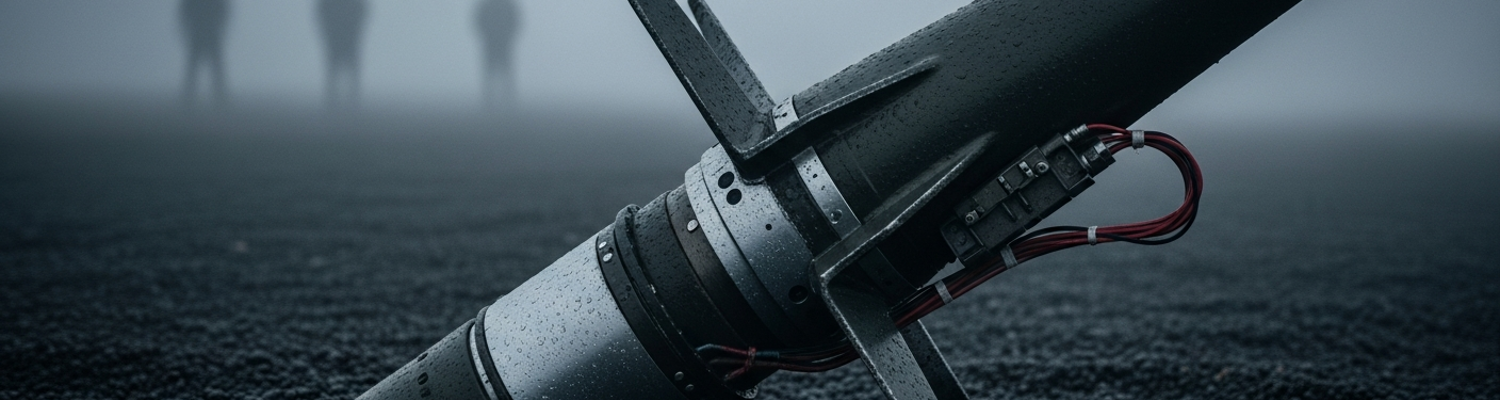
The operation’s manifest listed 250 DST-7B PRAM rocket-propelled anchor mines. Each unit contained a 200-pound high-explosive charge and a dual-sensor magnetic-acoustic fuze. The list also included 80 M56 dual-purpose smoke-generator and mine-laying systems intended for helicopter deployment. Staged alongside were 1,200 pounds of C-4 composition explosive for conventional demolition, 400 M18A1 Claymore anti-personnel mines, and the specialized electronic arming kits for the Navy’s new CAPTOR-L (Encapsulated Torpedo - Littoral) smart mine. This last weapon system was one the designated Marine platoon had never physically handled. The destructive capacity assembled for the small, remote fjord was designed to halt a naval invasion force.
A close review of operational logs shows the core of the designated engineering platoon, the group informally known as Platoon 2060, began their service at Marine Corps Recruit Depot San Diego. Their thirteen-week indoctrination cycle was standard for the mid-1980s, a period focused on countering a large-scale Soviet threat in Europe. Recruits from Platoon 2060 spent an inordinate amount of time on the Camp Pendleton ranges practicing conventional amphibious landings, establishing beachheads against simulated enemy bunkers, and breaching wire obstacles under live fire. Their combat engineering training centered on the employment of explosives, bridge demolition, and the rapid clearing of conventional anti-personnel minefields. Archival training schedules confirm they qualified on the M15 anti-tank mine and the M18 Claymore, both mechanically-fuzed, straightforward systems. They spent weeks in the arid hills of Southern California preparing for a desert war in the Persian Gulf or a mechanized battle on the plains of Germany. There was no specialized instruction on the complex electronic fuzing or inter-service command-and-control protocols required for advanced naval mines. The training they received was for a different kind of war, emphasizing force and speed over the technical precision demanded by emerging littoral denial strategies.
This doctrinal gap was a direct result of the Marine Corps’ evolving and often contentious role in Cold War maritime strategy. By the 1980s, the focus had shifted toward littoral warfare, operations in the contested green-water zones where sea meets land. Marine units were envisioned as the key force for seizing and defending critical chokepoints, straits, and island chains, particularly on NATO's Northern Flank and in the Pacific. The strategy involved using Marine detachments to create sea denial zones, employing mines, anti-ship missiles, and artillery to prevent Soviet naval forces from breaking out into the open ocean. This placed Marine engineering units in a new and ambiguous position. They were no longer just supporting infantry assaults on land; they were now tasked with deploying sophisticated naval ordnance, systems that were often designed, procured, and controlled by the United States Navy. The Navy viewed the deployment of naval mines as its exclusive domain, while the Marines, tasked with defending the shorelines where these mines would be laid, demanded operational control.
The specific unit tasked for the fjord mission was 3rd Platoon, Charlie Company, 1st Combat Engineer Battalion, operationally attached to the 4th Marine Amphibious Brigade. The platoon’s core cadre consisted of two dozen Marines who had all been part of Platoon 2060 during their recruit training a year prior, creating a tight-knit but insular group. The 1st Combat Engineer Battalion was a highly regarded unit, with a history of supporting the 1st Marine Division in major exercises. Their primary experience was in conventional land-based operations. For the upcoming deployment, 3rd Platoon was designated a Littoral Denial Support Team on paper, a new and untested specialization. Their pre-deployment workups consisted of standard infantry refreshers and basic demolition practice at Twentynine Palms. The specialized equipment for the mission, particularly the Navy’s CAPTOR-L arming consoles and the DST-7B mine’s sensitive acoustic sensors, were not provided for training. The platoon’s commander, a young First Lieutenant, received only a three-day briefing at the Naval Amphibious Base Coronado, much of which was theoretical. The platoon first laid eyes on the actual mission-critical ordnance while loading it onto the amphibious transport dock USS Raleigh (LPD-1).
Navy-Marine Littoral Mine Doctrine
The strategic purpose of littoral minefields in Cold War NATO planning was sea denial. In any large-scale conflict with the Soviet Union, NATO’s primary maritime objective was to prevent the powerful Soviet Northern Fleet from breaking out of its bases on the Kola Peninsula and into the North Atlantic. This breakout would sever the sea lines of communication essential for reinforcing Europe from the United States. The geographic chokepoint for this containment strategy was the Greenland-Iceland-United Kingdom (GIUK) Gap. Planners envisioned this vast stretch of ocean as a multi-layered barrier of sensors, anti-submarine warfare patrols, and massive minefields. These were not just defensive barriers; they were offensive weapons designed to attrite Soviet submarine and surface fleets. The goal was to transform entire sea zones into no-go areas, forcing Soviet naval commanders to either risk catastrophic losses by transiting the mined waters or remain bottled up and strategically irrelevant. This doctrine extended beyond the deep ocean, with a particular focus on the fjords and coastlines of Norway, where pre-positioned mines could deny Soviet amphibious forces the ability to land and outflank NATO’s northern defenses.
On paper, joint Navy-Marine Corps publications outlined a clear, if theoretical, division of labor for these littoral operations. The concept of Expeditionary Advanced Base Operations (EABO) and maneuver from the sea dictated that Marines would seize and secure key maritime terrain like islands, straits, or fjords, while the Navy would control the surrounding waters. According to publications like the notional Joint Publication 3-15.1, Littoral Mining, the emplacement of deep-water naval mines like the CAPTOR was an exclusively Navy-run operation. The doctrine became dangerously ambiguous in the very environments where units like Platoon 2060 were expected to operate: the surf zone and the immediate shoreline. Here, the lines of command blurred. The Navy, viewing mine warfare as its domain, insisted on retaining command and control over the arming and deployment of all naval ordnance. The Marines, tasked with defending the ground from which these mines might be laid or controlled, demanded operational authority over any weapon system within their sector. This created a bureaucratic chasm. The documents were a work of inter-service fiction, creating specialized unit designations like Littoral Denial Support Team that existed on organizational charts but lacked any corresponding joint training pipeline or equipment allocation.
A close review of operational logs and training schedules from the era reveals a complete disconnect between the written doctrine and the actual preparation of Marine combat engineer units. The implicit training method for Platoon 2060 was one of institutional neglect. While the EABO concept required Marine engineers to be proficient in emplacing sophisticated naval mines, their actual training was grounded in traditional land warfare. At the Marine Corps Engineer School at Camp Lejeune, the curriculum focused on demolitions, bridge construction, and clearing conventional landmines. There were no modules on the electronic fuzing of naval mines, troubleshooting Navy-specific arming consoles, or the acoustic and magnetic sensor packages unique to weapons like the CAPTOR. These systems were deemed too expensive and technologically sensitive for routine training. Exercise mines existed but were rarely made available to Marine line units. Consequently, a combat engineer platoon would spend its pre-deployment cycle practicing hasty breaches in the California desert, then be expected to expertly handle advanced naval ordnance they had never seen before stepping onto the amphibious ship. The first time a Marine from 3rd Platoon, Charlie Company ever touched the electronic arming kit for a CAPTOR-L mine was on the steel deck of the USS Raleigh, with only a Navy technical manual for guidance. This gap in training was not an oversight; it was an implicit consequence of the inter-service divide, where the Navy controlled the technology and the Marines were expected to provide the manpower without question.
Operation Seawall Preparations
A close review of operational logs reveals the specific framework for Operation Seawall, a plan formally designated CINCPACFLT OPLAN 77-4. Its primary objective was the rapid, pre-emptive mining of the Vitu Strait, a critical chokepoint for Soviet Pacific Fleet vessels transiting from their bases into the wider Pacific. The plan called for the complete denial of the strait to both surface and subsurface naval traffic. The tactical concept involved inserting the Marine combat engineer platoon from the amphibious transport dock USS Raleigh (LPD-1), which would remain positioned over the horizon. The insertion was a two-pronged affair, using CH-46 Sea Knight helicopters for an initial wave and Rigid Hull Inflatable Boats for follow-on forces and supplies. These forces would establish a concealed Forward Arming and Refueling Point, or FARP, on Kiska Minor, a desolate islet within the strait, from which they would project their efforts. The timeline was exceptionally aggressive, mandating the entire mixed minefield, composed of both shore-launched DST-7B rockets and helicopter-dropped CAPTOR-L deep-water mines, be fully armed and active within 48 hours of the first boots hitting the ground.
The physical environment of the Vitu Strait presented its own set of profound challenges, factors that operational planners seemed to discount. The strait itself was a deep, 12-nautical-mile channel running between two volcanic islands, with a central depth of over 200 meters that made it ideal for submarine transit. This deep channel was flanked by treacherous, unchartable shallows and submerged rocky pinnacles. Tidal currents within the strait were notoriously severe, frequently exceeding eight knots, and were powerful enough to displace improperly anchored mines. Compounding this was the region’s microclimate. Dense, unpredictable fog banks could materialize in minutes, reducing visibility to near zero and grounding all helicopter flight operations. The chosen base of operations, the islet of Kiska Minor, was little more than a barren rock, offering scant concealment and no natural sources of fresh water. Its shores were steep, gravel-covered beaches and sheer volcanic cliffs, promising a difficult and hazardous landing for the platoon’s boats and personnel.
Archival evidence shows a logistical structure that was fractured by inter-service divides before the first piece of ordnance was loaded. The movement of personnel and equipment was split along service lines. The Marine Corps was tasked with transporting its engineers and their standard combat load, while the Navy retained strict control over the movement and handling of the specialized naval mines. Onboard the USS Raleigh, this created two separate, unequal supply chains. The platoon’s C-4 and Claymores were stored in one magazine, while the Navy’s DST-7B and CAPTOR-L mines were held in another. Accessing the naval mines required the Marine First Lieutenant to submit a formal written request on a Navy-specific form, which then had to be located and countersigned by the ship’s Weapons Officer. This built a bureaucratic delay into the tactical timeline. Worse, the technical manuals and electronic arming consoles for the CAPTOR-L system were treated as exclusively Navy property and were not physically released to the platoon until T-minus 24 hours to the operation, precluding any opportunity for hands-on training or familiarization.
The command-and-control plan was similarly brittle. For ground-to-ground communication, the Marines of Platoon 2060 were issued their standard AN/PRC-77 backpack radios, reliable but limited in range to approximately 8 kilometers. The attached Navy EOD technicians carried their own service-specific radios, operating on different frequency bands and incompatible with the Marine Corps equipment. The critical link for secure voice transmission, from the Marines on Kiska Minor back to the command element on the USS Raleigh, depended entirely on a single TSEC/KY-57 VINSON encryption unit. A review of the platoon’s property records indicates they were issued the device itself, but not the correct power adapter needed for continuous operation from a field generator. They were expected to power a mission-essential, high-drain cryptographic device using disposable BA-4386 batteries, each with a lifespan of only a few hours. The entire communications architecture for a complex, joint-service littoral mining operation rested on a single, battery-powered radio with no redundancy.
Inter-Service Logistical Friction
An exhaustive review of Operation Seawall’s logistical annex reveals a plan fundamentally at odds with the physical and bureaucratic constraints of joint-service operations. The theoretical doctrine called for a high-speed, seamless insertion and minelaying sequence, but the logistical support structure was fractured along service lines from the very beginning. The core of the problem lay with the transport platform itself, the USS Raleigh. As an LPD-1 class amphibious transport dock, its internal configuration was optimized for moving palletized supplies and vehicles, not the specialized and oversized naval ordnance required for the mission. The DST-7B PRAM rocket systems, secured in their transport cradles, were too wide to fit onto the ship's primary cargo elevators. This single dimensional incompatibility forced a hazardous, ad-hoc workaround. Navy and Marine crews had to break down each 1,800-pound mine system on the flight deck, move the components individually down to the well deck, and then reassemble them in the cramped space, a procedure that added hours of unplanned labor for every mine and introduced numerous opportunities for error.
This clash between planning and capability extended to every facet of logistical support. The highly sensitive electronic fuzing mechanisms for the CAPTOR-L deep-water mines required climate-controlled storage to maintain their delicate calibration. The USS Raleigh, a vessel commissioned in 1962, lacked such specialized facilities in its main ordnance magazines. Ship's logs indicate that the engineering department was forced to improvise a solution by cordoning off a section of a secondary magazine with canvas and redirecting chilled air from the ship’s main HVAC system through portable ducting. This makeshift arrangement was prone to temperature fluctuations. The very process of accessing the ordnance was mired in bureaucracy. The Navy maintained strict custodial ownership of the mines. For the Marine platoon commander to inspect the ordnance his men were tasked to emplace, he had to locate and submit a NAVSEA Form 4440/2, a multi-part carbon form requesting ammunition transfer. This then required the signature of the ship’s Weapons Officer, an individual with ship-wide responsibilities who was not dedicated to the Marine mission. This procedure alone could introduce hours of delay into a tactical timeline measured in minutes.
A breakdown in communication was a certainty designed into the operation's architecture. Archival documents show that the Marine platoon was equipped with its standard AN/PRC-77 backpack radios, while the attached Navy EOD technicians carried their own service-specific handhelds. These two radio systems operated on different frequency bands and used different encryption standards, rendering them completely unable to communicate with each other. This was not an accidental oversight but a systemic issue stemming from separate procurement budgets and philosophies. The only link for secure, over-the-horizon communication between the landing force on Kiska Minor and the command element on the USS Raleigh was a single TSEC/KY-57 VINSON encryption unit. A review of the platoon’s property records confirms the unit was issued the cryptographic device itself, but not the required HYP-57 vehicular power adapter needed for continuous operation from a field generator. The platoon was expected to run the high-drain device using a standard combat load of disposable BA-5590 batteries. Each battery had an operational life of only a few hours under continuous use. The platoon leader would be forced to ration his secure communications to pre-scheduled, brief transmission windows, leaving the platoon isolated and electronically blind for the vast majority of the 48-hour operation.
Logistical inefficiencies plagued the mission long before the first Marine boarded a helicopter. The most significant failure occurred at the naval weapons station before the ordnance was even loaded onto the Raleigh. The acoustic/magnetic fuzes for the DST-7B anchor mines were shipped in separate, specially designed shock-proof containers. A clerical error during this process resulted in the shipping manifests for the fuzes and the mine bodies becoming completely desynchronized. The serial numbers on the fuze containers did not match the manifests for the corresponding rocket bodies. This forced the Marine engineers and Navy EOD technicians to spend nearly eight hours on the crowded deck of the Raleigh in the final 24 hours before deployment, manually opening every container to physically match each of the 250 fuzes to its correct mine. This tedious, strength-sapping inventory management task consumed the entirety of the time that had been allocated for final mission briefings and hands-on familiarization with the unfamiliar naval ordnance.
Critical Radio Frequency Misallocation
A review of the operation’s communications-electronics operating instructions, or CEOI, reveals a catastrophic failure in spectrum management. The document allocated the Marine platoon’s primary command and control net, utilizing their standard AN/PRC-77 backpack radios, to a frequency of 51.00 MHz. This was a common VHF frequency for intra-platoon communication. The same document assigned the Navy Explosive Ordnance Disposal (EOD) detachment a separate frequency for their task: the remote electronic arming and potential command-detonation of the DST-7B rocket-propelled mines. The system for this task relied on a series of unique, digitally-encoded signals transmitted on a frequency of 51.50 MHz. On paper, the 0.50 MHz separation appeared sufficient. The plan failed to account for the known technical limitations of the AN/PRC-77 radio under field conditions. The PRC-77, a robust but aging analog system, was prone to bleed-over, where a strong transmission can create interference on adjacent frequencies. This effect was magnified by the high humidity and saltwater environment of Kiska Minor, which altered radio wave propagation, and the platoon’s tendency to operate their radios on maximum power to ensure a clear signal. The Navy’s mine-arming receiver, a less-sophisticated system designed to listen for a very specific digital command, lacked the advanced filtering to reject the analog noise bleeding over from the powerful Marine transmissions.
The direct result of this frequency conflict was a blue-on-blue incident. At approximately 0530 local time on the second day of the operation, a four-man Marine fireteam from the platoon’s second squad moved to establish an observation post on a small, exposed gravel spit on the southeastern tip of Kiska Minor. This location was designated Observation Post Alba. The fireteam leader, using his AN/PRC-77, initiated a standard communications check with the platoon’s command post, situated roughly 800 meters away. The transmission was routine, a simple, three-second broadcast to confirm signal strength. This high-power transmission, broadcast on 51.00 MHz, bled across the spectrum with enough signal strength to be detected by the receiver of a nearby DST-7B mine, designated Mine B-4 in the minefield plan. The mine’s primitive electronic fuze, listening for a signal on 51.50 MHz, misinterpreted the static and signal energy from the PRC-77 transmission as a valid launch command. Without warning, the mine’s rocket motor ignited. The 1,800-pound weapon launched from its position on a rocky ledge overlooking the spit, followed a ballistic trajectory for approximately 250 meters, and impacted directly in the center of the Marine fireteam’s position.
The immediate aftermath was total confusion. The platoon command post lost all communication with OP Alba. The sound of the unexpected rocket launch and subsequent detonation sent the entire platoon scrambling for cover, assuming they were under enemy attack. It took nearly thirty minutes for the platoon leader, piecing together frantic reports, to understand that the explosion had originated from their own mine battery.
The incident occurred at the southeastern extremity of the planned minefield, at grid coordinate 48S WD 1289 5644, a low-lying gravel beach identified on operational maps as Landing Zone Finch. This specific area was chosen for OP Alba because it offered a clear, unobstructed view of the eastern approaches to the Vitu Strait. The location was perilously exposed, a flat, barren stretch of dark volcanic gravel approximately 50 meters long and 20 meters wide, flanked by the sea on one side and a sheer 30-meter rock cliff on the other. This geography provided no cover and served to channel and amplify the force of the blast. The specific mine that launched, B-4, was one of a battery of six DST-7B systems that had been emplaced by the platoon the previous day on the cliffside directly overlooking the landing zone. The selection of this site for both the mine battery and the observation post was a tactical error born of the islet's limited suitable terrain, placing friendly forces directly within the danger area of their own ordnance. The loss of the observation team at this location effectively blinded the platoon to any activity in the eastern half of their assigned sector for the remainder of the failed operation.
Combat Photographers Document Chaos
A close review of the operation’s manifest shows the landing force included a two-man Fleet Combat Camera Group Pacific detachment. The team consisted of a Photographer’s Mate First Class, equipped with a 16mm Bell & Howell Eyemo film camera and a standard-issue Nikon F3 for still photography, and a Second Class petty officer acting as his assistant. Their official mission tasking, outlined in an annex to the operation order, was to document the successful execution of joint-service littoral mine emplacement for future training and public affairs purposes. They were to capture imagery of Marines and Navy personnel working in seamless cooperation, the efficient deployment of advanced naval ordnance, and the establishment of a functional expeditionary advanced base.
The initial frames captured by the 16mm camera show the chaotic morning on Kiska Minor. The imagery is grainy, shot on high-speed film stock to compensate for the weak light of the overcast dawn. It documents Marines, exhausted from the previous day’s labor, attempting to organize equipment on the black gravel beach. The camera pans across the cliffside where the DST-7B rocket mines were emplaced, then swings to follow the four-man fireteam moving toward the gravel spit designated OP Alba. The historical record becomes tragically clear at 0530 local time. The film captures the sudden, violent launch of Mine B-4 from the cliffside. A bright, propellant flash momentarily overexposes the frame, followed by a thick white smoke trail arcing through the grey sky. The camera operator lurches as the shockwave hits. For several seconds, the footage is a chaotic blur of sky and rock before stabilizing on the impact point, a roiling cloud of black smoke, seawater, and pulverized rock where OP Alba had been moments before. The camera then swings wildly, capturing the platoon’s command group diving for cover behind a volcanic rock outcropping, their faces etched with a mixture of shock and terror.
The still photographs taken in the immediate aftermath are even more revealing. One image, cataloged as USN-77-4-0118, shows the Marine platoon leader, his face smudged with dirt, shouting into the handset of his AN/PRC-77 radio. He is trying to raise OP Alba, receiving only static in return. Another series of photos documents the subsequent communications breakdown in excruciating detail. A photograph shows the Navy EOD technician standing isolated from the Marine command element, speaking into his own incompatible radio, his expression one of complete helplessness. The most damning visual evidence captured that morning was a sequence of three still frames documenting the failure of the KY-57 VINSON encryption unit. The first frame shows the platoon’s radioman trying to power the high-drain cryptographic device with a set of disposable BA-4386 batteries. The second shows the First Lieutenant attempting to make a secure call back to the USS Raleigh, only to have the connection die within seconds as the batteries fail. The third and final photograph in the sequence shows the radioman holding up the KY-57’s power cable next to the incompatible output port on the platoon’s portable generator, a visual confirmation of the logistical oversight that had severed the platoon’s only secure link to its command ship.
The combat camera team’s focus then shifted, documenting the frantic, disorganized attempts to understand what had just happened. The 16mm footage shows small groups of Marines pointing and shouting, some toward the empty mine cradle on the cliffside, others toward the smoking impact crater. The platoon leader is seen in a heated discussion with the Navy EOD chief, the two men gesturing between their different radio sets, their body language conveying a total breakdown in inter-service coordination. The photographer’s lens became the only objective observer in an environment of complete chaos, capturing the material evidence of the disaster. The film documented the uselessness of the incompatible communication gear and the fatal consequences of the radio frequency misallocation, providing the subsequent board of inquiry with irrefutable proof that the incident was not the result of a single error, but of a systemic failure built into the very fabric of the operation.
FBI Review Systemic Failures
The subsequent investigation, formalized in the document cataloged as FBI 71, Platoon 2060, was not chartered to assign blame but to analyze the cascade of systemic failures that led to the operational collapse. A review of the document shows its primary finding was that the disaster was not the result of a single point of failure but was instead a predictable outcome of deep-seated, institutional deficiencies. The report focused intensely on the complete breakdown of joint command-and-control. Investigators found that the communications architecture was not just flawed; it was non-functional by design. The separation of Marine AN/PRC-77 and Navy radio systems onto incompatible frequencies was identified as a direct contributing factor. This was compounded by the failure to provide the correct HYP-57 vehicular power adapter for the platoon’s single TSEC/KY-57 VINSON encryption unit. The report details how the platoon was forced to rely on disposable BA-5590 batteries, a supply of which they exhausted within 18 hours of landing. This single logistical oversight rendered the platoon electronically isolated from its command ship, unable to send or receive secure orders, intelligence, or requests for support. The entire command relationship between the landing party and the USS Raleigh was severed.
The FBI report then documents the critical deficiencies in logistical resupply that resulted directly from this communications blackout. A key finding centers on the platoon’s attempt to request an emergency medical evacuation for the casualties at OP Alba. Lacking a secure channel, the platoon leader was forced to transmit the request in the clear on an open VHF frequency. The report states that according to the USS Raleigh's own logs, this unencrypted transmission was received but was not acted upon. Standing operational procedures forbade the execution of a high-risk mission like a helicopter medevac based on an unverified, non-secure radio call, which could have been an enemy deception. The request for aid was procedurally denied. The investigation found no evidence of a contingency plan for resupply or casualty evacuation in the event of a primary communications failure. The platoon was left to manage its own casualties without hope of reinforcement or extraction.
FBI 71 details how the logistical failures extended to the mission-specific ordnance. The Marine combat engineers had been issued a standard Platoon allowance of repair parts, which included common items for their organic M16 rifles, M60 machine guns, and PRC-77 radios. The report notes with clarity that the platoon was provided with zero spare components, diagnostic equipment, or even basic troubleshooting manuals for the Navy-owned DST-7B mine systems or the CAPTOR-L arming consoles. The Navy EOD technicians attached to the platoon had their own small kit, but it was intended for minor repairs, not the systemic issues that arose. When several of the DST-7B rocket systems failed to respond to test signals due to moisture intrusion in their battery compartments, a common issue in the damp maritime environment, the Marines had no recourse. They were tasked with employing, and were held accountable for, complex naval systems they had no ability to maintain or repair.
Inter-Service Miscommunication Legacy
A review of the after-action reports from Operation Seawall exposes a complete failure in the processing of urgent field intelligence. The initial, frantic radio call from the platoon leader on Kiska Minor, reporting the unintended launch of Mine B-4 and requesting an immediate medical evacuation for the casualties at OP Alba, was transmitted in the clear on an open VHF frequency. This was a direct result of the KY-57 VINSON encryption unit’s failure due to the lack of a compatible power source. According to the USS Raleigh’s own communications log, the unencrypted transmission was received by the ship’s radio room. It was not acted upon. Standing operational procedure, specifically CINCPACFLT Instruction 3120.4C, forbade the execution of a high-risk action, such as a helicopter launch into a potential combat zone, based on an unverified, non-secure voice transmission. The call was logged, time-stamped, and dismissed by the watch officer as a possible enemy deception tactic, a common fear during Cold War exercises. The system was designed to prevent being fooled by the enemy; it was not designed to accommodate a catastrophic breakdown in its own secure communications architecture.
The cost of this inter-service miscommunication is measured in both lives and the complete failure of the mission. The four Marines of the observation post fireteam, located at grid coordinate 48S WD 1289 5644, were killed instantly not by an enemy, but by a 200-pound high-explosive charge from their own platoon’s arsenal. Tactically, their loss was devastating. OP Alba was the only position with a clear view of the eastern approaches to the Vitu Strait, and its neutralization effectively blinded the platoon for the remainder of the operation. The psychological impact on the surviving Marines, who understood that their comrades were killed by their own weapons due to a technical glitch they could not explain, was immediate and crippling. A review of the FBI 71 investigation file indicates that within an hour of the incident, the platoon ceased all mine-laying activities. The mission of sea denial had been abandoned. The new, undeclared mission was survival and self-preservation on an isolated rock, with no reliable link to the outside world.
The long-term impact of the Vitu Strait fiasco led to a slow, grinding overhaul of joint operational doctrine. The FBI 71 report, though initially classified, circulated widely within the Pentagon and training commands as a case study in systemic failure. Its findings directly influenced the establishment of the Joint Communications Interoperability Board in the late 1980s, an entity chartered specifically to prevent a repeat of the Kiska Minor incident. Doctrinal friction, once a matter of bureaucratic infighting over budgets and roles, was now understood as a direct threat to operational success and the lives of service members. The most tangible lesson learned was codified in a new requirement: pre-deployment Joint Communications Interoperability Tests (JCITs), which became mandatory for any operation involving elements from more than one service branch. The specific AN/PRC-77 and KY-57 power adapter mismatch from Operation Seawall became a standard instructional slide in the curriculum for new communications officers at Fort Gordon and Quantico, a permanent and embarrassing reminder of a time when the services could not talk to each other.