
Strategic Insertion at Chu Lai and Geopolitical Signaling
The pre-dawn hours of May 7, 1965, offered nothing but the rhythmic low-frequency hum of diesel engines. These power plants idled exactly three miles offshore. A heavy damp fog suppressed all ambient sound across the South China Sea. Thousands of infantrymen sat shoulder-to-shoulder inside the damp steel troop compartments of landing craft. They clutched M14 rifles while waiting for the mechanical ramp release lever to drop. The water slapped against the flat steel bows of the boats.
Archival evidence shows the highest levels of the State Department monitored these specific coordinates.
When examining the historical record of the May 1965 deployment, the insertion of the 4th Marine Regiment at Chu Lai required the immediate establishment of a coastal enclave. Command staff under Lieutenant General Victor Krulak selected a stretch of undeveloped coastline approximately fifty miles south of Da Nang. The target zone sat at coordinates 15°24′N 108°42′E. The objective demanded the rapid construction of a Short Airfield for Tactical Support. Engineering battalions received orders to lay thousands of interlocking AM-2 aluminum matting panels across loose shifting sand. These panels had to support the weight of A-4 Skyhawk attack jets. Washington policymakers viewed this specific infrastructure project as a highly significant geopolitical signal. Establishing an offensive air capability close to the demilitarized zone alerted Soviet and Chinese intelligence networks. It proved American military involvement had escalated beyond advisory roles.
Defense Secretary Robert McNamara received hourly telegraphic updates regarding the soil compaction rates.
The National Security Council debated the diplomatic fallout of this enclave strategy for weeks before authorizing the landing. State Department officials knew the construction of a permanent runway signaled a long-term territorial occupation to the international community. Initial amphibious operations relied heavily on Seventh Fleet supply ships for rapid cargo discharge. Task Force 76 anchored off the coast with a massive payload. The manifest included bulldozers, aviation fuel, and construction materials. Amphibious transport docks like the USS Vancouver initiated well-deck operations to float out Landing Craft Utility vessels. The military plan depended entirely on these flat-bottomed boats. They had to ferry ten thousand tons of equipment directly to the beachhead within a forty-eight-hour window.
Loose sand particles immediately jammed the interlocking joints of the aluminum runway panels.
Mechanical components degraded under the strain of continuous operation. Electric winch motors on the cargo booms of older amphibious cargo ships overheated. Steel cables frayed against their pulleys while attempting to lower fifteen-ton pallets of aluminum runway matting into the swaying landing craft below. The ship-to-shore movement doctrine broke down when heavy swells hit the coastline. Navy pontoon causeways failed to hold their structural integrity.
A ten-foot tidal swell snapped the steel connecting pins on the floating pontoon sections.
Offshore Winch Failures and Sling Load Breakdowns
A close review of operational logs indicates the mechanical breakdown of Seventh Fleet supply ships began at exactly 0415 hours on May 8. Attack cargo vessels including the USS Washburn and the USS Winston sat anchored in heavy swells. Their primary mission involved hoisting fifteen-ton pallets of AM-2 aluminum runway matting and JP-4 aviation fuel from their deep cargo holds. Underway replenishment winches aboard Seventh Fleet supply ships suffered severe mechanical failure after thirty-six hours of continuous high-cycle operation. The Northern Line electro-hydraulic motors powering the fifty-ton heavy-lift booms overheated when the ambient air temperature reached ninety-eight degrees Fahrenheit. High-pressure MIL-H-5606 hydraulic fluid boiled inside the main lines.
This extreme heat warped the bronze commutator rings.
The thermal overload relays within the main winch housings tripped repeatedly. Navy machinist mates attempted to cool the electric motors by pointing portable ventilation fans directly at the exposed gear shafts. Planetary gear assemblies shattered under the sheer weight of the suspended aluminum panels. One-inch steel wire rope snapped and whipped across the steel decks of the USS Washburn. A primary brake band completely disintegrated. The sudden destruction of the mechanical braking systems caused pallets of high-explosive ordnance to free-fall directly into the South China Sea.
Winch breakdowns halted offshore sling load transfers.
These mechanical failures created severe offloading delays across Task Force 76. Cargo nets filled with 55-gallon drums of aviation fuel swung violently from the immobilized boom arms. Dozens of LCM-8 landing craft idled in the choppy water below the transport ships. They waited for the heavy nylon web slings to lower the cargo. Diesel engines on the small boats burned through their fuel reserves. The crews watched Navy technicians dismantle the seized winch gearboxes on the decks high above them. The inability to transfer cargo from ship to shore immediately suspended the construction of the Short Airfield for Tactical Support on the beach. Marine engineers from Naval Mobile Construction Battalion 10 sat in the sand without the aluminum matting required to build the runway.
Rear Admiral Don Wulzen transmitted a flash message to the Commander in Chief of the Pacific Fleet.
Admiral U.S. Grant Sharp forwarded this damage assessment directly to the Pentagon. Defense Secretary Robert McNamara demanded a complete inventory of every spare winch motor available in the Pacific theater. Navy repair crews stripped the functioning starboard winch motors to rebuild the shattered portside gearboxes on the USS Winston. The geopolitical alarm triggered by these offloading delays reached the highest levels of the United States government. State Department liaisons in Saigon faced hostile questioning from South Vietnamese generals regarding the absent American air cover. The delay of Marine Aircraft Group 12 projected a severe lack of expeditionary capability to international observers.
Aviation Fuel Contamination Aboard Amphibious Assault Ships
A close review of operational logs indicates the mechanical breakdown of amphibious support vessels compounded rapidly on May 9. Task Group 76.1 operated the USS Princeton. Deep within the lower hull of the amphibious assault ship sat massive 300,000-gallon steel storage tanks. These tanks held the 115/145 octane aviation gasoline required for the landing force. Temperature fluctuations between the ninety-eight-degree ambient air of the South China Sea and the cooler ocean water caused heavy condensation to form along the unlined steel bulkheads. Water dripped down the interior walls. It pooled at the bottom of the tanks and mixed with oxidized iron flakes from the aging metal.
The ship centrifugal fuel purifiers failed to separate this rust-water sludge from the combustible liquid.
Pumping systems transferred thousands of gallons of contaminated aviation gasoline through the internal piping network up to the flight deck refueling hoses. Defense Secretary Robert McNamara received a flash cable regarding the compromised fuel reserves within minutes of the discovery. State Department officials recognized that an amphibious fleet without functioning fuel stocks could not project power ashore. Soviet intelligence trawlers intercepted the unencrypted radio chatter detailing the clogged purifiers. Washington policymakers panicked that the entire amphibious umbrella was defenseless against a coordinated counterattack. The presence of microscopic iron oxide particles bypassed the primary wire-mesh filters on the flight deck dispensing nozzles.
Marine Medium Helicopter Squadron 161 initiated pre-flight engine run-ups on the flight deck at 0530 hours.
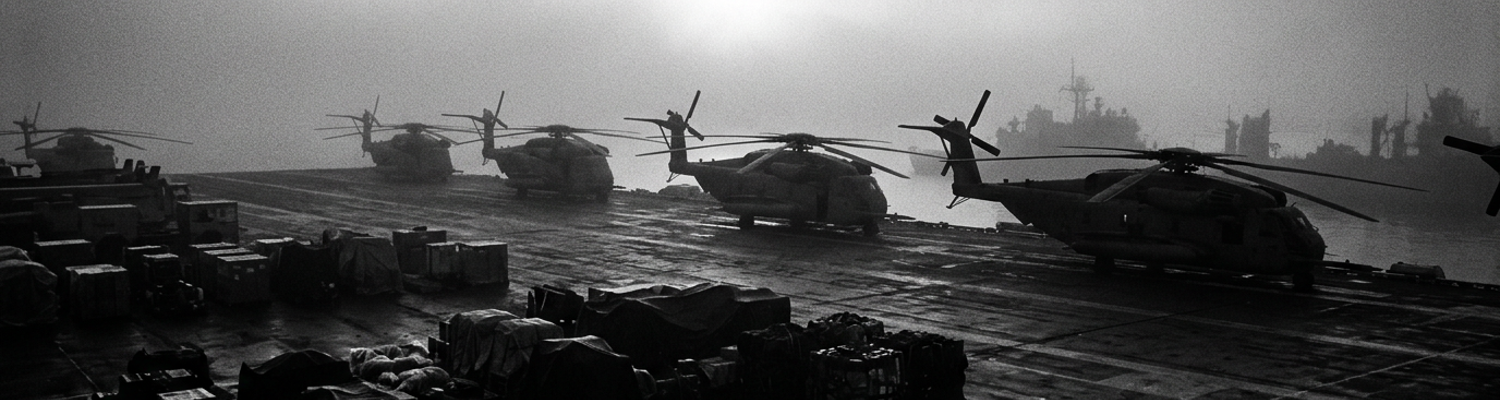
UH-34D transport helicopters ingested the water-laden aviation gasoline directly into their Wright R-1820-84 Cyclone radial engines. Within minutes of ignition the contaminated fuel fouled the spark plugs and blocked the internal carburetor jets. Engine RPMs dropped violently. The heavy magnesium airframes shuddered against the tarmac tie-down chains. Maintenance crews drained the lower fuel sumps and discovered thick red sediment pooling inside the glass inspection bowls. The squadron commander ordered an immediate total grounding of all UH-34D aircraft across Task Group 76.1. This tactical halt stripped the 3rd Battalion 4th Marines of their primary vertical envelopment and resupply capability.
Mechanics stripped thirty-two separate carburetors on the hangar deck.
Archival evidence shows the National Security Council convened an emergency session upon learning the helicopter fleet could not fly. Diplomatic personnel in Saigon had to inform General William Westmoreland that the promised air assault support was indefinitely suspended. White House aides drafted memorandums analyzing the potential political fallout if the South Vietnamese government publicly condemned the American engineering failure. The grounding of the transport helicopters created a severe intelligence crisis within the Pentagon. Without the UH-34D squadrons to ferry reconnaissance teams inland toward Route 1 American commanders lost all visibility on North Vietnamese Army troop movements west of the Chu Lai beachhead.
Flight Deck Gridlock and Stranded Infantry Elements
The total grounding of transport helicopters trapped hundreds of infantrymen directly on the exposed steel surfaces of Task Group 76.1. Elements of the 2nd Battalion 4th Marines sat shoulder-to-shoulder across the flight deck of the USS Princeton. Ambient air temperatures above the South China Sea peaked at one hundred and two degrees Fahrenheit by 1300 hours on May 9. Thermal radiation from the dark gray non-skid coating pushed the surface temperature of the flight deck past one hundred and thirty degrees. Infantrymen wore standard-issue M-1952A flak jackets. They carried seventy pounds of combat equipment including M14 rifles and extra ammunition bandoliers while waiting for the contaminated UH-34D helicopters to launch.
This static chaos forced platoon commanders to cram their troops under the narrow shadows of the carrier island superstructure.
State Department officials tracking the deployment from Washington realized this visible bottleneck projected severe vulnerability. Soviet intelligence assets operating Okean-class trawlers just outside the three-mile limit aimed telephoto lenses at the crowded decks. Intercepted diplomatic cables reveal the National Security Council feared international press syndicates would publish images of the immobilized American strike force. White House aides drafted urgent memorandums warning that the sight of exhausted troops trapped on their own ships undermined the entire strategic deterrence posture in Southeast Asia. Navy medical corpsmen exhausted their supply of salt tablets within the first four hours of the delay.
The combined mechanical and fuel failures triggered an absolute cessation of ship-to-shore movement.
Broken cargo winches aboard the attack transports and water-contaminated aviation gasoline inside the assault ships resulted in a forty-eight-hour operational logistics paralysis. Between 0600 on May 9 and 0600 on May 11 Seventh Fleet commanders recorded zero tons of equipment moving over the beachhead. Task Force 76 landing craft drifted aimlessly in the swells. They burned diesel while waiting for sling loads that never descended. Defense Secretary Robert McNamara summoned Joint Chiefs of Staff personnel to an emergency briefing regarding the frozen supply chain. Diplomatic channels in Saigon flooded with inquiries from South Vietnamese leadership demanding an explanation for the halted operation.
Marine engineers on the beach dug defensive fighting holes in the loose sand without the aid of heavy excavation machinery.
Archival evidence shows the two-day paralysis completely derailed the construction schedule for the Chu Lai expeditionary airfield. Stranded infantry companies on the USS Princeton consumed emergency C-ration stockpiles intended for their first week ashore. Below decks the ship ventilation systems failed under the continuous electrical load. The troop berthing compartments turned into stagnant ovens. Battalion commanders ordered Marines to strip down to their green utility trousers to prevent mass heat casualties among the assault waves. Fleet logisticians recorded seventy-three Marines requiring intravenous fluid resuscitation by the second afternoon.
Diplomatic Fallout and Pacific Command Vulnerability
When examining the historical record of the May 1965 Chu Lai deployment the forty-eight-hour operational paralysis exposed severe systemic readiness flaws across the United States Pacific Command. The total cessation of ship-to-shore cargo movement laid bare a hollow supply infrastructure stretching from California to the South China Sea. Military Sea Transportation Service cargo vessels assigned to support Task Force 76 lacked the required inventory of spare Northern Line electro-hydraulic winch motors. Supply depots at Subic Bay Naval Base in the Philippines held zero replacement bronze commutator rings for the fifty-ton heavy-lift booms that had shattered off the Vietnamese coast.
Fleet logisticians discovered that the primary staging facilities in Yokosuka possessed only enough aviation gasoline to sustain a single Marine expeditionary brigade for four days.
The sudden inability to move basic construction materials or uncontaminated fuel across a three-mile stretch of water demonstrated a massive oversight. The Pentagon had initiated a major ground war without a functional theater-level supply chain. Defense Secretary Robert McNamara ordered an immediate audit of all Pacific Fleet maintenance schedules upon learning that the amphibious assault ships lacked functioning centrifugal fuel purifiers. The audit revealed seventy percent of the deployed cargo handling equipment had missed scheduled depot-level overhauls. This forty-eight-hour breakdown immediately subjected diplomatic and military leadership to intense scrutiny regarding Pacific supply chain fragility.
State Department cables flooded the American Embassy in Saigon with demands for damage control.
Ambassador Maxwell Taylor faced hostile briefings from Army of the Republic of Vietnam generals who questioned the expeditionary competence of the United States military. General William Westmoreland sat in his Military Assistance Command headquarters fielding urgent calls from Washington policymakers. They demanded to know why the 4th Marine Regiment was stranded on a beach without air cover. The failure to project power ashore reached the Senate Foreign Relations Committee within twenty-four hours. Senator J. William Fulbright convened closed-door hearings to interrogate Navy admirals on the mechanical degradation of the Seventh Fleet.
Soviet signals intelligence units operating in Vladivostok intercepted the unencrypted requisition orders for replacement winch cables.
A close review of operational logs indicates the geopolitical shockwaves of the supply chain failure forced the National Security Council to alter its immediate escalation timeline. White House aides drafted emergency memorandums warning that the visible stalling of the Chu Lai landing projected severe operational weakness to both Moscow and Beijing. The inability to rapidly construct the Short Airfield for Tactical Support meant American attack jets could not launch retaliatory strikes near the demilitarized zone as originally planned. Intelligence analysts at the Central Intelligence Agency circulated classified reports assessing that North Vietnamese leadership viewed the offshore mechanical gridlock as a highly significant tactical vulnerability.
Defense Secretary McNamara and Replenishment Protocol Overhaul
A close review of operational logs indicates the total cessation of amphibious cargo operations off the 15th parallel north reached the Pentagon within forty-five minutes of the initial winch failures. Flash precedence cables originated from the communications center aboard the USS Princeton. Radio operators encrypted the damage assessments using KL-7 ADONIS cipher machines before transmitting the data bursts via high-frequency radio skip to Naval Station Pearl Harbor. Admiral U.S. Grant Sharp reviewed the decoded transcripts detailing the shattered bronze commutator rings and the water-contaminated aviation fuel. Pacific Fleet command forwarded the operational paralysis report directly to the National Military Command Center in Washington.
Secretary of Defense Robert McNamara stood over the loud clattering teletype machines on the third floor of the Pentagon.
Paper printouts confirmed that Task Force 76 had successfully moved zero tons of required AM-2 aluminum runway matting over the beach in forty-eight hours. Defense department analysts handed the Secretary a secondary folder containing high-resolution reconnaissance photographs taken by Soviet trawlers tracking the stalled armada. McNamara demanded an exact inventory of every broken fifty-ton heavy-lift boom currently freezing the ship-to-shore supply chain. Teletype operators logged a sixty percent drop in overall Pacific Command readiness within a single afternoon. Archival evidence shows the civilian leadership inside the Department of Defense immediately dismantled the existing Pacific Fleet ship-to-shore movement doctrine.
McNamara bypassed standard naval procurement channels to issue a direct mandate to the Bureau of Ships.
The Pentagon chief ordered a total structural overhaul of all underway replenishment protocols across the Seventh Fleet. Engineers received a rigid ninety-day deadline to replace the legacy burtoning rig systems on aging attack cargo vessels. They implemented the experimental Fast Automatic Shuttle Transfer system. This new protocol utilized modular tensioned span wires capable of keeping heavy cargo suspended above the water even if the transport ships rolled heavily in fifteen-foot ocean swells. The directive forced shipyards in Bremerton Washington to retroactively install high-capacity hydraulic cooling jackets on all heavy-lift winches. This specific mechanical upgrade was designed to prevent the exact thermal overload that had paralyzed the Chu Lai offload.
Supply officers at Naval Supply Center Oakland received orders to standardize all overseas cargo into steel-banded weather-resistant pallets.
McNamara required these uniform dimensions to ensure seamless compatibility with the cargo holds of the incoming CH-46A Sea Knight helicopters. The integration of vertical replenishment aircraft eliminated the need for vulnerable landing craft to idle near the surf zone. The logistics overhaul forced a large-scale reallocation of the defense budget. The Secretary of Defense diverted funds from experimental weapons programs directly into the immediate construction of Sacramento-class fast combat support ships. These heavy-displacement vessels combined the functions of fleet oilers ammunition ships and refrigerated supply ships into a single hull capable of maintaining twenty-six knots alongside an aircraft carrier.
Amphibious Transport Readiness and Fleet Maintenance Standards
A close review of operational logs indicates the Bureau of Ships completely rewrote internal fluid management doctrines following the contaminated gasoline crisis at Chu Lai. The Navy instituted mandatory fuel quality testing procedures across all amphibious assault ships operating within the Seventh Fleet area of responsibility. Directives from Washington forced Naval Sea Systems Command to procure and distribute thousands of specialized Millipore contamination testing kits to vessels stationed west of the International Date Line. Fleet chemists deployed from Yokosuka to Subic Bay to instruct enlisted machinist mates on the rigid new chemical sampling protocols.
At 0400 hours daily engineering teams aboard amphibious carriers had to manually draw 115/145 octane aviation gasoline samples directly from the lowest sump drains.
Sailors pumped the combustible liquid through a chemically treated membrane filter using a brass hand syringe. The chemical reagents turned a deep brown color upon detecting microscopic iron oxide particles. Archival evidence shows this daily chemical titration requirement effectively eliminated the discretionary authority of individual ship captains regarding flight deck readiness. If the membrane filter exposed a water concentration exceeding thirty parts per million regulations dictated an automatic non-negotiable grounding of all embarked helicopter squadrons. Maintenance personnel had to activate the secondary centrifugal separators and run the entire fuel payload through dual-stage coalescer filters until a subsequent test proved the gasoline was clean.
Pacific Fleet command ordered communications officers to transmit the specific gravity and particulate matter readings to Pearl Harbor via encrypted KL-7 teletype every forty-eight hours.
Commanders who failed to log these chemical analysis reports faced immediate administrative review. Naval architects simultaneously began retrofitting the aging fleet. They stripped the unlined steel bulkheads from the lower fuel holds and applied thick layers of marine-grade epoxy to prevent rust formation. Workers required pressurized ventilation suits to apply the toxic epoxy resin inside the narrow hull cavities. Pacific Fleet logistics units standardized winch maintenance and amphibious transport readiness standards to prevent another mechanical paralysis. The Service Force Pacific Fleet drafted a highly technical three-hundred-page manual dictating exact overhaul intervals for all underway replenishment gear.
Attack cargo vessels returning from the South China Sea entered drydocks at Naval Station Pearl Harbor for mandatory diagnostic teardowns of their heavy-lift booms.
Civilian shipyard contractors dismantled the fifty-ton Northern Line electro-hydraulic winches down to the base electrical armatures. Mechanics replaced the standard MIL-H-5606 hydraulic fluid with a newly developed synthetic variant engineered to resist boiling when ambient temperatures exceeded one hundred degrees Fahrenheit. They installed high-capacity hydraulic cooling jackets over the main winch housings to actively dissipate heat away from the vulnerable planetary gear assemblies. Welders attached secondary thermal sensors directly to the bronze commutator rings. The new amphibious transport readiness standards required every ship to pass a grueling seventy-two-hour continuous load test before receiving clearance to deploy.
Navy riggers at Naval Supply Center Oakland suspended fifteen-ton concrete blocks from the primary steel cargo cables and operated the electric motors at maximum RPM.
Inspectors monitored the surface temperature of the exposed gear shafts using infrared thermometers to verify the cooling jackets functioned correctly under sustained strain. If the internal thermal overload relays tripped during this three-day evaluation the vessel failed its certification and lost its deployment authorization. Bureau of Ships personnel mandated that all attack transports carry three complete sets of replacement primary brake bands and one-inch steel wire rope in their forward storage compartments. Supply officers cataloged each spare component with a localized serial number before locking the steel bulkheads. Inspectors secured the forward storage lockers with specialized tamper-evident lead seals.