Marines Defend Wake Island and Repulse Japanese Amphibious Fleet
Marine shore gunners and fighter pilots shatter an approaching invasion fleet to score the first American naval victory of the war.
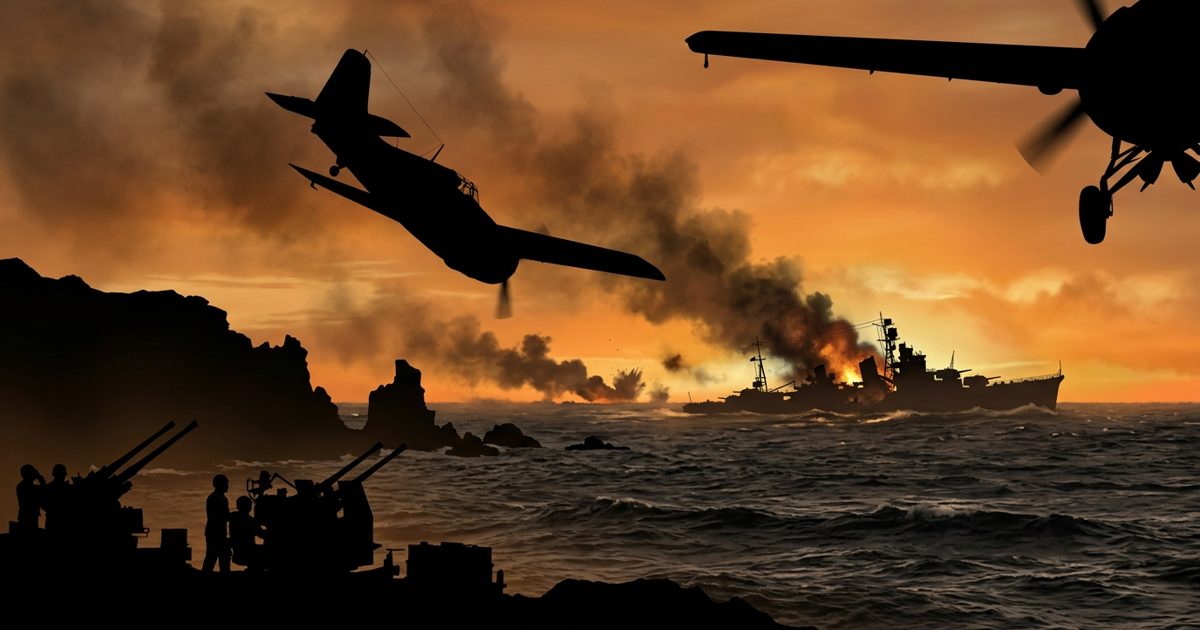
Gunners from the 1st Defense Battalion stood vigil behind concealed coastal batteries as a Japanese amphibious task force loomed on the horizon before dawn on December 11, 1941. Rear Admiral Sadamichi Kajioka sailed three light cruisers, six destroyers, and two transport vessels toward Wake Island, expecting little resistance after three days of relentless aerial bombardment. Major James Devereux ordered his five-inch artillery crews to hold their fire while the enemy warships closed the distance and initiated shore bombardment. The Japanese fleet closed to 4,500 yards without receiving return fire, assuming the island defense batteries had been completely wrecked.
Battery commanders shattered that assumption at 0615 by unleashing rapid salvos against the broadsides of the approaching vessels. Shore gunners of Battery L on Wilkes Island scored direct hits on the destroyer Hayate, which erupted in a catastrophic blast and slipped beneath the waves in less than two minutes. Artillery from Wake and Peale islands struck the cruiser Yubari and several transport craft, puncturing hulls and forcing the Japanese formation to reverse course. Captain Henry T. Elrod led four surviving Grumman F4F-3 Wildcats of Marine Fighter Squadron 211 aloft to intercept the retreating enemy flotilla.
Wildcat pilots pressed low-level strafing and bombing runs against the scattered warships through intense antiaircraft fire. Elrod dropped two 100-pound bombs directly onto the stern depth-charge racks of the destroyer Kisaragi, detonating the ship and sending her to the bottom thirty miles offshore. Marine aviators and coastal gunners had sunk two destroyers, damaged six other vessels, and inflicted more than five hundred casualties on the landing force. The victory marked the first time in the war that shore defenses turned back an amphibious assault, providing a verified operational triumph during the opening days of Pacific conflict.